-4.7 C
New York
Home Blog Page 1147

Port of Langnas to have rope-free mooring system

0

Trelleborg will provide to the Port of Langnas an automated rope-free mooring system, 'AutoMoor'. The system uses smart technologies to enable a faster berthing process and improve safety levels within the port environment. The port has international cruise ferry and domestic ro-ro ferry berths and is situated in the Baltic Sea, on the archipelago of Aland which has ferry traffic between Sweden and Finland via Aland.

Mainly, AutoMoor decreases the motions a vessel can make and monitors all mooring loads acting on the vessel at berth, with the use of a vacuum technology that attaches and secures the vessel.

Also, the system provides real-time data to the operator and optimizes day-to-day port and terminal operations. It also minimizes personnel involvement to reduce human error and improve safety.

The system was developed specifically for the port of Langnas.

It has two mooring arms that either operate in synch or independently. This will enable the port to be able to accommodate a variety of vessels.

The AutoMoor T40 Twin Arm also has a compact footprint allowing for installation in limited spaces including between gantry rails and the wharf edge.

Ronny Eriksson, CEO at the Port of Langnas noted that the port's international cruise ferry berth alone can accommodate about 3.000 vessel moorings, annually.

The majority of those accommodated are advanced cruise ferries with a range of sizes from 34.000GT to 66.000GT and between 165 to 230 meters in length.

Concluding, the CEO stated that both berths had to be updated in order to be able to be in line with the mooring system.

Source:safety4sea


U.S. Travel Industry Thriving, Will China Follow Suit?

0

2019 marks a decade since the U.S. travel industry emerged from the depths of economic recession. Over the past 10 years, the surge in recovery has coincided with an economic turning point in emerging markets, fueling a historic burst in demand for travel. It remains to be seen, though, whether China, second only to the U.S. in the number of cruisers, will follow the same cruising trends.

From 2009 to 2017, U.S. cruise passenger numbers grew from 10.4 million to 12.4 million and revenue growth from $12 billion to $18 billion, according to Deloitte in their 2019 US Travel and Hospitality Industry Outlook. The U.S. represents 55 percent of all global cruise passengers. 

While strong, Deloitte says that the growth trajectory for the cruise industry falls just short of hotel industry growth, as it is a more specialized experience. Consumer perceptions around spending extended periods of time at sea tend to be polarized. Travelers are often loyal or avoid the experience. The dichotomy underpins recent strategy within the segment with brands often flipping between new customer acquisition and extracting greater value from existing cruisers. 

“People who go on cruises have a very high instance of repeating that experience and going on more cruises,” says Adam Weissenberg, National Managing Partner at Deloitte. It's a very loyal market. The cruise industry loves that. They love to attract people, because once they get you through the door, a lot of people go again with their families every year or with friends.

“These people are loyal, they understand cruising, you know what they're gonna spend on board, you can look at other ways to get them to do that, and it's almost cheaper to get that repeat customer to come back than it is to go out and advertise and do all the things you have to do to find new ones.”

However, from a long-term perspective, new customer acquisition seems the more promising strategy, particularly considering the untapped global market. China is of particular interest. Yet cruise lines continue to pull back as travel demand in the region cools, says Weissenberg. The strategy so far with some lines has been to put ships there and assume the Chinese will start cruising. “It hasn't necessarily happened, and I think there's also been a lot of chartered cruises which in the long-run probably isn't the way to do it either. You want to be able to have more daily, normal, vacation cruisers, like we have in other markets. I think the other thing is that high-end Chinese travelers don't necessarily want to cruise in China.”

This has caused a rethink on strategy even though the industry is confident of growth there eventually. “It's already the second-largest cruise market in the world. It's gonna continue to grow. It's just inevitable.”

What shape that growth will take is still uncertain. The U.S. market has moved towards massive ships that offer more and more high end amenities: zip-lines, race tracks, multiple restaurants, high end restaurants, ice skating rinks, and that seems to be one of the ways of attracting more and more people to cruise or to get people to repeat. The size of these ships is incredible: 4000, 5000 passengers. 

“If you think about the size of China's population, is that ultimately the way the market will go – bigger and bigger cruise ships to attract more and more people? They clearly have the population, so I think it's a trend that is happening. I also think there's a high end travel market that's starting to grow in China in general. When Chinese travel, they love to shop. They're the number one in terms of their spend on retail, so I think we'll see more luxury cruise ships enter the market to really appeal to that high end. They'll travel to more shopping destinations such as Hong Kong, Macau and further south in Asia.”

As the global traveler pool grows, so do the number of attractive destinations competing for their dollars. Globally, popular destinations like New York are competing with newer “rising stars” like Portugal and Vietnam. Some of these destinations are growing visitations by 20 to 30 percent annually. 

While inbound tourism has always been strong for the U.S. travel industry, it is now feeling the pressure. International arrivals into the country increased by 0.7 percent in 2017, but its global share of long-haul travel is dropping, down to 12.2 percent in 2017 from 13.8 in 2015.

Deloitte says that infrastructure investment is important. “Smooth-running airports and even well-paved roads and waste management are integral to keeping the United States competitive as a global destination. But recent travel growth, combined with other factors like urbanization, has U.S. travel infrastructure bursting at the seams.” 

According to the American Society of Civil Engineers, the U.S. needs $4.5 trillion in infrastructure investment by 2025 before the problem potentially impacts GDP and job growth. Key travel infrastructure, including airports, parks and recreation, rail, ports, roads and transit require some of the biggest improvements, says Deloitte.

Still, says Weissenberg, the growth of the travel industry has been outpacing the world economic growth. How long this can continue, particularly in the U.S., remains to be seen, but Asian growth, in particular, retains strong growth potential.

Source:maritime-executive

Carnival Cruise Line Rolls Out 3D X-Ray Security Scanning

0

Carnival Cruise Line is adding 3D x-ray security scanning at nine of its North American cruise ports, bringing the latest technology for travel and facility security to the cruise industry. 

VOTI Detection, a Canadian firm based in Montreal, took the contract for 91 of its 3D scanning units. VOTI president and CEO Rory Olson said in a statement that the design's durability in a maritime environment was a key factor, along with remote diagnosis capability and advanced imaging capability. 

VOTI claims that its equipment enhances detection and speeds up screening by giving operators a 3D view of the scanned object. The scanners save the imaging files in a format that allows them to be re-analyzed later if needed. 

"The addition of VOTI technology will enhance our existing security platforms," commented Dominick Froio Jr., Carnival Cruise Line's VP of security services. "The safety and security of our guests and crew is our top priority and the opportunity to deploy VOTI's 3D perspective imaging brings X-Ray screening to a new level of effectiveness and will ensure that we continue to lead the way when it comes to safety." 

Carnival has already begun deploying the units and expects to complete the rollout by the end of this month. 

Carnival Cruise Line also uses a visual identification security access system to restrict access to its ships to authorized passengers and crew. The system records the movement of guests and crew who enter and exit the ship and requires the capture of a security photo. In addition, a keycard system is used to identify authorized persons and control access during port calls. 

Carnival's security protocol also includes a thorough document check. Since 2016, Carnival Corporation has partnered with Interpol to check the validity of passenger travel documents with Interpol's I-Checkit global security systems. This database allows Carnival to compare passengers' passports and other travel documents against a list of about 70 million lost or stolen IDs. “As the world’s largest cruise company carrying hundreds of thousands of daily passengers, having a highly effective and efficient security screening process is a crucial part of how we serve our guests every day," said Bill Burke, Carnival Corporation's chief maritime officer, in announcing the partnership. 

Source:maritime-executive

Viking Jupiter Delivered

0

Viking Jupiter, the sixth cruise ship which Fincantieri has built for Viking Cruises, was delivered on February 7 at the shipyard in Ancona, Italy.

The 745-foot Viking Jupiter has a gross tonnage of about 47,800 tons and has 465 cabins with accommodation for 930 passengers.

Fincantieri started its partnership with Viking in 2012 when the line entered the ocean cruise market as a startup. The cooperation, which began with an order of two ships, has reached a total of 16 units. This is the largest number of ships built by a shipyard for one shipowner.

The first of the series, Viking Star, was built at the shipyard in Marghera and delivered in 2015. Viking Sea, Viking Sky, Viking Sun, and Viking Orion, handed over in 2016, 2017 and 2018, were all built at the Ancona yard. Another 10 vessels (including options) for Viking Cruises will be delivered from the Group’s Italian yards between 2021 and 2027. Vard, together with Fincantieri, is also specializing in the construction of expedition vessels, and Viking has placed orders for two special cruise ships which will be built in the Group’s yards.

Viking Jupiter's interior was designed by London-based SMC Design and Los Angeles-based Rottet Studios. The designers created a modern design of Scandinavian inspiration. In addition to the all-veranda staterooms, the ship features spacious suites with sweeping views, two pools, one an Infinity Pool off the stern, and a Spa sauna and a snow grotto.

The Viking ships are all built according to the latest navigation regulations and equipped with the most modern safety systems, including the “Safe return to port.” They feature high-efficiency engines, hydro-dynamics and hull optimized for maximum fuel efficiency and equipment that minimizes exhaust pollution and meets the strictest environmental regulations.

Viking Jupiter was floated out in May 2018:

Source:maritime-executive

Port of New Orleans Posts Record Cruise Traffic

0

The Port of New Orleans, the sixth largest cruise port in the United States, set a new record for cruise traffic in 2018 with about 1.2 million passenger movements. According to the port, its numbers were buoyed by newer and larger ships departing New Orleans for both the Caribbean and inland river destinations.

The port continues to attract new ships and port calls, with 235 vessel arrivals in 2018. Disney recently announced that it will be adding a homeported vessel in New Orleans for the first time, beginning in 2020. Carnival Cruise Line, which has an established presence at the port, is upsizing the vessels it deploys from New Orleans by moving the newer 3,000-passenger Carnival Glory and Carnival Valor to The Big Easy.

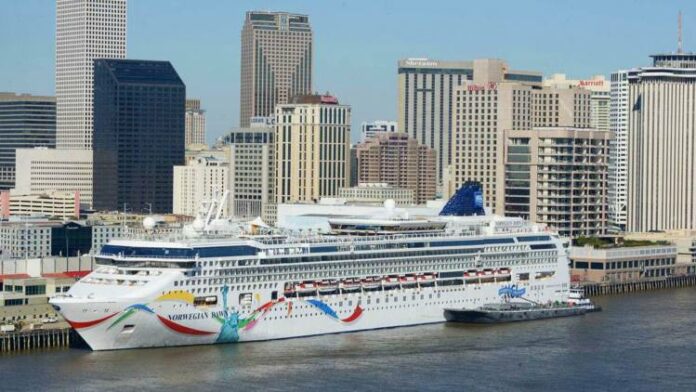
New Orleans is also the home port for NCL's Norwegian Breakaway, the largest cruise ship it has hosted to date. In December, Royal Carribean's Vision of the Seas arrived, marking the line's return to New Orleans after a four-year hiatus. 

Five riverboats also call New Orleans home, including the American Harmony, the newest riverboat plying the Mississippi's waters. The port saw a 23 percent surge in guests taking Mississippi River cruises last year, with a total of 30,000 passengers opting for this classic option.  

Cruising is great for passengers and for the cruise industry, but it also boosts New Orleans' local economy. A recent study found that the vast majority of cruise passengers and crew arrive from outside of the city, and they spend a total of about $120 million per year when they visit. "The popularity of New Orleans as a cruise port and our commitment to customer service proves again why Port NOLA is a catalyst for local businesses." said Brandy D. Christian, Port NOLA President and CEO. "Our homeport status is important for the local economy and helps us fulfill our role as an economic engine for Louisiana."

Source:maritime-executive

Quark Expands Arctic Cruise Offerings

0

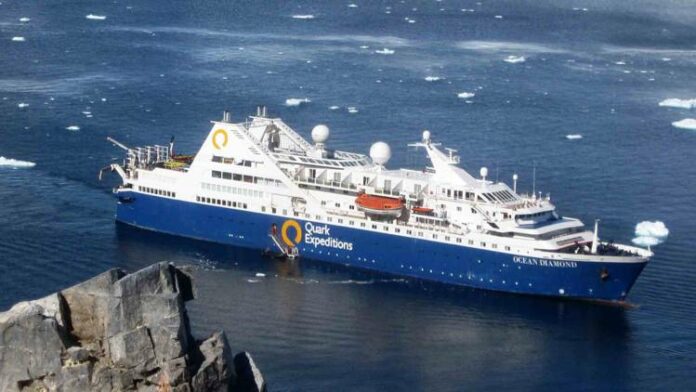
Expedition travel company Quark Expeditions has expanded its portfolio of Arctic voyages to include voyages to hard-to-access remote regions, such as the Russian Arctic. A new purpose-built expedition ship, the World Explorer, will be making its Arctic debut in 2020, and the company will offer a cruise to the North Pole in that year too.

World Explorer
The steel cutting ceremony took place at the shipyard and museum of Quark Expeditions’ build partner, Brodosplit. The 13,500 gross ton vessel is 128 meters long, with a beam of 21.5 meters. She was designed by LMG Marin and will accommodate up to 200 passengers. She features an interior Zodiac hangar and four embarkation points, state-of-the-art dual helicopters with simultaneously operable helidecks and a 70-day operational range.

The ship will feature 13 fully redundant critical systems, twin propellers powered by four engines in two separate engine rooms and also a fully operational emergency bridge.

The ship’s innovations will also minimize its environmental footprint to an extent previously unseen for a vessel of comparable size, including a sophisticated water treatment system, state-of-the-art waste handling,  a leading-edge heat recovery system that recycles excess energy back into the ship, and the use of entirely recyclable materials to construct her. The dynamic positioning technology will also mean no need to anchor – avoiding damage to sensitive seabed ecosystems.

Voyage to the North Pole

The 14-day voyage to the North Pole will be undertaken by the 50 Years Of Victory. The vessel will crush through multiyear ice, to offer hot-air balloon rides at 90º N and sightseeing of walruses, seals, whales and polar bears via helicopter.

Quark says that interest in the north pole is growing. Travelers have different interests and motivations for reaching the North Pole. It could be on their bucket list or a remarkable destination for photographers. For some, it’s a once in a lifetime feat but for others, the North Pole calls them back over and over. 

50 Years of Victory is one of six nuclear-powered Arktika-class icebreakers. She has a spoon-shaped bow, capable of breaking through ice up to 2.5 meters (9.2 feet) thick. 20 in the making, she is one of the world’s largest, most-powerful nuclear icebreaker. The ship can host up to 128 guests and 140 crew members. All cabins have exterior views, private facilities and TV’s. The vessel has a gym, basketball court, two saunas and a small plunge pool. 

Source:maritime-executive

Naval Energies sees floating wind in 3D

0

French marine contractor Naval Energies is using Dassault Systemes’ software to reduce floating offshore wind development costs.

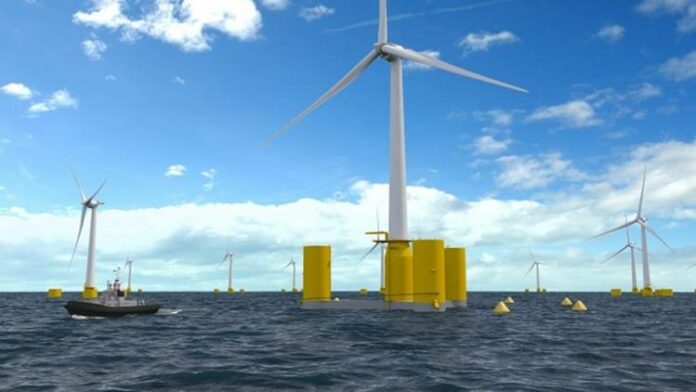
Naval Energies will use the ‘Designed for Sea’ application, part of Dassault Systemes’ 3DExperience platform, for programme management, engineering and analysis of floating offshore wind farm components, including semi-submersible floaters, anchors and cables as well as ocean thermal energy conversion devices.

The software will enable Naval Energies to reduce floating offshore project development cycles and associated costs.

Naval Energies is the prime contractor for the semi-submersible floating systems for the Groix and Belle-Ile floating wind farm pilot, comprising four 6MW turbines off France’s Atlantic coast.

The pilot aims to optimise floating wind farm technology and infrastructure before full-scale deployment.

Dassault Systemes marine and offshore industry vice president Alain Houard said: “The marine marketplace is shifting due to a heightened focus on alternative energy sources."

Innovators like Naval Energies are entering new segments with new business models.

The 3DExperience platform enables them to better address the challenges of this market transformation.

Source:renews

USCG informs mariners how to react on cyber attacks

0

US Coast Guard published a Bulletin concerning a cyber incident that occurred on a commercial vessel. The paper aims to inform possible victims how to prevent cyber attacks and also provides additional information on who to inform if one is under attack.

On January 26, 2019 the vessel received an e-mail according to which an individual or entity would present an official port state control body.

Specifically, the e-mail originated from an email address 'port@pscgov.org' and was sent to the Captain of the vessel asking for detailed information for the vessel, its cargo and its crew.

The master of the vessel was doubtful of the email and activated elements of the vessel security plan related to suspicious cyber attacks.

Moreover, the Captain forwarded the email to the USCG Captain of the port for investigation and feedback.

Mainly, USCG states that CG-5P Policy Letter 08-16 titled "Reporting Suspicious Activity and Breaches of Security" outlines the criteria and processes for Maritime Transportation Security Act (MTSA) in order to report suspicious activity (SA) and breaches of security (BoS).

Also, USCG's National Response Centre (NRC) remains the primary contact for notifications concerning SAs and BoSs, including cyber.

Concluding, members can report possible attacks at National Cybersecurity and Communications Integration Centre (NCCIC).

Source:safety4sea

Belgium suggests 4GW by 2030 offshore wind target

0

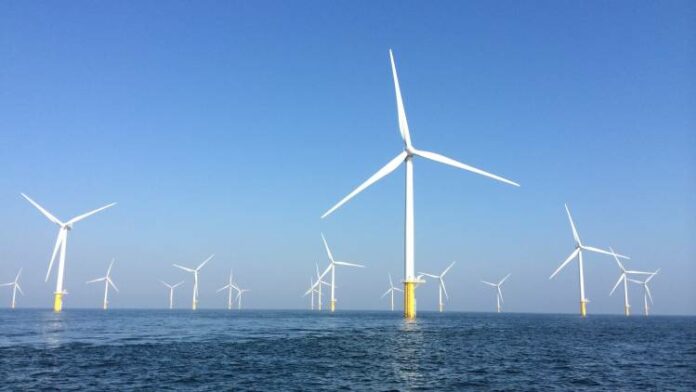
The Federal Parliament of Belgium has proposed a target of 4GW of total installed offshore wind capacity by 2030 in the draft of the National Energy and Climate Plan (NECP). Belgium assures of a total 2030 renewables target of 18.3%, which allegedly is in contrast to the country’s 2020 renewable energy target of 13%.

Mainly, according to WindEurope, that attended a workshop in the Federal Parliament of Belgium, the draft of the NECP focuses on grid and system integration, infrastructure, the decarbonization of heating and industrial process, as well as a complete nuclear phase-out by 2025.

The Federal Government will ask input from different advisory councils and organise a public consultation on the draft text.

Moreover, the European Commission plans to provide feedback on the NECP in June, 2019.

Also, the plan is scheduled to be finalized and to the Commission by the end of 2019.

Belgium recently took fifth place in the global offshore wind capacity rankings as the 309MW Rentel offshore wind farm went online.

Source:safety4sea

BSOG moves forward with the Midia Gas Development Project

0

Black Sea Oil & Gas (BSOG) has made the Final Investment Decision (FID) to proceed with the $400 million Midia Gas Development Project (MGD Project), in the Black Sea.

BSOG made the FID together with its co-venture partners, Petro Ventures Resources and Gas Plus International.

As BSOG said in a press statement, the FID has been taken in good faith and on the assumption that BSOG and its joint venture partners will successfully be able to restore all of their rights with respect to the removal of any newly imposed supplemental taxes and fees as well as removing any restrictions, in accordance with EU Directives, on the free movement of gas on a fully liberalized market in order to not only make MGD Project a viable investment but also to encourage further gas developments in the Black Sea.

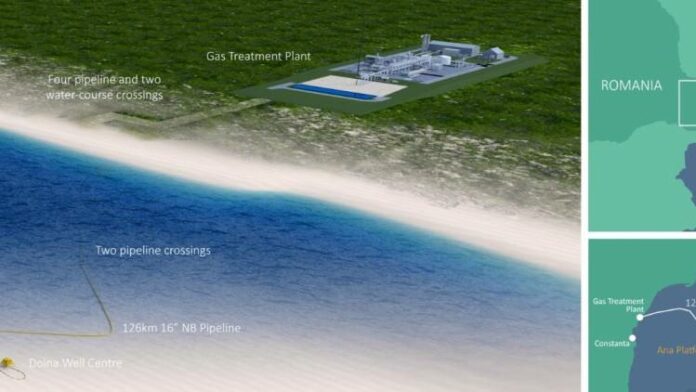
The MGD Project, in the Romanian Black Sea, consists of 5 offshore production wells (1 subsea well at Doina field and 4 platform wells at Ana field), a subsea gas production system over the Doina well which will be connected through an 18 km pipeline with a new unmanned production platform located over Ana field.

A 126 km gas pipeline will link the Ana platform to the shore and to a new onshore gas treatment plant (GTP) in Corbu commune, Constanta county, with a capacity of 1 BCM per year representing 10% of Romania’s consumption. The processed gas will be delivered into the NTS at the gas metering station to be found within the GTP.

BSOG has secured a long-term gas sales agreement with a Romanian subsidiary of ENGIE. The contracted volumes refer to all MGD Project gas production, reduced by the volumes that the producers are currently obliged to sell on the centralized market.

BSOG has also secured a gas transmission contract with Transgaz for the transport of the MGD Project production into the National Transmission System (NTS) for a contractual period of 15 years.

The entire project infrastructure, including all offshore and onshore facilities, has been contracted to be built, installed and commissioned under an EPCIC contract with GSP Offshore, with a contracted delivery date Q1 2021.

The development drilling of the five production wells will also be performed by GSP for which GSP Uranus jack-up rig will deployed.

In 2019, BSOG plans to complete the detailed engineering for the MGD Project, start the fabrication of the Ana Wellhead Platform at the shipyard in Agigea, start the civil constructions at the GTP site in Corbu and purchase a number of long lead company items.