-5.9 C
New York
Home Blog Page 1139

ONE Breaks Record For Highest Utilization of a Container Ship

0

Ocean Network Express (ONE) has broken the last reported world record for the largest amount of cargo ever stowed – carrying over 19,100 TEU on board the MOL Tribute

Using Navis’ StowMan vessel stowage planning software to optimize the ship, the record load surpasses the record previously announced by Maersk at 19,038 TEU, achieved in August 2018.

The MOL Tribute, with a total capacity of 20,146 TEU achieved the new record on February 11, 2019. Prior to the latest achievement, ONE completed two additional record stows on board the MOL Trust and MOL Tradition in its last two calls at PSA Singapore.

“As vessel sizes increase, so too do the complexities associated with safe and effective stowage planning,” said Captain Kunihiko Nishimura, General Manager Global Vessel Operations, ONE. “With the help of Navis and PSA Singapore, we were able to accomplish a tremendous feat – not only planning, but successfully executing a vessel call with more than 19,100 containers on board.”

ONE partnered with Navis leveraging its StowMan solution on a vessel also equipped with the MACS3 loading computer for the most recent voyage. ONE was able to optimize the cargo load based on accurate vessel profile information, resulting in higher utilization and fewer restows. Navis plans to expand these results to other terminals. Currently, 50 carriers and logistics providers with approximately 3,000 users worldwide stow their vessels with StowMan.

Source:maritime-executive

INPEX Selects NAPA for LNG Carrier Fleet

0

Japan's largest oil and gas exploration and production company INPEX Corporation has installed ClassNK-NAPA GREEN for monitoring operations on three of its liquefied natural gas (LNG) carriers.

NAPA said that Inpex awarded a deal to the company for the provision of a solution for monitoring and follow-up of ship operations on two LNG carriers built to service the Ichthys project and one LNG carrier for Shell’s Prelude FLNG project.

With the core motivation of accurately verifying the technical performance of these highly complex carriers, INPEX chose ClassNK-NAPA GREEN for the combination of NAPA’s LNG carrier design understanding and market leading performance monitoring software.

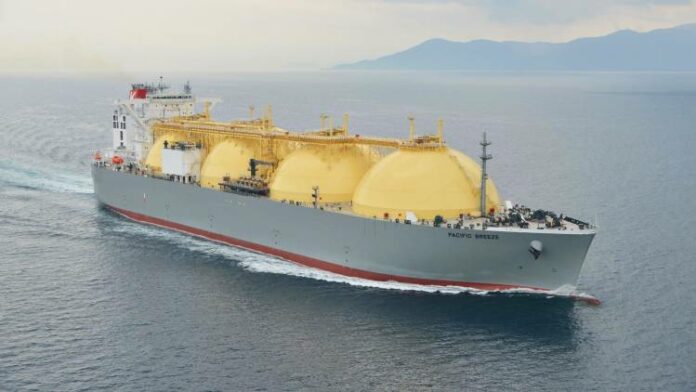
The Oceanic Breeze, Pacific Breeze, and Symphonic Breeze are amongst the world’s largest MOSS-type LNG carriers and ClassNK-NAPA GREEN will enable INPEX to monitor how well the promises made by their shipbuilders match the reality of operations, as well as the carriers’ performance over time.

Akihiko Itoh, Manager of Transportation group, LNG Trading Unit at INPEX said: “The propulsion system of an LNG carrier is far more complex than that of any other vessel type, which is why a fundamental understanding of elements including the cargo containment and management systems, as well as the ultra steam turbine is critical to efficiency. From system configuration to setting KPIs, NAPA’s in-depth LNG knowledge, spanning design, engineering and operations enables us to effectively collaborate with them for transparent fleet performance and voyage reporting that delivers genuine value.”

With offshore production facilities located in the Browse Basin, about 200 kilometres off the coast of Western Australia, Ichthys is one of the world’s most complex LNG projects, and is expected to operate for the next 40 years.

At full capacity Ichthys will produce 8.9 million tonnes of LNG per year, along with about 1.65 million tonnes of liquefied petroleum gas and about 100,000 barrels per day of condensate at peak. Ichthys adds a major new source of LNG supply equivalent to more than 10% of the annual LNG import volume of Japan – the world’s largest LNG importer.

INPEX has a major stake in Ichthys LNG Project. Other shareholders include CPC Corporation, Taiwan and Japanese utilities Tokyo Gas, Osaka Gas, Kansai Electric Power, JERA and Toho Gas.

Source:marinelink

ECSA, WSC: Simpler reporting is a major step for European Maritime Single Window

0

ECSA and WSC have welcomed the agreement reached by the European Parliament, the Council and the European Commission in their 'trilogue discussions' on the European Maritime Single Window environment proposal last week.

On 15 October 2018, the European Parliament’s Committee on Transport and Tourism published the draft report on the Commission’s proposal for a Regulation creating a European Maritime Single Windowenvironment, which came out on 17 May.

The report focuses on the harmonisation of data elements and data sets, and supports the cooperation between customs and maritime authorities at both national and Union level. It also recognises that, even with a fully harmonised data set, relevant authorities might require additional data.

The final text now includes an agreement that provides security for Port Community Systems in relation to the public National Single Windows that have to act as a 'mailbox' for reports to authorities.

Namely, Port Community Systems that meet the requirements of the European reporting interface module must be allowed by member states as a reporting system.

According to the the final text, the Port Authority will examine the consequences of the European Maritime Single Window Regulation for the reporting process in European ports and discuss this with, among others, the ministry responsible for the elaboration at Member State level.

ECSA’s Secretary-General, Martin Dorsman, commented that this instrument will bring real and positive change for shipping companies and crews. He also added that it is a good sign that the co-legislators have agreed to the idea of a harmonised data set.

This is the fundamental building block that will bring true harmonisation and simplification for the shipping industry and other partners in the chain.

For his side, WSC CEO and President John Butler, noted that the agreement not only harmonises the data that must be reported but also the way that it should be transmitted. Specifically, he explained that the EU machine to machine interface module as required by the Regulation will make the process of reporting data simpler, as long as it is implemented identically in each national single window without deviation.

The Port of Rotterdam Authority and other major ports in Europe, also said that it was of great importance that investments in current Port Community Systems (Portbase) and port call optimization processes in European ports would not be affected.

Source:safety4sea

Former CEO of Alaska-based telecom firm pleads guilty to fraud

0

Elizabeth Ann Pierce, the former Chief Executive Officer of a telecommunications company based in Anchorage, Alaska, pled guilty in Manhattan federal court to wire fraud and aggravated identity theft, Monday.

The plea related to a scheme to use forged guaranteed revenue contracts fraudulently to induce investors to invest more than $250 million into her company for the construction of a fiber optic cable network in Alaska.

"As she admitted today, Elizabeth Ann Pierce engaged in a brazen, multi-year scheme to obtain over $250 million from investors by misrepresenting that she had guaranteed revenue contracts with multiple telecommunications services companies."

Until July 2017, Pierce was the CEO of Quintillion, a telecommunications company based in Anchorage, that built, operates, and markets a high-speed fiber optic cable system (the “Fiber Optic Cable System”).

This System consists of three segments: a subsea segment that spans the Alaskan Arctic; a terrestrial segment that runs north to south along the Dalton Highway; and a land-based network of fibers that connects the subsea and terrestrial segments. The Fiber Optic Cable System is connected to the lower 48 states through other existing networks.

Between May 2015 and July 2017, Pierce engaged in a scheme to induce two investment companies to provide more than $250 million to construct the Fiber Optic Cable System by providing them with eight forged broadband capacity sales contracts and related order forms under which Quintillion would obtain guaranteed revenue once the Fiber Optic Cable System was built (the “Fake Revenue Agreements”), the US Department of Justice informed.

Under the Fake Revenue Agreements, four telecommunications services companies appeared to have made binding commitments to purchase specific wholesale quantities of capacity from Quintillion at specified prices.

The cumulative value of the Fake Revenue Agreements was more than $24 million during the first year of the subsea segment’s operation, approximately $10 million during the first year of the terrestrial segment’s operation, and approximately $1 billion over the life of the Fake Revenue Agreements.

In reality, the Fake Revenue Agreements were completely worthless because Pierce had forged the counterparties’ signatures.

Certain of the Fake Revenue Agreements never existed at all, while others were falsified versions of genuine revenue agreements.  Pierce fabricated the terms of the false versions of the agreements to make them more favorable to Quintillion and, therefore, more appealing to investors than the genuine agreements.

For example, under one of the Fake Revenue Agreements, the customer purportedly agreed to buy increasing amounts of gigabits per second of capacity over a period of 20 years from Quintillion. That agreement, if genuine, would have assured Quintillion hundreds of millions of dollars in future revenue. In reality, negotiations over that deal had ended unsuccessfully, which fact Pierce never disclosed to the investors.

After the terrestrial system was built, Pierce attempted to prevent the discovery of the Fake Revenue Agreements by accelerating the timing of incoming payments under certain genuine agreements to make those payments appear to be based on the Fake Revenue Agreements.

Pierce also sought to prevent Quintillion and the investors from invoicing one of the customers that had no real contract with Quintillion by fabricating e-mail correspondence Pierce purportedly had with that customer. Pierce’s scheme started to unravel when a customer disputed invoices that it received from Quintillion pursuant to one of the Fake Revenue Agreements.

Shortly thereafter, in the midst of Quintillion’s internal investigation, Pierce abruptly resigned.

Source:safety4sea

 

KDB on standby to save Hanjin Heavy

0

State-run Korea Development Bank is on standby once again to step in and save one of the nation’s shipbuilders.

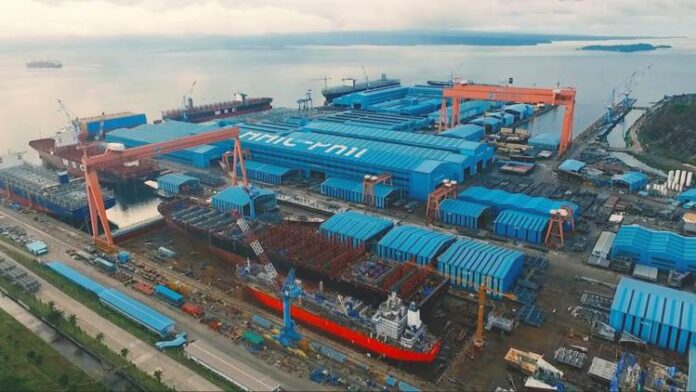
Hanjin Heavy Industries & Construction, South Korea’s oldest shipbuilder, said Wednesday that its stock trading has been suspended until the end of March due to capital erosion.

The shipyard also said losses leapt to KRW1.32trn won ($1.18bn) last year, from a loss of KRW278bn won a year earlier, hit hard by its Philippines unit, HHIC-Phil, seeking court rehabilitation.

Hanjin Heavy said it would carry out debt-for-equity swaps with its creditors, including state-run KDB, the bank that has done much to save a number of yards in recent years, most notably Daewoo Shipbuilding & Marine Engineering (DSME).

KDB said yesterday it would help Hanjin Heavy negotiate with a number of Filipino financial institutions who are owed vast sums of money by the Korean yard.

Source:splash247

Rig lined up for initial Ironbark well offshore Australia

0

BP has contracted the Diamond Offshore semisubmersible Ocean Apex to drill the potentially giant gas prospect Ironbark offshore Western Australia.

Ironbark is in exploration permit WA-359-P in the Carnarvon basin.

Matthew Boyall, CEO of BP’s partner Cue Energy, estimated resources at up to 15 tcf.

“Securing the Ocean Apex sets a clear path for drilling,” he added. “The rig contract, escrow funding, and shareholder approval for New Zealand Oil & Gas to farm in have all been satisfied."

“NOPTA approval of an extension to the permit term to allow the well to be drilled is a remaining condition and Cue expects to submit an application soon.”

The Ironbark-1 well, with an expected depth of 5,500 m (18.044 ft), should get under way in late 2020 following completion of the rig’s other commitments.

BP has started environmental planning activities for a site survey of the well location and the drilling activities.
Source:offshore-mag

BOEM details next region-wide Gulf of Mexico lease sale

0

The Bureau of Ocean Energy Management will offer 78 million acres in a region-wide lease sale in March.

Lease Sale 252 will include all available unleased areas in federal waters of the Gulf of Mexico. The sale will include about 14,696 unleased blocks, located from 3 to 231 mi (5 to 372 km) offshore, in the Gulf’s Western, Central and Eastern planning areas in water depths ranging from 9 to more than 11,115 ft (3 to 3,400 m).

The sale, scheduled to be livestreamed from New Orleans, will be the fourth offshore sale under the 2017-2022 national outer continental shelf oil and gas leasing program.

The Gulf of Mexico OCS, covering about 160 million acres, is estimated to contain about 48 Bbbl of undiscovered technically recoverable oil and 141 tcf of undiscovered technically recoverable gas, according to BOEM.

Source:offshore-mag

GE to Propel MSC Cruises Fleet

0

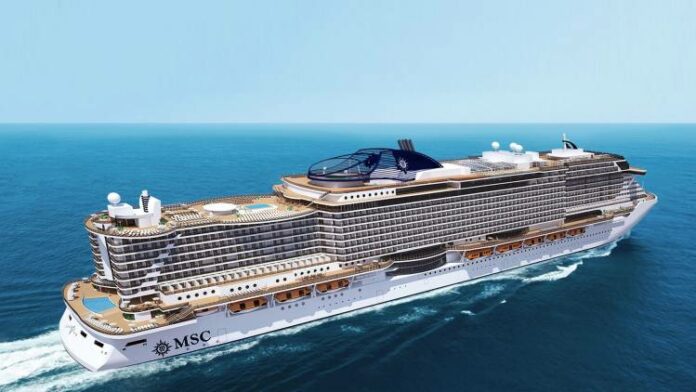
GE’s Marine Solutions has once again been selected by MSC Cruises and Fincantieri to provide the marine electric propulsion technology for two new Seaside EVO ships, further driving the evolution of the Seaside Class next-generation mega cruise ships.

This follows the delivery of the first and second ship – MSC Seaside and MSC Seaview – in the Seaside Class by the Fincantieri shipyard of Monfalcone.

With a gross tonnage of 169,400 GT and a total guest capacity of 5,632, Seaside EVO ships will be the largest cruise ships ever built by the Fincantieri shipyard. The two ships will adopt a range of innovative design features and maritime technologies, among which GE will provide the electric propulsion system with his partners Imesa and Nidec that will bring operational efficiency and excellent maneuverability.

GE will also lead the consortium – Imesa, Nidec, ASI – for managing the overall electrical power and propulsion system.

GE’s solution consists of propulsion controls along with transformers, variable frequency drive (VFD) technology, propulsion motors and distribution transformers. The propulsion system will see an increased power rating compared to those onboard the previous two vessels. GE’s electrical marine solution enables a smooth installation and cabling process. It also eliminates the need for harmonic filters.

“Sailing full steam ahead, the Seaside Class showcases our commitment to pushing the boundary of the future of cruising by unlocking the maximized potential that a cruise ship can achieve. MSC Seaside EVO ships will be longer and consequently more powerful than the previous two ships concerning power generation and propulsion motors. And we once again place our trust and count on GE, among other various partners, to deliver the outcome,” said Emilio La Scala, President & Managing Director, MSC Cruise Management UK.

“We have a long-term relationship with MSC Cruises. Our electrical propulsion systems have been installed on the existing fleet of 14 vessels, bringing reliable operations and smooth voyage experiences to millions of passengers worldwide,” said Ed Torres, GE’s Marine Solutions leader. “We are excited to partner with MSC Cruises once again and provide GE’s marine electric propulsion technology with increased power rating to propel the next generation of mega cruise ships.”

As the demand for cruise holidays soars, fleets continue to grow. While stringent regulations and increased vessel sizes may pose new challenges, they bring with them a host of opportunities. New regulations are driving for more efficient operations with reduced carbon footprint, while larger sizes of vessels will set new benchmarks for technology reliability,” said Azeez Mohammed, president and CEO of GE’s Power Conversion business.

“GE’s marine electric propulsion is an attractive commercial solution for the growing cruise industry, and we are delighted to partner with a major cruise line and grow the industry with reliable and sustainable technology innovations,” he added.

Source:marinelink

BHP greenlights Atlantis Phase 3

0

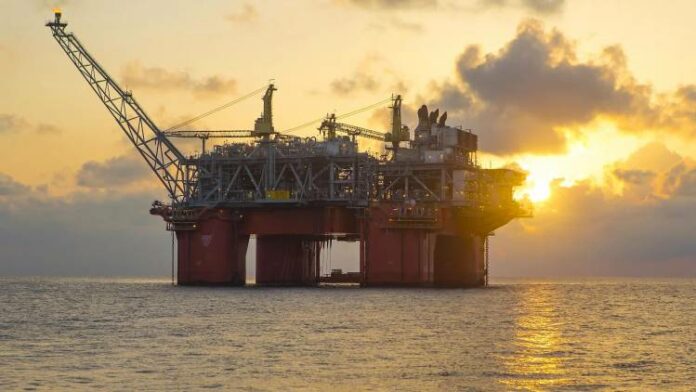
The BHP board has approved $696 million in funding to develop the Atlantis Phase 3 project in the deepwater US Gulf of Mexico.

This follows sanction by operator BP in January. 

Atlantis Phase 3 is about 130 mi (208 k) offshore Louisiana. The project is a subsea tieback of eight new production wells that will be drilled and completed to access infill resource opportunities. It will take advantage of existing infrastructure, production ullage, and marketing agreements. 

First production is expected in the 2020 calendar year and is estimated to increase production by ~38,000 boe/d gross at its peak.

BHP holds a 44% interest in the Atlantis field. BP holds a 56% interest. 

Steve Pastor, BHP President Operations Petroleum, said: “The Atlantis Phase 3 project provides a competitive opportunity to deliver on our strategy to grow resources in Tier 1 conventional deepwater assets. The project will further expand the Atlantis field and will provide cost-efficient, near-term volumes.”

Source:offshore-mag

ABB to power Iceland’s first electric ferry

0

New electric ferry to operate on an Icelandic route known for its harsh weather conditions will benefit from efficiency and sustainability enabled by ABB’s technology.

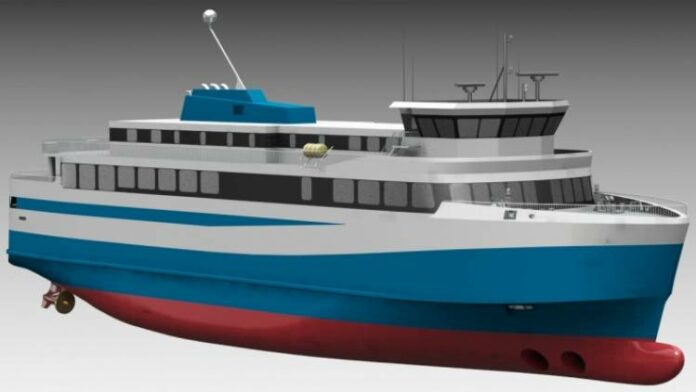
ABB will supply integrated power and electric storage solutions to the Icelandic Road and Coastal Administration’s new ferry that will take 3,600 annual trips in the rough waters between Landeyjahöfn on the mainland and the Westman Island, covering 13 km in about 45 minutes.

The 70m-long ferry, with a capacity of 550 passengers and 75 cars, is designed by Polarkonsult and is due for delivery from the Crist S.A. shipyard in 2019. The vessel will feature a large battery pack (3000kWh) and is designed to operate in a fully electric mode for most of time, with onshore charging in both harbors. During particularly challenging weather conditions, when the consumption of battery power may exceed the available energy, the ferry will utilize its diesel-electric generator set.