-5.9 C
New York
Home Blog Page 1138

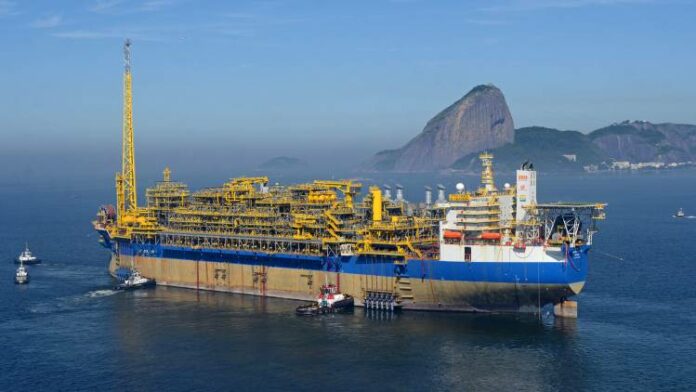
Liza FPSO to sail-away this summer

0

 SBM Offshore has issued an update on its FPSO construction programs.

In the Fast4Ward program, its first standard, multi-purpose hull is progressing well and according to schedule at the Shanghai Waigaoqiao Shipbuilding and Offshore (SWS) shipyard in China. Last November, the company contracted the SWS shipyard to build the second hull for which progress is in line with expectations.

Due to anticipated demand, the company has progressed negotiations to start work on its third standard, multi-purpose hull. These negotiations are expected to be closed in 1Q 2019.

Construction of the FPSO Liza Destiny at Keppel Shipyard in Singapore is progressing well, the company said. The last modules were lifted on board and commissioning activities are currently taking place. Sail-away is planned for this summer so that the vessel can be installed offshore Guyana later in the year.

In Guyana, work is under way with respect to operations readiness, setting up the shore base and delivering on its local content commitments.

The company added that with engineering now nearly completed, the fabrication of the turret mooring system for the Johan Castberg FPSO is well advanced in Dubai. It remains on track to meet Equinor’s schedule with delivery in early 2020.

Source:offshore-mag

World’s biggest wind farm produces power

0

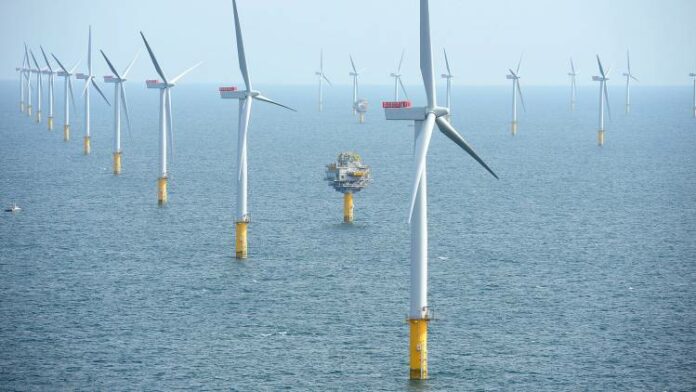
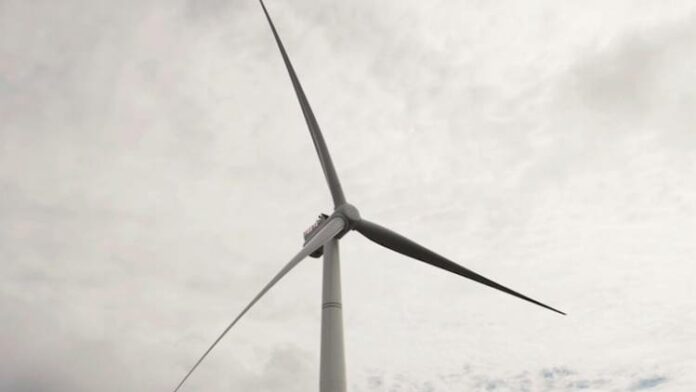
The turbine F18 is the first of the 174 Siemens Gamesa 7MW units to be installed at the site some 120 kilometres offshore Yorkshire, UK, and the first to start producing power.

The electricity that will be generated by the turbines will pass through one of the wind farm’s three offshore substations, before being transmitted by three high voltage subsea export cables, via a reactive compensation substation (RCS), to shore.

Specifically, the offshore unit was transmitted from the pre-assembly site in Hull and installed by Fred.

In addition, half of the turbines are to be installed by Bold Tern, with the remaining half to be installed by A2SEA.

Hornsea One is scheduled for completion in 2020 when it will become the biggest wind farm in the world.

Ørsted owns the 50% of the offshore project, as the developer of the project, whereas Global Infrastructure Partners hold the remaining 50%.

Source:safety4sea

Ports Competing for ULCVs Along North America’s East Coast

0

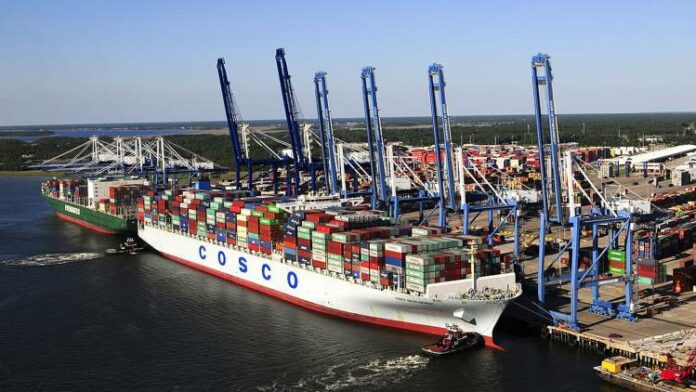
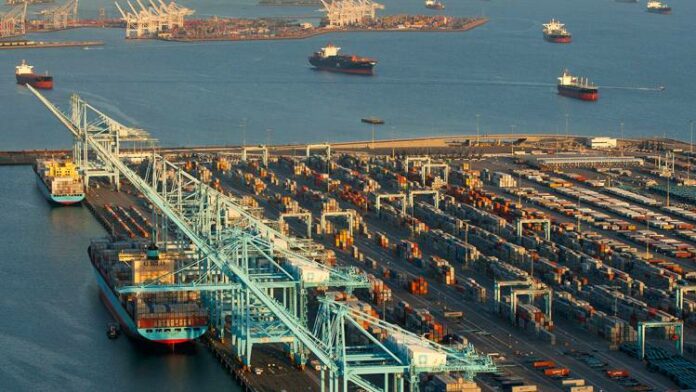
When ultra-large container vessels (ULCVs) of 18,000-TEU capacity first entered service, very few major ports could berth and provide service to them. At present, several East Coast ports that include Jacksonville, Savannah, Ports of Virginia, Baltimore and Philadelphia have been developed to berth and provide service to neo-Panamax size of ships. While South Carolina Ports Authority has authorized the deepening of the navigation channel to Leatherman terminal to 52 feet (16 meters), the authority would be wise to recognize the future possibility of larger ultra-large container vessels (UCLV) built well in excess of 18,000-TEU capacity.

The South Carolina Port Authority's plans to develop the Hugh K. Leatherman have a sound logistics basis especially if the port were to include the transshipment option. The port City of Charleston is located within close proximity to several other American East Coast port cities such as Jacksonville Fla, Savannah GA and Norfolk – Newport News VA. It is also located close to the navigable intra-coastal waterway along which barges may carry container traffic. The water extends to Norfolk and Chesapeake Bay, giving inland waterway access to cities such as Baltimore, Philadelphia and even into Washington via the Potomac River. 

The Suez Canal

The steady increase in the size of ships that sail through the Suez Canal has prompted authorities to widen and deepen the canal and include a parallel section of channel. Within the next few years, the Suez Canal Authority is expected to develop parallel navigation channels between the Red Sea (Gulf of Suez) and Mediterranean Sea. ULCVs that sail between eastern Asia and Port of Charleston will sail either via the Suez Canal or via Port of Cape Town, South Africa. Parallel navigation channels at Suez Canal would be able to transit larger ULCVs.

There may be scope to attach removable bow wave deflectors to each future size ULCV that sails through the Suez Canal's future twin channels to change the angle of the bow waves and reduce channel bank erosion. A ship built slightly higher (greater air draft), slightly deeper and slightly longer may be able to carry 28,000 TEUs. 

The Suez Canal offers an air draft of 223 feet while the Port of Charleston’s Arthur Ravenel Bridge offers 186-foot air draft and will need to be raised to clear future ULCVs. At Port of Newark, the Bayonne Bridge was raised to transit larger container ships.

Competition

In Eastern Canada, both the Port of Sydney and the South Terminal at Port of Halifax offer unlimited air draft clearance for ULCV ships. If the air draft of the Ravenel Bridge remains unchanged, the Port of Charleston would deliver a competitive edge to Canada’s Port of Sydney. 

America’s ongoing trade dispute with China has the potential to impact future container based trade. A reduction in the number of containers arriving at East Coast ports could encourage ship operators to multi-port, that is, the same neo-Panamax ship serving a pair of nearby ports such as Jacksonville and Savannah.

If future trade declines, a single ULCV arriving from Asia could incur lower per-container transportation costs than multiple neo-Panamax ships by carrying the combined load of four nearby ports that could include Jacksonville, Savannah, Charleston and Norfolk – Newport News. A slight increase in the frequency of UCLV arrivals at Charleston could expand the transshipment region to include Baltimore and Philadelphia, courtesy of the Chesapeake – Delaware Canal. Most customers would be willing to save transportation costs by delaying arrival of their containers by one or two days, sailing via the Suez Canal instead of via the Panama Canal.

Port of Newark

Port of Newark is the busiest container port along the East Coast and through intermodal truck and railway connections, links to many inland cities that includes Boston, Buffalo NY, Toronto, Montreal, Pittsburgh, Cleveland, Toledo, Detroit and Chicago. The future arrival of ULCV’s at Port of Charleston would connect to cities such as Atlanta, Birmingham and Chattanooga with potential to divert some intermodal container traffic from Newark. A decline in container trade arriving at Newark from China would require some multi-port operations involving neo-Panamax ships that sail via the Panama Canal to Newark.

One option would be to combine container trade destined for both Newark and Montreal on board a single neo-Panamax ship that would stop at Ports of Virginia to partially off-load containers for transshipment to a ship sailing to Port of Montreal and during warmer weather, to the Port of Toronto. The future prospect of mega-size ULCV’s arriving at Charleston would through transshipment, potentially offer lower overall per-container transportation costs to Port of Newark. It may also become possible to load some trade from India aboard a future mega-size ULCV sailing from China to Charleston.

Eastern Canadian Ports

While Port of Halifax has been Eastern Canada’s major maritime port that has served the international container trade, other ports are being developed in the region to also serve that trade. Perceiving that a single railway company carried containers between Eastern and Central Canada, government authorities decreed to divide the railway container transportation between two railways, by developing the Port of Saint John to serve neo-Panamax ships. The strategy duplicates the business plan of Melford that has endeavored to develop their container port to the east of Halifax, while Port of Sydney chose to develop to serve ULCV transshipment traffic.

The future opening of the Leatherman terminal for ULCV traffic at Charleston would likely divert container transshipment market share from Eastern Canada. If Trump is re-elected and the trade dispute continues, there will not be a sufficient volume of business to sustain viable operations at four container ports in Eastern Canada. A neo-Panamax ship carrying future trade from India could serve the combined markets of Boston, Newark – New York and Montreal, using Halifax as the transshipment terminal for partial unloading of 4,000 to 7,000-TEU would occur. The Port of Sydney would depend on trans-Arctic sailing of ULCVs.

Charleston – Sydney Interlining

Under a very rare set of economic circumstances resulting from very unusual trade decrees for a future Trump White House, the same ULCV could stop at both Sydney and Charleston following the opening of parallel navigation channels at the Suez Canal and successful negotiations with the Suez Canal Authority to transit larger ULCVs. The UCLV would carry trade for the entire Eastern Coast, calling at Port of Sydney to off-load containers destined for the combination of Newark – New York, Boston and Montreal before proceeding south to Port of Charleston. 

The other circumstance involves future summer time navigation via the Canadian side of the Arctic involving future super-mega-size ULCVs of 28,000-TEU and a refusal by Suez Canal authorities to transit such vessels. During the northern winter, these ULCVs would have to sail the added distance via Cape Town. During a future extended duration Arctic navigation season, ULCVs that sail that route would first stop at Port of Sydney for partial off-loading of containers before proceeding south to Charleston. The number of off-loaded containers would have to greatly exceed the transshipment capacity of Halifax south terminal.   

Conclusions

The planned Hugh K. Leatherman terminal with 280-acres near the Cooper River would likely be capable of container transshipment involving ULCVs that carry 18,000-TEU. 

Given the possibility that larger ULCVs would enter future service, South Carolina Port Authority along with state and federal transportation officials would need to consider raising the Ravenel Bridge in the manner in which the State of New Jersey raised the Bayonne Bridge to provide increased air draft for higher ships. 

Charleston’s planned ULCV terminal shows prospects of being viable. Being able to sail ULCVs via the Canadian Arctic would enhance container transshipment prospects for Port of Sydney and also provide lower per-container transportation costs arriving at Port of Charleston.

During a period of reduced east-west trade, if Canadian trans-Arctic sailing conditions restrict vessel size to neo-Panamax dimensions, container transshipment would transfer to Port of Halifax and involve both north and south terminals with connections to several other eastern ports.

Source:maritime-executive

Inmarsat in IoT Start-Up Initiative with Rainmaking and Bluetech

0

Inmarsat has joined forces with two leading start-up programs, Rainmaking’s Trade and Transport Impact (T&TI) and Bluetech Accelerator, to create initiatives that directly support start-ups focused on IoT and big data innovation in the maritime, ports and logistics supply chain.

The programs will fund, support and mentor start-ups developing applications that aim to harness the power of IoT and big data to enhance safety, efficiency and sustainability. Inmarsat will collaborate with those start-ups to find a route to market via its global, high-speed satellite communications infrastructure that connects over 160,000 ships and yachts, as well as ports, road and rail networks across the world.

The Trade & Transport Impact (T&TI) program initiated by Hamburg-based Rainmaking will help connect established leading players, such as Inmarsat, Cargotec and Wärtsilä, with innovative start-ups and work collaboratively to address the biggest commercial and operational challenges facing the global supply chain today.

The Bluetech Accelerator, sponsored by the Portuguese Government and based in Lisbon, was launched at the end of January and will take on six business partners including Inmarsat to help select and finance the first batch of winning start-ups, which will be chosen in the last quarter of 2019. 

The first business partners to join Bluetech Accelerator are two Portuguese shipping groups (Portline Group and ETE Group), the two largest Portuguese ports (Port of Sines, in the south of the country and Port of Leixões, in the North of Portugal) and two digital and robotics companies (Inmarsat and Tekever).

From enhancing safety to improving operational efficiency, emerging digital technologies such as machine-learning and IoT are set to become increasingly important in the day-to-day running of shipping and logistics companies and vital to improving throughput at the world’s largest ports.

Ali Grey, Senior Director of Digital Incubation at Inmarsat said: “Companies operating across the global supply chain clearly acknowledge the potential of digitalization, and recognize that we’ve only scratched the surface of what’s possible. Unlocking the full benefits will require fresh perspectives on both long-standing and looming challenges. Start-ups are good at spotting opportunities that more established players miss, so it is important for the industry’s future that we offer a helping hand to nurture innovation.”

Both Rainmaking and Bluetech have extensive experience in identifying promising tech start-ups from around the world, verifying their collaboration potential then mentoring and preparing the way for pilots. 

Inmarsat already has significant experience in developing innovative application-based solutions in both the maritime and logistics industries. Inmarsat’s Fleet Data solution is a bandwidth-inclusive IoT platform that allows ship operators to instantly collect data from onboard sensors, upload the data to a secure cloud-based platform and interface with applications from third-party application developers. 


Record Gas Flow from Northeast Gateway Deepwater Terminal

0

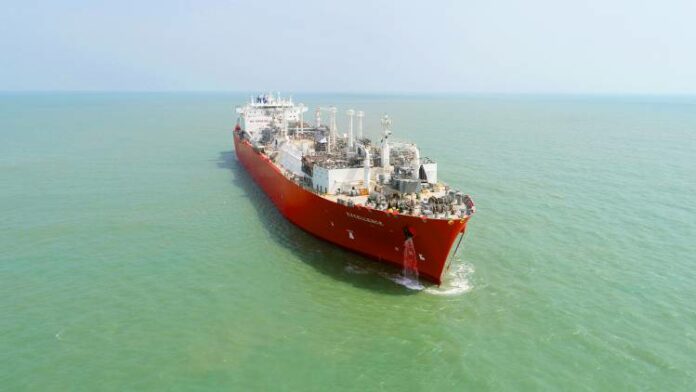
Excelerate Energy’s Northeast Gateway Deepwater Terminal, located offshore Boston, reached a peak send-out flow rate of over 800,000 MMBTU per day of natural gas on February 1, 2019, a first for the terminal. 

The operation was completed by two of Excelerate’s floating storage regasification units (FSRUs), Exemplar and Express discharging in parallel through Excelerate’s proprietary offshore buoys.

The terminal is designed to respond to local market conditions in real-time and can ramp up service to ensure energy providers meet customer demand. During the coldest days of the year, demand for natural gas from residential customers rises in New England. Historically, during these times, as natural gas deliveries become constrained, and power generators have been forced to burn dirtier fuels such as oil. 

This year, LNG imports from Excelerate’s Northeast Gateway facility have allowed the generators to continue burning natural gas. At a flow rate of 800,000 MMBTU per day, this represents approximately the average gas demand of power generators during recent January – February periods.

Located 13 miles offshore Boston, Excelerate commissioned Northeast Gateway in 2008. The terminal consists of a dual submerged turret-loading buoy system which allows for the connection of FSRUs that have been specifically designed to meet the challenging conditions of the North Atlantic. FSRUs act, in all aspects, similar to a land-based terminal and have the onboard capability to vaporize LNG and deliver natural gas directly into the existing 16-mile subsea HubLine pipeline operated by Enbridge’s Algonquin Gas Transmission.

The terminal started up in 2008 and was the first LNG terminal to integrate marine mammal detection technology with its LNG fleet operations. Operating at Northeast Gateway means operating among a declining right whale population, and Excelerate partnered with Cornell University and the Woods Hole Oceanographic Institution to develop a system that detects their presence. Aided by this tool, ships voluntarily reduce speeds around sensitive areas.

Source:maritime-executive

ICTSI inaugurates the expansion of its Batumi International Container Terminal

0

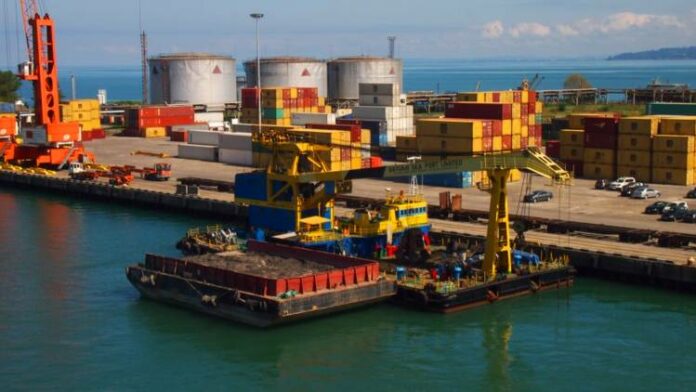
International Container Terminal Services Inc. (ICTSI) formally inaugurated the expansion of its Batumi International Container Terminal (BICT) in Georgia, the company said in its release.

The expansion encompasses both the waterside and landside areas of the multipurpose terminal, intended to optimize the processing of existing cargo flows and install additional capacity to accommodate new business.

Marking the importance of the occasion, the inauguration was attended by Giorgi Kobulia, Georgian Minister of Economy and Sustainable Development; Tornike Rizhvadze, Chairman of the Government of the Autonomous Republic of Ajara; senior executives from Mediterranean Shipping Company (MSC)–the terminal’s principal container customer–and Hans-Ole Madsen, ICTSI Senior Vice President and Europe, Middle East and Africa Head.

Commenting at the time of the inauguration, Mr. Madsen said: “This new investment consolidates and expands BICT’s competitive position. A comprehensive dredging program, undertaken in cooperation with Batumi Sea Port, provides an 11.5-meter draught in the port’s fairway and alongside BICT’s quay line allowing easy access for feedermax vessels at the port and making it Georgia’s deepest draught port."

“On the landside,” he continued, “we have met the stated requirement of importers and established a new container freight station (CFS) complete with a 180-meter rail spur to facilitate cross-stuffing from containers to rail cars. Complementing this, we have also expanded container and truck storage areas, and following the completion of a new highway to Batumi, introduced a new, dedicated two-lane gate complex for BICT.”

Batumi, unlike Potti–Georgia’s other major port–offers all-year round access without closures due to high winds.

The overall development program for BICT raises annual container handling capacity to 200,000 TEUs and boosts its general cargo and dry bulk handling capacities. It further concurs with the Georgian Government’s stated objective of growing Georgia’s role as a transport-logistic hub serving the Caucasus and Central Asia.

Cosco ordering 16 newcastlemaxes for bauxite shipping project with Chalco

0

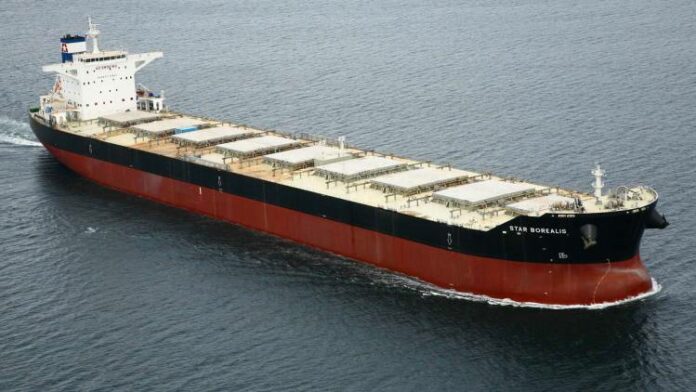
Chinese state-run shipping giant Cosco is ordering up to 30 newcastlemax bulk carriers at domestic yards to support its long-term shipping project with Aluminum Corporation of China (Chalco), marking the largest ever bulker order placed by the company.

Cosco secured a long-term shipping contract with Chalco last October for the transportation of bauxite from Guinea to China.

According to sources close to the matter, Cosco Shipping Bulk has chosen several domestic yards including subsidiary yards of Cosco Shipping Heavy Industry and CSIC-affiliate yards for the first batch of sixteen 210,000 dwt vessels. The total orderbook for the project could be expanded to 25-30 vessels.

The price for a newbuild 210,000 dwt bulker is currently around $54m.

When contacted by Splash, an official at Cosco confirmed that the company is in negotiations with a number of domestic yards to finalise a series of new orders, however the contracts have not been officially signed yet. The official declined to reveal more details on the orders.

VesselsValue data shows Cosco Shipping Bulk currently operates a fleet of nearly 268 vessels with total capacity of 31.7m dwt, and also has another 12 newbuildings on order at Waigaoqiao Shipbuilding and Tianjin Xingang Shipbuilding.

Aluminum Corp of China (Chalco) entered into an agreement with the government of Guinea in June last year to develop the Boffa bauxite project in the west of the country. The company has been granted mining licenses for 15 years, renewable by 15 years on expiry.

Chalco is expected to gain annual bauxite output of 12m tonnes from the project, which will go to its alumina refineries in Shandong and Guangxi.

Source:splash247

OLT Offshore LNG Toscana reports regasification terminal near capacity

0

Italy’s OLT Offshore LNG Toscana reports the floating regasification terminal it operates off the coast of Livorno is working at close to capacity, less than a year after implementing a new allocation system.

From October 2018, six countries have taken 38 of 41 slots available in 2018/2019 for 5.85M m3 of capacity allocated, equivalent to 92% of the annual regasification capacity of the terminal.

In a statement, OLT Offshore LNG Toscana said it was satisfied with the results and would try to maintain that standard going forward.

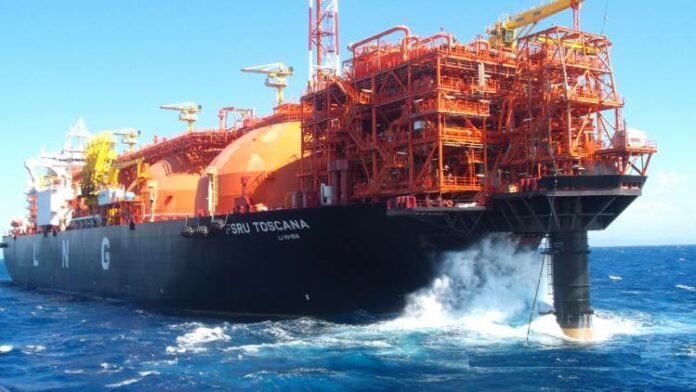
Regasification is handled by FSRU Toscana, which is permanently moored 22 km off the coast of Italy. Managed by Exmar, FSRU Toscana can handle different types of gas, ensuring geographic coverage from Europe to America, up to Africa to the Middle East. It can accommodate 90% of LNG carriers in operation, including Neo Panamax-class vessels, with cargo capacities up to 180,000 m3.

Furthermore, OLT Offshore LNG Toscana reports that from the start of commercial operations, the import terminal has received LNG from 10 countries – Algeria, Cameroon, Egypt, Equatorial Guinea, Nigeria, Norway, Peru, Qatar, Trinidad & Tobago, and the US – as well as cargo from Dutch and Spanish terminals.

OLT Offshore LNG Toscana plans to implement a small-scale LNG service to supply commercial marine and land-based transport with more sustainable fuel.

Source:lngworldshipping

Hornsea 1 achieves first power

0

The first turbine installed at the 1.2GW Hornsea 1 offshore wind farm off the UK’s eastern seaboard has started delivering power to the grid.

First power was recorded by an engineer at the wind farm’s developer, Orsted, and posted on social media this morning.

When it is fully commissioned at the end of this year, Hornsea 1 will be the largest wind farm in the world.

Earlier this week Fred Olsen jack-up Bold Tern installed the first of the 174 Siemens Gamesa 7MW turbines at the project, off the Yorkshire coast.

Components are being assembled at Siemens Gamesa's Green Port facility in Hull.

Fred Olsen Windcarrier will install half of the project's turbines between now and the end of this year.

The vessel will soon be joined by GeoSea jack-up A2Sea Sea Challenger, to undertake installations for the project.

Nearly all monopiles and transition pieces have been installed by GeoSea at Hornsea 1.

Source:renews

BIMCO tempers GDP growth projections ahead of IMO’s next greenhouse gas study

0

A global shipowning body has called for regulator International Maritime Organization (IMO) to dismiss high global gross domestic product (GDP) growth projections when addressing its next greenhouse gas (GHG) study, due to get underway next month.

In a release yesterday, BIMCO proposed that the fourth IMO GHG study does not include “unrealistically” high GDP growth forecasts to predict future transport demand – and thereby emissions – of the shipping industry. The proposal has been made to the expert workshop preparing for the study, which is meeting in London for three days from March 12. The global shipping body has also suggested that the IMO expert workshop take the decoupling of GDP growth and transport work into consideration.

“It is imperative that the industry – and the world – base discussions and actions to reduce emissions from shipping on credible and realistic projections. If not, we risk making the wrong decisions and spending resources ineffectively,” said Lars Robert Pedersen, BIMCO deputy secretary general.

BIMCO argues that the fourth IMO GHG study should avoid scenarios 1 and 5 of the International Panel on Climate Change (IPCC) Shared Socio-economic Pathways (SSP), as these scenarios project considerably higher short- to mid-term economic growth than current economic trends and Organisation for Economic Cooperation and Development (OECD) projections.

“The previous study’s most pessimistic projection of a 250% increase in CO2 emissions from shipping has since proven to be totally unrealistic, given the actual and projected economic development of the world. Unfortunately, the 250% projection has frequently been used as a stick against the shipping industry and to shape regional policy. BIMCO wants to avoid that happening again,” Pedersen said.

BIMCO has collaborated with CE Delft, the consultancy that modelled and calculated the third IMO GHG study’s projections in 2014 for future GHG emissions from ships. The revised calculation includes the most recent OECD GDP projections.

The report highlights, that when using a lower GDP growth scenario, the shipping industry is projected to achieve an absolute reduction of 20% versus the target of an absolute emission reduction of 50% by 2050 compared to 2008.

“We will need new solutions, in addition to traditional efficiency measures, to reach the 2050 target. But to pick the right solutions, we need realistic projections,” Pedersen said.

Source:splash247