1.1 C
New York
Home Blog Page 112

Russia withdraws all submarines from the Mediterranean Sea

0

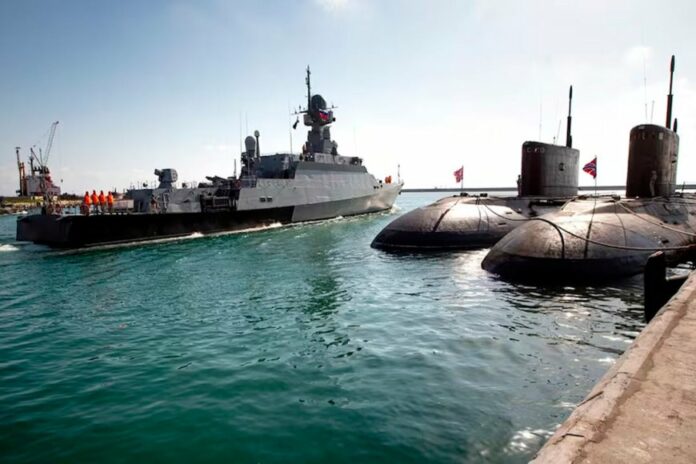
After the fall of Syrian dictator Bashar al-Assad and the loss of Russian control over Syria’s government, a significant number of Russian ships left the port of Tartus within a short time.

Naval News reported on this.

The last Russian submarine left the Mediterranean on January 2. According to objective control, there are no more Russian surface or submarine vessels in the port of Tartus.

According to the media, the last ship to leave the Mediterranean was the Novorossiysk submarine (B-61). Its departure was made under the cover of night through the Strait of Gibraltar, and the Portuguese Navy confirmed the movement.

Whether the submarine and ships’ departure from the region is final or just part of a planned rotation remains to be seen.

It is worth noting that the port of Tartus was the only Russian naval base in the Mediterranean. Further use of the port depends on the relationship between Russia and the new Syrian government.

In the event of negative developments, Russia may lose this base forever.

Militarnyi previously reported that the Russian contingent in Syria was withdrawing its troops away from the front line but was not going to leave its military bases yet.

Despite this, the Russian contingent deployed in northern Syria and the Alawite Mountains has left its positions.

Similar activity has also been observed at the Khmeimim air base, which is important for the Russian Aerospace Forces’ logistics and support of troops in Syria.

The new satellite imagery shows the activity of two An-124 transport aircraft with an open nose for loading cargo. Additionally, anonymous sources told Reuters that some military equipment and high-ranking officers in Assad’s army were being shipped back to Russia.

Source: Militarnyi 

Bunkering service introduced with new barge fleet at strategic Canadian port

0

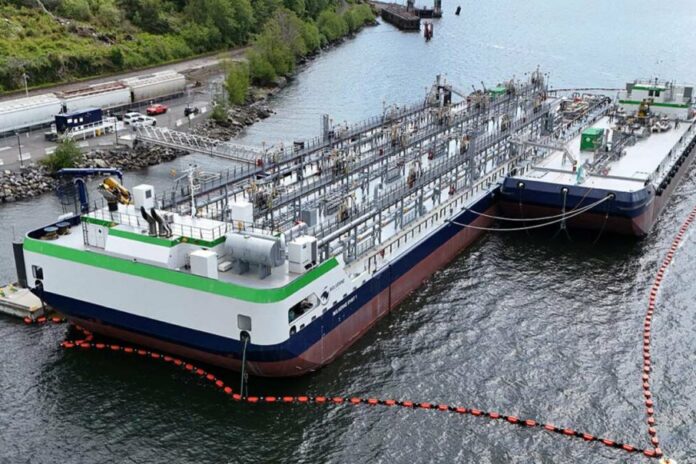
Using a unique pair of barges designed by Robert Allan Ltd., Wolverine Terminals can deliver a wide range of fuels to suit the needs of vessels calling at the port, including marine diesel, heavy, intermediate, and other blends to individual customer specifications. By introducing this new service, deep-sea ships may now bunker at this key and growing gateway to North America, which features favourably short trading routes to Asia and access to a supply of domestically produced fuels delivered by rail.

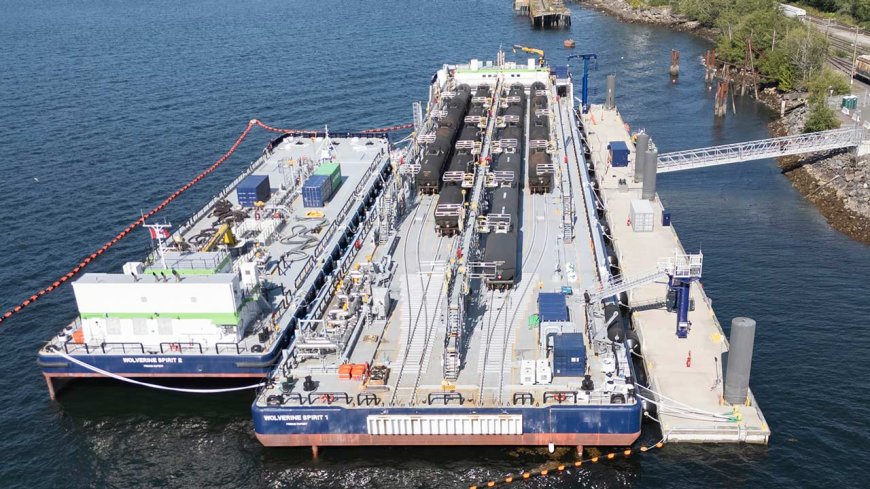
The Wolverine Terminals fleet is composed of a transloading barge and a fuel delivery (lightering) barge.

Wolverine Spirit 1, the 142-metre long transloading barge, has been custom-designed to accept up to twenty-four rail tank-cars on deck. These are loaded using a marine rail ramp in Prince Rupert with maximum efficiency using four rail lanes with a pair of onboard turnouts (switches) – a novel arrangement on a rail barge. Combined with a high-performance ballasting system and Wolverine’s dedicated locomotive, this barge can onboard a full set of railcars during a single tide. Once loaded and secured, the Transloading Barge is moved using tugs from the loading ramp to the Wolverine Terminals project site, where once moored, the railcars can be drained into the barge’s hull tanks, which have a combined capacity of nearly 80,000 barrels of oil products.

Wolverine Spirit 2, the 78-metre long lightering barge, receives fuels from the Transloading Barge, and is towed to client vessels in harbour where it delivers fuel to their individual requirements. With a capacity of approximately 30,000 barrels of products, this barge can efficiently deliver fuels to ocean-going vessels at up to 450 m3/hr.

Both barges have been designed to maximize the safety of operations. In addition to featuring double-hulls, there are extensive containment and response systems aboard both barges, as well as fire-fighting systems and equipment. Access to the railcar tops is via a fixed gantry system with Safe Harbor access platforms/gangways, while access between the barges is via a swinging Verhoef gangway with articulated stairs that adjust to ensure safe passage for all combinations of drafts and freeboards between the two barges. Cranes on both barges facilitate the transfer of equipment from shore and handling of hoses.

Both barges are fully compliant with Transport Canada regulations and are classed for their service with Lloyds Register. Attention has been paid to keep all potential sources of emissions low, with IMO Tier III compliant exhausts equipped with after-treatment, silencing for all diesel-fired machinery, vapour recovery for the cargo systems, and low-intensity lighting.

Specifically tailored to meet Wolverine Terminals’ needs, these barges deliver best-in-class bunkering and logistics whilst minimizing environmental impact and contributing to the economic growth of the port and region. They are fine examples of Robert Allan Ltd.’s ability to design highly customized vessels of virtually any type and complexity to customers’ unique project requirements.

Sanmar delivers new Ice Class 1A tug to work in northern Baltic

0

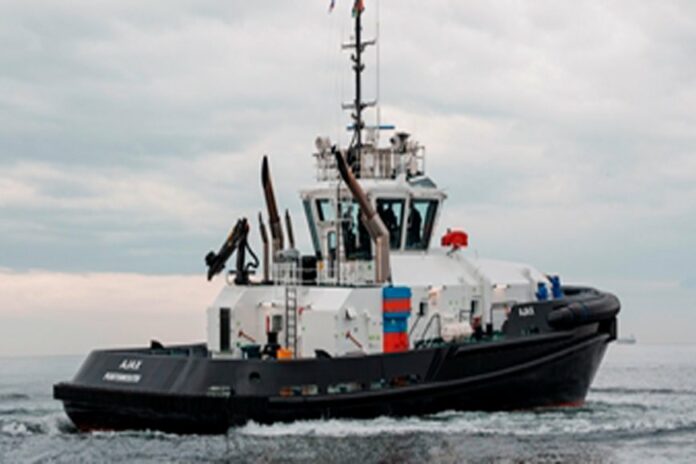
Measuring 25.8m LOA with a moulded beam of 11.8m, least moulded depth of 5.2m and navigational draft of 5.05m, AJAX can perform multiple tasks including escort, ship assist, icebreaking and ice management and open sea towing.

The ASD tug’s two CAT 3512E main engines produce an over stern bollard pull of 60 tons and free running speed of 12 knots. With the CAT “E” main engines and CAT “SCR” system AJAX is an environmental friendly tug having ABS NOx notation and IMO Tier III emission standard.

Deck equipment includes a heavy-duty winch on the fore deck for ship-assist duties and foldable knuckle boom marine crane. Tank capacities include 75.2m3 of fuel oil.

Like all TundRA Series tugs, AJAX combines good seakeeping and relatively high free-running speed in open water with substantial escort performance, and at the same time has an effective icebreaking capability.

Formed in Finland in 1945, Alfons Håkans expanded in 2004 to also provide additional services in Estonia, and now also operates in Latvia via PKL Flote, a Latvian tugboat company part of Alfons Håkans group.

Operating all year round in often harsh conditions, the group provides towage, salvage, icebreaking, heavy transport services, along with shipyard services at the Suomenlinna Shipyard in Helsinki, Finland.

Alfons Håkans is a long-term Sanmar customer sharing a commercial relationship dating back to the early 2000s when it took delivery of two then state-of-the-art 1AS Ice Class new-builds, HELIOS and SELENE, to strengthen its fleet. These were the first icebreaking escort tugs made for a private entity to arrive in Finland.

Rüçhan Civgin, Commercial Director of Sanmar Shipyards, said: “We have worked closely with Alfons Håkans throughout this project to ensure that AJAX meets – and often exceeds – their brief. They are the experts when it comes to knowing what is needed to work all year round in the northern Baltic. That we have precisely matched their requirements is a great achievement by all those involved from the drawing board to final sea trials.”

Crowley acquires Main Line, expanding harbor services with mooring capabilities

0

The addition of Main Line will provide Crowley’s customers calling on the ports of Seattle and Tacoma, Washington with a comprehensive solution for their vessel mooring and ship assist needs. 

Main Line is a longtime provider of vessel mooring services in the Pacific Northwest for ship operators who value safe and dependable mooring service. Main Line staff members are transitioning to Crowley as part of the asset purchase agreement. Terms were not disclosed.

“For decades, our customers have put their trust in Crowley to ensure their vessels arrive and depart ports safety and reliably,” said James C. Fowler, senior vice president and general manager, Crowley Shipping. “The addition of vessel mooring to our harbor services product offering ensures the highest levels of coordination between the critical services of vessel mooring and ship assist. As a result, Crowley customers can have even more confidence their vessels will be docked and sailed without delay or incident.” 

A leading provider for more than a century, Crowley has deployed the industry’s most technologically advanced and environmentally friendly tugboats, combining capability and cleaner emissions to support timely harbor operations.  

The highest natural gas production ever from a Norwegian field

0

The Troll field in the North Sea has set a historic production record, delivering 42.5 billion standard cubic metres of natural gas in 2024.

This is the highest annual production ever for the field, and is an increase of almost ten percent from the previous record from 2022 (38.8 billion standard cubic metres).

“With record-high production in 2024, the Troll field confirms its position as a pillar of Europe’s energy security. The field contributes to a stable gas supply for millions of households and is important for European industry. This milestone is the result of decades of targeted work to recover the Troll oil and gas resources in an efficient and sustainable manner. It is rewarding to be able to deliver such significant volumes of gas when Europe needs it most,” says Kjetil Hove, Equinor’s executive vice president for Exploration & Production Norway.

Troll A and the processing plant at Kollsnes have been electrified since the start-up in 1996. Gas on the Norwegian continental shelf (NCS) is locally sourced and has the industry’s lowest emissions from production and transport.

This year’s record is the result of high regularity, a year without turnarounds, as well as upgrades that have increased efficiency. Riser replacement on Troll B has also played an important role in maximising production.

Since coming on stream in 1996, the Troll A platform has been the main contributor to natural gas production on the NCS. In 2021, production was expanded to also include the gas cap in the western part of the reservoir, facilitated by a major subsea development.

This expansion has been instrumental in increasing production, even 28 years after the start-up. The Troll B and C platforms also contribute significant quantities of gas that are transported via Troll A to Kollsnes.

During 2024, both the Troll B and C platforms were partially electrified. This enabled significant CO2 emission cuts for 2024. A preliminary estimate indicates that emissions have been reduced by approximately 90,000 tonnes in 2024, or approximately 15 percent in 2024.

The gas processing plant at Kollsnes has undergone significant upgrades in recent years. Working closely with the operator Gassco, capacity has been increased from 144.5 million to 156 million standard cubic metres per day. This has been an important contribution to the production record.

“The efforts to recover more Troll gas and increased export capacity clearly help ensure that our customers in Europe get the energy security and long-term perspective they need,” says Helge Haugane, Equinor’s senior vice president for gas and power trading.

Chinese ship damages telecommunications cable off Taiwan

0

An undersea cable off the coast of Taiwan has allegedly been damaged by a Chinese ship in its latest sabotage incident.

A telecommunications cable was reportedly left damaged near Yehliu, New Taipei City on Friday, just days after Russian vessels were accused of deliberately cutting wires in the Baltic Sea. 

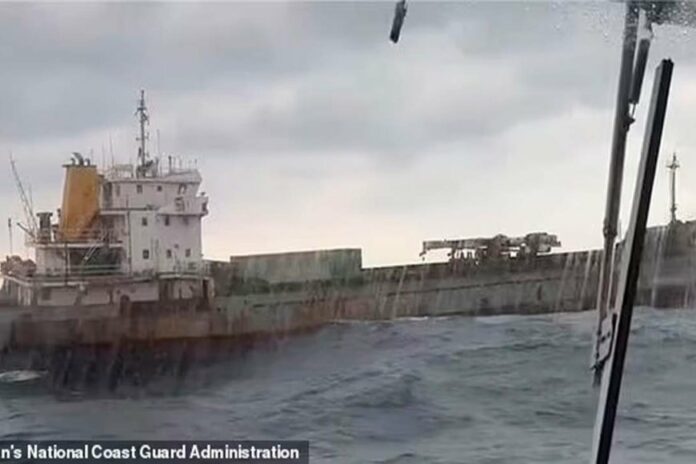
The Coast Guard Administration (CGA) and Chunghwa Telecom yesterday confirmed that the international undersea cable near Keelung Harbor had been cut by a Chinese ship, the Shunxin-39, a freighter registered in Cameroon. 

Chunghwa Telecom said the cable had its own backup equipment, and the incident would not affect telecommunications within Taiwan, as per the Taipei Times.

The CGA said it dispatched a ship under its first fleet after receiving word of the incident and located the Shunxin-39 13km north of Yehliu at around 4:40pm on Friday.

The CGA demanded that the Shunxin-39 return to seas closer to Keelung Harbor for examination where Taiwan’s Coast Guard carried out investigations.

There, they found that four cores of the international cable had been scrambled.

Tracking data from the ship’s automatic identification system signal and satellite data showed the Shunxin-39 pulled its anchor near to where the cable was destroyed, according to the Financial Times.

Officers reportedly traced down the cargo ship and demanded its return to the Port of Keelung.

The Coast Guard investigated the outside of the vessel and had a short conversation with the ship’s captain, but officials could not board the vehicle due to poor weather conditions, as per local reports.    

They were forced to allow the vessel to journey on to South Korea as they could not hold it any longer under international laws, officials said.

But despite the ship displaying a Cameroon flag, Taiwan officials are convinced it is owned by China.

The Shunxin-39 is believed to have been purchased by Jie Yang Trading Limited, which is registered in Hong Kong.

The company’s only listed director is a mainland Chinese man named Guo Wenjie, officials added.  

Kuma Academy chief executive officer Ho Cheng-hui said yesterday that while the incident was pending investigation, China has a long history of sabotaging Taiwanese infrastructure using various maritime tactics.

Ho said that the incident was a Chinese ploy to gauge the point at which the international community would draw a red line in an attempt to escalate its ‘gray zone’ tactics.

Sources: Daily Mail, Financial Times

Boskalis announces new 45,500 MT subsea rock installation vessel

0

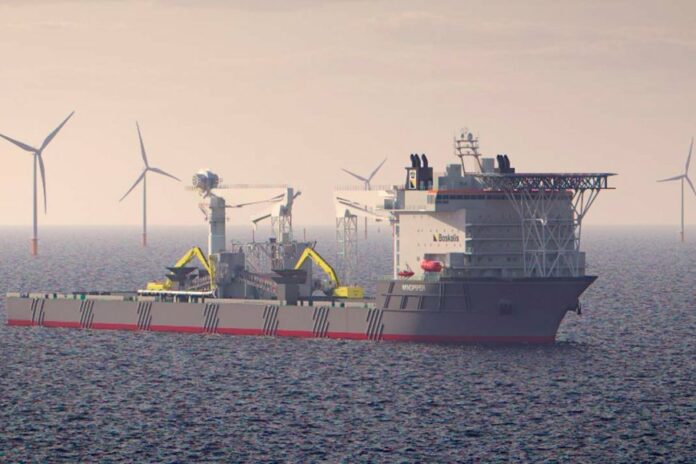
This state-of-the-art vessel will stand as the largest SRI vessel in the industry, significantly bolstering Boskalis’ position in this specialized niche market, which currently includes three existing SRI vessels. 

With the introduction of the ‘Windpiper,’ Boskalis will effectively double its capacity and thereby becomes the largest player in the industry. Scheduled for delivery in the first quarter of 2026, the ‘Windpiper’ is set to play an important role in facilitating the energy transition working on offshore wind projects. Her first projects are expected to be located in Northwest Europe. 

The innovative ‘Windpiper’ is being developed by converting an existing new vessel under the expert supervision of Boskalis. With impressive dimensions of 227 meters in length and 40 meters in breadth, the powerful vessel boasts a total installed power exceeding 31,000 kW. In addition to its moonpool for the fall pipe installation, the vessel will feature an inclined fall pipe, crucial for the protection of offshore structures such as the foundations of offshore wind turbines. Equipped with seven thrusters and DP2 certification, the ‘Windpiper’ is specifically designed for optimal performance in challenging offshore conditions.

The vessel’s substantial capacity, divided over two holds, makes it well-suited for projects with a long transit distance between the rock loading facilities and the project site, such as those along the North American East Coast, the Baltic Sea and the Southern North Sea. This large capacity minimizes the number of round trips required, ultimately leading to less emissions and lower costs per installed volume of rock. Additionally, with over hundred single-occupancy cabins, the vessel can comfortably accommodate client representatives alongside the onboard crew.

Securing financial close for Empire Wind 1

0

Empire Wind 1 will power 500,000 New York homes and is expected to reach its commercial operation date in 2027.

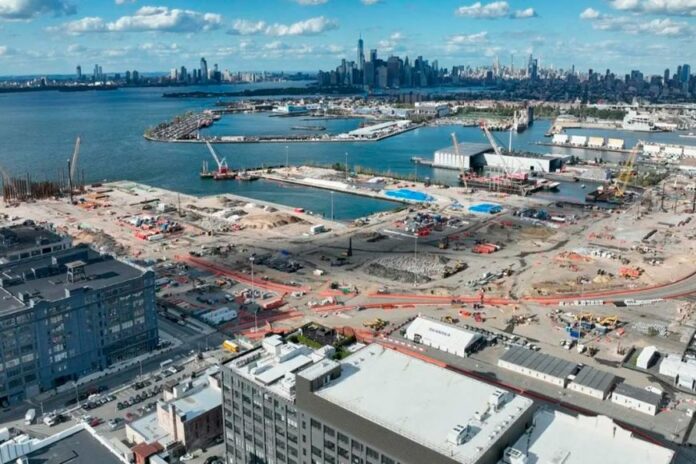
The expected total capital investments, including fees for the use of the South Brooklyn Marine Terminal (SBMT), are approximately USD 5 billion including the effect of expected future tax credits (ITCs).

Equinor acquired the Empire Wind lease area in 2017. In June 2024, Equinor announced the execution of the Purchase and Sale Agreement (PSA) with the New York State Energy Research and Development Authority for Empire Wind 1 power for 25 years at a strike price of USD $155.00/MWh. The investment level and support framework are in line with the developing US offshore wind industry.

Equinor intends to farm down in the Empire Wind 1 project to a new partner to further enhance value and reduce exposure.

“This is an important milestone for Equinor, in line with our plan to enhance value and reduce exposure in the Empire Wind 1 project. As we now enter full execution mode, we continue our efforts to increase robustness and value-creation in the project,” said Jens Økland, acting executive vice president for Renewables in Equinor.

“Today’s financial close maintains our momentum toward bringing a significant source of power to the grid. Empire Wind 1 will strengthen US energy security, build economic growth and fuel a new American supply chain,” said Molly Morris, senior vice president for Renewables in Americas. “Our redevelopment of the South Brooklyn Marine Terminal is already putting more than 1,000 people to work. Equinor is proud to play a part in advancing domestic energy solutions safely, efficiently, and for the long term.”

Equinor made a final investment decision on the wholly owned and operated Empire Wind 1 project earlier this year. Construction has already begun. Empire Wind 1 is located 15-30 miles southeast of Long Island and spans 80,000 acres. With a contracted capacity of 810 MW, Empire Wind 1 will be the first offshore wind project to connect into the New York City grid. The redevelopment of the South Brooklyn Marine Terminal and construction of Empire Wind 1 will create more than 1,000 union jobs in the construction phase.

The debt financing of the project has reached financial close. Due to strong interest from lenders, the Empire Wind 1 project was able to secure competitive terms. The final group of lenders includes some of the most experienced lenders in the sector along with many of Equinor’s relationship banks.

Port of Amsterdam to ban open-loop scrubbers from 1 January

0

Open-loop scrubbers discharge polluted washing water into our port waters. By this ban, we contribute to a cleaner marine environment.

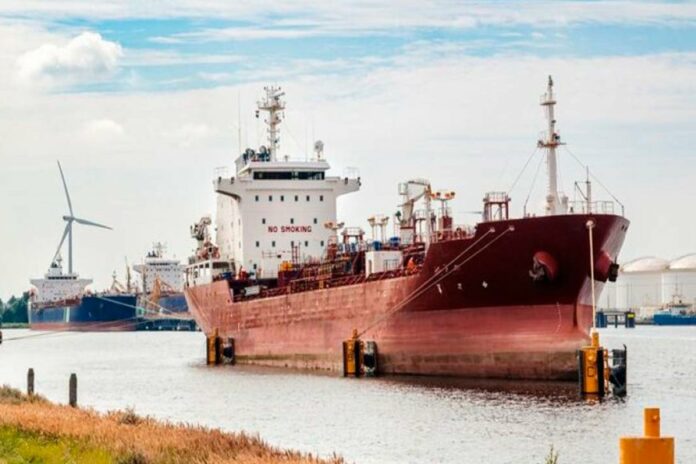
A scrubber, also known as an “exhaust gas cleaning system”, is a system in the funnel of ships that ‘washes’ exhaust gases to ensure that less sulphur is emitted into the air. After washing the exhaust gases, polluted wash water remains. Scrubbers come in different versions: closed-loop and open-loop. With closed-loop, the waste materials are collected in a waste tank. With open-loop, the polluted wash water is discharged directly into the water. This contributes to the pollution of the water and causes water and soil pollution. In addition, because of these scrubbers, ships continue to use fuel oil.

In order to combat water and soil pollution in the Port of Amsterdam, a restriction on the use of open-loop scrubbers will apply from 1 January 2025. The ban applies on ships that are berthed. There, the discharge of the washing water is most locally concentrated. In the case of a hybrid scrubber system, seagoing vessels must switch to closed-loop, or switch to another cleaner fuel that meets the sulphur environmental standards, such as Marine Gas Oil.

In 2023, approximately 100 seagoing vessels with an open-loop scrubber called at the Port of Amsterdam. In addition to Amsterdam, the ban already is in place in the ports of Antwerp, Hamburg, French and several Scandinavian ports. Milembe Mateyo, Harbor Master at Port of Amsterdam:

“With this decision, we are combating the pollution of the marine environment. It is another step closer to a cleaner port and an acceleration in the sustainability of shipping.”

Declining Antarctic sea ice generating more ocean heat loss and storms

0

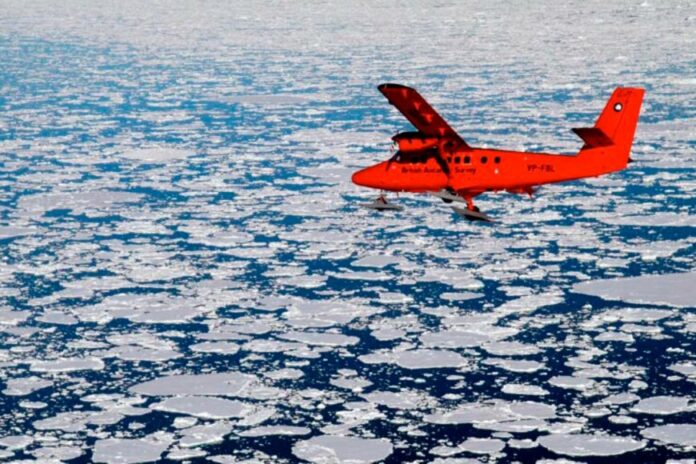
The research, led by the UK’s National Oceanography Centre (NOC), focuses on the record-low sea ice cover in Antarctica during the winter of 2023. The study, published in Nature, offers a clearer understanding of the impacts of this dramatic loss.

Using data from the atmospheric layer just above the ocean surface, the study found that the amount of heat lost from the ocean to the atmosphere doubled. This heat loss is also linked to a rise in storms across the high-latitude Southern Ocean, with some areas seeing up to seven extra storm days per month.

The study also warns that these changes could affect deep ocean currents. The heat loss is causing surface waters to become denser than before, which could have long-term effects on the ocean’s circulation.

Co-author Dr Andrew Meijers, from the British Antarctic Survey, explains:

“The location of this new denser surface water is relatively far from the sites at the Antarctic shelf where the densest and deepest waters of the global ocean are formed.

“However, this cooling and subsequent sinking of waters previously covered by sea ice has the potential to release deeper warm waters that would normally be kept away from ice by an insulating surface layer. In turn this has the potential for increasing sea ice melt in future years”.

“Further analysis is urgently needed to understand these processes and their complex feedbacks, and determine how the massive decline of winter sea ice in 2023, and again this year, will impact the Southern Ocean circulation.  This is key to understanding the climatically critical ocean uptake of atmospheric heat and carbon, and the rate of melt of the Antarctic continent.”

The study suggests that these extreme conditions could continue. With 2024 showing signs of continued low sea ice levels, the researchers warn that this could lead to more storms and further changes in ocean properties, which could disrupt global circulation patterns.

Professor Simon Josey, lead author of the study from NOC, said:

“It is too early to state whether 2023 and it’s record-breaking sea-ice decline marks the onset of a fundamental shift in the amount of Antarctic sea ice. However, our study does reveal the extreme conditions to be expected in future years of low ice regrowth, with 2024 looking like it is continuing the sharp change seen in 2023.”

Josey says it is crucial to use advanced ocean and climate models to understand the long-term effects of these changes. “Our research highlights the need to keep studying the link between Antarctic sea ice loss, ocean heat loss, and changing weather patterns,” he says. “These changes could affect weather and climate far beyond Antarctica.”

The study also notes that sea ice around Antarctica dropped to its lowest levels in 2023, with some regions losing up to 80% of ice compared to the 1991-2020 winter average. With the Southern Ocean exposed, more heat is lost to the atmosphere, cooling surface waters and increasing their density. This could disrupt the global ocean circulation and change how the ocean absorbs heat and carbon. The study warns that repeated low ice years could make these changes worse, potentially speeding up Antarctic ice sheet melt.

Previous analysis of the long-term impacts of declining Antarctic sea ice by co-author Dr Holly Ayres, formerly at the University of Reading and now at NOC, shows that enhanced ocean heat loss can also affect the climate as far away as the Tropics and the Northern Hemisphere.

The researchers stress the need for more studies to understand the full impact of these changes on the Southern Ocean and global climate. “It’s critical to understand how the increased heat loss and more frequent storms are linked to broader shifts in weather patterns,” adds Professor Josey.