-1.3 C
New York
Home Blog Page 111

Aker QRILL Company announces next vessel

0

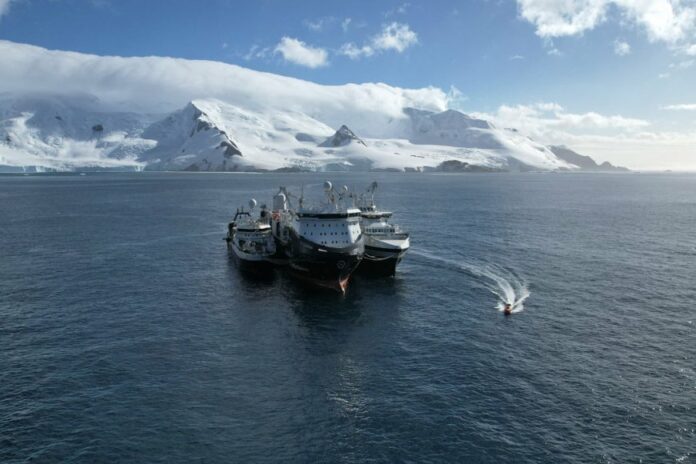
This agreement involves the purchase and significant rebuild of a project that was cancelled 18 months ago, and secures continued sustainable supplies of feed and raw materials from Antarctic krill, recognized as the world’s largest single-species biomass.

For Aker QRILL Company, the new vessel is a vital step forward in its mission to provide sustainable, premium nutrition and to further strengthen its position in the krill industry. For Tersan Shipyard, the agreement finds a buyer for a vessel that was essentially completed in 2023.

“This partnership represents an ideal solution for both parties,” says Webjørn Barstad, CEO of Aker QRILL Company. “Adding a fourth vessel to our fleet is crucial for our success as we enter the next phase of growth and development. Equipped with the latest and most advanced technologies, this vessel will bolster our ambition to maintain our leadership position in the krill industry and ensure access to renewable and sustainable marine raw materials—vital to meet the growing global demand for sustainable marine feed ingredients with excellent nutritional qualities.”

The vessel will undergo significant rebuilding and customization to meet the specialized requirements of Aker QRILL Company, creating several important contracts for Norwegian maritime suppliers and further strengthening the company’s ties to local expertise and innovation. Connected to the project Aker QRILL Company also works with significant advances in the use of alternative fuels.

Vice President Ahmet Paksu of Tersan Shipyard expresses his satisfaction with the agreement: “We are glad to finally find a solution to a challenge we have been working hard to solve. This partnership provides valuable opportunities for both parties, and we are grateful for the chance to complete and deliver this vessel. Partnering with Aker QRILL Company, the global leader in sustainable krill fishery, aligns perfectly with our vision of innovation and excellence.”

The vessel will operate under a Norwegian fisheries license in the CCAMLR krill fishery starting in the third quarter of 2026.
Shell starts production at Whale in the US Gulf of Mexico

0

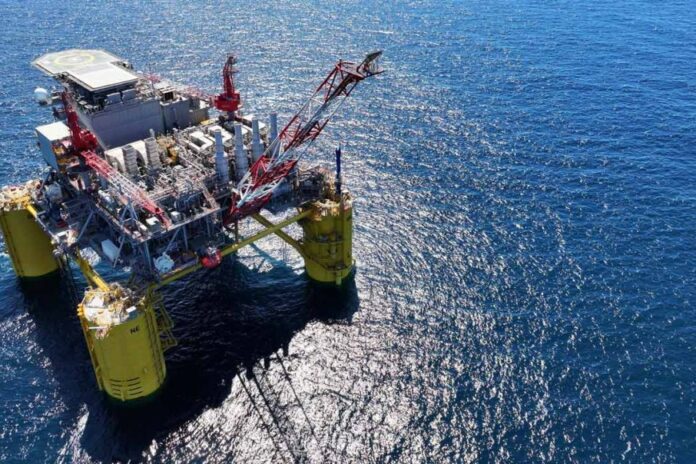
Shell Offshore Inc. (Shell), a subsidiary of Shell plc, announced that production has started at the Shell-operated Whale floating production facility in the Gulf of Mexico.

Whale replicates the simplified, cost-efficient host design of the Vito platform, which began production in early 2023. The Whale development is owned by Shell Offshore Inc. (60%, operator) and Chevron U.S.A. Inc. (40%).

“Whale demonstrates our focus on driving more value with less emissions from our Upstream business as we deliver the energy people need today,” said Zoë Yujnovich, Shell’s Integrated Gas and Upstream Director. “It will make a significant contribution to our commitment to bring projects online, with a total peak production of more than 500,000 barrels of oil equivalent per day from 2023 through 2025.”

With an estimated peak production of 100,000 barrels of oil equivalent per day (boe/d), Whale currently has an estimated recoverable resource volume of 480 million boe. Whale replicates 99% of the hull design and 80% of the topsides from Vito. It also features energy-efficient gas turbines and compression systems, operating with around 30% lower greenhouse gas (GHG) intensity over its life cycle than Vito. 

ABL to assess navigational risk for Finland’s first open-sea offshore wind farm

0

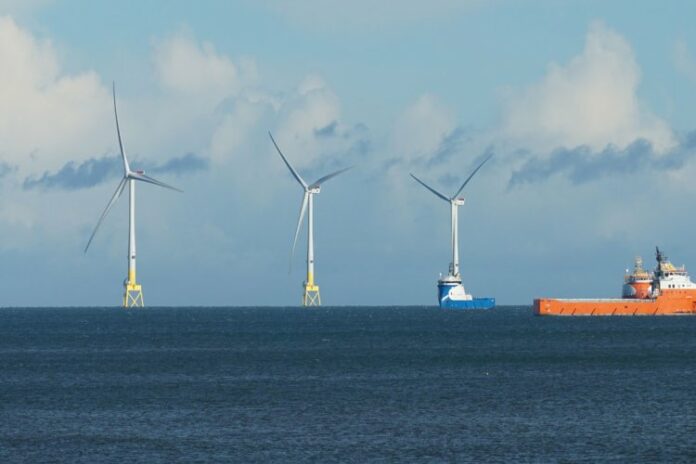
Energy and marine consultancy ABL has been awarded a contract to provide a shipping study to identify and assess navigational risks associated with the Korsnäs offshore wind farm – Finland’s first open-sea offshore wind power project.

The Korsnäs offshore wind farm is located on the west coast of Finland, in the Baltic Sea. The wind farm is a joint project between Vattenfall and Metsähallitus. It has a planned maximum capacity of 2.5 GW and an annual production of 7 TWh – enough capacity to power 350,000 electrically-heated detached houses by renewable energy.  

ABL’s scope of work includes a comprehensive navigational risk assessment, including quantitative risk modelling, stakeholder engagement and recommendations for risk mitigation measures. The findings will also include consideration of the risk effects of sea ice in the vicinity of the development site during the winter season. 

The contract has been awarded to ABL’s operations based in Hamburg, Germany, and will be carried out by the company’s global Ports and Harbours consultancy team, with specialist support from sister company OWC.

Tilo Klappenbach, ABL’s Country Manager to Germany, said:

“We are pleased to provide our expertise in navigational risk analysis to support this pivotal step in Finland’s renewable energy development. This follows many years of successful collaboration by our team on similar work for Germany’s Federal Maritime and Hydrographic Agency – BSH – to assess shipping risks from offshore wind sites across the North Sea. This project win is therefore, a testament to our established technical reputation in this field.”

Brunvoll secures another thruster package contract with Myklebust Shipyard and REM Offshore

0

Brunvoll has secured another contract with Myklebust Shipyard for the delivery of a comprehensive thruster package.

Brunvoll’s thruster package consists of two propulsion azimuth thrusters, two retractable azimuth thrusters, and a tunnel thruster. This configuration is the same as the previous vessel announced in May, except that this vessel with be equipped with a slightly larger tunnel thruster. The thruster package does also feature Brunvoll’s Condition Monitoring system,BruCon CMS, for enhanced operational efficiency and decision support.

The vessel named MS “REM Ocean” is designed by Skipsteknisk share the same platform as the previous vessel, ST-245. Although the previous vessel is an Energy Subsea Construction Vessel (ESCV), will this vessel be equipped for Inspection, Maintenance, and Repair (IMR) within the offshore energy industry.

“We have implemented several measures to enhance the energy efficiency of these vessels,” says Kristian Stavset, Head of Projects at REM Offshore AS. “For propulsion, we selected two retractable azimuth thrusters to improve station-keeping efficiency. Additionally, we installed a larger tunnel thruster specifically for this vessel to reduce noise and vibration, ensuring greater comfort and welfare for the crew onboard.”

“This project would not have been possible without exceptional collaboration between multiple companies. We are immensely proud to have brought together so many suppliers from our local maritime cluster to bring this project to life.”

Skipsteknisk and REM have emphasized low energy consumption and emissions when developing the vessel. This has resulted in a vessel that uses only half of the energy compared to other equivalent vessels of the same tonnage, with the goal of net-zero emissions. This will be achieved through a combination of different measures like; dual-fuel engines running on methanol, battery packs, lifting-equipment with energy recovery and a highly efficient propulsion system from Brunvoll.

The vessel will, after commissioning enter operation on a long-term contract with DeepOcean, providing subsea inspection, maintenance and repair services for Equinor. 

Allseas delivers Southeast Gateway Pipeline ahead of schedule

0

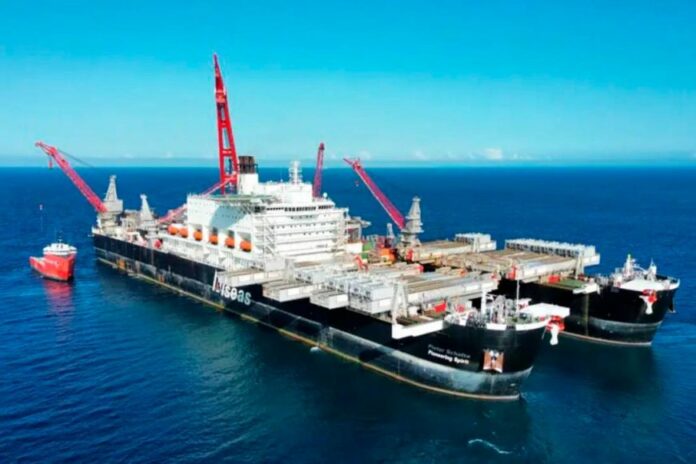
Allseas has completed its offshore pipelay commitments for a 700-kilometer-long natural gas pipeline in Mexico ahead of schedule, for its client TC Energy.

Allseas delivered the pipeline in 11 months, which included the complex nearshore scope and pre-commissioning of the entire system, under a contract secured in 2022.

Solitaire laid most of the pipeline, with Lorealay and Tog Mor providing first-class support. Pioneering Spirit installed the outstanding nearshore section at Coatzacoalcos, without a stinger. Instead, the hanging stinger transition frame served as a mini stinger, a solution tailored to the shallow water depth, Allseas reported.

Furthermore, the company deployed its automated ultrasonic testing system Dolphin for the work, inspecting more than 57,000 welds.

Damen delivers FCS 3307 Patrol to Homeland Integrated Offshore Services in Nigeria

0

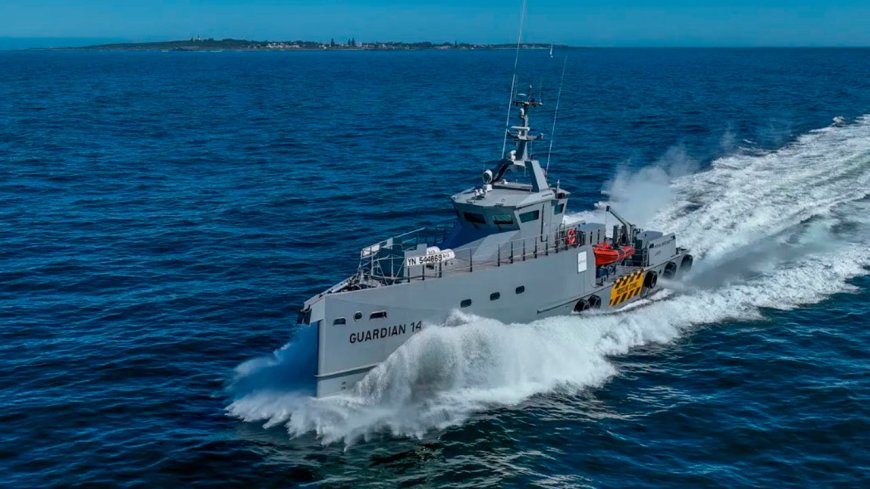
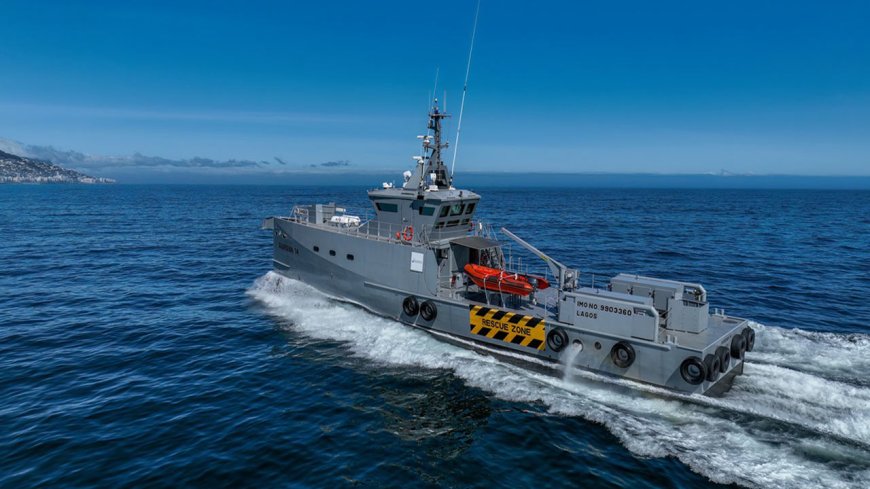
This vessel, on charter with an international energy company, will perform offshore patrol duties to enhance the security of personnel, assets, and the environment in Nigerian maritime territories.

This delivery marks the tenth Damen vessel to join the Homeland fleet, reflecting ongoing fleet expansion efforts. Homeland IOSL reaffirmed its confidence in Damen by signing a contract for this vessel last year. Damen’s approach of building vessels in series and keeping them in stock allows for rapid delivery of proven products to its clients.

The FCS 3307 Patrol is equipped with Damen’s advanced Sea Axe hull technology, which allows it to cut through water at remarkably high speeds, ensuring safety, stability, and comfort for the crew, alongside enhanced maneuverability, and fuel efficiency. The vessel also features a spacious aft deck, facilitating the transfer of cargo to offshore facilities. 

Dr. Louis Ekere, CEO of Homeland IOSL said, “Together with Damen as a strategic partner, Homeland IOSL is dedicated to surpassing client expectations through stringent regulatory compliance and adherence to original equipment manufacturer (OEM) guidelines. We also employ top-tier personnel to support our operations while maintaining the highest QHSE standards.”

“The recently delivered vessel includes custom features such as ballistic protection in the wheelhouse and messroom area. It also features an electronic fuel monitoring system (EFMS), to allow the operators to monitor fuel use in real time, taking steps to address inefficiencies and reduce fuel consumption and emissions. Homeland IOSL’s FCS 3307 Patrol comes equipped with a night vision camera and a daughter craft to enhance its operational capabilities around the clock.

In addition to the vessel, Damen is providing extensive aftersales support including crew training and a comprehensive spare parts package. Homeland IOSL also benefits from access to Damen’s technical facilities, which support both scheduled and unscheduled services to maximise vessel uptime.”

Stena RoRo takes delivery of the battery hybrid vessel Guillaume de Normandie

0

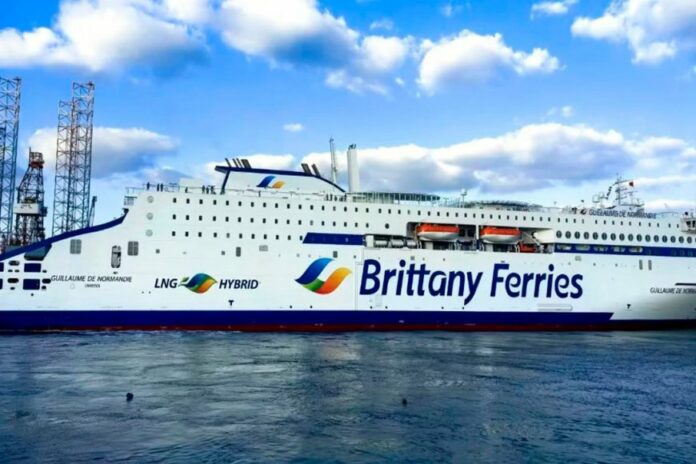
In April 2025, the ship will enter service on the Portsmouth – Caen route, replacing the Normandie, which has sailed the route since 1992. This is the fifth of five ordered E-Flexer vessels for the Brittany Ferries fleet.

Just as with four of the five E-Flexer ships that Stena RoRo has delivered to Brittany Ferries, the vessel will be powered by multi-fuel engines as well as the market’s largest battery-hybrid package of 12 MWh. With these batteries, the ship will be able to operate in and out of port solely on battery power and even maneuver when docking and undocking without using the ship’s diesel engines.

This is a unique technical solution that provides significantly lower CO2 emissions for the ship.

The E-Flexer concept has been continuously developed in line with future environmental requirements, and through its technical design and high degree of innovation, it can fulfill and exceed both existing and future international requirements.

The Guillaume de Normandie is also equipped with a shore connection with an output of 8 MW for high-speed charging of the batteries, which also enables a completely fossil-free stay when in port. With the installed battery capacity, the vessel can operate at speeds of up to 17.5 knots on batteries alone.

The ship’s engines can be powered by marine diesel (MGO), liquefied natural gas (LNG), biodiesel or biogas. In addition, the PTI/PTO system with the Battery Power function can be used for propulsion at sea or maneuvering in port. The system is scalable, which means that in the future, the Guillaume de Normandie can operate entirely on batteries or with a combination of the different fuels.

The ship’s modern interior (designed by Figura Arkitekter AB) has been especially created for the current route and with clear influences from Normandy. The ship is certified for 1300 passengers along with 2410 lane meters of cargo, whereof 176 lane meters for personal cars.

The E-Flexer series is based on a basic concept with vesselslarger than most existing RoPax ferries and features a highly flexible design. Each ship is tailored to customers’ needs, both commercially and technically. An optimized design of the hull, propellers and rudders along with opportunities to incorporate new environmentally friendly technology contribute to the E-Flexer vessels being at the absolute forefront in terms of sustainability and performance as well as cost and energy efficiency.

“It is with great satisfaction and pride that we have now taken delivery of the twelfth E-Flexer vessel in the series,” says Stena RoRo AB Managing Director Per Westling. “Within the framework of the E-Flexer concept, there has been continuous technical development and we can offer our customers flexible and future-proof propulsion systems that by a wide margin meet both today’s and future environmental requirements. The large battery hybrid system we installed on the Guillaume de Normandie means that the ship can operate optimally, in step with regulatory developments, or in accordance with the operator’s own policies.”

The Guillaume de Normandie is chartered to Brittany Ferries for 10 years.

The total of five E-Flexer ships ordered by Brittany Ferries are renewing and modernizing thecompany’s current fleet of cargo and passenger ships. The first ferry, the Galicia, was delivered in the autumn of 2020, the second in November 2021, the third in December 2023. The Saint-Malo was delivered in October 2024, which is the fourth vessel in the series, and the Guillaume de Normandie in December 2024, the fifth and final ship.

Stena RoRo currently has 15 confirmed orders at CMI Jinling, Weihai shipyard for E-Flexer vessels, as well as two orders for New Max RoRo vessels. Twelve vessels have now been delivered.

OSIL buoy charting new waters in Central American Pacific

0

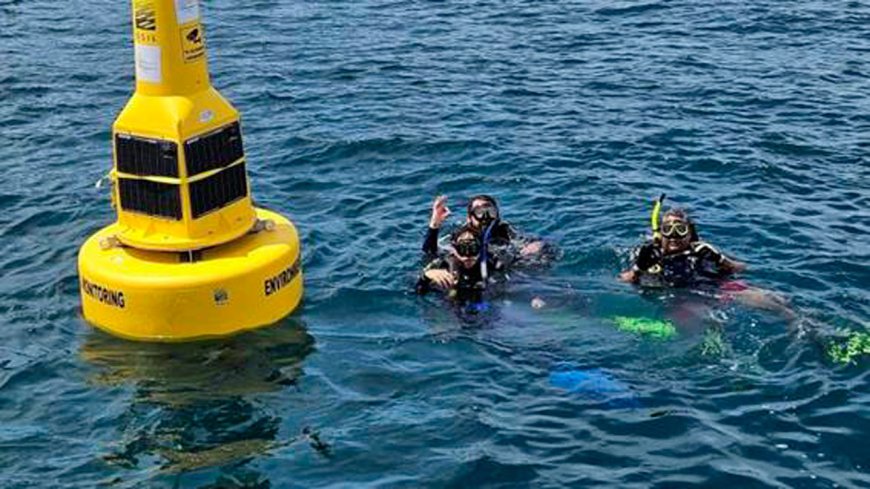
The buoy system will be used as a floating laboratory platform and has been installed in the Parque Nacional Coiba in Panama for the Estación Científica Coiba (COIBA AIP) to assist with the study and conservation of marine diversity and monitoring climate change. 

COIBA AIP is set to host the 21st Latin American Congress of Marine Sciences (COLACMAR) in 2026 so is ideally positioned as a regional leader in the study of marine sciences.

Coiba Island is part of the marine corridor of the tropical eastern Pacific, and regularly sees large congregations of different migratory marine species. The buoy will continuously monitor parameters that are crucial to critical migratory events.

Dr. Edgardo Díaz Ferguson, executive director of Coiba AIP, highlighted the international impact of this initiative “Panama is positioned as a regional leader in the study of marine sciences. This advance strengthens our local capacities and allows decision-making based on scientific evidence, essential to face the challenges of the decade of ocean sciences established by UNESCO (2021-2030).”

The 1.2m system is equipped with two multiparameter sondes (one at the surface and another at a depth of 10m) that measure up to 20 environmental parameters including temperature, salinity, sound velocity, dissolved oxygen, pH and Chlorophyll a, and a current profiler. These data will allow real time analysis of the interactions between the ocean and the atmosphere, identification of spatial and temporal patterns, and monitoring of phenomena associated with climate change and oceanographic processes.

OSIL have worked in conjunction with their partners Casco Antiguo in Panamá to curate the system requirements, and supply, install and support the buoy system and instruments for the duration of the deployment.

Producing data buoy systems for the last 25 years, OSIL now have well in excess of 1000 data buoy systems worldwide.

America can recycle 90% of wind turbine mass, according to new DOE report

0

A new report from the U.S. Department of Energy (DOE) outlines recommendations that could increase the recycling and reuse of decommissioned wind energy equipment and materials to create a more circular economy and sustainable supply chain.

Among other findings, the research reveals that existing U.S. infrastructure could process 90% of the mass of decommissioned wind turbines. However, the remaining 10% will need new strategies and innovative recycling methods to achieve a more sustainable wind energy industry. This research will help guide over $20 million in investments previously announced from the Bipartisan Infrastructure Law to advance technologies that address this gap.

 “The U.S. already has the ability to recycle most wind turbine materials, so achieving a fully sustainable domestic wind energy industry is well within reach,” said Jeff Marootian, principal deputy assistant secretary for the Office of Energy Efficiency and Renewable Energy. “Innovation is key to closing the loop, and this research will help guide national investments and strategies aimed at advancing technologies that can solve the remaining challenges and provide more affordable, equitable, and accessible clean energy options to the American people.”

A team of researchers, led by the National Renewable Energy Laboratory with support from Oak Ridge National Laboratory and Sandia National Laboratories, developed the report. The first of a suite of reports, this part provides DOE’s Wind Energy Technologies Office (WETO) with short-, medium-, and long-term RD&D priorities along the life cycle of wind energy systems. 

The effective reuse and recycling of wind system components, parts, and materials will rely on a combination of measures, including: 

  • Improved end-of-life decommissioning collection and scrap sorting practices. 
  • Strategic siting of recycling facilities. 
  • Expanded and improved recovery and recycling infrastructure. 
  • Substitution of hard-to-recycle and critical materials with more easily separable and affordable materials, improved component designs and manufacturing techniques, or the development of modular system components. 
  • Optimized properties of recovered materials for second-life applications. 
  • Greater access to wind energy waste streams and the equipment required to disassemble wind energy components. 

Towers, foundations, and steel-based subcomponents in drivetrains offer the greatest potential currently to be successfully recycled, whereas blades, generators, and nacelle covers are likely to prove more difficult. Recovering critical materials and alloying elements from generators and power electronics, such as nickel, cobalt, and zinc, will be crucial in establishing a circular economy for wind systems. 

Short-term strategies for decommissioning include promoting blade production using more easily recyclable thermoplastic resins and reusing these resins in cement production. Thermoplastic-based blade recycling technologies, such as pyrolysis and chemical dissolution, could be viable medium- and long-term options. Other medium- and long-term solutions include high-yield techniques for separating compounds found in power electronics and hybrid methods for recycling permanent magnets. 

Regional factors—such as material demand, disposal fees, transportation distances, and an available skilled workforce—will play vital roles in ensuring the success and cost-competitiveness of recycling wind energy components. 

Research used to compile this report will be used to guide the development of the Wind Energy Recycling Research, Development, and Demonstration program funded by the Bipartisan Infrastructure Law. 

DOE recently announced an investment of $20 million to improve the recycling of wind energy technologies. This effort, which focuses on enabling sustainable wind turbine components, enabling wind turbine material recycling and reuse processes, and qualifying recycled and recyclable material, will help increase the sustainability of wind energy materials and bolster the domestic supply chain. 

France accelerates offshore wind development: major tender wave announced for 2025

0

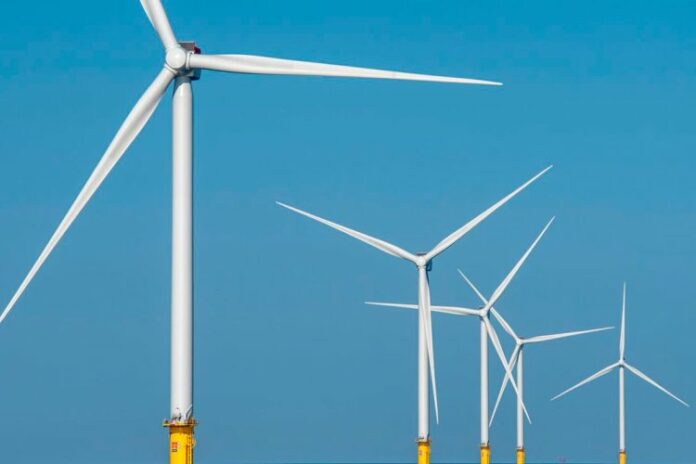
President Emmanuel Macron has announced a major tender wave for 2025, with the goal of connecting an additional 10 gigawatts (GW) of offshore wind capacity to the grid by 2035. This ambitious plan corresponds to approximately ten new wind farms and marks a pivotal step in France’s energy transition.

This year has already seen major milestones: The results of two tenders for floating offshore wind farms in the Mediterranean have been announced. The contract for the “Éoliennes Flottantes d’Occitanie” wind farm (250 MW) was awarded to Ocean Winds and Éolien en mer Beteiligungen. The “Golfe de Fos” wind farm (also 250 MW) will be developed by the project company Éoliennes Méditerranée Grand Large.

In Brittany, France continues to invest in innovative offshore projects. The floating wind project “Pennavel” (270 MW) was awarded in May 2024 to Elicio and BayWa r.e. These companies also secured the “AO5” tender for another floating wind farm in southern Brittany, with a capacity of 230 to 270 MW.

These developments are part of France’s long-term strategy to increase offshore wind capacity to 18 GW by 2035 and an ambitious 45 GW by 2050. The recent tenders underline the country’s commitment to expanding renewable energy and driving forward the energy transition.

Source: windfair