4.8 C
New York
Home Blog Page 1119

JAXPORT partners with SSA on 25-year container terminal deal

0

The Jacksonville Port Authority (JAXPORT) Board of Directors approved a long-term agreement with terminal operator SSA Marine for the development and operation of a $238.7 million international container terminal at JAXPORT’s Blount Island Marine Terminal.

Specifically, the SSA Jacksonville International Gateway Terminal is an expansion of SSA Marine's current leasehold at Blount Island and will offer deepwater berthing space to accommodate the larger container ships calling JAXPORT from Asia more fully loaded.

According to the port, the SSA Marine is to expand to about 80 acres. It also has the option to expand to 120 acres the minute more space becomes available.

The facility will, also, offer a vessel turning basin and deepwater access of 47 feet upon completion of the Jacksonville Harbor Deepening project, which is ahead of schedule; Therefore it is expected to be complete in 2023 based on continued funding from all partners.

SSA Marine contributes by $28 million for exclusive use of JAXPORT’s three 100-gauge cranes, with those funds going for the deepening project.

Moreover, the agreement will last for 25 years, coming with a two-year renewal possibility.

In addition, the deal includes improvements to the Blount Island Terminal. SSA Marine will contribute up to $129.7 million for the use of the terminal and facility upgrades, including the addition of three new 100-gauge container cranes.

Finally, JAXPORT will provide additional $109 million in berth rehabilitation and upgrades that are already underway. By these enhancements, the port will be able to host two post-Panamax vessels.

 

LPG tanker fire in Kerch Strait extinguished after burning for over a month

0

A fire on the Tanzanian-flagged LPG tanker 'Maestro' in the Black Sea has stopped after one-and-a-half month, according to data provided by Russia's Federal Agency for Maritime and River Transport.

Ten crew died and another 10 are still missing and presumed dead, due to the fire which erupted on the two Tanzanian-flagged LPG tankers 'Venice' and 'Maestro', while they were transferring fuel in the Kerch Strait, Russia’s territorial waters, Black Sea, on 21 January.

The fire eventually was extinguished after 45 days. The salvage vessel 'Spasatel Demidov' remains on scene to monitor the wreck. The owner of the vessel is informed and response actions are awaited.

According to the Russian news agency TASS, the fire on the other vessel, 'Candy', stopped on 28 February.

These are the same names with two Tanzanian-flagged ships, which last year were included on a US sanctions advisory as delivering fuel to Syria, Reuters earlier reported.

In November 2018, the US Treasury Department added nine Russian and Iranian individuals and companies on its sanctions list for participating in the shipment of petroleum to Syria. Along with this, it issued an advisory note warning of the potential sanctions risk for any entities involved in such shipments which listed 35 ships, including the Maestro and Venice, as having delivered oil to Syria between 2016 and 2018.

Source:safety4sea

FEPORT welcomes agreement on European Maritime Single Window

0

FEPORT welcomed the European Parliament’s TRAN (Transport and Tourism) Committee's adoption of Provision Agreement on proposal for a Regulation establishing a European Maritime Single Window Environment.

Specifically, FEPORT believes that the agreement provides a solid basis for cutting the administrative burden on ships, while also respecting existing investments in reporting channels. In fact, it believes that the focus of the provisional agreement on data harmonization is the right approach, as well as the best means to reduce the administrative burden on ship calls.

What is more, FEPORT supported the fact that the provisional agreement remains technology neutral and ensures that potential new systems are not rapidly outdated by new developments, while also ensuring that industry does not need to needlessly re-invest in regulatory compliance, in order to focus on innovation and improved services.

Lamia Kerdjoudj-Belkaid, FEPORT Secretary General, highlighted that the provisional agreement is a good result for all players in the maritime logistics chain and FEPORT believes it is a win-win approach for all actors involved in maritime logistics.

Ms. Kerdjoudj-Belkaid also thanked the rapporteur, Deirdre Clune, the Romanian Presidency and the European Commission, for ensuring 'a clear and future-proof legal framework for ship reporting formalities.'

Concluding, FEPORT asked for the formal adoption of the Regulation by the European Parliament.

The final text of the report includes an agreement that provides security for Port Community Systems in relation to the public National Single Windows that have to act as a 'mailbox' for reports to authorities.

Namely, Port Community Systems that meet the requirements of the European reporting interface module must be allowed by member states as a reporting system.

According to the the final text, the Port Authority will examine the consequences of the European Maritime Single Window Regulation for the reporting process in European ports and discuss this with, among others, the ministry responsible for the elaboration at Member State level.

ECSA, WSC, and ESPO have also welcomed the agreement, while the ports of Hamburg, Antwerp and Rotterdamurged the European Transport Committee to vote against the European Maritime Single Window.

Source:safety4sea

East Anglian Expects USD78bln Offshore Projects

0

Based on the latest forecasts, engery-sector specialists Nautilus Associates claim more than GBP59bn (USD78bln) could be invested in new offshore energy and infrastructure projects between now and 2040 in the Lowestoft and Great Yarmouth Enterprise Zones.

Johnathan Reynolds, director at Nautilus Associates, said: “We are seeing huge new investments in new offshore wind projects off the East Anglian coast, with an annual operational spend close to £1.3 billion per year by 2025. Offshore oil and gas activity is picking up following the most recent downturn, and decommissioning projects are now being contracted. It is an exciting time to be in the energy supply chain with so many opportunities for growth.”

The Lowestoft and Great Yarmouth Enterprise Zones, launched in 2012 and expanded in 2018, cover over 130 hectares of land and aim to attract at least 200 businesses, generating more than 9,000 direct jobs over its 25-year life span.

To date, they have delivered a staggering 1,720 news jobs across 59 businesses. 55,000 sq.m. of new commercial floorspace has been built, attracting £48 million of private sector investment.

The Zones are focussing primarily on the energy sector and its supply chains, recognising the importance of the oil & gas, offshore renewables, and nuclear power sectors to the local area.

Source:marinelink

World’s largest semi-submersible rig sails to North Sea, leaves Scotland

0

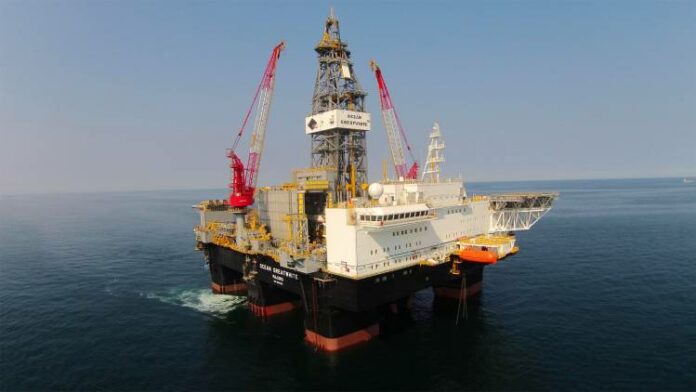
Diamond Offshore’s semi-submersible drilling rig Ocean GreatWhite is voyaging to the North Sea to work for Siccar Point, leaving Scotland's Kishorn Port. Kishorn Port revealed it had won a contract to prepare the world’s largest semi-submersible rig for its new contract off Shetland with Siccar Point in December 2018.

Specifically, the port stated that they wish the OGW, its crew and all the Diamond Offshore Drilling team the best.

As the port published in a statement "Wishing the OGW, its crew and all the Diamond Offshore Drilling team all the very best from KPL, the Port staff and all at the Ferguson Transport & Shipping team, a very safe journey and transit to the West of Shetland and best wishes for a very successful drilling operation for Siccar Point Energy."

The Ocean GreatWhite voyaged from Singapore, transmitting through Las Palmas in the Canaries, assisted by the Alp Defender, a large ocean-going offshore supply vessel. It arrived at the port in mid-January 2019.

The contract between the rig and the Siccar Point began in early March and is set to be completed in the mid-July, 2019.

The contract consists of three firm wells and three option wells.

In addition, the Ocean GreatWhite belongs to Diamond Offshore, and weighs 60,800 tonnes and is a 6th generation harsh environment drilling rig capable of drilling down to 10,000m in 3,000m of water.

Source:safety4sea

Northwest Europe demand driving up rig rates

0

The mobile offshore drilling unit market has recovered across northwest Europe, especially offshore Norway, according to Westwood.

This is due to a combination of a more stable oil price, higher development and exploration and appraisal (E&A) activity, and various older rigs being permanently removed from the fleet.

As a result, day rates have risen, most notably for sixth-generation Norwegian semis which are now commanding some of the highest rates worldwide.

Although much of the capacity for campaigns in the region this year has already been secured, Westwood Intelligence’s analysis reveals that there are still 3,808 days of unfulfilled rig demand for 2019, i.e. operators with drilling plans but no rig.

However, there are currently 6,066 days of available rig time so this should not be an unsurmountable problem.

There appears to be ample standard jackup supply to cover the remaining 710 days of unfulfilled demand for the rest of the year. Much of this demand relates to P&A work in the UK southern North Sea.

Uncontracted demand for high-spec jackups totals 841 days: taking into account free rig time the undersupply is estimated at 241 rig days this year.

As a result, said Teresa Wilkie, Senior Analyst, Rigs & Wells at Westwood, operators may struggle to secure a more modern and capable jackup in 2019. The main requirements for rigs in this category are for E&A and development drilling programs offshore the UK, Norway, the Netherlands, and Denmark.

Operators appear to favor premium assets in northwest Europe, in particular deeper rated, more modern rigs that provide winterization, greater drilling efficiencies and less downtime that will help lower project costs.

Some drilling contractors have as a result secured high-price contracts for rigs previously located outside of the region, including newbuilds still in Asian shipyards. Others such as Diamond Offshore, Wilkie added, have reactivated older, cold-stacked rigs for mid-to-long-term campaigns in the area.

As rig availability continues to contract during the prime spring and summer periods, offshore operators will have little choice but to commit to programs during the harsher winter months, she suggested. Jackup and floating rig use is set to keep increasing throughout the year, resulting in further upward movement in day rates, especially in the undersupplied UK and Norwegian sectors.

Westwood foresees day rates for the Norwegian semi market fixed at more than $300,000, with deepwater floaters in the UK sector on rates above $200,000/d, compared with the recent range of $120,000-160,000.

One instance is Premier Oil’s recent signing of the semi Transocean Leader at a rate of $245,000/d for a UK campaign starting in early 2020.

Seapulse, EnQuest to cooperate on exploration, development

0

Seapulse has entered an alliance with London-based E&P independent EnQuest.

The two parties will work together to ‘streamline’ the development process for discoveries, Seapulse said: the company’s declared strategy is to adopt a low-cost, high-impact portfolio approach to offshore exploration.

Last year it formed a partnership with Maersk Drilling with a view to delivering 12 exploration wells and testing potential oil reserves of 6 Bbbl over the next two years.

EnQuest will contribute its experience in fasttrack offshore project engineering and execution. In return, it will benefit from data insight and preferential farm-in option rights to Seapulse’s discoveries, limiting its exposure to exploration costs.

Seapulse co-founder and CEO Scott Aitken said: “This alliance builds on our business model of eliminating duplication in the sector and finding a lean approach to the frequent exploration and development of a world-scale portfolio of prospects.”

Mega Jack assists Mexican platform load-out

0

 ALE has managed load-out of a large platform for a project in the Mexican offshore sector.

The first stage of the three-phase program involved jacking up the topsides, weighing more than 13,000 t, by 14 m (46 ft) using the company’s Mega Jack system which had its own starter beams.

ALE claims the Mega Jack can provide quicker assembly and jacking speeds than competing systems.

For load-out of the topsides, ALE – Offshore Services designed and supplied the rapid ballasting system with a capacity of 16,000 cu m/hr (565,035 cu ft), and the associated ballast pipework.

The team then pulled the full topsides load out by 196.63 m (645 ft) using strand jacks and kicker jacks and onto the client’s barge to complete the operation.

Source:offshore-mag

Indonesia detains more than 20 ships for illegal anchoring near Singapore

0

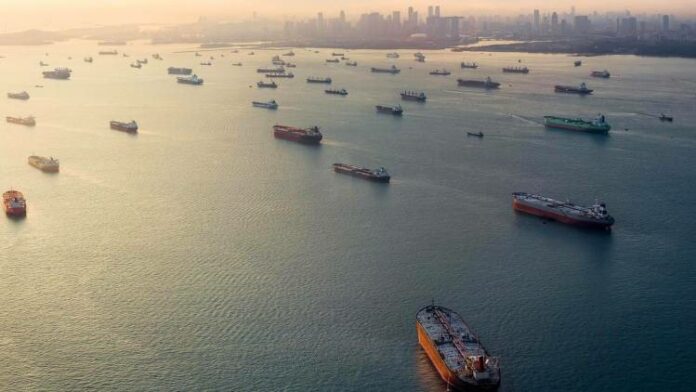
There has been a recent spike in the number of anchored vessels detained by Indonesian authorities in waters near Singapore.

One of the London P&I Club’s correspondents in Southeast Asia, Spica Services, has reported that there have been a significant number of vessel detentions in the eastern parts of the Singapore Strait, mainly in the waters around Bintan Island.

“These waters are a popular place to anchor whilst ‘waiting for orders’, and often misconstrued by ships proceeding to Singapore as being the Outer Port Limit (OPL) of Singapore,” the London P&I stated in a circular to clients earlier this month.

The insurance company reminded clients that these waters are in fact within Indonesian territorial waters.

“Under Indonesian law, any vessel not engaged in an innocent passage (ie. proceeding without stopping) within the territorial waters of Indonesia is required to obtain clearance (inward or outward) from the relevant authorities. A vessel that is anchored, with no intention of visiting Indonesia to carry out duties such as cargo operations, transhipment, taking on supplies or crew changes, must appoint a local agent to obtain clearance,” the circular warned.

Source:splash247

Singapore takes the lead in promoting e-bills of lading

0

Singapore authorities are amending existing legislation to ensure the republic remains at the forefront of the digitalisation of global trade.

A pilot initiative starting later this year will turn paper-based bills of lading into electronic ones with politicians set to make relevant changes to the nation’s Electronic Transactions Act to recognise e-bills of lading.

The blockchain pilot, called TradeTrust, was announced by minister for communications and information S. Iswaran in parliament yesterday.

Iswaran said: “TradeTrust will enhance our attractiveness as a business hub and improve the efficiency of our trading and logistics sectors… The Info-communications and Media Development Authority (IMDA) and other government agencies are now working with industry partners to conduct proof-of-concept trials and will provide more details later.”

Government statistics show trade document processing and administration adds an estimated 20% to the physical cost of shipping a single container.

TradeTrust comes soon after the republic’s largest boxline, Pacific International Lines (PIL), conducted a groudbreaking e-bills of lading pilot with IBM last October which ultimately saw the arrival of mandarins to Singapore shipped from China in time for Chinese new year celebrations last month.

Source:splash247