4.8 C
New York
Home Blog Page 1118

DSME Develops AI System to Deal with Shipowners

0

Daewoo Shipbuilding & Marine Engineering Co. (DSME) announced that it had developed a design system for supporting ship sales using artificial intelligence (AI).

According to DSME, a joint development of the system with an AI startup company called 42 Maru was launched to find appropriate answers and immediately respond to a variety of technical questions asked by shipowners based on past history.

Usually, in the course of ship orders, the shipowner has hundreds of technical inquiries per project, which most often have to be answered within days or on the same day.

Previously, it took a lot of time and effort to check thousands of documents in order to provide answers.

However, with the new AI program, the system will be able to provide data more accurately and quickly based on AI technology.

Specifically, if a word or sentence is entered in a given system, the system will understand its context and meaning and search for past cases. Then the system will choose the most appropriate answer.

This way, AI will not only allow human resources to be used in tasks with high value, but also secure credibility with shipowners as the system can respond consistently.

DSME officials also announced that the system has already completed deep learning on 100,000 case files and will evolve to become even more accurate.

Source:hellenicshippingnews
PGS begins 3D multi-client survey offshore Angola

0

PGS, in cooperation with Sonangol, has started a 3D multi-client GeoStreamer survey over the shallow-water shelf area of the Kwanza basin off Angola.

This new multi-sensor 3D GeoStreamer survey, together with gravity and magnetic data, over the central part of the shelf (blocks 6, 7, and 8) will identify and unlock the underexplored presalt and postsalt plays. The acquisition configuration uses triple-source with 12 x 8,025 m streamers operating in fan mode and multi-sensor GeoStreamer technology, to provide clearer images with reliable attributes.

A modern prestack depth processing workflow, the company said, has been tailored to the imaging challenges of subsalt stratigraphy within a shallow-water setting. The preprocessing will include targeted 3D shallow-water demultiple, while the velocity model build will include full waveform inversion together with separated wavefield imaging using PGS SWIM.

Deliverables will include PSDM Kirchhoff stack, RTM PSDM, angle gathers, velocity models, as well as gravity and magnetic data.

Source:offshore-mag

Making lifting and winching operations safer

0

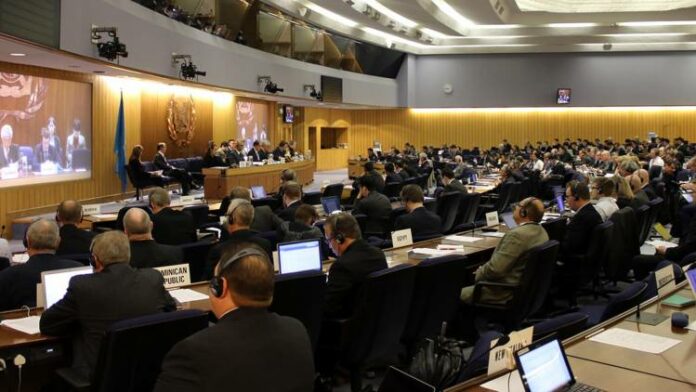
Draft mandatory regulations to make lifting appliances such as onboard cargo cranes safer are being developed by the Sub-Committee on Ship Systems and Equipment (SSE), which meets this week (4-8 March).

The Sub-Committee aims to finalise the draft SOLAS regulations and related guidelines covering design, construction, installation and maintenance of onboard lifting appliances and anchor handling winches. The rules are intended to help to prevent accidents and harm to operators and damage to ships, cargo, shore-based structures and subsea structures, as well as the marine environment.

On fire safety matters, the Sub-Committee is working to minimize the incidence and consequences of fires on ro-ro spaces and special category spaces of new and existing ro-ro passenger ships. Current SOLAS regulations and associated codes are being reviewed. The meeting is expected to further develop draft interim guidelines and draft amendments to the SOLAS Convention and associated Codes. The Sub-Committee will also develop amendments to relevant guidelines for the approval of fixed dry powder systems used on ships carrying liquefied gases in bulk.

Agenda items related to life-saving appliances and arrangements include the work to develop the goal-based standards safety-level approach for the approval of alternative designs and arrangements for regulations on life-saving appliances. The Sub-Committee is also expected to finalize draft amendments to the Life-Saving Appliance (LSA) Code on ventilation requirements for survival craft and related draft amendments to the Revised recommendation on testing of life-saving appliances, to ensure a habitable environment is maintained in such survival craft. Another item on the agenda is the finalization of draft Interim guidelines on life-saving appliances and arrangements for ships operating in polar waters, to support the implementation of the mandatory Polar Code.

On-shore power supply is another item on the agenda. A correspondence group will report on its work to develop draft guidelines on safe operation of on-shore power supply to ships, also known as “cold ironing”, “alternative maritime power” and “shore-side electricity”. The Sub-Committee is expected to consider whether there is a need for relevant amendments to SOLAS. Plugging a ship into shore-side power – and turning off onboard generators – is one solution to reducing air pollution from ships, as well as limiting local noise.

The SSE 6 meeting was opened by IMO Secretary-General Kitack Lim and is being chaired by Dr. Susumu Ota (Japan).

Yang Ming Launches Final Megaships in New-Build Series

0

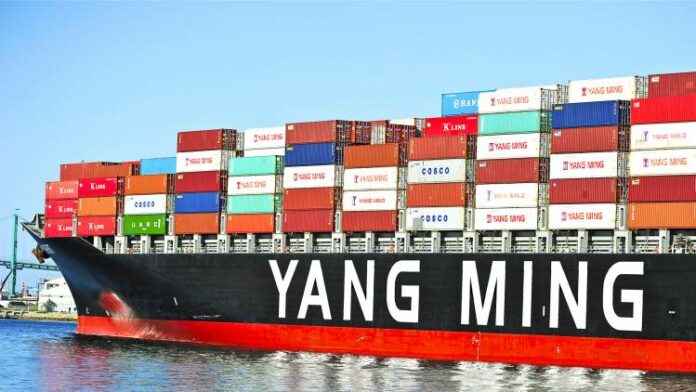
Shipping company Yang Ming has announced the launch of two new ultra-large container vessels (UCLVs), which were officially named at Imabari shipyard on March 6, 2019.

The duo of megaships, called the YM Warranty and YM Wellspring, have a container capacity of 14,000 TEU and will join the total of 20 UCLVs added to Yang Ming’s fleet since 2015.

The two vessels are also the fourth and fifth 14,000 TEU ships that Yang Ming has chartered from Shoei Kisen Kaisha, belonging to the same type as the YM Wellbeing, YM Wonderland and YM Wisdom, all of which were delivered to Yang Ming recently.

According to a statement, this type of ship is equipped with 1,000 reefer plugs, providing capacity for the transport of refrigerated containers.

YM Warranty and YM Wellspring, the last vessels in the series of new-builds to be completed, are scheduled to join Yang Ming’s service in the near future.

The shipping line has also revealed that it will deploy ten self-owned 2,800 TEU ships and fourteen chartered-in 11,000 TEU ships, which are expected to be delivered in stages between 2020 and 2022.

A further statement from Yang Ming read: “With the modern, eco-friendly and highly efficient new vessels, Yang Ming will be able to provide customers worldwide with more efficient and cost-competitive services."

Source:porttechnology

Crane Collapse Kills Worker on Eni Platform

0

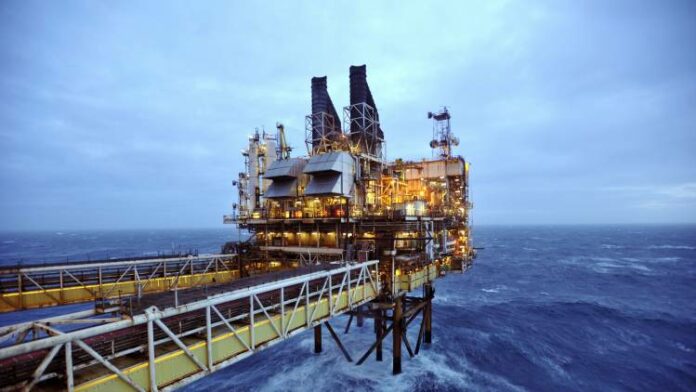
Early on Tuesday morning, a crane collapse at an offshore platform in the Aegean killed one platform worker and injured two seafarers, according to Italian oil major Eni.  

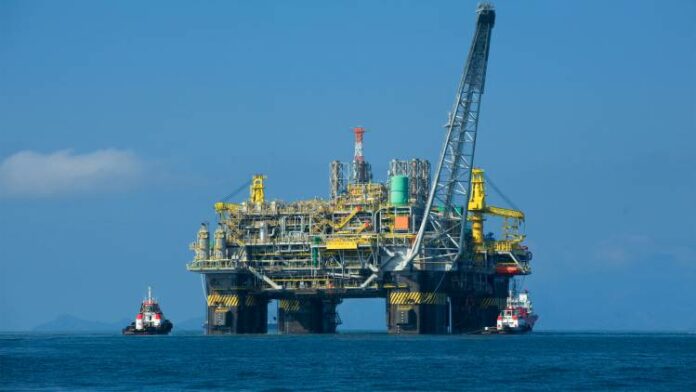
The accident occurred on the Barbara F platform, which is located about 30 nm off the coast of Ancona, Italy. The crane was carrying out cargo operations over an OSV, and when it collapsed, it struck the vessel below, injuring two people. The wreckage then slid below the surface, taking the crane operator with it. A dive team from the Ancona fire department found the operator's body in the submerged crane cab, which remains suspended by cables from the platform structure.  

The Guardia Costiera identified the victim as Mr. Egidio Benedetto, 63. Local media reported that he had decades of industry experience, and he was due to depart the platform tomorrow. The injured seafarers were both evacuated to the Torrette di Ancona hospital, and their injuries are not life-threatening, according to local media. 

Prosecutors in Ancona have launched an investigation into the circumstances of the accident, and are considering the possibility of culpable homicide (manslaughter). Initial reports suggest that a structural failure may have been a contributing factor.

In a statement, Eni said that it has "immediately started checks to shed light on the dynamics of the event and is giving the maximum cooperation to the coast guard, to the port authorities and to the fire brigades supporting them in the work for the safety of the area."

Source:maritime-executive

CMA CGM’s debt levels to soar above $15bn this year

0

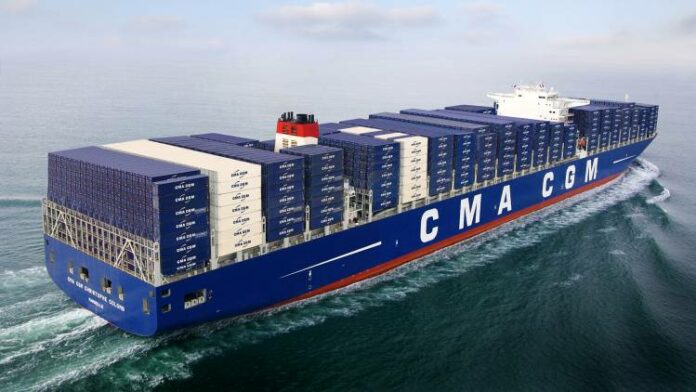
Alphaliner has warned CMA CGM’s debt levels are set to soar this year while earnings dip.

The world’s third largest liner issued its 2018 results last Friday, which have since been scrutinised by analysts at Alphaliner in the lead story of their latest weekly report.

CMA CGM’s total debt hit $9.18bn at the end of 2018 and Alphaliner states the figure will increase to more than $15bn in 2019, due to new capital expenditure requirements and the consolidation of CEVA Logistics’ debt, as well as changes in accounting rules.

With higher costs hurting, CMA CGM made a net profit of $34m last year, down from $697m in 2017, sparking top management at the Marseille-headquartered line to initiate a new $1.2bn cost saving drive.

Source;splash247

Stena Bulk hails chemical foray

0

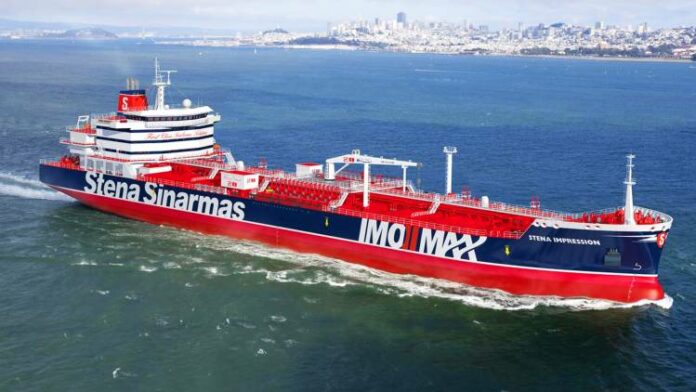
Stena Bulk has hailed its entrance into the chemical sector as having surpassed all expectations. The Swedish owner’s fleet of 13 so-called IMOIIMAX MR vessels have been on the market for a year, with the company claiming yesterday they have been a notable success both in terms of performance as well as business. An IMOIIMAX tanker has 18 separate tanks (3,000 cu m per tank), giving great flexibility in terms of combinations of cargoes.

“Utilisation of and entry into the chemicals market has gone better than expected, and we have secured a good market position that we are continuing to build on. We have achieved this through not only our hard work in marketing, but also through operational performance”, president and CEO Erik Hånell stated in a release.

All the ships were built at Guangzhou Shipyard International (GSI) in China.

“The vessels perform well in terms of speed and bunker consumption. Additionally, in respect of loading, transport, discharging and tank cleaning, it has technically performed above expectations”, Hånell added.

Source:splash247

Van Oord and BAM International complete state-of-the-art container terminal in Costa Rica

0

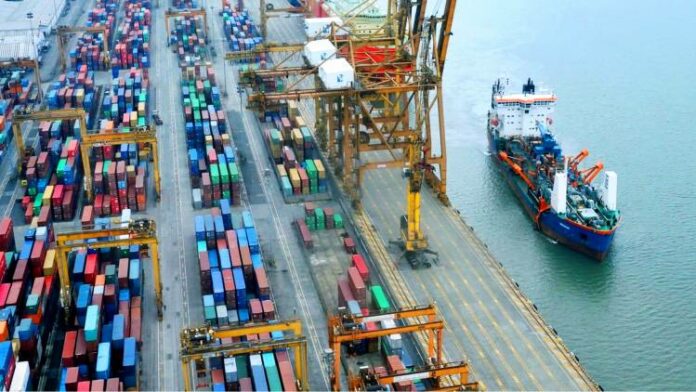
A consortium of Van Oord and BAM International completed the construction of the APM Terminals Moín in Costa Rica. Last week’s inauguration of the container terminal will enable products to be shipped on transatlantic routes to European and Asian markets without transshipment, the company said in its release.

The project represents a total investment of USD 1 billion and is built on a 40-hectare artificial island. The terminal has a 650-meter long quay wall and a container yard with the capacity to hold 26,000 TEUs (Twenty-foot Equivalent Units), including power connection capacity for 3,800 refrigerated containers. Refrigeration is essential as Costa Rica is currently the world’s largest exporter of pineapples and third largest exporter of bananas. The terminal has the most modern scanner in Latin America for cargo inspections.

One of the goals of the Costa Rican Government is the job creation with a territoriality approach and, with this project, the conditions of competitiveness and economic reactivation are being created for the province of Limón and also for the entire country.

The region will attract a very high percentage of the ships that transit through the Panama Canal. The number of shipping routes that reach the APM Terminals Moín is projected to increase by as much as 285 percent. ‘We are proud that the country has trusted APM Terminals with the mission of developing and operating this amazing port. A concession that also brings socioeconomic opportunities to the community, the country and the region,’ said Kenneth Waugh, Managing Director of APM Terminals Moín.

UK Destroyer Seizes Two Tonnes of Hashish

0

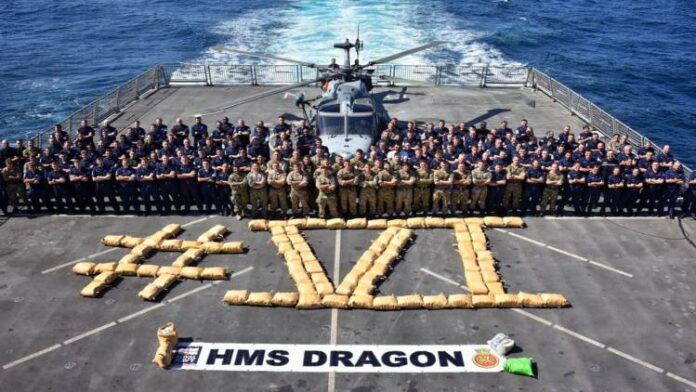
The Type 45 destroyer HMS Dragon has completed her sixth drug bust on the Middle East's "Hash Highway," seizing more than two tonnes of hash in a single boarding. The sale of these drugs is a known source of funding for terrorist organisations and criminal networks.

The suspect vessel, a wooden dhow, was spotted by the warship’s helicopter during a night-time sortie. After closing in and taking a closer look, HMS Dragon decided to investigate further.

Launching her two fast sea boats, each one carrying a joint boarding team of sailors and Royal Marines, they swooped on the dhow. After questioning the master and crew, the boarding team determined that the dhow was not likely to be conducting legal activities, and they began a search. They uncovered 101 bags containing a total of about 2,000 kg of hash. 

“The efforts of the boarding team in difficult conditions allowed the process to be quick and efficient, and we’re thrilled HMS Dragon scored her sixth drugs bust of the deployment,” said Lieutenant Jonathan Bennett, the officer in charge of the Royal Navy boarding team. After documenting the haul, the Dragon destroyed it and returned to her patrol. 

In December, HMS Dragon intercepted $100 million worth of hash within 48 hours – a new record for the Combined Maritime Forces, the multinational organization in charge of policing the region. 

"These significant seizures stop cash flow to terrorists, hurt criminal gangs who fund them and hinder the supply of harmful drugs to streets around the world, including Britain," said UK Defence Secretary Gavin Williamson in a statement. 

Source:maritime-executive

Joint Industry Project to tackle wind turbine blade erosion

0

DNV GL launched a Joint Industry Project with ten commercial partners to develop a Comprehensive methodology for Blade Rain erosion Analysis (COBRA). The project aspires to get an insight into the damage caused to leading edge wind turbine blades from the high-speed impacts of foreign objects, such as raindrops, and identify how best to develop protection systems.

Mainly, rain erosion damage can have serious effects on the unprotected wind turbine blades.

Although the damage doesn't always have negative effects on the structural integrity of a blade, it can affect the energy generation that is produced by the turbine due to degrading the aerodynamic performance of blades.

Consequently, DNV GL has partnered with Vestas, Siemens Gamesa Renewable Energy, LM Wind Power, Ørsted, Mankeweicz, Akzonobel, Aerox-CEU, Polytech, Hempel and PPG, to take up the challenge of analysing the effect that rain erosion damage can have on the blades of operating wind turbines.

According to DNV GL the result of the Joint Industry Project will be a Recommended Practice for designing a protection system against rain erosion which is due to be published by July 2020.

The project aims to highlight the topics:

  • Identify and define relevant material properties for a protection system;
  • Develop and methodology to handle and derive design loads from rain data;
  • Develop a model to conduct raindrop impact analysis;
  • Develop a design methodology for leading edge protection systems.

Steffen Laustsen, Head of Blade Materials, Offshore Technology at Siemens Gamesa Renewable Energy added "With the trend of building larger machines continuing, greater research is required to provide more protection for wind turbine blades against rain erosion. The high blade tip velocities associated with large blades makes the impact of rain especially demanding."

Therefore, the company looks forward to collaborating with the Joint Industry Project partners across all industries to improve the quality and durability of future blade designs.

Concluding, interested parties can still join the Joint Industry Project subject to approval by the Steering Committee.

Source:safety4sea