-1.8 C
New York
Home Blog Page 1104

Esvagt eyes short-term opportunities

0

Service operations vessel operator Esvagt is planning to target further short-term contracts for its fleet of vessels at offshore wind farms.

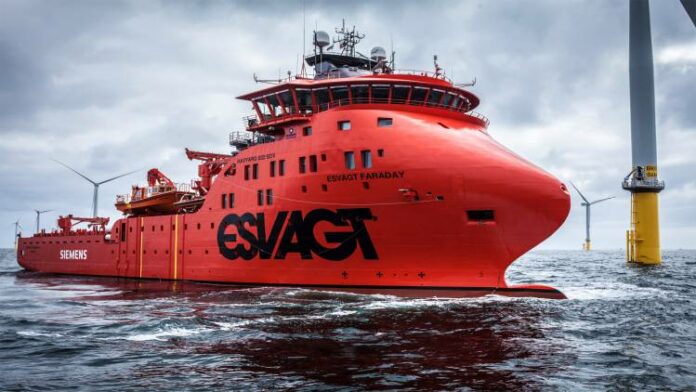
The Danish company's Esvagt Dana vessel (pictured) entered into a contract with Vattenfall in February on the 406MW Horns Rev 3 project off the coast Denmark.

Esvagt said the deal was an “atypically short SOV contract”, while all the company's other SOVs that work in the offshore wind market are built for “long-term contracts for a specific task in a fixed area”.

According to Esvagt commercial head Ib Hansen the choice of SOVs for short-term contracts is limited and so provides a market opportunity.

“We see that there is potential in offering an SOV with Esvagt’s competences and concept to a market that is more dynamic,” he said.

The newly-built Esvagt Dana has a walk-to-work system, boat transfer with Esvagt’s STB12 boat, a centrally placed crane and 76 single cabins.

Both the gangway and the crane can operate on both sides of the vessel, which offers the potential for much faster tempering and streamlining of both transfers of cargo and personnel without impacting safety, said Hansen.

“Vattenfall and the crew deserve some credit for taking advantage of the vessel’s many possibilities in order to drive a safe and efficient operation, where you really get work done,” he said.

The STB12 boat can be used for variety of roles, including when the gangway system is not usable, Esvagt said.

“For example, if the weather is foggy, thus hindering us in approaching the wind turbine by vessel, or if we cannot use the walk-to-work system due to work on the wind turbine, our STB12 can thankfully do the job,” said Hansen.

Source:renews
Vessel collision in Vancouver Harbour prompts investigation

0

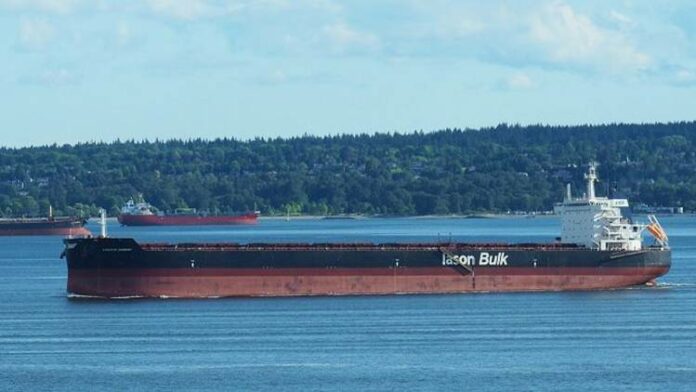
Canada’s Transportation Safety Board (TSB) has deployed a team of investigators to Vancouver Harbour in British Columbia following a collision between two bulk carriers. 

According to a brief statement from the TSB, the Panama-flagged MV Pan Acacia collided with MV Caravos Harmony, which flies the Marshall Islands flag, at 00:20 local time on 17 March. 

TSB spokesperson Chris Krepski declined to say how serious the accident was, nor what caused it, but said there were no reports of injuries or pollution. The Board sent two investigators to the scene to inspect the vessels and talk to crew members and potential witnesses. 

Transport Canada – the government department responsible for transport policies and programmes – has said that Caravos Harmony lost power and initiated the collision. The vessel was loaded with corn and sustained damage to its bow. Meanwhile, Pan Acacia was waiting to load coal and sustained damage to its port side above the water line. 

According to IHS Markit data, Caravos Harmony has since left Vancouver Harbour and was west of Vancouver Island on Wednesday 20 March, en route to Incheon. Pan Acacia remains at anchor. 

Source:safetyatsea

Subsea 7 DSV undergoes engine overhaul

0

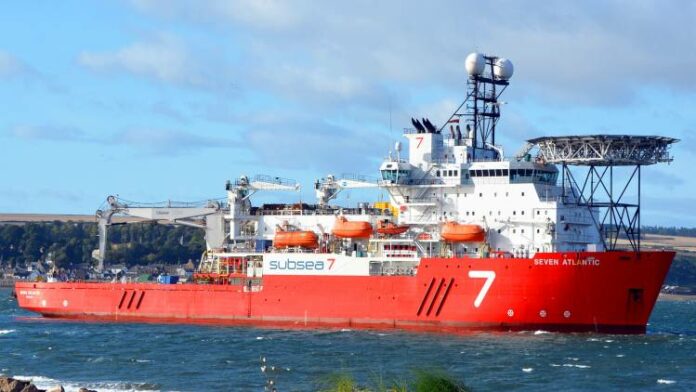
 Royston has completed an overhaul of diesel engines on the 140-m (459-ft) long Subsea 7 diving support vessel Seven Atlantic.

Engineers undertook the 30,000 running hour service on the generator engines onboard the vessel as part of a general refurbishment and maintenance of critical power plant.

The Seven Atlantic, built in 2009, is said to be one of the largest vessels of its type in the world, operating a 24-person saturation diving system.

Royston disassembled the Wärtsilä W7L32 diesel generator No.5 to install new cylinder heads, air start valves, indicator cocks, injectors, and cylinder seals.

Relief valves, pistons and conrods, cylinder liners, bearing blocks, crankshaft and turbocharger were sent to the company’s Newcastle workshop for checking and repairs before being returned ahead of the final reassembly and inspection of the engine.

In addition, the company overhauled the turbocharger on the Wärtsilä W7L32 diesel generator No.3.

Due to the need for a 12,000 running hour overhaul, the NA297 Napier turbochargers from both engines were removed, stripped, cleaned, inspected, and balanced at the company’s test and repair facility.

Royston engineers also undertook load testing in line with the engine manufacturer’s specification.

Shawn Doering, Royston’s service manager on the contract, said: “Our experience with the engine and vessel type ensured the work was carried out efficiently and effectively, enabling the vessel to return to sea-going operations as quickly as possible.”

The Seven Atlantic’s power plant comprises six Wartsila 7L engines, each driving a 3360kVA Van Kaick generator, generating 6.6 kV (mains voltage). The propulsion installation runs on marine gasoil and provides power for propulsion, dive systems, crane activities and others.

Source:offshore-mag

Totem Plus to implement cyber protection for shipboard equipment

0

Totem Plus signed a licence agreement with Naval Dome to include the latter's maritime cyber security software into its automation and navigation systems. These systems are included in the hard drives of the equipment at the build stage before being delivered to the customers.

All current operational Totem Plus systems will be automatically updated with Naval Dome when technicians perform software upgrades. In addition, any new hardware orders can be specified with Naval Dome protection.

Commenting about the agreement, Capt Azriel Rahav, Chief Executive Officer, Totem Plus, said that the company wants to supply its customers with systems that are protected at the highest level. The Naval Dome system has achieved Security Level 4 under DNV GL CP-0231.

The two companies began their cooperation in 2017 when the Naval Dome system was implemented alongside Totem Plus ECDIS, IMAC (Integrated Monitoring, Alarm & Control), VDR and BAM (Bridge Alert Management) installations on board a 5,000 TEU containership.

Source:safety4sea

Polish LNG Terminal Gets EU Grant

0

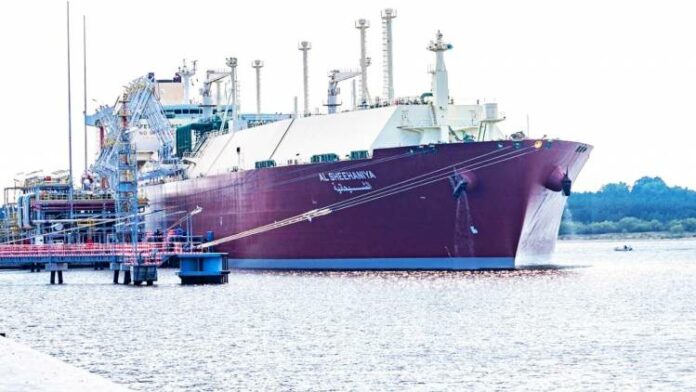
Poland’s LNG import terminal in Świnoujście will receive a EUR128mln grant from from the European Regional Development Fund and the Cohesion Fund to expand its regasification capacity.

The European Commission said in a notification that it has approved plans to support the increase of the regasification capacity, and the development of additional functionalities of the LNG terminal in Poland.

The plans were approved under EU State aid rules and would see the terminal capacity increase from 5 to 7.5 billion cubic metres per year.

The Commission approved the aid for the construction of this LNG terminal in 2011. The increase in capacity was included in the list of Projects of Common Interest of the European Union as part of the Baltic Energy Market Interconnection Plan (BEMIP) corridor.

The Polish LNG will receive the fund under the 2014-20 Infrastructure and Environment Operational Programme, which has among its priorities the improvement of energy security.

"The project will contribute to ensuring security of gas supplies in Poland and in the Baltic countries by making supplies more diverse and promoting new gas transport routes in the region," pointed out the EC notification.

Polish LNG terminal operator, Polskie LNG has already launched a tender procedure to select a contractor for three key projects within the first Polish LNG import facility.

Source:marinelink

Cosco develops record-breaking 25,000 teu ship design

0

A Cosco ship design subsidiary has completed designs for a record-breaking 25,000 teu ship.

Shanghai Ship and Shipping Research Institute (SSSRI), a unit of Cosco Shipping, has got the design approved by CSSC No.708 Institute, part of the nation’s largest shipbuilding group.

According to SSSRI, the development of the new ultra large containership meets the requirements of the government’s China Manufacturing 2025 strategic plan and ties in with the country’s Belt and Road initiative.

When contacted by Splash, an official at SSSRI said Cosco is still studying the market and no newbuilding order has been planned yet.

The latest results from MarPoll, our quarterly survey, show 59% of readers believe the ordering frenzy for ultra large container vessels is now over.

Speaking at TPM in early March, the giant container conference in Long Beach, Søren Skou, the CEO of AP Moller-Maersk, questioned the need for 25,000 teu ships.

Skou said Maersk’s investments going forward would be elsewhere rather than on so-called megamaxes, a ship type he likened to Airbus’s A380 aircraft, which has proven to not be a commercial success.

Maersk’s partner on the 2M vessel sharing agreement, MSC, is readying to take on a series of record-breaking 23,000 teu ships shortly.

Andy Lane, director of Asia for SeaIntelligence Maritime Analysis, also questioned whether Cosco should push ahead with this record breaking boxship move.

“This would appear to be a risky move, at times when long-haul demand continues to soften,” Lane told Splash, adding: “The slot cost saving of a 25,000 teu capacity ship versus one of 20,000 teu is minimal, all other things being equal. With some of that value being eroded by the additional three days per rotation of in-port time, reduced service offerings and risk of poorer utilisation levels.”

Source;splash247

Sverdrup ULQ topsides heads offshore

0

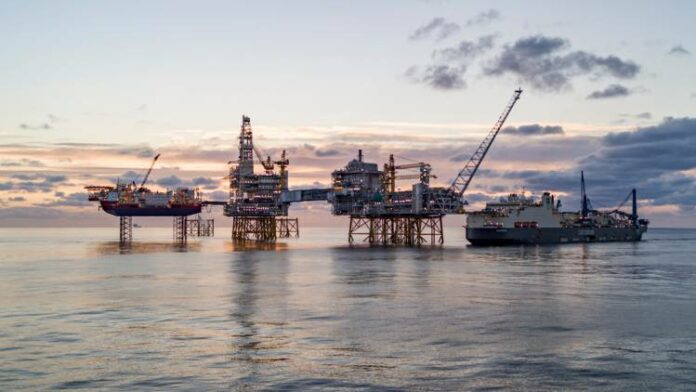
The Johan Sverdrup utilities and living quarters (ULQ) platform topsides has sailed away from Kvaerner’s yard in Stord, western Norway, for installation in the Norwegian North Sea, according to KBR.

In 2015, KBR in a joint venture with Kvaerner signed an EPC contract with Equinor for the complete delivery of the ULQ platform topsidesfor the Johan Sverdrup Phase 1 field development on the Norwegian continental shelf. This, the company said, is one of the largest ULQ platforms in the world and will also serve as the field center for the Johan Sverdrup development.

KBR’s London office, supported by its Jakarta office and Kvaerner, led the detailed engineering, design and procurement scope for the utility module upon signing the contract with Equinor. The accommodation module was constructed by Apply Leirvik under an EPC lump-sum subcontract. 

The complete topsides was assembled at Kvaerner Stord with KBR providing engineering and procurement support during the construction and mechanical completion phase through its team collocated at Kvaerner Stord.

The company said it was also actively engaged in providing onshore commissioning assistance to Equinor to meet its targets of onshore commissioning and early habitat of the platform offshore.

Source:offshore-mag

TechnipFMC to supply second Sverdrup subsea production system

0

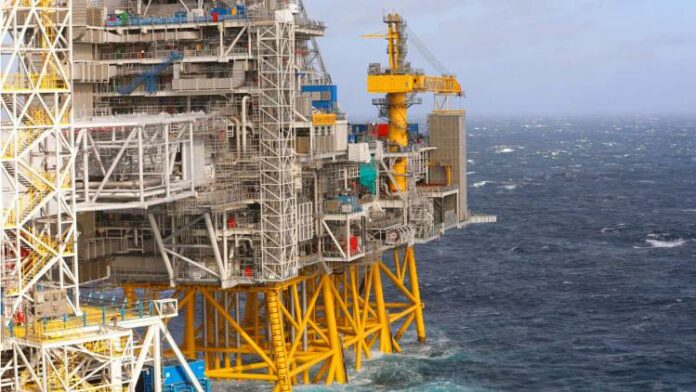
Equinor has awarded TechnipFMC a wide-ranging subsea contract for the Johan Sverdrup Phase 2 development in the Norwegian North Sea, in a water depth of 120 m (394 ft).

The work scope includes delivery and installation of the subsea production system, with integrated template structures, manifolds, tie-in and controls equipment.

Arnaud Piéton, President Subsea at TechnipFMC, said: “We have collaborated closely with Equinor establishing a Strategic Collaboration Agreement in 2018.”

Source:offshore-mag

Damen Wins First Cruise Ship Order

0

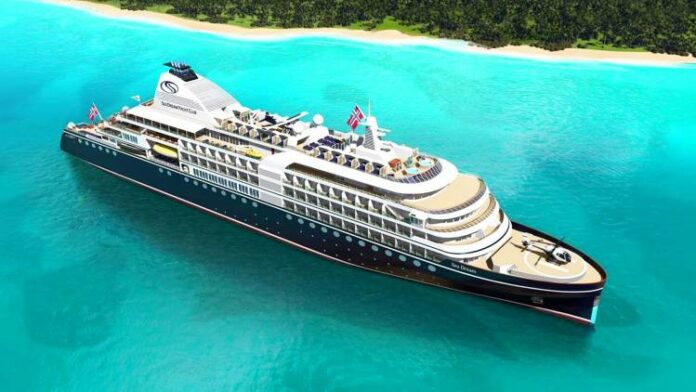
Damen Shipyards Group has signed a contract for its first cruise ship with Oslo, Norway-based SeaDream Yacht Club.  

SeaDream will operate the Polar Code 6, 155-meter Mega Yacht on luxury voyages around the world including polar and tropical regions.

The international shipyards group launched its new venture, Damen Cruise, in 2018. Though a new entrant to this particular market, Damen has delivered ships to diverse sectors of the maritime industry for over 90 years, including mega yachts, offshore, naval and RoPax vessels.

In 2018, Damen began operational control of the shipyard now known as Damen Shipyards Mangalia, in Romania, a joint venture with the Romanian Government. The yard, located on the Black Sea, is the largest in the Damen portfolio and brings with it the capabilities for the group to construct larger, more complex vessels.

The Mega Yacht for SeaDream will be completely constructed and outfitted, including the interior, at the Mangalia yard. Damen will commence construction of the vessel in October this year, with a scheduled delivery date of September 2021.

Source:maritime-executive

Tanker Fire Kills Two off South Korea

0

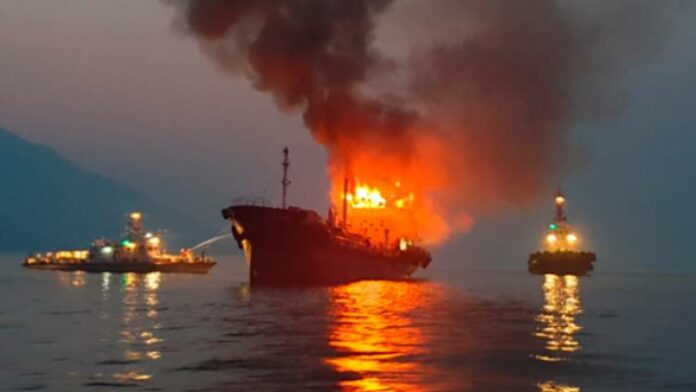
Early Wednesday morning, a small tanker caught fire off the coast of Odong Island, South Korea, killing two and injuring one. 

The fire broke out at 0538 hours at a position about two nm to the east of Odong. Four good samaritan vessels, a military vessel, and multiple SAR units responded to the scene. Four of the tanker's six crewmembers were rescued, and responders succeeded in bringing the fire under control by about 0930 hours.  

The two remaining crewmembers were found dead in the vessel's wheelhouse. The victims, identified by their family name Kim, were aged 68 and 70. The chief engineer was burned in the accident and has been hospitalized for treatment. 

The Korea Coast Guard is conducting an investigation into the cause of the casualty.

Source:maritime-executive