-1.4 C
New York
Home Blog Page 1102

Shipping losses continue to fall but new cyber and climate risks and perennial human error problem threaten safety progress

0

Large shipping losses have declined by more than a third (38%) over the past decade, according to Allianz Global Corporate & Specialty SE’s (AGCS) SAFETY & SHIPPING REVIEW 2018, with this downward trend continuing in 2017. Yet recent events such as the collision of the oil tanker “Sanchi” and the impact of the NotPetya malware on harbor logistics underline that the shipping sector is being tested by a number of traditional and emerging risk challenges.

There were 94 total losses reported around the shipping world in 2017, down 4% year-on-year (98) – the second lowest in 10 years after 2014. Bad weather, such as typhoons in Asia and hurricanes in the US, contributed to the loss of more than 20 vessels, according to the annual review, which analyzes reported shipping losses over 100 gross tons (GT).

“The decline in frequency and severity of total losses over the past year continues the positive trend of the past decade. Insurance claims have been relatively benign, reflecting improved ship design and the positive effects of risk management policy and safety regulation over time,” says Baptiste Ossena, Global Product Leader Hull & Marine Liabilities, AGCS. 

“However, as the use of new technologies on board vessels grows, we expect to see changes in the maritime loss environment in future. The number of more technical claims will grow – such as cyber incidents or technological defects – in addition to traditional losses, such as collisions or groundings.”

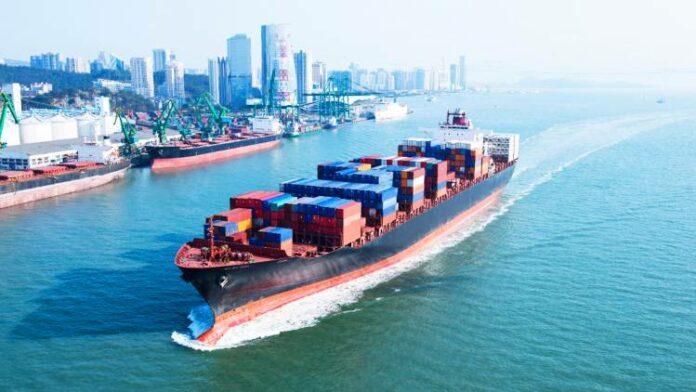
There are multiple new risk exposures for the shipping sector: Ever-larger container ships – longer than the Empire State Building is high – pose fire containment and salvage issues. The changing climate brings new route risks, with fast-changing conditions in Arctic and North Atlantic waters posing new hazards. Environmental scrutiny is growing as the industry seeks to cut emissions, bringing new technical risks and the threat of machinery damage incidents at the same time. Shippers continue to grapple with balancing the benefits and risks of increasing automation on board. The NotPetya cyber-attack caused cargo delays and congestion at nearly 80 ports, underlining the threat of cyber risks for the sector.

Dangerous seas, Friday 13th and the unluckiest ship

Almost a third of shipping losses in 2017 (30) occurred in the South China, Indochina, Indonesia and Philippines maritime region, up 25% annually, driven by activity in Vietnamese waters. This area has been the major global loss hotspot for the past decade, leading some media commentators to label it the “new Bermuda Triangle”. The major loss factors are actually weather – in November 2017, Typhoon Damrey caused six losses –, busy seas and lower safety standards on some domestic routes. Outside of Asia, the East Mediterranean and Black Sea region is the second major loss hotspot (17) followed by the British Isles (8). There was also a 29% annual increase in reported shipping incidents in Arctic Circle waters (71), according to AGCS analysis.

Cargo vessels (53) accounted for over half of all vessels lost globally in 2017. Fishing and passenger vessel losses are down year-on-year. Bulk carriers accounted for five of the 10 largest reported total losses by GT. The most common cause of global losses remains foundering (sinking), with 61 sinkings in 2017. Wrecked/stranded ranks second (13), followed by machinery damage/failure (8).

Analysis shows Friday is the most dangerous day at sea – 175 losses of 1,129 total losses reported have occurred on this day over the past decade. Friday 13threally can be unlucky – three ships were lost on this day in 2012 including Costa Concordia, the largest-ever marine insurance loss.  The unluckiest ship of the past year is a passenger ferry operating in the East Mediterranean and Black Sea region – it was involved in seven accidents in 12 months.

Human error still a big issue. Data can help.

Despite decades of safety improvements, the shipping industry has no room for complacency. Fatal accidents such as the “Sanchi” oil tanker collision in January 2018 and the loss of the “El Faro” in Hurricane Joaquin in late 2015 persist and human behavior is often a factor. It is estimated that 75% to 96% of shipping accidents involve human error1. It is also behind 75% of 15,000 marine liability insurance industry claims analyzed by AGCS – costing $1.6bn2.

“Human error continues to be a major driver of incidents,” says Captain Rahul Khanna, Global Head of Marine Risk Consulting, AGCS. 

“Inadequate shore-side support and commercial pressures have an important role to play in maritime safety and risk exposure. Tight schedules can have a detrimental impact on safety culture and decision-making.”

Better use of data and analytics could help. The shipping industry produces a lot of data but could utilize it better, producing real-time findings and alerts, Khanna believes. “By analyzing data 24/7 we can gain new insights from crew behavior and near-misses that can identify  trends. The shipping industry has learned from losses in the past but predictive analysis could be the difference between a safe voyage and a disaster.”

Shippers get serious about cyber threat, as penalties increase

Cyber incidents like the global NotPetya malware event have been a wake-up call for the shipping sector. Many operators previously thought themselves isolated from this threat. “As technology on board increases, so do the potential risks,” says Khanna. At the same time, new European Union laws such as the Network and Information Security Directive (NIS), which requires large ports and maritime transport services to report any cyber incidents and brings financial penalties, will exacerbate the fall-out from any future failure – malicious or accidental. “The current lack of incident reporting masks the true picture when it comes to cyber risk in the marine industry,” says Khanna. “The NIS directive will bring more transparency around the scale of the problem.”

Other risk topics identified in the review include:

  • Container ship fire struggles continue: Container-carrying capacity has increased by almost 1,500% in 50 years. Today’s “mega-ships” create new risk exposures and there have been a number of fires at sea in recent years. Fire-fighting capabilities have not necessarily kept pace with increasing vessel sizes.
  • Climate change brings new route risks: Climate change is impacting ice hazards for shipping, freeing up new trade routes in some areas, while increasing the risk of ice in others – over 1,000 icebergs drifted into North Atlantic shipping lanes last year3, creating potential collision hazards. Cargo volumes on the Northern Sea Route reached a record high in 2017.
  • Emissions rules bring problems: Estimates suggest that the shipping sector’s emissions levels are as high as Germany’s, prompting a recent pledge to reduce all emissions by 50% in the long-term, alongside existing commitments to reduce sulphur oxide emissions by 2020. As the industry looks to technical solutions to achieve these aims, there could be accompanying risk issues with engines and bunkering of biofuels, as well as operator training.
  • Autonomous shipping and drones: Legal, safety and cyber security issues are likely to limit widespread growth of crewless ships for now. Human error risk will still be present in decision-making algorithms and onshore monitoring bases. Drones and submersibles have the potential to make a significant contribution to shipping safety and risk management. Future use could include pollution assessment, cargo tank inspections, monitoring pirates and assessment of the condition of a ship’s hull in a grounding incident.
NATO allied nations from last year’s NATO Summit to attend Unmanned Maritime Systems Technology 2019

0

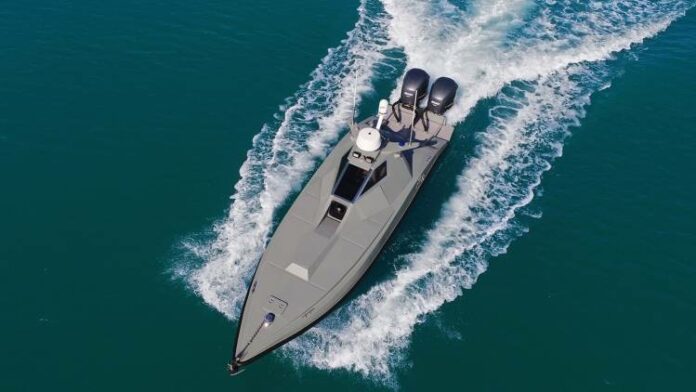
NATO allied nations including UK, Poland, Germany, Netherlands & Belgium will be attending Unmanned Maritime Systems Technology in London this May.

After the NATO Summit in Brussels last year, Defence Ministers from thirteen NATO Allies signed a declaration of intent to cooperate on the introduction of Maritime Unmanned Systems.

This new initiative will enable countries including Belgium, Germany, Netherlands, Norway, Poland, and the United Kingdom amongst many others to work together to create increasingly sophisticated and more interoperable unmanned, maritime vehicles and systems.

For NATO and allies, the use of unmanned systems is a leap forward in maritime technology and will enable nations to be significantly more effective in crucial areas such as detecting and clearing mines (Mine Counter Measures – MCM) and finding and tracking submarines (Anti-Submarine Warfare – ASW).

Working alongside traditional naval assets, these unmanned systems will increase both situational awareness and control of the seas.

For this reason, SMi Group are pleased to host the 3rd annual Unmanned Maritime Systems Technology (UMST) taking place in London on the 8th and 9th May 2019. Delegates at the two-day conference will hear more about the cooperation from NATO, Belgium, Germany, Netherlands, Poland, and the United Kingdom.

These nations will be presenting exclusively on the very latest advancements in unmanned and autonomous technology.

UMST 2019 is the only conference providing holistic coverage of unmanned systems across the full maritime domain, including undersea, surface, and aerial environments.

Source:portnews

U.S. Coast Guard Offloads $360M Cocaine Haul in Miami

0

On Friday, the crew of the Coast Guard cutter Tampa offloaded about 27,000 pounds of cocaine at Coast Guard Base Miami Beach, worth an estimated $360 million wholesale. It is the latest in a long series of multi-tonne drug seizures taken in the Eastern Pacific's busy trafficking zone.

The drugs were seized off the coasts of Central and South America, and they represent the results of a dozen separate smuggling vessel interdictions. Three cutters contributed to the haul: the cutter Dependable interdicted two boats and seized about 2,900 pounds; the Tampa interdicted six boats and seized about 18,000 pounds; and the Venturous interdicted four boats and seized about 7,200 pounds.

“Tampa’s crew is extremely proud of the work they accomplished over the past three months. There are few things more frustrating to our sailors than idle deployments, and none more gratifying than accomplishing a very important mission with impacts that resound across our nation. For many of the crew, this will be their last deployment on Tampa, and it’s one they will always remember.” said Cmdr. Nicholas Simmons, the cutter's commanding officer. 

The Coast Guard has increased U.S. and allied presence in the Eastern Pacific Ocean and Caribbean, which are known drug transit zones off of Central and South America. During at-sea interdictions in international waters, each suspect vessel is located and tracked by one or many of the federal agencies, military units and allied partners involved in the counternarcotics effort. The interdictions, including the actual boarding, are led and conducted by U.S. Coast Guardsmen. The law enforcement phase of counter-smuggling operations in the Eastern Pacific is conducted under the authority of the Coast Guard 11th District, headquartered in Alameda, California.

The effort has yielded impressive results. In FY2017, the Coast Guard seized about 445,000 pounds of cocaine worth an estimated $6 billion, compared with about 36,000 pounds seized on shore by U.S. Customs and Border Protection. 

Source:maritime-executive

Docker Killed at Karachi International Container Terminal

0

Last Sunday, a Pakistani dock worker was killed at Hutchison Port’s Karachi International Container Terminal (KICT), according to the International Transport Workers' Federation (ITF). The victim, a 58-year-old yard checker, was fatally injured when a reach stacker reversed over him. He passed away at about 2300 hours on March 17 at the Civil Hospital Karachi, less than one hour after the accident.

“This is a tragedy. Every worker deserves to go to work and return home safely, every shift, every day. Our thoughts are with [his] family, his workmates, friends and comrades at KICT Labour Union,” said Paddy Crumlin, the head of the ITF's dockers' section. “Today we mourn for a man who was only two years from retirement." 

Crumlin blamed Hutchison Ports, the operator of KICT and the world's largest stevedoring company, for allegedly poor safety practices. A worker who requested to remain anonymous told the ITF that "safety standards in the yard area are very bad," citing allegedly poor lighting and a lack of traffic management. 

ITF asserted that no official inquiry has been initiated by KICT's management, and called on Hutchinson’s global team to intervene and launch a joint labor/management investigation into the incident. KICT and Hutchison have not yet published a statement on the accident.

“This is yet another tragic incident that again raises serious questions about Hutchison’s safety procedures, and how seriously the company takes its responsibility to ensure the health and safety of its employees in ports worldwide,” said Crumlin. "Hutchison needs to know that the ITF will fight to make sure every worker goes home safe, every day."
 

Five workers died at Hutchison’s Jakarta International Container Terminal (JICT) between 2016 and 2018. In the past, ITF has blamed these casualties on the replacement of unionized dockers with non-union contract labor at JICT.

Source:maritime-executive

PSA aims to create the ‘Internet of Logistics’ with partners

0

While continuing to grow its port's business terminal operator PSA International will also broaden its business to other areas of the supply chain with an aim to co-create the Internet of Logistics.

Releasing its annual results PSA reported a 3% increase in revenues last year to SGD4.09bn ($3.03bn) compared to SGD3.97bn in 2017, while net profit was down 3.2% year-on-year SGD1.25bn last year.

PSA group chairman, Fock Siew Wah, noted that 2018 had been a year that presented many challenges to its global business.

“2018 was a year of constant change, beset by the headwinds of global economic and geo- political uncertainty, escalating trade wars, and persistent operational challenges in the shipping industry due to overcapacity, low freight rates and rising fuel costs,” he said.

“Despite all this, PSA managed a creditable and resilient performance in 2018 by staying focused on our customers, and participating in the transformation with like-minded partners towards a truly connected global supply chain.”

Looking ahead it is this global chain business where PSA sees an opportunity for growth beyond its core terminal operations.

PSA group ceo, Tan Chong Meng, said: “In charting our future ahead, while we continue to grow our port business, we will broaden our attention to other segments in the supply chain to create new cargo flow solutions. We will also embrace digital technologies as a game changer, co-creating the Internet of Logistics with like-minded partners."

“Together, we can propel the global supply chain towards greater visibility and connectivity, for the benefit of cargo owners, logistics players, and ultimately, facilitate more vibrant trade,” he added.

Source:seatrade-maritime

Norsk Hydro cyber-attack a clear indicator of cyber risk

0

After a cyber attack recently hit Norsk Hydro, the threat of hacking has once again been imminent for maritime companies, warns Nor-Shipping. Namely, Per Martin Tanggaard, Director of Nor-Shipping, stated that this attack is a showcase of the increasing risk that maritime and ocean companies face.

Specifically, Norsk Hydro computer systems were hit by the comparatively new LockerGoga virus at first, before spreading to its network encrypting files. Due to the attack, the company had to pause production in several plants, switching to increased manual operations to bypass problems connecting to its production systems. LockerGoga demanded payment for the decryption of infected files.

"This is yet another wake up call for industry, and particularly for the maritime segment. Shipping has been comparatively slow to join the digital revolution, but now that it has developments are moving fast, with ever increasing automation, connected operations and the move towards autonomy. It is absolutely essential that firms don’t just see the opportunities inherent here, but also the threats"…..Per Martin Tanggaard, Director of Nor-Shipping, mentioned.

In addition, Mr. Tanggaard also noted that the last two years have seen a rising number of cyber attacks on big maritime players, such as Maersk, COSCO and Austal, as well as ports such as San Diego and Barcelona. He believes that this situations is only the beginning of the development curve. For this reason, shipping and ocean industry firms must have strategies in place to counter risk.

Cyber security should be top of the agenda for all businesses, big and small. If a company with Norsk Hydro’s resources, expertise and systems is susceptible to attack, then everybody is. 

In order to help the industry address the risk, Nor-Shipping has invited Admiral Michael Rogers, who served under both Presidents Obama and Trump as former director of the National Security Agency (NSA), to talk about cyber security on its Ocean Leadership Conference as a keynote speaker on 4 June.

Source:safety4sea

TUV Nord to certify Siemens Gamesa giant

0

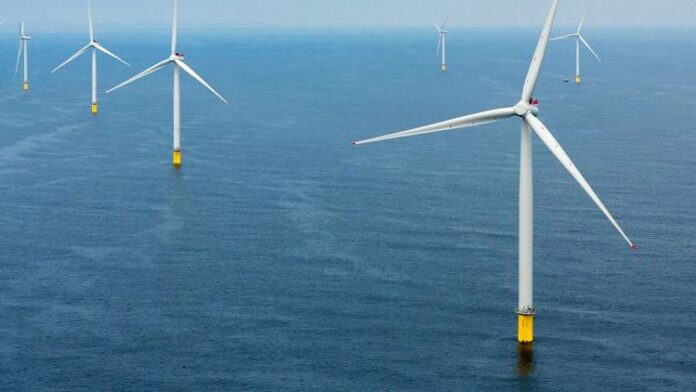
Siemens Gamesa has chosen TUV Nord to certify the turbine manufacturer's new 10MW offshore wind turbine.

The first prototype of the 10.0-193 DD machine will be built this year with TUV Nord carrying out design checks and the type testing campaign.

The latter will involve load validation and performance measurements, as well as safety and functional tests.

TUV Nord will ascertain whether the turbine meets with the design evaluation.

The company will also monitor production of the main components and the final assembly of the hub and nacelle to ensure compliance with the design requirements and Siemens Gamesa's specifications.

TUV Nord energy industrial services business unit member Silvio Konrad said: “With the SG 10.0-193 DD, Siemens Gamesa is launching one of the most powerful offshore wind turbines on the market."

“We are pleased to announce that Siemens Gamesa, after certification of wind turbines based on the G2 and D3 onshore platforms, now also has the confidence to partner with their offshore developments.”

Source:renews

Konecranes and Gulftainer Strike Wilmington Deal

0

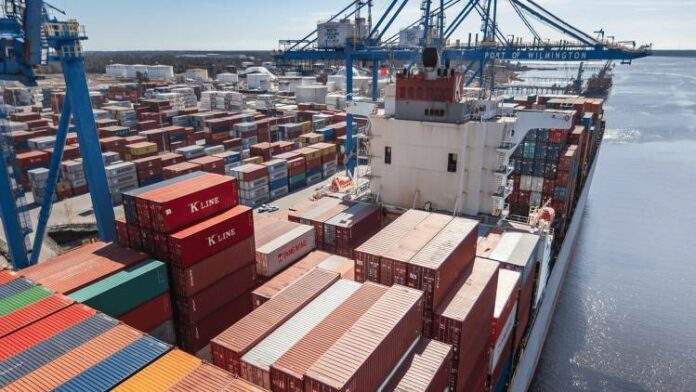
Konecranes, a provider of smart port solutions, has announced that it will supply nine all-electric rubber-tyred-gantry (RTG) cranes and three ‘Liftace Reach Stackers’ to the Port of Wilmington, USA.

The order from port operator Gulftainer USA Wilmington LLC, which agreed a 50-year concession to operate and develop the Port of Wilmington in September 2018, is scheduled for delivery between 2019 and 2020.

Wilmington already operates a fleet of Konecranes’ Gottwald mobile harbour cranes, while Gulftainer has established a relationship with the company by operating Konecranes equipment at Port Canaveral, Florida and in the Middle East.

The new, diesel-free RTGs will run exclusively on electric power supplied by a busbar system, and are equipped with Konecranes’ Active Load Control (ALC) system, eliminating container sway.

Fitted with fire suppression systems, central lubrication and reversing sensors, as well as having a lifting capacity of 45 tons, Konecranes’ Liftace Reach Stackers will also support efficient, eco-friendly operations at the port.

Eric Casey, CEO of Gulftainer USA Wilmington, said: “The delivery of these all-electric RTGs will mark a first for Gulftainer."

The addition of this advanced cargo handling equipment at the Port of Wilmington underlines our commitment to further strengthen our operations at the terminal and defines the Port’s credentials as the number one gateway for imports of fresh fruit and juice concentrate in North America.

“Gulftainer has had a long partnership with Konecranes and we look forward to that continuing for many years to come.”

Jussi Suhonen, Regional Sales Director for the Americas at Konecranes Port Solutions, added: “This order shows that Konecranes’ offering is strong across every category of container handling equipment. Our success in the Americas continues.”

PSA and Partners to Buy Gdansk Container Terminal

0

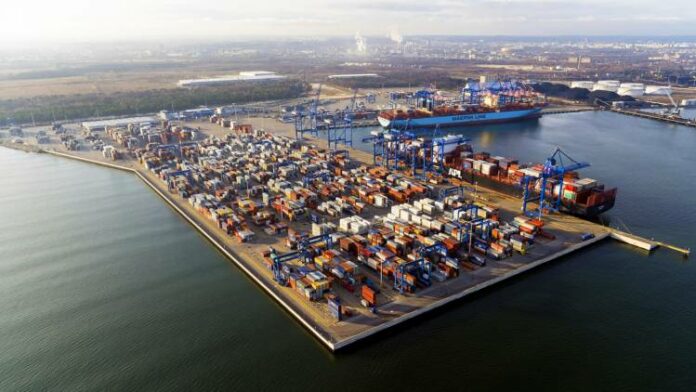
PSA International, the Polish Development Fund and the IFM Global Infrastructure Fund have signed an Agreement to jointly acquire 100 percent of the shares of DCT Gdansk, the largest container terminal in Poland.

The terminal is currently owned by Macquarie Infrastructure and Real Assets managed fund Global Infrastructure Fund II, MTAA Super, AustralianSuper and Statewide Super.

DCT Gdansk is situated at the crossroads of the Baltic deep-sea trading routes and holds a strategic position as a major gateway into Poland and Central-Eastern European markets. Construction of the Port began in 2005. Following a significant capital expenditure program, the port’s capacity doubled in 2016 with the completion of a second quay. Container volumes have grown steadily over the years to reach 1.9 million TEUs in 2018.

DCT Gdansk is the fastest growing container port in Europe and is ranked amongst the 15 largest container ports on the continent. With a quay length of 1,306 meters and a maximum depth of 17 meters, DCT Gdansk is the only terminal in the Baltic that can serve Ultra Large Container Vessels with a capacity of up to 23,000 TEUs.

The investment is a first in Eastern Europe for PSA. The new owners plan to build a third terminal.

Prosafe restructures contract options with Aker BP

0

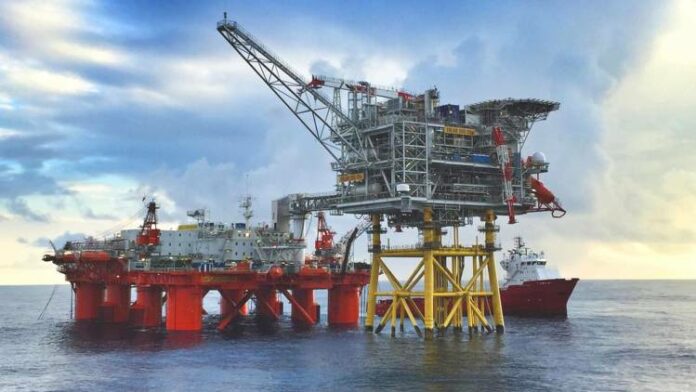
Offshore accommodation platform operator Prosafe has entered into an agreement with Aker BP to restructure the remaining seven one-month options for the 1984-built tender support vessel Safe Scandinavia at the Ula platform in the Norwegian sector of the North Sea, to three one-week options.

The vessel secured a seven-month contract with seven one-month options from Aker BP in August last year.

The first of the one-week options has been exercised. The total value of the option is around $1m which will keep the platform employed until early May 2019.

Prosafe owns/operates seven semi-submersible vessels and has three newbuildings Safe Eurus, Safe Nova and Safe Vega under construction at Cosco Qidong.

Source:splash247