-0.1 C
New York
Home Blog Page 1100

Chinese shipyard mega merger being fast-tracked

0

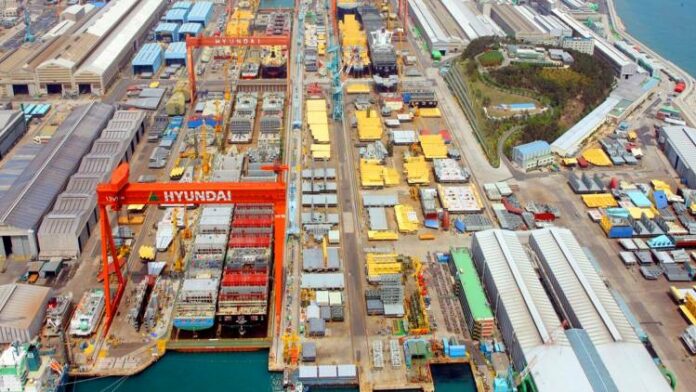
China’s two major state-run shipbuilding majors – CSSC and CSIC – are accelerating preparation for a potential merger, and a detailed merger plan is expected to be finalised this year.

Chinese financial media, The Economic Observer, quoted a source close to the matter saying that the two groups are still working to adjust the merger plan and the State-owned Assets Supervision and Administration Commission (SASAC) will soon present a detailed plan to a new central reform commission established last year by the Chinese president Xi Jinping. If the process goes successfully, the entire planning for the merger could be done before the end of this year.

Earlier this month, merger speculation between CSSC and CSIC heated up further with leaders from both groups meeting at the headquarters of CSSC.

Splash reported last month that the central government had already been working on the merger but a concrete plan has yet to be brought on the table. The issue has intensified in the wake of Korean rivals, Hyundai Heavy and DSME, getting a green light to merge in the past few weeks.

CSIC and CSSC were one conglomerate until 1999 when they were spilt in two with the Yangtze river serving as a geographic marker with CSIC in charge of northern yards and CSSC taking yards south of the river.

Source:splash247

Damen Verolme Rotterdam completes refit of drilling rig Stena Don

0

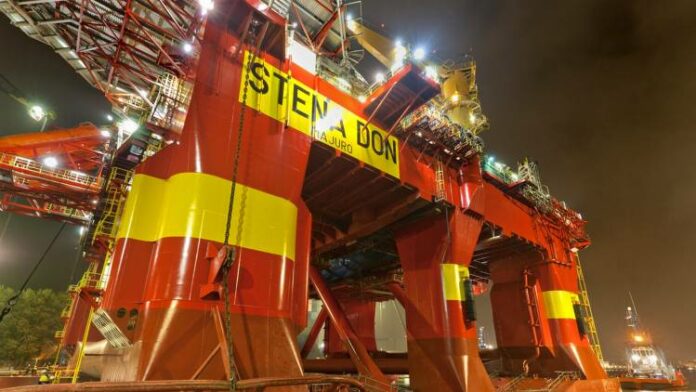
Damen Verolme Rotterdam (DVR) has completed a major refit of the Stena Drilling-owned 5 th generation, semi-submersible drilling rig Stena Don, the company said in its release. The vessel arrived at DVR in October 2018 and departed for her new contract off the UK’s Shetland Islands in February 2019.

The most significant aspect of the works was the installation of an eight-point mooring system for her future drilling contracts. By using this for holding position, emissions will be significantly reduced and substantial savings on fuel costs will be made. The upgrade also enables the rig to work in shallower waters than before which greatly increases her operational envelope. DVR, one of Damen Shipyards Group’s most experienced yards in the repair and refit of complex offshore structures, began preparations for the installation of the new mooring system well before the Stena Don arrived at the yard. Various elements of the system were manufactured by Damen in advance including the anchor chain lockers and sponsons. Weighing 1,200 tonnes in total they were fabricated at Damen Shipyards Mangalia before being shipped to Rotterdam.

Other key components included eight anchor winches and the fairleads plus the winch control cabins, new VFD switchboards and brake resistor units. The eight ultra-high-holding power anchors were delivered by Damen Anchor and Chain Factory. In addition to installing the mooring system the yard also strengthened the hull to comply with the new regulations regarding the mitigation of wave impact forces. The extra weight required the fitting of two additional sponsons. Furthermore, the POB capacity was upgraded from 120 to 140 persons on board. This included the fabrication and installation of two triple lifeboat systems. On the 18 th of February the Stena Don exited the yard for the reinstallation of its six DPS thrusters in the deep water of the Port of Rotterdam’s Maasvlakte. The official handover to Stena Drilling followed on 26 February, in line with the original schedule. The following day she departed for Bergen for inclination tests and additional assessments prior to starting work off the Shetland Islands.

“This was a major project with limited time available, with its challenges.” said Jan Kees Pilaar, managing director of DVR, “It was effectively a turn-key project with DVR handling every aspect including the detailed engineering. However, we know Stena Don from previous projects and have an excellent working relationship with Stena Drilling so the combination of familiarity with the vessel and the support of different specialist units within the Damen Group ensured a successful conclusion.” “We are deeply impressed with how DVR, in close cooperation with our own first-class project team on site and all involved subcontractors, managed to successfully complete this very challenging project on time, on budget and without incidents,” added Fredrik Samuelsson, Commercial Project Manager at Stena Drilling. “A lot of work had to be completed in a very short time frame and this could only be achieved thanks to the professionalism and dedication shown by DVR throughout the project. The result is a very capable and highly versatile rig which will make us and our clients proud for many years to come.”

The Stena Don, a harsh environment, dynamically-positioned, 5 th generation semi-submersible drilling rig, can drill in waters up to 650 metres deep and has an upgraded accommodation capacity for 140 personnel. 95.5 metres in length and with a beam of 67 metres, it was built by the Kvaerner Warnow Werft Shipyard in Germany in 2001. This was the drilling rig’s fourth visit to the DVR site, with its most recent stopover in July 2015 when it came in for a special periodical survey and a mid-life upgrade. 

Port of Thessaloniki joins Green Award scheme

0

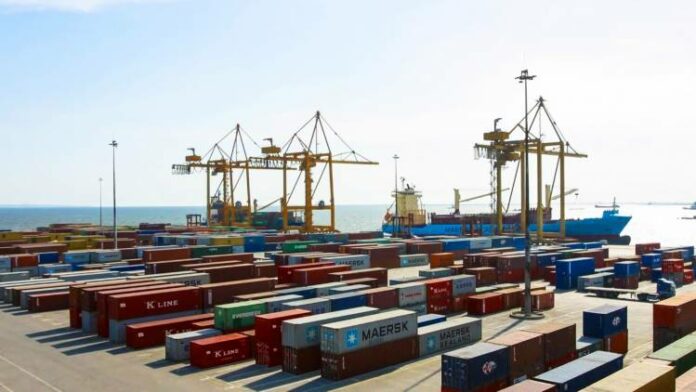
The Port of Thessaloniki, Greece's second largest container port, became the first Greek port to enter the Green Award certification program and will be providing an incentive to Green Award ships calling at the port. The move comes as part of the port authority's broader plan to keep pace with the governmental and society efforts to combat climate change.

Green Award certifies ships that demonstrate high safety and quality standards and excellent environmental performance.

The Port of Thessaloniki is one of the most important ports in South Eastern Europe, serving an enlarged hinterland of countries. It is also the largest transit-trade port in Greece and it services the needs of approximately 15 million inhabitants of its international mainland.

Green Award’s Chairman, Captain Dimitrios Mattheou, handed over a Green Award plaque to Thessaloniki Port Authority S.A. on 8 March 2019. On tho occasion, he said:"I certainly expect that this frontrunner role worthy taken by the Port of Thessaloniki will both stimulate the local and peripheral shipping society and generate high interest of other ports to follow this eminent example and become part of this global green team. The port of Thessaloniki, from now on, as a member of our global port community will use the Green Award program as a tool to improve the environmental and safety standards in shipping."

The port of Thessaloniki joins forces with 36 other ports globally and more than 75 other incentive providers with a prominent presence of several Greek maritime service providers, he added.

Green Award network of incentive providers has been growing very fast in the past few years.

Incentive providers are ports, companies operating in the shipping industry and organisations providing maritime related products en services that voluntarily join Green Award to encourage ships with safe and green performance.

Source:safety4sea


New project eyes creation of a gigawatt electrolysis plant

0

In a bid to bring hydrogen generation to an industrial level, a consortium of Dutch companies, universities and knowledge institutions have teamed up on the 'Gigawatt Electrolysis Factory' project. The project, recently kicked-off at the Institute for Sustainable Process Technology, aims to investigate what it takes to build a gigawatt-sized electrolysis plant in the Netherlands around 2025-2030.

As explained, around 2030, wind farms in the Netherlands and the North Sea will produce several dozen GWs of renewable electricity. On the other hand, current industrial plants producing hydrogen from natural gas have a capacity comparable to an electrolysis plant of GW size.

At present, industrial installations for the electrolysis of water – the electrolysers – are no larger than a few megawatts. A factory with a capacity of a gigawatt would thus operate a hundred to a thousand such electrolysers.

As such, the project seeks to identify the key barriers to overcome when the numbers of electrolysis cells (so-called 'stacks') in an integrated factory are hugely increased.

With this 'numbering up' it is important that the factory is able to operate in a dynamical fashion. After all, it will operate on electricity from wind or solar parks and will therefore have to cope with a varying electricity supply. It will have to be able to adapt to declining or increasing power supply.

Another important aspect of the gigawatt factory is the production of heat and oxygen which are potentially valuable 'by-products' of the water electrolysis. The technical design of the factory should take into account the capturing and delivery of hydrogen, heat and oxygen in a way that goes hand in hand with the operational strategy of the large-scale facility.

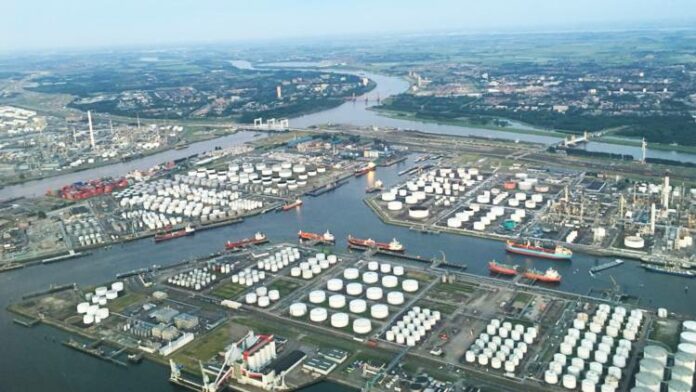
"The ultimate goal of the project is to achieve an optimal design at minimal cost. With the current state of technology and current market prices, the investment for a GW electrolysis plant would amount to about one billion euros. The partners in the Gigawatt Electrolyser project aim for a design that reduces this amount three- or fourfold. Bringing the cost back to around 350 million euros for a GW electrolysis plant, would give rise to a competitive alternative for the conventional 'fossil' hydrogen technology."…the Port of Rotterdam said.

In addition, an important project aim is to determine how the cost of electrolysers and components can decrease as a result of the scaling up of the electrolysis technology. This entails a study of the expected learning effects in the manufacturing industry which might be comparable to those that have led to cost reductions in wind and solar energy equipment.

The project is expected to stimulate innovation in the field of electrolysis technology, thus creating opportunities for the Dutch manufacturing industry in the production of electrolyser modules and components.

The project is coordinated by the Institute for Sustainable Process Technology (ISPT), the Amersfoort based intermediary between industry, SMEs, knowledge institutions and government, focused on the development of innovative process technology.

The project is supported by TKI Energy & Industry and partners include Nouryon, Shell, Yara, OCI Nitrogen, Gasunie, DOW Chemical, Ørsted, Frames, ECN part of TNO, Utrecht University and Imperial College London.

The project is part of the ISPT Hydrohub program, aimed at the scaling up of green hydrogen production. This also includes the Hydrohub MW test centre for testing new electrolysis technology on a megawatt scale, and an analysis of the future value chain in hydrogen production (HyChain).

The next step is to assess how an industrial GW electrolysis plant can be fitted into an industrial environment, and how a specific environment affects the cost of the plant. In the next project phase that is currently under development, case studies will be carried out in collaboration with industry.

Source:safety4sea

TenneT awarded a framework agreement to Jan De Nul Group for repairs of TenneT’s offshore high-voltage cables

0

TenneT has awarded a framework agreement to Jan De Nul Group for repairs of TenneT’s offshore high-voltage cables in the German Bight. TenneT’s mission is to ensure a reliable and uninterrupted supply of electricity in its high-voltage grid and therefore, Jan De Nul Group has been appointed by the leading European electricity transmission system operator to mobilize in the event of high-voltage cable system faults or failures within the contractual period.

The scope entails repairs of all TenneT’s existing HVAC cable systems connecting individual wind farms to the offshore convertor stations or directly to the onshore grid, as well as repairs of all TenneT’s HVDC cable systems connecting the offshore convertor stations to the onshore grid. In addition, any future connections commissioned within the duration of the agreement will be added to Jan De Nul’s scope. The contract covers a period of 24 months with two optional extensions of 12 months each.

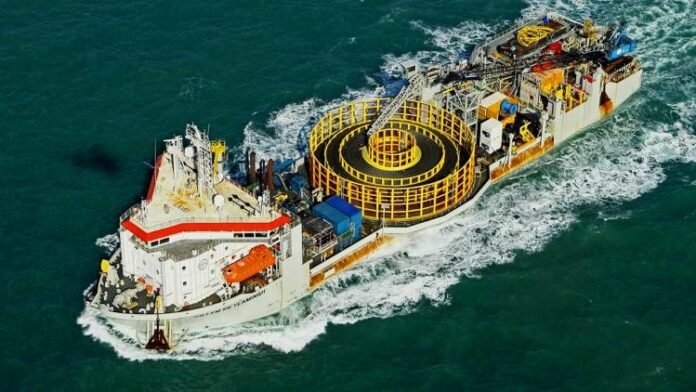
Jan De Nul Group has already initiated the preparatory engineering works required to perform the cable repairs. In the event of a HV cable system fault or failure, Jan De Nul will immediately mobilize one of its offshore cable laying vessels, either Isaac Newton or Willem de Vlamingh.

In 2018, the Willem de Vlamingh installed HV cables to connect the Trianel Windpark Borkum and Borkum Riffgrund II wind farms to TenneT’s DolWin Gamma and Alpha offshore convertor stations. These cables are also subject of this framework agreement.

Jan De Nul Group has executed several cable installation projects in Belgium, the United Kingdom, Germany, Iceland, Egypt, Canada, Mexico, Russia, Taiwan and in the Middle East. In addition, Jan De Nul has installed multiple cable joints over the past years, including the cable joints for an urgent cable repair in 2017 in Iceland by means of the Isaac Newton.


Stag drilling suspended until cyclone clears

0

Bad weather related to the approach of tropical cyclone Veronica have halted preparations for an infill drilling program at the Stag oil field offshore Western Australia.

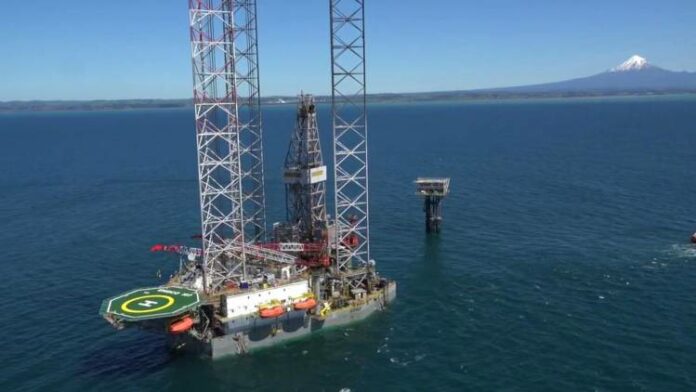
According to operator Jadestone Energy, the jackup Ensco 107 had reached the Stag platform location on March 15 to undergo preparations for drilling. However, both the rig and platform have since been made safe and de-manned.

Paul Blakeley, Jadestone’s president and CEO, said: “Tropical storms are expected in the area in December and through February and we plan for two to three such weather-related events annually…Though this storm is later than usual, our response in such circumstances is clear.”

Already conditions are said to be easing and drilling operations will restart once it appears safe for personnel to return offshore. Thereafter, the well should take around 34 days to drill, and it will likely be completed using an electric submersible pump and brought on production soon afterward.

Jadestone is targeting around 1.2 MMbbl of unswept 2P oil reserves in a higher-pressure area of the field, just west of the platform.

Source:offshore-mag

CMA CGM Orders Ten New Container Ships from China

0

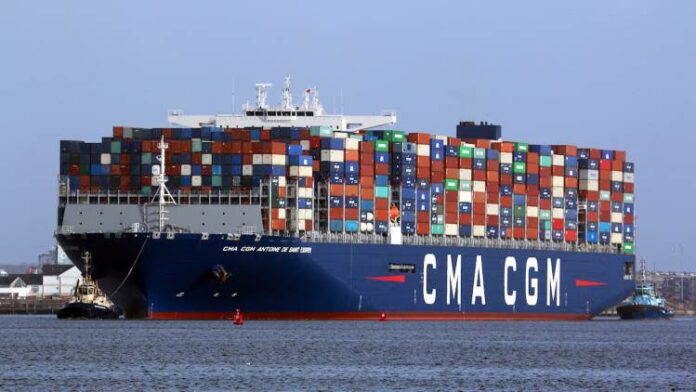
CMA CGM has ordered 10 15,000-TEU container ships, five fueled by LNG and five with scrubbers, from China State Shipbuilding Corporation (CSSC).

The 366-meter (1,200-foot) ships will be delivered from 2021 in replacement of 10 other vessels and will be used on the Asia-Mediterranean lines.

Rodolphe Saadé, Chairman and Chief Executive Officer of the CMA CGM Group, signed the agreement on Monday with Lei Fanpei, Chairman of CSSC, in the presence of French President Emmanuel Macron and Chinese President Xi Jinping. They also signed a cooperation agreement to develop more efficient and environmentally-friendly vessels.

Saadé said: “Through this strategic partnership with the China State Shipbuilding Corporation, we once again opt for LNG propulsion, and we reinforce our efforts to develop ever more efficient and environmentally-friendly vessels. We thereby reassert our leading role in the energy transition of the shipping industry.”

In November 2017, the Group announced an order for nine 22,000-TEU container ships powered by LNG, becoming the first shipping company in the world to choose this energy source for vessels of this size.

Also this week, CMA CGM's 5,095-TEU White Shark successfully refueled with sustainable marine bio-fuel oil in Rotterdam trial.

The trial is being conducted by IKEA Transport & Logistics Services, CMA CGM, the GoodShipping Program and the Port of Rotterdam. The sustainable marine bio-fuel oil was developed by GoodFuels. The second-generation bio-fuel oil is completely derived from forest residues and waste cooking oil products. It is expected to deliver an 80-90 percent well-to-propeller CO2 reduction versus fossil equivalents, and virtually eliminates sulfur oxide (SOx) emissions – without any requirement for engine modifications.

The trial was facilitated by the GoodShipping Program, a sustainable initiative dedicated to decarbonizing ocean freight. 

Source:maritime-executive

Spill from Tank Farm Fire Closes Houston Ship Channel

0

On Monday, the U.S. Coast Guard said that about five dozen ships will have to wait to transit the Houston Ship Channel while efforts to clean up waste from the International Terminals tank fire continue. 

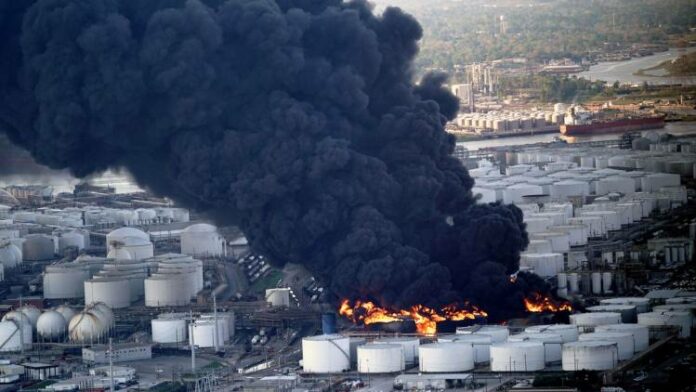
The fire at International Terminals Co.'s Deer Park tank farm broke out on March 17, and it spread to seven filled tanks at its peak. It was largely out by Wednesday, except for a few reflash events, and workers at the site have been draining off the last of the petrochemicals in the affected tanks. 

On Friday, the containment wall around the tank farm failed, sending an unknown quantity of refined petroleum products and firefighting foam into a ditch that drains into the Houston Ship Channel. 

The environmental contractor for the Texas Commission on Environmental Quality (TCEQ) has been working to contain the site using booms, and it is pumping waste to storage containers to minimize the release. The Coast Guard's Gulf Strike Team, which specializes in spill response, has been called in to assist, and 15 skimmers are currently working on the cleanup effort on the waterway. About 60,000 gallons of contaminant-laden water have been collected so far, and the Houston Chronicle reports that most of the rest has been contained within Tucker Bayou, a small inlet adjacent to Deer Park's marine terminal. 

Environmental assessments are under way. TCEQ has been sampling water from the drainage ditch, and nine chemicals in its samples exceeded health-protective concentration levels, including xylenes, pyrene, anthracene, benzene, ethylbenzene, toluene, phenanthrene, fluoranthene, and 2-methylnaphthalene. Surface water sampling continues in Tucker Bayou, the Houston Ship Channel, and the channel's entrance to Galveston Bay. TQEC has not yet released the results of these sample tests, but it noted that the spill does not threaten drinking water supplies.

Source:maritime-executive

First Condensate Cargo Shipped from Prelude

0

Royal Dutch Shell on Monday said it had shipped the first condensate cargo from its Prelude floating liquefied natural gas (FLNG) project off northwestern Australia over the weekend.

"We can confirm that the first shipment of condensate has sailed from the Shell-operated Prelude FLNG facility. This is another step towards steady state operations," a Shell spokeswoman said in emailed comments.

Shell had hoped to start generating cash flow from Prelude in 2018, but has yet to start shipping LNG from the project, which was to have been the world's first floating LNG facility but was beaten by Malaysia's Petronas.

The company declined to say when it expects the first Prelude LNG cargo.

"The focus continues to be on providing a controlled environment to ensure Prelude will operate reliably and safely now and in the future," the spokeswoman said.

Shell also declined to comment on a report in the West Australian newspaper which said one factor that has delayed LNG production is a problem with the arms built to transfer LNG from Prelude to tankers alongside the massive vessel.

Prelude, designed to produce 3.6 million tonnes a year, is the last and smallest of eight LNG projects built in Australia since 2012, putting the country on course to overtake top LNG exporter Qatar's capacity.

Prelude is the world's biggest floating LNG production unit and the biggest maritime vessel ever built.

Source:marinelink

UK offshore industry eyes floating vision

0

RenewableUK is partnering with Scottish Renewables to establish a new group to set out the floating offshore wind industry’s strategy for large-scale deployment in the UK.

The Floating Wind Steering Group aims to produce a vision for the future of floating wind, and the business case for its continued development in the country.

The group includes representatives from developers and the supply chain from regions around the UK.

R-UK deputy chief executive Emma Pinchbeck said: “The UK has a unique opportunity to pioneer a new technology which has a truly global potential."

“Industry leaders are working together to ensure that government seizes that opportunity. As we step up decarbonisation of the energy system, competitive new technologies like floating wind will be good for consumers.”

Scottish Renewables deputy chief executive Jenny Hogan said: “Innovation is key to the long-term growth set out in the offshore wind sector deal and floating turbines will open up new areas in deeper waters, particularly off the coast of Scotland with new sites for development currently being considered."

“Globally, much of the offshore wind potential is in deeper waters that will need floating technology, so this sector offers new industrial opportunities across the UK.”

The partners said that following the UK government's cost of energy review the Department for Business, Energy and Industrial Strategy is developing a White Paper to update electricity strategy.

“The floating offshore wind industry is looking for the White Paper to recognise the opportunity for the UK to pioneer new technology and industrial opportunities for our regions,” they added.

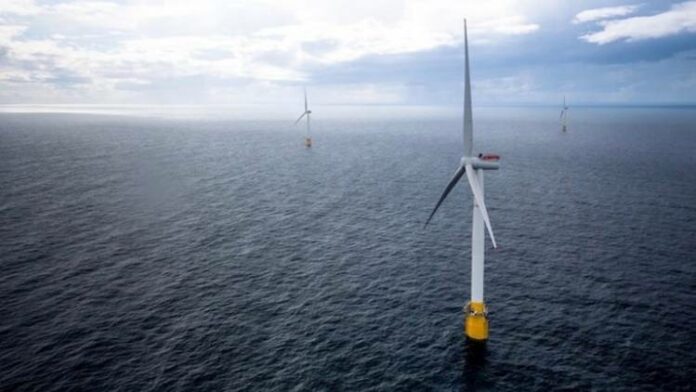
The world’s first floating offshore wind farm the 30MW Hywind project (pictured), was opened by Equinor and Masdar off the coast of Peterhead in late 2017.

Source;renews