6.5 C
New York
Home Blog Page 1071

Haliade-X showcase for UK supply chain

0

GE Renewable Energy will hold a series of supply chain events in the UK next month for its Haliade-X 12MW offshore wind turbine.

Scottish Enterprise and Highlands and Islands Enterprise are partnering with GE on two events on 7 and 8 May in Edinburgh and Inverness, respectively.

The 7 May event will be at Scottish Enterprise's office at 99 Haymarket Terrace, while the venue for the Inverness event has yet to be decided.

GE said it is looking for a broad range of potential suppliers for the Haliade-X machine.

Source:renews

Trump administration reportedly delays offshore leasing plan

0

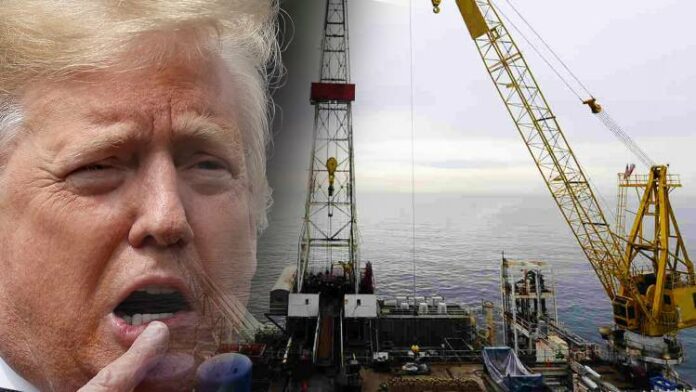
Interior Secretary David Bernhardt told the Wall Street Journal the Trump administration’s development of a new five-year offshore oil and gas leasing program has been delayed indefinitely.

According to the Wall Street Journal report, Bernhardt said the ruling by a federal judge in Alaska last month may force Interior Department officials to wait until the case goes through potentially lengthy appeals before they can make a final decision on what offshore areas to open for leasing to the oil and gas industry.

“By the time the court rules, that may be discombobulating to our plan,” Bernhardt was quoted as saying.

Last month US District Court Judge Sharon Gleason ruled that an Obama-era ban on drilling in the Arctic Ocean off Alaska and areas of the Atlantic Ocean must remain in place unless Congress passes legislation to end it.

National Ocean Industries Association President Randall Luthi said the department should consider moving ahead with the proposed plan “with the caveat that the areas that are affected by the previous withdrawal could be excluded from an eventual sale. A hard stop negates months of environmental and economic analysis that could be used to move the plan forward. Again, this is not a final plan, it is a proposed plan.”

He pointed out that while the offshore industry is starting to recover from the downturn, companies may decide to invest billions of dollars into foreign offshore energy markets “free from litigious activism.”

Luthi added: “What cannot be delayed, however, is the importance of domestic production to meet the growing demand for affordable, reliable American energy. While Democratic presidential candidates are bowing to Keep It in the Ground activists, California is launching yet another an investigation into the state’s exorbitant gasoline prices (Californians paid close to $10 billion for premium-priced Saudi crude oil during 2018) and New England stayed warm this winter as residents relied on imports of Russian LNG. It is clear that the high-energy prices and policies of California and New England should serve as a real a warning to what happens when rational energy policies that promote domestic development are abandoned.”

Source:offshore-mag

Latest Keppel jackup to work in the North Sea

0

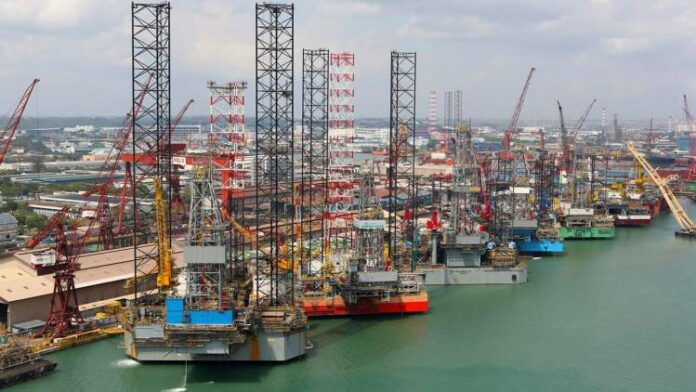
Keppel FELS has delivered the jackup ENSCO 123 to Ensco Rowan plc.

The KFELS Super A Class design, harsh environment rig will work initially in the UK North Sea.

This is Keppel’s fourth enhanced KFELS Super A Class rig for EnscoRowan. All are designed to operate in a variety of environments in water depths up to 400 ft (122 m), and to drill to TDs of 40,000 ft (12,192 m).

Applications include large multi-well platform drilling programs, ultra-deep gas drilling and ultra-long reach wells.

Among the features of the design are a 2.5-MMlb quad derrick, automated, hands-free offline pipe handling, high capacity jacking and fixation systems, and accommodation for 145 personnel.
Source:offshore-mag

Petronas acquires stake in two fields offshore Brazil

0

Petrobras has entered into a sale and purchase agreement with Petronas Petróleo Brasil Ltda. for 50% working interest in the Tartaruga Verde field and Module III of the Espadarte field in the deepwater Campos basin. The value of the transaction is about $1.3 billion.

Petrobras will maintain 50% working interest and the operatorship of the fields.

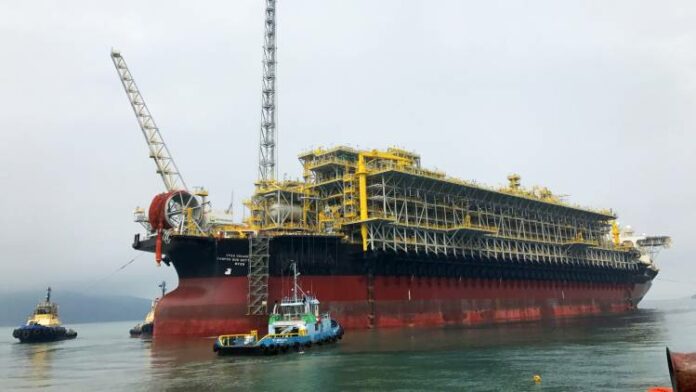
The Tartaruga Verde field began production on June 22, 2018 through the FPSO Cidade de Campos dos Goytacazes MV29. According to Petrobras, the field currently produces about 103,000 b/d of oil and 1.2 MMcm/d of gas.

The Module III is an area of the Espadarte field to be developed in an integrated way with the Tartaruga Verde field. First oil is expected in 2021. 

The completion of the transaction is subject to the closing conditions, including the approval from the Brazilian Administrative Council for Economic Defense and the Brazilian National Agency of Petroleum, Natural Gas and Biofuels.

Source:offshore-mag

Azerbaijan starts cooperation with Dutch companies

0

The Baku International Sea Trade Port began cooperation with companies operating in the city of Venlo in the Limburg Province of the Netherlands, considered one of the transport and logistics hubs of Europe.

Specifically, the government of the state of Limburg signed an MoU with the port of Baku.

The Memorandum focuses on collaboration that will take place between the government of the province of Limburg, companies Cabooter Group, SMART Logistics Centre, the Limburg Development & Investment Company, Greenport Venlo, KLG Europe, the Council for the Development of Northern Limburg, companies of business network Azerbaijan-Netherlands and the University of Fontys.

After the signing ceremony, the General Director of BISTP commented "Our cooperation, the foundation of which is being laid today, will be the result of attracting well-known companies from the Netherlands and Europe to the Port of Baku. It is gratifying that the Dutch companies in the logistics chain between Asia and Europe pay special attention to the new Port of Baku located in Alat settlement, and seek to involve various services and production in our country."

professional orientation in the Port of Baku and Limburg, for the acquisition of international experience of the Port of Baku's specialists.

After the initial selection in Azerbaijan, specialists are expected to participate in training and practical experience for six months in Venlo.

In addition, during the ceremony, the Chemelot terminal which is based in the city of Geliina experienced inspections and also detailed information was provided on the control system, the technological processes of loading and unloading and the general processing of the terminal.

The visit resulted to an agreement that was decided between logistics companies operating in the city of Venlo in connection with the transportation of the first test container in the direction of Venlo-Istanbul-Baku-China this May.

Moreover, the ones taking part in the collaboration, discussed the matter of opening of the European representation of the Port of Baku in Venlo, in order to expand bilateral trade relations.

Source:safety4sea


NYK president replaced as losses hit $400m

0

After just four years in charge, Tadaaki Naito’s tenure in charge of one of the world’s largest shipping lines is coming to an early end.

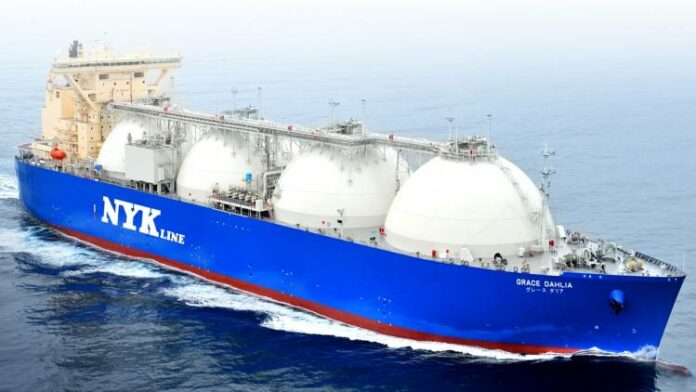
Naito, president of the 134-year-old Nippon Yusen Kaisha (NYK) since 2015, today delivered one of the company’s poorest financial results with the Tokyo-listed company revealing a net loss for 2018 of Y44.5bn ($398.4m).

Following a shareholder meeting scheduled for this June, Naito will move to become NYK chairman, which in Japanese corporate culture is a largely ceremonial role en route to retirement. His position as president will be taken by Hitoshi Nagasawa.

Nagasawa, 61, has been with NYK since 1980, most recently heading up the group’s profitable LNG division.

“We are viewing the results of this year seriously,” NYK stated in a release today. Nevertheless, the giant shipowner, with 290 ships on its books outside of its joint venture container vehicle, ONE, is forecasting a return to profit this year, predicting today a full year net profit of Y26bn for 2019.

Source:splash247

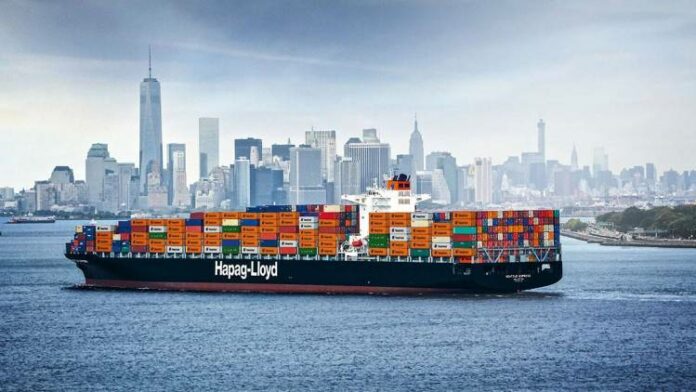
Hapag-Lloyd plans to reduce its emissions 20% until 2020

0

Hapag-Lloyd published its Sustainability Report, saying that it is on track to reduce its CO2 emissions per TEU-kilometre by 20% by 2020, in comparison to the base year 2016. The company is achieving that by focusing on increasing energy efficiency, applying stricter requirements for newbuilds and reducing bunker consumption.

Hapag-Lloyd noted that it has environmental certifications, including the global environmental and quality management standards ISO 9001 and ISO 14001. It also has certifications on energy efficiency and prevention of oil, sewage and air pollution.

The company also informed that it plans to reduce its emissions per TEU-kilometre by 20% until 2020, compared to 2016. Under this aspect, 'Fleet Management' aims to decrease bunker consumption by limiting resistance in the water. Until now, three ships' hulls have undergone cleaning during the reporting period.

In addition, specific biofouling plans for each vessel were established, so as to reduce fouling on the ships' hulls.

Moreover, Hapag-Lloyd has reduced the energy consumption of the various pump systems on board ships. This was done by installing a frequency-reducing regulator.

Furthermore, the report mentions that the company managed to reduce CO2 emissions by retrofitting eleven ships with mixed stows. This led to higher capacity through greater flexibility in using slots.

Another significant aspect in which Hapag-Lloyd has invested is 'cold ironing'. Aiming to enhance the efficiency of its fleet, it retrofits ships with 'cold ironing' ship-to-shore connections.

This ensures that power is supplied from the on-shore electricity grid while the ship is docked at the port

Hapag-Lloyd stated.

Finally, the company analyzed the pros and cons of using different compliance methods for the 2020 sulphur cap:

  • Compliant bunkers can be used for the short-term, but they will increase the cost for buying low-sulphur bunkers to about $1 billion per year;
  • Hapag-Lloyd also plans to convert one ship to LNG, as a test run in order to evaluate this option as well;
  • Scrubbers will also be tested and evaluated on ten ships as of 2019.

We regularly assess our compliance with the requirements of the standards and certifications as well as with applicable environmental laws and regulation


It’s ‘make-or-break time’ for shipping to invest in women

0

Digging deeper into the diversity issue and learning by other industries, shipping tends to understand that a diverse organization equals with a more profitable organization by all means. It is high time, we look at how priorities are set in the shipping industry agenda and move from discussions into real actions. It is the make-or-break time for shipping industry, not only to point out the need of investing in women, but also to address better ways and strategies of investing in female personnel.

2019 has been proclaimed, by the International Maritime Organization to be the year of “Empowering women in the maritime”. Besides, the recent WMU Conference in Malmo, Sweden identified opportunities to encourage women to pursue careers in the maritime and ocean sectors, and called for action from maritime and other stakeholders in support of achieving the UN SDGs, in particular Goal 5 related to gender equality, as a cross-cutting theme.

Five ways to invest in women

#1 Adopt a new mindset

A new mindset is the first priority for an actual change. ‘’There are a lot of men that want the change too. We need to include the men in our conversations and work together to create the future of the maritime industry that we want,” Lena Göthberg, producer of Shipping Podcast.

#2 Help female role-models develop

There is also great need to showcase what women in shipping can do. In this context, more female role-models are needed. Sadly, there is a consensus that shipping companies are usually waiting for potential employees to approach them rather than approaching prominent people by themselves. By helping women out there stand out from the crowd of men, an organization further helps female role-models develop for the next generations to come and subsequently contributes in changing the profile that seafaring jobs have as of now.

#3 Learn from other countries, industries, companies

We should not do diversity for diversity, but look upon how we can benefit from it,” Lena Göthberg adds. Here comes the answer to the question; why embracing gender diversity in shipping industry? There are several examples that our industry in general, and individual companies in particular, need to focus on.

A good example is Stena Line – among the largest ferry operators in the world- who in 2018 signed the Maritime UK’s “Women in Maritime pledge” committing to building an employment culture that actively supports and celebrates gender diversity, at all levels. The organization has further announced a diversity program to employ a minimum of 30% female leaders in three years of now, while currently they account for 19% and has further set a zero-vision in terms of harassment. What if each and every organization in shipping industry sets a goal that 20-50% of its recruits annually are females? What if each company sets a limit of its men recruits?

#4 Train your women around

In order to have women compete on a level playing field in the sphere of shipping, they need to have equal training opportunities as men onboard. Apart from training of the necessary technical skills onboard and regulatory update, important topics are the development of soft skills such as leadership skills (i.e. negotiations, communications, team management) and how to adapt to forthcoming maritime industry challenges.

#5 Spread meaningful data on digital media

Instead of sharing slogans or long-term visions of the organization, organizations need to start sharing concrete actions and results, such us figures of women that you occupy, accomplishments of their female employees and/ or rising trends within their organizations regarding female employees occupying a position or getting promoted in a new one. Another good tip is not sharing the future challenges in terms of diversity, but results from current challenges that overcome in present through the implementation of diversity policies.

Source:safety4sea

2.2 tons of cocaine found on Neopanamax container ship, so what?

0

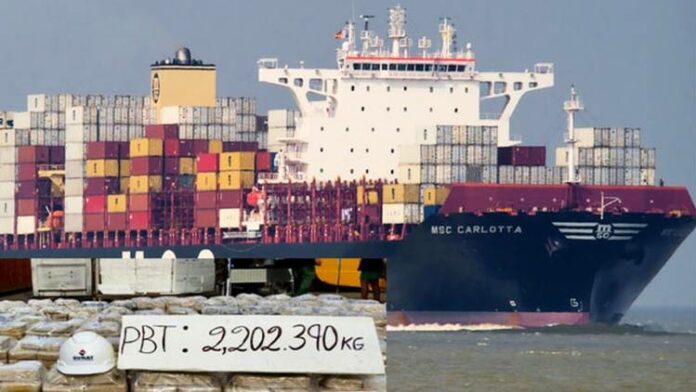
1851 packages of cocaine, of total 2202 kilo weight, were found in containers on board of Neopanamax container ship MSC CARLOTTA at Callao port, according Chilean police official statement.

The ship arrived at Callao on Apr 23, and most likely, police and anti-drug agency already knew where to look for. After Callao, the ship is to call Panama and then, Belgium, Antwerp, believed to be port of cocaine destination. No crew were detained, investigation is still going on, MSC CARLOTTA still berthed at Callao as of morning Apr 25. Highly unlikely crew or company or MSC agents have anything to do with busted drugs shipment. 

With news like this one being regular, I can’t but feel frustrated every time I publish them, just by sheer meaningless of it all. There’s little doubt if any at all, that overwhelming majority of drugs hidden in containers, safely reach their destinations. Here and there crews are arrested and sentenced on false accusations of collusion with drug smuggling rings.

What’s the use of this incessant and fruitless fight with drugs trafficking? Does it hamper or disrupt trafficking to any considerable effect? No, but what it does, and very effectively, is sustaining drugs street costs on a level which brings fortunes to organized crime, and being justification of anti-drug agencies existence, with fortunes wasted on them, being little less (or probably, bigger), than those pouring onto criminals. Fighters with drugs are interested in drugs trafficking no less than traffickers. What’s the use of all this, the purpose? Aren’t there other ways to deal with drugs problem, sensible and realistic? 

Source:fleetmon

Rising maritime traffic could lead to surge in invasive species

0

Rising global maritime traffic could lead to sharp increases in invasive species around the world over the next 30 years, according to a recent study by McGill University researchers. The findings suggest that shipping growth will far outweigh climate change in the spread of non-indigenous pests to new environments in coming decades.

"Biological invasions are believed to be a major driver of biodiversity change, and cause billions of dollars in economic damages annually. Our models show that the emerging global shipping network could yield a three-fold to 20-fold increase in global marine invasion risk between now and 2050"…says senior author Brian Leung, an associate professor in McGill’s Department of Biology and School of Environment.

Shipping accounts for an estimated 60% to 90% of marine bio-invasions. In some cases, ships transport living organisms through ballast water, which is taken up to stabilize the vessel. In others, species hitch a ride to new environments by attaching to the hulls of ships.

"To understand how biological invasions will change, we need to understand how shipping patterns could change. Our study suggests that, unless appropriate action is taken, we could anticipate an exponential increase in such invasions, with potentially huge economic and ecological consequences,"…says lead author Anthony Sardain, a graduate student in Leung’s lab at McGill.

Meanwhile, major policy initiatives such as the international BWM Convention, put in place in 2017, represent the latest global effort to control bio-invasions.

While it’s too early to gauge the efficacy of the Convention globally, this work suggests it is in the right direction, noted Dr. Leung.

As wealth and population increase, so too does demand for goods and services that are not available locally. The wide range for increases in bio-invasion risk estimated by the models – anywhere from three-fold to 20-fold – stemmed from uncertainty in the underlying socioeconomic trajectories.

"Despite this large range, all scenarios point to an increase in both shipping and invasions. That should alert us to the gravity of the situation, and the importance of measures to curtail biological invasions,"..Sardain notes.

The Natural Sciences and Engineering Research Council of Canada funded the research. Findings were published in the journal Nature Sustainability.

Source:safety4sea