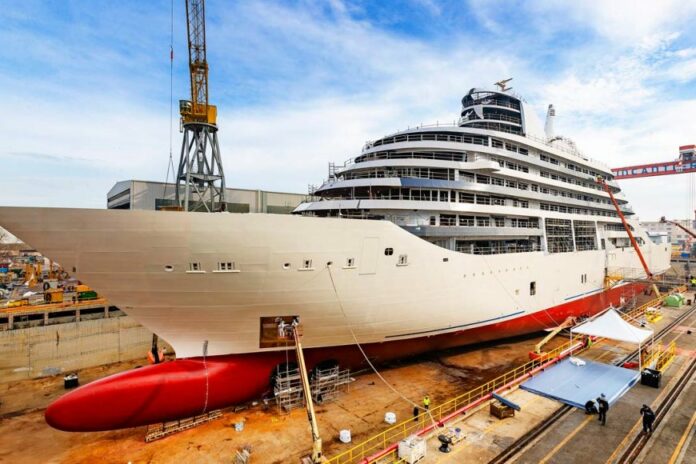
Fincantieri and Marc-Henry Cruise Holdings LTD, Joint Owner/Operator of Four Seasons Yachts, have celebrated at the shipyard in Ancona the launchingof “Four Seasons I”, the first ultra-luxury vessel under construction for Four Seasons Yachts, which will be delivered at the end of this year and setting sail in January 2026.
The launching ceremony was attended for Fincantieri by its Chairman, Biagio Mazzotta, the CEO and Managing Director, Pierroberto Folgiero, the General Manager Merchant Ships Division, Luigi Matarazzo, while for the shipowner by Nadim Ashi, Owner and Executive Chairman, Marc-Henry Cruise Holdings LTD, Joint Owner/Operator of Four Seasons Yachts/Founder and CEO of Fort Partners, by Prosper Assouline, Creative Director, Four Seasons Yachts, and Bart Carnahan, President, Global Business Development, Portfolio Management and Residential, Four Seasons.
“Four Seasons I”, which will be using the very latest in environmental protection technologies, will be 34,000 gross tons, 207 meters long, and will have 95 exclusive suites with remarkable custom design, focused on removing barriers between guests, the sea, and their surroundings. Each suite features extensive terrace decks, reaching up to impressive 457 square meters in the prestigious Funnel Suite, the Yacht’s most exclusive accommodation.
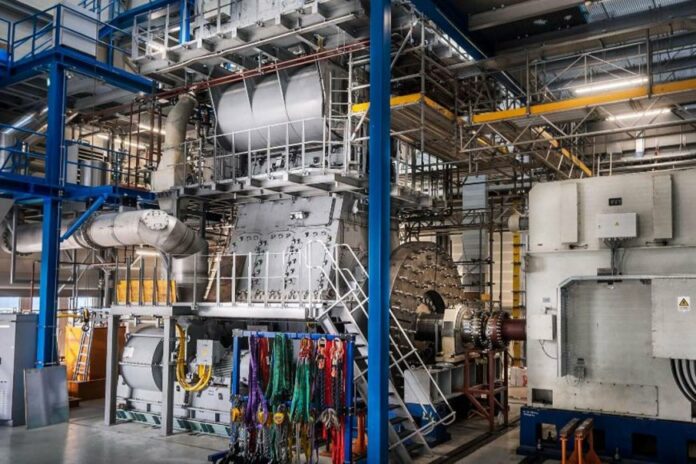
Swiss marine power company WinGD has seen key parameters in line with expectations during early testing of its new X-DF-A ammonia-fuelled engine design.
Single-cylinder testing will allow rapid validation of the ammonia combustion system under engine conditions, as well as optimisation of emissions and performance. It follows earlier combustion tests and validation of critical systems on dedicated test rigs and multiple class approvals of the safety concept. In the coming months, a multi-cylinder engine test at WinGD’s Global Research Centre in Shanghai will validate the full-scale engine, turbocharger configuration and control system before the engine enters production.
WinGD Vice President Research & Development, Sebastian Hensel, said:
“The single-cylinder X-DF-A concept is running well, with combustion efficiency, emissions and pilot consumption within our range of expectations. This milestone is a testament to our uniquely rigorous approach to innovation and the fantastic work of our development team and partners.”
The company’s dedicated ammonia development programme began in 2019. In 2022 the project progressed to experiments using WinGD’s one-of-a-kind spray combustion chamber (SCC). This was followed by a deep investigation of key engine components on the test rigs housed within ERIC’s Future Fuels Lab.
WinGD Head of Testing and Validation, Sotiris Topaloglou, said:
“In previous tests, we verified that SCC results were transferable one-to-one to the results on our test engines, which is why we invest so much time on these early testing phases. As a result, we are in a strong position to make rapid progress through validation of our ammonia technology.”
Even before the single-cylinder engine tests started, the X-DF-A ammonia fuel injectors were tested on test rigs to validate the functional, mechanical behaviour and reliability, and on a multi-cylinder methanol engine at 100% load. The later test using methanol allowed WinGD a further opportunity to verify the ammonia injection concept under harsh engine conditions and thermal stress and make improvements before testing with ammonia.
The development process has combined proven technology with a meticulous approach to innovation. The X-DF-A platform is based on the diesel-cycle concept that has been well-established for several decades on WinGD’s diesel-fuelled engines. New innovative technologies have been developed to inject and burn ammonia in the most efficient way, controlling and minimising engine out emissions. Huge efforts have also been undertaken to develop the whole fuel handling and safety concept, which is especially challenging due to the characteristics of ammonia as fuel.
The engine safety concept will also be verified on the test engines. WinGD has secured approvals in principle for the concept from several class societies and collaborated with fuel technology providers to develop a tailor-made fuel system. It is now working closely with shipyards and early customers to translate safe design into safe installation and operation.
WinGD has already secured nearly 30 orders for X-DF-A engines in the bulk carrier, containership, tanker and LPG/ammonia carrier segments. The first engines will be built for four LPG/ammonia carriers owned by Exmar LPG and ten bulk carriers operated by CMB.Tech.
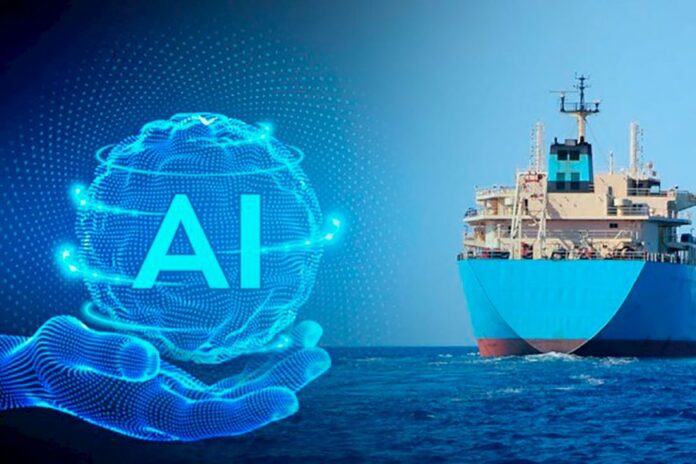
Bureau Veritas Marine & Offshore (BV) has partnered with French AI start-up NukkAI to develop a proof-of-concept (POC) project for an AI-powered agentic tool aimed at transforming surveyor scheduling.
Unplanned delays or early arrivals of ships — often due to weather conditions or operational factors — frequently disrupt surveyor schedules, leading to inefficiencies and lost productivity. The AI agents are being designed to quickly absorb changes to vessel timings and recalculate a new, optimized surveyor schedule while keeping humans in the loop. The agents are also planned to be developed to eventually use open-source data, such as Automatic Identification Systems (AIS), weather forecasts, and additional data sources, to predict changes in ships’ expected times of arrival (ETA).
By integrating this capability into BV’s scheduling platform, MyChronos, this agentic tool will enable near real-time optimization of surveyor assignments. For example, if a vessel’s arrival in Singapore is delayed due to congestion, the system will integrate the change to the vessels ETA and quickly recalculate an optimized surveyor schedule, delivered in a smooth and continuous human-agent interaction. This helps ensure that surveyors’ time is utilized more effectively, minimizing downtime and disruptions while maintaining seamless service for clients.
The POC project will initially focus on scheduling optimization for Singapore’s in-service vessel inspectors. Its seamless integration into MyChronos will allow existing workflows to remain uninterrupted while benefiting from the agents’ advanced capabilities. The AI tool is designed to deliver immediate benefits in operational efficiency. Future development plans include expanding its application to global ports, and other Bureau Veritas Group activities. The POC project is slated to begin in Q1 2025, targeting measurable improvements in surveyor scheduling efficiency and client satisfaction.
This collaboration stems from the partnership between BV and NukkAI, fostered through ZEBOX, a corporate innovation hub launched by CMA CGM. ZEBOX connects industry leaders with start-ups, enabling groundbreaking advancements across maritime and logistics sectors. Through this initiative, BV continues to embrace digital innovation to drive efficiency and enhance services for our stakeholders.
Over a two-week period last month, a steady stream of senior naval officers made their way to the English south coast for a ringside view of an epochal arms race. At stake is the ability of Britain to defend critical seabed infrastructure – and in so doing, keep the nation functioning securely in the internet age.
What the military VIPs had come to see was Herne – a cutting-edge, British-made autonomous submarine about the size of a single-decker bus. The vessel is packed with the kit necessary to monitor and protect against threats to the thousands of miles of data cables and energy lines that connect the UK to the outside world and keep institutions running, from the financial markets to the NHS.
The uncrewed craft, which made its debut in front representatives from no fewer than 10 allied navies potentially looking to acquire the technology, is at the cutting edge of an unseen but growing underwater dogfight with adversaries such as Russia and China, which use fleets of robotic craft controlled by artificial intelligence to prosecute a silent conflict off the shores of Britain and beyond.
The “drone war” that has developed in the skies above the battlefields of Ukraine is slowly but surely moving to the seas.
Intelligence sources told The i Paper that Moscow’s highly-specialised “cable sabotage” force – the Main Directorate for Deep-Sea Research or GUGI – is “strongly assessed” to have deployed advanced uncrewed submarines in the Baltic and North Sea. In little-noticed remarks earlier this year, a UK government minister suggested it was likely that Russian autonomous systems built for “underwater warfare” have been active off the British coast.
Now, after longstanding criticism that Britain and Nato have been painfully slow to confront this threat, a race by the UK and its allies to field equivalent – or even superior – military technology is under way.
Once it is fully operational within the next 18 months, Herne, developed by UK defence giant BAE Systems, will have the ability to stealthily rove the North Sea for up to two months at a time, or lie dormant on the seabed for up to nine months. Using its advanced sensors it can detect incoming threats to fibre optic cables, electricity lines or gas pipe lines, and, in future, remotely destroy or disrupt whatever is responsible.
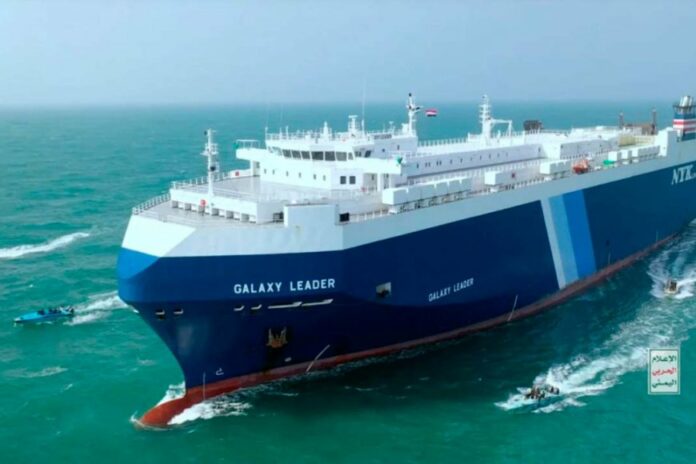
The Galaxy Leader’s 25-strong crew – 17 Filipinos, three Ukrainians, two Bulgarians, two Mexicans and a Romanian – has been handed to mediators from Oman, the Houthi-owned Al Masirah TV reported Wednesday.
The freed Filipino seafarers were under the care of the Philippine Embassy in Muscat, Oman and, “will be reunited with their loved ones in the Philippines very soon,” Philippine President Ferdinand Marcos Jr. said in a statement Wednesday.
The crew’s release comes just days after Israel and Hamas agreed to a ceasefire, bringing a reprieve to Palestinians in Gaza after 15 months of war. The Houthis had long said they would only wind down their campaign in the Red Sea once Israel halted its offensive in Gaza.
The crew had been held hostage since November 2023, when armed Houthis – descending from a helicopter bearing Yemeni and Palestinian flags – stormed the ship off the coast of Yemen.
The Houthi attacks forced some of the world’s biggest shipping and oil companies to suspend transit through the Red Sea, one of the world’s most important maritime trade routes.
Arsenio Dominguez, Secretary-General of the International Maritime Organization, said the crew’s release was a “profound relief.”
“Today’s breakthrough is a testament to the power of collective diplomacy and dialogue, recognizing that innocent seafarers must not become collateral victims in wider geopolitical tensions,” he said.
Hans Grundberg, the United Nations special envoy for Yemen, welcomed the “heartwarming” reports that the Houthis had “put an end to the arbitrary detention” of the ship’s crew for 14 months.
The Galaxy Leader sails under the flag of the Bahamas and is usually used to transport vehicles worldwide. It was among dozens of vessels targeted by the Houthis during their Red Sea campaign.
Eduardo de Vega, a Filipino foreign affairs official overseeing millions of Filipino migrant workers, said in March last year that little could be done to influence the Houthis except the end of hostilities in Gaza.
The Houthis – one side of Yemen’s civil war that has raged for more than a decade – played an outsized role during the past year of conflicts in the Middle East. As well as targeting ships, the Houthis fired a series of missile attacks at Israel.
Although most of the attacks were intercepted by Israeli air defense, Israel’s military responded with airstrikes of its own against Houthi targets in Yemen. The United States and United Kingdom, both allies of Israel, also carried out rounds of strikes against the Houthis.
This was the first exploration well in production licence 1055, which was awarded in 2020 (Awards in predefined areas (APA) 2019).
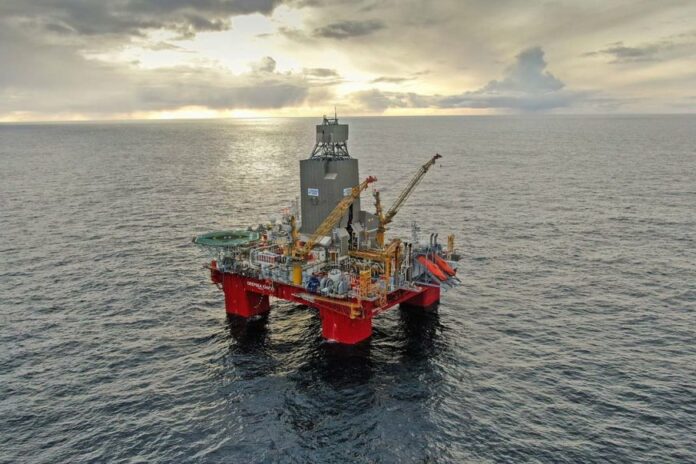
The drilling activity was carried out by the Deepsea Yantai rig, about 40 kilometres south of the Ormen Lange field.
The objective of the well was to prove petroleum in Upper Cretaceous reservoir rocks in the Lysing Formation. The secondary exploration target was to prove petroleum in Upper Cretaceous reservoir rocks belonging to the Kvitnos and Lysing formations.
The primary exploration target was encountered 3806 metres below sea level. The reservoir zone was 118 metres thick with alternating siltstone, limestone and some thin sandstone layers with generally poor reservoir quality.
No reservoir was proven in the secondary exploration targets.
Well 6305/10-1 was drilled to a vertical depth of 3993 metres below sea level, and was terminated in the Lange Formation in the Lower Cretaceous.
Water depth at the site is 367 metres. The well has been permanently plugged and abandoned.
The partnership also includes Honeywell and StS-ISONOR and builds on an already established collaboration model with clear incentives to work as an integrated team towards common goals.
The contract has a duration of 5 years with the option to be extended up to 11 years.
“We are proud to be a trusted and strategic partner for Vår Energi. At Aker Solutions, we believe that strong partnerships drive efficiency, foster continuous improvement, and enable a leaner project organization,” said Paal Eikeseth, executive vice president and head of Aker Solutions’ Life Cycle segment.
The strategic partnership aims to create value through joint project planning, safe and efficient execution, collaboration and shared objectives.
Vår Energi’s chief operating officer, Torger Rød, is pleased to initiate a four-party collaboration with the team:
“Aker Solutions, Honeywell and StS-ISONOR represent world-leading technical expertise and extensive experience in areas of strategic importance to our activities. With Vår Energi’s clear growth ambitions, a strong and long-term partnership is crucial. We are working purposefully to achieve results through close collaboration, actively utilising our partners’ core competencies. By year-end, we will increase production to around 400 thousand barrels per day, which makes us one of the world’s fastest-growing oil and gas companies.”
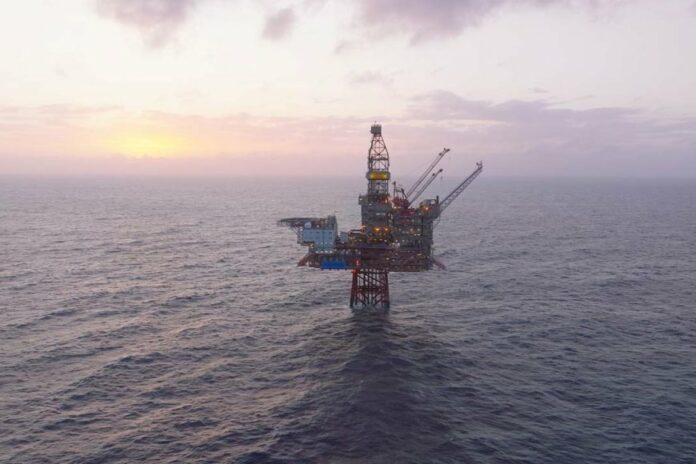
Vår Energi’s operations span the entire Norwegian continental shelf with a diversified portfolio of 200 licenses and 42 producing fields.
In December 2024, Aker Solutions signed a sizeable1 frame agreement to deliver maintenance and modification services for Vår Energi’s Jotun, Balder, and Ringhorne assets in the southern Norwegian Continental Shelf (NCS). These activities are part of the partnership.
In connection with the transaction, Stena RoRo is taking over a contract with the Tunisian shipping company Cotunav for service on the Rades-Marseille route. The seller is CIN (Compagnia Italiana di Navigazione S.p.A), a company in the Moby Lines S.p.A group of companies.
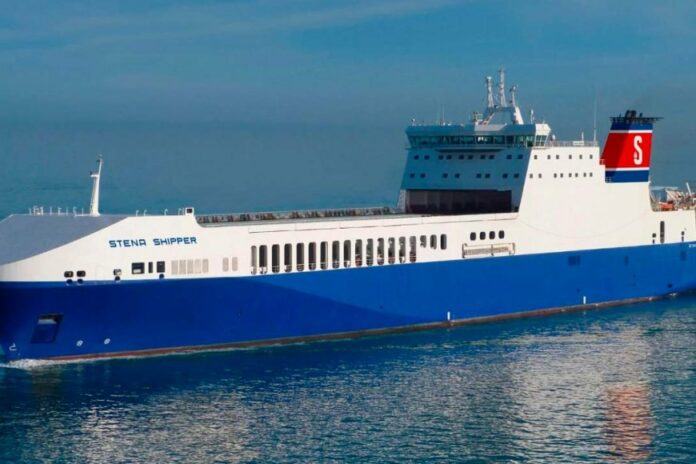
The Stena Shipper was built in 2012 at the Danish shipyard Odense Yard.
“This acquisition is part of our continuing expansion of our fleet, broadening our offering and strengthening our position in the market,” says Per Westling, Managing Director, Stena RoRo. “The Stena Shipper is the last ship in a long series of sister ships built at the Danish Odense shipyard and has a large cargo capacity, which combined with a low fuel consumption, provides good environmental characteristics.”
Stena Shipper, basic specifications:
Length: 193 m
Draught: 7 m
Beam: 26 m
Capacity: 3,663 length meters, distributed on 4 decks
Belfast Harbour has unveiled a new strategy which sets out plans to position the port at the forefront of the clean energy transition as a key player in the development of offshore wind energy port capacity in the UK & Ireland.
The strategy – Advance Regional Prosperity 2025-2029 – outlines an ambitious programme to invest more than £300m in capital projects over the next five years – £208m in port developments and improvements and £105m in the ongoing regeneration and development of the Harbour Estate and waterfront.
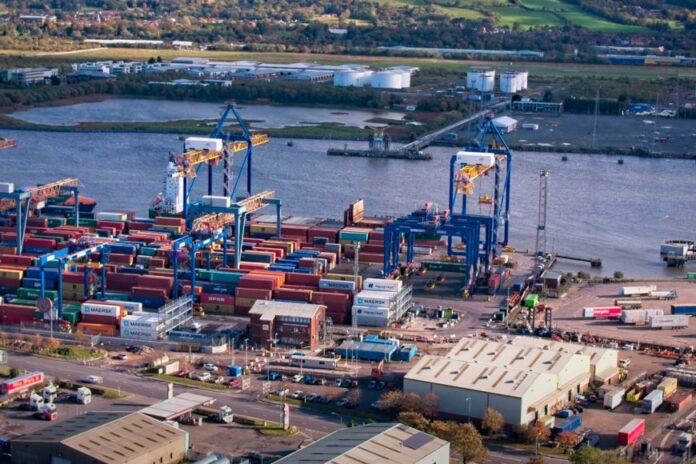
This includes the largest single capital project ever undertaken by Belfast Harbour, a proposed £90m investment in a new deepwater quay which will be able to accommodate some of the world’s largest cruise vessels and expand the port’s capacity for offshore wind turbine assembly and installation.
Belfast Harbour previously invested £53m in its D1 terminal to become the first UK port with a bespoke offshore wind facility and remains the only port on the island of Ireland with offshore wind capability. Between 2013 and 2018, Belfast Harbour’s facility enabled the delivery of 66% of the offshore wind projects developed in UK waters.
By investing in a new deepwater berth, Belfast Harbour is aiming to build on its offshore wind business, by expanding the capacity of its current offshore facility by 2027/28 and developing a brand-new terminal to service next generation floating turbines by 2030.
Under the plans, the offshore wind logistics facility at Belfast Harbour’s D1 terminal will again become a full-time offshore wind facility. Cruise ships, which currently dock at the terminal six months of the year, will now be relocated to the new deepwater berth at Belfast Harbour’s D3 terminal, which will be used as a dual-purpose site from 2030.
While stage two of the project is dependent on additional investment or third-party funding, Belfast Harbour is confident that when complete, it will position the port and local supply chain as central to the deployment of high-capacity wind farms, helping meet demand for clean energy as the UK, NI and Ireland strive to reach net zero targets.
Belfast Harbour is uniquely placed to support the offshore wind industry, with 30 offshore wind farms planned within a 200km range of Belfast with a projected capacity of more than 30 GW, enough to power 20 million homes.
The UK government’s Clean Power 2030 Action Plan commits to increasing capacity of key technologies to create a new energy system, including up to 50GW of offshore wind generation. In Northern Ireland, the NI Executive is targeting 1GW of offshore wind from 2030 while the Irish government has targeted 20GW of offshore wind by 2040.
Dr Theresa Donaldson, Chair of Belfast Harbour, said: “The wind farms planned for UK and Irish waters over the next decade will be the power stations of the future. They are crucial to meeting the ambitious clean energy targets set out by governments in the UK and Ireland, and will contribute to increased energy security, lower costs and reduce reliance on imported fossil fuels that are subject to global volatility.
“Belfast Harbour also wants to be a key contributor to meeting the UK government and NI Executive targets. Our £90m investment in a new deepwater quay and facilities will support the deployment of the next generation of floating offshore wind farms and allow us to meet the growing needs of offshore renewable energy developers.
“Our expertise and infrastructure, alongside NI’s existing clean energy and advanced manufacturing ecosystem, will support the development of a strong local supply chain that we believe will be viewed favourably when developers are making future investment decisions and considering construction and deployment options for their projects.”
Steven Agnew, Director of RenewableNI, said: “Belfast Harbour is already an excellent resource for renewable energy developers. With a target to reach 80 per cent renewable electricity across the island it is clear we need the infrastructure to match the increased demand. The opportunities for new floating offshore are significant. I am delighted that Belfast Harbour has had the foresight to prepare to take the lead on facilitating the assembly and installation of this vital technology. Our members will be keen to work with them to ensure this new facility meets future needs.”
Dr Kerry Muldoon, Manager of NI Maritime & Offshore (NIMO) said: “NIMO welcomes the launch of Belfast Harbour’s Strategy for 2025-29 which sets out a bold vision for the continued evolution of the port. With unequivocal commitment to development of a new deepwater quay, it demonstrates Belfast Harbour’s support for the offshore renewables and cruise sectors, both of which play a vital role in our economy. Delivery of this new facility is critical to the long-term success of local companies working in these sectors and can ensure that Northern Ireland plays a critical role in helping to deliver on our net zero ambitions.”
Belfast Harbour’s new strategy has four key objectives:
to enable economic growth;
to develop and improve the port;
to create vibrant places to live and work;
and to innovate for a better tomorrow – with the overarching objective of accelerating to net zero embedded across all activities.
Other significant port projects outlined in the strategy include the delivery of new, sustainably powered cranes, the planning, design and consent for a rebuild of Stormont Wharf – the port’s main deepwater berth, the construction of new BREAAM Excellent sustainable warehouses and the deployment of autonomous vehicles across the port.
Investment in the Harbour Estate will include the £60m development of City Quays 5, a significant mixed use regeneration project including office, retail, hospitality and exhibition space. There are also plans to move forward with the City Quays 4 scheme for 325 homes, including affordable housing and to begin the process of developing an additional 3,000 houses by 2030.
Belfast Harbour also expects to fully deploy ‘The Harlander’ autonomous passenger vehicle across the estate in 2029, with on-road trials due to begin later this year. The organisation is also targeting a series of new productions at Belfast Harbour Studios aimed at delivering £200m to the economy by the end of the decade.
This strategic plan and investment programme is in addition to the £374m of investments made by Belfast Harbour in the past decade, to ensure a competitive and resilient port, and developing a vibrant economic hub with connected and inclusive communities across Belfast Harbour Estate.
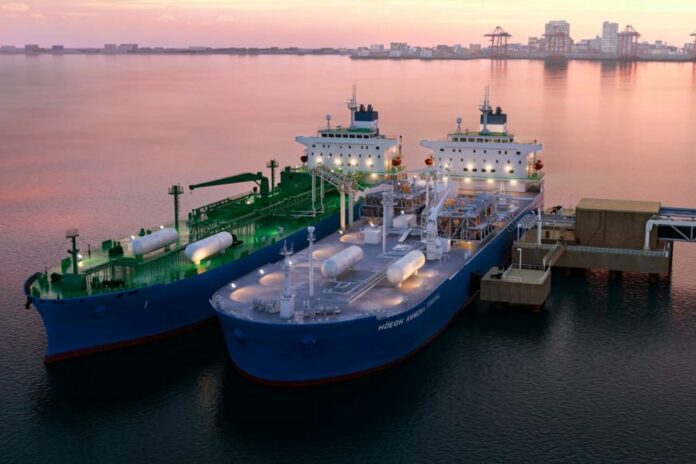
SEFE Securing Energy for Europe and marine infrastructure provider Höegh Evi have signed a Memorandum of Understanding (MoU) to jointly develop international supply chains for clean hydrogen to be delivered to Germany and other locations in Europe.
Partnering to enable customer decarbonisation in support of Germany’s energy transition goals
The objective of the agreement is to implement international supply chains for clean hydrogen. This includes sourcing of ammonia, transportation by ship, and delivery to floating import terminals where the ammonia is cracked into hydrogen for delivery to SEFE customers through the German hydrogen core grid. The cooperation will also identify possible locations for floating ammonia-to-hydrogen terminals along Germany’s Baltic Sea and North Sea coasts, as well as other potential locations in Europe.
SEFE will manage both the upstream supply portfolio and the downstream part of the supply chain, including global sourcing of clean molecules, the aggregation of hydrogen demand in Germany and Europe as well as investment in the German hydrogen core grid through its subsidiary GASCADE.
Höegh Evi will provide the midstream infrastructure to connect Germany with international hydrogen markets including the transportation of ammonia by ship and the floating import terminal infrastructure. The terminals will provide a supply of dispatchable and baseload-ready clean hydrogen for industrial customers using Höegh Evi’s ammonia-to-hydrogen cracker, the world’s only floating solution to convert ammonia to hydrogen at an industrial scale.
Hamead Ahrary, CSO of SEFE highlights: “In our relentless quest to provide our customers with competitive clean hydrogen, we are pleased to be partnering with Höegh Evi to explore the technical and economic viability of different supply chain opportunities. With Höegh Evi’s pioneering technology in the field of floating import terminals including the cracking of ammonia to hydrogen within the terminal and the deep customer understanding we have gained over the last decades, we have the best conditions to develop international clean hydrogen supply chains to make the energy transition a reality.”
Erik Nyheim, CEO of Höegh Evi says: “Establishing global supply chains for hydrogen is a major step towards advancing the energy transition in Germany and Europe. SEFE is leading the way by investing in the German hydrogen core grid and developing global and local partnerships for the production, sourcing and supply of cost-competitive clean hydrogen for Germany and Europe. Höegh Evi is proud to contribute to this endeavor with its world-leading expertise in floating infrastructure and unique hydrogen terminal solutions. In Germany and across Europe, we are developing infrastructure that creates new pathways to decarbonisation via global market corridors for clean hydrogen.”