-8.1 C
New York
Home Blog Page 104

Corps completes Elizabeth Dam removal on Lower Mon

0

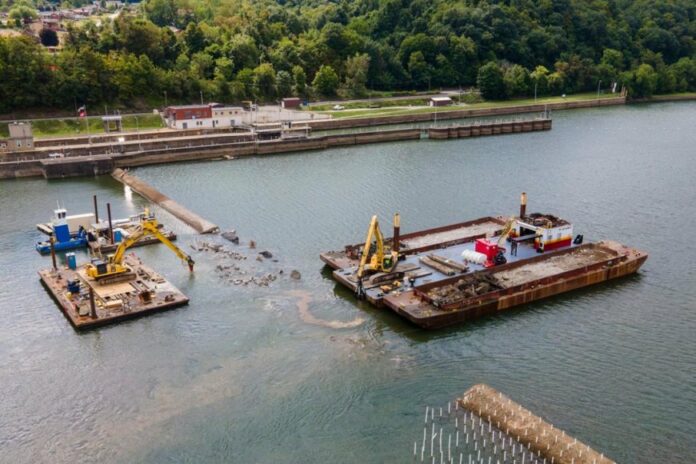
A 300-foot navigation channel opened in the former Monongahela Locks and Dam 3 at Elizabeth, Pa., commonly known as Elizabeth Locks and Dam, on December 20, marking a major milestone for the project, said Steve Dine, the Pittsburgh Engineer District’s resident engineer for the Lower Mon Project.

“The entire dam is now removed from the bank, the left abutment all the way to the river wall,” Dine said.

Machinery and gates will be removed in the next couple of months, with controlled blasting for wall removal beginning in the spring, he said. Contractor Joseph B. Fay Company began work January 13 to mechanically demolish portions of the lock walls to 2 feet above the water level. Excavators and jackhammers are being used before explosives remove the rest.
 
Explosive blasts are expected to take place once or twice per week in daytime hours only. A complete river closure 1,500 feet upstream and downstream will be instituted from two hours before to two hours after each blast, with notice of blasting broadcast 24 hours beforehand and on the day of the blast, said Steve Fritz, mega project program manager for Pittsburgh Engineer District.

While the middle and river walls of the locks will be removed to below the river bottom, the wall of the lock adjacent to the riverbank, called the land wall, will remain in place, with a stone berm added for stability of the bank, beneficially using concrete rubble from blasting, Dine said. Fritz added that the abutment from the dam on the opposite side of the river will also stay in place.

Removal of the walls is scheduled for completion by the end of the year, although the full project completion date is set for spring 2027.

The Lower Monongahela Project included replacing the fixed-crest dam at Locks and Dam 2 at Braddock, Pa., with a gated dam, constructing a new, larger lock at Locks and Dam 4 at Charleroi, Pa., which was renamed the John P. Murtha Locks and Dam, and, finally, removing Locks and Dam 3 at Elizabeth.

These were the three oldest operating navigation facilities in the country, according to the Corps of Engineers, and they experienced the highest volume of commercial traffic on the Monongahela River Navigation System.

The Lower Mon Project was first approved by Congress as part of the Water Resources Development Act of 1992, with the first construction funding becoming available in 1995.

The Braddock dam was converted into a gated facility in 2004.

A contract that included the middle wall monoliths for the new chamber at Charleroi was awarded in 2015. The chamber is 84 feet wide by 720 feet long and can fit a nine-barge tow of standard barges or six jumbo barges. It was watered in 2023, and officially opened with the facility renamed in 2024.

The contractor breached the dam at Elizabeth, which was built in 1907, the evening of July 10 last year.

Demolishing the dam created one 30.2-mile pool instead of 12.5 and 17.7-mile pools between the locks and dams at Braddock and Charleroi.

Source: waterwaysjournal
50Hertz and Energinet welcome EU Support – next steps depend on regulatory clarity

0

The European Commission has provided funding from the Connecting Europe Facility (CEF) program in the amount of 645 million EUR – underlining the importance of green transition for The European Union and providing financial support for the world’s first hybrid direct current interconnector.

The project, which is jointly developed by grid operators 50Hertz and Energinet, includes a power hub on the island of Bornholm with two converters, direct current connections to the Danish and German mainland and additional converter systems there for converting direct current into alternating current. This infrastructure will be used to harvest the planned three gigawatts of power from offshore wind farms of Bornholm and make it available to the electricity markets in Germany and Denmark in line with demand. To this end, it is the first time Energinet and 50Hertz have issued a joint tender of cross border electrical infrastructure. 

Bornholm Energy Island is an innovative project that can serve as a model for further interconnections in the North and Baltic Seas. Before the start of the next project phase, which includes the signing of contracts for converters, transformers and other substation technology, regulatory clarity is needed. Consequently, the signing of contracts in the ongoing tender will not yet be done. 

Energinet and 50Hertz will continue their close cooperation in dialogue with the Danish and German governments.

Fugro secures new NOAA contract to support U.S. maritime safety

0

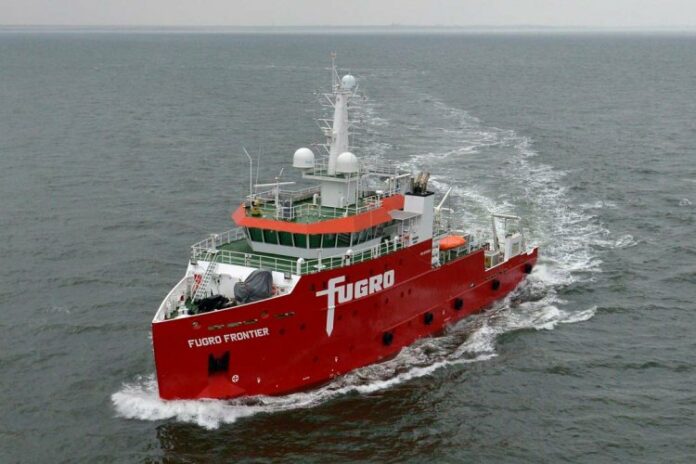
Fugro has been awarded a new five-year contract by the National Oceanic and Atmospheric Administration (NOAA) for hydrographic survey services. 

Under this indefinite delivery/indefinite quantity (IDIQ) contract, Fugro will support the creation and maintenance of highly accurate nautical charts, which ensure safe and efficient maritime navigation within U.S. waters. Projects can be assigned to any of the six companies holding an IDIQ contract based on NOAA’s ongoing priorities.

The contract will be administered by NOAA’s Office of Coast Survey (OCS), responsible for maintaining the nation’s nautical charts. This includes thousands of electronic navigational charts covering 153,000 kilometres of shoreline and 3.6 million square nautical miles of ocean, coastal, and Great Lakes waters to the outer limits of the U.S. Exclusive Economic Zone. Since 1996, NOAA OCS has relied on five-year IDIQ contracts with private-sector firms to fulfil this critical mission. Fugro has been a consistent partner throughout this period, introducing multiple advanced technologies, such as airborne lidar bathymetry and remote and autonomous survey techniques to enhance survey safety, speed, and sustainability.

Céline Gerson, Fugro’s Group Director for the Americas and President of Fugro USA, stated: “A sustainable blue economy depends on accurate and up-to-date nautical charts. We’re proud to continue our long history of work with NOAA, leveraging cutting-edge technologies to deliver the hydrographic data mariners need to safely operate in U.S. waters.”

The new IDIQ contract, effective 1 January 2025, and expiring 31 December 2029, will be managed from Fugro’s Hydrography Center of Excellence in Houston.

EU vessel sanctions weigh on Russian grain exports, central bank says

0

The European Union’s sanctions on vessels transporting Russian grain, along with Turkey’s wheat import ban, impacted Russian grain exports at the end of 2024, the country’s central bank said on Thursday.

The EU sanctioned 79 vessels, including four accused of undermining or threatening “the economic subsistence or food security of Ukraine, such as the transport of stolen Ukrainian grain.”

Russia currently occupies about 20% of Ukrainian territory, with the four regions it officially calls “the new territories” accounting for about 5% of Russia’s total grain harvest, estimated at 130 million metric tons in 2024.

In its balance of payments report, the central bank noted the increasing pressure of Western sanctions on Russian exports, which fell by 2% in 2024. Russia is the world’s largest wheat exporter.

“The EU has added more than 50 vessels to the sanctions list, which are subject to a ban on entering ports and receiving services, including those transporting grain,” the central bank said.

The EU listed vessels San Damian, San Cosmas, San Severu, and Enisey in the list published on Dec. 16, 2024. Russia-registered Enisey can transport up to 44,000 tons of cargo.

The central bank said Turkey’s ban on wheat imports, introduced following a good harvest and partly to protect farmers from low prices, also played a role. Turkey was a major importer of Russian wheat.

Agriculture Minister Oksana Lut earlier said that Russian grain exports will fall by one-fifth from last season’s record to 57 million tons in 2024-2025, attributing the decline to bad weather.

The share of agricultural products in Russia’s total exports rose to 10% after about 10 years of strong growth in the sector, triggered by Moscow’s ban on food imports from Western countries, imposed in 2014.

Source: Reuters

MODEC and TOYO receive stamp of approval for blue ammonia FPSO

0

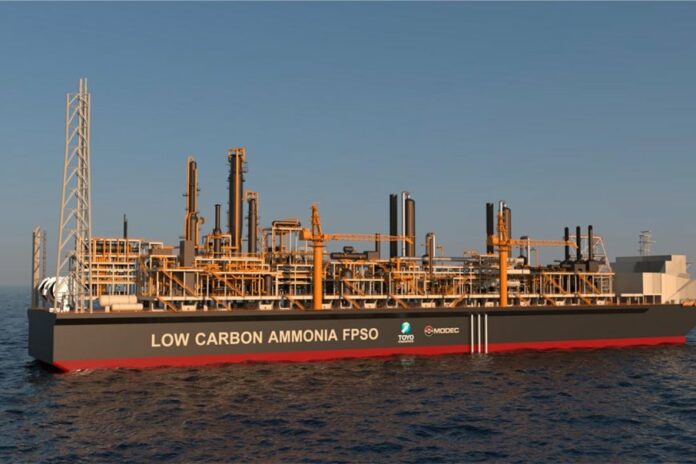
MODEC and Toyo Engineering Corporation have jointly obtained an Approval in Principle from the American Bureau of Shipping (ABS) for a Blue Ammonia Floating Production Storage and Offloading that will produce ammonia from the gas supplied by Oil & Gas FPSO located nearby.

This Blue Ammonia FPSO is intended to produce and store blue ammonia by using associated gas which has conventionally been reinjected into the reservoir without specific applications. The FPSO is also equipped with Carbon Capture & Storage (CCS) facility to capture not only CO2 generated in the process of converting associated gas to ammonia (NH3), but also CO2 from gas turbine generators (GTG). This makes it possible to minimize CO2 emissions from the FPSO during ammonia production.

Additionally, the hull, which stores and offtakes the produced ammonia, was developed in collaboration with Mitsubishi Shipbuilding Co., Ltd.

This joint development is positioned as the first “Concept Design of Floating Alternative Energy Production Facility” as stated in the Mid-term Business Plan 2024-2026 “Explore a Sustainable Future with Innovation”. The concept of producing blue ammonia offshore is achieved by combining MODEC’s expertise in overall layout, hull design and mooring technology, cultivated in Oil & Gas FPSO projects, with TOYO’s expertise in ammonia production process design and FPSO equipment design. This blue ammonia is expected to serve as an alternative fuel and hydrogen carrier in the energy transition.

MODEC considers this AiP as an initial step in the development of a floating solution for alternative energy production and will continue to strive to refine and mature this concept to address the key challenges for commercialization identified through this development, aiming to provide a safe and affordable alternative energy supply solution. 

Fincantieri: renaming ceremony of the two MPCS/PPA vessels for the Indonesian Navy

0

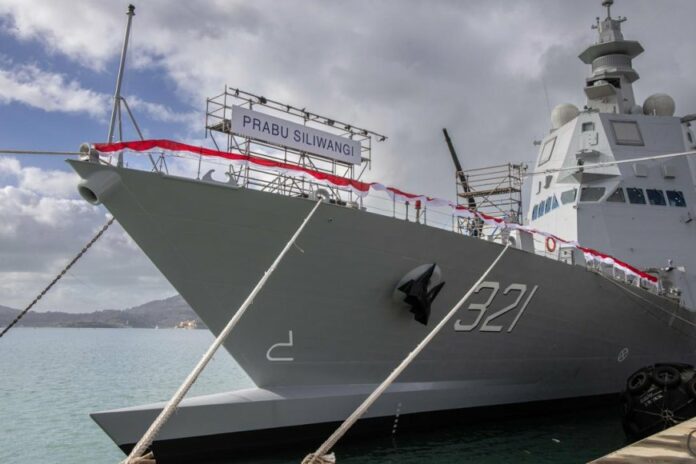
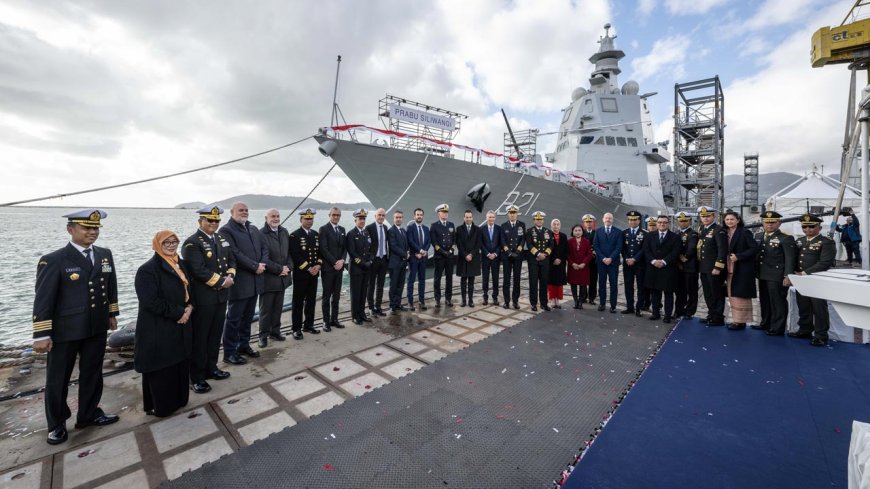
The renaming ceremony of the two MPCS (Multipurpose Combat Ship/PPA) vessels sold to the Indonesian Navy was held today at Fincantieri’s shipyard in Muggiano (La Spezia). 

The ceremony was attended by, among others, Biagio Mazzotta, Chairman of Fincantieri; Dario Deste, General Manager of Fincantieri’s Naval Vessels Division; Admiral Muhammad Ali, Chief of The Indonesian Navy, and Admiral Giuseppe Berutti Bergotto, Deputy Chief of Staff of the Italian Navy. Their presence underscored the strong defense collaboration between the two nations.

Originally built as the fifth and sixth units for the Italian Navy, the two ships, formerly named “Marcantonio Colonna” and “Ruggiero di Lauria,” have now been renamed KRI BRAWIJAYA-320 and KRI PRABU SILIWANGI-321.


This supply contract stems from the interest generated during the campaigns of the MPCS/PPA vessels “Francesco Morosini” and “Raimondo Montecuccoli” in Indonesia in 2023 and 2024, respectively. It marks a significant milestone in the strategic partnership between Fincantieri and the Indonesian Ministry of Defense. Built at Fincantieri’s integrated Riva Trigoso-Muggiano shipyard, these vessels will be the largest combat ships in the Indonesian Navy, strengthening stability in the Indo-Pacific region and safeguarding Indonesia’s national interests.

The MPCS/PPA is a highly versatile class of ship designed to perform a wide range of missions, including frontline combat operations, maritime patrol, rescue, and civil protection activities.

The two ships are scheduled for delivery to the Indonesian Navy in 2025.

Ørsted and PGE take final investment decision on Baltica 2 Offshore Wind Farm

0

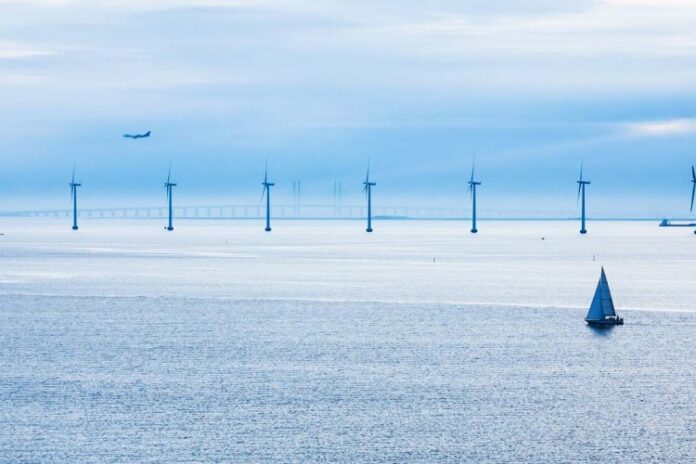
Ørsted and PGE have taken final investment decision (FID) on the 1.5 GW Baltica 2 Offshore Wind Farm, which will be built, owned and operated in a 50/50 partnership between Ørsted and Poland’s largest energy company PGE Polska Grupa Energetyczna.  

Baltica 2 has a 25-year inflation-protected contract for difference (CfD) in place with the Polish state. The wind farm has obtained all permits and has signed a grid connection contract with the Polish transmission system operator PSE.

All major component and vessel contracts for Baltica 2 have been signed, locking in the majority of the project’s CAPEX, which significantly derisks the project.

Rasmus Errboe, Deputy CEO and Chief Commercial Officer at Ørsted, said: “With today’s announcement, we’re ready to build Baltica 2, a flagship project for offshore wind in Poland. We’re satisfied with the value creation of the project, which has an attractive risk-reward profile.”

Dariusz Marzec, CEO of PGE, said: “The Baltica 2 offshore wind farm, the largest renewable energy project currently under development in the Baltic Sea, will diversify Poland’s energy production, enhance energy security, and provide cleaner and more affordable energy. This investment represents a significant step in Poland’s energy transition and serves as a major boost to economic development, attracting new investments to the entire Polish economy and helping to create new jobs”.

Agata Staniewska-Bolesta, Managing Director of Offshore Poland at Ørsted, said: “The development of offshore wind energy is a key element for Poland’s energy transition, which will strengthen the country’s energy security. As Poland’s largest-ever renewable energy project, Baltica 2 will lead the way for Poland’s transition to green energy, producing green electricity to meet the needs of approximately 2.5 million Polish households and deliver first power in 2027.”

Poland’s energy policy until 2040 singles out offshore wind as a key technology to make Poland a low-emission economy. With its Offshore Wind Act, Poland has committed to installing 5.9 GW offshore wind by 2030, and 11 GW by 2040.

SEAONICS secures milestone contract to supply five newbuilds

0

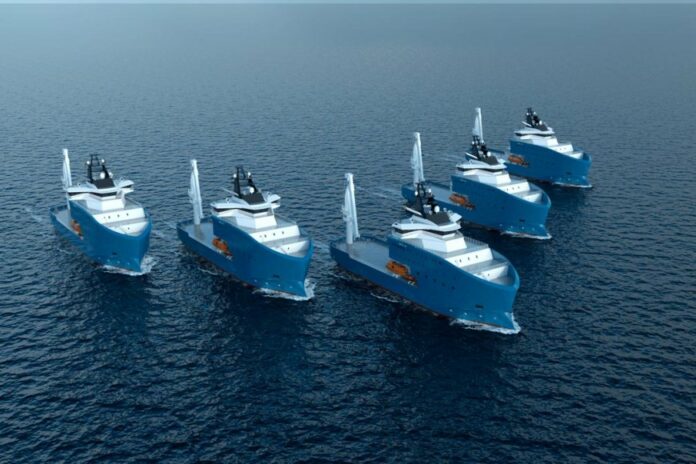
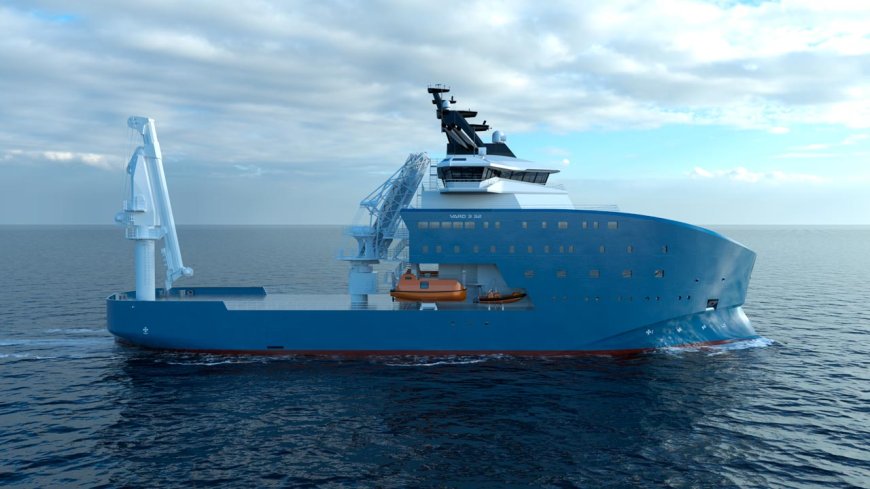
SEAONICS has signed a record-breaking contract covering the delivery of five ECMC Gangways and five ECMC 3D Cranes for an international customer to a series of walk-to-work offshore newbuilds under construction at global shipbuilder VARD’s yard in Vietnam.

The equipment will enable the vessels to provide comprehensive maintenance, supply and operational services to offshore oil-and-gas installations. The ECMC systems ensure smooth and precise movements even in challenging sea conditions by compensating for the vessel movement. The simplified design promotes operational safety and efficiency, reducing the time and effort required for cargo handling and personnel transfer.

The gangways will secure safe transfer of cargo and personnel from the vessel to the offshore installations, and the cranes have a motion compensated lifting capacity of 15T 3D lift and 15T motion compensated Subsea lift. Both systems have an outreach of 30 meters. The SEAONICS ECMC systems utilises directly the benefits of the DC grid solution and battery solution on the vessel.

SEAONICS Managing Director Håkon Fauske said: “This is a significant milestone for us and underscores our position as a leading supplier of advanced electric lift and handling equipment. We look forward to collaborating with the yard and shipowner and contributing to smarter, greener and safer operations in the offshore industry.”

“It has been a long process with good cooperation with the customer and I am certain that the final solution will be very well suited to their operations,” added Sales Manager Petter Nesset.

Vard Vung Tau in Vietnam is responsible for building, equipping, sea trials and delivery of the five ships of VARD 3 32 design contracted by Vard Group in November 2024. All five vessels will be delivered in 2027.

With this latest contract, the total number of ECMC Gangways and ECMC Cranes Seaonics has sold is 16 and 18 respectively. Both introduced to the market in 2023.

Successful pilot: emission-free dredging with crane vessel Christiaan P.

0

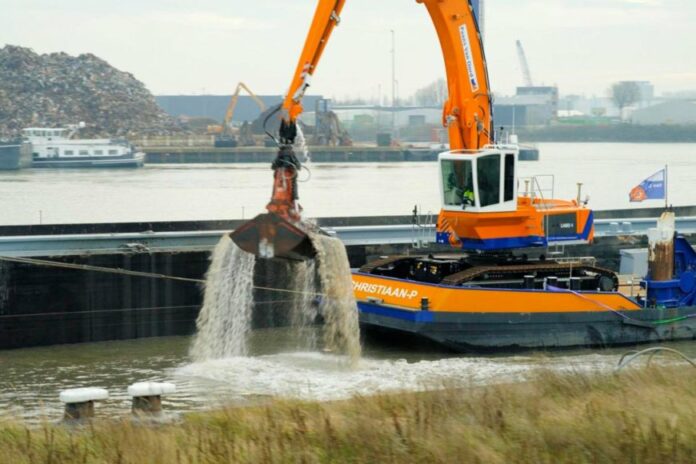
Van Oord, in cooperation with ZEDHub, Smart Delta Drechtsteden, the Municipality of Dordrecht and Port of Rotterdam, has carried out a pilot project with the crane vessel Christiaan P. 

The pilot project took place in the seaport of Dordrecht and was partly financed by the Regio Deal Drechtsteden-Gorinchem. Thanks to the successful collaboration between companies and government, this pilot project shows how collaboration and innovation can lead to sustainable solutions in the maritime sector.

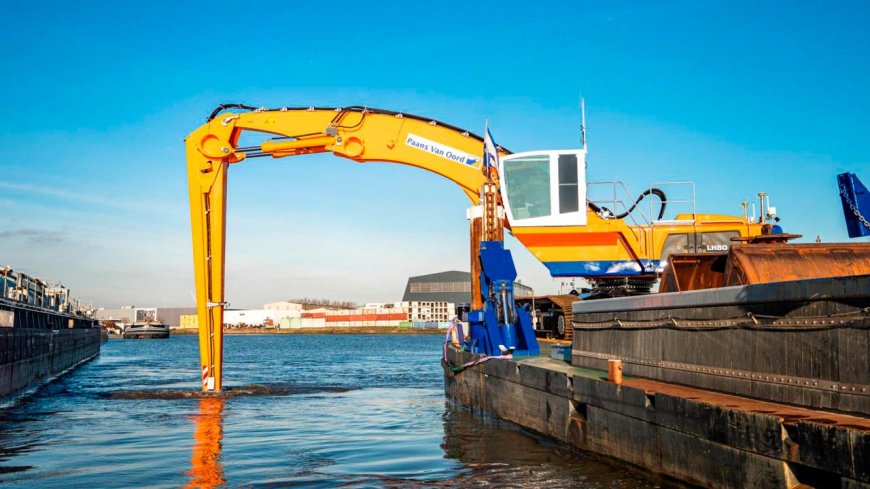
Christiaan P. is a crane vessel owned by our subsidiary Paans Van Oord. It is used for various kinds of marine engineering work, mainly dredging projects and the installation of shore protection and revetments. Prior to the pilot project, the Christiaan P. was re-converted. All its engines were replaced with electric motors and the crane was also replaced by an electric version. 

For the pilot, two DENS Powerhub mobile battery systems of 870 kWh each were used. These batteries were charged at night at the shore power point of the municipality of Dordrecht. In addition, a Nexus fuel cell and a hydrogen storage container were installed on board, so that the batteries can be charged when shore power is not available.

During the pilot project, research was conducted into how effective and efficient battery-electric dredging is in practice. Various measurements were carried out, such as energy consumption when sailing at different speeds and during light and heavy dredging operations. In addition, testing was done on how the batteries are charged via shore power and the ship’s own generator. Research was also conducted into whether the batteries can be continuously charged during work using hydrogen.

All the trials and tests went extremely well. The data collected is now being developed and analysed. The results of these tests are of great importance because they are valuable not just for us but for the whole industry. The lessons learned can be used soon to implement other zero-emission projects and thus achieve our sustainability goals. 

Cor Paans, Manager Paans Van Oord: ‘We are extremely proud of our engineering team who prepared and carried out this pilot project. Thanks to their expert preparation, everything worked flawlessly. That was also thanks to close cooperation with the supply companies (DENS, Nexus Energy and Roger Energy) and the cooperating partners. The Christiaan P. is a great addition to our Zero Emission fleet and the results of this project will make a significant contribution to achieving Van Oord’s sustainability goals.’

Arjen de Jong, Director ZEDHub: ‘This project was initiated by ZEDHub, where companies, the education sector, and government are working together to accelerate the energy transition in the dredging sector. It’s a great example of how we investigate and improve technical and economic feasibility and the associated risks. By sharing what we learn with the Dutch dredging industry, we can help the entire value chain make progress.’

Leen Paans, Harbour Master, Municipality of Dordrecht: ‘As a government, we have the ambition to reduce CO2 emissions. That is why we have entered into a multi-year contract with Van Oord, a party that shares the same sustainable vision. When tendering for such a contract, we always include this sustainable criterion in the award criteria. In this way, we encourage companies to work on this and we act as a launching customer, with which we promote innovation as the first purchaser. As a government, we can make the right assessment in this, without overtaxing the market with unrealistic demands. This pilot in the seaport of Dordrecht gives a realistic picture of what is possible.’

Taean Wind Power secures fixed-price offtake contract to develop offshore wind project in Korea

0

Vena Energy, together with Copenhagen Infrastructure Partners (CIP), announces that their joint offshore wind project, Taean Wind Power, has been awarded an offtake contract in the 2024 Wind Power Fixed-Price Contract Auction arranged by the Korea Energy Agency (KEA).

The Taean Wind Power project, a fixed-bottom offshore wind project with a planned capacity of 500 MW, is targeting to commence construction in the second half of 2026, with commercial operations anticipated by late 2029.  CIP, through its flagship fund Copenhagen Infrastructure V, acquired a 49% stake in Taean Wind Power in late 2024 and will develop the project jointly with Vena Energy.

Kwangjin Cheong, Representative Director of Taean Wind Power, expressed his commitment, stating: “Reaching this milestone emphasizes our dedication to delivering clean, sustainable energy to our local communities. We extend our gratitude to our stakeholders and partners, including the Government, Taean County, our supply chain collaborators, residents and fisheries for their invaluable support. Together, we are focused on ensuring the success of this project, fostering local engagement, and contributing meaningfully to Korea’s energy transition, engineering a greener future for generations.”

The Taean Offshore Wind Project is designed to deliver significant economic and environmental benefits, revitalizing the local economy, creating meaningful job opportunities, and enhancing the resilience of the local supply chain. Collaborating with key stakeholders including LS Cable & System, a globally renowned leader in cable technology from Korea, as the preferred cable supplier, Taean Wind Power unites industry leaders in offshore wind development, supply, construction, and operations. This collective expertise establishes a robust foundation to generate enough clean energy to power approximately 300,000 Korean households annually. The project represents a pivotal step toward increasing domestic and independent green energy production, contributing to Korea’s national renewable energy goals.

Vena Energy’s technical capabilities are at the forefront of renewable energy innovation in the Asia-Pacific region, with expertise in the design, development, and execution of large-scale solar, wind, and battery storage projects. Leveraging in-depth regional knowledge and technical proficiency, Vena Energy ensures efficient and sustainable project development and delivery, while fostering strong collaboration with stakeholders, ensuring continuity and alignment with local market needs.

CIP has been a leading player in Korea’s offshore wind sector since entering the Korean market in 2018. CIP is currently developing approximately 5 GW of offshore wind projects in Korea, including Jeonnam Offshore Wind 1, the country’s first commercial-scale offshore wind project, led by the private sector.  CIP’s extensive experience in managing the complex nature of risks in building large-scale offshore wind farms, as well as its strong collaboration with local supply chains, authorities, and communities, will contribute to successfully delivering Taean Wind Power.

Thomas Wibe Poulsen, Partner at CIP, said: “Taean represents an attractive opportunity to increase our offshore wind footprint in Korea. We look forward to completing this exciting project together with our new partners at Vena Energy who, with a strong track record of developing green energy solutions across the APAC region, is a great match for us. The participation in the Taean project will further strengthen and diversify CI V’s investment portfolio and support our ambition of securing attractive risk-adjusted returns for our investors.”

Simone Grasso, Chief Investment Officer of Vena Energy, highlighted the strength of this partnership: “Taean Wind Power represents a significant step forward in advancing Korea’s energy independence and decarbonisation goals, and we are proud to partner with CIP to bring this project to life. By combining our respective capabilities and expertise, we are paving the way for the successful delivery of this landmark project, contributing to Korea’s green energy transition.”

South Korea has significant potential for offshore wind and is one of the most promising markets in Asia Pacific, with an ambitious target of 14.3GW installed capacity by 2030. The country has pledged to achieve carbon neutrality by 2050 which will require delivery of additional large-scale renewables including offshore wind projects.