-7.4 C
New York
Home Blog Page 103

McDermott completes offshore project in East Malaysia Ahead of schedule

0

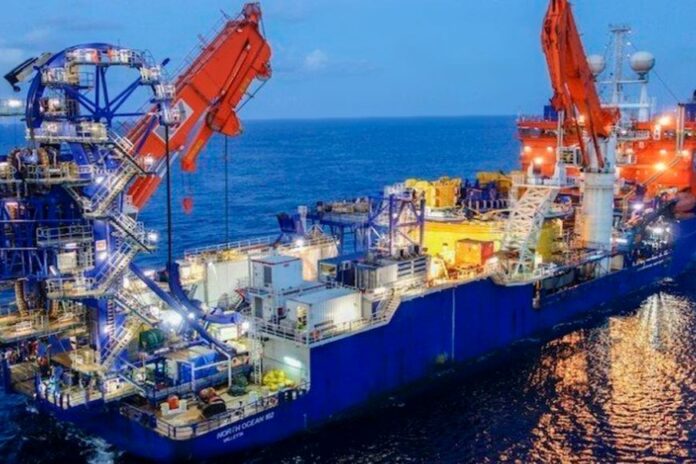
McDermott announces the safe and successful completion of transportation, installation, and commissioning activities for the Kikeh subsea gas lift project, awarded by PTTEP Sabah Oil Limited (PTTEP) in the first quarter of 2024.

The project, executed by the company’s Kuala Lumpur (KL) based team, in water depths of approximately 1,400 meters, progressed on a fast-track schedule. It involved the replacement of an existing gas lift riser, and the installation of a new dynamic riser section, flowline, and two thermoplastic composite pipe jumpers. Rigorous safety protocols, readiness planning, robust engineering, and procurement efforts ensured seamless vessel mobilization, and completion of the offshore scope of work in under eight months.

“Completing the project ahead of schedule stands as testament to McDermott’s capabilities in delivering safe and efficient solutions for deepwater field development projects,” said Mahesh Swaminathan, McDermott’s Senior Vice President, Subsea and Floating Facilities. “This project adds to our successful project execution track record and highlights our commitment to operational excellence, the importance of collaboration and teamwork, and the value of leveraging local expertise and resources to exceed customer expectations.”

Kikeh is a producing field, located approximately 75 miles (120 kilometers) northwest of Labuan Island, offshore Sabah, East Malaysia. It came on stream in 2009 as one of the largest deepwater developments in Malaysia, at the time. The work completed by McDermott includes upgrades essential to maintaining gas delivery to the subsea production system tied back the Kikeh floating production storage and offloading vessel.

McDermott’s KL office serves as a strategic hub for the company’s Subsea and Floating Facilities business line. It is home to the company’s engineering center of excellence with a growing workforce surpassing 1,000 employees, all supporting offshore deepwater project execution in Malaysia, and in other locations across the globe.
G2 Ocean implements Seaber to optimize fleet planning

0

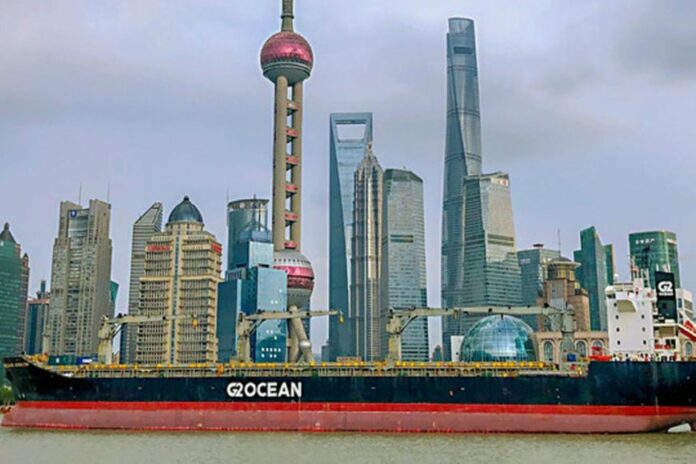
Seaber’s AI platform provides data-driven decision support for scheduling and chartering, empowering commercial ship operators, industrial charterers, and commodity traders to maximize fleet utilization and earnings. The platform’s insights not only enhance operational efficiency but also help reduce the environmental impact of shipping—a key priority for many industry leaders. 

G2 Ocean sees significant value in this collaboration. “We aim to digitalize our fleet planning process to increase efficiency in our organization. Seaber is a tool with great potential in terms of supporting our team with quick calculations and optimized fleet plan suggestions, and we very much look forward to starting using the system. By using Seaber, we aim to increase automation and data-driven decision-making to reduce ballasting days and our carbon footprint. We also aim to free up time for other value-adding activities.” says Benedicte Hjelle Størksen, Director of Digitalisation and Innovation at G2 Ocean. 

Seaber’s solution is designed for maximum flexibility, supporting not only single-cargo voyages but also complex multi-parcel and multi-port operations where scheduling challenges are most demanding. Seamlessly integrating with existing voyage management systems and ERPs, the platform delivers rapid deployment and immediate value. 

Jean-Guy Faubert, Chief Revenue Officer at Seaber, shared his excitement about the partnership:

“We’re delighted to welcome G2 Ocean to the Seaber family.  By adopting our scheduling software, G2 Ocean is taking a significant step toward enhancing operational efficiency while reducing their environmental footprint. Our platform empowers companies to make data-driven decisions that optimize voyages, increase fleet utilization, and minimize emissions. G2 Ocean’s commitment to sustainability and innovation, aligned with UN Sustainable Development Goals like ‘Climate Action,’ sets a powerful example for the maritime industry. We are proud to support their journey toward a more efficient and responsible shipping future.” 

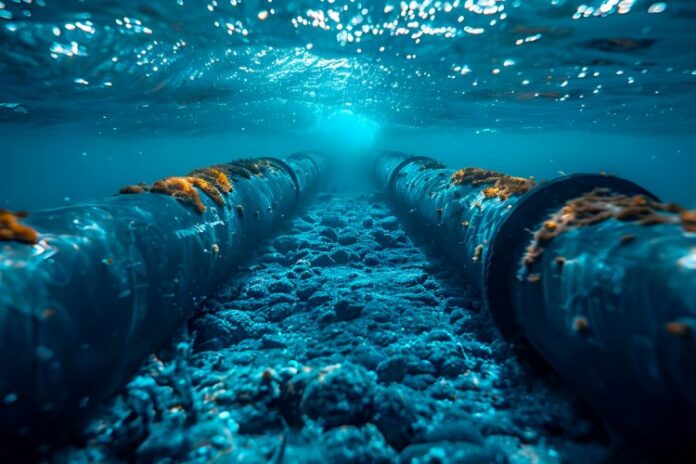
Sweden says ship broke Baltic Sea cable by accident

0

The cargo ship Vezhen did damage a subsea cable linking Sweden and Latvia last month but it was an accident, not sabotage, a Swedish prosecutor said on Monday, adding that the Maltese-flagged vessel had been released.

The incident took place on Jan. 26 and was one of several in recent months, triggered a hunt for vessels suspected of involvement.

The prosecutor said the Vezhen’s anchor severed the cable but that the incident was related to a combination of bad weather, equipment deficiencies and poor seamanship.

“We can see that the anchor was dropped without involvement by the crew,” Senior Prosecutor Mats Ljungqvist told Reuters.

He said two of the three locking mechanisms preventing the anchor from dropping had been out of commission for a lengthy period. The third was a manual lock.

“We have film footage where we can see a wave hitting the lock and the anchor drops,” Ljungqvist said. “In this case we can say ‘No, it wasn’t a hybrid attack’.”

Ljungqvist said the ship dragged its anchor for more than 24 hours.
“We can see that the speed drops. The anchor pulls the ship in one direction, but the autopilot compensated for it,” he said, adding that the crew had failed to notice this.

Swedish police seized and boarded the Vezhen the day after the cable was damaged in Sweden’s exclusive economic zone.

A second vessel, the Silver Dania, a Norwegian cargo ship with an all-Russian crew, was seized in Norway at the request of Latvian authorities but was cleared of wrongdoing and released.

The Baltic Sea region is on high alert after a string of power cable, telecom link, and gas pipeline outages since Russia invaded Ukraine in 2022.

In response, NATO last month said it would deploy frigates, aircraft and naval drones to help protect critical infrastructure in the region and that it reserved the right to take action against ships suspected of posing a threat.

Source: Reuters 

Viking XPRS has undergone a complete refurbishment

0

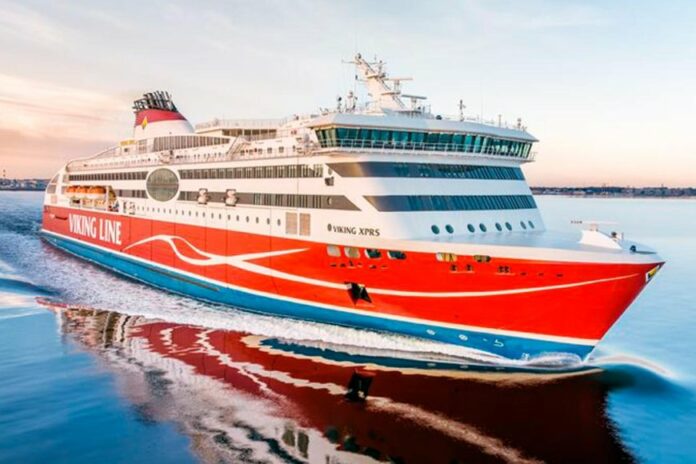
Viking XPRS will resume service on the Helsinki–Tallinn route on February 7 after three weeks at the shipyard and will now offer passengers what is in many ways a new cruise experience. 

The vessel has sailed under the Finnish flag for almost two years and has increased its popularity on this highly competitive route. Viking XPRS offers 15 weekly departures from the two ports and serves the most passengers of all of Viking Line vessels. Last year, the total number of passengers on Viking XPRS was more than 1.6 million.

“There is great demand for trips to Tallinn, and it’s easy and advantageous to make a spontaneous trip with XPRS. More than a third of passengers take their car along on the journey. There are many families that sail, especially in peak season and during the holidays. XPRS is also a popular conference vessel, and the percentage of group and conference passengers has increased in recent years,” says Ninna Suominen, Head of Marketing at Viking Line.

During those weeks at the shipyard, the biggest change made was in the vessel’s tax-free shop, which was enlarged during the renovation and provided with more functional spaces. The shop also has a new area for tastings.

“We rebuilt the original shop from floor to ceiling. Trends have changed a lot over the past 17 years. Now more space and visibility are given to cosmetics and fragrances, among other things. Almost every perfume house launches seasonal fragrances, and new products are presented more often than before. As for beverages, we’ve made sure that the most sought-after products, like the flavoured long drinks that are now popular, don’t sell out,” says Viking XPRS’s intendant, Ronny Hagelberg.

The restaurant world on board Viking XPRS also has something brand-new on offer. Bistro Coffee serves quality coffee products, specialty coffees and hot dishes. Adjacent to the buffet restaurant, a private dining room has been built for large groups of up to 34 people.

At the shipyard, the vessel’s interiors were updated in a bright, modern, fresh style. The entrance was completely overhauled, carpets were replaced and cabin interiors were updated, with reupholstered sofas and new curtains.

Technogical updates reduce fuel consumption

Viking XPRS, which was delivered in 2008 from what was then the Aker Yards shipyard in Helsinki, was dry-docked this time at Oresund Dry Docks in Landskrona, in southern Sweden. The biggest and most costly job involved maintenance work to update the vessel’s technology.

The most significant technological update is the installation of flow-control mechanisms, which reduces the vessel’s resistance. This flow-control technology, supplied by the Finnish engineering company Elomatic, reduces fuel consumption and improves travel comfort through reduced vibration. The vertical sections of the vessel’s bottom were also sand-blasted and painted. With these updates, Viking Line aims to reduce fuel consumption on the vessel’s service to Tallinn by about five per cent. Technology upgrades and maintenance over the vessel’s entire life cycle are a crucial factor in reducing total emissions. 

Viking Line’s vessels are dry-docked twice within a five-year period, in accordance with International Maritime Organization (IMO) regulations. Smaller-scale maintenance work is carried out on a regular basis while the vessels are in service.

“The dry-docking and planning for this are a major joint project that involves a large number of our shipboard and land-based staff as well as specialists in various fields. During the planning phase, we listen very closely to the requests of staff members and customers. I can hardly wait until we get to enjoy the end result together with our passengers – an even more pleasant and more functional Viking XPRS,” says Ronny Hagelberg.

Shell starts up new facility in UK North Sea, restoring production from the Penguins field

0

Shell has restarted production at the Penguins field in the UK North Sea with a modern floating, production, storage and offloading (FPSO) facility (Shell 50%, operator; NEO Energy 50%). 

Peak production is estimated at around 45,000 barrels of oil equivalent per day (boe/d) and currently has an estimated discovered recoverable resource volume of approximately 100 million boe. Although primarily oil production, Penguins will also produce enough gas to heat around 700,000 UK homes per year.

The new FPSO will have around 30% lower operational emissions compared with Brent Charlie and is expected to extend the life of this important field by up to 20 years.

“Today, the UK relies on imports to meet much of its demand for oil and gas,” said Zoë Yujnovich, Shell’s Integrated Gas and Upstream Director. “The Penguins field is a source of the secure domestic energy production people need today, and the FPSO is a demonstration of our investment in competitive projects that create more value with less emissions.”

Although oil will be transported by tanker to refineries outside of the UK, these include ones that supply refined products like petrol and diesel back to the UK because of its limited refining capacity.

Natural gas will be transported through the existing pipeline to the St Fergus gas terminal in the north-east of Scotland, which supplies the UK’s national gas network.

The redevelopment of the Penguins field has involved drilling additional wells, which are tied back to the new FPSO. The field is in 165 metres (541 feet) of water depth, around 150 miles north-east of the Shetland Islands. Discovered in 1974, the field previously produced oil and gas between 2003 and 2021.

Corvus ESS will power the world’s first fully electric Offshore Vessel

0

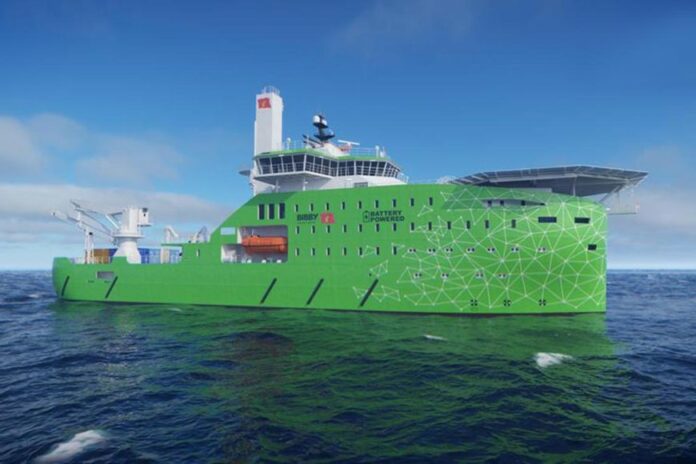
Corvus Energy will deliver a mega-size battery system for the first fully electric offshore vessel ever to be built. 

Corvus Energy will supply its Blue Whale Battery Energy Storage System (BESS) delivering close to 25MWh of power for the vessel. It will be the largest LFP (Lithium Iron Phosphate) battery system ever delivered to a maritime project. 

“A fully electric offshore vessel is something the industry has been working towards for a long time and marks a major milestone in offshore vessel operations,” said Pål Ove Husoy, VP Sales at Corvus Energy. 

“This eCSOV will be the first offshore vessel that can operate fully electric for a full day and will set a new standard for future offshore vessels. The unique system design incorporating both battery power and dual-fuel methanol engines will significantly reduce carbon emissions and increase energy efficiency while providing the reliability and performance needed for demanding offshore wind and renewable operations.”

Corvus Energy has been cooperating closely with the shipowner, designer and integrator to dimension and optimize the system design. Unlike conventional hybrid systems, the vessel will utilize its large battery pack as the primary power source, with engines running solely for charging at a constant, optimized load that maximizes efficiency, extends battery lifespan and significantly reduces emissions. The innovative DC grid architecture further enhances overall system performance by minimizing energy losses and ensuring seamless power distribution. Additionally, offshore charging capabilities will enable simultaneous battery charging while maintaining DP for station-keeping, representing an industry first in the SOV market.

Gavin Forward, New Build Director at Bibby Marine, commented: “We are excited to collaborate with Corvus on this pioneering eCSOV project, setting a new benchmark for sustainable offshore operations and driving the future of zero-emission vessel technology.”

He added that Bibby Marine selected Corvus Energy “for its proven track record in delivering complex vessel projects, while the LFP battery chemistry was chosen for its alignment with our eCSOV’s operational profile, offering enhanced safety, longevity and reliability for a project that promises to accelerate the path to net-zero for the maritime sector.”

Equipment from Corvus Energy will be delivered to the shipyard in 2026, and the vessel is scheduled for operation in 2027 supporting the commissioning and operation of windfarms.

Suez Canal facilitates unconventional transit of ADMARINE260 Rig

0

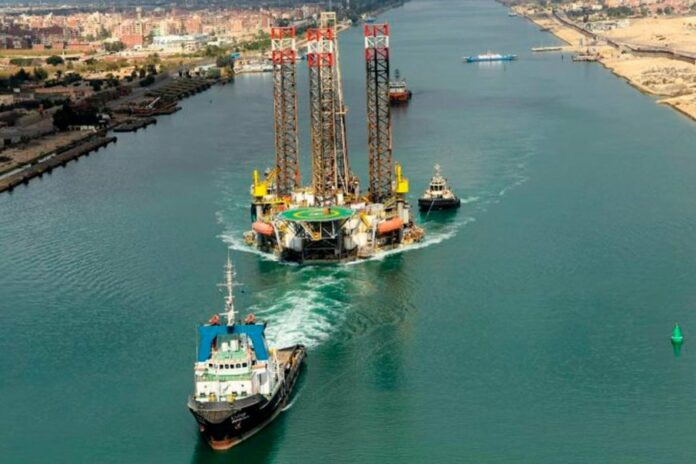
During its journey from the Mediterranean Sea to the Red Sea, the rig was guided by a group of senior guides from the authority as well as captains of tugs, the statement added.

The length of the drilling rig is 45 meters, and its width is 48 meters, with a total load of 3543 tons. 

The SCA stated that the crossing operation required special navigational arrangements and measures, including reducing the height of the drilling rig to ensure it could pass under the Peace Bridge. This was achieved by increasing the rig’s draft, allowing it to cross during low tide. These adjustments enabled it to safely pass through.

The rig’s crossing took 22 hours, beginning with its arrival at Port Said. It was then connected to the main guidance tugboat, Baraka, for towing. The vessel was also secured to two of the authority’s tugboats, Port Said 3 and Suez 3, which assisted with steering. Throughout the operation, careful attention was given to the accuracy of the steering, as well as the movement and direction of air and water currents, to ensure the excavator remained positioned in the center of the canal.

Vattenfall and BASF award key contracts for Nordlicht offshore wind projects

0

Vattenfall and BASF have awarded four major contracts for the Nordlicht 1 and 2 offshore wind farms, which are located 85 kilometers north of the island of Borkum in the German North Sea. 

Catrin Jung, Head of Offshore Wind at Vattenfall, stated:

“The award of these contracts marks an important milestone in the development of the Nordlicht cluster. We value our suppliers as true partners, whose exceptional expertise is essential for realising our vision of large-scale, fossil-free renewable energy in the German North Sea. The Nordlicht projects will play a crucial role in advancing the energy transition while supporting our sustainability goals. We look forward to working closely with our partners to bring these projects to fruition.”

These agreements mark a significant step in translating the Nordlicht vision into reality. By securing key components and services from trusted partners, the projects are now firmly on track to deliver clean energy to 1.7 million households1 and drive forward Germany’s renewable energy ambitions. Production of these key components is scheduled to begin in late 2025, pending the Final Investment Decision (FID).

Across all suppliers, a total of 112 key components, including monopiles and transition pieces, will be manufactured and installed to support the Nordlicht wind farms.

EEW SPC will manufacture the monopile foundations, processing approximately around 141,000 tons of steel at its Rostock site, their fifth offshore wind project for Vattenfall. The monopiles, each with a diameter of 10 meters, will provide the structural base for the Nordlicht turbines.  

CS WIND Offshore will supply the transition pieces to connect the turbines to the monopiles. The company’s proven track record in offshore wind includes its recent collaboration with Vattenfall on the Vesterhav projects in Denmark.

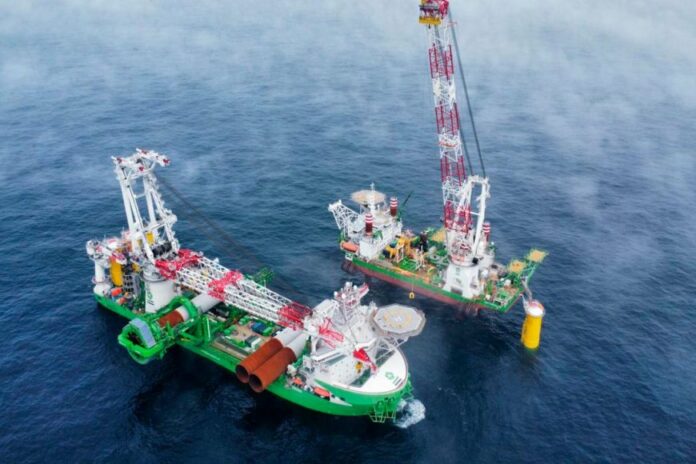
DEME will manage the installation of the monopiles and transition pieces, using its state-of-the-art installation vessels to ensure precise and efficient foundation placement.

Jan De Nul has been contracted to install 196 kilometers of inter-array cables, connecting the turbines and ensuring optimal energy transmission within the wind farms. The company will deploy its advanced cable installation vessel, the Connector, for the task.

Pending final investment decisions in 2025, construction for Nordlicht 1 and 2 is set to begin in 2026, with full commissioning anticipated by 2028. In 2024, Vattenfall and BASF awarded contracts to Vestas for the supply of state-of-the-art wind turbines, Havfram for low-carbon transport and installation services, and TKF for the supply of inter-array cables.

Once operational, the wind farms will significantly contribute to Germany’s renewable energy capacity and Vattenfall’s goal of building a future where everyone can choose fossil free ways to move, make and live. 

DeepOcean awarded offshore wind survey contract

0

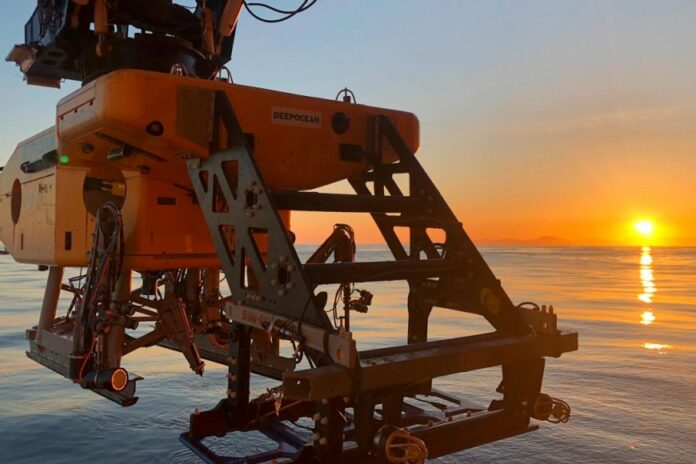
Ocean services provider DeepOcean has been awarded a subsea survey contract on the Bałtyk 2 and 3 offshore wind developments in Poland which are jointly developed by Equinor and Polenergia. Polish company MEWO will serve as a subcontractor to DeepOcean.

Under the contract, DeepOcean will conduct geophysical seabed surveys of the export and inter-array cable seabed corridors, utilizing a dedicated survey remotely operated vehicle (SROV). The work scope also includes surveys to map the seabed for potential unexploded ordnances (UXO). The survey campaigns will be executed during early 2025.

DeepOcean’s flagship survey vessel, Edda Flora, will be mobilized for the main scope. The Polish survey company MEWO will serve as a subcontractor for UXO surveys, utilising the vessel, Amber Cecilia.

The Bałtyk 2 and 3 offshore wind developments are a joint venture (JV) between Equinor and Polenergia, and will have a total combined capacity of 1.44 GW enough to power more than two million households. These projects play a crucial role in achieving Poland’s updated energy strategy.

In the last ten years, the offshore survey industry has seen the evolution of a new breed of fast remotely operated vehicles (SROVs) specifically designed for high-speed surveys and pipeline inspections.

“A dedicated survey ROV will have significant efficiency gains when compared with the alternative of using slower work class ROVs configured with a survey sensor payload. We look forward to supporting Equinor and Polenergia on these important offshore wind projects,” says Øyvind Mikaelsen, CEO of DeepOcean.

DeepOcean’s Superior SROV has surveyed thousands of kilometres of subsea survey annually.

“The Superior probably has the largest track record in survey inspection of any ROV globally. This reliable asset, our leading survey engineers and experienced offshore crew, make us a trusted survey provider for renewable and conventional energy operators,” adds Mikaelsen.

MAURIC and NEOLINE launch the Neoliner Origin at RMK Marine shipyard in Turkey

0

The Neoliner project represents the culmination of a collaboration initiated in 2016 between MAURIC and NEOLINE. At the heart of this initiative: the ambition to revolutionise maritime transport by offering an environmentally responsible Ro-Ro transport solution, capable of reducing fuel consumption by 80 to 90% compared to conventional vessels.

The development of innovative technologies such as composite material masts and sails, the implementation of anti-drift plans, and weather routing systems offers new perspectives for the development of vessels with wind assistance or propulsion.

It was by betting on these developments that Neoline and MAURIC began developing the Neoliner 136 nearly 10 years ago, first by developing a detailed preliminary design of the vessel, allowing Neoline to promote its concept to shippers and finalise its business model.

These preliminary studies, initiated with a Duplex rig and soft sails, then from 2022 with the Solid Sail rig developed in the meantime by Chantiers de l’Atlantique, enabled the development of industrial solutions meeting Neoline’s and its clients’ specifications: to transport heavy or large-dimension packages efficiently and safely on transatlantic voyages.

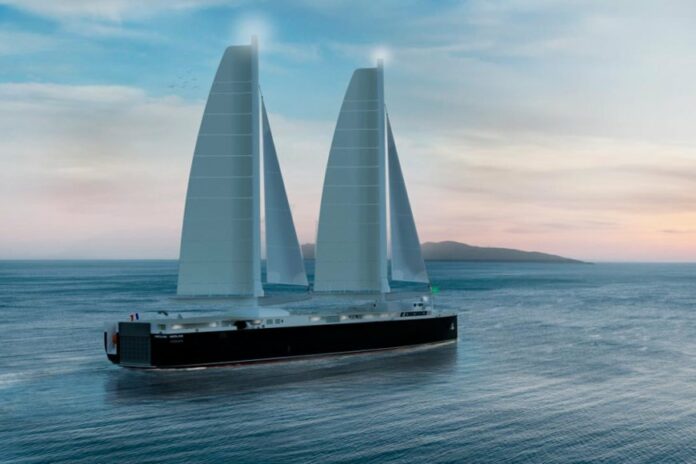
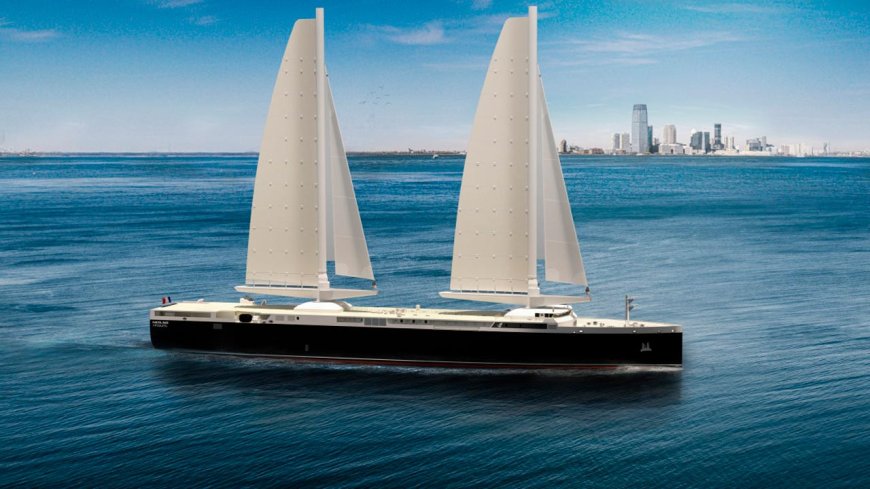
This project stands out because its specifications and design choices are all oriented towards maximising wind propulsion efficiency and reducing energy consumption. It is indeed a vessel specifically designed and built for wind propulsion, not merely a cargo ship equipped with rigging.

As Vincent Seguin, President of MAURIC and naval architect in charge of the Neoliner 136 concept design, emphasises: “This project stands out tanks to both its specifications and design choices that are all oriented towards maximising wind propulsion efficiency and reducing energy consumption. From the very first sketches, we have worked in close collaboration with the Neoline team to design a vessel specifically for wind propulsion, not merely a cargo ship equipped with rigging.”

In January 2023, RMK MARINE entrusted MAURIC with all the vessel’s design studies (Basic & Detailed Design) and technical assistance for the vessel’s construction.

For 2 years, the MAURIC team, consisting of experienced naval architects, engineers, and design draughtsmen, has been able to develop and optimise the vessel’s design, integrate the two rigs, and validate performance.

In May 2023, after parametric optimisation of the hull through CFD calculations, we conducted tank tests at Force Technologies in Denmark and then at MARIN in the Netherlands, to validate and optimise the vessel’s form plan and validate its seakeeping and manoeuvrability.

Performance calculations were also conducted, aimed at refining the expected performance of the Neoliner Origin under sail and in hybrid sail + engine operation, and optimising its mechanical propulsion, appendages, etc. This study was able to capitalise on tank test results, thus offering performance prediction at a very high level of fidelity.

For a 136m long cargo vessel with a 7.65m high garage and incorporating two 70m high foldable masts, the technical challenge of designing the vessel’s structure was particularly high.

Numerous finite element calculations enabled optimisation of the vessel’s structure to maintain the 5,300t carrying capacity, transfer the rigging loads to the main deck, and respect the vessel’s dimensional constraints.