-7.1 C
New York
Home Blog Page 101

Damen unveils new Logistics Support Ship range

0

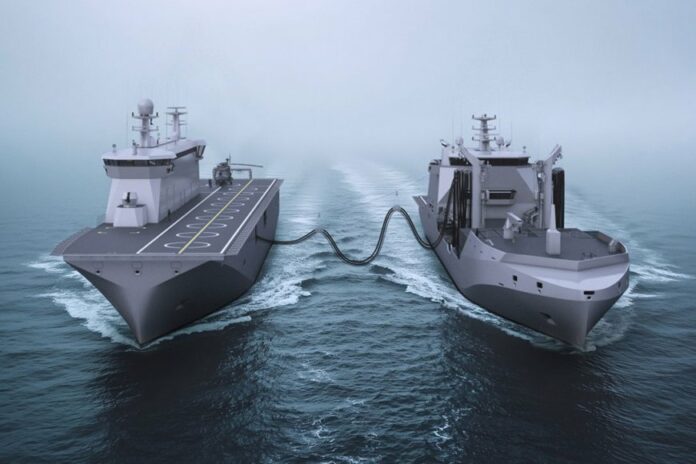
Damen Shipyards Group has announced the introduction of a new range of naval support vessels. The Logistics Support Ship (LSS) series will play an important role in extending the operational reach of naval forces, enabling sustained deployment and enhancing logistical support capabilities in a cost-effective manner. 

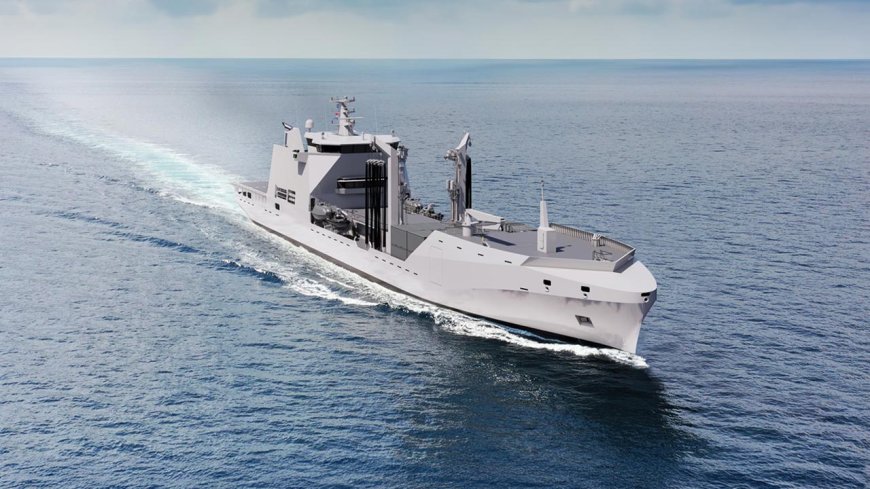
The LSS range consists of two vessel types, the LSS 9000 and LSS 11000, 127 and 140 metres in length, respectively. Damen has designed the vessels to meet the diverse needs of the modern navy. As such, the LSS offers a broad mix of capabilities ensuring readiness and flexibility.

The vessels will be equipped with NATO-standard replenishment at sea (RAS) technology, RoRo capabilities, and substantial cargo transportation capacity. They will be installed with modern navigation and communication systems to ensure safe and efficient operation. 

The LSS will facilitate the efficient transfer and transport of fuel, munitions, provisions, personnel and other essential supplies. The vessels will serve as the backbone of naval logistics, enabling fleets to remain operational far from their home port during extended deployment. They will provide navies with a critical capability that enhances the ability to project power and maintain a presence in key maritime areas.
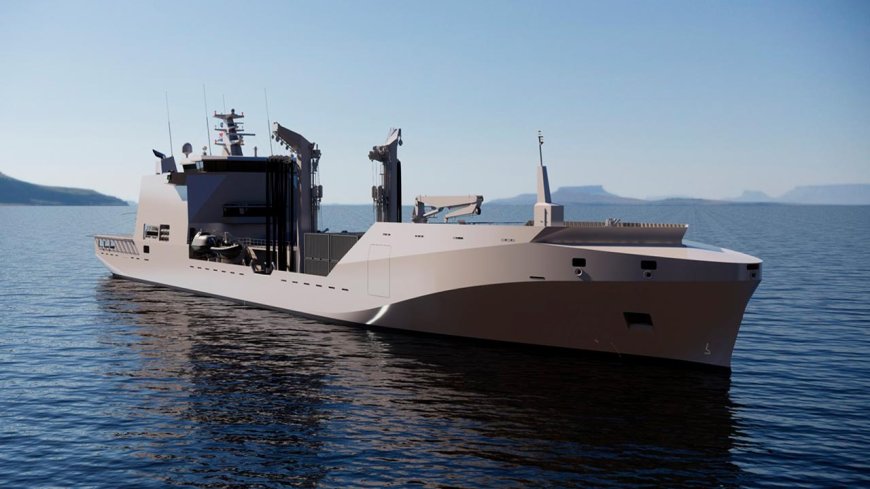
With its modular design, the LSS can be easily and rapidly configured and upgraded for special operational requirements. The scope of the vessels covers duties such as disaster relief, humanitarian assistance and training exercises. 

A key feature of the LSS is the ability to operate in diverse maritime environments, from the open ocean to littoral waters. This versatility arises from an advanced design and engineering process and the combination of both military and commercial standard technology, a combination which also ensures lower OPEX and CAPEX.

In addition to operational efficiency, in line with the ambitions of many navies, the LSS has a sharp focus on sustainability. The LSS will be outfitted with advanced propulsions systems that will reduce fuel consumption and emissions considerably.

Piet van Rooij, Commercial Manager Defence & Security at Damen said, “We have developed the LSS based on discussions with our naval clients around the world. As such, we are confident it represents an appropriate response to the operational challenges they are facing, now and in the future. The LSS offers enhanced capabilities, efficiency and sustainability at a very competitive price. As these vessels enter service, they will undoubtedly play a crucial role in supporting the strategic objective of navies around the world.”
Katoen Natie invests in four all-electric Konecranes Gottwald Mobile Harbor Cranes

0

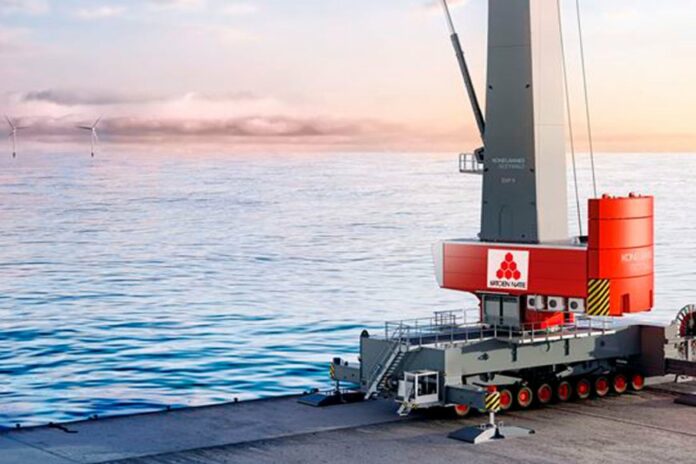
Belgian logistics giant Katoen Natie has ordered four all-electric Konecranes Gottwald Mobile Harbor Cranes for its Port of Antwerp operations. The order, which includes a 10-year service level agreement, was booked in Q1 2025, with delivery scheduled for Q1 2026.

For more than 170 years, Katoen Natie has played a key role in global trade. Sustainability is the heart of their operations, guiding every aspect of their logistic processes. To modernize their port operations, the company is leading by example by investing in Konecranes Gottwald mobile harbor crane technology for several terminals at the Port of Antwerp.

The order is comprised of:

  • Two ESP.9 Konecranes Gottwald mobile harbor cranes with a maximum lifting capacity of 200 tonnes each. The cranes are equipped with a Tandem-lift Assistant, enabling a combined maximum lifting capacity of 400 tonnes.
  • Two ESP.8 Konecranes Gottwald mobile harbor cranes with a maximum lifting capacity of 150 tonnes each.

Each crane features a Konecranes all-electric drive system. Seamlessly integrating an external power supply with rechargeable batteries, the system optimizes energy efficiency while producing zero local tailpipe emissions. With this investment, Katoen Natie joins a growing number of global port operators adopting Konecranes’ all-electric drive technology.

“Katoen Natie has chosen Konecranes Gottwald mobile harbor cranes after a thorough evaluation of the existing solutions in the market.  Konecranes’ all-electric drive concept is the best choice for achieving our goals in sustainable port operations while also offering a new level of performance,” says Tom Brouwers, Energy Manager at Katoen Natie.

To ensure high availability and minimal downtime, all four cranes come equipped with Konecranes TRUCONNECT for remote condition monitoring. The order also includes a holistic 10-year service level agreement, with predictive servicing based on a condition-based monitoring system provided by Konecranes Service Frontline in Belgium. Special spare parts packages ensure fast and efficient maintenance.

“This was a long-term project where we worked closely with Katoen Natie to share our experience from a decade of field operations with all-electric drives. Through detailed technical discussions we demonstrated the unparallelled combination of performance, reliability and sustainability provided by this Konecranes technology,” said Alexandros Stogianidis, Regional Sales Manager at Konecranes.

This contract is part of Ecolifting™, Konecranes’ vision to increase its handprint – meaning the beneficial environmental impact that can be achieved with our product and service portfolio – while reducing customers’ carbon footprints. From eco-optimizing diesel drives, to hybridization and fully-electrified fleets, we will continue to do more with less.

A strong focus on customers and commitment to business growth and continuous improvement make Konecranes a material handling industry leader. This is underpinned by investments in digitalization and technology, plus our work to make material flows more efficient with solutions that decarbonize the economy and advance circularity and safety.

New passenger ferry for US Virgin Islands to British Virgin Islands tourist route in the Caribbean

0

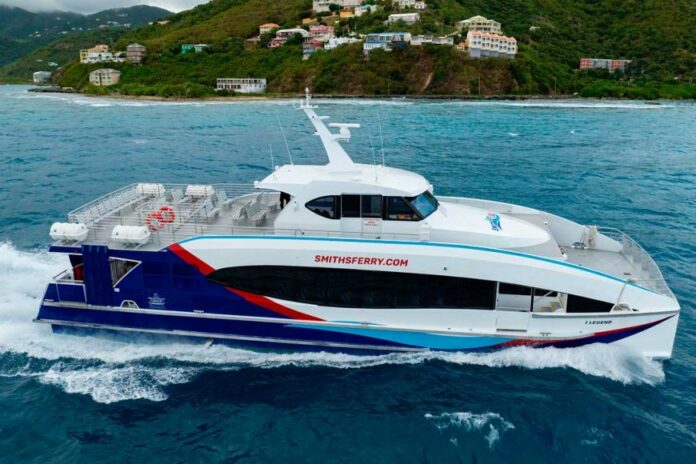
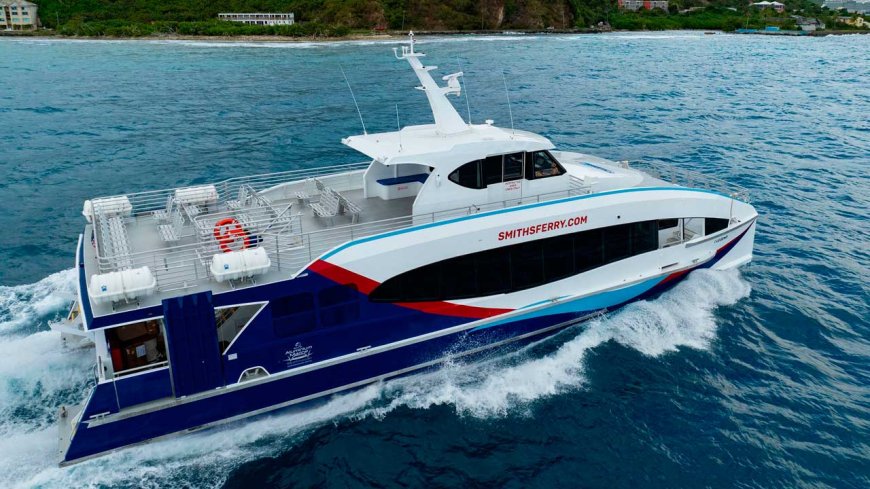
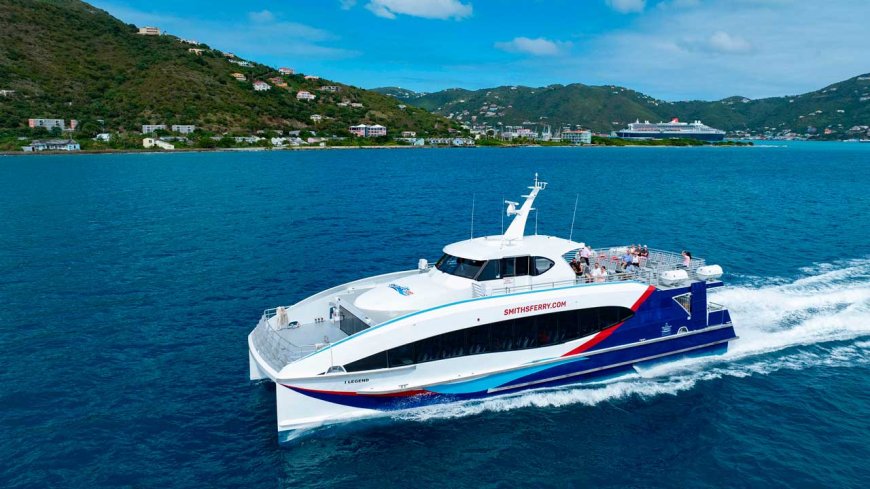
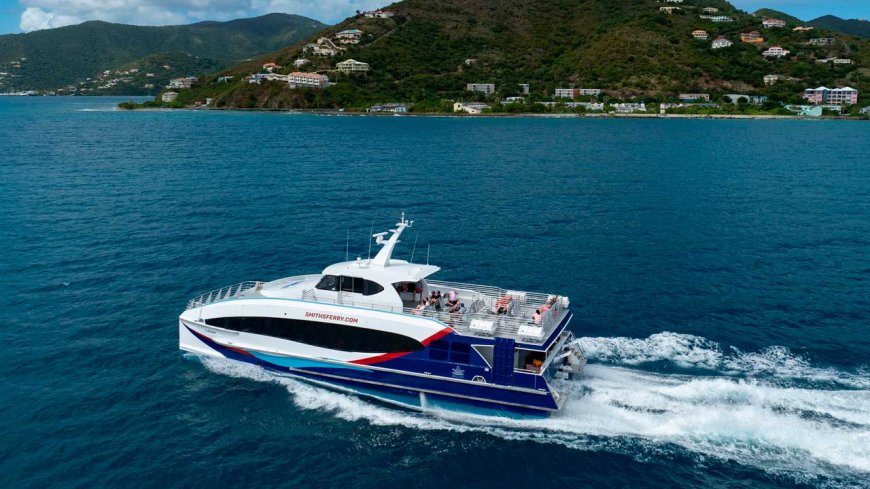
Leading digital shipbuilder Incat Crowther has designed a new, state-of-the-art 24-metre passenger fast ferry for Caribbean operator Smith’s Ferry Services. Built by Australian shipyard Aluminium Marine in Brisbane, the new ferry will transport 149 passengers at speeds of up to 28 knots, has been designed for the busy Charlotte Amalie (U.S Virgin Islands) to Road Town (British Virgin Islands) tourism route. 

Designed with operational flexibility and an enhanced customer experience in mind, the main deck is capable of transporting 118 passengers in air-conditioned comfort and boasts a large service kiosk, two bathrooms and luggage space. The ferry has also been designed to be handicap accessible and has two spaces for people with wheelchairs on its main deck. 

The vessel’s upper deck features premium outdoor seating for 40 passengers as well as protected storage boxes for luggage. The vessel’s wheelhouse provides the vessel’s captain with an excellent line of sight ensuring safe operations in almost any sea conditions. 

The vessel is powered by two MAN 2862 LE454 EPA Tier 3 compliant diesel engines rated for 588 kilowatts (kW) in a continuous duty application allowing for dependable speed performance, reduced maintenance intervals and increased time between overhauls. 

Rikky Baynes, Operations Manager at Smith’s Ferry Services said: “We required a vessel that not only delivered a premium customer experience, but one that was also operationally efficient and tailored to the sea state conditions we experience on the Caribbean Sea.”

“Incat Crowther has delivered on this brief by designing a vessel that will provide a step change in comfort and operational reliability for people travelling between the US and British Virgin Islands,” said Mr Baynes.

Speaking after the vessel’s delivery, Grant Pecoraro, Incat Crowther’s US Managing Director said the project saw Incat Crowther work closely with operator Smith’s Ferry Services through the design and build of the new ferry.

“This new vessel will provide a step change in comfort and operational reliability to tourists visiting the US and British Virgin Islands, and we are grateful for the opportunity to support Smith’s Ferry Services in their efforts to enhance their fleet,” said Mr Pecoraro.

The new vessel has been built to comply with both the US Coast Guard’s Subchapter T requirements and the Small Commercial Vessel (SCV) Code allowing it to operate in Caribbean waters.

Next Ocean secures investment to scale offshore safety technology

0

This funding will accelerate Next Ocean’s growth, enabling the company to scale production, expand into new markets, and further develop its predictive radar technology.

Over the past years, Next Ocean has successfully delivered numerous Vessel Motion Radar systems to leading companies in the Offshore Wind and Oil & Gas industries. The technology provides real-time insights into wave-induced vessel motions, enabling operators to anticipate conditions up to three minutes ahead. This precision allows for safer and more efficient offshore operations, minimizing operational risks and maximizing uptime, even in rough weather.

With this investment, Next Ocean will enhance its commercial reach and solidify its leadership in maritime safety technology. Partnering with Arches Capital and their network of successful former entrepreneurs brings strategic expertise to help Next Ocean expand its impact globally.

Karel Roozen, CEO, Next Ocean, said:

“This partnership marks a significant milestone for Next Ocean, reinforcing our long-term commitment to the offshore industries. We are confident that Arches Capital will be a key partner in further establishing our market position. By accelerating our growth, we can bring our potentially life-saving technology to operators worldwide and strengthen the relationships we’ve built with our existing clients. Together, we can drive safer and more efficient maritime operations.”

Frank Appeldoorn, Managing Partner, Arches Capital, said:

“At Arches Capital, we seek out transformative technologies, and Next Ocean embodies that vision perfectly. Their predictive radar technology is reshaping offshore safety and efficiency. We are excited to support their global expansion and help bring this innovation to more maritime professionals, making offshore operations safer and more reliable.”

Damen installs NOX-reducing SCRs to Van Oord’s Nexus

0

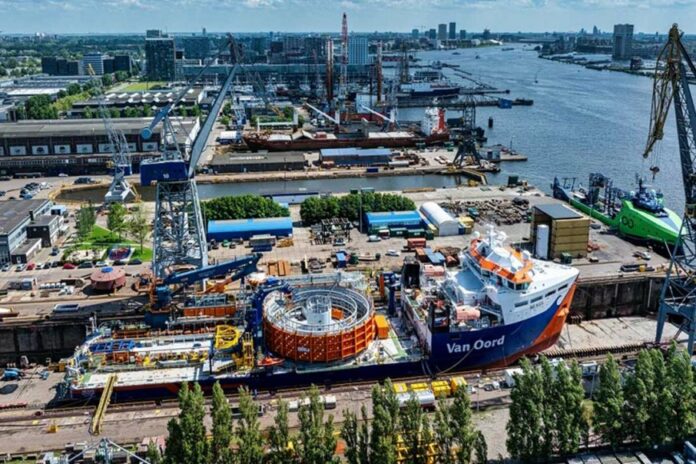
The Nexus is a Damen Offshore Carrier (DOC) 8500 delivered in 2014. The 122.68 x 27.45 metre vessel undertakes cable laying operations, principally in the offshore wind sector. With the SCRs installed, Van Oord has reduced the NOX emissions of its vessel by up to 80%. 

The project required the installation of five SCR units, one for each of the Nexus’ engines. Damen developed its Marine NOX Reduction system in 2015 in preparation for IMO Tier III regulations. The system has proven itself on multiple applications on tugs, workboats, yachts and inland shipping vessels. 

The system uses a catalyst to react with injected urea to chemically reduce NOX from the vessel’s exhaust gases. Damen adapted its proven, standard system to meet the specific requirements of the Nexus.

This project demonstrates the synergy to be found within the Damen Group, an important factor for Van Oord, says Manager Projects Fleet Hein Leemhuis, “We chose Damen based on their familiarity with the Nexus as the original builder. Additionally, they were able to offer us a one-stop-shop solution, taking care of the entire project.”

Damen’s included the undertaking of a feasibility study to assess, and make proposals for the installation of the SCRs. Furthermore, Damen was responsible for the engineering, production and installation of the systems. Additionally, Damen’s scope included unburdening the client by taking care of the arrangements for the verification and certification for class notation of the vessel.

A further factor in Van Oord’s decision to contract Damen is that the Marine NOX Reduction system is a relatively compact system, with all component parts combined. 

“Damen’s system combines the damper and scrubber in one unit. With an existing vessel that has not been built with an SCR installation in mind, there is a minimum of space available, so a system such as this, which requires less volume, is ideal for a retrofit project.”

Reduced NOX emissions is increasingly becoming a license to operate, particularly in the offshore wind sector in which the Nexus is active. Next to this, Van Oord, like Damen is committed to increased maritime sustainability. 

The company operates its own Sustainability Programme, within which it focuses on the four pillars of enhancing the energy transition, accelerating the energy transition, accelerating climate action, empowering nature and communities, and achieving net zero emissions.

Following the completion of the project, the Nexus has been extensively, independently tested and the effects of the SCR installation on her NOX emissions verified. 

Speaking of the successful conclusion to the project, Damen’s Program Manager Sustainable Propulsion André de Bie says, “There is a good match in the culture and mentality between Damen and Van Oord – we both want to go forward. When you’re both looking in the same direction, things are easier. As a result, there has been a very pleasant cooperation that has helped to ensure such a positive result.”

NYK conducts biofuel trial on coal carrier for Tohoku Electric Power

0

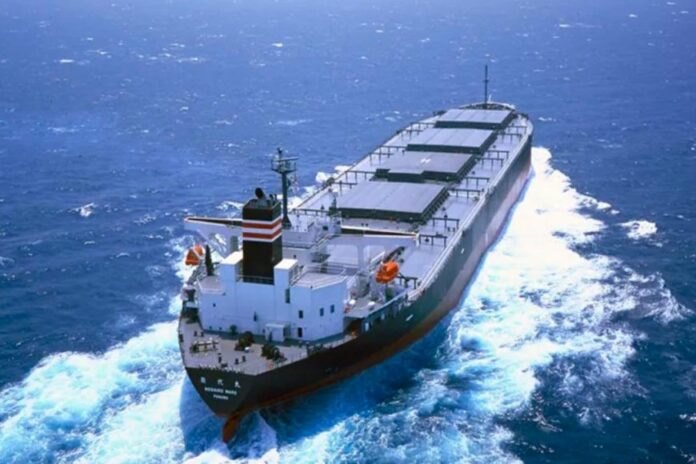
On February 9, NYK started a biofuel test run on its coal carrier Noshiro Maru (hereafter “the vessel”), which is operated for Tohoku Electric Power Co., Inc. 

Mitsubishi Corporation Energy Co., Ltd. in the Keihin area facilitated the supply of biofuel for the vessel.

Biofuels are made from organic resources (biomass) of biological origin, such as agricultural residues and waste cooking oil, and are considered to produce virtually zero carbon dioxide (CO₂) emissions when combusted. Since they can be used in heavy-oil-powered ship engines, which are common on large merchant ships, biofuels are considered a key means of reducing greenhouse gas (GHG) emissions in the transition period from heavy oil to zero-emission fuels.

Using biofuel to reduce GHG emissions during sea navigation also contributes to reducing Scope 3 GHG emissions generated by transporting customers’ cargo. NYK will continue to focus on introducing biofuels and other next-generation fuels, and will contribute to reducing GHG emissions in our customers’ supply chains while promoting decarbonization in marine transport.

Learnmarine launches NavSimulator V 2.0 – advanced ship-handling training

0

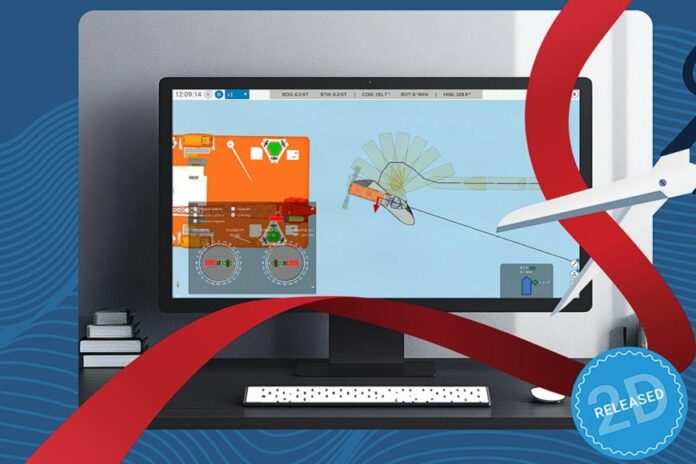
Learnmarine has officially launched NavSimulator V 2.0, an advanced ship-handling training tool designed to enhance maritime skills through realistic simulations.

This versatile simulator caters to both novices and seasoned professionals, offering a range of configurations to suit various training needs.

Key Features of NavSimulator V 2.0:

  • Advanced Ship Models: Utilizes sophisticated mathematical simulations to replicate authentic vessel behavior, providing users with realistic training scenarios.
  • Flexible Configurations: Offers options from simple setups to advanced XR environments, allowing users to scale their training as needed.
  • Global Accessibility: Cloud-enabled solutions ensure that training can be conducted anytime and anywhere, accommodating diverse users from individual students to corporate teams.
  • Cost-Effective Solution: Designed to be affordable, eliminating the need for expensive hardware setups.
  • Regulatory Compliance: Meets international maritime standards, including the STCW Code, ensuring that training aligns with industry requirements.

To celebrate the company’s anniversary on February 1, Learnmarine is offering a 50% discount on NavSimulator V 2.0. This limited-time offer presents an excellent opportunity for maritime professionals and institutions to enhance their training programs at a reduced cost.

For more information and to take advantage of the special offer, visit the official NavSimulator page.

Termavi increases eco-efficient productivity with two Konecranes hybrid RTGs

0

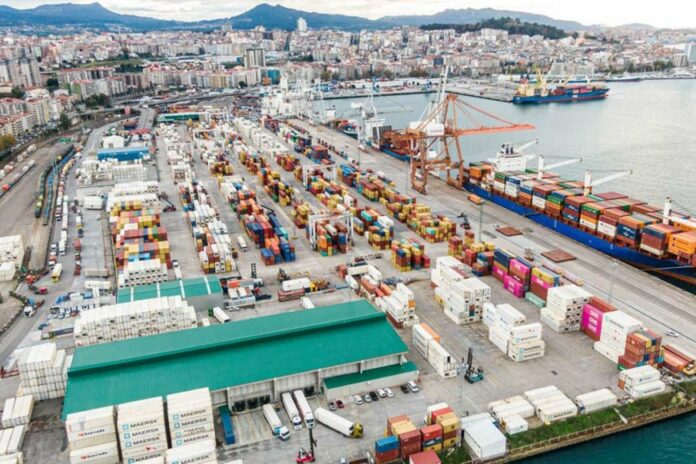
Terminales Marítimas de Vigo, S.L.U. (Termavi), a new Konecranes customer, has ordered two hybrid Konecranes Rubber-Tired Gantry (RTG) cranes equipped with the complete range of Konecranes Smart Features. The order was booked in Q4 2024 and delivery is scheduled for Q4 2025.

Termavi operates the main container terminal at Spain’s Port of Vigo on the country’s Atlantic coast, and has implemented a number of initiatives to increase energy efficiency, reduce its carbon footprint and protect biodiversity. This investment continues that approach alongside Termavi’s broader strategy to improve operational efficiency.

“Our investment in hybrid Konecranes RTGs aligns with our drive for more efficient and sustainable container handling. These cranes cut emissions and reduce fuel consumption, and their advanced safety and automation features improve our productivity. We’re also leaving the door open to potential retrofitting for hydrogen power,” says Román Davila González, Associate Director, Termavi, Grupo Davila.

The cranes are equipped with the complete range of Konecranes Smart Features including Auto-Steering, Auto-Truck Guiding, Auto-Path Optimization and Auto-Positioning, keeping the RTGs on course and ensuring precise container handling. Auto-TOS Reporting integrates seamlessly with terminal systems. Additional enhancements include trolley and truck lane cameras, tire pressure monitoring, fire suppression systems and automatic greasing systems.

“Termavi’s decision to invest in our hybrid RTGs reflects the container handling industry’s ongoing shift towards zero tailpipe operations. With these cranes, Termavi gets greater efficiency, improved safety and a future-ready solution that supports their long-term operational goals,” says Darryn Scheepers, EMEA Sales Director, Konecranes, Port Solutions.

This contract is part of Ecolifting, Konecranes’ vision to increase its handprint – meaning the beneficial environmental impact that can be achieved with our product and service portfolio – while reducing customers’ carbon footprints. From eco-optimizing diesel drives, to hybridization and fully-electrified fleets, we will continue to do more with less.

Yara and NYK conclude world’s first time-charter agreement for ammonia-fueled medium gas carrier

0

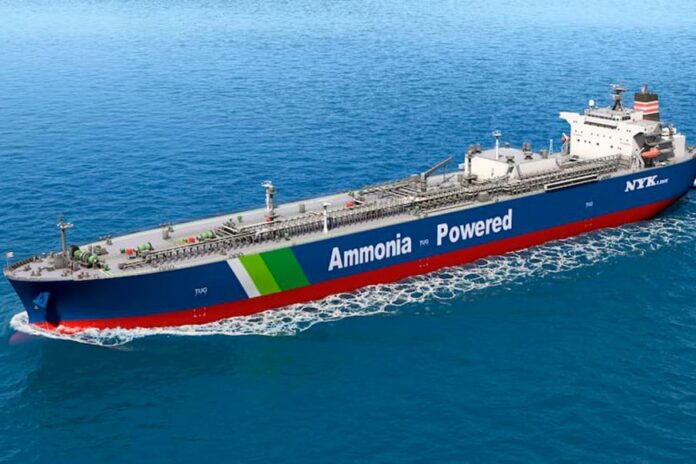
Yara Clean Ammonia signed a time-charter contract with Nippon Yusen Kabushiki Kaisha (NYK) for an ammonia-fueled medium gas carrier (AFMGC) to be delivered in November 2026.

“Our successful collaboration with NYK enables us not only to comply with future regulations related to CO2 emissions from sea-going vessels but also helps us to ensure that our customers can receive carbon-intensity compliant clean ammonia throughout our supply chain from well to wake,” says Murali Srinivasan, Senior Vice President Commercial in Yara Clean Ammonia.

Since 2021, Yara Clean Ammonia and NYK have jointly studied the practical application of an ammonia-fueled ammonia gas carrier, and the companies have now concluded the world’s first time-charter contract for an AFMGC, the most popular type of vessel for the international maritime transportation of ammonia.

“I am pleased to have concluded this charterparty which will give us great flexibility to manage carbon emissions and product carbon intensity. I look forward to a successful cooperation in operating this new technology to its best efficiency,” says Csaba Laszlo, Vice President Ammonia Trade & Shipping in Yara Clean Ammonia.’

The use of an AFMGC will greatly contribute to significantly reducing GHG emissions from marine transportation and developing an ammonia supply chain by providing a more environment-friendly means of ammonia transport as demand grows for ammonia use in the power sector, for marine fuel, and the like.

“In November 2023, we released the ‘NYK Group Decarbonization Story’ declaring a target of achieving net-zero GHG emissions by 2050. We have been developing an ammonia-fueled vessel because we believe that using alternative fuels, especially ammonia, is essential to reaching the net-zero goal. We are delighted to have concluded this time-charter contract with Yara Clean Ammonia, the world’s largest ammonia player, which has highly evaluated the AFMGC we develop with our partner companies as a next-gen fueled vessel. We will continue to work with Yara on building an ammonia supply chain from various aspects, not only in the maritime transportation of ammonia,” says Hironobu Watanabe, Managing Executive Officer NYK.

Outline of vessel

  • Type of vessel: 40,000m³ Ammonia-Fueled Medium Gas Carrier
  • Delivery: November 2026
  • Length overall: 180.00 m
  • Breadth: 32.00 m
  • Molded depth: 18.45 m
  • Flag: Japan

Nexus Energy supplies zero emissions PowerPack to Van Oord fully electric dredging project

0

Nexus Energy has recently supplied its PowerPack to a pilot project taking place in the seaport of Dordrecht. 

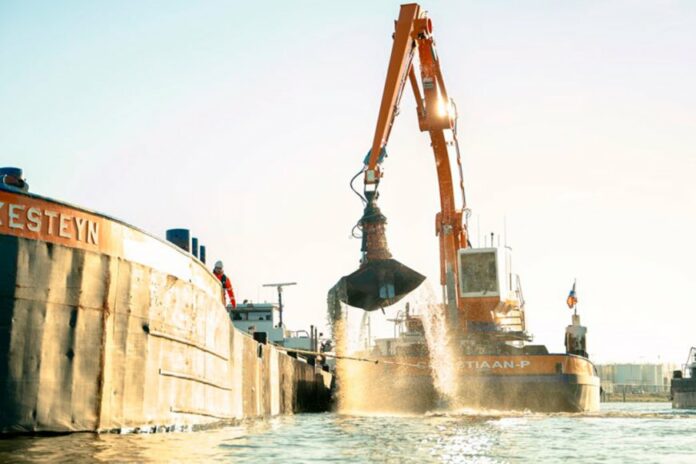
During the test, Paans Van Oord demonstrated the operation of its fully electric crane vessel, Christiaan P. The vessel has been retrofitted for increased efficiency. This involved having its engines replaced with electric motors and crane replaced with an electric model. 

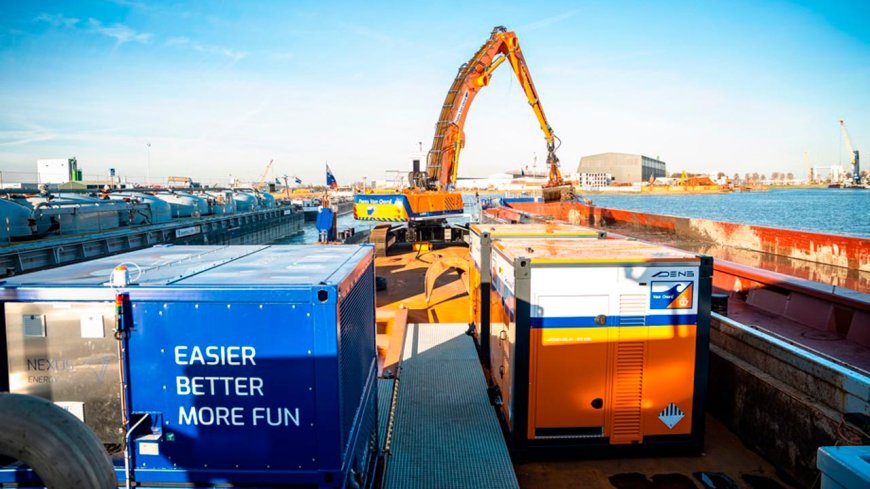
For the pilot project, the vessel was outfitted with mobile battery systems of 870kWh. Additionally, the Nexus plug and play PowerPack was installed. This hydrogen powered pack provides the means to charge the batteries, with zero emissions, in the absence of shore power, and even while the vessel is in operation. 

Nexus’ solution generates electricity via PEM fuel cell technology. It is supplemented with a battery package to deliver immediate access to power, increase peak power and safeguard excess power for maximum efficiency. The system is installed within a 10ft container for straightforward storage, transportation and installation.

The top half of the container is exclusively used for air cooling. As such, in cases where the vessel’s own box coolers can be used for this function, the entire process takes place with the space of half a 10ft container. 

Also included in the project scope is provision of hydrogen storage capacity. The solution is specifically designed for marine applications. It is modular, scalable and fully redundant, with pressure regulation, conforming to all applicable safety regulations and a fully integrated power management system. 

During the pilot project, Van Oord carried out various measurements, such as energy consumption when sailing at different speeds and during light and heavy dredging operations, in order to assess the effectiveness and efficiency of electric dredging.

In addition, testing was done on how the batteries are charged via shore power and the ship’s own generator. Research was also conducted into whether the batteries can be continuously charged during operation using hydrogen.

Wouter Guijt, CEO and Founder of Nexus Energy said, “We are delighted and proud to have been invited to support this exciting initiative of Van Oord and their project partners. The aim of assessing the viability of a fully electric, emissions free dredging operation is fully aligned with Nexus’ mission of bringing about a positive transformation – Easier, Better and More Fun – for the maritime sector. These goals are the driving force behind the PowerPack, a straightforward solution, offering higher efficiency, lower costs, and a reduction of emissions that we can all take pride in.”

The project was partly financed by the Regio Deal Drechtsteden-Gorinchem.