-7.1 C
New York
Home Blog Page 100

‘Green loan’ of €1 billion to finance offshore grid connections in North and Baltic Seas

0

Eurogrid GmbH, the parent company of 50Hertz Transmission GmbH, entered into a contract with twelve banks for a redeemable loan of one billion euros with a term of ten years as part of ‘green’ syndicated financing supported by KfW.

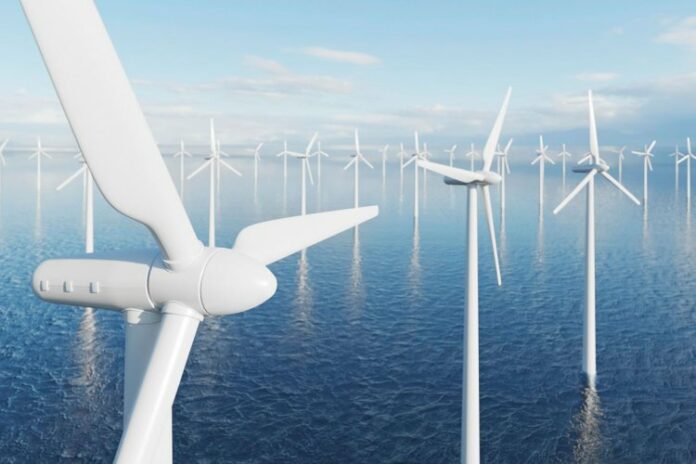
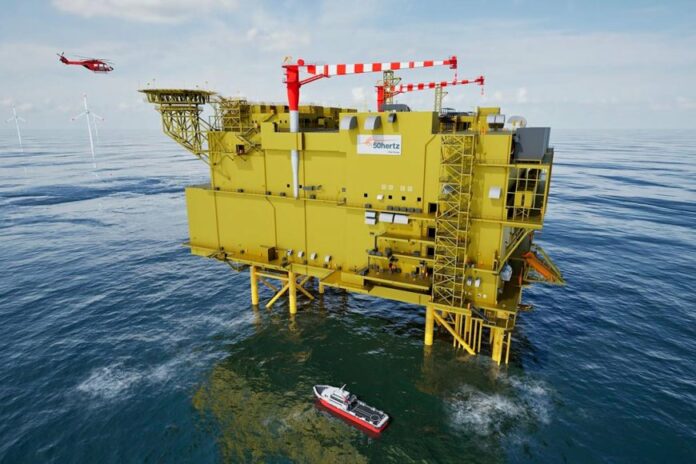
The projects financed with the loan are the two 2 GW grid connections Ostwind 4, the first direct current grid connection in the innovative 525 kV standard off the island of Rügen in the Baltic Sea, and LanWin 3, the first offshore grid connection to be built by 50Hertz in the North Sea off the coast of Schleswig-Holstein.

Following the successful syndication of a first KfW-supported green loan in April 2023, this is the second financing project in which Eurogrid is participating in a KfW programme as part of the climate protection for Corporates. The company was again supported by IKB Deutsche Industriebank as an arranger. Eurogrid has thus secured a significant amount early in the year to finance this year’s investments.

Marco Nix, 50Hertz Chief Financial and Investment Officer (CFO): ‘The relatively new 525kV offshore DC standard is a demanding challenge for 50Hertz, both technically and economically. The loan agreement concluded under the umbrella of the KfW programme is another important building block in our financing strategy, which is based on green financing elements, a broad investor base and a balanced mix of various financing instruments.  Loans from equity investors and a strong internal financing force provide the necessary support.’

bp announces start of production from Raven Second Development Phase, offshore Egypt

0

bp has announced the start of production from the second development phase of the Raven field, offshore Egypt, which involves the subsea tieback of additional Raven infill wells to its existing onshore infrastructure as part of the West Nile Delta (WND) project. bp, the operator, holds an 82.75% stake in the project, while Harbour Energy owns the remaining 17.25%.

The new wells are expected to produce approximately 220 billion cubic feet of gas and 7 million barrels of condensate. The project was safely executed ahead of schedule, allowing for an accelerated start of production.

Nader Zaki, bp Regional President for the Middle East and North Africa, commented: “Since January 2024, we have not stopped drilling for one day. The focus of the Raven Infills project has been to fight natural decline and increase production while maximizing our existing infrastructure to meet Egypt’s domestic market demand at pace. This further demonstrates bp’s commitment to investing in Egypt, enabled by the unparalleled support and partnership with the Ministry of Petroleum, EGPC, and EGAS.”

“The focus of the Raven Infills project has been to fight natural decline and increase production while maximizing our existing infrastructure to meet Egypt’s domestic market demand at pace.”
 
Nader Zaki, bp Regional President for the Middle East and North Africa
 
Wail Shaheen, VP bp Egypt, added: “The safe start-up of this project follows our recent announcement of the successful completion of the El King exploration well. This series of achievements embodies our ongoing commitment to helping meet the increasing local energy demand by optimizing production from available resources while adding new ones.”

Raven Infills is in line with bp’s drive to deliver as a simpler, more focused, higher-value company by maximizing production from existing assets and optimizing resource efficiency.

The WND Gas Development comprises a series of gas condensate fields located offshore Egypt, within the North Alexandria and West Mediterranean Deepwater concessions. The Raven field, the final phase of the WND project, has been in production since early 2021. Its initial phase included the development of eight subsea wells, located up to 65 km offshore, at water depths ranging from 550 to 700 meters.

Boluda orders four Konecranes hybrid RTGs

0

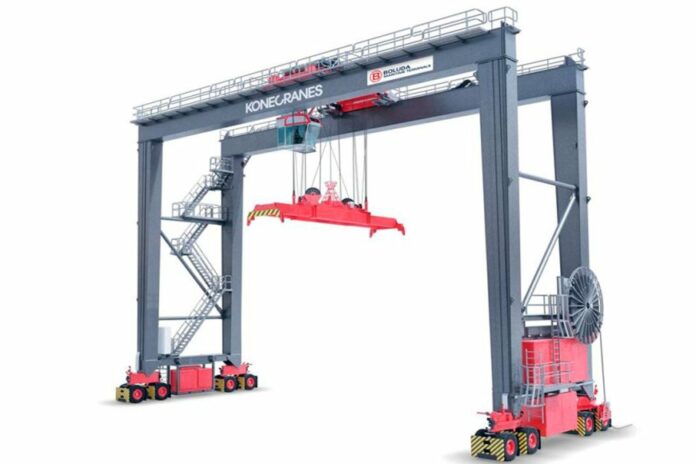
Konecranes customer Boluda Maritime Terminals Tenerife has placed an order for four hybrid Konecranes Rubber-Tired Gantry (RTG) cranes equipped with many Smart Features. The contract was signed in December 2024.

Boluda Maritime Terminals Tenerife (Boluda) is an independent port operator providing container handling and logistics services at the Port of Tenerife, a strategic hub in the Canary Islands for trade between Africa, the Americas and Europe.

The company opted for hybrid Konecranes RTGs after reviewing fuel consumption calculations and comparisons that demonstrated the fuel efficiency and eco-efficiency of Konecranes hybrid drives.

“Konecranes hybrid drive technology provides the perfect balance of performance and environmental responsibility. The Smart Features also contribute to more efficient container handling and enhanced safety,” says Gonzalo Calero Gómez, CEO of Boluda Maritime Terminals.

The four new cranes will join two Konecranes RTGs. The long-term reliability of these existing RTGs, delivered in 2007, reinforced Boluda’s confidence both in the durability of Konecranes technology and how it keeps improving. Evidence of this is seen In the Smart Features that will come with the new cranes: Auto-Steering, Auto-TOS Positioning, Auto-Positioning, Stack Collision Prevention and Truck Lift Prevention.

“We look forward to supporting Boluda’s journey to zero tailpipe emission operations. This investment Is further evidence of growing demand for hybrid solutions in container handling and underscores Konecranes’ strength in this domain,” says Darryn Scheepers, EMEA Sales Director, Konecranes, Port Solutions.

Damen and Rossilini’s Four-10 sign REV Ocean outfitting contract

0

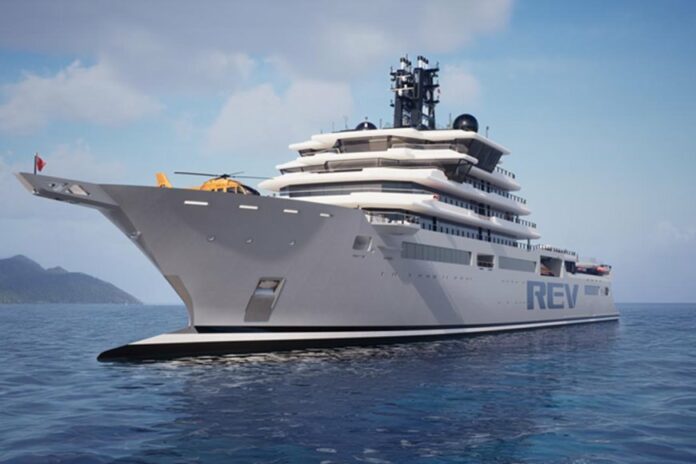
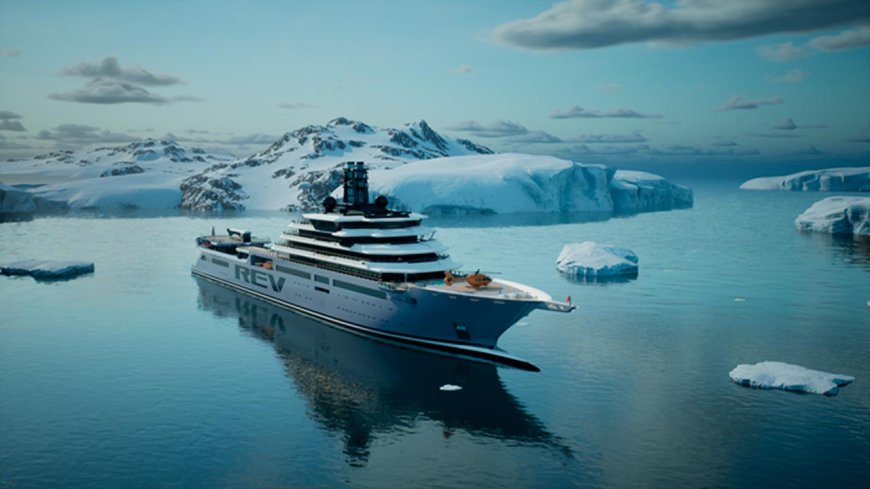
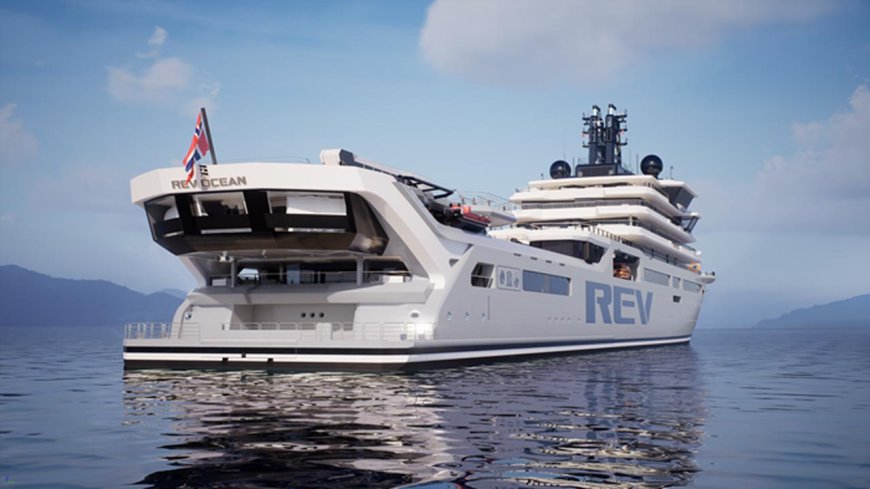
On February 6, 2025 Damen Shiprepair Vlissingen (DSV) and Rossilini’s Four-10 signed a contract for the outfitting of the REV Ocean. The contract covers both the interior and exterior of the state-of-the-art research and expedition vessel. The workscope will take place in DSV’s covered drydock.

The 194.4 by 22 metre vessel will seamlessly integrate cutting-edge marine technology with advanced research facilities, setting a new benchmark in the industry.  

This includes laboratories, furnished with state-of-the-art equipment allowing for the preservation, processing, analysis and storage of specimens while at sea. A range of acoustic sensors will enable mapping of the seafloor down to hadal depths as well as to survey biological communities in the water column. 

An onboard conference centre will provide meeting rooms, a multipurpose exhibition room, a 35 seat auditorium with Dolby Atmos for lectures, and a media editing suite for videography and documentaries etc. 

Additionally, REV Ocean will feature five hangar gantry cranes, pelagic trawling capabilities and a moonpool, providing sheltered access to the water in the widest range of possible conditions.  

The DSV Aurelia, the world’s deepest diving three person acrylic submarine will provide the capability to reach depths of 2,200 metres. Also aboard, will be the ROV Aurora. The ROV comes together with its tethered management system, Borealis and, with a depth rating of 6,000 metres enjoys access to 98% of the ocean. 

Exploration, particularly in polar regions, is further facilitated by an Airbus ACH145 helicopter, which can operate from either of the two helidecks on the vessel. The helicopter also has the functionality of re-supply and passenger transport. George Gill, Project Director and Owner’s Representative for the vessel REV Ocean, commented: “With the imminent delivery of the 884-REV Ocean from the newbuild yard, we move into the next phase of REV Ocean’s journey. The owner and their team are delighted to embark on this collaboration with Damen Shiprepair at their impressive facility in Vlissingen.”

This agreement marks the largest contract in DSV’s history, reinforcing its position as a key player in the maritime industry.

Michiel de Vliegher, Managing Director of DSV said, “Speaking on behalf of the whole team, we are delighted and proud that Rossilini’s Four-10 have placed their trust in DSV for this momentous and exciting project. We’re looking forward to getting stuck into the challenge – the largest project we have undertaken to date – and to bringing it to a successful conclusion in the months ahead.”

Equinox goes live with BASSnet SaaS, streamlining FSRU operations

0

To optimise efficiency, Equinox chose BASSnet SaaS for Maintenance, Operations, Safety & Improvement Reporting (SAFIR), Risk Management, Reviews & Improvements, Document Management and Procurement. Additionally, the BASSnet BI Dashboard enhances strategic decision-making with advanced analytics.

Implementation of BASSnet’s Control of Work, Safety & Quality, and Inventory mobile apps will also drive on-the-go convenience and efficiency for crew in the complex FSRU shipboard environment.

“We opted for BASSnet SaaS to ensure seamless migration of our Planned Maintenance System (PMS) database and elevate our vessel management with the latest technology,” says Capt. Andrew Clifton, General Manager of PT. Perusahaan Pelayaran Equinox. “The BASS team rendered excellent service and support to ensure project success. Our FSRU crew’s familiarity with BASSnet further contributed to a smooth transition. We look forward to benefit from BASSnet’s cybersecure and cloud-based solutions to drive productivity onboard and at the office.”

“BASSnet SaaS provides a future-ready platform for Equinox,” says Per Steinar Upsaker, CEO & Managing Director of BASS Software. “With our complete cloud solutions and dedicated support, customers can achieve high operational efficiency with quality data. We’re proud to support Equinox to streamline their operations with cutting-edge maritime technology.”

“Managing an FSRU involves complexities beyond traditional vessels,” adds Capt. Andrew Clifton. “BASSnet’s SaaS solutions offer the innovation and digital edge we need to effectively maintain high-value LNG handling equipment and comply with strict maritime and energy regulations. BASSnet enables us to optimise performance while staying ahead in a rapidly evolving industry. We also received training in our office and onboard the FSRU from BASSnet staff; this training was of a very high standard and was invaluable.” 

Evergreen adds eleven 24,000 teu box ships to its orderbook

0

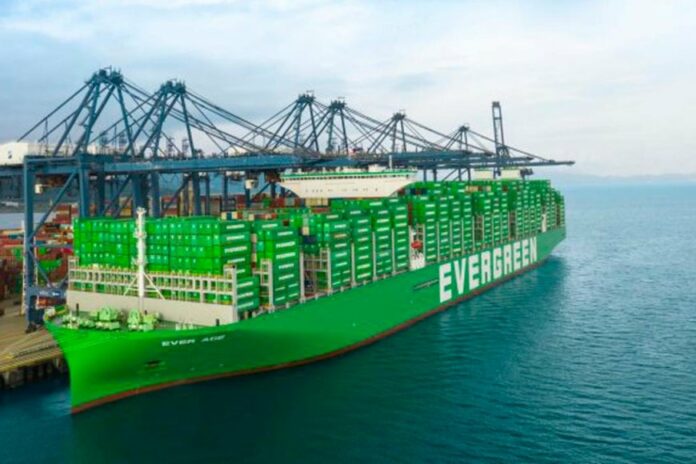
The Taiwanese mainline operator said yesterday it had commissioned 11 ships, priced between $265m and $295m each; six to be built by South Korean shipbuilder Hanwha Ocean and five at Guangzhou Shipyard International in China.

Evergreen’s orderbook is now at 821,423 teu, the fifth-largest, behind MSC, CMA CGM, Cosco, and Maersk, and equates to 46% of its active fleet.

The newbuilds will join a dozen 24,000 teu ships already in the Evergreen fleet and, while no delivery dates were confirmed, Alphaliner believes they won’t begin before 2028, as the major shipyards are mostly fully booked for the next two years.

Evergreen already operates 23 conventionally powered ‘megamax’ vessels, with one more due next year, so, suggests Alphaliner, the latest newbuildings are likely to be LNG dual-fuelled.

Although the carrier has 16 methanol dual-fuelled 16,000 teu vessels on order from at Samsung Heavy Industries, there is talk that the company is considering following Maersk by switching propulsion to LNG.

Another carrier with a seemingly insatiable appetite for new ships is CMA CGM. Not long after commissioning a dozen 15,500 teu LNG dual-fuelled ships at HD Hyundai Heavy Industries, the French carrier is reportedly planning an order for as many as 24 LNG dual-fuel 18,000 teu ships from one of China State Shipbuilding’s yards.

New map of South Orkney Islands published for the first time in 40 years

0

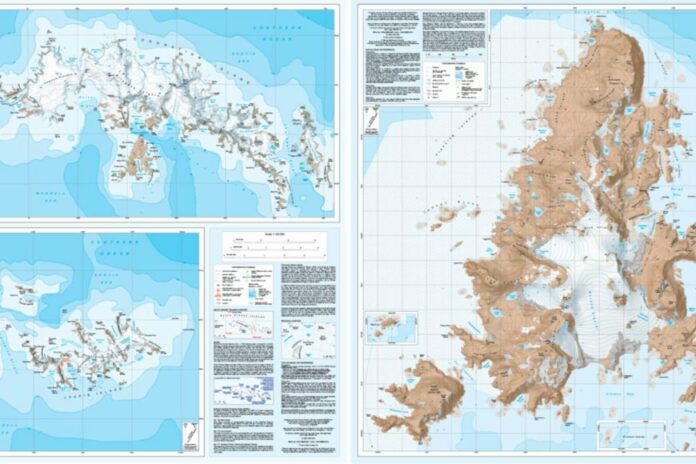
Created by the Mapping and Geographic Information Centre at BAS, the map offers a detailed topographic view of the entire South Orkney archipelago on one side, with a focused, high-resolution map of Signy Island on the reverse.

Produced at a 1:100,000 scale for the archipelago and 1:10,000 scale for Signy Island, these new maps incorporate extensive data on key geographical features, including contours, mountain spot heights, rock outcrops, lakes, and place names. These maps are vital for scientific research and operational purposes in this remote region of the Southern Ocean, which is home to diverse wildlife populations, including over a million breeding pairs of penguins.

The South Orkney Islands lie roughly 650km north-east of the Antarctic Peninsula and 1250km south-east of South America. The British research station on Signy Island and the Argentine research station on nearby Laurie Island rely on precise maps to navigate the region’s challenging terrain. The new maps are a significant update on previously published versions, which were produced by the Directorate of Overseas Surveys (DOS) in 1963 and by BAS in 1988. Both older maps were based on surveys conducted by the Falkland Islands Dependencies Surveys (FIDS), but are now considerably out of date and not comparable to the standard of modern maps.

Another useful addition to the new map is the inclusion of bathymetry data, reproduced with permission from a UK Hydrographic Office chart. The waters to the west of the island are still unsurveyed however, due partly to the treacherous nature of this region and the presence of numerous rocks. The shipwreck of an old whaling ship called the Tioga is shown on the map in Port Jebsen, where it was wrecked in 1913.

The map of the whole South Orkney Island group shows a similar story to the Signy map, but over a much larger area. The ice has retreated around the coastline, creating new islands and exposing rocks in the water that were previously covered by the ice. Many areas of exposed rock outcrop and moraine have also been revealed on land as ice retreats and melts. The accurate location of these exposed rocks are important for anyone traversing over the land, and for identifying locations in a satellite image. New mountain spot heights were calculated for the maps, using the most recently available high-resolution elevation data. Some of the peaks were more than 200m taller than previously thought, with Worswick Hill changing from 575m to 794m. 

Bathymetry depths are also shown on this South Orkneys map, with the data reproduced from an Argentinean hydrographic chart, with permission from the Servicio de Hidrografía Naval (SHN – the Argentine Hydrographic Service).

This new map is available in two formats: a folded version with a card cover and a flat version suitable for wall display. It joins the ‘BAS Topographic Series’ and can be purchased from various online retailers, including Stanfords and NHBS.

Kongsberg Maritime develops innovative Mooring Capable Solution for Offshore Construction Vessels

0

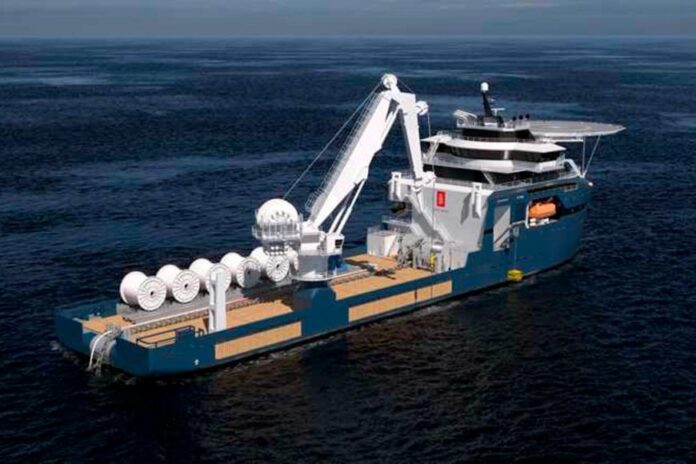
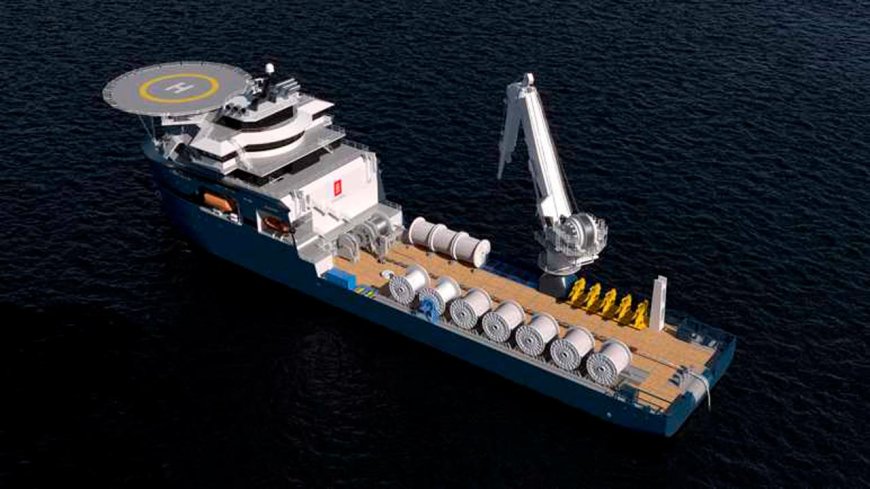
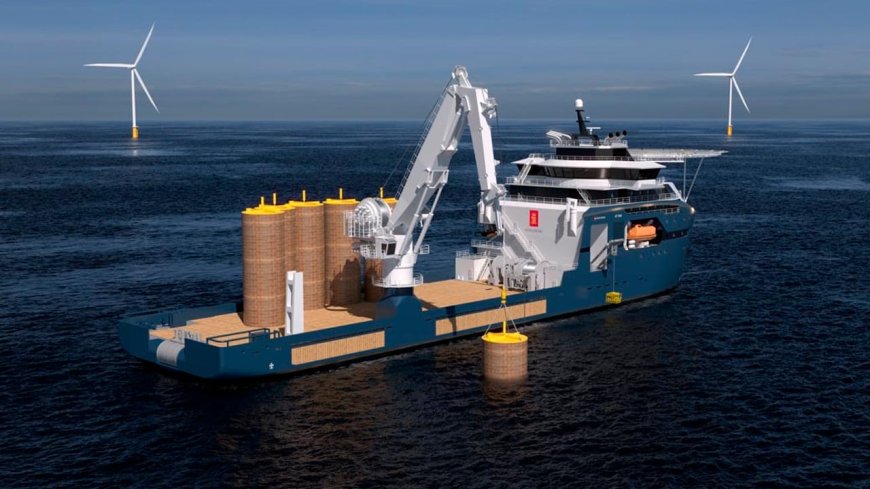
Kongsberg Maritime has developed an innovative mooring capable solution for Offshore Construction Vessels (OSCVs), expanding the capabilities of OSCVs beyond their current scope to include the pre-lay of mooring lines as a natural extension to original suction anchor capabilities.

By integrating a purpose designed anchor handling winch, shark jaws and stern rollers into the design of OSCVs at the newbuild stage, vessel owners can now equip their ships to perform a broader range of mooring operations. This advancement allows OSCVs to handle more tasks independently, filling the shortage of vessels capable of large-scale mooring installations.

Key Benefits of the Mooring Capable Solution:

  • Enhanced Operational Window: The new system allows OSCVs to carry out a larger portion of mooring operations, extending their operational window and reducing the need for additional vessels at the field.
  • Cost Efficiency: By expanding the operational capabilities of OSCVs, significant synergies can be achieved for the field developer.
    Safety and Efficiency: The addition of winches and stern rollers enables safer and more efficient over-stern deployment of mooring lines, a method commonly used by AHTS vessels.
  • Flexible Installation Options: The winch can either be permanently installed or portable and loaded on board only when needed. The shark jaws and stern rollers are permanently fitted to the ship.
  • Versatile Equipment: The subsea crane, a common feature of OSCVs, can lift and install suction piles, as well as hold the load of mooring chain. The winch package includes one drum for work wire and two cable lifters for handling chain. In combination with superior DP capabilities and a large deck area that makes for an efficient installation vessel

With regards to field development and mooring installation, OSCVs are currently limited to setting large suction piles or driven piles into the seabed using onboard cranes and ROVs, without requiring additional vessel equipment. While some mooring lines can be installed using ad hoc methods, the new solution from Kongsberg Maritime means that OSCVs can perform these tasks safer and more efficiently.

Runar Hjelle, Sales Director, Offshore Construction & Support Kongsberg Maritime, said:

“There will be a lack of vessels with subsea crane and sufficient deck area suited to support the planned high volume of both large anchors and mooring lines in the years to come. With the addition of this system, OSCVs become a more attractive and efficient solution, especially when there is a shortage of specialised mooring installation vessels.”

Indonesia’s Amman takes delivery of two versatile mooring boats

0

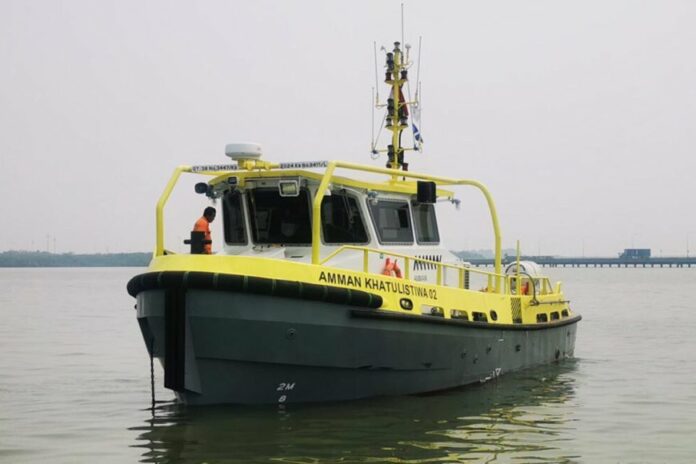
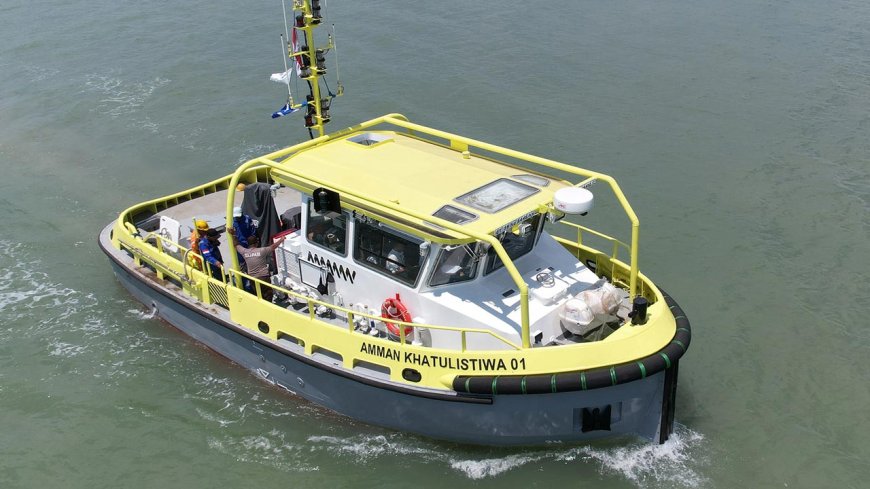
Two versatile RAmbler 1400 mooring boats, Amman Khatulistiwa 01 and Amman Khatulistiwa 02, owned by PT Amman Mineral Nusa Tenggara (AMNT), one of Indonesia’s largest copper-and-gold mining companies, a subsidiary of PT Amman Mineral Internasional Tbk, were recently built by PT Dumas Shipyard in Surabaya, Indonesia. 

The completion of these vessels’ construction was supervised by PT IMEC International Services (IMEC), which provides project management and naval engineering services for AMMAN.

These boats are designed for operation at the port of Benete in West Nusa Tenggara, Indonesia, and will mainly be used for handling mooring lines for large LNG ships. Additionally, they are equipped to perform line towing, pushing, and oil spill recovery. During sea trials, they easily exceeded the required performance standards.

Key Particulars

  • Length, overall: 13.86 metres
  • Beam, moulded: 5.5 metres
  • Depth, moulded: 2.2 metres
  • Maximum draft (navigational): 1.72 metres

Performance

  • Speed: 10.35 knots
  • Bollard Pull: 6.39 tonnes
  • Capacities
  • Fuel oil: 3.8 m3
  • Potable water: 0.6 m3
  • Dispersant: 1.8 m3
  • Recovered oil: 4.4 m3
  • Class Notation: LR✠ 100A1, SSC WORKBOAT, G2, MCH

The vessel is configured as a dayboat with a crew of two persons. Inside the compact wheelhouse a small pantry and dinette seating is provided. The lower accommodation has two berths and toilet, along with considerable storage. Access to the engine room is through a watertight door from this space.

The vessel has a single chine hull form for maximum roll damping which also simplifies construction. A rope guard cage protects the wheelhouse. Aft, the bulwarks are lower to prevent fouling by towlines. The mast and radar can fold to reduce air clearance under the flared hull of larger ships.

For light towing the vessel can use a forward towing bitt or an aft bitt with towing hook as well as bow pushing fenders. During oil recovery operations a skimmer can be deployed on the aft deck where a clear 3m x 3m deck space is available for recovery equipment. A crane is provided to deploy this equipment and for general cargo use.

Main propulsion machinery is two Caterpillar C7 diesel engines, rated at 209 kW at 2300 RPM. Propellers are 5 blade, 900mm diameter Kaplan style in Kort nozzles. A single generator provides 220V AC power. Large battery banks charged by a generator and or main engine alternators, provide DC power supply for the vessel’s essential loads, e.g. navigation equipment, communication, lighting, engine room pumps and deck machineries. Wet exhausts are used for main engines and the generator.

OX2 submits EIA for 2.4-GW wind project in Finnish waters

0

The report was lodged with the Centre for Economic Development, Transport, and the Environment of Northern Finland and is now open for public comment. Feedback regarding the proposal will be collected by April 14, 2025, the developer said on Wednesday.

OX2 owns the Halla project together with Ingka Investments, the investment arm of Netherlands-based Ingka Group.

The Halla wind farm is planned to be located in the Gulf of Bothnia, about 35 km (21.7 mi) from the Finnish coast, and is expected to generate roughly 12 TWh of electricity annually from up to 160 turbines. Studies and assessments conducted in relation to the proposal have shown that the project will not have “particularly harmful impacts” on the environment, while the onsite wind conditions are “good and suitable for offshore wind power production.”

In addition to Halla, OX2 has two more offshore wind projects under development in the Gulf of Bothnia – Laine and Tyrsky. The company has been working on Halla’s development since 2021 and received a research permit in the following year.