
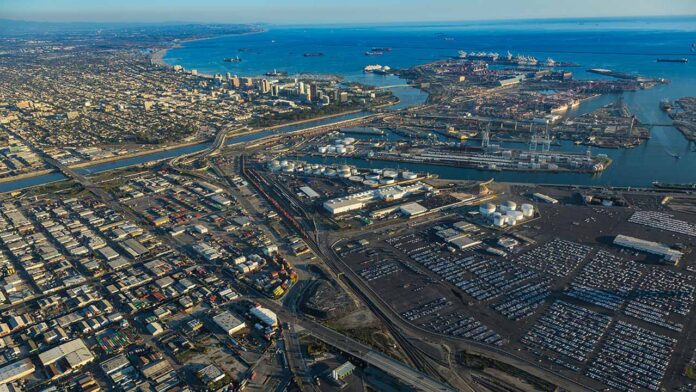
The Port of Long Beach is launching a Hydrogen Fuel Grant Program to support early adopters of hydrogen fuel cell drayage trucks and encouraging others to transition from using diesel trucks at the nation’s largest seaport complex.
If all the funds are used, the program will result in at least 3.7 million zero-emissions miles for drayage services.
Funding for the initiative is drawn from the Clean Truck Fund Rate program, which was founded in 2022 to pay for incentives for zero-emissions trucks and the infrastructure needed to charge and fuel them.
To date, the Port has committed $27.5 million to battery-electric truck projects or programs, including charging depots, truck vouchers and technology demonstration projects. These investments have resulted in approximately 540 additional battery electric trucks at the San Pedro Bay ports complex that would have otherwise been diesel-fueled trucks. The Port has also committed $1.45 million so far to fuel cell truck programs or projects. About 100 hydrogen fuel cell trucks are registered to work at the Port.
“One of the keys to the Port of Long Beach’s success in reducing emissions is technology neutrality,” said Port of Long Beach CEO Mario Cordero. “There’s no one-size-fits-all solution for all of our drayage partners due to the diversity of operations and duty cycles. It’s important to help ensure multiple equipment options are viable as we advance our decarbonization goals.”
“Fuel cell truck operators have experienced a sharp increase in fueling costs in recent years,” said Long Beach Harbor Commission President Frank Colonna. “The Hydrogen Fuel Grant Program will help bridge the gap for operators who want to utilize the longer driving range and faster fueling of this technology while its market matures.”
Eligible participants will be reimbursed monthly for fuel usage, after Port staff confirm those fuel-cell trucks visited Long Beach terminals. The program will be evaluated every six months to assess current conditions, fueling options and the availability of related subsidies.


