-8.5 C
New York
Home Blog Page 94

Norsepower and Syroco collaborate to optimise wind-propulsion efficiency on commercial vessels

0

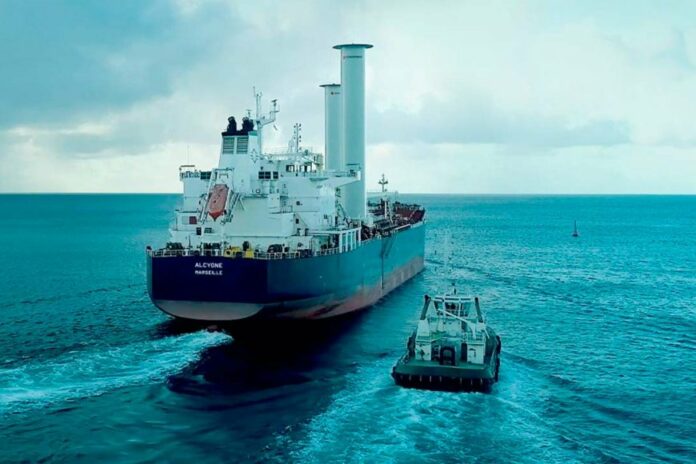
The joint deployment of Norsepower and Syroco onboard Socatra’s tanker Alcyone demonstrates how combining wind propulsion with cutting-edge digital technologies can help shipowners overcome operational complexities and maximise the benefits of wind propulsion. 

Vessels with rotor sails require advanced calculations to optimise routes, balancing wind propulsion with other factors such as waves and currents. Their integration with AI-driven platforms provides ship operators with reliable, real-time insights into how to maximise efficiency, savings, and sustainability.

This partnership has already demonstrated success onboard several vessels, including Socatra’s tanker Alcyone. Syroco’s performance evaluation technology has validated the effectiveness of Norsepower Rotor Sails™, confirming fuel savings of up to 21% per voyage.  By combining Norsepower’s wind propulsion systems with Syroco’s weather routing technology, these savings are amplified, with initial results revealing voyages where combining the technologies can as much as double the performance.

Jarkko Väinämö, CCO at Norsepower, commented: “Our collaboration with Syroco is an important step forward in optimising the potential of wind propulsion. By accurately validating the performance of Norsepower Rotor Sails™ and demonstrating how advanced AI can amplify their benefits, we are driving significant progress in sustainable shipping. Together, we are proving that cleaner, more efficient shipping is not only achievable but measurable.”

Syroco combines weather and sea data with advanced naval architecture principles and IoT data collected from onboard systems to create a digital twin of each vessel. This virtual representation of the ship accounts for key characteristics such as hull design, windage, appendages, propulsion systems, and the most accurate models of the Norsepower Rotor Sails™. This digital twin enables vessel operators to optimise routes in real-time, considering wind propulsion, waves, swell, currents, arrival times, safety constraints, and cargo-specific parameters.

Alex Caizergues, Cofounder and CEO of Syroco, said: “By integrating Norsepower Rotor Sails™ with digital twin models, the Syroco platform helps the crew obtain the most optimised routing at any time, and essentially amplifies the effect of wind assistance. This collaboration showcases the great potential of combining innovative technologies to meet the maritime industry’s decarbonisation goals.”

“Syroco also provides a precise evaluation of the contribution of wind propulsion to fuel savings and emissions reductions. The user-friendly interface not only enables vessel operators to make data-driven decisions but also to quantify the impact of these decisions,”, he added.
“K” Line secures ‘Zero-Emission Accelerating Ship Finance’

0

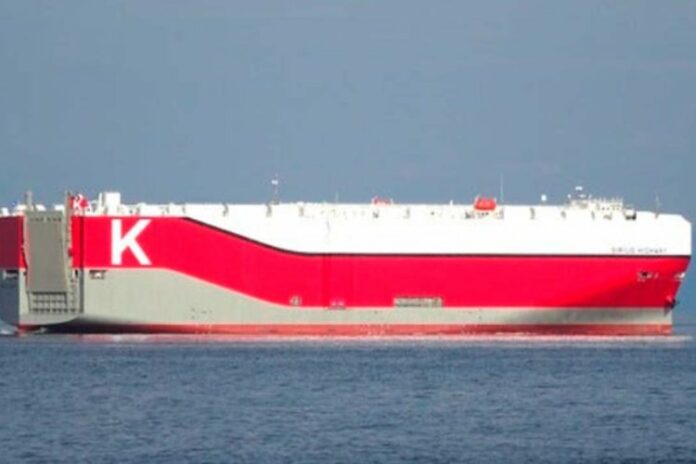
Under Zero-Emission Accelerating Ship Finance (the Program), which is jointly operated by Development Bank of Japan Inc. (DBJ) and ClassNK, ClassNK evaluated the LNG-fueled car carrier ‘OCEANUS HIGHWAY’ (IMO No. 1046049), owned by Kawasaki Kisen Kaisha, Ltd. (“K” LINE). DBJ provided financing to “K” LINE.

In the shipping industry, where environmental regulations are becoming stricter as the industry moves towards decarbonization, ClassNK evaluates ships based on a comprehensive scoring model jointly developed with DBJ from the perspective of ‘decarbonization, environmentally friendly performance, and innovativeness,’ and DBJ provides investment and financing. The project supports initiatives that contribute to the transition to decarbonization from both IR and financial perspectives.

“K” LINE is actively promoting various initiatives to support the social transition to low- and zero-carbon under its “K” LINE Environmental Vision 2050 policy. Recently, the company has been focusing on the development of the next-generation fuel ships to realize sustainable and environmentally friendly transportation. OCEANUS HIGHWAY, built by Shin Kurushima Toyohashi Shipbuilding Co., Ltd., was delivered in February 2025. It is designed to reduce environmental impact utilizing LNG fuel.

The following points were highly evaluated in this assessment of the ship:

(1)  The use of LNG fuel makes a 25% reduction in carbon dioxide (CO2) emissions possible compared to conventional fuel oil.
(2)  Reduction in the emission of nitrogen oxides (NOx), sulfur oxides (SOx), and particulate matter (PM) through the use of LNG fuel complies with the International Maritime Organization (IMO)’s NOx Tier III regulations and SOx regulations.
 

ClassNK issues AiP for ammonia-fuelled ammonia bunkering vessel

0

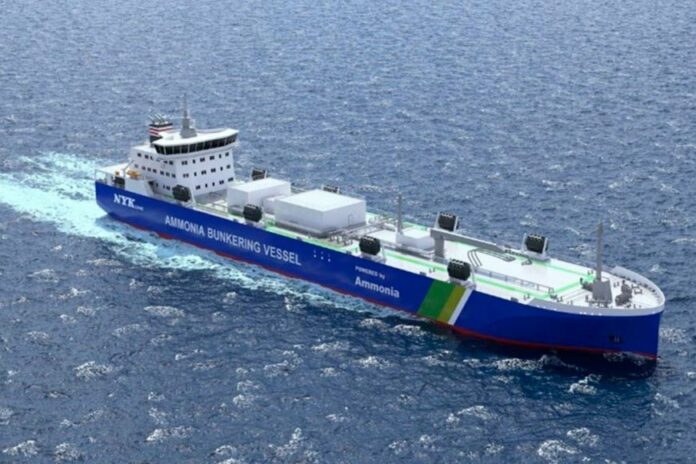
ClassNK has issued an Approval in Principle (AiP) for ammonia-fuelled ammonia bunkering vessel. 

As ammonia fuel utilization is expected in shipping for decarbonization, bunkering vessels that supply fuel to ships and related equipment will play an essential role in the supply chain. 

This vessel is being developed jointly by NYK Line, advancing the development of ammonia-fueled vessels, and Seatrium, the largest shipyard in Singapore, with the goal of introducing it to Singapore, one of the world’s leading bunkering ports.

This vessel is mainly designed by LMG Marin AS. It features ammonia fuel dual-fuel engines from IHI Power Systems and a bunkering boom from TB Global Technology, allowing for safe and reliable ammonia bunkering operations. Additionally, a safety verification was conducted through HAZID involving relevant stakeholders.

ClassNK carried out a review of the conceptual design of the ship based on its ‘Part N; Ships carrying liquefied gases in bulk ‘ of the Class Rules and ‘Part C-2; Guidelines for the Safety of Liquefied Gas Carriers Using Ammonia as Fuel (Edition 3.0.2) which is part of ‘Guidelines for Ship Using Alternative Fuels (Edition 3.0) and examined the result of required assessment. Upon confirming they comply with the prescribed requirements, ClassNK issued the AiP. Moreover, the latest ‘INTERIUM GUIDELINES FOR THE SAFETY OF SHIPS USING AMMONIA AS FUEL’ approved at MSC 109 last December are referred to in this AiP.

MODEC enters into offshore carbon capture FEED contract with SAMSUNG E&A

0

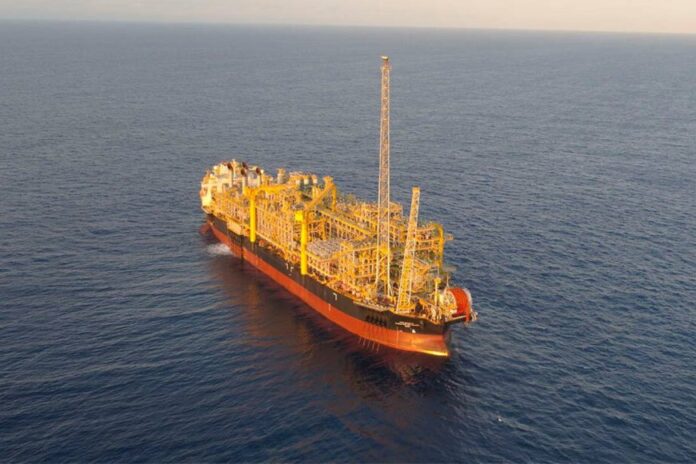
The study envisages the installation of a carbon capture module on a MODEC Floating, Production, Storage and Offloading (FPSO) vessel as a pilot, and it will be a first-of-a-kind deployment of CycloneCC in an onboard carbon capture setting.

Carbon Clean will provide FEED support to SAMSUNG E&A, including equipment supply of the rotating packed bed (RPB) technology at the heart of CycloneCC and process design package (PDP) licensing for the unit. SAMSUNG E&A will perform detailed engineering to optimize CycloneCC for the offshore environment and FPSO’s boundary conditions.

CycloneCC is well suited to an offshore maritime environment, as the unit footprint is up to 50% smaller than conventional solutions, with its largest equipment sizes reduced by a factor of 10. The recently launched CycloneCC C1 series delivers a height reduction of 70% compared to column-based technologies. The RPBs will achieve enhanced capture performance under vessel motions compared to columns, making CycloneCC ideal for offshore operations.

Koichi Matsumiya, Chief Technical Officer, MODEC, said:

“MODEC is proactively pursuing two targets through our R&D activities. One is to provide a stable energy supply to society with minimum GHG emission, and another is to prepare for new floater solutions to bridge the society with alternative energies from oil and gas. We believe that the carbon capture technology proposed by Carbon Clean will be the key to achieve both of our targets.”

Cheon Hong Park, Executive Vice President and Head of Sustainable Solutions Division, SAMSUNG E&A, said:

“This initiative aligns with our company’s mission to address societal challenges through our technological solutions. It marks a significant milestone with the first application of Carbon Clean’s innovative carbon capture technology in the marine industry. We are confident that the successful execution of this project will play a key role in advancing MODEC’s mid-term decarbonization plan while accelerating the commercialization of Carbon Clean’s CycloneCC technology.”

Aniruddha Sharma, Chair and CEO, Carbon Clean, said:

“Onboard carbon capture is essential for decarbonizing offshore oil and gas operations. Our highly modular CycloneCC technology is 10x smaller than conventional solutions, making it ideal for confined spaces, including floating vessels and maritime settings. Its replicable, scalable design makes it logistically and commercially viable to be deployed across a fleet at a fraction of the cost of traditional amine systems.”

Marine Masters set to install two offshore wellhead platforms for SunPetro

0

Marine Masters announces its involvement in a pivotal offshore installation project for the greenfield Bhasker A & B platforms, designed and constructed by Indian energy company SunPetro. 

The project, managed by main installation contractor ACE Pipeline and directly overseen by Consolidated Support Services PTE LTD (CSS), involves the development of two wellhead platforms featuring robust jackets with integrated boat landings and topsides. 

The Marine Masters work encompasses detailed preparation for lifting and mooring activities, the lifting of two jackets and their respective topsides, the upending and installation of piles, and the creation of a dedicated platform for subsea and piling operations. Notably, each jacket weighs approximately 800 tonnes, underscoring the project’s technical demands and the need for precise engineering execution.

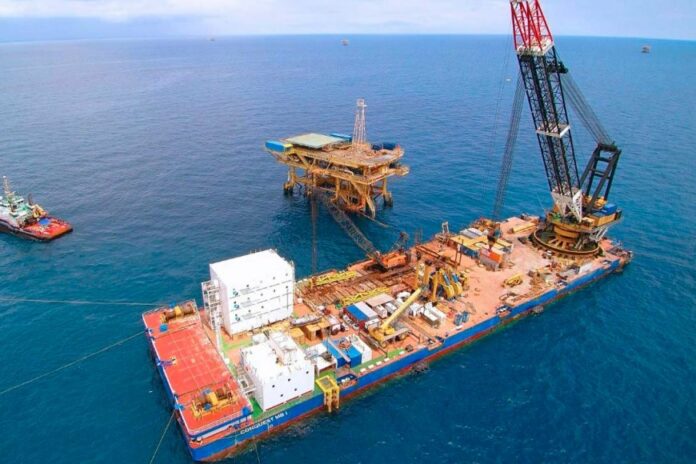
To support these complex operations, Marine Masters has chartered the Conquest MB1, a heavy-lift barge boasting a lifting capacity of approximately 1,400 tonnes. The vessel is further equipped with two mobile cranes, with lifting capacities of 180 tonnes and 500 tonnes respectively, ensuring that all phases of the project are executed safely and efficiently. 

Currently in transit to Mumbai, the Conquest MB1 is scheduled to arrive on March 7, 2025. After obtaining the necessary inward clearance and completing all mobilization activities, the vessel will proceed to the offshore location in the Gulf of Kutch, 110 nautical miles south of Kandla, India, with an expected arrival on March 20, 2025. The installation work is anticipated to be completed by May 15, 2025.

“We are honored to support Sun Petro, ACE Pipeline, and CSS in this challenging, high-profile project,” said Henk Smith of Marine Masters. “The deployment of the Conquest MB1 exemplifies our commitment to leveraging advanced marine technology and operational expertise to execute complex offshore installations safely and efficiently. The crane barge will remain in the region and is available for other challenging salvage, decommissioning, or transport & installation projects.”

Vår Energi discovers oil reserves in the Zagato prospect

0

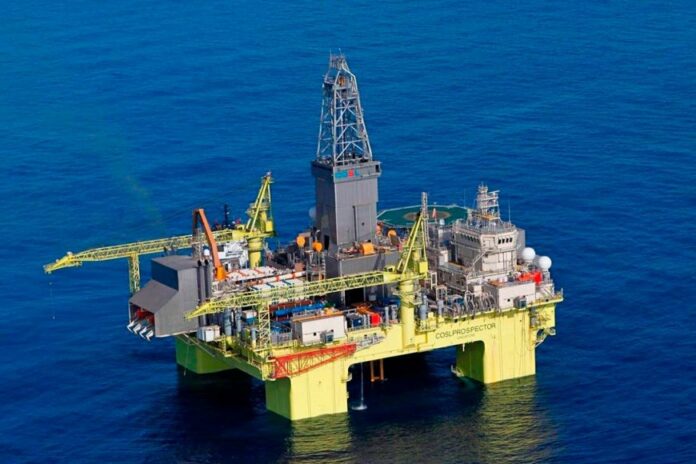
Wildcat well 7122/8-3 S is the eleventh in production licence 229 in the Barents Sea. It was awarded in 1997 in a round of awards called the Barents Sea Project -97. The well was drilled by the COSL Prospector rig.

Preliminary estimates place the size of the discovery between 2.4 – 6.8 million standard cubic metres (Sm3) of recoverable oil equivalent (o.e.). This corresponds to between 15 and 43 million barrels of recoverable o.e.

The licensees will assess the discovery together with other discoveries and prospects in the vicinity, with a view towards a potential development tied back to existing infrastructure on the Goliat field.

Vår Energi is active in the area surrounding Goliat and plans to conduct further exploration. The next scheduled well for the rig is 7122/7-8, “Goliat nord”.

The well’s primary exploration target was to prove petroleum in Middle Triassic reservoir rocks in the Kobbe Formation. The well’s secondary exploration target was to prove petroleum in Middle/Lower Jurassic reservoir rocks in the Realgrunnen sub-group.

In the primary exploration target, well 7122/8-3 S encountered oil columns totalling 72 metres in the Kobbe Formation, distributed over three reservoir zones. The reservoir quality varies from good in the upper part to moderate in the lower part. The oil/water contact was not encountered.

In the secondary exploration target, the well encountered a 3-metre oil column in the Tubåen Formation, with a total thickness of 20 metres and very good reservoir quality. The oil/water contact was encountered 1427 metres below sea level.

In addition, a 2-metre oil column was proven in the Klappmyss Formation in a sandstone layer with moderate reservoir quality.

The well was not formation-tested, but extensive data acquisition and sampling have been carried out. The well was drilled to a vertical depth of 2542 metres below sea level and was terminated in the Klappmyss Formation in the Lower Triassic.

Water depth at the site is 410 metres. The well has been temporarily plugged and abandoned.

Damen Naval and Saab partner to deliver PES Frigate for Colombian Navy

0

This partnership combines Damen Naval’s design and engineering expertise with Saab’s advanced defence systems to deliver a naval solution tailored to Colombia’s operational requirements.

The PES frigate is based on Damen Naval’s SIGMA 10514 series. Damen Naval will provide design, engineering, technical support, and materials to enable Colombia’s leading shipyard, COTECMAR, to construct a frigate locally.

Saab will equip the frigate with its advanced 9LV Combat Management System and 9LV Fire Control System, alongside sensors and radar systems, including the Ceros 200 radar, EOS 500 electro-optical fire control director, Sea Giraffe 4A radars, among other systems.

This is the first SIGMA frigate to feature Saab technology. Damen Naval designs combat-neutral platforms that can be tailored to diverse operational requirements.

“This collaboration with Saab is a prime example of how North European cooperation can drive naval innovation and meet the evolving needs of international clients,” says Roland Briene, Damen Naval Managing Director. 

Carl-Johan Bergholm, Saab Senior Vice President and Head of Business Area Surveillance, adds: “The PES programme is state-of-the-art, and we are honoured that the Colombian Navy selected us to supply their combat system. Our partnership with Damen Naval marks an important collaboration for the naval domain.”

This partnership between Saab and Damen Naval shows the shared commitment of Sweden and the Netherlands to advancing defence innovation and global security. The PES frigate is scheduled for delivery to the Colombian Navy in 2030. 

Four new major Japanese maritime organizations join Digital Twin Project

0

Four new companies—Kawasaki Kisen Kaisha, Ltd. (“K” LINE), Kyokuyo Shipyard Corporation, Mitsui E&S Shipbuilding Co., Ltd., and Sumitomo Heavy Industries Marine&Engineering—have joined the collaborative cross-industry Digital Twin Project.

This expansion marks phase three of the Digital Twin Project, which aims to create a secure data-sharing framework between shipyards and shipowners to advance the use of digital twins throughout a ship’s lifecycle, contributing to improved operational efficiency and safety. The participants will engage in detailed discussions around the feasibility of increased data sharing between stakeholders, with the aim of tackling some of the hurdles around sharing sensitive design and operational data.

Through close collaboration between a diverse range of stakeholders, the Project aims to develop a new platform to allow the 3D models created during the ship design stage to be shared in a secure, access-controlled digital environment. It can also allow operational data to be fed back to shipyards, providing invaluable insights. This could create a new revenue stream for shipyards and solution providers, as well as mechanisms to share benefits between stakeholders.

The Digital Twin Project already includes some of the largest shipowners and shipbuilders in the world. The four new companies will join the original members, including shipowners Nippon Yusen Kabushiki Kaisha (NYK), NYK Group company MTI Co. Ltd. (“MTI”), Mitsui O.S.K. Lines, Ltd. (MOL), Marubeni Corporation (Marubeni) and Marubeni Group company MMSL Japan Ltd., shipbuilders Imabari Shipbuilding, Japan Marine United Corporation, and Usuki Shipyard, software and data services provider NAPA, and classification society ClassNK.

Mr. Yoshimichi Sasaki, General Manager, Digital Transformation Center at ClassNK, commented: “We are delighted to welcome new participants to this major Digital Twin Project. We now have people from across a diverse range of maritime business areas and roles offering their valuable perspectives. With “K” LINE, NYK/MTI, MOL, and Marubeni/MMSL Japan involved, we also have representation from many prominent Japanese shipowners, highlighting the significance of Digital Twin technology and the strength of the collaborative project.” 

Naoki Mizutani, Executive Vice President for NAPA Studios at NAPA, added: “These renowned new additions to the Digital Twin Project also mark a significant milestone for NAPA Studios; the Project forms a prominent part of the NAPA Studios initiative to bring together shipowners, charterers, shipyards, classification societies, financiers and insurers in joint projects. These efforts will provide more clarity on the practical implications of deploying new technologies or contracts and help develop the new technologies and operational frameworks needed for the transition to net-zero. We are grateful to all the participants for their engagement and look forward to the next collaborative developments.”

Akihiko Masutani, Director and Chief General Manager of the Business & Technical Division at Sumitomo Heavy Industries Marine&Engineering, said: “We take great pride in our company’s participation in such pioneering initiatives. Through this endeavor, we aspire to create innovation by integrating existing maritime technologies, such as wind propulsion, with cutting-edge ICT and digitalization techniques, with the goal of making a meaningful contribution to the industry.”

When used effectively, Digital Twins can offer unparalleled insights into a ship’s unique design profile and characteristics to inform decarbonization decisions. As a result, they can be a powerful tool supporting the shipping industry’s energy transition.

Intelligent drones increase offshore wind efficiency

0

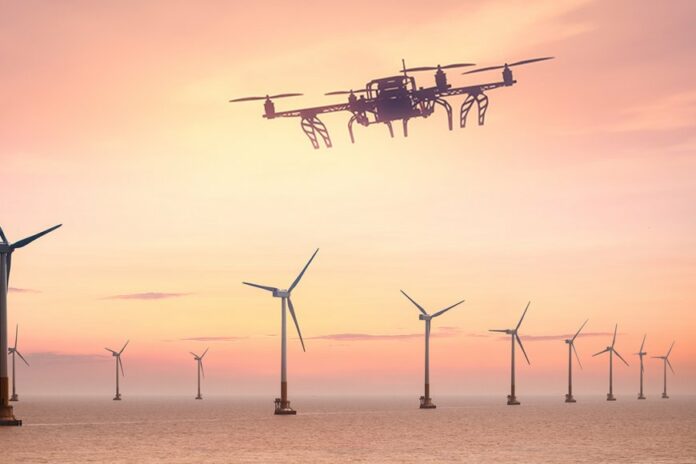
AI-equipped drones can work independently, find their required flight path and avoid obstacles. Some drones are piloted by a nearby pilot, while others are piloted by a remote-control center, which can even be located in another country. 

Data and images collected by inspection drones are merged and analysed by machine learning algorithms to detect cracks, erosion, dirt, and other anomalies. The data is stored in the cloud, categorised by severity, compared with historical data and finally reports are generated for maintenance teams. This enables proactive maintenance planning, which can prevent major repairs. 

By contributing technical expertise, Vattenfall is supporting the AIRTuB-ROMI initiative in the Netherlands, to improve offshore wind maintenance using in-blade monitoring and drone-crawler robots. The project, supported by the Dutch Ministry of Economic Affairs and an industry-academic collaboration, will evaluate three different sensor technologies in turbine blades. 

When the sensors detect an anomaly, AI algorithms help to predict the potential damage and its location. A drone-crawler is automatically deployed from its offshore docking station within the wind farm to perform a further inspection. 

Tomas Jansen, product manager O&M Automation for Vattenfall Offshore Wind in Germany, explains: “After take-off of the drone, it will autonomously capture high-resolution images of the blades from different angles. The drone will then land on the blade to conduct an ultrasonic scan of the potentially damaged area, giving us complete information of the structural health of the blade. With this detailed information, the maintenance team can initiate repair planning as needed.”

Thanks to advanced sensors and AI-powered software, cargo drones can fly safely in complex offshore environments, avoid obstacles and adapt to changing weather conditions. They can transport materials and equipment from a service operation vessel (SOV) to wind turbines, reducing the need for vessels to go back and forth. The use of an unmanned air vessel (UAV) speeds up the delivery of materials, saves time, and reduces CO2 emissions by eliminating the need for a crew transfer vessel (CTV). 

This innovation was recently tested in Vattenfall’s offshore wind farms DanTysk and Sandbank in the German North Sea. A collaboration between offshore service provider Ampelmann, Dutch Applied Scientific Research Institute TNO, and Vattenfall demonstrated the use of cargo drones in the offshore environment. 

Roddy Douglas, automation engineer at Vattenfall Offshore Wind in the UK, was involved in the test: “The innovation we showcased included using UAVs for rapid deliveries and pre-loading spare parts and tools to the turbine’s nacelle. This is especially beneficial when a part is needed unexpectedly, allowing the on-site team to work efficiently, without waiting for a ship, minimising downtime and revenue loss at wind turbine generators. For sites closer to the coast, cargo can be transported directly from the service center, where operators use automated drones to deliver essential cargo even in challenging weather conditions.”

Uncrewed vessels and remote-controlled drones enhance employee safety during inspections at sea and ensure environmentally friendly operations.

During installation works at offshore wind farm Hollandse Kust Zuid in the Dutch North Sea, Vattenfall deployed 12-meter-long uncrewed surface vessel Blue Essence, equipped with an electrical remotely operated vehicle (eROV) for inspections and seabed mapping. Developed in close collaboration with partner Fugro, this innovation reduces the reliance on crewed vessels, speeds up inspections and minimises environmental impact. The uncrewed vessel with eROV features advanced sensors, sonar, and high-definition cameras that provide real-time data on cable and foundation conditions. 

Both the uncrewed vessel and eROV can operate 24/7, withstand wind speeds of up to 38 kilometers per hour (wind force 5), and handle wave heights of up to one and a half meters. They are remotely operated from Fugro’s control rooms in Aberdeen, Scotland. As offshore wind projects move further offshore, the advantages of remote-controlled vessels become increasingly significant. Initial operations have shown that uncrewed vessels emit approximately 95 per cent less CO2 compared to traditional survey vessels. Additionally, their smaller size reduces the impact on marine life.

Damen Air Cavity System fuel efficiency capabilities verified by Lloyd’s Register

0

DACS’ efficiency boosting potential had earlier been confirmed by classification society RINA. 

DACS is the result of a collaboration between Damen and the Delft University of Technology (TU Delft). The air cavity system maintains a thin layer of air over the flat bottom of the vessel’s hull, lowering resistance in the water and, thereby, fuel consumption.

Last year, Damen installed the DACS system to Amisco’s cargo vessel Danita in Estonia. During Danita’s sea trials, Damen collected a range of data on the vessel’s performance. Independent verification of this information by RINA confirmed that DACS enabled the vessel to make significant savings in fuel consumption (6-7%). 

To add weight to the findings, Damen wanted a second opinion. Its next step was to provide Lloyd’s Register with the same data. With this, Lloyd’s performed a further independent verification, applying its own methodologies.

Lloyd’s findings were similar to those of RINA, demonstrating that, at the vessel’s typical operating speeds, DACS enabled a reduction in fuel consumption by between 7-8%. 

With this increased fuel efficiency comes a considerable reduction in emissions. This paves the way for more straightforward compliance with environmentally focused regulations such as the EU Emissions Trading System (EU ETS), Carbon Intensity Indicator (CII) and Energy Efficiency Existing Ship Index (EEXI). 

Marcel Onink, Managing Director of Damen Green Solution said, “We’re very pleased with this second, independent verification from Lloyd’s Register. The results confirm our expectations and back up the verification earlier undertaken by RINA. Such findings highlight the potential for air lubrication to increase vessel efficiency and reduce environmental impact.”

Rutger van Dam, responsible for business development at Damen Green Solutions added, “With these considerable savings in fuel, DACS offers vessel owners a reduced emissions operation with a rapid return on investment within approximately three years of installation.”

Maarten Veenstra, Business Development Manager at Lloyd’s Register, said, “In having DACS verified by more than one classification society, Damen offers the market increased confidence in the potential of air lubrication. Given the current challenges posed to maritime operators by a range of environmentally focused regulations, there is a clear argument to be made for investing in energy saving technologies with proven credentials.”