-5.3 C
New York
Home Blog Page 857

SMD’s Megalodon for use at Ørsted’s offshore wind farm

0

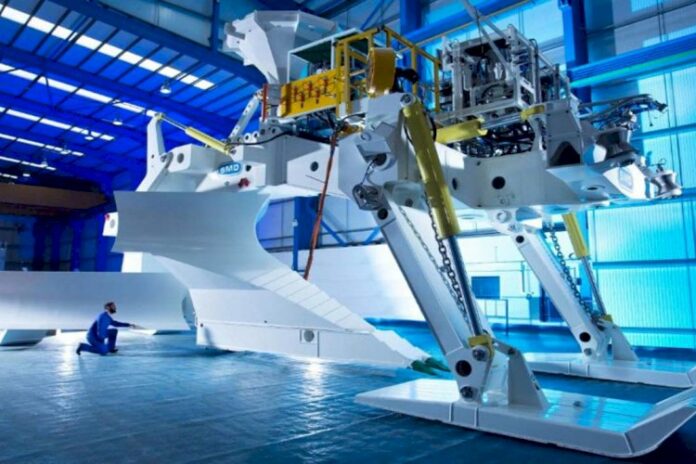
North Shields based manufacturer, Soil Machine Dynamics Ltd (SMD) recently handed over a purpose-built pre-lay plough to marine service providers Boskalis, for use at Ørsted’s offshore wind farm Hornsea Two.

The multi-functional pre-lay plough will be used by Ørsted contractor, Boskalis to install 380km of export cables which will ultimately connect Hornsea Two’s offshore substation to the site’s onshore substation in Killingholme, Lincolnshire.

Once complete, Hornsea Two will host an array of 165 wind turbines, each standing over 190m above sea level. The wind farm, which will become the world’s largest generating 1.4GW, will be able to power well over 1.3 million homes in the UK with clean electricity.

The pre-lay plough, named Megalodon by Boskalis, was manufactured on the north bank of the Tyne by SMD who employ over 240 people and will benefit from features such as an active steering, multi modes, specialized share design and remote-control access.

Paul Davison, Managing Director of SMD said:

“This is our third pre-lay plough delivered to date. Together with the Boskalis Innovation team, we have developed innovations for this plough which reduce seabed impact and reduce vessel fuel consumption whilst burying to protect the crucial offshore wind infrastructure that is the export cable. I’d like to thank Ørsted and Boskalis for their support and collaborative approach, and we look forward to supporting the plough in service”.

The Megalodon can operate in water at a depth of up to 500m and will be used in collaboration with Boskalis’ offshore support vessel, the BOKA Falcon. With offshore works due to commence in May for Hornsea Two’s offshore construction. Boskalis is working alongside Ørsted to complete cable-laying campaigns for 2020 within six months.

Steve Marshall, Boskalis Project Director for Hornsea Two said:

“Boskalis wants to stimulate the local supply chain, not only by purchasing locally but also innovating and collaborating towards achieving the best possible end result.”

Expected to be complete in 2022, Hornsea Two’s wind farm array is dispersed across an area of 462km2, which is equivalent to a larger surface area than the island of Barbados.

Patrick Harnett, Ørsted Senior Programme Director for Hornsea Two said:

“We are committed to working with local suppliers where possible and are extremely pleased that Boskalis has chosen SMD as their manufacturer for this specialist piece of equipment.”


Siemens Gamesa launches 14 MW offshore Direct Drive turbine with 222-meter rotor

0

With an unprecedented 14-megawatt (MW) capacity – reaching up to 15 MW using the company’s Power Boost function, a 222-meter diameter rotor, 108-meter long blades, and an astounding 39,000 m2 swept area, the newest Siemens Gamesa wind turbine stands tall in a world currently undergoing enormous upheaval.

Markus Tacke, CEO of Siemens Gamesa Renewable Energy, states:

“We’ve gone bigger for the better. Safely and sustainably providing clean energy for our customers and society-at-large is at the core of all we do. The new SG 14-222 DD is a global product which allows all of us take giant steps towards protecting and preserving our planet. We ourselves became carbon neutral in late 2019 and are on track towards meeting our long-term ambition of net-zero CO2 emissions by 2050. Our installed fleet of over 100 GW both offshore and onshore abates more than 260 million tons of CO2 emissions annually.”

Andreas Nauen, CEO of the Siemens Gamesa Offshore Business Unit, says:

“Since we helped create the offshore wind industry in 1991, we’ve been determined to safely increase operational performance, minimize technology risks, and create a consistently lower Levelized Cost of Energy. The SG 14-222 DD demonstrates our drive to lead the way in a world powered by clean energy. In fact, just one unit will avoid approx. 1.4 million tons of CO2 emissions compared to coal-fired power generation over the course of its projected 25-year lifetime.”

The 14 MW capacity allows one SG 14-222 DD machine able to provide enough energy to power approximately 18,000 average European households every year. Approximately 30 SG 14-222 DD offshore wind turbines could furthermore cover the annual electricity consumption of Bilbao, Spain.

The 222-meter diameter rotor uses the new Siemens Gamesa B108 blades. As long as almost three Space Shuttles placed end-to-end, each 108-meter long IntegralBlade® is cast in one piece using patented Siemens Gamesa blade technologies. Additionally, the turbine’s massive 39,000 m2 swept area is equivalent to approximately 5.5 standard football pitches. It allows the SG 14-222 DD to provide an increase of more than 25% in Annual Energy Production compared to the SG 11.0-200 DD offshore wind turbine.

Furthermore, the new offshore giant features a low nacelle weight at 500 metric tons. This light weight enables Siemens Gamesa to safely utilize an optimized tower and foundation substructure compared to a heavier nacelle. Benefits thus arise in the form of lower costs per turbine by minimizing sourced materials and reducing transportation needs.

Extending on the proven offshore direct drive track record, the SG 14-222 DD is based on Siemens Gamesa’s deep understanding and expertise gained over five product generations since the platform was launched in 2011. Key components such as safety systems, hub and tower concepts, operations and maintenance solutions, along with a strong, qualified supply chain form the basis of the new offshore wind turbine.

Over 1,000 Siemens Gamesa Direct Drive offshore wind turbines have been installed in all major offshore wind markets globally. They include the UK, Germany, Denmark, The Netherlands, Belgium, and Taiwan, among others. Furthermore, confirmed orders for an additional 1,000 Offshore Direct Drive turbines have been received, with installations planned for the markets mentioned above and new offshore markets including the USA and France.

Joint group to develop AI for container tracking

0

Bolloré Transport & Logistics, the company Next4 and the IMT Mines Albi engineering school are announcing the signature of a memorandum of understanding with a view to developing new traceability functions for goods flows based on the study of data gathered by IoT sensors.

In particular, the three partners are committed to unlocking synergies between their various fields of activity in order to improve the agility and resilience of the supply chain relative to the transport of containerised goods.

Next4, a partner and supplier of Bolloré Transport & Logistics since 2018, has developed an innovative solution enabling its freight forwarder and shipping company customers to monitor containers around the world. In July 2019, Next4 initiated a joint research lab with IMT Mines Albi to co-design new innovations based on the real-time analysis of data from its trackers using artificial intelligence.

In 2019, Bolloré Logistics, a brand of Bolloré Transport & Logistics, launched Real Time Monitoring, an offering based on the Internet of Things and smart data processing. Featuring a proactive alert management system, the new solution developed by the B.Lab [1] enables the end-to-end and real-time monitoring of shipments while guaranteeing the integrity of the goods transported.

Seeking to provide Bolloré Logistics customers with new optimisation and prediction functionalities, Bolloré Transport & Logistics decided to join forces with this pooled research laboratory. The company notably intends to equip shipments with Next4 trackers in order to analyse the data using artificial intelligence models currently under development, and thus propose new services to its customers. It will also be the first to offer functionalities developed via the Next4 platform, itself interfaced with Bolloré Logistics’ LINK traceability platform.

Evac Evolution ballast water management system chosen for Irish Lights vessel

0

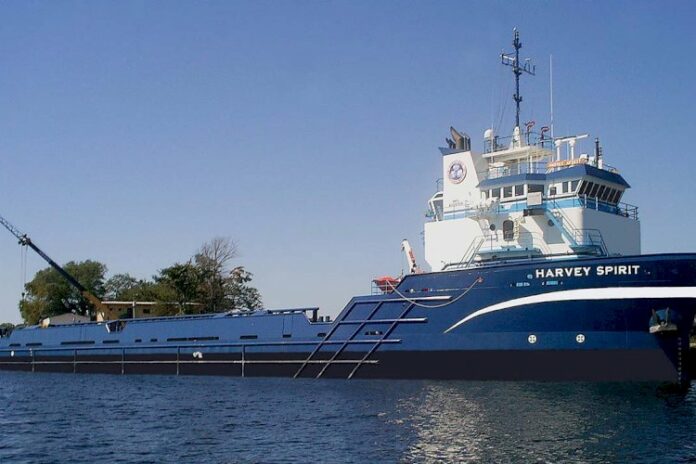
The vessel’s primary function is to place and service 150 offshore buoys, which warn mariners of the location of sand banks, reefs and other offshore hazards. The vessel also provides support for the teams tasked with maintaining a further 65 lighthouses and beacons around the coast of Ireland and Northern Ireland. In addition, the ship supports the national response to maritime wreck and new dangers to navigation.

With a length of 79.69m, the ship is equipped with advanced dynamic positioning equipment and accommodates a crew of 16.

Adam Rogers, Evac’s Head of Global Sales for Ballast Water Management Systems, said:

“We are delighted to have won the BWMS order for a vessel which has such an important role in maintaining safety at sea and protecting the marine environment.”

The vessel will be installed with an Evac Evolution system with the capacity to treat ballast water at a rate of up to 250m3/hr. The components will be supplied in modular form enabling them to be distributed to make the best use of available space within the engine room.

The Evac Evolution attained IMO and U.S. Coast Guard Approval last year, opening the way to worldwide sales. Based on a combination of filtration and UV technology, the space-saving system is energy effective and completely chemical-free. It has a ‘feedback loop’ which uses UV transmission as the parameter for precisely determining UV dosage. This ensures effectiveness in challenging water conditions, but saves on power during normal running.

Effective in fresh, brackish and seawater, the Evac Evolution system enables vessels to operate without restriction. The system is available with capacities from 34m3/hr to 1,500m3/hr in a single unit. It can be supplied in modular form for retrofits or skid mounted for newbuild applications.

The Evac Evolution system has been fitted on vessels including cruise ships, container vessels, research ships, offshore supply vessels and cable laying craft where its small footprint and potential for flexible installation have proved to be important assets.

Abu Dhabi Terminals receives five new ship-to-shore cranes

0

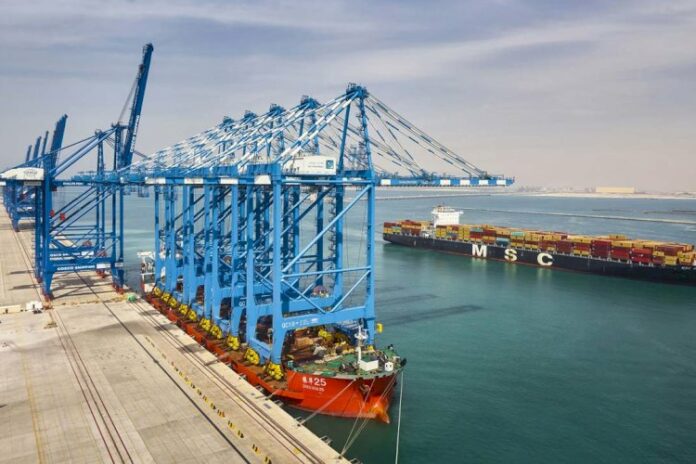
Abu Dhabi Terminals is the Management Company and operator of Khalifa Port Container Terminal (KPCT), the region’s first semi-automated terminal and one of the most technically advanced.

The five new cranes each with a 73 metre reach, 52 metre height and a lifting capacity of 90 tonnes are integral to ambitious plans that aim to increase capacity at KPCT to 5 million TEU (twenty foot-equivalent units) by the end of 2020. The STS cranes are among the largest in the world and will play a key role in ADT’s technologically advanced operational ecosystem at Khalifa Port, the flagship semi-automated deep-water port owned by Abu Dhabi Ports Group.

Captain Mohamad Juma Al Shamisi, Group CEO, Abu Dhabi Ports and Chairman of Abu Dhabi Terminals, said:

“Thanks to the wise strategic guidance of the leadership’s Economic Vision 2030, Abu Dhabi Terminals at Khalifa Port is well positioned to complete its expansion in record time and ahead of schedule, validating our commitment to becoming one of the leading container terminal operators in the world. As Abu Dhabi’s gateway to the world, Khalifa Port continues to surpass world-class performance benchmarks, and through its growth is playing a vital role in contributing to creating prosperity and opportunity for all those within the UAE. Offering world class levels of operational performance through continuous investment in our maritime assets and infrastructure enables Abu Dhabi to position its economy to reap the benefits of future non-oil growth for years to come.”

Ahmad Al Mutawa, Abu Dhabi Terminals CEO, said:

“The purchase and delivery of these cranes demonstrates how continuous investment in our infrastructure and technology, helps us exceed customer expectations by constantly delivering the most efficient operational performance.“

Our current expansion project of Khalifa Port Container Terminal sets a new benchmark for container terminal expansion in the region, and ensures that ADT can continue to deliver world class levels of operational performance to our partners, customers and shareholders well into the future.”ADT purchased the ultra-modern cranes from Shanghai Zhenhua Heavy Industry Co. Ltd. (ZMPC) in China. This milestone follows the recent arrival of a batch of Automated Stacking Cranes which are also part of the expansion project, taking the total number of cranes at the terminal to 22.

The final phase of ADT expansion will see the Terminal linked to the Etihad Rail network providing direct rail connections across the UAE and regionally.The 1.6 billion expansion at Abu Dhabi Terminals is part of AED 4 billion development projects underway at Khalifa Port including an AED 2.2 billion development of its South Quay and Khalifa Port Logistics which will expand overall capacity and boost container capacity to 9 million TEUs over the next 5 years.

Qatar Petroleum enters agreement with Total for two exploration blocks

0

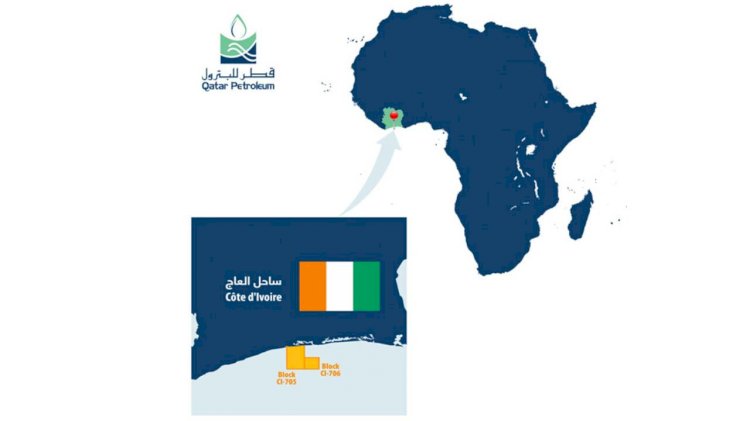
Qatar Petroleum entered into a farm-in agreement with Total to acquire a 45% participating interest in blocks CI-705 and CI-706, located in the Ivorian-Tano basin, offshore the Republic of Côte d’Ivoire.

The two blocks cover an area of approximately 3,200 square kilometers, and present multi-target hydrocarbon prospects in water depths ranging from 1,000 to 2,000 meters, 35 kilometers from shore and about 100 kilometers from nearby Foxtrot, Espoir and Baobab fields.

Commenting on the agreement, His Excellency Mr. Saad Sherida Al-Kaabi, the Minister of State for Energy Affairs, the President and CEO of Qatar Petroleum said:

“The acquisition of working interests in these two blocks marks an important addition to QP’s upstream portfolio in Africa, and represents the first investment for QP in Côte d’Ivoire. Africa’s offshore is a key target area for QP’s international growth strategy.”

His Excellency Minister Al-Kaabi concluded:

“We are pleased to enter into this promising exploration opportunity with our long-term partner, Total, an experienced operator with historical presence in Côte d’Ivoire. We would like to thank the Ivorian authorities, and our partners in these blocks for their support.”

The farm-in agreement is subject to customary approvals by the Côte d’Ivoire Government.

Navigate Rotterdam improved thanks to data sourced from sector players

0

The digital application Navigate enables shippers and freight forwarders to choose the most efficient and sustainable transport options for their container shipments. By adding a new route engine and utilising data sourced directly from carriers and operators, the current version of Navigate is more efficient, more complete and – as a result – more reliable.

In 2017 the Port of Rotterdam Authority launched Navigate: a digital application that provides insight into connections to, from and via Rotterdam, as well as business activity in the port. Navigate Rotterdam offers a comprehensive overview of all deep sea and short sea connections via Rotterdam and links these to rail and inland shipping connections in the hinterland. In addition, Navigate’s ‘empty depot service’ shows users where empty containers can be collected and dropped off. The application also includes an online business directory that offers details on the wide range of companies in the port area.

Based on the selected point of departure and destination, the route planner presents a number of different door-to-door options. For each route, the application outlines possible maritime connections, as well as which rail, inland shipping or road haulage options are available for transporting the shipment to its destination. Users can apply filters to quickly pinpoint which solution best suits their needs. After this, they can use Navigate to get in touch with different service providers – at the click of a button – to request a price quote, for example.

It has become very simple to directly submit data to Navigate, enhancing the quality of the presented route options even further. The heart of Navigate is formed by a new intermodal route engine for all sea, rail and inland shipping connections. Navigate currently connects 3,186 terminals worldwide and is processing over 1,435,000 schedules daily.

The Port of Rotterdam Authority is working together with a range of parties in the sector to continuously improve the quality of its digital applications. These applications are in line with the Port Authority’s ambition to develop into the world’s smartest port, by taking advantage of the opportunities presented by new technologies. This will ultimately make operations in the port of Rotterdam swifter, safer, more efficient and more sustainable.

New freight ferry port on the Thames passes dress rehearsal

0

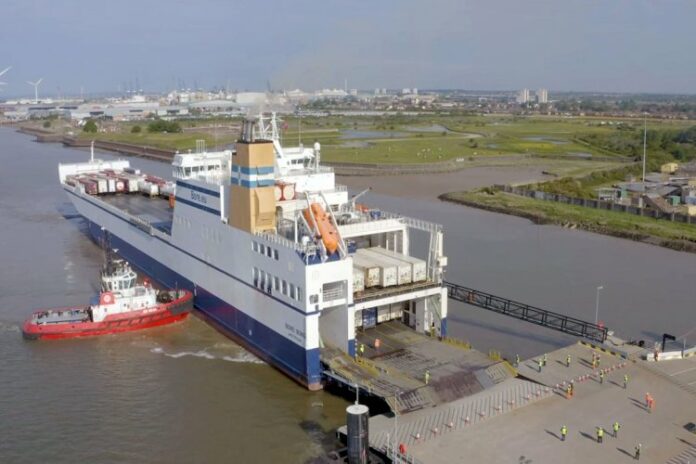
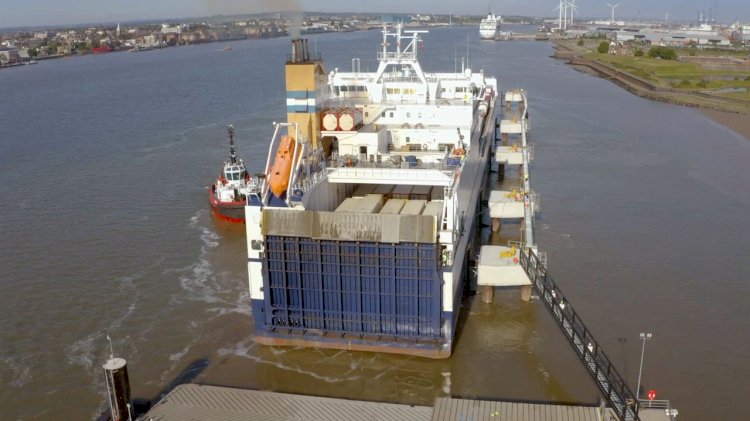
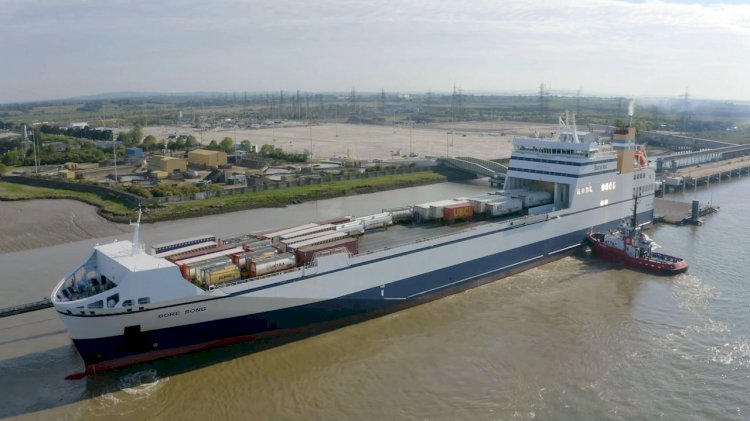
Two of P&O’s chartered freight ferry fleet, the Bore Song and the Norstream, arrived at the new ro-ro terminal on the Thames on Sunday 17 May where the port team carried out a full test of the marine facilities including manoeuvring and tying up the ship to test the berth; lowering the ship’s ferry ramp to test the pontoon facilities; and carrying out a full risk assessment. The ship trial was deemed a success with a smooth execution of all the test points being achieved.

The ferry terminal, which is due to open next week, has a capacity of 500,000 units and will operate in partnership between the port and P&O Ferries importing and exporting containers and trailers with food, drink, medicines and other vital supplies to-and-from Europe.

Commenting on reaching this milestone, Charles Hammond, Group Chief Executive of Forth Ports, said:

“We are in unprecedented times, both in the UK and globally, and this new unaccompanied terminal at Tilbury2 will ensure that we keep the vital supplies coming into the country as safely as possible, not just now but long into the future. Being a freight only terminal ensures that there is less risk of driver infection and exposure for our own quay workers at the port. The additional capacity of 500,000 units with streamlined customs procedures will enhance national economic resilience.”

Janette Bell, Chief Executive of P&O Ferries, said:

“The successful ship trial at Tilbury2 means that P&O Ferries will soon be able to offer customers even more choice when it comes to moving goods punctually, efficiently and reliably between Britain and Europe. The new berth will make our service faster and will guarantee that goods from Europe can be unloaded and continue their journey onto the M25 before the rush hour – a significant benefit for our customers.”

Peter Ward, Commercial Director at the Port of Tilbury, said:

“The ship trial at the weekend marks an important milestone for the T2 project. We started construction in Spring 2019 and working with GRAHAM, we are on track to open the first part of the port next week. The marine works were an important part of the project and included constructing a floating pontoon, link-span/articulated bridge, pilings and riverbed preparation for the berth.”

Robin Mortimer, Chief Executive of the Port of London Authority said:

“The successful ship trial at Tilbury2 is a major milestone for operations on the Thames. On the doorstep of the UK’s major consumer market, this is the logical place for new marine infrastructure, adding further resilience to supply chains which is essential in these challenging times.”

The marine works for the new ro-ro terminal were completed in April by GRAHAM who are constructing both the marine and land side of the new £200m, 160-acre port.

Tilbury2 is a new port at the former Tilbury Power Station on the north bank of the River Thames on the outskirts of London. When fully operational, Tilbury2 will be the UK’s largest unaccompanied freight ferry port, the country’s biggest construction processing hub and will see the creation of a new significantly larger rail head which can accommodate the longest freight trains of 775metres.

More about Tilbury 2

Tilbury2 received development consent from the Secretary of State for Transport in February 2019 to build Tilbury2 – the new multimillion-pound port terminal adjacent to the current 930-acre site in Thurrock, on the outskirts of Greater London.

The £200m Tilbury2 project consists of the construction of a new port terminal and associated facilities and once fully open, Tilbury2 will comprise:

  •  A roll on/roll off ferry terminal for importing and exporting containers and trailers to northern Europe, in partnership with P&O Ferries
  • A strategic rail terminal which can accommodate the longest freight trains of 775m
  • Storage areas for a variety of goods, including exported and imported cars.
  • The site will be trusted trader Authorised Economic Operator (AEO) accredited and will employ the latest border technology, such as number plate recognition.
  • A facility for importing, processing, manufacturing and distributing construction materials

The project is central to the Port of Tilbury’s £1 billion investment programme during 2012-20, which has seen it double the size of its business in the past 10 years and is projected to double the volume of cargo across the quay (from 16 million to 32 million tonnes) and increase direct employment (from 3,500 to 12,000 jobs).

Wärtsilä solutions chosen for first Japanese built LNG-fuelled ferries

0

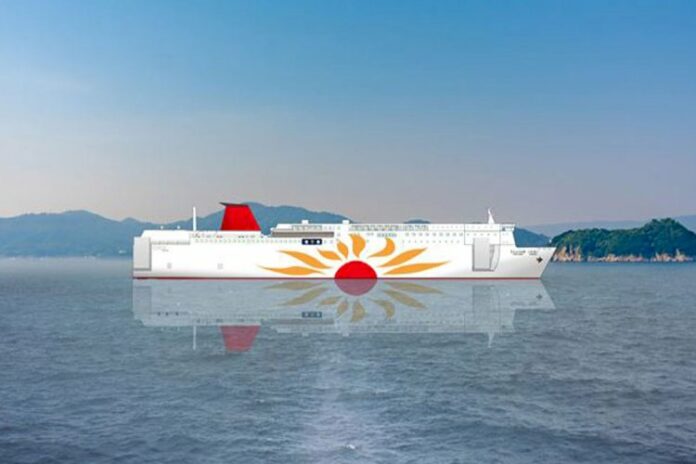
The technology group Wärtsilä will provide a complete LNG package, comprising the Wärtsilä 31DF engine, gearbox, and LNGPac storage, supply and control system for two new ferries being built on behalf of Ferry Sunflower, a subsidiary of Mitsui O.S.K. Lines (MOL).

The ships are being built at Mitsubishi’s Shimonoseki shipyard in Japan, and will be the first LNG-fuelled ferries to be built in Japan. The order with Wärtsilä was booked in the second quarter of 2020.This newbuild project has been adopted for Japan’s energy conservation rating system for coastal ships, a demonstration test programme to enhance operational efficiency. The Wärtsilä 31DF dual-fuel engine was chosen for these ferries specifically because of its very high efficiency. It also provides safe and continuous gas mode operation, which were other key requirements in the specification.

Keisuke Yasutake, Area Sales Manager, Wärtsilä Japan, says:

“Wärtsilä’s vast experience and know-how in LNG solutions for the marine sector is again recognised with this landmark order for the first Japanese built LNG-fuelled ferries. We are able to offer LNG-based products and systems having a proven design and high performance, with a strong reference list that supports our value proposition.”

Mr Makoto Yamaguchi, General Manager, Technical Division, Mitsui O.S.K. Lines, says:

“MOL is dedicated to reducing the environmental impact of its business activities, and these two ferries are being built in line with that objective. By operating on LNG they will have a greatly reduced carbon footprint, and the high-performance Wärtsilä engine fits our requirements perfectly.”

The about 200 metres long ‘Sunflower Kurenai’ and ‘Sunflower Murasaki’ will be capable of carrying approximately 763 passengers, 136 trucks and 100 passenger cars at a speed of 22.5 knots. They are scheduled to commence operations in 2023 on the Osaka – Beppu route.

Wärtsilä has had lengthy and strong relationships with both MOL and Mitsubishi. Mitsubishi Shipyards, for example, has delivered ferries, LNG carriers, and a seismic research vessel all with Wärtsilä engines.

ODE secured a contract from NEO for the Babbage Field

0

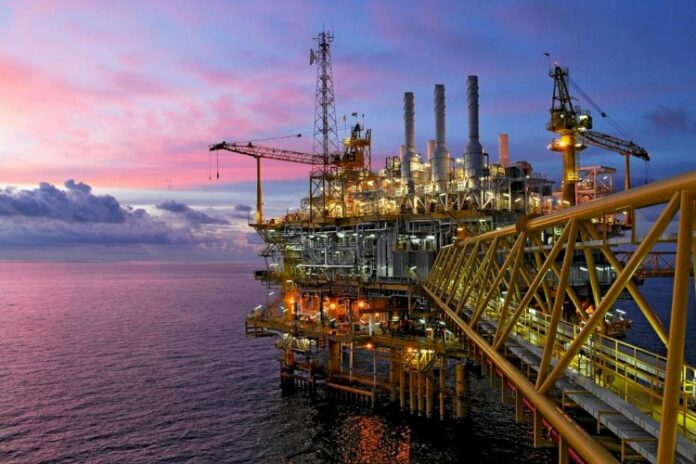
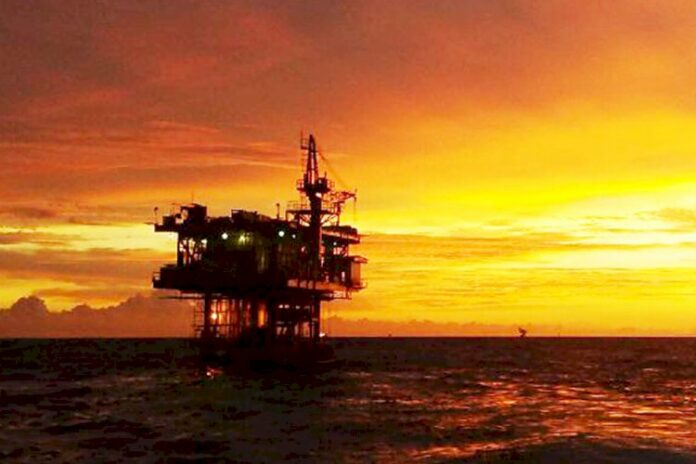
The Babbage InstallationODE Asset Management Ltd (ODE) has secured a contract from NEO Energy (NEO) for the Babbage Field in the Southern North Sea.

This is a significant ODE milestone as the first installation and pipeline operator (duty holder) appointment in the UK Continental Shelf (UKCS).

ODE is no stranger to the Babbage asset. The company has acted as operations and maintenance provider since the project phase and successfully transitioned the platform from normally manned to not normally manned status in recent years.

ODE’s continued involvement in Babbage is important business continuity for NEO Energy, in particular securing existing jobs managing the offshore asset.

Sandy Reid, managing director of ODE Asset Management, commented:

“This is the first of two outsourced duty holder contracts we’re bringing across the line in 2020 and is a tremendous achievement for our Great Yarmouth and Aberdeen teams.  We’re delighted to have the trust of NEO as their operations partner for Babbage, and hope to further build our relationship by helping them achieve their ambitious growth plans. We’ve got an excellent track record of keeping the facility performing above platform design efficiency levels whilst also safely minimising the cost of ownership.  We intend to maintain this track record despite the current industry challenges and those of maintaining an aging asset.

This contract recognises ODE’s experience and expertise in operations support and builds on our long history of supporting producing assets.  It also demonstrates that ODE’s offering and approach, focused on efficiency and bespoke integration with clients, challenges the market norm. As the North Sea matures, the ODE approach addresses the industry’s cost related challenges.”

Lynne MacPherson, NEO’s asset manager, commented:

“The Babbage operatorship is an important milestone for NEO as we develop the company in the UKCS. We continue to see significant value in the region with a strategy to grow, both organically and through acquisition, to achieve production of 80,000-100,000 boepd. In these challenging times, we’ve worked closely with our operations partner ODE to safely and effectively transition operatorship of the Babbage asset. We look forward to a successful long-term partnership managing the facilities.”