-8.3 C
New York
Home Blog Page 798

Two RAstar 3200-CL tugs delivered to Yiu Lian Dockyards Ltd

0

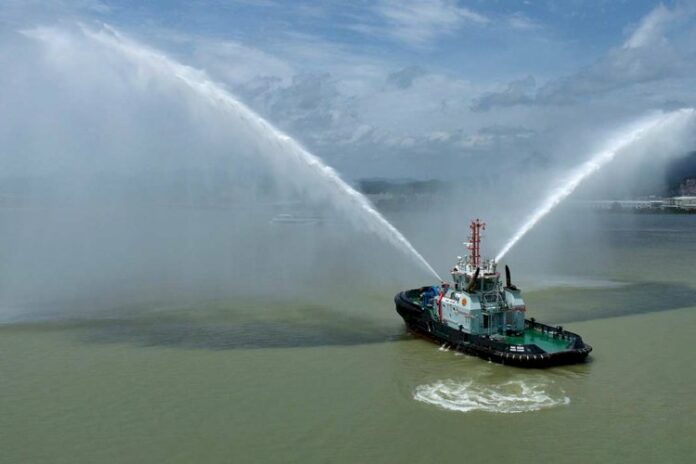
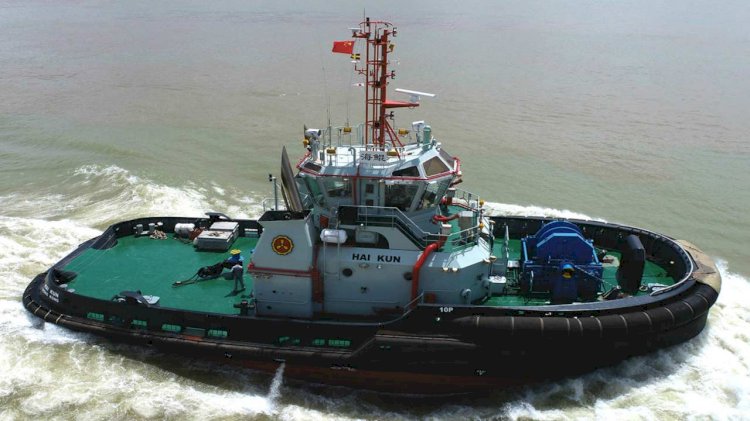
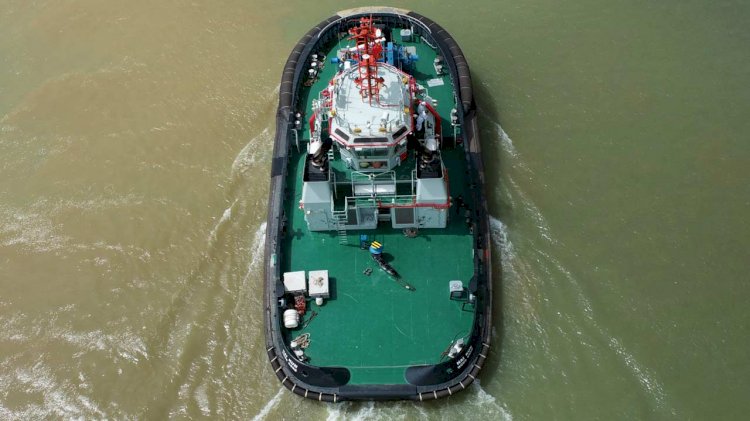
The HAI KUN, a Robert Allan Ltd. designed RAstar 3200-CL tug built by Cheoy Lee Shipyards was successfully delivered to Yiu Lian Dockyards Ltd., Hong Kong on July 15, 2020. The first half of a two vessel contract, the HAI KUN completed her sea trials with flying colours, achieving 88 tonnes bollard pull and a speed of 13.5 knots at 100% engine MCR.

This delivery marks the 21st vessel built and delivered by Cheoy Lee of the very successful RAstar 3200-CL design. Unique modifications were implemented to this hull to accommodate both the owner’s selected Niigata propulsion package and the required escort capability of the tug. This included a re-design of the skeg and simulations using our in-house computational fluid dynamics capability to confirm the tug’s expected escort performance. Other modifications to accommodation layout, etc. were also made to suit the owner’s preferences.

The HAI KUN will be joined by her sister the HAI PENG in August 2020.

The Particulars of tugboat HAI KUN are:

  • Length Overall: 32.00 m (excluding fenders)
  • Beam, moulded: 12.80 m
  • Depth, moulded: 5.37 m
  • Maximum Nav: 5.83 m
  • Gross Tonnage: 492
  • Fuel oil: 166 m3
  • Potable water: 49 m3
  • The tug was designed and constructed to the following Lloyd’s Register notation:
The vessel’s accommodations are outfitted to MLC compliant standards for a crew of up to 10 personnel. The master’s and chief engineer’s cabins are each outfitted with private ensuite washrooms, while one common washroom is located on each of the main and lower decks along with the remainder of the cabins.

Main propulsion for the tug comprises a pair of Niigata 8L28AHX main engines, each rated at 2574 kW at 750 rpm, driving a pair of Niigata ZP-41B Z-Peller propulsion units with AGCP192Y slipping built in clutch and 2,700mm diameter fixed pitch propellers.

Two identical diesel gensets of 136 ekW each provide electrical power to the vessel.

The deck machinery comprises a MacGregor hydraulic anchor windlass/double drum escort towing winch, model MG-HAET/GDG-22-1223U02096x2, on the bow spooled with 200 m line on each drum. A Mampaey disc-type towing hook is installed on the main deck aft for line towing operations.
New transport connection between Kundziņsala and Port of Riga

0

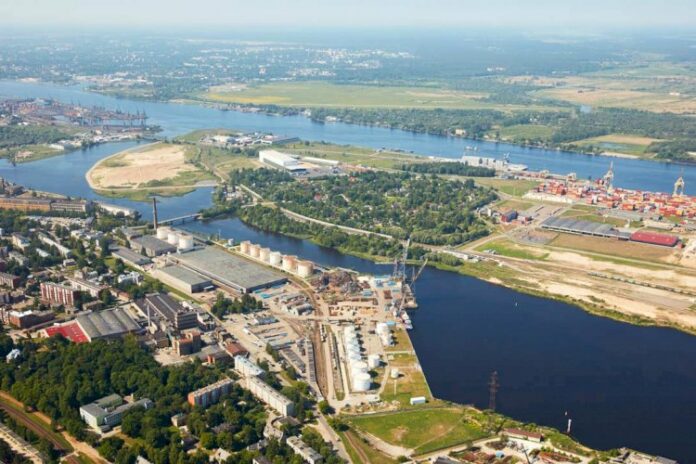
At the end of July, the Riga City Construction Board issued a building permit for the start of design and construction works for the Riga port infrastructure development project “Traffic overpass from Tvaika Street to Kundziņsala”. 

The project provides for the construction of a new bridge over the Sarkandaugava tributary, as well as access roads and the necessary infrastructure in Sarkandaugava and Kundziņsala, connecting it with the Eastern Highway project implemented by the municipality. According to the approved work schedule, it is planned to develop the construction project by the end of 2020, while the construction work has to be completed during 2023.

The new overpass will make it possible to deliver cargo to/from the port terminals in Kundziņsala faster and in more environmentally friendly way – the time spent on cargo transportation as well as cargo truck congestion and related emissions in the vicinity of the port will be reduced.

Kundziņsala is currently developing into an active cargo warehousing and logistics center, specializing mainly in container cargo handling. By reducing the time required for cargo delivery and processing, the port companies will be able to offer their customers a more cost-efficient and competitive service, at the same time enhancing the overall offer of the Port of Riga in the region.

Mr.Viesturs Zeps, the Chairman of the Freeport of Riga Board, says:

“Container cargo is one of the safest and the most environmentally friendly cargo segments in the world. The newly built, modern infrastructure of Tvaika Street up to Kundziņsala together with up-to-date customs logistics and control solutions will provide a significant investment into the sustainable development of the container cargo segment in the Port of Riga.”

The new project also provides for improvements in the infrastructure of the port areas. For the convenience of residents, it is planned to build a combined pedestrian and bicycle path across the new bridge, starting in the Kundziņsala residential area, as well as to install roadway and sidewalk lighting. One of the construction project objectives is reconstruction of the water supply and sewerage system main pipelines and supply network as well as construction of new routes in order to provide full-scale water supply and wastewater collection services. Anti-noise walls will be built in accordance with the noise assessment procedure, and the installation of protective fences over the industrial area will also be implemented.

The connection with Kundziņsala is a supplement to the project “Traffic overpass over the railway tracks “Rīga-Skulte” with connections to Viestura prospekts and Tvaika Street” launched by the Riga City Council. The aim of the said project is to divert traffic away from the residential areas and create road infrastructure which would prevent traffic jams, noise and air pollution.

The development, construction design supervision and construction works of the project “Traffic overpass from Tvaika Street to Kundziņsala” are performed by the association of persons “OCT”, with which a contract was concluded at the end of 2019 as a result of the procurement procedure. The contract price for this work is EUR 39,770,000. The project is co-financed by the EU Cohesion Fund.

Navisense AI-based technology makes port towage jobs smart and efficient

0

The global towage operator Svitzer and the maritime tech company Navisense have teamed up to make port towage services more efficient and sustainable. The “Porttracker” system, jointly developed and to date deployed in 21 harbours in Australia and Europe, successfully demonstrates how a smart combination of various data streams can result in a cost effective and easy to use tool primarily focused on reducing fuel consumption, cutting emissions, and thereby improving the environmental performance.

The main advantage of Porttracker over other approaches, explains Carsten Bullemer, Navisense Founder and CEO, is that it operates without any need for on-board installations or manual input:

“Our system is designed to be deployed effortlessly in any port worldwide and calculates fuel consumption by combining positional, weather, tidal, and engine data. At the heart of our tool, a smart eventlogging algorithm automatically detects and displays all operations. Purely by consuming a high frequent AIS stream, it instantly identifies behaviours of all vessels and registers events.

“Traditionally, captains have had to log their job timestamps manually. Instead, our system now helps them to focus on doing what they do best – manoeuvring the tug.”

Importantly, instead of having to rely on ex-post statistics, the Navisense technology tracks and analyses the operations of harbour tugs in real-time to facilitate proactive planning of the jobs.

Bullemer explains:

“Once set up, our system monitors all events in the area covered and produces fully automatic reports for each assisted movement. This generates immense market knowledge and provides support for fuel consumption and Co2 reporting.”

Evangelos Fragkoulis, Svitzer Chief Technical Officer leading the Porttracker program, says:

“Navisense has created a tool that is cost effective and, with its remarkable user friendliness, easy to implement. With Porttracker, we are able to review all operations in our ports and identify areas of improvement specifically during the mob and demob phases of a towage job. We have completed the installation of Porttracker at 21 ports. Right now, we are in ‘run mode’ and already recording significant reductions in fuel consumption across the board. This is the first step towards achieving full fuel efficiency and improving our environmental performance.”

BAE Systems wins contract to build prototype for new Wargaming Center the USMC

0

The U.S. Marine Corps (USMC) has awarded BAE Systems a contract worth approximately $19 million to develop a prototype design for a new state-of-the-art Wargaming Center to be built at Marine Corps Base Quantico in Virginia.

BAE Systems will integrate advanced technologies into the prototype, including artificial intelligence, machine learning, game theory, multi-domain modeling and simulation, and predictive data analytics, which will provide greater metrics and training on many wargaming processes.
 
Peder Jungck, vice president and general manager of BAE Systems’ Intelligence Solutions business, said:

“We will build on our experience supporting the Marine Corps Warfighting Laboratory Wargaming Division and partner with a diverse team of digital technology experts to produce an advanced prototype to help train an efficient, precise, and consistent force capable of fighting future wars in multiple domains. This prototype will integrate big data and advanced analytics in a secure cloud environment for future wargaming design and assessments.”

Since 2010, BAE Systems has supported the Marine Corps Warfighting Laboratory Wargaming Division with wargame planning, preparation, execution, and assessment. Deep understanding of the Marine Corps’ mission has positioned BAE Systems well for supporting further wargaming processes and identifying ways for the Marines to benefit from new technologies to enhance capabilities.

Vessel concept design to remove floating plastic

0

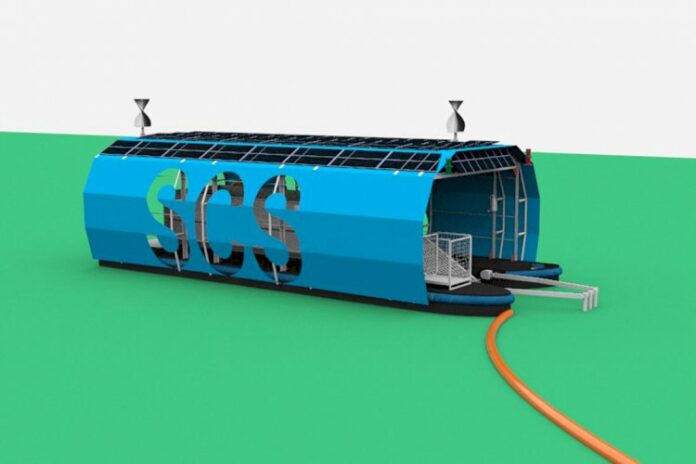
Longitude, an LOC Group Company, is pleased to announce it has completed the concept design for a vessel and recovery system to remove surface plastic flotsam from rivers in South East Asia. The contract was provided by Seven Clean Seas (SCS), a Company set up in 2018 to support the fight against ocean plastic pollution in South East Asia.

The vessel and river recovery system are aimed at recovering plastics in rivers before they reach the ocean. The vessel and system are designed to operate in some of South East Asia’s most remote regions. To undertake the work, Longitude leveraged its track-record in vessel design and naval architecture.

The concept developed by Longitude uses the rivers current to guide the plastics to the vessel’s recovery system and out of the water system. The system is designed to have minimal impact on biodiversity so as to not disrupt the river flow. A key design challenge was to be able to reduce construction, installation and maintenance costs of the vessel in remote rural areas.

The scope of work under the project included 3D modelling of the vessel, conceptual mobilization and an operational plan. It entailed ship layouts, weight distribution, power generation assessments and class compliance, as well as an estimate of the build and running costs and conceptual amortization modelling.

Based in Singapore, SCS has recovered over 59,423kg of plastics from five countries in the region to date. To achieve that it has mobilized over 3,800 volunteers and enabled the offset of unavoidable plastics use by business in their operations. It aims to clean, conserve and to educate about the impact of plastics, marine protection and the responsible consumption of plastics. SCS is partnered with Microsoft, Marina Bay Sands amongst other household brands.

Riccardo Felici, Naval Architect at Longitude Engineering, said:

“Working on this project reflects Longitude’s expertise in naval architecture, its history of developing vessels and its commitment to supporting clean oceans projects. The amount of plastics in the ocean is reaching or surpassed crisis point. It is a problem we need to act on and solve promptly. We are delighted to be working with SCS, which in the short time since it was set up has already developed a strong track record of removing plastics from the world’s oceans, through the support of volunteers, education and plastic offset.”

Fugro awarded CrossWind site investigation contract for Hollandse Kust

0

The CrossWind consortium, a joint venture between Shell in the Netherlands and Eneco, has awarded Fugro a contract to deliver comprehensive geotechnical site investigation solutions to support development of the Hollandse Kust (noord) offshore wind farm. The site investigation solutions will comprise an unexploded ordnance (UXO) site clearance survey followed by a seabed cone penetration test (CPT) investigation.

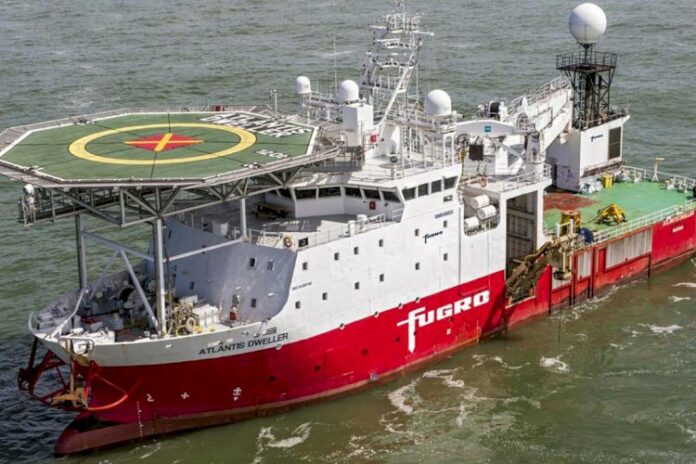
After clearing the sites with the Fugro vessel Atlantis Dweller, Fugro will mobilise their seabed SEACALF® Mk V DeepDrive CPT system for the fieldwork, which is scheduled to begin this month and should complete by the end of September. The SEACALF acquires high-quality data over the full foundation depth of wind turbines and has already been successfully deployed on a series of North Sea projects.

Tjalling de Bruin, Project Director for CrossWind, said:

“We are looking forward to working with Fugro to execute our first offshore activities safely and in good health during these extraordinary times. With a signed contract in place and the site investigation team mobilising, the work is progressing well to deliver clean energy by 2023.”

Sven Plasman, Commercial Manager at Fugro, added:

“We are pleased that our proven track record on previous projects for Shell and Eneco, and our deep knowledge of offshore wind farm developments have led to another major contract award using the efficiency and safety of our seabed site investigation solutions such as the SEACALF Mk V DeepDrive CPT system.”

The CrossWind consortium plans to have Hollandse Kust (noord) operational by 2023 with an installed capacity of 759 MW, generating at least 3.3 TWh per year. The wind farm will be located 18.5 km off the Dutch coast near the town of Egmond aan Zee.

VIKING delivers first of ambulance boat trio for Hellenic Coastguard

0

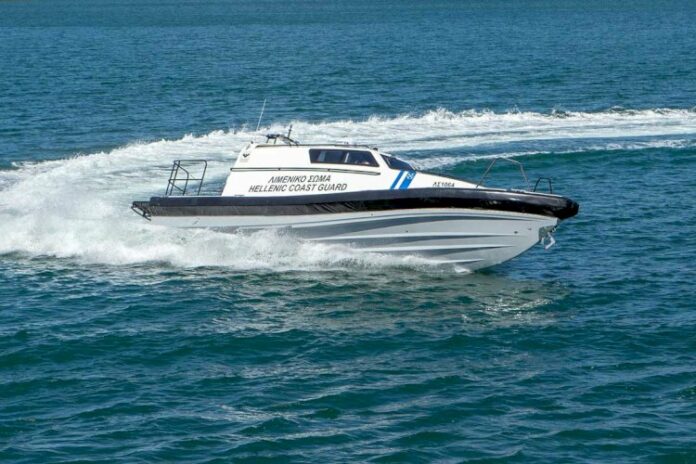
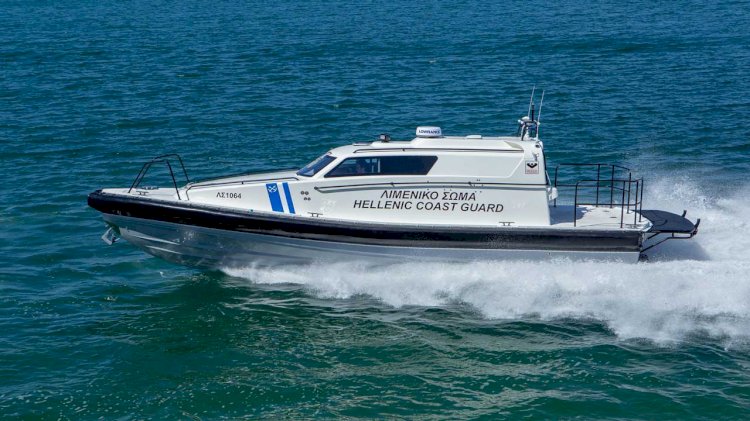
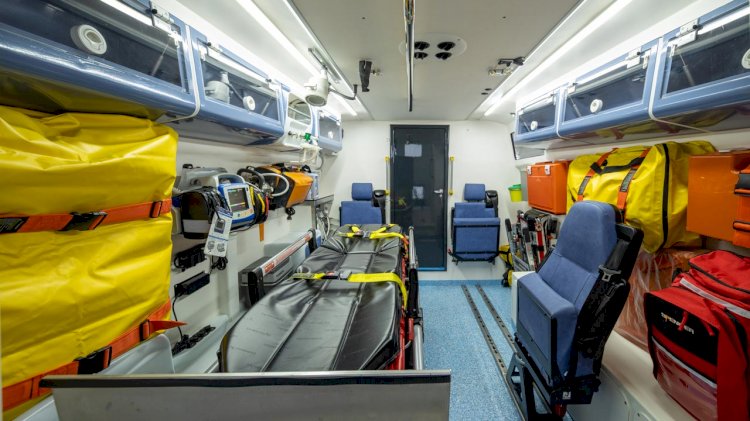
VIKING Life-Saving Equipment has delivered its first VIKING Norsafe Munin-S1200 ambulance boat to the Hellenic Coastguard. Stationed in Naxos, the largest of the Cyclades island group, the vessel is the opening installment in a three-boat order that will change the face of regional healthcare provision.

For many years, the Coastguard and EKAB have worked together to support patient transfer requirements from the Greek islands to larger hospitals. Today, a call for transport services is almost a daily occurrence.

As the largest boat currently offered by VIKING, the Munin-S1200 can carry 10 persons, all seated, while its 1,150-liter fuel tank supports a range greater than 350 nautical miles at a cruising speed of 35 knots. The S1200 is equipped with twin sterndrive Mercury diesel engines supplying a combined 740hp to enable a top speed of 45 knots at full load.

John Georgiadis, Managing Director of VIKING’s branch in Greece, says:

“I am proud of VIKING and our team in Greece for manufacturing and delivering the first ambulance boat on time, especially considering the challenges we faced due to the Covid-19 pandemic. The S1200 is a high-performance vessel equipped to sustain essential emergency services even in my country’s most remote islands.”

The S1200 comes complete with shock mitigation technology, ensuring safe patient transport and allowing high-quality medical services to be provided in transit. Certified by RINA (Registro Italiano Navale), the boat operates safely up to Beaufort force 8 and at a wave height up to 4m. It also features latest generation, Lowrance-branded navigational equipment from Navico, while its onboard diesel generator powers air conditioning/heating with capacity of 26,000 btu/h.

VIKING’s Endre Eidsvik, VP Sales, Boats & Davits, says:

“The new S1200 design incorporates knowledge gained from its existing closed-cabin S1200 counterpart and has passed a series of tests involving user groups representing the Hellenic Coast Guard, border patrol, customs and other governmental authorities.

Crucially for this order, the design and construction of the boat have been found to meet the exacting requirements of the EKAB and the Hellenic Coastguard for a high-performance, low-maintenance boat that supports Emergency Support operations day and night, in all weather conditions.”

HMCS Harry DeWolf officially delivered to the Royal Canadian Navy

0

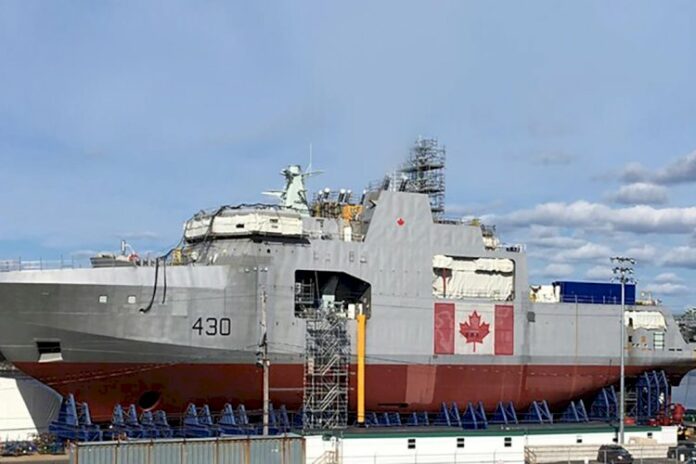
HMCS Harry DeWolf, named for Canadian wartime naval hero Vice-Admiral Harry DeWolf, is the first ship built for the Royal Canadian Navy under the National Shipbuilding Strategy (NSS) and is the lead vessel of a new class of Arctic and offshore patrol ships.

As the prime contractor for the original Design, Engineering, Logistics and Management Support (DELMS) services contract, BMT assisted Canada’s AOPS Program Management Office (PMO) in the project Definition Phase and assembled a Canadian-led design team that comprised Canada’s foremost Arctic marine designers. 

BMT’s extensive background in ship design was complemented by a skilled team of specialists from Vard Marine, with extensive experience in the design and construction of ice breakers and patrol vessels. This team delivered a class design package for the AOPS and a ship specification which formed the basis for the AOPS contract with Irving Shipbuilding Inc.

Designed to patrol Canadian waters, this new class of ship is at the core of an enhanced Arctic presence for the RCN that will add to the country’s fleet of current and future ships in performing critical reconnaissance and surveillance. 

The Harry DeWolf-class patrol ships will be capable of operating in challenging Arctic ice conditions, giving the RCN unescorted access to waters that were previously inaccessible to naval vessels.  Upon commissioning, Harry DeWolf will be able to participate in international operations such as anti-smuggling and anti-piracy, as well as providing support for Search and Rescue (SAR), emergency / disaster response and humanitarian missions.

Upon delivery of Harry DeWolf, Wade Carson CEO of Vard Marine said: 

“Vard Marine congratulates the Royal Canadian Navy on the acquisition of a capable and versatile vessel. As the lead naval architect on the AOPV program over a decade ago, I had the opportunity to be a part of the skilled Vard Marine and BMT team , working with the Project Team, in taking the design from a set of requirements, on to several concepts, and through the Class design stage. The HMCS Harry DeWolf represents the successful collaboration of Canadian industry to deliver a novel and flexible ship that will serve her crew and country well for decades to come. The Vard Marine team is proud to be a part of reinvigorating the Canadian shipbuilding industry through the AOPV program and the Canadian National Shipbuilding Strategy (NSS).”

Harry DeWolf will remain docked at Canadian Forces Base (CFB) Halifax while the Navy conducts post-acceptance trials to verify major ship systems and overall performance while providing an opportunity for the Navy to conduct crew training.  Once the training and post-acceptance work is complete, the ship will undergo a formal commissioning ceremony (summer 2021) and officially enter active service.

Sleipnir breaks own record with 10100 mT jacket lift

0

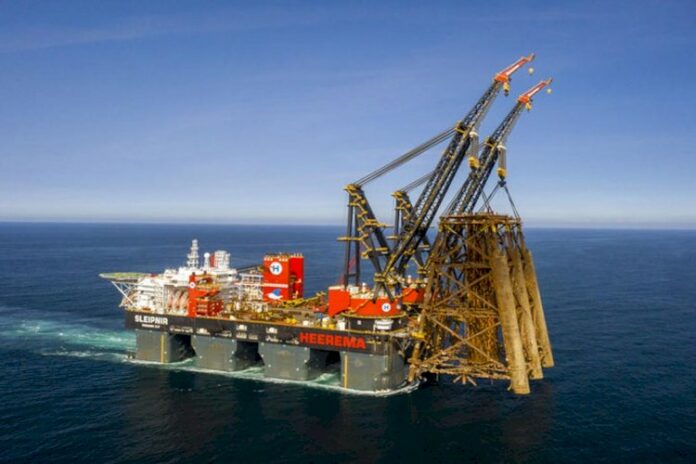
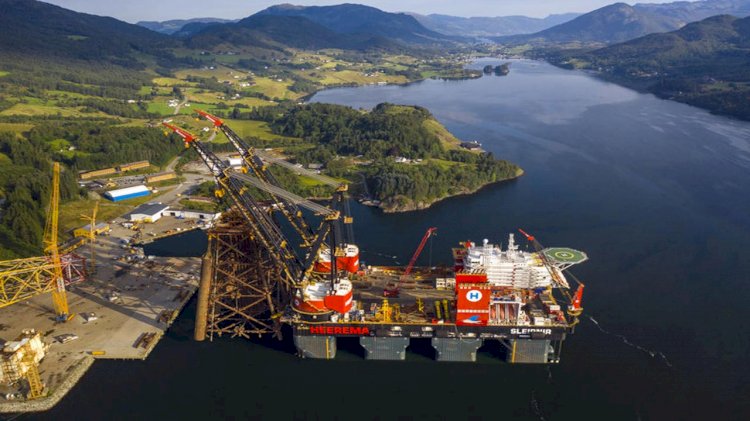
This project is Sleipnir’s fourth decommissioning job for this summer. The vessel will continue to be busy in the North Sea before swapping the largest lifts for one of the smallest with the installation of Dana Petroleum’s P11-Unity Platform later this year. 

So far, Sleipnir has safely removed and transported more than 43900 mT of decommissioned offshore infrastructure for recycling over this summer campaign.  

For the Brent Alpha jacket removal, Sleipnir arrived at the Brent Field located 186 km northeast of Scotland’s Shetland Islands on July 23, 2020 and completed the project by offloading the jacket onto the quayside at the AF Miljøbase decommissioning site in Vats, Norway on August 11, 2020.

The Brent Alpha jacket removal presented novel challenges for Heerema, resulting in unique solutions. During the project, Heerema cut jacket legs at 7.3m diameter using a 288” Diamond Wire Cutting Tool developed alongside CUT UK, especially for the Brent Alpha removal – the largest leg diameter to have been cut this way. 

Also, during this project Heerema removed and transported the conductors with the jacket, an entirely new way of decommissioning. The conductors were suspended on a Heerema Fabrication Group built Conductor Hang-off Frame made for this project. 

Sleipnir is the world’s most sustainable SSCV, and during the project the vessel performed the full removal operations while running on emission-reducing LNG fuel. Using LNG, Sleipnir reduces CO2 emissions by 25%, reduces NOx emissions by 92%, reduces SOx emissions by 99%, and Particulate Matters by around 99% compared to traditional Marine Gas Oil crane vessels. 

Now that the Brent Alpha jacket has been safely and sustainably transported to Vats, it will end its lifecycle by being over 97% recycled.

Heerema’s Decommissioning Director, Jeroen van Oosten noted:

‘There were quite some technical challenges during this record-breaking lift. Such as the cutting of the 3 x 288″ legs of the platform. However, due to the excellent preparation and perseverance during execution, we successfully delivered this jacket safely and sustainably to Vats for disposal. An outstanding achievement for all involved.’

Autonomous unmanned robot will hunt for plastic in the Arctic

0

This fund is the largest private environmental fund in Norway and it supports projects that reduce plastic waste, increase plastic recycling and reduce the consumption of plastic bags. 

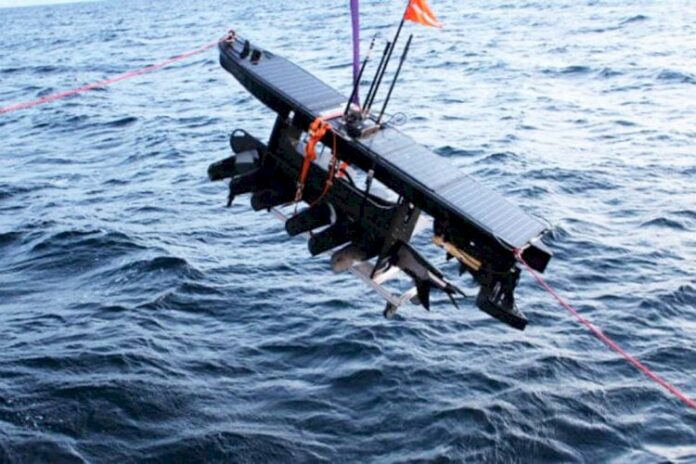
The project called “Detecting, Identifying and Mapping plastic in the Arctic using robotics and digital solutions (DIMARC)” will use an autonomous unmanned robot, a Wave Glider, and digital solutions involving machine learning approach for data analysis to detect, identify and map plastic litter offshore and onshore in the Norwegian Arctic.

Additionally, Akvaplan-niva will be developing a remote sensing methodology taking advantage of high definition satellite pictures and aerial drones to detect lost fishing nets stranded on the shore. These so called “ghost nets” are  known for catching and killing animals such as deers, bears, seals, birds etc. The team will also study the drift of plastic in the Arctic using a high resolution ocean model called FVCOM using different scenarios. 

The results from the project will be communicated to local communities to assist them in cleaning their shores, and to students for educational purposes. Partners are Maritime Robotics, IFREMER (France), SALT, TerraNor and UiT the Arctic University of Norway.