-10.8 C
New York
Home Blog Page 761

Wärtsilä powers world’s largest NGO hospital ship

0

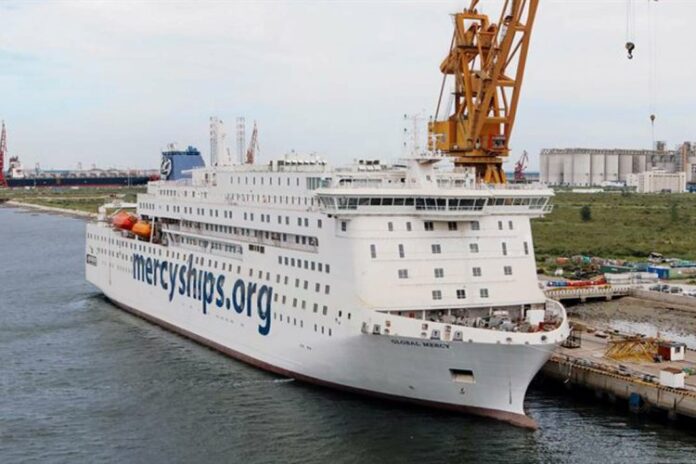
The technology group Wärtsilä announced today that Mercy Ships, a philanthropic organisation providing essential healthcare to needy patients in developing countries, will be utilizing its engine technology in the organisation’s new hospital ship.   

When completed, the Global Mercy will be the world’s largest vessel of its kind, and will be powered by four Wärtsilä 32 engines. Wärtsilä will also provide a five-year services maintenance agreement, . 

The comprehensive agreement covers parts, field service, asset monitoring, and full technical support to keep the hospital ship running at all times. Mercy Ships expects to take delivery in 2021, and the ship’s maiden voyage is planned later in the year to Africa where crew will provide vital surgical care at no cost. 

The Wärtsilä engines are double resilient mounted, and comply with the DNV VIBR vibration classification. This smooth running capability is of special importance for a hospital ship with onboard surgical operations taking place. The supporting maintenance contract is part of the company’s Lifecycle Solutions offering. It provides guaranteed operational reliability with performance targets determined from measured data. The measurable indicators can include, for example, availability, reliability, and fuel consumption. The agreed targets are reached through automated key performance measurements, optimised maintenance, and remote advisory. 

Jaakko Eskola, President and CEO of Wärtsilä Corporation, says:

“At Wärtsilä we are proud to be partnering with Mercy Ships and to be providing the power for this ground-breaking vessel. Because of its function as a floating hospital, special considerations have had to be taken into account, and we have worked closely with the owners and the yard to ensure that all requirements are met. As a global corporation, we are committed to supporting sustainable societies. We are therefore both honoured and humbled to join forces with Mercy Ships, and to support it in successfully carrying out its valuable humanitarian work.”

Russ Holmes, Director of Corporate Development of Mercy Ships, says:

“The Global Mercy is a fully purpose-built ship with state-of-the-art technology. In order to secure an uninterrupted power supply onboard the vessel, it was important that we have high quality engines available. The Wärtsilä 32 engines supported by the extensive maintenance agreement, provide this assurance, which will help us as we carry out our mission to bring hope and healing to the forgotten poor and to positively impact global healthcare. We welcome Wärtsilä as a one of our key suppliers in enabling this work.”  

Previous hospital ships have all been conversions from passenger ships and other vessels. The 174 metres long, 37,000 ton Global Mercy is a one-of-a-kind ship. It features 12 decks, two of which are for the hospital, including six operating theatres, 102 acute care beds, and 90 self-care beds. The vessel accommodates a crew of up to 641 volunteers, and additional space can host up to 950 people at any one time when in port.     
Yang Ming inaugurates depot at Port Klang, Malaysia

0

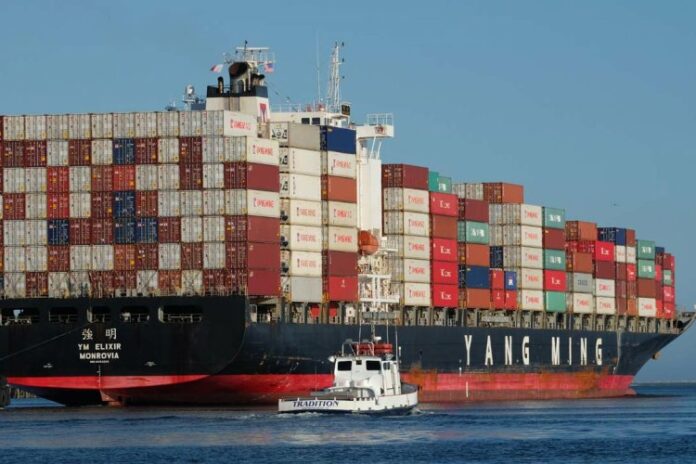
Yang Ming Marine Transport Corp. (Yang Ming) has cooperated with TAIWAN FOUNDATION INTERNATIONAL PTE. LTD. and Malaysian investors to set up a joint venture depot company named Jambatan Merah Formosa Depot Sdn. Bhd at Port Klang, Malaysia. The opening ceremony was held on October 1st, 2020. The new company will provide inland empty container depot and container maintenance and repair services.

Malaysia is the one of largest economies in ASEAN. According to an International Monetary Fund (IMF) report released in June, despite Malaysia’s GDP is projected to contract by 3.8% this year due to COVID-19, however, its GDP growth is expected to resume pre-COVID-19 growth levels in 2021 at 6.3%. The steady economic growth in the country will accelerate local industrial development and further stimulate local demand.

The harbor business is one of the most important sectors for development in Malaysia. Port Klang, the largest port in Malaysia, is also a main calling port of Yang Ming. In light of this, Yang Ming has set up wholly-owned subsidiaries in the country to position itself in the Malaysian transport and logistics market. The setup of Jambatan Merah Formosa Depot Sdn. Bhd, coupled with Yang Ming’s flexible service deployment and cooperative partners’ strengths, will enable the company to further integrate midstream and downstream businesses, and enjoy the advantage of cost reduction and profitability increase.

In keeping with the rapid growth of Southeast Asian market and The government’s “New Southbound Policy”, Yang Ming set up a joint venture depot company named PT. FORMOSA SEJATI LOGISTICS in Surabaya, Indonesia in 2018, and continued to extend its investment territory in Southeast Asia by establishing Jambatan Merah Formosa Depot Sdn. Bhd this year. 

Innovez One to digitalise towage and pilotage operations for the Port of Banten

0

Innovez One, one of the world’s leading providers of port management software for the world’s busiest ports and towage operators, has signed a contract with the Port of Banten, a growing Indonesian port located in the rapidly developing Banten region, to digitise its towage and pilotage operations.
 
The Port of Banten is the 13th port in Indonesia alone to adopt marineM, Innovez One’s cutting-edge digital solution to optimise its towage and pilotage operations.

Optimising towage and pilotage operations digitally is a critical challenge for ports around the world. With systems often relying on physical paper trails, whiteboards and excel sheets, inefficient planning of these critical resources, inaccuracies in recording key details, and billing problems often become the cause of disputes and hinder the strategic importance to increase efficiency in the port as well to reduce the emissions.

Innovez One will deliver the complete set of marineM modules to the port, an AI-powered port management information system for managing seaports and nautical services operators’ entire operations, from ordering booking, resources planning, dispatch, and billing, to the port. The marineM modules will be fully operational by February 2021. 

The Port of Banten will use marineM’s AI and scheduling capabilities to optimise the allocations of pilotage and towage operations at the port. The solution has been proven to save significant time and costs as well as lower GHG emissions thanks to reduced fuel consumption of tugboats and be more efficient to take vessels to the berth. The Port of Banten will also receive a unique scheduling engine, built specifically for the maritime sector, that uses cutting-edge algorithms to better plan pilotage operations.

David Yeo, group CEO and founder of Innovez One said:

“We’re delighted that the Port of Banten has decided to digitise its towage and pilotage operations and Partner with Innovez One. Our marineM solution will make an immediate difference by turning complex, manual tasks into a streamlined, efficient process underpinned by cutting-edge digital innovation from Innovez One that will enable Port of Banten to achieve its strategic objective.

For too long advanced technology that improves efficiencies, profitability and sustainability, has only been reserved for the larger top-tier ports around the world. This does not need to be the case. Our software and solutions can unlock the opportunities of digitalisation right now for the mid-sized and smaller ports which account for over 80% of the market. Our mission is to help this 80% reap the benefits that digitalisation brings, so they can improve the efficiency and sustainability of their operations, as well as increase their profitability, commercial success, and competitiveness in the eyes of their customers.

Currently, many operators in the towage and pilotage industries rely on manual, paper-based processes or Excel spreadsheets to arrange and execute jobs. Digitising these processes can deliver substantial cost savings every year for ports and tug fleets, as well as giving them close control over their operations and providing crews with the right support that they need.”

The suite of software includes the marineM Marine Job Planner application to the port, which runs a proprietary marineM AI engine, built specifically for the maritime sector, to maximise efficiency for pilotage and towage operations. It enables the handling of complex task allocations and auto-generation of schedules while allowing users to make minor adjustments easily by drag-and-drop.

The Port of Banten Pilots, tugboats, and pilot boats will use marineM apps to facilitate the easy receipt of job assignments and allow real-time updates of progress. With Marine Job Planner Maps, the port will be able to monitor movements of tugboats in real-time and monitor the progress of every job instantaneously.

Triton Knoll pre-assembly hub ramps up activity

0

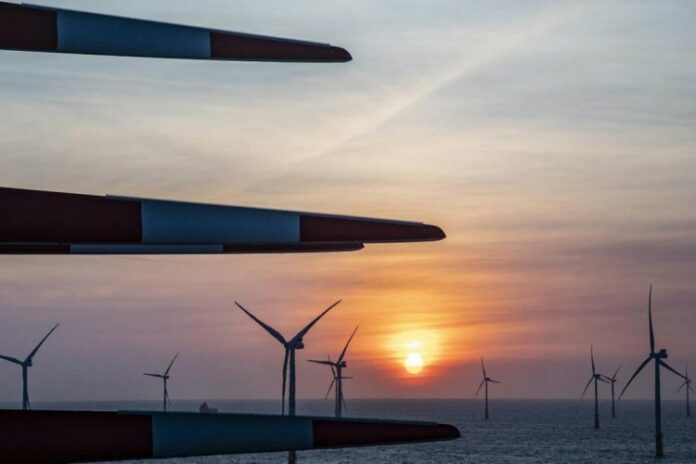
MHI Vestas has moved in to Able Seaton Port (ASP) in Hartlepool ready to install 90 of its V164-9.5 MW turbines at the Triton Knoll project in Q1 2021.

This signals a major ramp up in MHI Vestas’ UK offshore wind activity supporting the leading role of offshore wind in the delivery of the UK’s Net Zero ambitions, while helping drive a green economic recovery from the ongoing COVID pandemic.

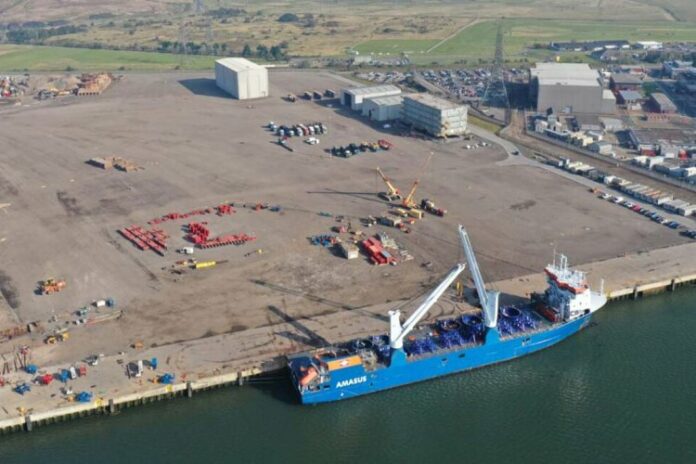
ASP will serve as the turbine logistics and pre-assembly hub for the project, with components expected to arrive from next month. Turbine tower sections, blades and nacelles will be marshalled and pre-assembled at ASP, before being loaded onto vessels for transport to the wind farm.

Triton Knoll, the 857 MW offshore wind farm, is being built by RWE Renewables in partnership with J-Power and Kansai Electric Power, and is RWE’s most powerful offshore project under construction. The wind farm will be powered by 90 MHI Vestas V164-9.5 MW turbines, which are due to be installed 32km off the Lincolnshire coast beginning in Q1 next year.

Each turbine consists of 80m long blades, which are manufactured at MHI Vestas’ facility on the Isle of Wight, and finished at its Fawley plant across the Solent. The Fawley facility is a decommissioned, oil-fired power plant that has been repurposed into a state-of-the-art painting and logistics facility for the 80m-long blades.

MHI Vestas VP and UK Country Manager, Julian Brown, said:

“MHI Vestas’ commitment to the UK is demonstrated by the local benefits we have prioritised for the Triton Knoll project. Able UK’s close collaboration with MHI Vestas to prepare the ASP site for Triton Knoll has made it an easy choice to use this top-class facility. The site covers approximately 140,000 square metres with heavy duty deep water quays, a vital pre-requisite for a project the scale of Triton Knoll.

“The Triton Knoll project will deliver clean, domestic offshore wind power to UK customers with added national benefits. Not only will most of our suppliers at ASP be British companies, but the vast majority of the employees involved will also be from the UK.”

Port owner Able UK carried out extensive site preparation works from November last year, to create a site suitable for MHI Vestas to move into. MHI Vestas, in turn, has now begun to prepare the site at ASP site for the impending arrival of turbine components, prioritising UK companies in the delivery of the project. As a result, ASP now hosts technicians on-site from local suppliers, including Global Wind Service (GWS), Dawson and Boston Energy, as well as MHI Vestas employees. The main crane and Self-Propelled Modular Transporter (SPMT) to be used at ASP for moving turbine components will be supplied by Weldex, based out of Alfreton, UK.

Julian Garnsey, Project Director for Triton Knoll and RWE Renewables, said:

“At Triton Knoll we are committed to ensuring that our investments from this flagship project benefit local coastal communities, and the UK’s expanding offshore supply chain as much as possible.

“As part of that commitment we have made a significant investment to establish wind turbine handling facilities for the first time at Able Seaton Port. This places the North East of England at the heart of the delivery of Triton Knoll, and leaves a legacy for future offshore wind farm projects to be constructed from the region.”

Peter Stephenson, Able UK’s Executive Chairman, commented:

“We have enjoyed a long and constructive relationship with Triton Knoll and MHI Vestas culminating in their selection of ASP – it’s a massive vote of confidence in the UK, ourselves and the Teesside supply chain. Our sustained investment means we can provide a bespoke and tailor-made solution for Triton Knoll.

“The offshore wind sector is potentially on the cusp of something very special. We have a clear and unambiguous policy from Whitehall through the Sector Deal in the Industrial Strategy, and the increasingly demanding targets for both power generation and the extent of UK content. Combine this with the sector’s extraordinary efforts in terms of developing new products and significantly reducing costs and the sector is set to become a dominant factor in a post Covid-19 UK economy.”

MHI Vestas will be installing several projects across the UK and Scotland in the coming years, including Triton Knoll, Moray East, Seagreen and Kincardine. These projects will continue to be supplied by MHI Vestas’ blade facility in the Isle of Wight and supported from existing offices in Warrington and London. MHI Vestas currently employs 1,096 people in the UK, all focused on delivering clean offshore wind energy to meet the UK government’s ambition of increasing new offshore wind capacity to 40GW by 2030.

Svitzer chooses Med Marine exclusive design tug

0

Having signed a contract for two 30m ice-breaking tugs last September for Scandinavian operations of world leading Danish operator, Med Marine and Svitzer now shake hands for one of the most demanded tug model in successful Turkish shipbuilder’s portfolio.

The new contract was signed last week. The vessel will be operated in Svitzer’s German fleet and the delivery is set for November 2020.

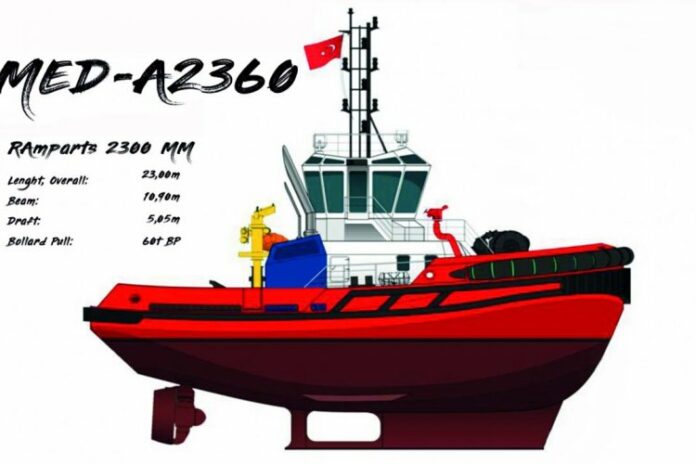
MED-A2360 series tug having different bollard pull options is Robert Allan’s RAmparts 2300-MM that is designed exclusively for Med Marine by Canadian tug designer.

Compared to other 60TBP designs, MED-A2360 series tugs are very popular as they are compact yet robust, and have better manoeuvrability allowing the tug to offer versatility even in narrow and shallow ports.

Mr. Muhammet Gökhan, Business Development Manager from Med Marine, expressed his feelings about this new contract by saying:

“We are very pleased to continue our collaboration with Svitzer, which started with MED-A3060 ICE series projects last year, with our one of the most popular MED-A2360 series. We hope that we will work together on different projects in future and keep responding quickly to their requirements. Med Marine’s expertise and knowledge in MED-A2360 series provide a smooth delivery experience to the new owner. Med Marine has already built a dozen of the series which were successfully delivered to operators from different locations including Abu Dhabi, Guatemala, Turkey -and now Germany-. This also proves MED-A2360 series’ compatibility to different needs and environments.” 

Commenting on the deal, Mattias Hellström, Cluster Managing Director, Scandinavia and Germany, Svitzer said:

“We are very pleased to have signed a contract with Med Marine for a MED-A2360. Shortly, the new acquisition will join our growing business in Scandinavia and Germany where the design is very well suited to our needs. Together with our customers and crews, we look forward to welcoming the new tug which was actually built next to the two Ice Class tugs we are expecting next year.”

Two ice-breaking tugs are being built for Svitzer’s Scandinavian fleet and the delivery is planned at early 2021. The tugs are TundRA 3000 design by Canadian Robert Allan Ltd. TundRA design is made for tugs operating in extreme winter conditions, which makes it a great fit for Svitzer’s North European fleet.

DEME joins European Clean Hydrogen Alliance

0

DEME has joined the European Clean Hydrogen Alliance, supporting the EU’s ambitious hydrogen and decarbonisation strategy. With this membership DEME underlines its commitment to use its expertise for the production, transport and storage of green hydrogen from renewable energy sources.

In July 2020, the European Commission announced the EU Hydrogen Strategy and the launch of the European Clean Hydrogen Alliance. By establishing the Alliance, the EU aims to strengthen its global leadership position in the rapidly developing hydrogen domain, which will in turn help it to realise its carbon neutrality goals by 2050.

The European Clean Hydrogen Alliance, which brings together more than 200 industry, national and local public authorities, civil society and other stakeholders, aims to initiate an investment agenda and support the scaling up of the hydrogen value chain across Europe.

Luc Vandenbulcke, CEO DEME Group, comments:

“As a pioneer in the development, construction and financing of offshore wind farms, we want to make full use of our long-standing expertise for the production, transport and storage of green hydrogen from renewable energy sources. We look forward to bringing our knowledge and experience to the European Clean Hydrogen Alliance and actively supporting the EU in its drive to see Europe become the first climate neutral continent by 2050. This initiative also fits perfectly with our own sustainability goals.”

DEME has already recognised the vast potential of this sector and has entered into several green hydrogen partnerships internationally to ensure the company is at the forefront of developments. In November 2019 DEME signed a cooperation agreement with six other leading industry players in Belgium for the transport of green hydrogen, and this year, also entered into exclusive partnerships to develop industrial scale green hydrogen plants in Belgium (Hyport® Ostend) and in Oman (Hyport® Duqm). Meanwhile in the Netherlands, DEME joined forces with Neptune Energy for the PosHYdon offshore hydrogen pilot, where the company will beinvolved in the conceptual design of a 100 MW offshore hydrogen production plant.

Luc Vandenbulcke emphasises:

“The combination of renewable energy with green hydrogen and the exciting potential it represents is fully in line with DEME’s innovation vision, which includes plans to invest in the development and large-scale production, storage and delivery of green hydrogen.”

GTT receives two orders for the tank design of four VLEC

0

Korean shipyards Hyundai Heavy Industries (HHI) and Samsung Heavy Industries (SHI) will each build two VLECs.

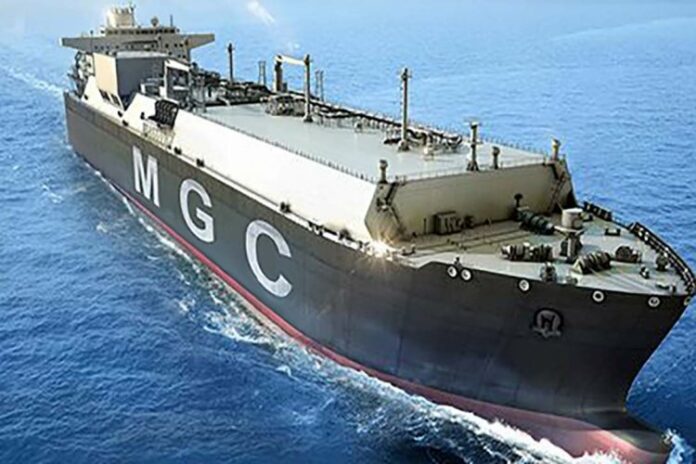
Each of the vessels will offer a capacity of 98,000 m3. GTT will design the tanks, which will be fitted with the Mark III membrane containment system. The delivery of the vessels is scheduled for the second quarter of 2022.

Designed to be multi-gas units, i.e to transport ethane as well as several other types of gas, such as propylene, LPG and ethylene, the cargo tanks will benefit from the “LNG cargo ready” notation, thus offering the possibility to carry LNG in the future. These VLECs will be second generation ships which will optimize fuel consumption, reduce the boil-off rate and increase the cargo capacity.

Philippe Berterottière, Chairman and CEO of GTT declared:

“One year after the orders for six second generation VLECs by Zhejiang Satellite Petrochemical from HHI and SHI, we are pleased to continue this partnership of excellence with these two shipyards. These new orders confirm that GTT’s technologies are the reference solutions for very large ethane carriers.”

Launch of construction work on the second container terminal at the port of Abidjan

0

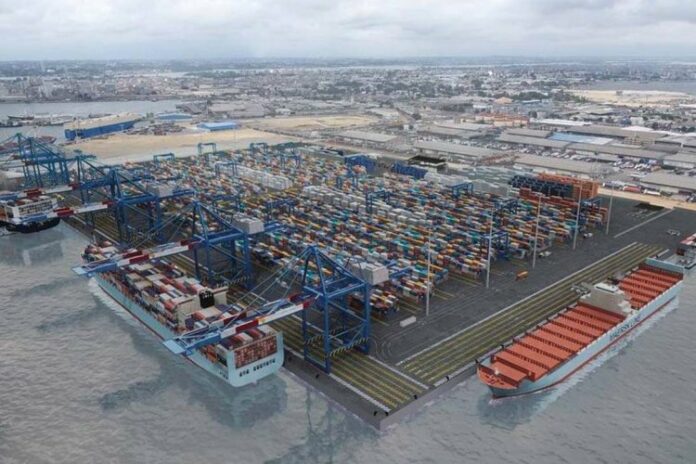
Representing an investment of 262 billion CFA francs, the Terminal construction work will last 18 months and consist in surfacing and developing the reclaimed land and connecting the Abidjan railway network. This will be followed by the construction of the buildings and the acquisition of cutting-edge equipment. 

With a surface area of 37.5 hectares, the new container terminal will be able to process over 1.5 million TEU containers a year and welcome ships with a draught of 16 metres on 1,100 metres of wharves. The new terminal will generate 450 direct jobs and thousands of indirect jobs and contribute to upskilling with a view to training young Ivorians on the port professions and the handling of latest-generation equipment.

Philippe Labonne, CEO of Bolloré Ports, said:

“The new container terminal will be more competitive and foster intra-African trade, create high-performance logistics ecosystems and bolster the development of local processing industries. It will also rank as a transshipment hub for neighbouring coastal countries and a preferred entry point for landlocked countries such as Burkina Faso, Mali and Niger.”

Thanks to the expertise of Bolloré Port and APM Terminals, the second container terminal will provide greater capacity for receiving goods at the Port of Abidjan and enhance the flow of the country’s imports and exports while contributing to the well-being of the population. It will also serve to drive the development of agricultural value chains and notably benefit local cocoa, cashew and mango producers.  

Connected to the Côte d’Ivoire capital, the new terminal will be built in compliance with the most stringent environmental and social standards and will obtain “Green Terminal” certification for its clean-energy powered equipment.

Sea Machines to prototype use of barges as autonomous military helipads

0

Boston-based Sea Machines Robotics, leading developer of autonomous command and control systems for surface vessels, announces that it has been awarded a multi-year Other Transaction (OT) agreement by the U.S. Department of Defense (DOD)’s Defense Innovation Unit (DIU). 

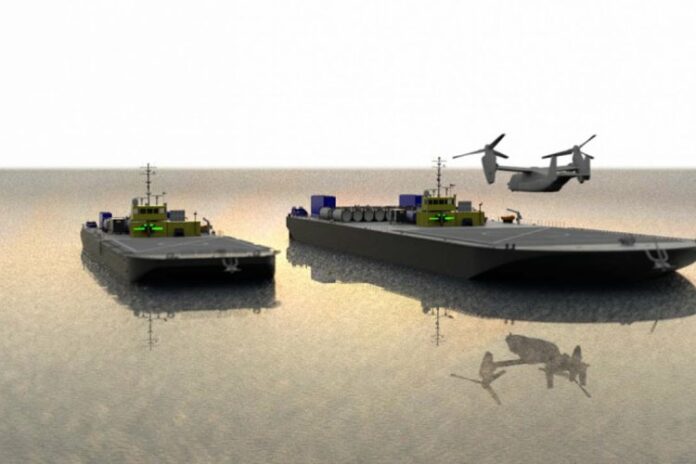
The primary purpose of the agreement is to initiate a prototype that will enable commercial ocean-service barges as autonomous Forward Arming and Refueling Point (FARP) units for an Amphibious Maritime Projection Platform (AMPP). 

Under this OT agreement, Sea Machines will engineer, build and demonstrate ready-to-deploy system kits that enable autonomous, self-propelled operation of opportunistically available barges to land and replenish military aircraft. The kits will include Sea Machines’ SM300 autonomous-command and control systems, barge propulsion, sensing, positioning, communications and refueling equipment, as well as items required for global deployment. Each modular kit will meet U.S. Navy criteria and will be in compliance with classifications and regulations from the DOD’s aviation bodies. 

The contract includes a concept demonstration phase, with an option for following phases to deploy SM300 Operational Kits. The live concept demonstration is scheduled for the fourth quarter of 2020, in Washington state, for which Sea Machines has teamed with FOSS Maritime, a leading maritime transportation and logistics provider based in Seattle. FOSS will provide naval architecture, support engineering and operations management to outfit a remotely commanded deck barge to land helicopters and host a scaled fueling station for aircraft, surface vessels and shore replenishment. Using the SM300, shoreside operators will have remote situational awareness and will be able to demonstrate the capabilities of remote command and control of the vessel, her operating systems and flight deck.

Sea Machines is the prime contractor for the multi-year contract and is working closely alongside FOSS Maritime and other significant industry leaders, including Huntington Ingalls, America’s largest military shipbuilding company and a provider of professional services, based in Newport News, Va., and Bell Flight, a producer of commercial and military, vertical-lift aircraft, based in Fort Worth, Texas, to ensure a successful demonstration.

Sea Machines’ Phil Bourque, director, sales, said:

“The AMPP autonomous replenishment systems will solve critical logistics challenges of expeditionary missions. We are pleased to enable this innovative capability, which will increase the effectiveness and flexibility for the U.S. military. With Sea Machines systems already working off the waters of four continents, this project is well suited for us and one that we look forward to delivering on for the U.S. Government.”

Foss’ Will Roberts, chief operating officer, said:

“Foss is excited about this new opportunity with Sea Machines. This contract has led to discussions with Sea Machines in a number of other areas where their expertise can help Foss, including bringing more technology to our tug fleet. What they are doing in automation is very interesting and that technology could help our mariners and our vessels safety.”

DIU’s work is part of the DOD’s Resilient Expeditionary Agile Littoral Logistics (REALL) Joint Capability Technology Demonstration (JCTD) project. Funded by the Office of the Secretary of Defense Research & Engineering, the JCTD Program addresses Combatant Command (CCMD) and Joint warfighting gaps through prototyping and demonstration of innovative and game-changing technologies. The following offices are involved with defining performance requirements and developing capabilities for REALL: U.S. Central Command, U.S. Transportation Command, U.S. Marine Corps Warfighting Laboratory, Naval Facilities Engineering and Expeditionary Warfare Center, Army Engineer Research and Development Center, and the Naval Aviation Warfare Center – Lakehurst.

MSC sees hydrogen and biofuels as key components of shipping’s future fuel mix

0

MSC Mediterranean Shipping Company, a global leader in transportation and logistics, said it is further exploring the viability of hydrogen and fuels derived from it as a possible fuel source for the future for container shipping, and is increasingly pioneering the use of biofuels within its existing fleet.

Speaking on 5 October at the inaugural Maritime Transport Efficiency Conference in Geneva, Switzerland, where MSC is headquartered, MSC Group’s Bud Darr outlined some preferred options in a keynote speech on decarbonisation and during a panel discussion on fuels for the future.

Bud, who is Executive Vice President, Maritime Policy & Government Affairs at MSC Group, said:

“There’s no one single solution to decarbonise shipping; we need a range of alternative fuels at scale and we need them urgently. The future of shipping and decarbonisation will rely on strong partnerships from both the perspective of technology collaboration and procurement.” 

In support of the UN International Maritime Organization’s (IMO) policy goals to decarbonize shipping, MSC is actively exploring and trialling a range of alternative fuels and technologies and is already actively bunkering biofuels at scale. Fossil-sourced LNG remains a transitional option, while carbon capture and storage, if perfected for marine use, could be useful, Bud told the conference, which gathered together a variety of shipping companies, fuel providers, academics, policy makers and representatives of the UN and Geneva government. MSC employs more than 1200 people in Switzerland, where the company has been based since 1978.

Industry partnerships could help accelerate the development of clean hydrogen for the benefit of the entire container shipping industry. Despite some significant challenges to overcome mainly related to density, volume and safe handling, MSC is in favour of further R&D efforts to produce it in a greenhouse gas neutral way and to develop it at scale, along with other fuels that may derive from it.

MSC is also pioneering the large-scale usage of biofuel blends for container ships and is already bunkering responsibly sourced, up to 30% biofuel lends on a routine basis in Rotterdam, the Netherlands. Furthermore, the world’s largest class of container ships, MSC’s Gülsün Class, was fitted at delivery in 2019-20 with the option to convert in future to liquefied natural gas (LNG) as a potential bridging fuel as part of the industry’s transition towards a zero-carbon future.

MSC contributes actively to the work of industry groups and associations and supports their proposal to the IMO to create a new R&D fund to support GHG reduction in the maritime sector.

MSC believes there must be a massive injection of energy and capital into R&D efforts to bring alternative fuels and alternative propulsion technologies to the marketplace for us to deploy and decarbonise in the longer term. MSC is therefore engaging with potential vendors to investigate new solutions that would help to minimise and one day, to eventually eradicate CO2 and other GHG emissions from shipping fleets.