-6.2 C
New York
Home Blog Page 728

DUKC® integrated into HR Wallingford’s Ship Simulation System

0

Pilbara Ports Authority (PPA), which operates the Port of Port Hedland, is now benefiting from the DUKC® integration in its regular integrated familiarisation training for advanced pilot, tug master and vessel traffic service (VTS) operators at HR Wallingford’s Australia Ship Simulation Centre in Fremantle.

The PPA marine team has been using the Centre since 2013 to practice emergency scenarios in the virtual port environment. Practising for these scenarios is vital, as otherwise an incident could block the Port’s access channel, hindering ship movements.

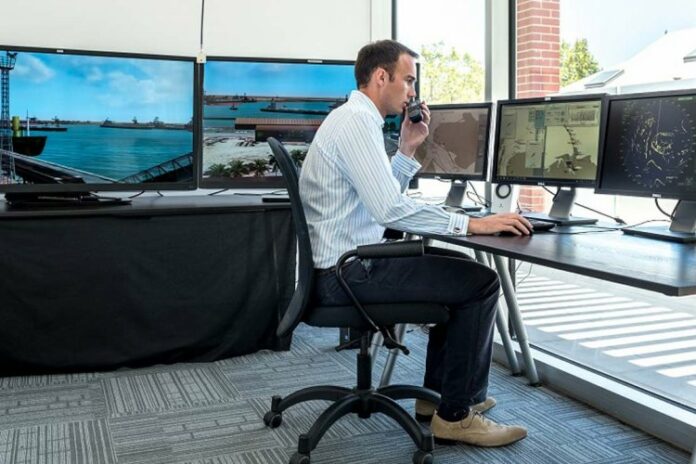
Typically, the Harbour Master or Deputy Harbour Master, two pilots, up to six tug masters and a VTS operator attend the training sessions. HR Wallingford sets up multiple simulators to represent a ship, four tugs and the VTS, all fully integrated in one virtual environment.

The integration of OMC International’s DUKC® system into the simulators is of particular importance for the Port of Port Hedland’s VTS operators, as they interrogate DUKC® during everyday operations to manage the sailing draughts and tidal windows for vessels restricted by their draught. The VTS operators and marine pilots can now practise their communication and use of the DUKC® system, for both routine transits and emergency scenarios. Training in the simulation environment allows for greater familiarisation, and overall improved safety and response if the situation was to occur in reality.

Ben Spalding, Manager of the Australia Ship Simulation Centre, explained:

“The integration works by HR Wallingford’s Ship Simulation System linking to OMC International’s cloud-based server which runs the DUKC® system. The AIS data of the ship in the simulation is sent to the cloud server which does the calculations and feeds data to the web-based system integrated into HR Wallingford’s VTS simulator.”

OMC International’s DUKC® is vital for maximising the restricted tidal window at the world’s largest bulk export port, which primarily trades in iron ore, a mainstay of the region’s economy. Some of the world’s largest ships call to the Port of Port Hedland every day and, for example, if a ship’s engine fails, the VTS operator can draw on information from DUKC® to enable the Harbour Master to make an informed decision on the next course of action.

DUKC® delivers real-time UKC information during transit to ensure the safety of vessels. Integrating this technology into the full bridge simulators is a great development allowing for realistic training and emergency scenario replication.

Capt Heathcliff Pimento, Port Hedland Harbour Master, said:

“We are pleased that OMC International and HR Wallingford have collaborated on this integration. DUKC®and the training at HR Wallingford are critical to our operations. Incorporating the software into a VTS simulator enhances our emergency response training, further increasing safety at our ports, which is paramount for Pilbara Ports Authority”.
Wärtsilä to supply its FPP solutions for Yang Ming’s container vessels

0

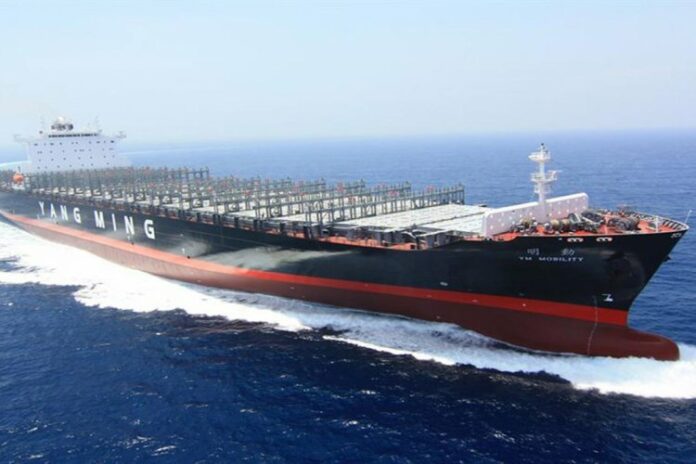
The technology group Wärtsilä will supply its Fixed Pitch Propeller (FPP) and EnergoProFin solutions for two container vessels owned by Yang Ming Lines, the Taiwan-based shipping company.

As container ship operators continue to seek energy savings through slow steaming, the necessary engine adjustments need to be matched by the propeller arrangement. The Wärtsilä solutions enable this adjustment, allowing the speed of the two vessels to be reduced from 24 to 18 knots. The order with Wärtsilä was placed in August 2020.

The two vessels, the ‘YM Mobility’ and the ‘YM Milestone’, are the last in a series of four Yang Ming ships to be retrofitted with the Wärtsilä FPP and EnergoProFin solutions. The two earlier retrofit projects have resulted in energy savings in the region of three to five percent. The newly designed Wärtsilä propeller mass is approximately 27 percent lighter than the ships’ existing propellers. The EnergoProFin post-swirl device reduces energy losses from the flow around and behind the propeller.

Jackie Ho, Chief Technical Officer, Yang Ming Lines, says:

“The two retrofit propeller projects already completed with the Wärtsilä systems have been very successful, which is why we had no hesitation in taking the option to do the same with these two vessels. Wärtsilä was also able to meet our tight delivery schedule requirements, and we are very happy with the support they have provided.”

Patrick Van Gorkom, Senior Manager Sales & Sales Support, Wärtsilä Marine Power, say:

“Efficiency and cost savings are extremely important in today’s operating environment, and the Wärtsilä propulsion solutions are designed to meet these needs. By enabling the engine power to be reduced, we are also enabling fuel consumption to be lowered, which in turn also leads to fewer exhaust emissions.” 

The Wärtsilä equipment is scheduled for delivery in March and June 2021 to the Changhong shipyard in China where the retrofitting will take place.

The Wärtsilä EnergoProFin is an energy saving propeller cap with fins that rotate together with the propeller. This solution provides average fuel savings of two percent, with a payback time of less than one year. The propeller’s energy losses are among the factors related to the flow phenomena around and behind the propeller boss. Installing the Wärtsilä EnergoProFin helps to reduce these energy losses and increase overall propulsion efficiency.

MAN compression technology for Senegal’s first offshore development project

0

MODEC has placed an order for six compressor trains for an FPSO (floating production storage and offloading) unit, which will be deployed on the Sangomar field approximately 100 km south of Dakar, Senegal. Together with the nearby Rufisque and Sangomar Offshore blocks, it is one of the world’s largest oil & gas discoveries of the last decade.

Yuji Kozai, President and CEO of MODEC, commented:

“We are delighted and proud to have been selected to provide the memorable first FPSO for Senegalese waters. We consider West Africa where numerous offshore oil and gas fields have been discovered in recent years, as one of our most important core regions, and this contract award should geographically reinforce our business portfolio. We are equally pleased to be a part of the team that will provide a needed energy resource for the people of the Republic of Senegal. We look forward to cooperating closely with our clients and partners to make this project a success.”

Patrik Meli, Senior Vice President, Managing Director of MAN Energy Solutions Switzerland Ltd., states:

“Senegal has a bright energy future ahead and we are proud that MAN Energy Solutions will take an active part by providing high-end technology solutions for the Sangomar field. Gas is becoming economically and environmentally the world’s most significant energy source for the next couple of decades. This important order is a further testimonial of the trust put in our well-founded technology knowhow in the energy sector.”

The total order comprises six centrifugal compressor trains: one low pressure (LP), three medium pressure (MP) and two high pressure (HP), which are all driven by fixed speed electric motors. All compression systems will be designed, manufactured and tested by MAN Energy Solutions in Zurich (Switzerland). The machines will be ready for installation in the fourth quarter of 2021.

Once they are in operation, the compression systems will help maintaining the pressure of the Sangomar field, thus maximizing the quantity and efficiency of hydrocarbon production. The FPSO will be capable of processing 100,000 barrels of oil and 130 million standard cubic feet of gas per day. First production is planned for 2023.

Study: Offshore helicopter traffic plunged by 15% due to the pandemic

0

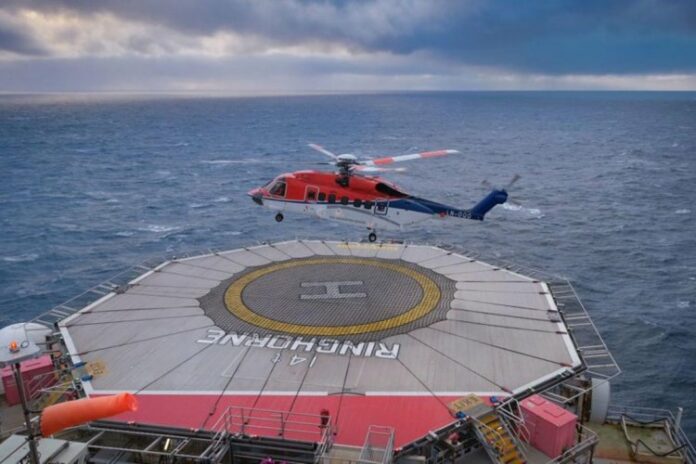
Global demand for helicopter transport to offshore facilities plunged in 2020 as a result of the Covid-19 pandemic, a Rystad Energy report shows. Helicopter traffic was affected as non-critical maintenance crews were moved to shore and other non-essential operations at offshore facilities were preventatively deferred to reduce the risk of contamination and conserve cash.

Rystad Energy estimates offshore helicopter traffic will have declined by 15% in 2020, dropping to 410 million passenger miles from 483 million passenger miles in 2019. Traffic fell even though production facilities and moveable offshore drilling units (MODUs) – the two main drivers of helicopter demand within oil and gas extraction and drilling operations – only experienced limited disruptions.

The North Sea is the world’s busiest region for offshore-bound helicopters, representing 22% of global traffic. It is followed by Brazil with 11%, West Africa and the US Gulf of Mexico with 8% each and Australia with 3%. The remaining 48% is shared amongst all the other remaining regions.

Helicopter passenger demand is driven by a variety of factors; distance from the offshore facility to the onshore heliport, offshore workers’ rotation schedules, bed utilization, and the share of flexible/project beds across different facilities.

However, positive flight traffic reports indicate that activity could bounce back by the end of 2020. In Norway, for example, reported offshore passenger traffic shows a 14% decline in the first ten months of 2020 compared to the same period last year, and the October reported passenger traffic shows an increase of around 10,500 (to 45,500) from traffic lows in April.

In 2021, Rystad Energy expects offshore helicopter traffic to rise to 460 million passenger miles. Going forward into 2022, we expect a small increase in the average distance from facility to heliport, driven by an increase in the number of deepwater operations, which will help traffic to exceed even 2019 levels and reach an estimated 487 million passenger miles.

Of the two main drivers for offshore helicopter demand, production facilities are comprised of steel platforms and FPSOs, while MODUs include semisubmersibles, drillships and jackups. For the purpose of our analysis, we define the production facilities market as all offshore production facilities with helidecks. (Platforms make up a stable underlying driver for helicopter flights, but in terms of units, this market has been on a constant decline since its peak in 2013 up to 2019.)

This year, Covid-19 has had a limited impact on existing production infrastructure as active production facilities are not typically affected by variations in oil price, and most activity (both shut-downs and new developments) requires long-term planning. Looking towards 2022, this trend will continue as old fields are shut down due to depleted resources, and the dearth of new field developments is unable to offset the decline.

A modest recovery in 2018-2019 was halted by the pandemic this year, as exploration drilling (both wildcat wells and appraisal wells) took a major hit, down by 48 rig years or a 40% cut to activity year-on-year. However, demand could start to increase from next year with the expectation of improving oil prices and reduced uncertainty.

Development drilling, which relates closely to new facility sanctioning and infill drilling at producing fields, is less prone to the contract cancellations seen this year. Most sanctioning for next year has already been contracted, providing good visibility into next year, and we estimate rig demand will fall by 6% in 2021 before beginning to recover in 2022.

Photo: Equinor

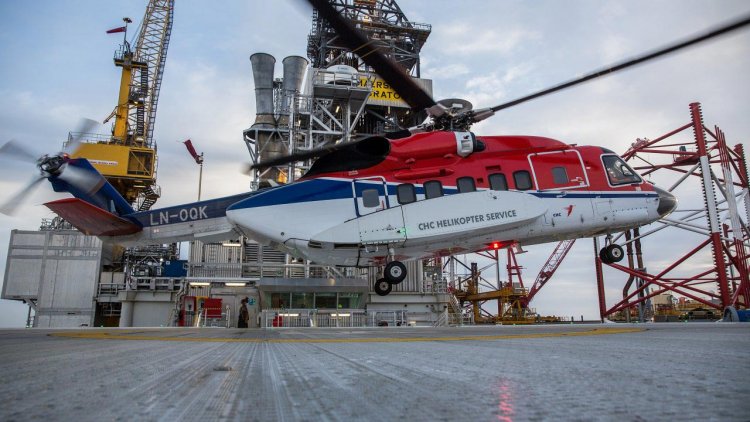
Meanwhile, Vår Energi awards CHC Helicopter Service AS contract for personnel transportation from Stavanger airport, Sola.

The contract, which will run from 01.01.2022 for a fixed period of three years plus options, covers crew change services by means of one Sikorsky S-92 helicopter for the Vår Energi operated fields in the Balder area.

The contract is part of a cooperation agreement formed between Vår Energi and Equinor for sharing capacity of one helicopter.

HullWiper to launch mobile hull cleaning in Namibia

0

HullWiper Ltd is teaming up with KWINT Offshore Services Namibia (Pty) Ltd to bring green, safe and port-approved hull cleaning solutions to vessels calling at Walvis Bay.

Namibia’s Ministry of Environment, Forestry and Tourism has issued an Environmental Clearance Certificate to KWINT to operate the hull cleaning solution, making HullWiper’s eco-friendly Remotely Operated Vehicle (ROV) the only hull cleaning equipment approved to meet growing demand for sustainable shipping solutions that comply with local port regulations.

KWINT joins the growing network under HullWiper’s lease agreement launched in 2017. This initiative allows partners around the world to offer ship owners and operators an affordable, brush- and diver-free alternative to traditional methods, to protect both expensive anti-fouling coatings on vessel hulls and the delicate ocean ecosystem.

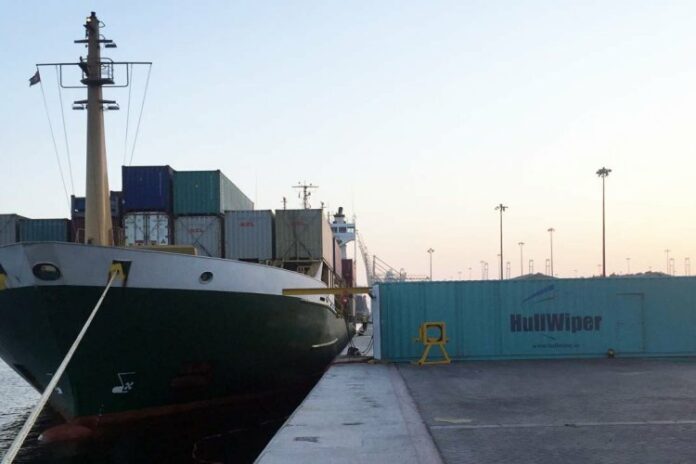
Namibia is the first country where hull cleans will be conducted using HullWiper’s recently introduced self-contained 40ft hull cleaning container. The customised container includes a fully functioning engine room, workshop and control area from where trained technicians work. The air-conditioned unit will be stored in a Walvis Bay jetty for quick and easy mobilisation and demobilisation for vessels calling at the port or outer port limits.

Simon Doran, HullWiper Managing Director, says:

“KWINT’s addition to the HullWiper family continues our global expansion and increases availability of our environmentally friendly services to principals, both existing and new ones. We share with KWINT a consistent approach to reducing the spread of invasive species with operations that significantly reduce the risk to life.”

HullWiper’s ROV is recognised as 100% environmentally friendly as all pollutants removed during a clean are collected by a unique onboard filter unit for safe disposal onshore. The system uses adjustable seawater jets as the cleaning medium, instead of brushes or abrasives, to minimise the risk of damage to coatings. Removing fouling from vessels’ hulls results in optimal performance, energy efficiency and reduced CO2 emissions, and avoids the expense of recoating in case of damage.  No divers are used, so there is no risk to human life and cleaning can be conducted day or night, in most weather conditions, and whilst cargo operations are underway.

The hull cleaning operations in Namibia will be headed by Ciska Swart of Hull Cleaning Namibia, whose passion for environmental cleaning and care for our oceans for future generations helped bring this pioneering hull cleaning solution to West Namibia.

She says:

“HullWiper is the future for Namibia’s drive to bring eco-friendly solutions to our shores. We are proud to be part of this green future and excited to bring environmentally-friendly hull cleaning solutions to Namibia.”

Jerry Bakx, KWINT General Manager adds, “Our partnership with HullWiper is in full support of Namibia’s 2030 vision to introduce innovative, eco-friendly solutions to various sectors that operate in the country. This collaboration is a move in the right direction to provide our clients with a cost-efficient solution to remove biofouling from their vessel hulls, whilst protecting our delicate marine eco-system.”

VIDEO: Wallenius Wilhelmsen welcomes new HERO vessel MV Tannhauser

0

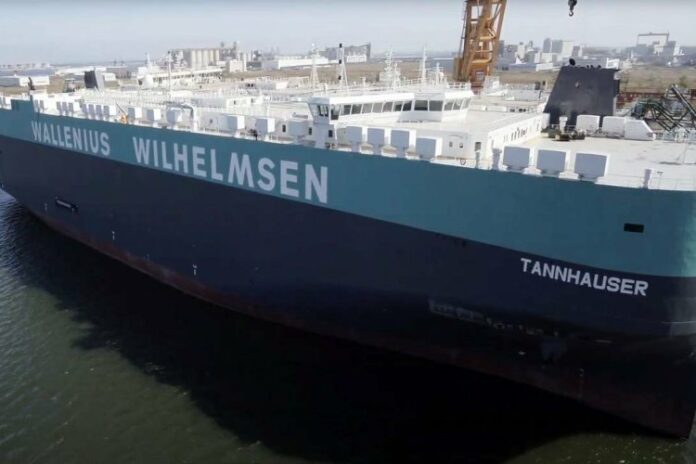
The Covid-19 pandemic has presented many challenges this year, but it has also fostered a great spirit of imagination and innovation – and the virtual naming ceremony of MV Tannhauser was no exception.

Craig Jasienski, Wallenius Wilhelmsen’s CEO, in his welcoming address from the Oslo offices, said:

‘We turned a challenge into an opportunity to do something new, which has allowed everyone to participate. This year has been challenging, but we have responded well and this is the spirit we want to continue with.”

Boasting 13 liftable decks to accommodate different types of cargo, a wider stern ramp for a safer, more efficient flow of traffic, an optimised hull for reduced fuel consumption and digital navigation aids, MV Tannhauser is designed to provide operational and environmental efficiencies.

Jasienski says:

“Given Tannhauser’s technology and capabilities, she will not only help to service our customers, but will also help to contribute to the target set by IMO of 40% reduced emissions by 2030.”

He adds that Wallenius Wilhelmsen has already achieved a significant 35% output reduction in CO2 emissions per tonne/km on its ships.

MOL concludes charter contracts for Waterfront methanol carriers

0

MOL has concluded long-term charter contracts for two methanol-fueled, methanol carriers with Waterfront Shipping Company Limited.

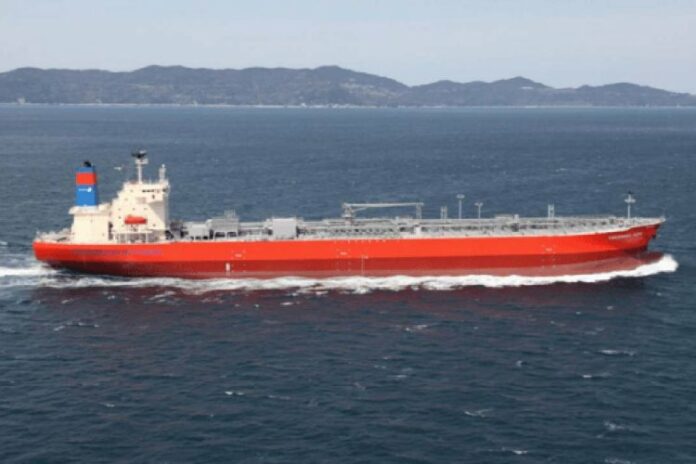
The vessels will be equipped with dual-fuel engines that can run on environment-friendly methanol or conventional fuel oil. They are slated for delivery at Hyundai Mipo Shipyard (South Korea) in 2021 and 2023 and will transport methanol for WFS.

MOL owns three methanol carriers equipped with dual-fuel engines-the Taranaki Sun, which was delivered in 2016 and was the world’s first methanol carrier with a methanol-fueled engine, the Manchac Sun, and the Cajun Sun. All three vessels are under long-term charter contracts for WFS. The two new vessels will be MOL’s fourth and fifth methanol-fueled ships chartered to WFS, which makes MOL owners of one of the world’s largest methanol-fueled fleet. The new vessels will be managed by a MOL Group company, MOL Tankship Management Pte Ltd (MOLT; Headquarters: Singapore), which will leverage its experience and knowledge in the management of methanol-fueled vessels to deliver performance and environmental benefits.

Methanol is an environmentally-friendly fuel and, compared to heavy oil, it significantly reduces nitrogen oxide (NOx) emissions and virtually eliminates emissions of sulfur oxide (SOx). The new vessels also conform to environmental regulations such as NOx Tier III requirements established by the International Maritime Organization (IMO).

Port of Los Angeles enters agreement with IBM to create Cyber Resilience Center

0

The Los Angeles Board of Harbor Commissioners has approved an agreement with International Business Machines Corporation (IBM) to design and operate a Port Cyber Resilience Center (CRC) at the Port of Los Angeles.

Focused on detecting and protecting against malicious cyber incidents potentially impacting cargo flow, this first-of-its-kind system is also expected to greatly improve the quality, quantity and speed of cyber information sharing within the Port community.
 
Port Executive Director Gene Seroka said:

“As our Port increasingly relies on data integration to guide its cargo operations and processes, detection and protection against cyber incidents is critical. This new Cyber Resilience Center will not only provide the Port an early warning system against port-wide cyber attacks, but result in greater collective knowledge and data sharing throughout our entire Port supply chain ecosystem.”

Wendi Whitmore, Vice President, IBM Security X-Force, said:

“Now more than ever, there’s a critical need for global supply chains to operate securely and undisrupted. We’re honored to partner with the Port of Los Angeles to design and build its Cyber Resilience Center, further strengthening its cyber preparedness. As the Port of Los Angeles takes these significant steps to strengthen the cyber resilience of its ecosystem, we’re proud it selected IBM’s premier capabilities in threat intelligence, AI and cloud security to help achieve this.”

Currently, companies and stakeholders at the Port monitor and respond to cyber threats individually. While still allowing stakeholder control over their own information and security protocols, the CRC will serve as a “system of systems” and focal point across all participating supply chain stakeholders for cyber threats to the Port of Los Angeles ecosystem. The CRC will enable participants—such as tenants and cargo handlers—to quickly share threat indicators with each other and better coordinate defensive responses as needed. The CRC will also serve as an information resource that stakeholders may use to help restore operations following an attack.

Thomas Gazsi, Deputy Executive Director/Chief of Public Safety and Emergency Management, added:

“Collaborative cyber-threat information sharing is critical to the safety and security of our Port. The Cyber Resilience Center is an innovative solution that will put the Port of Los Angeles at the forefront of maritime cybersecurity initiatives.”

The $6.8 million, three-year agreement with IBM includes hardware, software and services to design, install, operate and maintain the CRC. The Board recommendation to select IBM was based on a competitive Request for Proposal (RFP) process conducted by the Port.
 
In 2014, the Port established the nation’s first Port of Los Angeles Cyber Security Operations Center, operated by a dedicated cybersecurity team. The Center currently serves as a centralized location to proactively monitor the Port’s own technology environment to prevent and detect cyber incidents. Since 2015, the Port has also maintained its ISO 27001 certification for cyber security, the only port to have this certification.
 
In support of the Port’s Strategic Plan objective of a secure, efficient and environmentally sustainable supply chain, the Center will implement security and public safety strategies that support goods movement and mitigate risk.

ISWAN launches new guide Mentally Healthy Ships

0

An essential new guide Mentally Healthy Ships has been launched by ISWAN to provide shipping companies and ship operators with information to help devise and implement mental health policies and practices to promote and protect seafarers’ mental health.

ISWAN’s earlier series of Good Mental Health Guides, published between 2017 and 2018, aim to offer seafarers evidence-based information about what they can do to protect and promote their own mental health at sea. These guides were designed to adapt the evidence base to the seafaring population by carefully considering ways in which strategies to maintain good mental health and promote wellbeing could be practised on board. However, some of this self-help advice, is only possible if the facilities are made available to the crew. Employers have a critical role to play in executing their duty of care, through mitigating known risks where possible, and ensuring that systems, procedures and structures are in place to create a mentally healthy environment on board.

Mentally Healthy Ships is written by Consultant Clinical Psychologist and author of ISWAN’s Good Mental Health Guides, Dr Pennie Blackburn. It offers invaluable guidance on why it is vital that procedures and safety planning include due consideration of mental health, as well as information on how to implement it.

Dr Pennie Blackburn said:

‘There has been a growing awareness in the shipping industry of the importance mental health and wellbeing has in how well we people can function both on shore and on board. I am delighted to be able to share this new guide and I hope that the principles outlined in it will give companies practical and useful ideas to guide them to create Mentally Healthy Ships.’

The COVID-19 pandemic and related crew change crisis has put unprecedented pressure on seafarers with prolonged time on board exacerbating existing risks to mental health and presenting new challenges. During the peak of the pandemic, ISWAN’s 24-hour helpline SeafarerHelp saw a threefold increase in the number of cases and is still dealing with an increase in cases compared with the same time last year. Many companies have recognised the risks to seafarers’ wellbeing caused by the pandemic and have taken important steps to improve the support available to seafarers during this time. The crisis has highlighted a great need for all companies to review and strengthen protections to seafarers’ mental health as a priority and this new guidance can offer the necessary tools to ensure policies and procedures are robust.

ISWAN Executive Director Roger Harris said:

‘Working with shipping companies and others on the mental wellbeing of seafarers has convinced us of the need to produce a comprehensive guide for vessel operators on this key area. We know that this guide will practically help companies develop a mentally healthy environment onboard for all their seafarers.’

This much-needed resource complements ISWAN’s other work on seafarers’ mental health having worked closely with shipping companies over the last few years to provide Maritime Mental Health Awareness Training and assistance with mental health support through its 24-hour services.

Vestdavit wins contract for new U.S. Coast Guard icebreaker

0

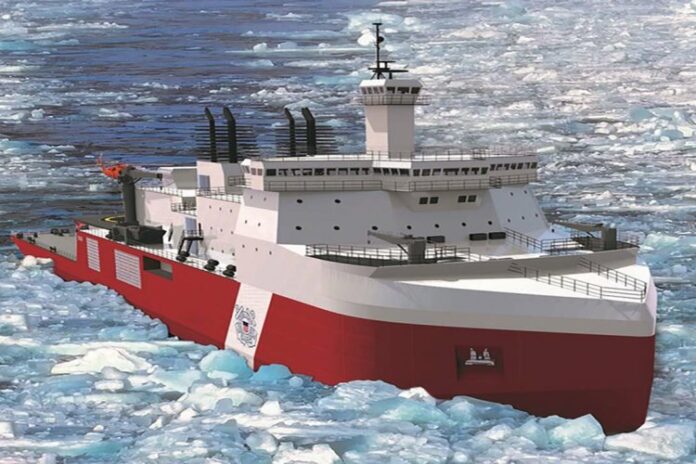
Vestdavit Inc. has won a tender with Halter Marine in Pascagoula, Mississippi to supply marine davits for the United States Coast Guard’s new Polar Security Cutter (PSC). The 460-foot vessel will support U.S. operations in Arctic and Antarctic waters.

Two HNFE-5000 davit systems from Vestdavit will launch and recover the Coast Guard’s ‘Over the Horizon’ rigid-hull inflatable boat, designed to intercept fast and non-compliant vessels, from the PSC’s enclosed bay. The lead PSC is scheduled to be delivered to the Coast Guard in 2024.

Magnus Oding, General Manager, Vestdavit Inc, says:

“The PSC is a robust, high performance ship designed to support critical missions in the harshest of marine environments. It requires a similarly resilient boat-handling system capable of functioning effectively in high seas. The HNFE-5000 is the most advanced motion-compensated davit in the world and can safely launch and recover RHIBs in conditions up to sea state 6.”

Motion compensation ensures boat crew safety and comfort are sustained as the HNFE-5000’s matches the cutter boat’s need for fast-paced and dynamic operations with hoisting and lowering speeds of up to 50 meters (164 feet) per minute. With a safe working load of 5,000 kilograms (11,000 lbs.), the HNFE-5000’s flexible davit-arm spacing will also enable it to handle any other RHIBs that the PSC may deploy in the future, explains Oding.

The electrically operated davit system features dual independent winches with dynamic brakes, as well as a telescopic painter boom that automatically adjusts the length of the painter line to match the position of the davit.

Vestdavit Inc.’s selection as supplier to the PSC Program follows a string of successes for the supplier with international coast guards and navies. Since opening its Seattle office in 2017, the Bergen-headquartered company has won davit supply contracts covering a U.S. Army Corps dredger, as well as two Expeditionary Sea Base and two Expeditionary Fast Transport ships for the U.S. Navy. Last month, it secured a frame agreement to service davits it has supplied to the National Oceanic and Atmospheric Administration (NOAA).

Vestdavit Managing Director Rolf Andreas Wigand says:

“Our office in Seattle gives us a strong foundation in North America – one of our most important markets. It has allowed us to establish new relationships and build on our reputation for premium-quality products and service, and to secure prestigious contracts. Working with such a renowned shipyard to supply the Coast Guard is a great honor; we can’t wait to get started.”