-11.5 C
New York
Home Blog Page 673

Baker Hughes joins forces with Akastor ASA to deliver offshore drilling solutions

0

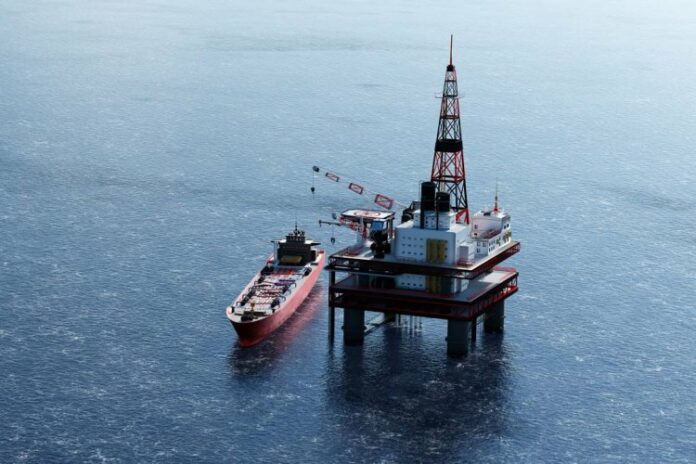
Baker Hughes and Akastor ASA have announced an agreement to create a joint venture company (Company) that will bring together Baker Hughes’ Subsea Drilling Systems (SDS) business with Akastor’s wholly owned subsidiary, MHWirth AS (MHWirth). The Company will deliver a global full-service offshore drilling equipment offering that will provide customers with a broad portfolio of products and services.

The transaction will result in a leading equipment provider with integrated delivery capabilities, financial strength, and flexibility to address a full range of customer priorities. The Company will be owned 50-50 by Baker Hughes and Akastor, and following the closing of the transaction, the Company’s operations will be managed from current offices in Houston, Texas, and Kristiansand, Norway. Merrill A. “Pete” Miller will serve as chairman and chief executive officer. 

The Company’s broader scope of services will also provide a more solid foundation for future growth, including the capability to participate in the oil and gas industry’s transition towards more energy-efficient solutions, as well as deploying technologies and service solutions to make the sector more competitive through increased drilling efficiency.

Kristian M. Røkke, chairman of Akastor, said:

“This transaction is a major step for MHWirth, and the transformation strategy announced in February 2019. The Company will offer customers a strengthened product offering and investors attractive value creation. This transaction will also allow Akastor to maximize, and ultimately realize, value to its shareholders.”

Neil Saunders, executive vice president of Oilfield Equipment at Baker Hughes, said:

“The oil and gas industry is rapidly evolving, and we are constantly looking at new and innovative ways of delivering value to our customers. This Company is the perfect fit between our respective portfolios and further transforms our core operations for long-term success, bringing complementary solutions to market and offering our customers a full offshore drilling equipment package.”

MHWirth is a global provider of advanced drilling solutions and services designed to offer customers a safer, more efficient and reliable alternative. MHWirth has a global span covering five continents with offices in 13 countries.

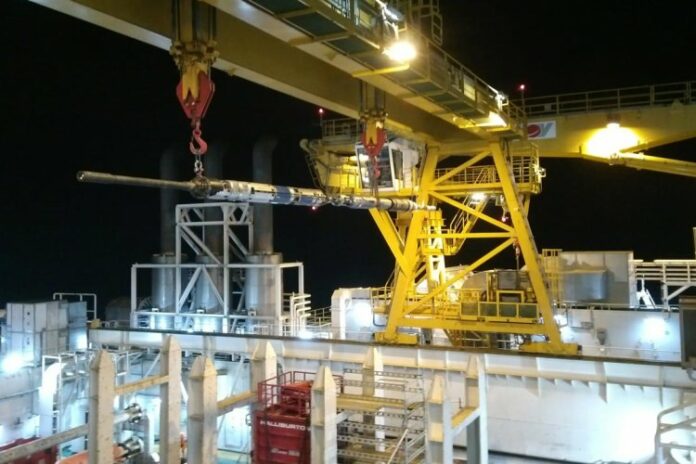
Baker Hughes’ SDS business is a division of the Oilfield Equipment segment of Baker Hughes and is headquartered in Houston. SDS provides integrated drilling products and services worldwide, with service and manufacturing facilities in 11 countries and a competitive portfolio, including world-class blowout preventor (BOP) systems, controls and riser equipment.

The closing of the transaction is subject to customary conditions, including regulatory approvals, and is expected to occur in the second half of 2021. Morgan Stanley, Paul Weiss, Thommessen, and EY are acting as advisors for Baker Hughes. Goldman Sachs, BAHR, Sidley Austin, and EY are acting as advisors for Akastor.
Port of Rotterdam: Taskforce seeks to set the pace in tackling plastic granule pollution

0

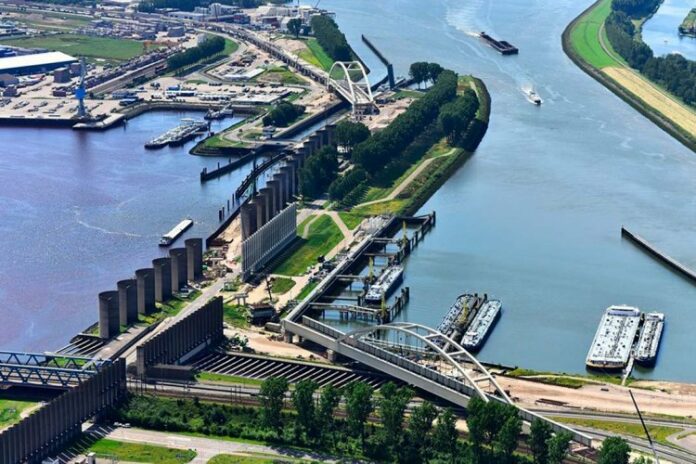
Several plastics companies have joined forces with the Port of Rotterdam Authority, Ducor Petrochemicals BV, PlasticsEurope Nederland, DCMR Environmental Protection Agency of Rijnmond and the Directorate-General for Public Works and Water Management to set up a special collaborative alliance: the ‘Rotterdam Clean Sweep Taskforce’.

The Rotterdam Clean Sweep Taskforce aims to combat pollution from plastic granules, powders and flakes in the port of Rotterdam. The alliance is the follow-up to a conference held on this subject last September. The Taskforce is affiliated with Operation Clean Sweep® (OCS), a covenant of plastic manufacturers set up to address the issue of granule loss.

The reason for the September conference was that the environmental organisation Plastic Soup Foundation had drawn attention to the fact that plastic granules had been found in the water and on banks of the port of Rotterdam. 

Ann Geens, Site Manager at plastics manufacturer Ducor and Chair of the Task Force, acknowledges the problem:

‘I honestly have to admit that our eyes have been opened. There are too many loose pellets (granules) on the quays, industrial sites and in the water of the Rotterdam port area. At Ducor we are already tackling this problem; however, it needs to be done on a much wider scale. I am therefore delighted that we have been able to bring together so many organisations from all parts of the supply chain. We can only solve this problem by working together.’

The full name of the taskforce is the Rotterdam Clean Sweep Taskforce, after the Operation Clean Sweep® programme set up by PlasticsEurope, the trade association for the plastics-producing industry. This covenant is widely accepted within the industry and its signatories aim to achieve zero emissions of plastic pellets, powders and flakes. The platform is open to all organisations and companies in the plastics industry that are willing to sign the OCS pledge. 

Ann Geens:

“The Rotterdam Taskforce wholeheartedly supports the OCS programme. Besides raising awareness, it also provides practical tools for tackling the problem. For example by improving the work location, tightening up procedures, raising awareness and training staff. More and more organisations are signing up to OCS, including only recently the Port of Rotterdam Authority which, as a neutral platform in the port of Rotterdam, has a vested interest in the programme.”

The intention is for as many companies and organisations throughout the supply chain as possible to join the taskforce. There is a similar task force operating in the port of Antwerp. There, companies, carriers, governments and environmental organisations are working together to reduce pollution from plastics. The Rotterdam Taskforce has a core group of participants comprising the Port of Rotterdam Authority, PlasticsEurope Nederland, Ducor Petrochemicals BV, DCMR, Deltalinqs, LyondellBasell, Shin-Etsu; the Directorate-General for Public Works and Water Management, Huntsman and Rotterdam Polymer Hub.

The core group has had its first – online – meetings – and is working on topics such as awareness, enforcement, historical pollution and cleanup. Over the next few months, several working groups will be drawing up action plans relating to these topics.

NAPA to provide safety solutions on Isle of Man Steam Packet Company’s new ferry

0

NAPA, the leading maritime software, services and data analysis provider, has announced a new agreement with global shipbuilding company Hyundai Mipo Dockyard (HMD) and passenger shipping company Isle of Man Steam Packet Company.

The installation of NAPA’s industry-leading software, which will optimize operations and enhance safety onboard Manxman on the Heysham-Douglas route, reflects a new benchmark for safety in the sector.

The RoPax is being constructed at HMD in South Korea and is scheduled for delivery in 2023. The new contract marks a series of notable industry firsts for NAPA; the first commissioning of NAPA Safety Solutions by Isle of Man Steam Packet Company and the first installation at HMD.

Under the agreement, NAPA will provide Isle of Man Steam Packet Company with NAPA Emergency Computer, which assesses the vulnerability of an intact ship as well as its survivability in case of a flooding emergency, and NAPA Loading Computer, which optimizes vessel load while minimizing stress and safety risk. NAPA Loading Computer and NAPA Emergency Computer have been approved by all major classification societies.

The investment in available technologies to increase safety and efficiency beyond that of regulation reflects a commitment from Isle of Man Steam Packet Company to increase standards in the sector.

The 133-m long vessel, which is due to start construction shortly, has also been designed using NAPA’s 3D modeling and design functionalities, with NAPA’s hull form optimization, stability assessment and initial structural design further optimizing efficiency and safety in the conceptual and approval phases.

Isle of Man Steam Packet Company Chief Executive Mark Woodward commented:

“We are proud to be recognized as a ferry operator raising standards in the sector. ‘As unquiet as the Irish sea’ is a common English proverb, and climate change is increasing the risks of extreme weather events. The addition of NAPA’s software to better monitor conditions, mitigate risk and enhance ship-shore communication will be increasingly important to the safety of our crew and passengers.”

Lars Nickel, Sales Director, Safety Solutions at NAPA, commented:

“At NAPA, we pride ourselves on enabling vessel owners with the highest level of safety, efficiency, and performance. We are therefore pleased to have NAPA Emergency Computer and NAPA Loading Computer, safety securing Manxman on the increasingly turbulent Heysham-Douglas route.”
 

Marlink and Soremar partner up to increase options for North African fishing operators

0

Under the agreement, Soremar customers can access Vessel Monitoring Systems (VMS) and the mandated Global Maritime Distress and Safety System (GMDSS) via the Iridium satellite network, in addition to other providers.

Marlink and Soremar have previously collaborated to create a portal that can be used by shoreside teams to track fishing vessels at sea and send and receive vessel positions and fleet overview to meet regulatory requirements.

Since the end of last year, Soremar has held state licences to provide security solutions for the Iridium satellite network via Marlink, which is now commercially available to Soremar’s extensive portfolio of fishing customers in Morocco and neighbouring countries. Its extensive knowledge and long heritage in North Africa make it the natural choice for fishing industry customers requiring the widest choice of digital safety solutions.

Dounia Gnaou, Managing Director, Soremar Group, says:

“Fishing operators in North Africa focus on safety compliance and the optimisation of potential catch, so the ability to combine mandated safety services with digital tools is an obvious advantage. The high number of alerts received via GMDSS every year is a testament to the value of this service to our customers operating in harsh environments.”

Tore Morten Olsen, President, Maritime, Marlink, said:

“Being able to provide tailored services is key for a partner like Soremar whose customers demand safety but also require the utmost flexibility and agility in their connectivity plans in a very competitive market. Enhanced provision of VMS and GMDSS services enables Soremar customers to further explore and embrace digitalisation and value-added services that can improve profitability moving forward.”

The ULSTEIN design holds an Approval in Principle for the U.S. market

0

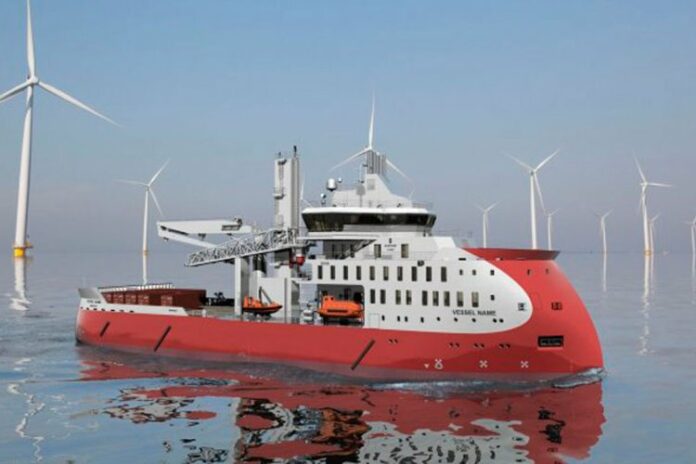
The U.S. offshore wind market is growing and will need a fleet of Jones Act compliant vessels. Ulstein Design & Solutions holds an Approval in Principle (AIP) for its proven Service Operation Vessel (SOV) design, the ULSTEIN SX195, from ABS – the American Bureau of Shipping.

Norway-based Ulstein Group is a leading designer and innovator in vessels for the offshore wind market. Installation vessels, subsea rock installation vessels and numerous service vessels have been designed, delivered or are currently under construction for the European and South East Asian markets.

The ULSTEIN SX195 design has been proven through several newbuilds currently operating in European waters. The design has been made ready for SOV activities in the US offshore wind industry, complying with the Jones Act and meeting the US Coast Guard requirements.

While operating in-field at the offshore wind farms, owners of the existing fleets report that they choose to operate their service vessels stern first, due to the logistics of the service work. In such modes, a traditional, transom stern will cause slamming in head seas. Ulstein launched its patented X-STERN® solution for the offshore wind market in 2015, and this innovation was soon after implemented in several of the newbuild orders. The X-STERN eliminates the slamming and wave-induced vibrations and leads to uninterrupted rest for the service personnel.

The SOVs are being used in the Operation & Maintenance phase of the wind farms, serving as an accommodation vessel for technicians and as a means of transferring tools and parts to the offshore wind turbines.

Ulstein recently announced a design contract with Great Lakes Dredge & Dock for the first U.S. flagged Jones Act compliant, inclined fallpipe vessel for subsea rock installation. The vessel is critical in building the future of the U.S. offshore wind industry, including establishing a U.S. based rock supply chain network.  

Fugro performs environmental and geotechnical surveys offshore Angola

0

Fugro has been awarded multiple contracts by Eni Angola to carry out geotechnical and environmental surveys off the coast of Angola between now and May, and two Fugro vessels from their world’s largest fleet of specialist geotechnical and geophysical vessels are currently active in the region.

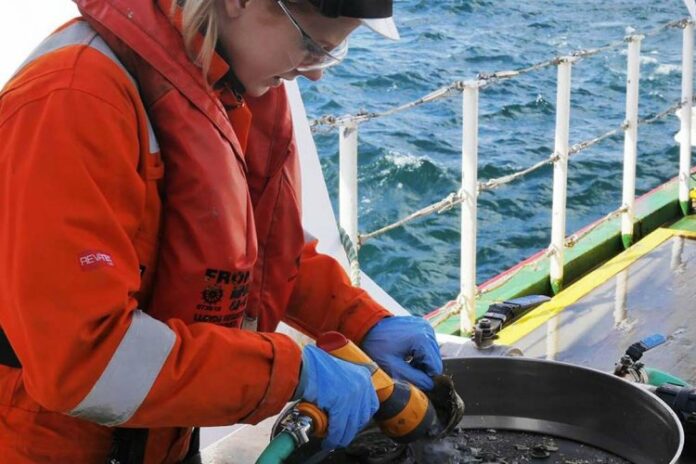
Multipurpose survey vessel the Fugro Scout, specifically designed for seabed sampling and in situ testing in water depths up to 3000 m, has embarked on a deepwater environmental survey to acquire, analyse and interpret sediment and water samples from Eni Angola’s Agogo field development. During the survey operations, specialist marine fauna observers (MFOs) will carefully monitor the marine mammals, turtles and seabirds that can be found in the area, and the study will gather key environmental baseline data on offshore Angola’s benthic communities, physicochemical sediment characteristics, and water column productivity. The resulting Geo-data will characterise the site stratigraphy for Eni Angola and define the mechanical and physical properties of the soil for their subsea facilities. The Fugro Scout will also perform a range of geotechnical site investigations on the project, with work due to start early this month.

A second vessel, the Fugro Helmert, will join the Fugro Scout to conduct a route survey in Angola’s nearshore areas, including various environmental, geotechnical and geophysical surveys, to allow Eni Angola to calculate the best installation route and optimise cable burial protection for the New Gas Consortium.

Jaco Stemmet, Fugro’s Director for Africa, said:

“Our vessels are supporting Eni in Angola and delivering a range of specialised Geo-data services. These projects are two great examples of how we unlock insights to help our clients design, build and operate their assets in Africa in a safe, sustainable and efficient manner.”

Port of Los Angeles launches new “Control Tower” data tool for tracking cargo

0

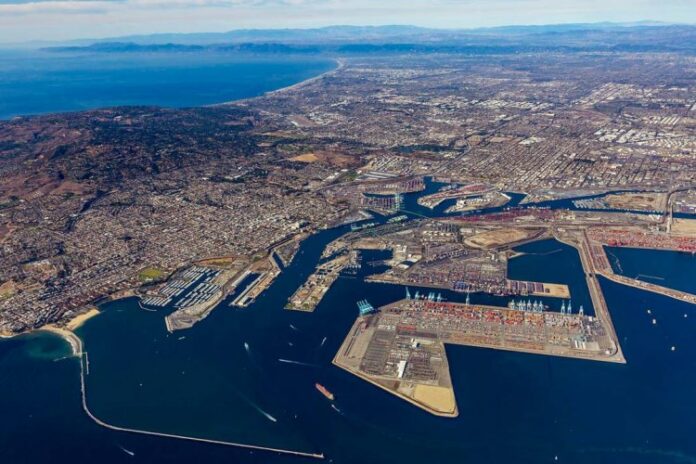
As part of its ongoing push to further digitalize the port supply chain and  improve cargo efficiency and fluidity, the Port of Los Angeles has introduced a new “Control Tower” data tool—the third such instrument introduced by the nation’s busiest trade gateway in less than six months. 

The Control Tower offers real-time views of truck turn times, as well as other truck capacity management information, to help cargo owners, truckers and other supply chain stakeholders better predict and plan cargo flows.

Port of Los Angeles Executive Director Gene Seroka, said:

“The Control Tower is a service and digital tool that will help get critical and reliable information to San Pedro Bay port stakeholders so that they can improve decision making and efficiencies. We are currently the only port in North America offering this array of digital tools, but I’m optimistic that this type of data will eventually be more uniformly available at every node of the supply chain.”

Phase one of the Control Tower launch provides users current snapshots of turn times at all of the Port’s cargo terminals, updated continuously with GeoStamp data and broken down by historical daily and monthly averages. The Control Tower also provides recent and future trending volume data, as well as historical volumes and trends dating back to 2017, segmented by mode and specificity.

Developed in partnership with Wabtec,  the Control Tower is being rolled out in phases, with more features added throughout 2021 based on user feedback and supply chain developments. Scott Holland, Vice President of Wabtec’s Network and Logistics business, said:

“Data is a critical resource in moving goods across the supply chain and into the hands of consumers. The Port Optimizer Control Tower is an important step in the journey to connect railroads, chassis providers, truckers, warehouse operators and others across the supply chain, and ensure cargo seamlessly flows in and out of ports. This system’s real-time and historical analytics will help the Port of Los Angeles community optimize their operations, relieve congestion stemming from increased global shipping traffic, and get products to people faster.”

The Control Tower builds on the data and success of the Port Optimizer™, the cloud-based secure digital portal of maritime shipping data created by the Port in 2017 to facilitate more efficient cargo flow through its terminals. Today’s Control Tower roll-out follows the launch of two other digital tools under the Port Optimizer umbrella in recent months: the Signal and Return Signal.

Launched this past September, the Signal data tool provides a three-week look at cargo coming into the Port of Los Angeles, with information updated daily. This information is now viewable via the Control Tower platform as well. The Return Signal tool introduced in November provides data that lets the trucking community know when and where to return empty containers to cargo terminals throughout the San Pedro Bay port complex. Return Signal data is updated every five minutes.

The Control Tower announcement comes on the heels of the Port’s announcement last month regarding its new incentive program to move trucks faster and more efficiently through its terminals. The Port’s Truck Turn-Time and Dual-Transaction Incentive Programs offer terminal operators two ways to earn financial rewards: one for shortening the time it takes to process trucks dropping off and/or picking up cargo, and the other for trucks handling both import and export transactions in the same trip.

Optime’s ROCS successful in its first operation for Aker BP

0

Optime’s subsea system, Remotely Operated Controls System (ROCS) has completed a successful subsea operation for Aker BP. The ROCS eliminates the umbilical during well completions. 

ROCS was deployed during a completions operation for a production well for Aker BP on the Ærfugl-field on the Norwegian Contintental Shelf in late February. Optimes CEO, Jan-Fredrik Carlsen, says:

“This is a major achievement! Optime has developed ROCS over several years and from looking at the total work hours available internally, we have spent a significant share of resources on this development. Together with Aker BP we have now achieved success on the first operation offshore. I believe that is a great accomplishment and the start of a major industry transition with this system.” 

Through ROCS, Optime is contributing to increased efficiency for the oil and gas industry in numerouis ways. ROCS is remotely controlled topside, using an advanced technological controls unit providing improved functionality, without a large hydraulic system, including a costly and heavy umbilical.

Mads Rødsjø, head of Aker BP’s subsea well operations, says:

“We have now completed a successful operation on the Ærfugl-field using Optimes ROCS. The operation was planned in great details, allowing for a safe execution. Imbedded in Aker BP is the continous drive towards technology that permanently improves our subsea well operations. ROCS is a good example of that, as it reduces HSE risk, optimizes operations and also reduces the overall cost for us.”

Rødsjø says:

“Through the use of ROCS we have been able to move tonnes of actual equipment from the rig, as well as mechanical and hydraulic interfaces, into a simple and efficient software. This is truly digitalization.”

Optime signed a frame agreement with Aker BP January of 2019. The agreement includes work on Aker BPs subsea systems for two years, with an additional 2 year extension.  

Jan Fredrik Carlsen says:

“Aker BP and their competence as well as focus to leverage innovative technology, is fundamental to continous industry improvements. This reduces the environmental footprint, improves efficiency, increases safety, and reduces cost – we believe it will create a new industry norm.”

New model more accurately predicts how massive glaciers melt

0

New research promises to enable more accurate ice-flow predictions, helping scientists better forecast how melting glaciers will contribute to rising sea levels, which have been linked to coastal and wetland flooding and destructive erosion around the world.

In a recent issue of Journal of Geophysical Research: Earth Surface, Harihar Rajaram and the team offer a new method of estimating how heat flows upwards from the Earth to beds of ice sheets in Greenland and Antarctica, affecting their viscosity and rates of movement.

Rajaram, a professor of environmental health and engineering at Johns Hopkins University, said:

“Mass ice loss from Greenland is the single largest contributor to sea level rise today, and Antarctica is projected to contribute significantly to sea level rise in the decades to come. The temperature of ice near the bed determines how fast it can flow. It is important that ice sheet models incorporate accurate bed conditions so that we make correct projections out to 2050 and 2100. Our method is a big step in the right direction.”

Rajaram worked on the study with experts from the Geological Survey of Denmark and Greenland, NASA, University of Maryland, University of California, and University of Alaska.

The team’s method is groundbreaking, Rajaram says, because it provides high-resolution estimates of variations in heat flow across a scale of hundreds of meters, accounting for the complex bed topography and geological features—such as valleys and ridges—underneath the massive ice sheets. Though it has long been understood that heat flow is greater in valleys, and is lesser on ridges, this was the first time a model has taken these factors into account.

The researchers created a simple statistical model to estimate influence of glacier bed topography on geothermal heat flow and applied it to digital elevation models of the sub-glacial topography beneath the Greenland and Antarctic ice sheets. The result? A far more detailed geothermal heat flow map than what has been offered before.

Rajaram said:

“We discovered that heat flow in central East Greenland and the Antarctic Peninsula is halved along ridges and doubled within glacier valleys.”

William Colgan, a senior researcher at the Geological Survey of Denmark and Greenland, and lead author of the study, explains the phenomenon.

Colgan said:

“Basically, if the heat escaping Earth’s interior is looking for the quickest way to radiate into the atmosphere, a deeply incised valley provides the fastest exit. This effect is readily observable from the fact that geotherms—surfaces of constant temperature—are packed more closely together beneath valleys, indicating a stronger temperature gradient there, and hence heat flow, in comparison to ridges.”

The researchers hope their method and results not only will be adopted into present-day ice-flow models to improve ice-flow predictions, but also will be used to estimate the influence of topography on geothermal heat flux in non-ice covered areas.

Independent study on board cruise ships examines air flow indoors

0

This study is part of broader recommendations put forth by the Healthy Sail Panel, a group of industry-leading public health experts, to ensure a healthy and safe global return to sailing

Royal Caribbean Group engaged UNMC and the National Strategic Research Institute (NSRI) at the University of Nebraska with the support of the Healthy Sail Panel, a group of globally recognized experts assembled by Royal Caribbean Group and Norwegian Cruise Line Holdings Ltd., to guide the cruise industry’s way forward in response to COVID-19.

The study by UNMC and NSRI scientists, conducted in July 2020 on Oasis of the Seas, helped inform the Healthy Sail Panel’s 74 detailed best practices to safeguard the health of guests, crew and communities cruise ships visit. The Healthy Sail Panel’s science-based recommendations were outlined in a 65-plus-page report submitted in September and is open sourced for others to incorporate in their protocols as well.   

A team of five medical scientists specializing in bioaerosols, led by Josh Santarpia, PhD. – associate professor, pathology and microbiology, UNMC; and research director, chemical and biological programs, NSRI – were called on to understand in detail the role of HVAC systems in spreading airborne particles on cruise ships. The study specifically explored the effectiveness and efficiency of ship air management strategies – ventilation, filtration and supply – and examined air flow across different areas of the ship, including guest staterooms, crew staterooms, lounges and other public spaces. 

Researchers found the transmission of aerosol particles between spaces, through the ventilation system, to be undetectable on surfaces and in the air. A leader in modern cruise ship design, Royal Caribbean Group has long been at the forefront of the industry’s latest innovations and advancements; and so, the existing HVAC systems were created to be robust and efficient in providing maximum ventilation, continual fresh air intake and layers of filtration for both incoming and outgoing air.

Based on the findings of the UNMC study and at the recommendation of the Health Sail Panel, Royal Caribbean Group is adopting new practices, incorporating additional layers of protection that further minimize the possibility of spread by adjusting shipboard settings to allow for the maximum air changes per hour and upgrading to MERV (Minimum Efficiency Reporting Value) 13 filters throughout the system. In addition, Royal Caribbean Group already equipped its medical facilities with an independent ventilation system and has added HEPA filters for additional precaution.