0.7 C
New York
Home Blog Page 60

Damen completes a maintenance programme on Shabab Oman II

0

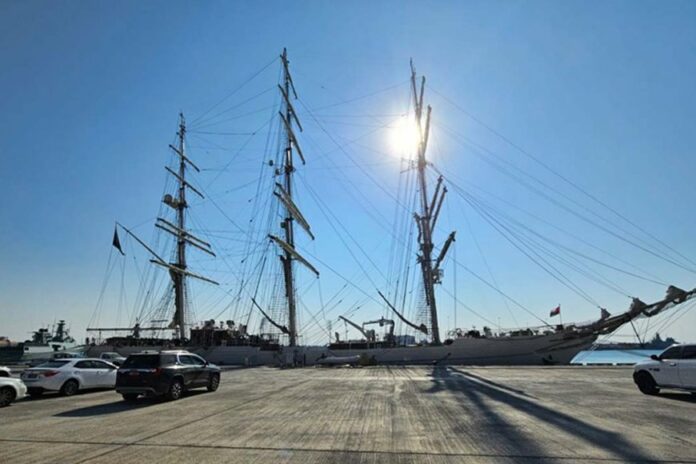
Damen has completed an extensive maintenance programme on the Royal Navy of Oman’s Sail Training Vessel Shabab Oman II. The work provides the Tall Ship with a series of upgrades and prepares her for her duties in the coming decade. 

Sending a team from its UAE based service hub to Oman, Damen executed a full refit of technical spares, renewal of standing rigging and three generators, as well as overhaul and maintenance of all critical systems on board on the Shabab Oman II. This included work to the vessel’s propulsion line, bilge, firefighting equipment, cooling water and power generation systems. The project execution was assisted by Damen Services’ familiarity with the vessel, having previously provided parts and services to the Shabab Oman II.

The Ministry of Defence of Oman selected Damen  to perform the work scope based on the excellent relationship that exists between the Ministry and the Royal Navy of Oman and Damen. 

Previously, Damen has provided the Shabab Oman II with its initial spare parts package, warranty support, woodwork maintenance, rigging maintenance and the replacement of a chilled water unit. 

Luca Lietaert, Service Hub Manager of Damen Services Middle East, said, “We were delighted to welcome the Shabab Oman II back to Damen and very grateful to the Ministry of Defence of Oman for their continued trust. This graceful and iconic vessel performs a crucial role, facilitating training and education that helps people to get the best from themselves and their careers. We are proud to be able to support this important work.”

Damen delivered the Shabab Oman II to the navy in 2014. The vessel was built at Damen Shipyards Galati in Romania, before being towed to Vlissingen in the Netherlands for outfitting. In addition to her role as a training vessel to various departments within the Ministry of Defence, the vessel is used for educational purposes for students from universities all the world. 

The Shabab Oman II also takes parts in sail racing events, such as Kiel Week in Germany, as well as representing Oman at sailing festivals. Upon completion of her maintenance programme at Damen Services Middle East, the vessel embarked upon a tour that will see her call at fourteen different countries in the Middle East, Europe, and Africa, participating in a race. She will also take part in this year’s Sail Amsterdam in the Netherlands, of which Damen is proud to be a supporting partner. The event will take place between 20th and 24th August. Shabab Oman II will return to Oman at the end of October 2025. 
The Havstjerne project: Proved suitable properties for CO2 injection and storage

0

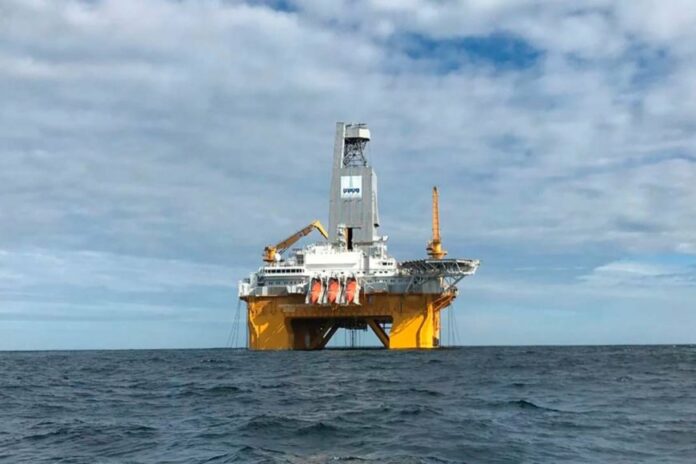
Well 9/6-1 was drilled in the North Sea around 30 kilometres southeast of the Yme platform and around 120 kilometres southwest of Farsund – the DeepSea Nordkapp rig was used in the drilling operation.

Well 9/6-1 is the first well drilled in exploration licence (EXL 006), which was awarded in May 2023. This is the fourth well drilled to investigate potential commercial storage of CO2 on the Norwegian continental shelf (NCS). 

The objective of well 9/6-1 was to investigate whether Middle Jurassic and Middle and Upper Triassic reservoir rocks in the Havstjerne project are suitable as a storage site for CO2. 

Well 9/6-1 encountered:

  • The Tau Formation (caprock), 115 metres of homogeneous shale 
  • The Egersund Formation (caprock), 58 metres of sealing shale and dense siltstone 
  • The Sandnes Formation (reservoir), 97 metres of sandstone, good reservoir quality 
  • The Bryne Formation (reservoir), 52 metres of sandstone, moderate reservoir quality
  • The Skagerrak Formation (reservoir), 200 meters of sand- and siltstone of very poor reservoir quality

The well was drilled to a vertical depth of 3366 metres below sea level and was terminated in the Skagerrak Formation in the Upper Triassic. Water depth at the site is 90 metres.

Formation pressure data indicates that the rocks in the Sandnes and Bryne formations are located in a regional hydrostatic pressure gradient for this area. 

Extensive volumes of data have been acquired from the reservoir and caprocks. An injection test has also been conducted. Preliminary results are positive. 

The data will now be subject to further analysis, and the results will become part of the basis for future decisions regarding investment in the Havstjerne storage project. 

Aker Solutions’ autonomous drones pass crucial milestone

0

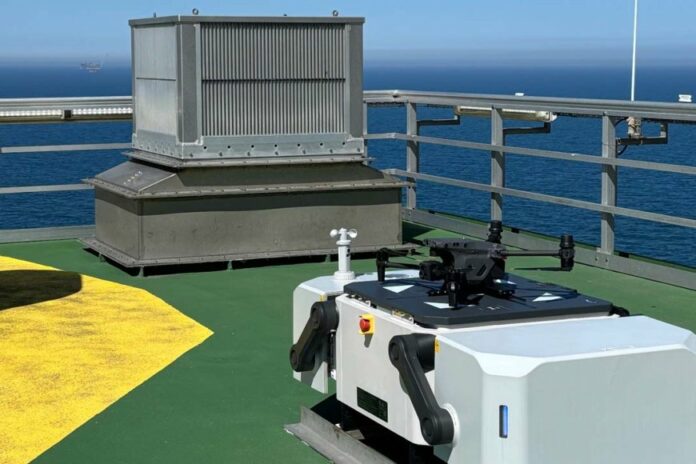
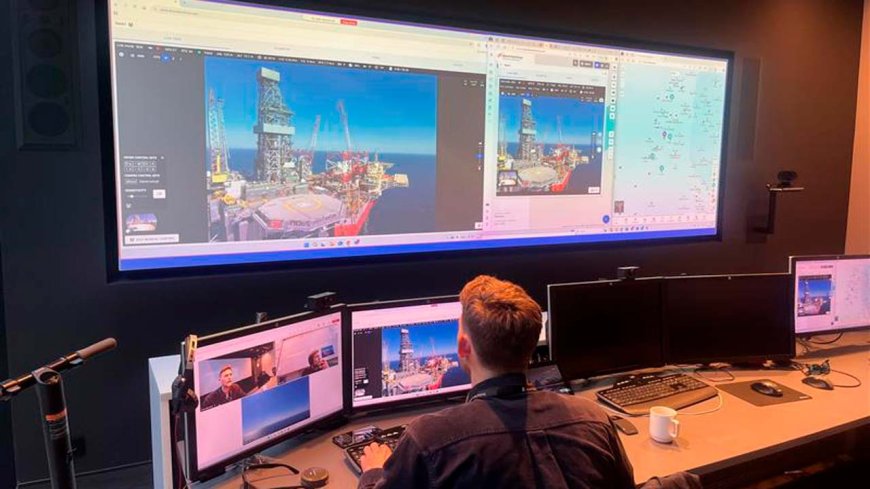
The company recently completed the first offshore beyond-visual-line-of-sight (BVLOS) drone operation, piloted from its onshore control center in Stavanger. The inspection flight was carried out using an installed drone on Aker BP’s Edvard Grieg platform. 

The drone is equipped with autonomous navigation capabilities and advanced sensors, collecting high-resolution imagery and data during its inspection rounds. The flight marks a major step toward fully autonomous offshore inspections.

“We believe autonomous drones will revolutionize how inspection and maintenance are performed in the energy industry. Permanently deploying a drone on an oil platform — combined with robotics, AI, and digital technologies takes offshore maintenance to a new level, improving safety, reducing costs, and increasing efficiency across offshore asset management,” said Anja Dyb, SVP Life Cycle Services, Aker Solutions.

The drone system on Edvard Grieg includes a drone docking station offshore and supporting infrastructure. Aker Solutions has also developed software systems and set up an onshore control room. The solution includes airspace and AIS monitoring, two-way communication with the Helicopter Landing Officer (HLO) aviation management, and platform leadership. 

“Aker BP’s operational strategy is based on the assumption that robotics and drones will be an integral part of observation, inspection and task executions offshore. These technologies will operate autonomously or remotely, either on-site or from land. The successful remote-controlled offshore drone operation at the Edvard Grieg platform, executed by Aker Solutions, is an important milestone for Aker BP as well,” says Thomas Øvretveit, Director of Operations at Aker BP.

Autonomous drones, combined with AI-powered analytics, make it possible to perform frequent and highly accurate inspections. The drone takes consistent, precisely positioned images and videos, allowing for regular monitoring of equipment over time. This enables faster detection of wear, corrosion, and other issues — so maintenance can take place before problems grow.

“We estimate that autonomous drones can reduce inspection costs by up to 70% and deliver detailed insights within hours — a process that traditionally takes days with manual drone operations,” said Joachim Hovland, Head of Drones and Robotics.

Autonomous drones, machine learning, and robotics are integral to Aker Solutions’ digital strategy. 
To deliver on those ambitions, the digital strategy focuses on improving project execution, developing new services, and building a digitally ready organization with a strong foundation in data and software technology.

Fugro secures significant gas field development award in Southeast Asia

0

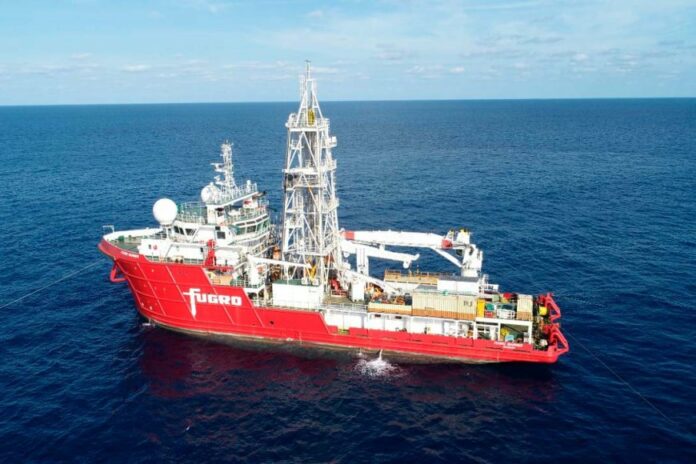
This significant award represents the largest geotechnical & geophysical survey project for Fugro in the Asia Pacific region to date, reflecting the positive momentum of deepwater developments in the region.

This complex project builds on a combination of Fugro’s onshore, nearshore and offshore geophysical and geotechnical survey services. Geo-data acquisition is scheduled to commence in the third quarter of 2025, with fieldwork estimated to last approximately one year.

Detailed testing and consulting deliverables will continue into 2027. Supporting site planning and engineering design, the resulting ground model will be made available to project owners in near real-time, to facilitate faster decision-making by project engineers and improved collaboration with stakeholders including regulatory agencies.

This project was largely included in the 12-month backlog as per March 2025 (Fugro’s latest published results).

Auramarine launches water in methanol measurement technology to support alternative fuel uptake

0

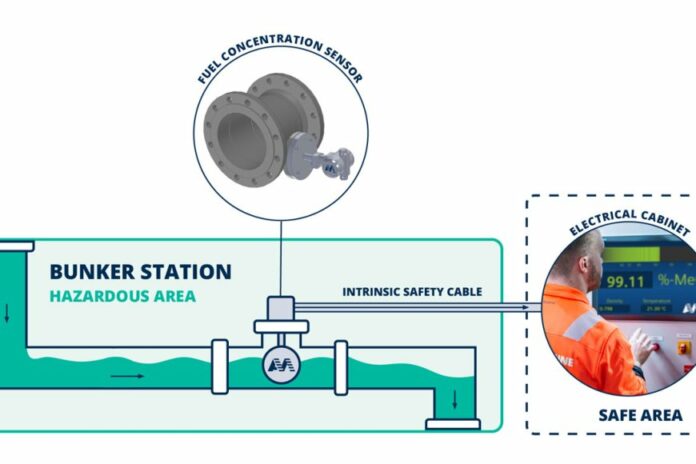
Auramarine has announced the launch of its Auramarine Water Content Analyser (AM Water Content Analyser). The technology measures and reports the concentration of water in methanol, helping ship operators take preventive action to minimise associated risks and costs when using the fuel. 

The analyser comes in response to growing uptake of methanol as a marine fuel to meet shipping’s decarbonisation targets. Water as a natural contaminant of methanol may be present in the bunkered methanol either by accident or intentionally. Water in fuel decreases the calorific heating value which increases the bunkering costs. In addition, if the water content is too high, operators may have to unload the fuel, leading to delays and additional costs.  

As an example, when a Ro-Ro vessel consumes 27 000 tons of green methanol in one year and with an average price per ton of green methanol at €1,196, the operator of the vessel may avoid losses of up to €1,614,600 for 5% concentration of water as contaminant. The AM Water Content Analyser is an inline measurement device that can be installed directly to the methanol process piping, for example to the main bunker line with the flanged housing. The technology uses a sensor to analyse the concentration of water in the methanol.

Mr. John Bergman, CEO of Auramarine, commented: “Methanol uptake is increasing across the industry due to its promising Greenhouse Gas (GHG) emissions reduction credentials. At Auramarine, we’ve led the way in developing solutions that support the use of alternative fuels-starting with the industry’s first Methanol Fuel Supply Units in 2022. Now, with the launch of our AM Water Content Analyser, we’re giving ship owners and operators the tools they need to take the next step in their energy transition and bunker methanol with greater confidence, and importantly, at a lower cost.”

Samskip launches new Blyth route

0

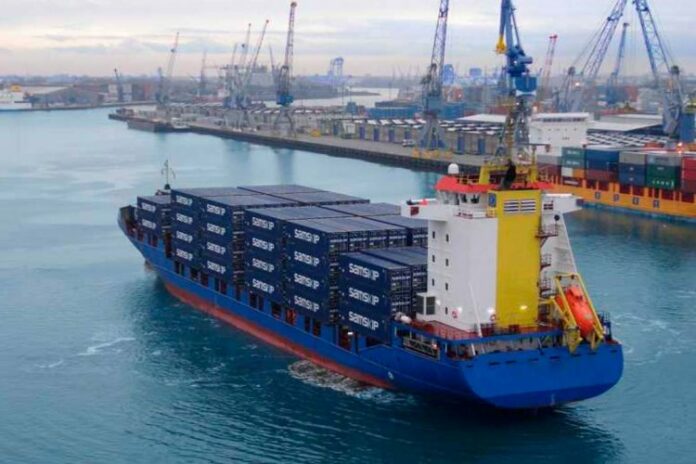
Samskip announces the launch of a new shortsea container service calling at the Port of Blyth, enhancing multimodal connections between the UK and key European trade hubs. 

This strategic expansion strengthens its presence in northeast England, offering shippers a reliable, cost-efficient and sustainable transport alternative that connects seamlessly to Samskip’s wider European network.

The Blyth service brings added value to Samskip’s UK customers by introducing:

  • Direct weekly sailings between Blyth and Rotterdam
  • Fast transshipment to European markets via Samskip’s hub network
  • Seamless road and rail connections for inland distribution
  • High-frequency departures and reliable transit schedules
  • A more sustainable alternative to traditional trucking routes

“Expanding to Blyth supports our mission to be closer to our customers and provide agile, multimodal solutions tailored to their evolving needs,” says Samskip Manager Sales & Operations, Scott Montgomery. “This new service opens up exciting opportunities for regional shippers seeking dependable and environmentally conscious logistics.”

This launch marks more than just a new service — it signals Samskip’s renewed focus and commitment to revitalizing its UK trade. With the addition of Blyth, the company is not only expanding port options for greater efficiency and flexibility, but also taking decisive steps to strengthen service reliability, reach new customers, and support its UK client base with improved access to European markets. As it invests in this new chapter, Samskip is inviting  new and returning customers to rediscover what it can offer — with local care, smarter routing, and the backing of one of Europe’s largest multimodal networks.

The Port of Blyth was selected for its strategic location, modern infrastructure, and growing importance as a regional logistics hub. Its proximity to key industrial zones and ports of entry makes it a vital part of Samskip’s UK strategy moving forward. 

Alasdair Kerr, Commercial Director at Port of Blyth, commented: “We’re delighted to welcome Samskip to the Port of Blyth and to support the launch of this new strategic service which will provide great links into The Netherlands and broader European markets. Together with our logistics arm, Transped, we’re providing a full suite of value-added services including cross-docking, storage, and export packing, to ensure a seamless and efficient supply chain for our customers.”

Berg Propulsion package optimizes MPCC feeder ships to run on low carbon bio-methanol

0

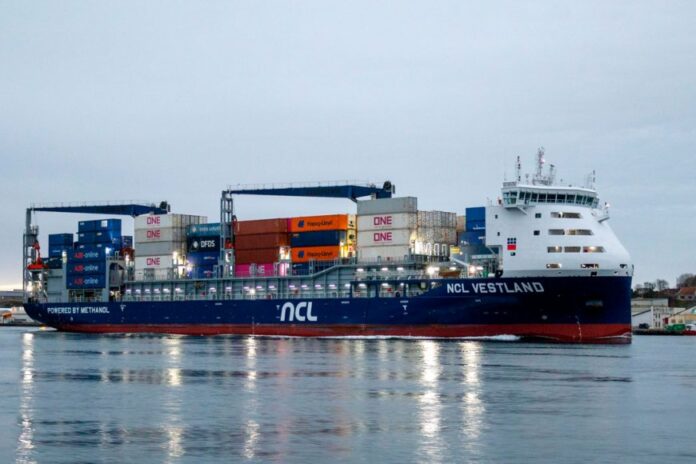
Owned by MPC Container Ships, these dual fuel 1300 TEU vessels can be operated on methanol and/or MGO, under a 15-year charter to North Sea Container Line in services connecting Norway and Rotterdam.

“Nordland and Vestland establish MPCC as an early mover in competitive green fuel strategies to deliver long-term shareholder value for shipping’s low carbon future,” said Constantin Baack, CEO of MPCC. “The project also shows how we meet ambitious goals by working with like-minded partners.”

Space efficiency and the high-performance propulsion systems built into these ships cut energy consumption per TEU by 63% per nautical mile compared to their predecessors. NCL has also signed a deal with Equinor to bunker bio-methanol – initially running on a 5% blend, but increasing bio-methanol content over time to support carbon neutral operations as the supply chain matures.

On each ship, the result is an integrated Berg energy management system and tailored total propulsion solution which consolidates the electric part of the propulsion train to optimize the two-stroke main engine performance, and Berg’s MPP 1410 Controllable Pitch Propeller and MTT bow and stern thrusters.

Christian Rychly, Chief Operating Officer, MPC Container Ships, commented: “Berg Propulsion and partners managed to develop, build and integrate complex systems and applied high-end technological philosophies into fully functional machinery on board both vessels despite challenges that can occur during newbuilding projects, and we would like to thank them for their cooperation and support.”

“We worked as a co-designer for the integrated main propulsion solution, configuring the compact Engine Room layout to enable optimized aft ship design and performance,” said Mattias Hansson, Senior Global Sales Manager, Berg. “We are delighted that the teamwork between all parties in this collaborative newbuilding program has resulted in truly exceptional ship fuel efficiency.”

Berg’s tailored solution also included optimized propeller design, as well as its power and control electronics to maximize operational flexibility.

“Nordland joins a service which is already proving itself on efficiency,” said Bente Hetland, Managing Director, NCL. “This is an extraordinary example of stakeholders collaborating to overcome decarbonization challenges cost-effectively so that green freight is the customer’s preferred choice.”

“This is next level energy management which mixes and matches the energy sources to the best advantage of ship performance,” said Mattias Dombrowe, Business Manager Electric System Integration, Berg. “The hybridized set up optimizes energy use from gensets, the shaft alternator, and 250 kWh battery for load balancing during thruster or other peak loads, also accommodating the shore connector for zero emissions when the vessels are in port.”

Corvus Energy to supply battery systems for new fully electric ferries for BC Ferries

0

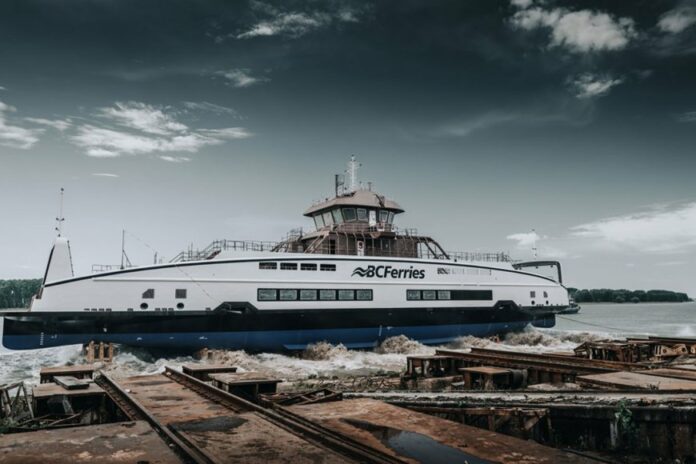
Under its contract with BC Ferries, Damen Shipyards Group has selected Corvus Energy to supply Energy Storage Systems (ESS) for four new, fully electric capable passenger car ferries currently under construction to join BC Ferries’ fleet of hybrid electric “Island Class” vessels.

BC Ferries currently has a contract with Damen Shipyards Group for the build and delivery of four Damen Road Ferries 8117 E3 design—known by BC Ferries as “Island Class” vessels. The fully electric capable ferries are scheduled for delivery by 2027 and will expand BC Ferries’ existing fleet of six hybrid diesel-electric Island Class ferries.

Corvus Energy was selected to supply battery systems for the four new vessels—together totaling over 8 MWh of battery capacity cumulatively for the four systems. BC Ferries’ six Island Class vessels currently in operation are also equipped with Corvus Energy ESS.

Featuring the latest in advanced clean marine technology, the new Island Class ferries are electric-ready with the ability to operate on fully electric power, utilizing renewable shore power for battery charging. When the vessel is operating on electric power alone, it will not consume fuel and there will be zero shipboard emissions, benefiting the environment, passengers, and local communities at large.

The new vessels are planned to serve routes between Nanaimo and Gabriola Island, and Campbell River and Quadra Island. Each vessel will carry up to 390 passengers and 47 vehicles.

BC Ferries aims to be among the most sustainable large-scale ferry operators in the world and has been an early adopter of clean technology.

The new, fully electric capable Island Class ferries are part of BC Ferries’ broader strategy to reduce corporate emissions. According to BC Ferries’ Executive Director of Shipbuilding, Ed Hooper, the four electric ferries are expected to significantly reduce the annual greenhouse gas emissions on two busy routes. 

With global reach, Corvus Energy has Canadian roots. The company was originally founded in British Columbia and is today strongly present in Richmond, outside of Vancouver, with manufacturing facilities, sales, service and other key support functions. In addition, Richmond is Corvus’ hub for product development. Proximity to BC Ferries’ operations well positions Corvus to provide service and support to BC Ferries and other Canadian-based clients.

“We are proud to continue our partnership with BC Ferries and Damen Shipyards in providing battery solutions for BC Ferries’ Island Class vessels,” said Tor-Gunnar Hovig, Head of Region-Americas at Corvus Energy. “BC Ferries’ fully electric capable ferries will help to drive the transition to cleaner, greener ferry operations.”

The new Island Class ferries will be equipped with Corvus Orca ESS, the most installed marine energy storage system worldwide, used onboard over 700 maritime vessels around the world. Each ferry will be powered by a 2,034 kWh Corvus Orca system.

The Corvus Orca is well suited for short-distance ferry operations due to its high-performance specifications, including fast charging capabilities, its field proven design and patented safety features that exceed industry standards.

Working with Damen Shipyards Group, Dutch integrator Royal Van Der Leun, will lead the electrical integration of the Corvus battery systems for the new, electric capable Island Class vessels.

ONE advances Green Strategy with Ship Recycling Policy

0

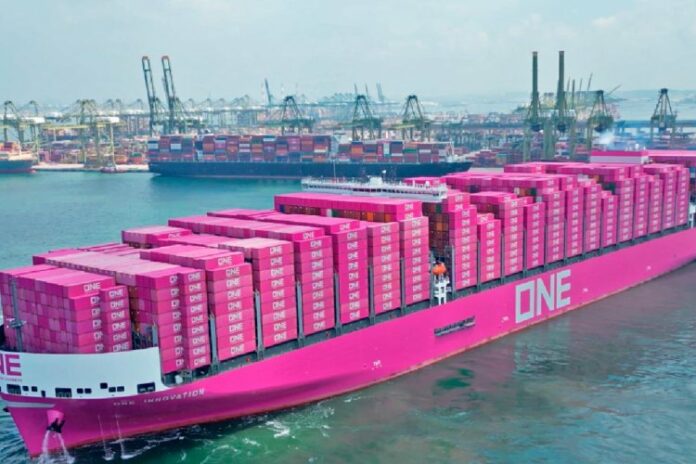
Ocean Network Express (“ONE”) has advanced its Green Strategy by implementing a Ship Recycling Policy and joining the Ship Recycling Transparency Initiative (SRTI), reinforcing its commitment to responsible practices and environmental stewardship. 

Both moves align with ONE’s efforts to enhance transparency, promote ethical operations, and uphold high environmental standards throughout the entire lifecycle of its vessels.

As ONE continues to expand its owned fleet, the Company is strengthening its commitment to the safe and environmentally responsible decommissioning of ships at the end of their operational life. 

In line with this commitment, ONE has established a Ship Recycling policy, requiring that all ONE vessels be recycled only at certified and reputable recycling facilities that operate in compliance with applicable international regulations and standards. In joining the SRTI, ONE will disclose its ship recycling policies and practices, supporting the initiative’s efforts to enhance accountability and sustainability within the maritime industry by encouraging voluntary data disclosure from shipowners.

Michimasa Noda, Senior Vice President, Sustainability, says, “The development of our Ship Recycling Policy, together with our participation in the SRTI, marks a meaningful step forward in our ‘Clean Ship Recycling’ initiative – one of the seven key pillars of ONE’s Green Strategy.” He adds, “We remain committed to fulfilling our responsibilities as a shipowner and to promoting safe, environmentally sound, and socially responsible ship recycling practices across the maritime industry.”

ONE’s announcement coincides with the upcoming entering into force of the Hong Kong International Convention for the Safe and Environmentally Sound Recycling of Ships (HKC) on June 26, 2025. The HKC stipulates that the recycling of vessels must be conducted in a manner that does not pose any unnecessary risk to human health, safety and the environment.

RensenDriessen enters deep-sea market with two LNG tankers built in China

0

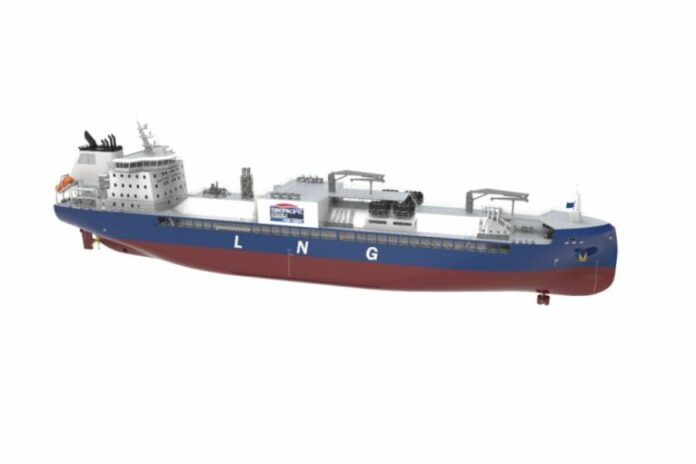
RensenDriessen Shipbuilding & Shipbrokers is stepping into the deep-sea segment with the brokerage of two 20,000m³ sea-going LNG tankers. 

The project marks a new chapter for the Dutch firm, best known for its inland shipping expertise. With more than four decades of experience in inland vessel design, construction, and brokerage, RensenDriessen is now applying its proven ‘Best of Both Worlds’ model: combining cost efficient newbuilding in Asia with Dutch maritime knowhow, client support, and project oversight to sea going tonnage.

Each vessel will measure 160 meters in length and 25 meters in width, with a designed service speed of 15.5 knots. Equipped with WINGD LNG dual fuel engines and iCER emissions reduction technology, the tankers are designed to meet the demands of today’s deep-sea LNG trades with greater fuel flexibility and environmental performance.

RensenDriessen brings extensive experience in sourcing the right yard for the right job. With access to more than 50 shipyards across China, the company is well positioned to broker complex or specialized tonnage. In the case of LNG tankers, not every yard has the technical capacity to handle highly specialized cargo systems, making precise yard selection crucial.

“This is more than just a transaction. It’s a next step in our development as a brokerage partner with a European heart and global reach,” says Wim Driessen, Managing Partner at RensenDriessen. “We have a solid track record in building vessels in China and know how to align each project with the most suitable yard. By entering the short-sea and deep-sea markets with a proven business model, we’re opening up new opportunities for shipowners who want to combine affordability with quality and flexibility.”

The vessels are being built for a Northern European owner focused on LNG transport and distribution. Steel cutting for the first vessel is scheduled to take place in two weeks, with delivery expected in April 2027. Steel cutting for the second vessel will follow in approximately four months, with delivery set for September 2027. Once completed, the tankers will be deployed in both Asian and European waters. In parallel, RensenDriessen also has an LCO₂ tanker on order in China, which will be deployed in Northwest Europe for the export of captured CO₂.