-11.4 C
New York
Home Blog Page 545

Equinor and partners receive permission to increase gas exports from two fields

0

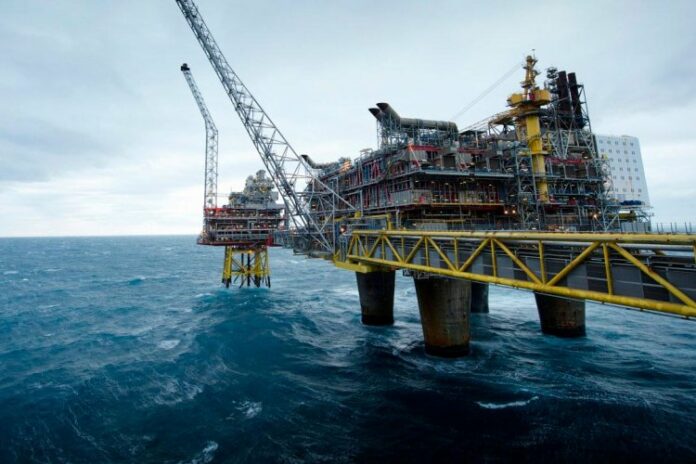
Production permits for the Oseberg and Troll fields have each been increased by 1 billion cubic meters (bcm) for the gas year starting 1 October.

Already in June, Equinor took steps to evaluate and develop concepts for enhancing the production and exports to the European market. This work resulted in enhanced production permits from the Ministry of Petroleum and Energy for the Oseberg and Troll fields.

Specifically, Equinor and its partners have received production permits for the gas year 2021 (starting 1 October) which for each is 1 bcm higher than for the current year, i.e. an increase from 5 bcm to 6 bcm for Oseberg and from 36 bcm to 37 bcm for Troll.

Helge Haugane, senior vice president Gas & Power, says:

“The production permits allow us to produce more gas from these two important fields this fall and  through the winter. We believe that this is very timely as Europe is facing an unusually tight market for natural gas. At Equinor we are working on measures to increase exports from our fields on the NCS.”

After 25 years of significant gas exports from Troll, around 50% of the gas is left in the ground. To further develop the Troll-area and reinforce our ability to secure gas deliveries to Europe in the coming decades, Equinor has recently completed the Troll Phase 3 project.

Recoverable volumes from Troll phase 3, which will produce the Troll West gas cap with industry leading low CO2 emissions, are estimated at as much as 347 billion standard cubic metres of gas. Total recoverable gas volume remaining in Troll is estimated to be 715 billion standard cubic metres.

Helge Haugane says:

“Now we are ramping up production at Troll following the completion of the Phase 3 project, and we expect to reach plateau production from 1 October. We take pride in being a long-term, reliable supplier of energy and we are happy that we have been able to identify ways to export as much as practically possible into this tight market.”

Troll phase 3 will extend the life of Troll A and the Kollsnes processing plant beyond 2050, and the plateau production period by 5-7 years.

Zinus secured new contract for autonomous ferry charging systems

0

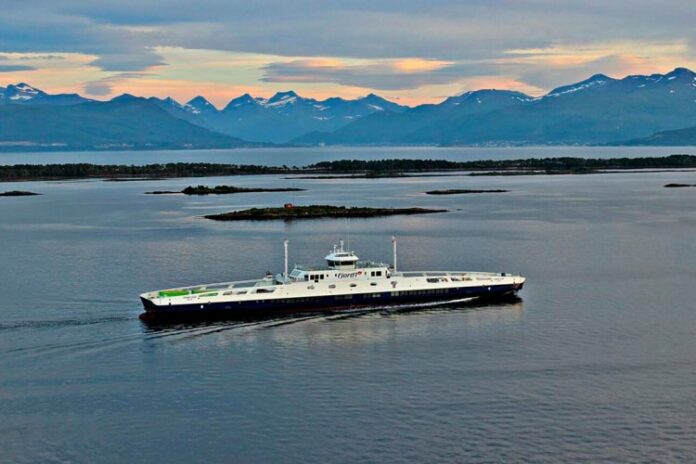
Norwegian Electric Systems (NES) has ordered Zinus’ autonomous charging solution for electrification of the ferry connections Bognes-Skarberget and Drag-Kjøpsvik in Nordland county – above the Arctic Circle. From 1 December 2022, both routes will be operated by the ferry company Fjord1.

Bognes-Skarberget is an important part of the E6, the main thoroughfare through northern Norway, while the 15-kilometer-long crossing from Drag to Kjøpsvik will be the longest electrified ferry connection in Norway. At all the ferry quays there are large tidal differences.

The delivery from Zinus includes one ZPP700 charging tower for each of the four ferry quays, as well as six SWC100 charging connections to be installed on board the ferries MF Glutra, MF Fannefjord and MF Lote. The systems will be put into operation in the first and second quarters of 2022. Together, the charging tower and connection form an autonomous system that charges electric ferries fully automatically at call. Connecting the ferries to the power supply only takes around 20 seconds, and the system can deliver a current of as much as 4400 amperes.

Odd Bjarte Johnsen, Project Manager in Fjord1 ASA, says:

“We look forward to a good collaboration with Zinus and NES on this delivery.”

Sales Manager at Zinus, Ronny Olson, is pleased with the trust shown from NES and Fjord 1.

Olson says:

“This is a valuable contract for Zinus. Not only financially, but also because we are connecting with new customers. Also serving Fjord1 with our equipment, means that we have deliveries to all the major ferry companies in Norway. The contract is therefore yet another confirmation of the trust we gained in the market, and it shows that our Norwegian-manufactured products for the green shift are doing well in competition with major international providers.”

He believes that Zinus’ Norwegian anchoring has been important for the company’s success in the domestic market.

Olson believes:

“Norwegian-developed and -produced technology, at competitive prices and with short delivery times, short shipping distances and a good service apparatus, has made us an important player in the work of increasing the sustainability of Norwegian shipping.”

Wärtsilä signs agreement featuring latest digital innovations with STQ of Canada

0

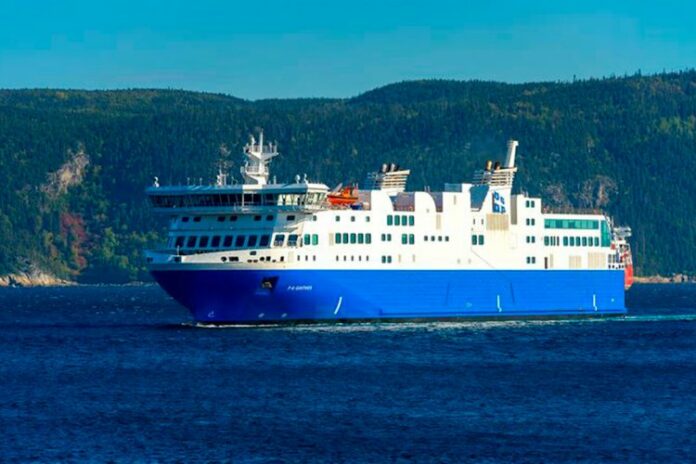
The agreement covers the ‘F.A. Gauthier’, a 133 metres long ferry operating with Wärtsilä 34DF dual-fuel engines and other Wärtsilä equipment. Signing of the agreement took place in the second quarter of 2021 and there is a further five-year extension option. This agreement is a renewal of a maintenance agreement that had been running for the previous five years.

Among the services provided by the Wärtsilä agreement are the company’s unique Expert Insight tool and Data-Driven Dynamic Maintenance Planning made possible by the Wärtsilä Data Collection Unit (WDCU). Expert Insight uses artificial intelligence and advanced diagnostics to take predictive maintenance to a level not earlier possible. It is estimated that unplanned downtime can be reduced by 30 to 50 percent. Communication between Wärtsilä’s experts and onboard crew can take place via the Expert Insight collaboration app. The WDCU collects and transmits operational data to the cloud for remote monitoring. This facilitates advanced analytics, thus providing accurate insight into the vessel’s performance.

In addition to the Wärtsilä engines, support is also provided to the Wärtsilä LNGPac fuel storage, supply, and control system, the Gas Valve Unit, and the ship’s electrical and automation systems. Included will be scheduled maintenance parts, field service, workshop services, and logistics for the covered equipment.

Luc Morneau, Director of Marine Operations at STQ, says:

“The cooperation with Wärtsilä is important and beneficial to our operations. This latest agreement will ensure the safety and optimal functioning of the equipment, while also ensuring that maintenance planning and procedures are optimised, leading to valuable reductions in operating costs.”

Cole Lowder, Agreement Sales Manager, Wärtsilä Marine Power, says:

“The renewal of this agreement demonstrates the benefits and value that it brings. It also strengthens the relationship between our companies. As the marine industry adopts more complex technologies, equipment insight, dynamic maintenance planning, and real-time technical support add considerable value and are becoming increasingly important. Maintaining and optimising an asset is also good for the environment, as well as for the fuel bill.”

The ’F.A. Gauthier’ is part of STQ’s fleet of ferries operating in and around the Canadian Province of Quebec as part of the regional transportation system.

SHAPE UK project will help develop green hydrogen energy system

0

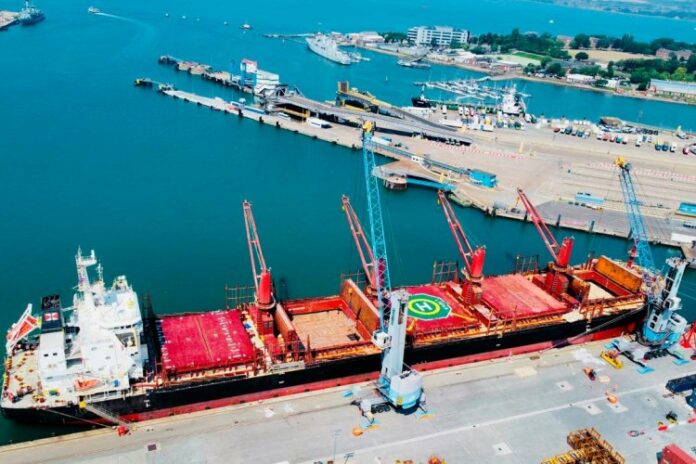
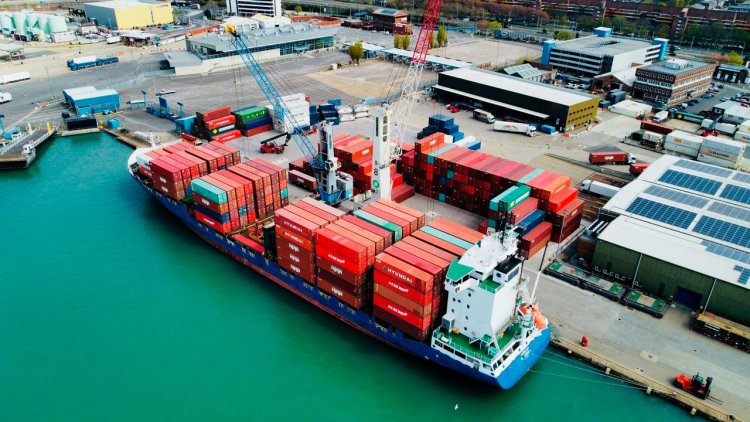
The SHAPE UK project will help develop and demonstrate a Green Hydrogen energy system within Portsmouth International Port.

An project, led by the University of Portsmouth, has been awarded £1.5 million to help develop and demonstrate a Green Hydrogen energy system within Portsmouth International Port.

The Shipping, Hydrogen & Port Ecosystems UK (SHAPE UK) project was named as one of the winning projects of the £23 million Clean Maritime Demonstration Competition, funded by the Department for Transport, to propel the government’s commitment to have zero emission ships operating commercially by 2025 and establishing the UK as world leaders in clean maritime.

The winners were announced on September 15th by Transport Secretary Grant Shapps, in Greenwich, as part of the greenest ever London International Shipping Week.

Maritime operations are crucial to the efficient movement of goods nationally and globally but are often high contributors of CO2e emissions and other air pollutants. The adoption of green low carbon energy systems offers the potential to support the necessary transition of ports and their operations to net-zero.

Dr David Hutchinson, Reader in Environmental Innovation and Innovation and Impact Development Manager for the Faculty of Technology, said:

“SHAPE UK represents a milestone in the move to innovative low-cost green hydrogen generation and storage systems that bring significant reduction in carbon emissions and air pollution in and around Portsmouth and other UK ports.”

Portsmouth International Port is the UK’s largest and most successful municipal port, owned by Portsmouth City Council, and is one of the sites of the new Solent Freeport. It is committed to becoming the first carbon neutral UK port by 2030, and the first zero-emission port by 2050.

The SHAPE UK project will help identify the barriers, infrastructure and regulatory considerations that will enable port managers to install a “Green Hydrogen” generation and storage system within the port. It will also supply a working vessel to the port authority, powered by an engine using green hydrogen.

Green hydrogen uses renewable energy sources, such as wind and solar, to power the electrolysis of water to create hydrogen, which will be used to power maritime vessels and dockside vehicles.
Dr David Hutchinson, Reader in Environmental Innovation and Innovation and Impact Development Manager for the Faculty of Technology at the University of Portsmouth, said:

“The government has a very ambitious environmental target within the maritime sector. SHAPE UK represents a milestone in the move to innovative low-cost green hydrogen generation and storage systems that bring significant reduction in carbon emissions and air pollution in and around Portsmouth and other UK ports.

“The project will also help the University achieve its core strategic aims. We have committed to becoming climate positive by 2030 and to becoming one of the UK’s leading civic universities; enhancing the local community and region through our research, services, estate, and staff and student collaboration.

“The port is keen to act as a ‘living lab’ so there will be a great student experience element, which will be particularly relevant for students in our Faculty of Technology, such as those on the renewable energy degree.”

Jerry Clarke, Senior Project Manager at Portsmouth International Port, said:

“As a port operating in the heart of a major city, and that is owned by the people of Portsmouth, we have an obligation to do everything we can to minimise our impact as we continue to grow in the coming years.

“We know that for heavy machinery and vehicles, current battery technology does not provide us with the answers that we need now. Port light goods vehicles and vans have already been replaced by zero-emission electric vehicles.

“Hydrogen and ammonia are the future fuels identified for a zero-emission future for shipping by 2050. SHAPE UK puts Portsmouth International Port at the forefront of future fuel solutions for the UK.”

SHAPE UK, led by the University of Portsmouth, brings together a wide range of expertise from industry and academia – Portsmouth International Port, Lloyd’s Register, five SMEs (Engas, IOTICS, B4T, KnowNow, and COX), two universities (the Universities of Portsmouth and Brighton) and the Connected Places Catapult.

All of the work will be tied together in the form of impact analysis, workable business models and recommendations and plans for future scalability in other ports across the UK.

Aukus: France pulls out of UK defence talks amid row

0

France’s defence minister has cancelled talks with her UK counterpart amid the row prompted by a new security deal between Britain, the US and Australia.

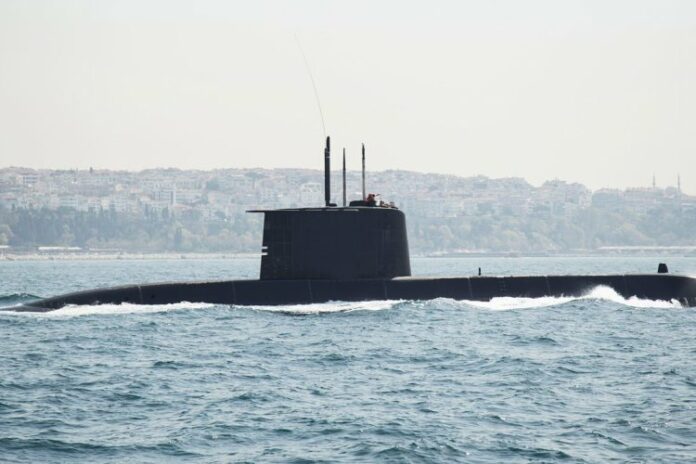
The Aukus agreement brokered last week, widely seen as an effort to counter China’s influence in the contested South China Sea, ended a deal worth $37bn (£27bn) signed by Australia in 2016 for France to build 12 conventional submarines.

French foreign minister Jean-Yves Le Drian has described it as a “stab in the back” that constituted “unacceptable behaviour between allies and partners”. And in a virtually unprecedented step among allies, French President Emmanuel Macron ordered the recall of the French ambassadors to Washington and Canberra.

Prime Minister of Australia Scott Morrison rejected accusations that Australia had lied, saying France should have been aware it was prepared to break the deal.

Speaking on Sunday, Mr Morrison said:

“Ultimately, this was a decision about whether the submarines that were being built, at great cost to the Australian taxpayer, were going to be able to do a job that we needed it to do when they went into service and our strategic judgement based on the best possible of intelligence and defence advice was that it would not.”

The agreement means Australia will become just the seventh nation in the world to operate nuclear-powered submarines. The pact will also see the allies share cyber capabilities, artificial intelligence and other undersea technologies.

But it has been criticised by China, which has accused the three powers of having a “Cold War mentality”.

And on Monday, North Korea, which has its own closely-watched nuclear weapon and missile programmes, warned it could spark a “nuclear arms race”.

Source: BBC

AD Ports Group to develop new cruise terminal in Aqaba

0

AD Ports Group has signed a Heads of Terms agreement with the Aqaba Development Corporation that will see AD Ports Group take on the establishment of a state-of-the-art cruise terminal at Marsa Zayed in Aqaba.

It will be the first facility to be developed by AD Ports Group in the Hashemite Kingdom of Jordan and its first cruise facility outside of the United Arab Emirates.

The new terminal will serve as a gateway in the Port of Aqaba that will receive cruise ships passengers visiting the Red Sea, in addition to serving as a major attraction for the residents of Aqaba with a wide range of tourism, commercial, and entertainment services.

A further Head of Terms agreement was also signed, stating that AD Ports Group, through its digital arm, Maqta Gateway, will manage the implementation of an advanced Ports Community System (PCS), which will oversee communication between Aqaba ports and terminals operators, Aqaba Special Economic Zone Authority (ASEZA), Aqaba Development Corporation, Jordan Maritime Commission, customs, support services and on-land connections for the Port of Aqaba.  

Leveraging its long-standing and extensive expertise as a global facilitator of trade and logistics, AD Ports Group will work closely with the Aqaba Development Corporation to deploy the digital system to expand the technical capacity and capabilities of Aqaba ports.

The agreement was signed during a visit by a senior delegation from the Hashemite Kingdom of Jordan headed by Eng. Nayef Ahmad Bakheet Altheeb, Chief Commissioner, Aqaba Special Economic Zone Authority to Abu Dhabi and is the first of a series of strategic partnerships with AD Ports Group.

Captain Mohamed Juma Al Shamisi, Group CEO, AD Ports Group, said:

“The creation and operation of a new cruise terminal at Marsa Zayed will be a milestone for Jordan’s fast-growing cruise and tourism sector and is the first of many enhancement projects that we have planned.

“In addition, as part of our continued commitment to support the growth of Jordan’s maritime industry, AD Ports Group, through its digital arm, Maqta Gateway, is leveraging its digital expertise to implement a robust Port Community System at the Aqaba ports ecosystem that will accelerate the exchange of goods and elevate commerce to new heights.”

Hussein Alsafadi, CEO, Aqaba Development Corporation said: 

“Developing the cruise terminal in Aqaba will significantly support the growth of the tourism sector in the Kingdom, which will expand of the scope of onsite facilities and services.

“It will also facilitate the movement of cruise ship passengers arriving from countries across the Mediterranean Sea and Europe, who typically visit the Golden Triangle of Jordan. Stretching from the desert landscape of Wadi Rum to the sandy beaches of Aqaba and the ancient city of Petra, the Golden Triangle is considered by many to be among the top tourism destinations within Jordan. This cooperation will also promote our tourism offerings, create new jobs, and strengthen Aqaba’s status as a major regional hub.”


New project to investigate net-zero options for channel ferry fleet

0

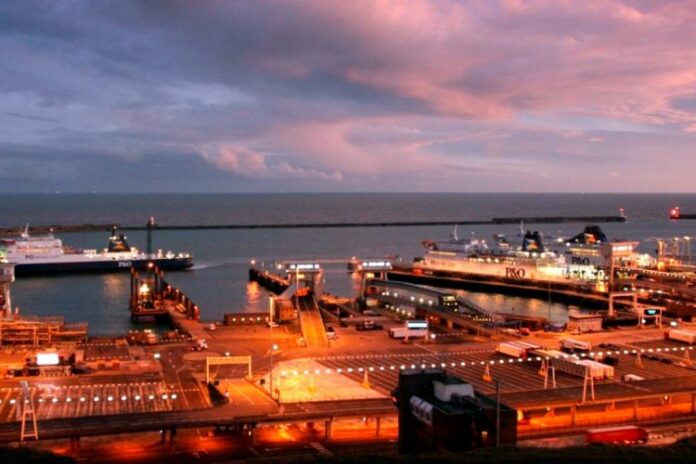
The University of Kent is leading a new research and innovation project with the Port, P&O Ferries, Warwick Manufacturing Group and Schneider Electric to investigate steps towards decarbonisation of the cross-channel ferry fleet. This project will support the delivery of the Port of Dover Air Quality Action Plan.

Vicki Beatty, Head of Safety, Quality and Environment at the Port of Dover said:

“As the UK approaches the important hosting of COP26, the United Nation’s climate change summit, we are delighted to be working with The Dover Clean Ferry Power (DCFP) consortium, including customers and academic partners, on the opportunity for hybrid and fully electric propulsion vessels on this critical trade route between the UK and its main trading partner, the European Union.

This project supports the design and development of technologies for the reduction of greenhouse gas emissions as set out in the Clean Maritime Plan. This will help us understand how to capitalise on the unique benefits that Dover offers now as the shortest crossing to Europe, ensuring its efficiency, capacity and resilience can continue to be enjoyed by future generations across the nation.”

The seven-month project will be led by Kent Business School, utilising the University’s experts in sustainability, cost-analysis and economic development to investigate decarbonisation options and optimising energy demands to see how net-zero energy can be supplied to ferry vessels.

Currently, Port of Dover vessels spend energy through in-harbour activity, open sailing and on-vessel services (such as heating, lighting and hospitality). Some vessels are hybrid; self-charging on-board batteries whilst in open sailing and then using the battery charge whilst in-harbour.

The project will analyse how much net-zero energy can be stored and delivered in-harbour, to accelerate the adoption of hybrid or fully electric propulsion vessels in the Short Straits (Dover to Calais and Dunkirk) ferry fleet. Insights gained may then have the potential to extend to cruise and cargo operators, as well as adaptation of experienced vessels.

Simon Barnes, Funding & Partnership Development Manager in the University of Kent’s Research and Innovation Services Operations and Project Manager said:

“For the University of Kent, this new project builds on a previous successful work with the Port of Dover and is an excellent example of a collaborative project with the University, industry partners and consumers.

It is our unified aim to investigate potential avenues that can lead to reductions in carbon emissions as part of the national priority of net-zero. The University of Kent is dedicated to the endeavour through a series of initiatives, with the Dover Clean Ferry Power project as a prime example of the role we play regionally and in applying intensive research to vital national goals.”

MissionEase passes test for Nexans in sea trial of first full-scale system

0

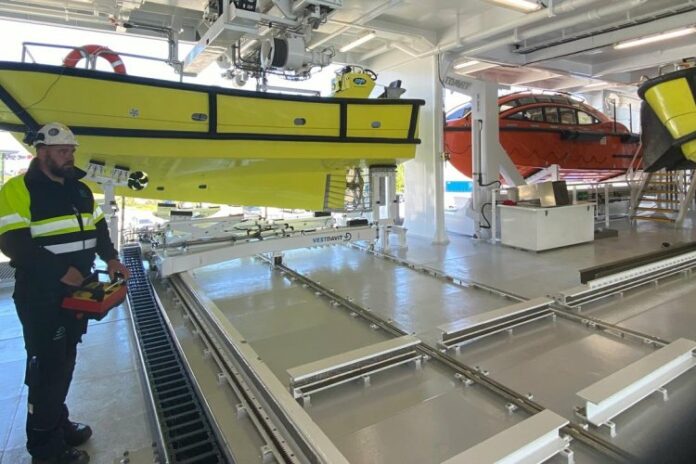
The use of MissionEase on the vessel constructed at Norway’s Ulstein Verft shipyard marks the first commercial delivery for Vestdavit of the full-scale system, which comprises an inboard hangar with an automated track-and-trolley system to launch multiple craft from either side of the ship.

Nexans’ Vessel Operations manager Knut Flage says:

“This is a significant upgrade in boat-handling as it provides much greater flexibility and efficiency in deploying workboats for cable installation, while also facilitating easier and safer launch-and-recovery operations in variable sea states.”

The Nexans Aurora is the most technologically advanced cable-laying vessel of its kind and will be used to install subsea cables to connect offshore wind farms to national grids, as well as interconnectors between countries, while also supporting electrification of offshore platforms.

The vessel has been undergoing final commissioning and testing following a successful sea trial after being delivered on time on 31 May this year by Ulstein.

It is set to lay cables on the Empire Wind project off the US East Coast, as well as the Seagreen wind farm off Scotland and Crete-Attica interconnector in Greece.

The MissionEase hangar will accommodate and handle a total of eight heavy-duty workboats that will be used by Nexans to control the float-in of cable ends to shore, as well as for inspection, maintenance and repair work on cables close to shore and shallow-water surveys.

Such boats have to keep control of between 2-5km of submarine cables that are floated into shore on buoyancy bags on the sea surface.

Typically, workboats have been loaded onto a cable-laying vessel and launched by crane onto the water.

Flage explains:

“The MissionEase system is seen as a big improvement from an HSE viewpoint, while the track-and-trolley arrangement is able to handle a large number of boats and gives us full freedom in how they are deployed.”

The Nexans Aurora, with 10,000 tonnes of cable load capacity and advanced instruments for cable transport and installation, is designed for operations in rough weather, with high manoeuvrability and DP3 station-keeping capability.

As such, MissionEase offers a wider weather window for launch and recovery of small craft that is important for efficient implementation of cable-laying projects given operating costs for the vessel, according to Flage.

Another benefit of the system is that the hangar allows for improved maintenance of workboats, he says.

Flage says:

“We have carried out an excessive number of launch-and-recovery tasks under different conditions since the vessel left Ulstein and the system has been working well, with only minor modifications to the lifting table to hoist boats up from the cradle.”

Navigator Gas awarded DNV AiP for new ammonia fuelled gas carrier design

0

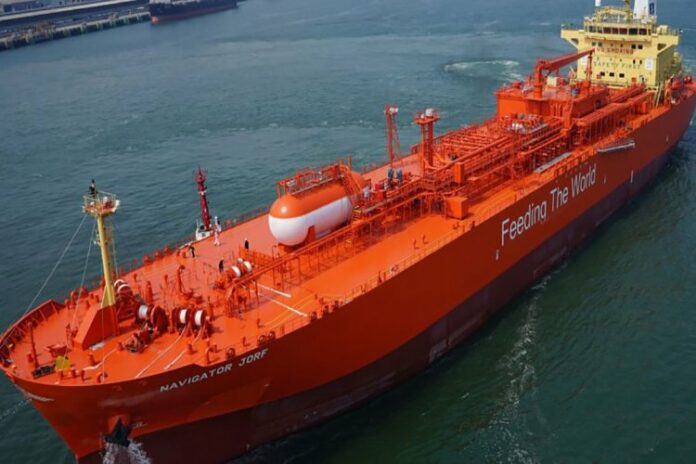
An industrywide consortium, including MAN Energy solutions, Babcock International, and the Norwegian Maritime Authority (NMA), has collaborated with Navigator Gas to achieve the Approval in Principle (AiP) from DNV.

The new gas carrier design has been awarded the AiP based on the special features notation (GF NH3) under DNV’s new rules for the use of ammonia as fuel in gas carriers. DNV, alongside the NMA, reviewed the design and relevant documentation and found no potential showstoppers to its realisation.

Paul Flaherty, Technical Advisor to Navigator Gas, said:

“Navigator Gas been discussing Ammonia as a fuel with our consortium partners since 2018, when this topic was on the fringes of discussions surrounding decarbonisation and the use of alternative fuels. Those early discussions on feasibility led to the completion of a comprehensive HAZID in early 2019, which remains as valid today as it was then. This has also been used as the base safety case during our AiP discussions with DNV. Since our discussions began, we have witnessed an exponential increase in the number of projects around the globe looking at Hydrogen and Ammonia as carbon free source of energy.”

Paul Flaherty said:

“Obtaining an AiP from DNV for an Ammonia fuelled vessels is the first step in preparing Navigator Gas to meet the future demands of our customers and to reduce our carbon footprint through lower greenhouse gas emissions. In the longer term, using Ammonia as fuel is one of Alternative Fuels options we are pursuing, along with CCS, Carbon Offsetting and improved Vessel Optimisation to reduce our carbon footprint and lower greenhouse gas emissions.”

Torgeir Sterri, Senior Vice President, Regional Manager West Europe, DNV Maritime, said:

“If our industry is going to continue to play a central role in the global economy, we need to be exploring all options that can get us further towards decarbonization. At the same time, we recognize that for our customers, how to tackle the decarbonization challenge is going to be most challenging and significant decision they are likely to make this decade. This is why we have created class notations and guideline that give them the flexibility to find the path that fits their operations and business.”

Andrew Scott, Business Development Director, Babcock LGE, said:

“This ammonia as a fuel concept design is supported by Babcock LGE’s operational experience of delivering Liquefied Petroleum Gas (LPG) fuel supply systems and carrying ammonia as a cargo on gas carriers, meaning specific issues occurring when utilising ammonia as a fuel are well understood, resulting in an inherently safe design. Babcock LGE is enabling the transition towards a cleaner, sustainable future through innovative technologies, and we are delighted to be working with our partners in this significant project.”

Thomas S. Hansen, Head of Promotion and Customer Support, MAN Energy Solutions, said:

“MAN Energy Solutions is happy to work with industry partners in decarbonising the maritime economy where, for us, the path starts with fuel decarbonisation. Here, several zero-carbon fuels offer significant potential, with ammonia of especial interest. Since large quantities of ammonia are already transported around the world, it is a well-established commodity and using it to power ships would be a natural step. In this context, we have already announced that we expect to be make a dual-fuel, two-stroke ammonia engine commercially available for large-scale ocean-going ships by 2024, followed by a retrofit package to make existing maritime vessels capable of running on ammonia by 2025.”

Maritime decarbonisation to cruise forward in Orkney

0

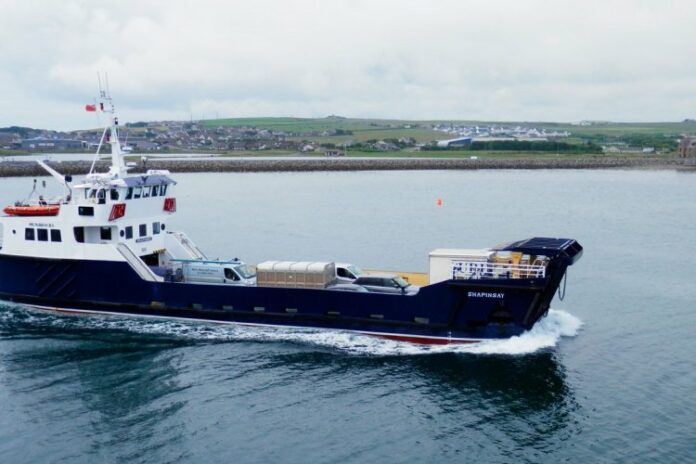
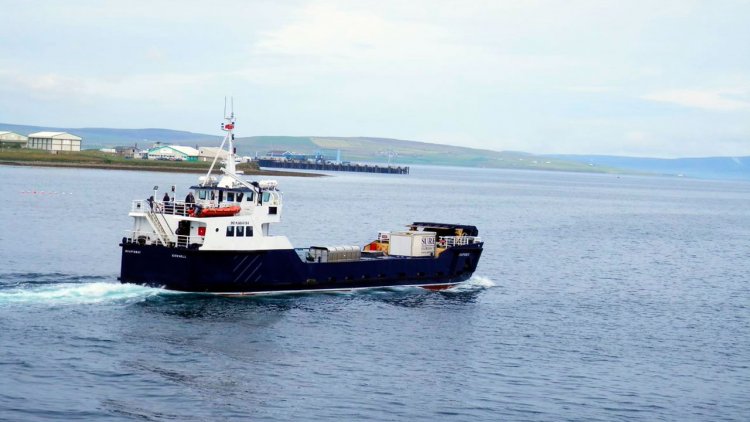
Orkney is to be the setting for an ambitious seven-month project demonstrating technologies to enable maritime decarbonisation.

The £2.2 million HIMET (Hydrogen in an Integrated Maritime Energy Transition) project will explore solutions for decarbonising ferries as well as shore-side activities in ports.

It is one of 55 projects selected for funding under the Department for Transport’s flagship Clean Maritime Demonstration Competition, delivered in partnership with Innovate UK.

Led by EMEC Hydrogen in Orkney, HIMET will progress an ambitious programme of activities centred on the decarbonisation of two key local maritime sectors: ferry services and cruise terminal operations.

To decarbonise ferries, various solutions will be designed and demonstrated including hydrogen storage specifically intended for use on board a vessel, and the supply of on-board auxiliary power using a hydrogen fuel cell. A conventional ferry propulsion engine will also be tested running on pure hydrogen.

To develop resilient shore-side power for the maritime sector a hydrogen engine will be deployed at Hatston to power crew welfare facilities at the cruise terminal, and microgrid solutions will be explored to consider future power requirements for ferry terminals.

In parallel, HIMET will carry out research and stakeholder engagement activities to establish how decarbonised fuels (hydrogen and ammonia) coupled with technology innovations can best inform the broader maritime energy transition and help overcome regulatory barriers.

HIMET draws upon leading energy system and maritime expertise locally in Orkney and is strengthened by the involvement of leading technology developers and sector experts drawn from across the UK. The consortium includes Aquatera, EMEC Hydrogen, Eneus Energy, OakTec, Orcades Marine Management Consultants, Orkney Islands Council, Ricardo, RINA, Schneider Electric, ULEMCo, and Urban Foresight.

Once project demonstration activities are complete, HIMET partners will help facilitate uptake across the UK and further afield, demonstrating the maritime working practices of the future.