-13.3 C
New York
Home Blog Page 543

Ridley promises to smash barriers to using subsea robotics in offshore wind

0

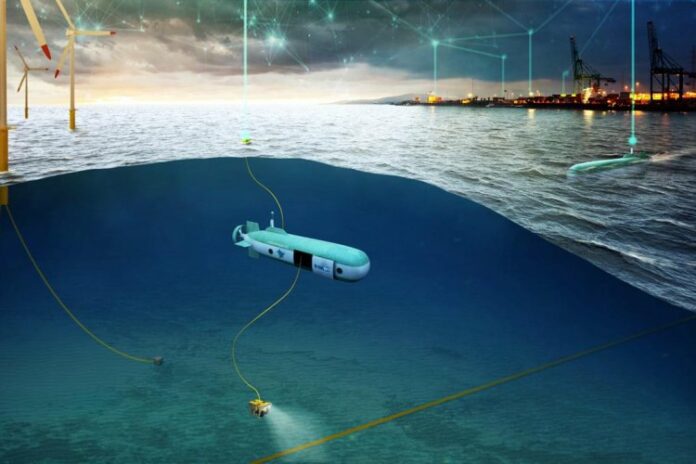
The project, funded by Innovate UK, will develop Ridley, a submersible platform that can transport large robots and remote operated vehicles (ROVs) to offshore sites and release them directly under the water. A successful outcome to the project will inform HonuWorx’ roadmap towards their highly disruptive Loggerhead concept, which will utilise an autonomous mothership as a mobile power and communications hub for ROVs and autonomous underwater vehicles (AUVs).

The concept is being highlighted by ORE Catapult as one that can resolve the remaining barriers to adoption of subsea robotics by the offshore wind industry in terms of cost, carbon footprint, battery life at sea and digital connectivity.

While ROVs exist for offshore wind farm inspections, they rarely achieve more than 50% of their annual utilisation as they rely upon large, crewed, diesel-powered vessels for transportation. Largely due to the use of these vessels, a 21-day inspection mission may cost up to £1.5 million and emit more than 500 tonnes of carbon dioxide.

By transporting the ROVs in a lightweight, autonomous submersible, much of this financial and environmental cost can be eliminated. Once at site, the platform submerges to deploy subsea robots without the need for crane drops, which means deployment is possible in rough weather and stress on the robot’s sensors and tooling is reduced.

A further transformative step will be the coupling of automation software for coordinating multiple platforms with communications technologies that can utilise satellite, 4G and 5G as best suits each location at sea. HonuWorx Distributed Control Centres (DCC) will allow for remote supervision from shore, while equipping the mothership with charging points will resolve many of the battery life issues that restrict the use of ROVs at sea.

Ben George, General Manager of ORE Catapult’s Operations & Maintenance Centre of Excellence, says:

“The offshore wind industry recognises that robotics and automation are key technologies to ensure decades of continued growth for the sector: sending people to ever more remote and deep-water sites will become progressively more difficult and expensive.”

“Cost reduction, safety improvement and operational integration: those three challenges are driving technology development in offshore wind operations and maintenance. That’s why this project is so significant: it addresses those factors head on, while also aligning with our own priorities around accelerating robotic, sustainable and smart technologies in the sector.”

Lee Wilson, HonuWorx CEO and Co-Founder, says:

“HonuWorx was founded with a vision to accelerate the uptake of underwater robotics technology in vital sectors such as offshore renewables.”

“Our team has spent many years pushing the envelope in subsea robotics and believe that existing operating modes can no longer scale sustainably, or at the pace needed to address some of our most critical challenges. We’re delighted to be working with ORE Catapult on this project. It will give us an acute sense of the issues offshore wind operators face and how we can optimise our technologies to remove them.”

ADNOC Logistics and Services acquires six line boats from Albwardy Damen

0

ADNOC Logistics & Services (ADNOC L&S), the shipping and maritime logistics arm of the Abu Dhabi National Oil Company (ADNOC) has contracted Damen Shipyards Group for six Stan Tugs 1606. The vessels will be used for pushing, towing, hose line handling and berting in ports in Abu Dhabi. The tugs were procured from Sharjah-based Albwardy Damen, as part of ADNOC Group’s commitment to boost in-country value across its operations.

The steel hulled, twin screw vessels are powered by two Caterpillar C18 engines providing 1216 bhp horse power with nearly 16 tonnes bollard pull. Nearly a hundred Damen Stan Tug 1606 type vessels are currently in operation by leading martime logisitics companies worldwide.

Captain Abdulkareem Al Masabi, CEO of ADNOC L&S, said:

“The acquisition of these state-of-the-art Line Boats from Albwardy Damen is in keeping with our strategy of enriching the ADNOC L&S fleet for highly specialised marine services, including comprehensive port operations for customers in the UAE and worldwide. Additionally, we are committed to boosting the in-country value of our operations by contributing to the development of high-end shipbuilding and repair capabilities within the UAE. The country is emerging as a global hub for maritime and shipping operations, and we will continue harnessing the environment for shipping and affiliated sectors through such targeted capital expenditure.”

Pascal Slingerland, regional sales director Middle East for Albwardy Damen, said:

“We are grateful for the long-lasting relationship with ADNOC Group. We have invested heavily in our UAE base with new shipbuilding and ship repair facilities so we can support the full range of repairs and requirements during the lifetime of the vessel. This includes the construction of new boats in the UAE and drydocking in addition to Damen Services Team in the UAE, which offers niche services for the maritime industry.”

The design and build work for the newbuild vessels was undertaken entirely in the UAE. Damen has previously delivered 33 vessels to ADNOC Group across all its operating companies.

The tender for acquiring vessels was floated in November 2019 and the contract was awarded to Albwardy Damen in July last year. Four of the vessels were delivered in May this year and another two were delivered in June 2021.

MOL adopts car carrier operation digital transformation promotion project

0

Mitsui O.S.K. Lines and its group company MOL Information Systems have announced the launch of full-scale operation and practical application of their advanced car carrier cargo loading plan generation system using mathematical optimization, a technology both companies have been working on since 2019.

MOL operates world’s largest car carrier fleets, with about 100 vessels. Car carriers today require much more complicated cargo loading plans than in the past, reflecting changing transport needs, evolving logistics patterns, and more diversity in both production centers and markets for automobiles. As a result, generation of loading plans has become much more time-consuming.

Working closely with Professor Shunji Umetani of Osaka University, MOL has developed an algorithm that derives the optimal “car carrier allocation plan” from among enormous combinations in a short time, and a system that swiftly generates a cargo loading plan, maximizing both efficiency and cargo safety. 

Adoption of the new system reduces the time required to generate the loading plan by about 40%. It leads not only to prompt decision making using innovative, cutting-edge technology, but also eliminates dependency on individual skills. MOL expects it to speed up response to customers and help attract new customers. Improved cargo handling efficiency also helps reduce greenhouse gas (GHG) emissions in car carrier operations.

In addition to the and projects, MOL has launched a study to use mathematical optimization for space management operation, moving ahead to further enhance efficiency in its car carrier business.

Wärtsilä and SHI collaborate on ammonia fuelled engines for future newbuilds

0

The technology group Wärtsilä and the Korean shipbuilding company Samsung Heavy Industries (SHI) have signed a joint development programme (JDP) agreement aimed at developing ammonia-fuelled vessels with 4-stroke auxiliary engines available for future newbuild projects.

Both parties recognise the importance of future carbon-free fuels in the marine industry’s drive towards decarbonisation. The agreement was signed in July 2021.

Wärtsilä has already successfully tested an engine running with a fuel mix containing 70 percent ammonia. The company anticipates having an engine concept capable of operating with 100 percent ammonia in 2023.

Youngkyu Ahn, Vice President, SHI, says:

“There is a lot of interest from owners and operators in the potential for new clean-burning fuels, and ammonia is thought to be among the most promising of these candidates. Wärtsilä has already made significant progress in testing ammonia, and we are pleased to work together with them to bring this to reality.”

Östen Lindell, Sales Director, Wärtsilä Marine Power, says:

“Decarbonisation has become the industry’s goal, and we at Wärtsilä are committed to doing everything possible to achieve this ambition. The adoption of a new generation of carbon-free fuels is central to a decarbonised future for shipping, so this JDP agreement represents an important step forward.”

According to SHI, the most likely initial newbuild targets for ships utilising ammonia fuel will be container vessels and very large crude carriers, operating with 2-stroke main engines and 4-stroke Wärtsilä auxiliary engines.

HHLA’s terminal Tollerort to become preferred hub for COSCO services

0

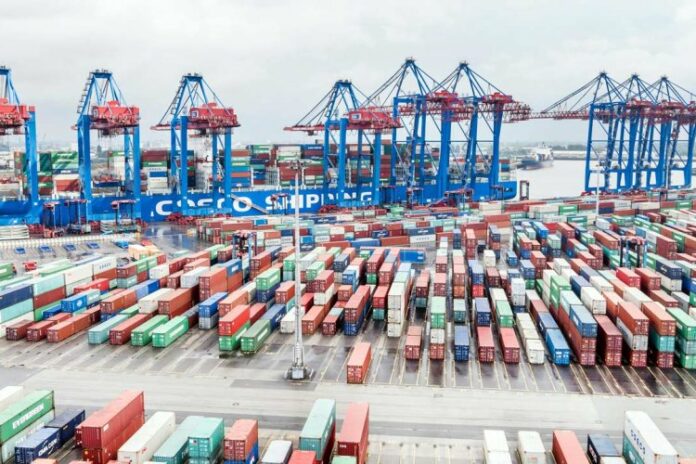
Hamburger Hafen und Logistik AG (HHLA) and COSCO Shipping Ports Limited (CSPL) have successfully concluded negotiations about a strategic investment by CSPL in HHLA Container Terminal Tollerort (CTT). CSPL, a terminal operator listed on the Hong Kong stock exchange and member of the COSCO Shipping Group, takes on a 35 percent minority share in the Hamburg container terminal.

HHLA expects the participation to strengthen the relationship with its Chinese partner, as well as long-term planning security for Container Terminal Tollerort and secured capacity and employment in the Port of Hamburg. With the minority interest of CSPL, CTT will become a “preferred hub” in Europe, meaning it will be the preferred transshipment point for COSCO, where cargo flows will be concentrated.

Angela Titzrath, Chairwoman of HHLA’s Executive Board:

“The maritime world is currently facing intense changes. Long-term, trusting customer relationships – like the ones HHLA has tended to for 40 years in trade with China – are that much more important now. The first Chinese vessel was processed at Tollerort back in 1982. Since then, the terminal has become a hub for liner services of what is now COSCO Shipping Lines. Against this background, HHLA and COSCO equally pursue the goal of successfully securing the future of CTT and an even more efficient dovetailing of Chinese logistics flows in Hamburg.”

Zhang Dayu, Managing Director of CSPL:

“Container Terminal Tollerort in Hamburg is a keystone of logistics in Europe and has excellent future development prospects. We look forward to working together with our partner HHLA to unleash the existing potential and further develop the terminal.”

Among others, two Far East services, a Mediterranean service and a Baltic feeder service of COSCO are handled at CTT today. Notwithstanding the agreed minority interest of CSPL, CTT will continue to be open to all shipping lines.

CTT is one of three HHLA container terminals at the Port of Hamburg. The terminal has four berths and 14 container gantry cranes. COSCO’s largest container ships with a capacity of 20,000 TEU and more are handled here. With its five tracks, the terminal’s own railway station is excellently connected to the hinterland, meaning goods can be moved quickly between CTT and European destinations.

The Port of Hamburg is the most important logistical hub for maritime and continental goods trade between China and Europe. Nearly every third container that is handled in Hamburg has its origin in China or is destined for the Chinese market. Through this strategic partnership with CSPL, it is not just CTT and HHLA that will benefit – Hamburg’s position as a logistical hub in the European North Range and for the Baltic region will also be strengthened.

The closing of the transaction is subject to various competition and foreign trade approvals. HHLA’s Supervisory Board has already approved the minority interest.

K LINE to procure eight car carriers fueled by LNG

0

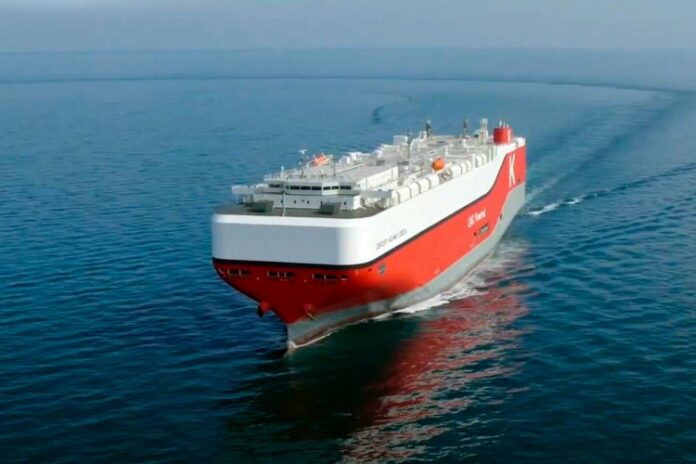
Kawasaki Kisen Kaisha, Ltd. (“K” LINE) has decided to procure eight 7,000 units class car carriers fueled by LNG (liquefied natural gas) by FY2023 to FY2025, following our first LNG-fueled vessel, “CENTURY HIGHWAY GREEN” which was delivered on March 12, 2021.

“K” Line has made an agreement to order the new next-generation of environmentally friendly car carriers from NIHON SHIPYARD CO., LTD., SHIN KURUSHIMA DOCKYARD CO., LTD., and CHINA MERCHANTS JINLING SHIPYARD (NANJING) CO., LTD, two vessels in each of three shipyards.

Next-generation of environmentally friendly vessels are expected to reduce emissions of carbon dioxide (CO2), which is a greenhouse gas (GHG), by 25% to 30%, emissions of sulfur oxides (SOx), which cause air pollution, by almost 100%, and emissions of nitrogen oxides (NOx) by 80% to 90% with use of LNG fuel and EGR (Exhaust Gas Recirculation), compared to conventional vessels using heavy fuel oil.

In “K” LINE Environmental Vision 2050 (Note1), we have set the 2030 interim target of improving CO2 emission efficiency by 50% over 2008, surpassing the IMO target of 40% improvement. We are planning to substitute LNG fuel and other new fuels for conventional heavy fuel oil to achieve the targets set forth.

In accordance with “K” LINE Environmental Vision 2050, we will flexibly and proactively listen to customer demands including environmental issues and find the best solution to contribute to the sustainable development of the society.

Kotug, Rotortug and Captain AI take a step towards fully autonomous sailing

0

Maritime service provider KOTUG International, ship design company Rotortug, and tech start-up Captain AI have demonstrated the first boat in the world that sails the most optimal route without human intervention at the Smart Shipping event of the Netherlands Forum for Smart Shipping. 

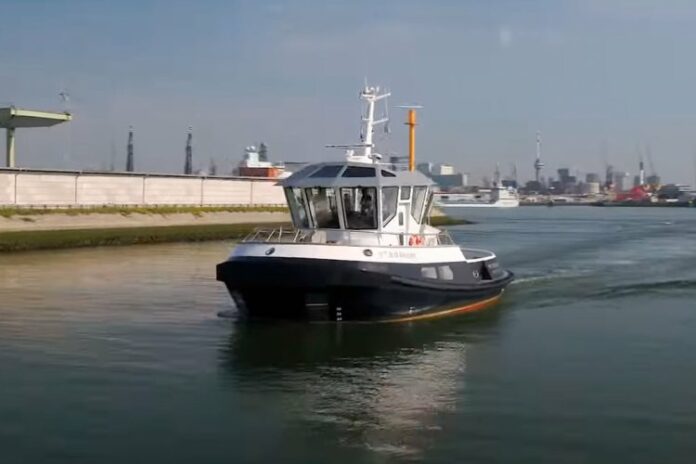
In the summer of 2018, KOTUG and Rotortug already demonstrated that it is possible to operate a tugboat in the port of Rotterdam, the Netherlands, remotely from Marseille, France. That was the first step on the roadmap towards fully autonomous sailing. In collaboration with Captain AI, it is now possible to safely sail the Rotortug “RT Borkum” autonomously on the river Nieuwe Maas in Rotterdam using the Captain AI Route Planner and Autopilot. 

Vincent Wegener of Captain AI says:

“The route planner can be seen as the Google Maps for waterways. It calculates the route, which the boat then autonomously sails, using our autopilot software.”

To define this route as efficiently as possible, Captain AI’s software is connected to the KOTUG Optiport dispatch planning software, enabling optimized route planning in real-time, based on AIS data and Artificial Intelligence. Patrick Everts of KOTUG:

“The digital captain has to know what the vessel’s destination is and how to get there in the most efficient way. Linking Captain AI’s software to OptiPort is not only making the skipper’s life easier because vessels can autonomously navigate the optimal route, but is also saving on fuel and CO2 emission”.

The “RT Borkum” already has undergone several successful operational tests in the busiest port of Europe, proving for the first time that autonomous planning followed by autonomous sailing works in practice.

KOTUG International and Captain AI have entered into a partnership to further develop and commercialize the software. The next step is making the software suitable for large-scale applications and to explore matters such as safety and legislation, in consultation with the users and legislators.

Subsea 7 awarded contract offshore Norway

0

Subsea 7 has announced the award of a sizeable contract by OneSubsea®, the subsea technologies, production and processing systems division of Schlumberger, for a project at the Ormen Lange field operated by Shell in the Norwegian Sea.

Subsea 7’s scope includes the engineering, procurement, construction, and installation of the subsea flowline system as well as the installation of OneSubsea’s multiphase compression system. The contract award follows completion of the front-end engineering design study and will be executed as a Subsea Integration Alliance project.   

Monica Th. Bjørkmann, Subsea 7’s Vice President Norway, said:

“This award demonstrates the value Subsea Integration Alliance brings by combining the technologies and capabilities of OneSubsea and Subsea 7 into a seamless integrated offering, resulting in the delivery of optimised solutions with reduced execution and interface risk. Subsea 7 looks forward to progressing the execution phase of the project with a focus on safe, efficient and reliable operations.”

Pioneering study estimates newbuild could reduce CO2 intensity by a third

0

A new-build, dual-fuel gas carrier vessel generates lower CO2 emissions over the course of its operational life than an existing gas carrier converted to dual-fuel operations. That’s the finding of a unique study by ABS using data based on vessels in the Avance Gas Holding Ltd. (AGH) fleet.

ABS compared potential greenhouse gas (GHG) emissions between a new-build, dual-fuel very large gas carrier (VLGC) and conversion of two AGH VLGCs over 20- and 25-year life cycles, including decommissioning. The findings suggest conversion increases emission intensity by between 13.7 and 32.6 percent over new construction.

Georgios Plevrakis, ABS Director, Global Sustainability, said:

“Decarbonization pathways are highly complex and challenging to evaluate how to produce the best strategy for reducing the GHG footprint over the lifetime of assets. These decisions matter both to the operational performance of shipping companies and to the environment, as well as to further investments as we embrace carbon economics. So, we are proud to be able to assist forward-looking operators, such as AGH, with making sense of the challenges they face with bespoke studies that shine a light on the best investment strategy. ABS is a global leader in this area and is working with leading operators all over the world to develop decarbonization pathways that deliver the best outcome for their fleets.”

The study compared 20- and 25-year lifecycle emissions from the conversion of AGH’s VLGC Monsoon from the diesel-fired SME engine and the diesel-fired SMC engine VLGC PROMISE to dual-fuel operations with new construction of a dual-fuel vessel with similar specifications to AGH’s LPG gas carrier. The LPG carrier was evaluated in both virgin steel and 70 percent recycled steel formulations.

LNG bunker terminal construction begins in Bilbao

0

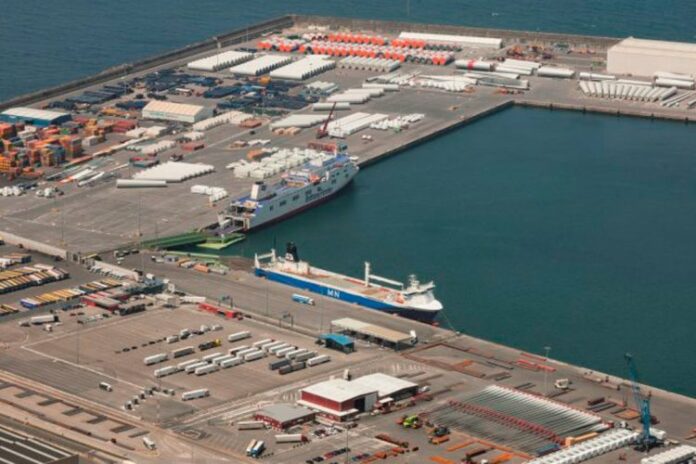
Work on the bunker terminal be completed in the first half of next year, coinciding with the ship’s arrival.

Salamanca will serve UK-Spain routes and will be joined by a second LNG-powered vessel called Santoña arriving in 2023. A separate LNG bunker facility will be constructed by Repsol in Santander and preparatory work is already taking place.

Construction of the LNG bunker terminal in Bilbao represents an important milestone on Brittany Ferries’ journey towards fleet renewal and energy transition. It also reaffirms the long-term partnership between the French ferry firm and fuel supplier Repsol.

Christophe Mathieu Brittany Ferries CEO said:

“This is welcome news and I applaud Repsol and our port partners in Bilbao for driving this forward. The move to cleaner, green fuels relies on an integrated approach that connects vehicles with fuel suppliers and other important partners like ports. We look forward to the completion of works in the months to come and to the arrival of our first LNG-powered ship.”

The Bilbao terminal will have a cryogenic tank with a storage capacity of 1,000m3, which permits the natural gas to be kept in a liquid state at -160°C. The flexible design of the terminal will allow it to service different vessels in the future, representing an important decarbonisation opportunity for port operations.

This project involves an investment of more than €10 million by Repsol.  The Port Authority of Santander has already begun work on the second facility, on the quay where the bunker station will be located.

Both Spanish terminals are to be co-financed by the European Commission through the CEF- Connecting Europe Facilities Programme.