4.4 C
New York
Home Blog Page 411

Arctic warming four times faster than rest of Earth: study

0

The United Nations’ climate science panel said in a special report in 2019 that the Arctic was warming “by more than double the global average” due to a process known as Arctic amplification.

This occurs when sea ice and snow, which naturally reflect the Sun’s heat, melt into sea water, which absorbs it instead.

While there is a long-held consensus among scientists that the Arctic is warming quickly, estimates vary according to the timeframe studied and the definition of what constitutes the geographic area of the Arctic.

A team of researchers based in Norway and Finland analyzed four sets of temperature data gathered by satellite studies since 1979—the year when satellite data became available—over the entire Arctic circle.

They found that on average the data showed the Arctic had warmed 0.75C per decade, nearly four times quicker than the rest of the planet.

Antti Lipponen, co-author from the Finnish Meteorological Institute, told AFP:

“The take in the literature is that the Arctic is warming about twice as fast as the globe, so for me it was a bit surprising that ours was so much higher than the usual number.”

The study, published in the journal Communications Earth & Environment, found significant regional variations in warming rate within the Arctic circle.

For example, the Eurasian sector of the Arctic Ocean, near the Svalbard and Novaya Zemlya archipelagos, has warmed as much as 1.25C per decade—seven times faster than the rest of the world.

The team found that even state-of-the-art climate models predicted Arctic warming to be approximately one third lower than what the observed data showed.

They said that this discrepancy may be due to previous modeled estimates being rendered out of date by continued Arctic modeling.

Lipponen said:

“Maybe the next step would be to take a look at the models and I would be really interested in seeing why the models do not reproduce what we see in observations and what impact that is having on future climate projections.”

As well as profoundly impacting local communities and wildlife that rely on sea ice to hunt, intense warming in the Arctic will have worldwide repercussions.

The Greenland ice sheet, which recent studies warn may be approaching a melting “tipping point”, contains enough frozen water to lift Earth’s oceans some six meters.

Lipponen said:

“Climate change is caused by humans. As the Arctic warms up its glaciers will melt and this will globally affect sea levels. Something is happening in the Arctic and it will affect us all.”
K LINE signs contract with QatarEnergy for seven newbuilding LNG vessels

0

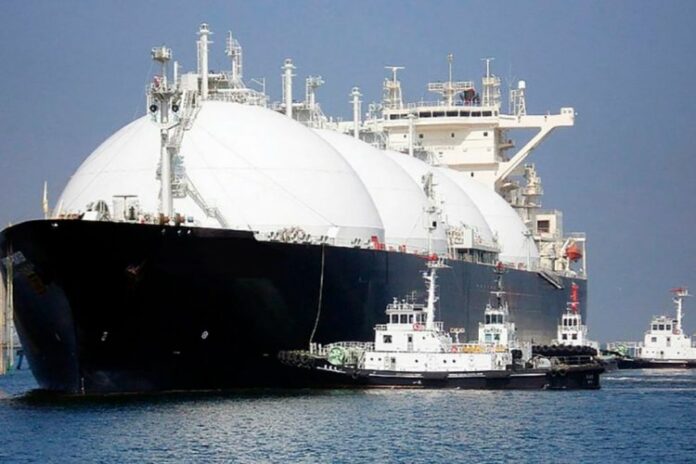
The joint venture companies have concurrently executed Shipbuilding contracts for 174,000m3 LNG carriers with Hyundai Heavy Industries Co., Ltd. QatarEnergy is one of the world’s largest LNG producers and will allocate the newbuilding vessels to transport LNG around the world.

The newbuilding vessels will be equipped with X-DF 2.1 iCER and Air Lubrication System which will contribute to reduction of GHG emissions and realize the ease of environmental impact by lower fuel consumption in operation.

Since the delivery of “Bishu Maru” in 1983 as the first Japanese LNG carrier, “K” Line has been establishing expertise on LNG transportation and developing its worldwide network for nearly 40 years.

“K” LINE and QatarEnergy have had long-term relationship through several existing projects.

The new contracts have been executed as a successful result of supervision of vessel’s construction with abundant experience, the high-quality ship management, and the highest level of safe and commercially optimized operation.

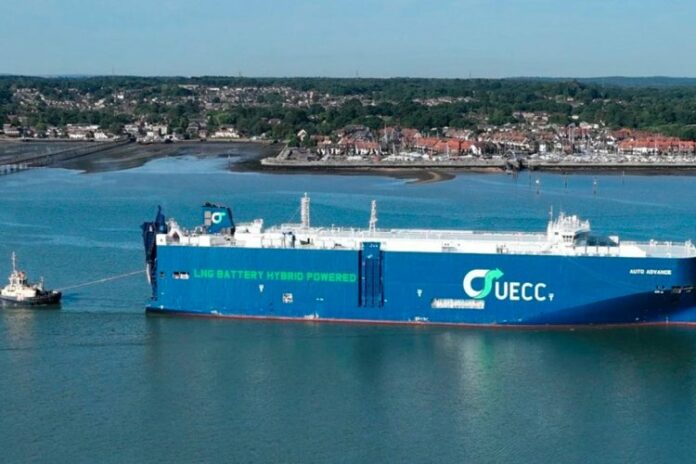
UECC signs up for Svitzer’s EcoTow solution in Scandinavia

0

Biofuels are among the most effective fuels for decarbonisation in the short term as these are readily available and can deliver easy, immediate cuts of as much as 100% in tank-to-wake emissions for existing vessels.

The new partnership will result in a reduction of almost 25% in UECC’s seaborne Scope 3 emissions – covering indirect emissions associated with business operations across IUCC’s value chain. It is estimated that CO2 emissions from UECC’s towage operations at the ports of Esbjerg, Gothenburg and Malmo will be reduced by more than 300,000 kilograms over the term of the agreement with Svitzer.

UECC’s energy & sustainability manager Daniel Gent comments:

“With this agreement, UECC once again positions itself in front of the market, demonstrating that decarbonisation projects are scalable and available. This project aligns with our own supplier policy, which looks to holistically reduce the environmental impact of our business operation, far beyond regulatory requirements.” 

Sven Lumber, head of EcoTow at Svitzer, comments:

“We are extremely pleased to see UECC among the first-movers on EcoTow in Scandinavia. With this agreement they join other global Svitzer customers who partner with us around decarbonisation, gaining the ability to include externally audited CO2 emission savings in their reporting. This shows a strong desire on the part of UECC to demonstrate environmental responsibility.” 

Shipowners will have to meet more stringent environmental performance standards with implementation of the IMO’s Carbon Intensity Indicator from 1 January 2023 and the Fuel EU Maritime regulation due to be phased in from 2025.

MAN Energy Solutions signs MoU with Stena and Proman

0

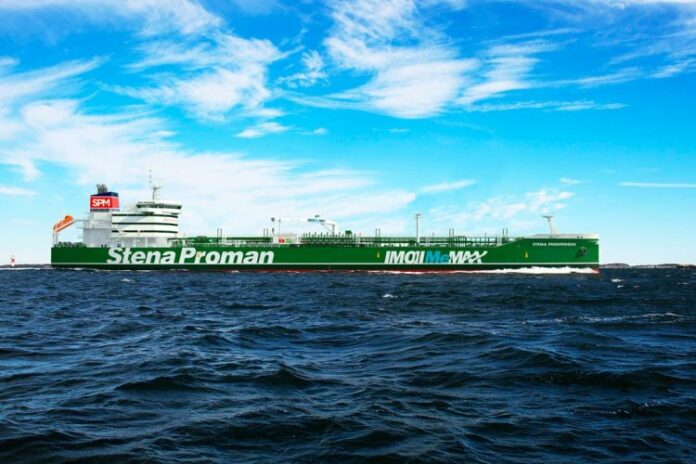
MAN Energy Solutions has signed a Memorandum of Understanding (MoU) with Stena Teknik – Stena’s inhouse R&D division – and Proman – the world’s second largest methanol producer – regarding their mutual cooperation on a project to retrofit MAN 48/60 engines to make them capable of dual-fuel, diesel and methanol operation. Stena and Proman announced their partnership to develop a methanol retrofit and fuel-supply solution last year.

Stefan Eefting, Head of PrimeServ Germany, and Bernd Siebert, Head of Retrofit & Upgrades, signed the MoU on behalf of MAN Energy Solutions, while Ron Gerlach, Technical Director signed on behalf of Stena. Peter Schild, Director of Marine Fuels, signed for Proman.

Eefting said:

“MAN Energy Solutions is happy to work with industry partners on decarbonising the marine segment, a sentiment that Stena and Proman happily share. Methanol has great potential as a future-fuel and is clean, efficient and safe to work with. It offers significant greenhouse-gas reductions, and is even net-zero when produced from renewable energy sources. I’m certain that many interested parties will be watching this retrofit’s progress.”

Under the terms of the agreement, the project will start with an initial feasibility study, defining the scope and limits of the project, the division of work and respective responsibilities. The primary aim of this is to investigate methanol combustion according to the Otto combustion principle with MeOH port fuel injection due to the inherent advantages for legacy installations. Developments on MeOH direct injection technology for newbuilds and the potential for later retrofits may also be considered here.

Upon successful completion of the feasibility study, the second phase would involve the retrofit of the engine(s), commissioning and field testing. The third and final phase would then involve the completion of field testing, and engine handover for commercial operation.

Kalimantan’s biggest container terminal begins operations

0

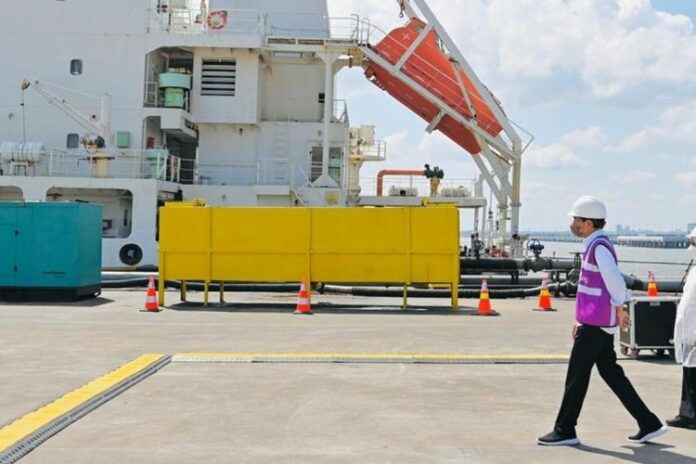
President Joko “Jokowi” Widodo on Tuesday inaugurated a major container terminal at Pontianak Port in the province of West Kalimantan six years after the construction began.

The new terminal in the district of Mempawah has a capacity of 500,000 twenty-foot equivalent units (TEU), making Pontianak Port the biggest on the island, according to government data.

The president said the total cost to build the new terminal is estimated at Rp 2.9 trillion ($195 million).

Jokowi said:

“It’s now the biggest port in Kalimantan. I have asked the president director of [state-owned port operator] Pelindo how much it costs to build this huge facility. It’s Rp 2.9 trillion.” 

The new terminal will provide shipments for the island’s major commodities like crude palm oil, bauxite, and alumina to domestic and overseas markets, the president said.

The president said:

“We need to make sure that such a big investment will help strengthen our competitiveness and improve inter-port, inter-island, and international connectivity.”

He also instructed Public Works and Housing Minister Basuki Hadimuljono to upgrade roads around the port to allow smooth traffic of large cargo trucks and containers.

He said:

“All roads heading to Pontianak Port must be widened and coincidently the minister is present here so I ask him to settle this.” 

The president said he is open to new ideas of renaming the port.

Jokowi said:

“If you want a new different name for this port, you can submit it to the central government. I think we are open to all aspirations but today we already inaugurated this terminal.”

ABL Group awarded marine warranty work for Dutch biofuel plant

0

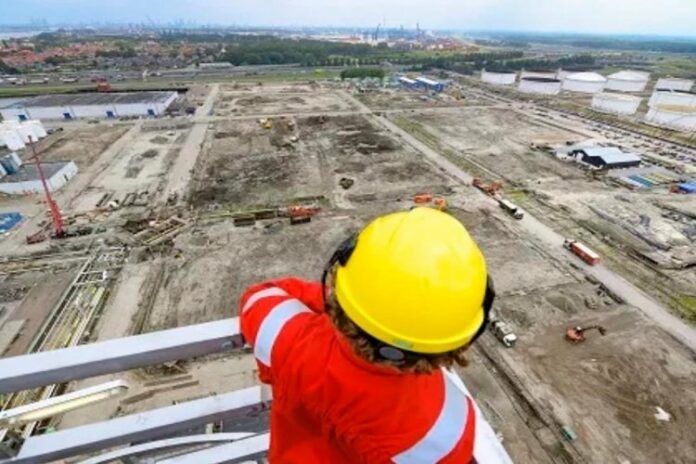
ABL Group has been awarded a contract to provide marine warranty survey services (MWS) for the marine transportation of components for a hydrogenated vegetable oil (HVO) plant, which will be part of one of Europe’s biggest biofuels facilities, in Rotterdam, Netherlands.

The project, operated and led by Shell Energy and Chemicals Park Rotterdam, envisages the construction of a biofuels plant with capacity to produce enough HVO – known as a renewable diesel – to avoid 2.8 million tonnes of CO2 emissions a year, the equivalent of taking more than 1 million European cars off the roads.

Energy and marine consultancy ABL’s scope of work is to provide MWS for all marine transportation operations from Nantong, China to Rotterdam, Netherlands relating to critical project components for the HVO plant.

The biofuels plant is part of Shell’s larger Red II Green project, which also envisages the construction of one of the world’s largest and Europe’s largest commercial green hydrogen production facilities, which will in turn be used to decarbonise the refinery process at the HVO plant.

Jonathan Cook, ABL’s Project Director, said:

“We are delighted to provide MWS on one part of the cutting-edge Red II Green project, which falls entirely in line with our commitment and mission to support and drive energy transition initiatives across energy and oceans.”

ABL’s operations in London, UK, is the contract party. The London office will be supported by ABL’s offices in China and the Netherlands, to carry out on-site attendances locally as part of the marine warranty survey scope of work.

ABL, which is part of Oslo-listed ABL Group ASA, has not disclosed the value of the contract.

Jonathan Cook, ABL’s Project Director, said:

“Our commitment is to accelerate net-zero solutions across all marine markets: renewables, maritime and oil and gas. The Red II Green project seeks to significantly accelerate alternative fuel development in Europe. It is a privilege to support Shell in this shared commitment to engineer a more sustainable world.”

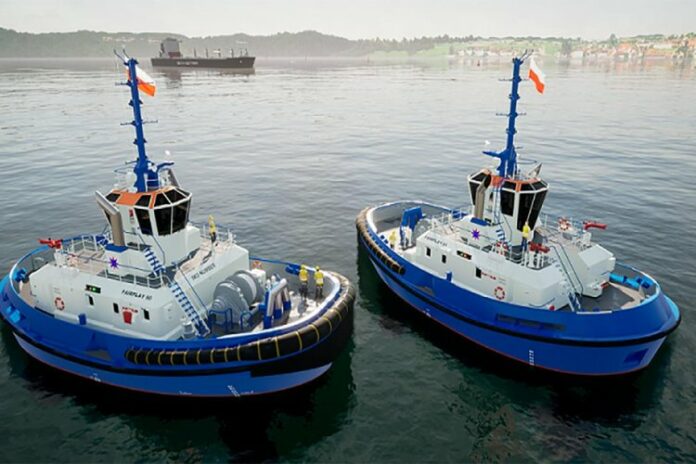
Damen will supply Fairplay Towage Group with two RSD Tugs 2513

0

The twin-fin Reverse Stern Drive (RSD) Tug 2513 is one of Damen’s most capable and innovative harbour tugs with excellent seakeeping behaviour, superb manoeuvrability and outstanding towing characteristics, with a maximum of 80 tonnes bollard pull. As one of Damen’s Next Generation Tugs Series, the RSD tug 2513 also has a focus on offering increased safety, sustainability, reliability and efficiency.

Fairplay’s new tugs will be equipped with powerful render recovery winches with auto tensioning systems, as well as FiFi1-rated fire-fighting systems. Fairplay has also voluntarily opted for immediate IMO Tier 3 compliance by specifying Damen’s Marine NOX reduction system with its advanced active emissions control system using SCR (selective catalytic reduction).

The vessels were already in production at Damen’s specialist tug building facility, Damen Song Cam Shipyard, Vietnam, when the order was placed, ensuring the rapid delivery. Other factors in Fairplay’s decision to source their latest vessels from Damen included their design and quality and the Damen Triton digital platform for the optimisation of operational efficiency.

Joschka Böddeling, Damen Sales Manager, said:

“We are very pleased to be supplying Fairplay with these state-of-the-art tugs. Fairplay has operated Damen-built vessels for many years and we were delighted when last year they purchased a Shoalbuster 2711 for general operations in the North and Baltic seas. This latest contract further reinforces the cooperation between our two companies.”

Arkadiusz Ryz, Fairplay Towage Polska, said:

“We are delighted with this order which is connected to our last year purchase in Damen. Thanks to strong connection with our Clients we actively respond to the growing market needs with highest quality and efficiency available. Those two highly maneuverable and high performance new modern tugs will strengths our fleet and cooperation with Damen.”

Deltamarin to help install WindWings on a Berge Bulk vessel

0

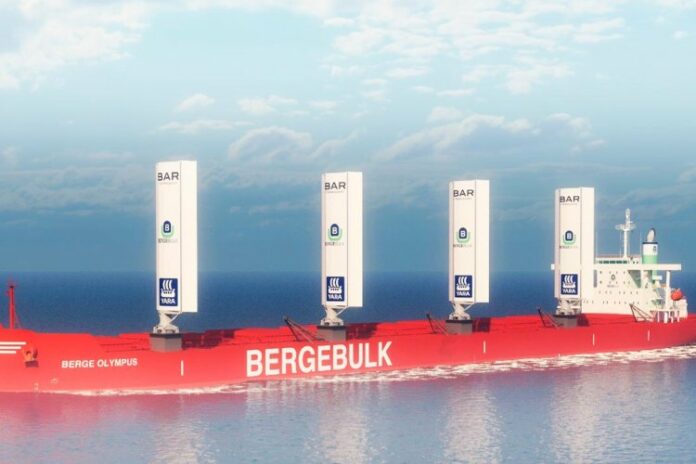
Deltamarin has earlier carried out ship side concept design of the retrofit including the needed analyses for structural matters, stability, other ship integration related issues and sea keeping. 

Basic design work is direct continuation of the project and includes preparation of the design documents needed for class approval for the retrofit.

Esa Jokioinen, Sales Director of Deltamarin says:

“We are excited to continue this project together with Berge Bulk, BAR Technologies and Yara Marine and look forward to seeing the sails in operation next year. Wind has a great potential for decarbonisation of both existing ships and newbuilds and we are very proud to work with these companies that are determined to make it a reality”.

Daniel Chin, Berge Bulk’s Innovation Projects Management Lead says:

“BAR’s WindWings system presents enormous promise, but also enormous challenges. We are confident that Deltamarin’s experience and familiarity with wind propulsion technology makes them our ideal integration partner to execute the installation of BAR wings onto our vessels.”

ZeroLab by Klaveness and South32 complete shipping emissions analysis

0

ZeroLab by Klaveness and South32 have partnered to complete an analysis of greenhouse gas (GHG) emissions generated through shipping, which contribute to South32’s reported Scope 3 emissions. The work aims to provide more accurate insights into shipping emissions to better inform decisions on how they can be addressed.

The analysis tracked greenhouse gas emissions generated by the transport of freight through shipping with calculations based on satellite data, using actual vessel behaviour and sailing distance. This method improves accuracy when compared to the previous method, where calculations were based on spend associated with shipping procurement. 

The data is then made available through an online dashboard powered by Klaveness Digital’s CargoValue solution, which includes information such as shipping related emissions per vessel, and the associated loading and discharge ports. 

The project reflects the increasing demand from customers, investors, and other stakeholders for high-quality sustainability data. 

The next phase of the project will see ZeroLab and South32 establish an emissions baseline and review the data to explore potential opportunities to reduce emissions associated with the shipment of South32’s raw material inputs and products.

Head of ZeroLab Morten Skedsmo said:

“Charterers are keen to understand the role of transportation in their emissions footprint, but while we wait for regulation to catch up, the industry will depend on front-runners to pave the way towards a future of zero emissions freight. Klaveness’ unique platform of services is perfectly positioned to help South32 on that journey.”

South32 VP Sustainability Strategy & Community Holly Buschman said:

“Working with ZeroLab enables us to assess greenhouse gas emissions more accurately within the value chain. The improved data will give us valuable insights and assist with our decision-making when it comes to addressing Scope 3 emissions. We recognise the critical importance of collaborating to support value chain decarbonisation.”

BHP, PPC and Norsepower partner to harness the power of wind-assisted propulsion

0

BHP has partnered with Pan Pacific Copper (PPC), a member of JX Nippon Mining & Metals group, and Norsepower, the leading global provider of auxiliary wind propulsion systems, to reduce greenhouse gas (GHG) emissions from maritime transportation between BHP’s mines in Chile and PPC’s smelters in Japan. 

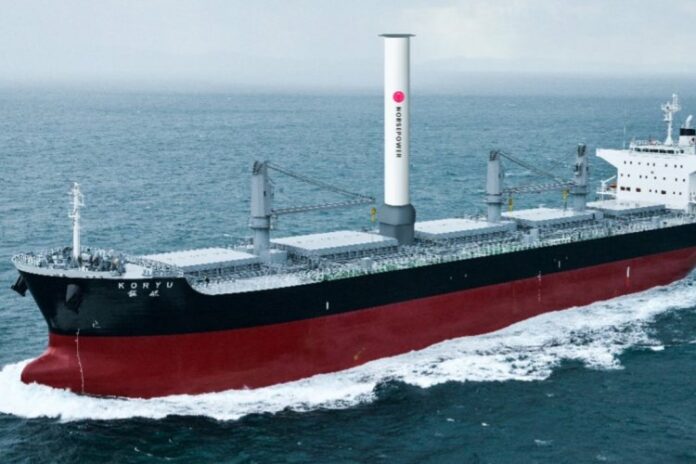
The parties are conducting a technical assessment and plan a retrofit installation of wind-assisted propulsion system onboard the M/V Koryu, a combination carrier operated by Nippon Marine – a member of SENKO group (shares held by SENKO 60%, JX Nippon Mining & Metals 40%). BHP and PPC have multi-year agreements for delivery of copper concentrates from Chile to Japan as well as sulphuric acid from Japan to Chile, making the cargo capacity utilization of M/V Koryu (a 53,762 deadweight tonne combination carrier) one of the highest in the industry.

Norsepower’s Rotor Sails installation – a “push-button wind propulsion” system and estimated to be around ten times more efficient than a conventional sail that requires no reefing or crew attention when in operation – is scheduled for completion by the third quarter of 2023, which is expected to make M/V Koryu the cleanest vessel in its category when measured for GHG emissions intensity. 

Norsepower’s Rotor Sails are modernized versions of Flettner rotors, and the technology is based on the Magnus effect that harnesses wind to maximize ship fuel efficiency. When wind conditions are favorable, Rotor Sails allow the main engines to be throttled back, saving fuel and reducing emissions, while also reducing power needed to maintain speed and voyage time. 

BHP’s Chief Commercial Officer, Vandita Pant, said:

“Identifying and implementing innovative and sustainable solutions through our strong commodity and supply chain partnerships remain essential in supporting BHP’s decarbonisation ambitions. We look forward to working with PPC on the wind-assisted propulsion system to enable further GHG emissions reduction in our supply chain and add to the already strong partnership between BHP and PPC.”

JX Nippon Mining & Metals’ Deputy Chief Executive Officer / PPC President, Kazuhiro Hori said:

“PPC and BHP has been sharing the mission to accelerate the activities for decarbonization in line with our respective climate targets and goals. The Koryu project is a good example of our collaboration and valuable step that proves eagerness by both companies to establish ecosystem partnerships to take on the climate challenge. We are looking forward to further developing the partnership with BHP in various areas.”

Norsepower’s CSO, Jukka Kuuskoski, said:

“Our vision is to set the standard in bringing sailing back to shipping, and empower the maritime industry towards reaching the goal of zero carbon emissions. As fuel prices increase and a carbon levy is initiated, investing in technologies which have proven emissions reductions and fuel savings is essential for long term commercial success. Working with BHP, PPC and Nippon Marine demonstrates the increased commitment to greener operations, particularly within the bulk carrier market. We look forward to completing the installation and seeing the results.” 

This latest partnership with PPC and Norsepower follows BHP’s collaboration agreements in the maritime decarbonisation segment that includes the first marine biofuel trial involving an ocean-going vessel bunkered in Singapore, taking delivery of the first of five LNG-fuelled Newcastlemax bulk carriers and joining a consortium to assess the development of an iron ore Green Corridor between Australia and East Asia. BHP is also a founding member of the Global Maritime Decarbonisation Centre in Singapore.