-2.5 C
New York
Home Blog Page 40

Anglo-Eastern selects Inmarsat’s NexusWave for Hadley Shipping Group

0

Hadley Shipping Group is a long-standing Inmarsat Maritime user. Its transition to NexusWave represents a significant step forward in adopting a unified, bonded multi-orbit solution that will deliver enhanced performance, enterprise-grade cybersecurity, and a scalable platform for future operational needs and crew welfare.

Torbjorn Dimblad, Chief Information Officer, Anglo-Eastern, said: “With NexusWave, we’re able to leverage secure, high-performance connectivity through a truly integrated multi-network approach. This solution aligns with our vision of a digitally advanced fleet, and we’re looking forward to the results of the ongoing trials as we continue to roll out NexusWave across our managed vessels.”

Sunit Das, Director of Operations, Hadley Shipping Group, said: “Unlimited data is a key benefit of Inmarsat’s NexusWave, but our decision to invest goes beyond just bandwidth. This upgrade supports our long-term goals for operational efficiency and crew wellbeing. With the built-in cybersecurity and our confidence in Inmarsat’s capabilities, NexusWave enables us to future-proof our fleet as maritime data and connectivity demands evolve.”

NexusWave combines high-speed connectivity, resilient bonded networks, and seamless global coverage to meet the growing requirements of modern shipping. Designed for scalability, it supports everything from smart vessel operations to enhanced crew welfare programmes.

Gert Jan Panken, Global Vice President, Inmarsat Maritime, said “This collaboration with Anglo-Eastern and Hadley Shipping Group reflects our shared commitment to building smarter, safer, and more connected operations at sea. NexusWave is engineered to meet the complex challenges of modern maritime operations, and we’re proud to support our customers as they embrace the future of connectivity.”
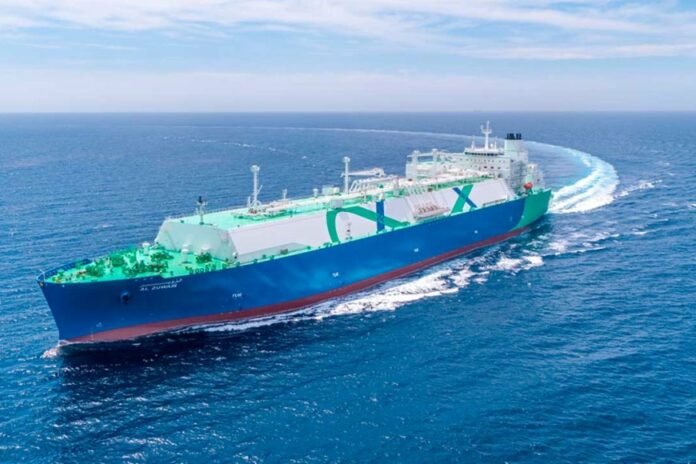
New LNG carrier Al Zuwair delivered for QatarEnergy

0

On August 18, the liquefied natural gas (LNG) carrier Al Zuwair was completed and delivered at the HHI Ulsan Shipyard of HD Hyundai Heavy Industries Co., Ltd. (HHI). The vessel will be deployed under a time-charter contract with QatarEnergy, one of the world’s largest LNG producers.

Al Zuwair is the third of 12 new LNG carriers being built for QatarEnergy by a joint venture comprising NYK, Kawasaki Kisen Kaisha, Ltd., MISC Berhad, and China LNG Shipping (Holdings) Limited. This delivery marks the first of these vessels built at HHI. Al Zuwair also represents the first instance in which the NYK Group will provide ship-management services for the consortium.

The ship is powered by two X-DF 2.1 iCER engines, highly fuel-efficient dual-fuel engines capable of using fuel oil and boil-off gas as fuel. Additionally, the vessel is equipped with an air lubrication system and a reliquefaction device that effectively uses surplus boil-off gas. These innovations promote efficient navigation and help reduce greenhouse gas (GHG) emissions, thereby minimizing environmental impact.

Vessel Particulars

  • Cargo capacity: approx. 174,000 m3
  • Length: approx. 299.00 m
  • Beam: 46.40 m
  • Main engine: X-DF2.1 iCER (dual-fuel slow-speed diesel engine)
  • Builder: HD Hyundai Heavy Industries Co., Ltd.

The core strategy of the NYK Group’s medium-term management plan, “Sail Green, Drive Transformations 2026,” is to deepen the Group’s existing core businesses and invest in new growth businesses. In its Energy Business Division, NYK has centered its strengthened efforts on the LNG/LPG carrier business, which the company has positioned as a growth area. NYK will contribute to realizing a stable energy supply in Japan by leveraging the experience, know-how, and networks the NYK Group has cultivated as one of the world’s largest LNG carrier-owning and management companies.

Incat Crowther commissioned to design new state-of-the-art passenger vessel

0

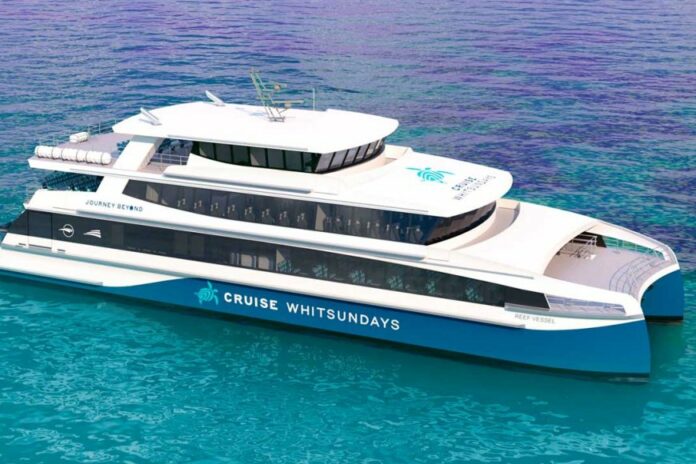
Incat Crowther has been commissioned by Cruise Whitsundays, part of Australia’s leading experiential tourism group Journey Beyond, to design a new, state-of-the-art passenger vessel. Incat Crowther’s scope of work includes the vessel design, tender process for the construction and advice on procurement and commercial processes. The new 36-metre vessel will be built by Austal Vietnam.

The vessel will be deployed year-round as a resort connection service between Airlie Beach, the resorts of Daydream Island and Hamilton Island and Cruise Whitsundays’ Reef World pontoons – located 39 nautical miles from shore at Hardy Reef.

Designed specifically for local conditions, optimised for its routes and tailored to infrastructure, the new vessel will accommodate up to 390 guests – including 10 wheelchair accessible spaces – and will travel at speeds of 25 knots at low engine loading offering high reliability and efficiency.

The multi-deck vessel boasts a range of outdoor and indoor seating options for Cruise Whitsundays’ passengers – including an open-air upper deck that can seat up to 48 passengers and a large viewing platform. The upper deck is also home to a crew room, administration office and a full width wheelhouse with wing stations.

The vessel’s mid-deck features a 36-seat First Class lounge with exclusive viewpoints through large windows from the comfort of first class seating, a lounge and dedicated bar. The mid-deck also features a Premium Class lounge for 64 passengers, while a further 80 passengers have access to an undercover outdoor seating area. It also features passenger bathrooms, a buffet service area and access to the vessel’s main deck via an internal staircase.

The cleverly designed main deck can seat up to 160 passengers and offers a large buffet service area and separate bar, a spacious galley with cold and dry food storage areas, a first aid room and three bathrooms, including one wheelchair accessible bathroom.

Dan Mace, Technical Manager of Incat Crowther said: “We’re excited to be working on this vessel, which Cruise Whitsundays have specified needs to be fully focused on providing a world class tourism experience while optimising operational flexibility, reliability and safety.”

Sture Myrmell, Chief Operating Officer of Journey Beyond said: “With demand continuing to grow, Cruise Whitsundays required an experienced team to help us expand our fleet. Incat Crowther’s deep knowledge of the local conditions and track record of delivering tailored vessels for similar operators here in Australia and around the world were some of the key reasons we chose to partner with them on this project. Incat Crowther’s end-to-end service also means we have confidence that they will partner with us along every step of the way, from design to construction and operation. We’re excited to be working with Incat Crowther and Austal Vietnam and can’t wait to see the boat hit the water.”

The new vessel will be powered by two Mitsubishi S16 T2MPTK engines and will boast Naiad active ride Control Systems for added comfort in wave heights of up to 2.5-metres.

Saipem: milestone achieved in the development of the Yellowtail project in Guyana

0

Saipem has successfully completed its designated scope of work for the development of the Yellowtail field, operated by ExxonMobil Guyana Ltd., located in approximately 1,800 metres of water within the Stabroek Block offshore Guyana.

Awarded the contract in 2022, Saipem undertook the Engineering, Procurement, Construction, and Installation (EPCI) of the Subsea Umbilical, Riser, and Flowline (SURF) system for the Yellowtail field. 

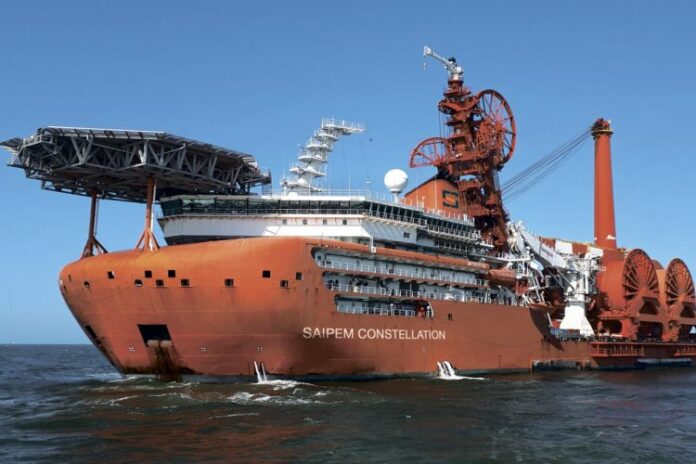
The FDS2 J-lay vessel, one of Saipem’s flagship assets, executed the installation of the rigid flowline and steel lazy wave risers in an early 2024 campaign. The project concluded in 2025 with the Saipem Constellation executing the installation of flexible risers, umbilicals, and the connection of the pre-laid rigid riser to the FPSO. 

Additionally, the Normand Samson, a Saipem-chartered MSV (Multi-Support Vessel), was involved throughout the offshore campaign from mid-2024, delivering subsea pre-commissioning, surveys, light construction, and installation of flowline jumpers fabricated at Saipem’s yard in Georgetown. 

Damen to deliver Stan Tug 1706 ICE to Chippewas of Georgina Island First Nation

0

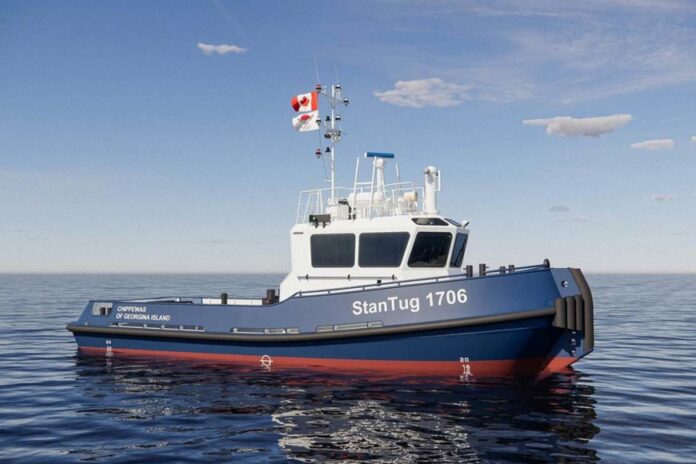
Damen Shipyards Group has recently signed a contract with the Chippewas of Georgina Island First Nation in Canada for the delivery of a Stan Tug 1706 ICE. The community will use the tug to break ice during the colder months, enabling its ferry service to operate for a longer duration each year, covering periods both earlier and later in the season. 

The Chippewas of Georgina Island community approached Damen having observed one of its tugs in operation in the region. The community is located on Lake Simcoe in Southern Ontario.

The acquisition of the Stan Tug 1706 ICE represents a vital improvement in community mobility and supply logistics. The remoteness of the Lake Simcoe region, and the harsh winter conditions it experiences, make safe, reliable transportation essential. 

With its ice breaking capabilities, the tug will ensure wider operability of the community’s ferry service between Georgina Island and Virginia Beach on the mainland.

Following construction of the hull in Poland, Damen will outfit the vessel in the Netherlands. Upon completion, Damen will deliver the vessel to Salaberry-de-Valleyfield in the Montreal region in September 2026, before the annual closure of the St. Lawrence Seaway. 

After that, the client will continue the voyage to Lake Simcoe via the Trent-Severn Waterway before that, too, is closed to marine traffic until the following year.  

The name of the tug has yet to be determined. However, it is known that it will receive a name with deep cultural meaning from one of the community’s elders in their native Anishinaabemowin, or Southern Ojibway, language. 

Damen Sales Manager Americas Dominique Smit, said, “We are pleased to support the Chippewas of Georgina Island First Nation with a vessel that will help to maintain ferry operations in harsh winter conditions. It is an honour to contribute to the community’s connectivity and resilience, and we look forward to a long lasting relationship.”

Seaspan Energy & Anew Climate partner to deliver lower carbon marine fuel

0

Seaspan Energy (Seaspan) and Anew Climate (Anew) have entered into a strategic agreement to offer delivery of renewable liquefied natural gas (R-LNG) to customers on the North American West Coast.

As part of the service offering, Anew will supply renewable natural gas (RNG) certified by the International Sustainability and Carbon Certification (ISCC) and provide pre-audit services to Seaspan required for ISCC certification. The RNG will comply with global standard frameworks like the International Maritime Organization’s (IMO) Net-Zero Framework and the FuelEU Maritime Regulation in the European Union.

This collaboration represents a first-of-its-kind initiative on North America’s West Coast, offering a more sustainable fuel option for ship owners. The initiative builds on the first bio-LNG bunkering in the U.S. that Anew Climate — then known as Element Markets — facilitated in 2021.

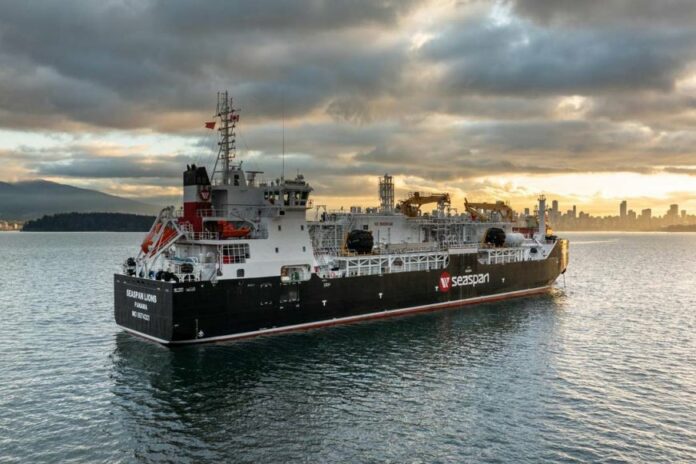
Seaspan Energy is a subsidiary of Seaspan ULC and a market leader on the West Coast for ship- to-ship marine bunkering of liquefied natural gas. In partnering with Anew Climate, Seaspan will expand its portfolio of offerings to include ISCC-certified R-LNG to customers all along the West Coast. This service offering will be among the first to target delivery of ISCC-certified lower carbon marine fuel at scale.

The initiative aligns with emerging guidance from the IMO, which has preliminarily approved measures to encourage emissions reductions like those associated with the use of alternative fuels such as R-LNG.

This partnership marks a significant step forward in delivering scalable, lower-carbon solutions to the maritime industry and accelerating the shift to a cleaner energy future. Anew Climate and Seaspan will work together to identify and develop commercial opportunities that promote the adoption of lower-carbon fuels, with a focus on delivering ISCC-certified R-LNG to ships throughout the region.

Saipem marks First Steel Cut for Tangguh UCC Project at Karimun Yard

0

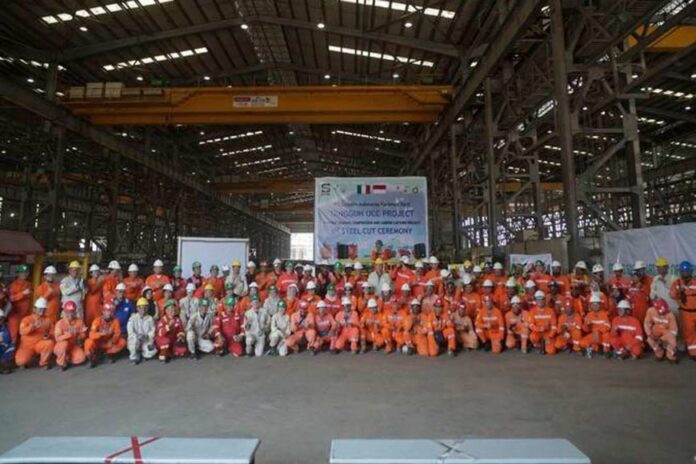
The event was attended by representatives of the client, local and national government bodies, together with key members of Saipem’s management team gathered to celebrate this significant milestone achievement.

The Tangguh UCC project, located in Papua Barat province, Indonesia, is a national strategic project that includes the development of the Ubadari gas field, increasing gas acquisition through carbon capture, utilization, and storage (CCUS) technology, and onshore compression. It is expected to unlock around 3 trillion cubic feet of additional natural gas resources from the Ubadari offshore field.

Saipem’s activities include the engineering, procurement, construction and installation and commissioning of two wellhead platforms, a CO2 reinjection platform, and approximately 90 km of associated pipelines, cables and tie-in to existing brownfield facilities.

The Karimun Yard, recognized as Saipem’s strategic fabrication centre in Southeast Asia, is Saipem’s largest one worldwide and one of the largest in the Southeast Asian region, with over 5,000 employees and approximately 1.4 million square meters area including the marine base and docks. This project confirms Karimun Yard’s ability to produce high-quality, intricate EPC modules. The facility is committed to upholding the highest standards of safety, reliability, and performance throughout the entire execution phase, further solidifying its reputation in the industry.

Van Oord completes first Bio-LNG fuel bunkering

0

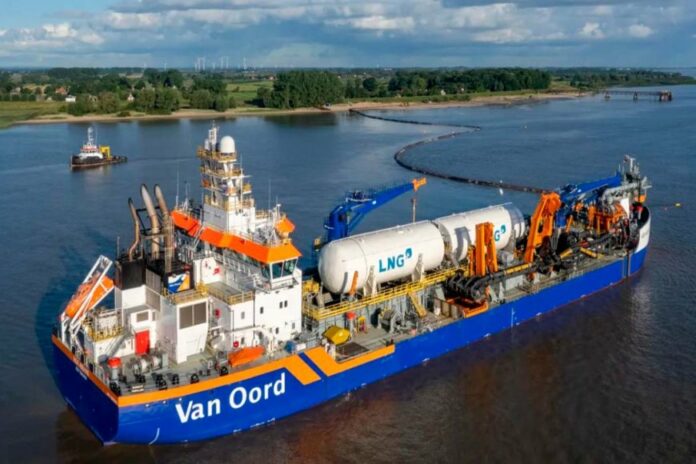
As the first marine contractor to have its climate targets approved by the Science Based Targets initiative (SBTi), Van Oord is actively investing in decarbonisation solutions.

Transitioning to alternative fuels such as Bio-LNG for our fleet is a key part of this strategy. Bio-LNG is produced from sustainable biobased feedstocks, including municipal organic waste and agricultural residues. By adopting Bio-LNG, Van Oord not only aims to reduce CO₂ emissions but also to stimulate the development and wider availability of sustainable biofuels. 

Martin Smouter, Director Dredging & Infra at Van Oord, said:

‘The successful bunkering of Bio-LNG by Vox Ariane is a significant milestone in our journey towards net-zero emissions. With our climate targets approved by the SBTi, we are leading the way in adopting more sustainable fuels and technologies. In close collaboration with our clients and stakeholders we continue to develop innovative and sustainable solutions in our projects worldwide.’

The bunkered fuel was verified by the ISCC EU certification scheme to ensure compliance with the European Union’s requirements for sustainable fuels. ISCC EU also covers additional ecological and social requirements that go beyond the requirements of RED III.

Van Oord is committed to science-based emission reduction targets in line with the Paris Agreement on the levels needed to limit global warming to well below 1.5 degrees. To achieve these ambitious goals, Van Oord is investing in sustainable technology, zero-emission electric equipment and alternative fuels.

In addition to modernising its fleet and equipment, Van Oord is actively working with clients and partners worldwide through its Sustainable Supply Chain Programme, supporting a shift to greener products and services. This reflects Van Oord’s commitment to innovation and leadership in the transition to a sustainable maritime industry.

ABB integrates multi-megawatt marine fuel cell system for the world’s first hydrogen fuel-cell superyacht

0

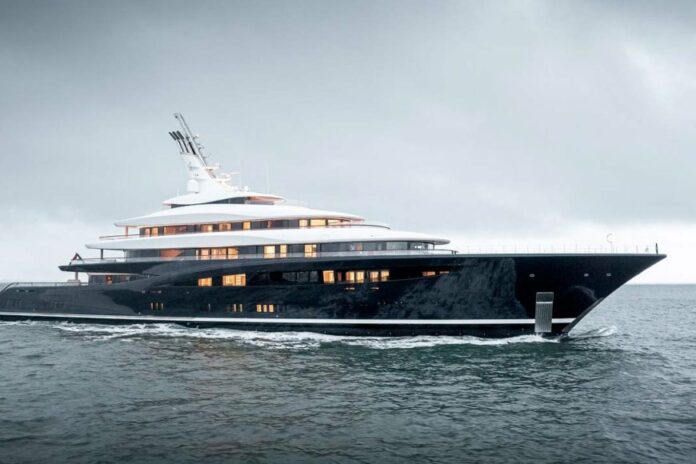
ABB has integrated a comprehensive scope of technologies onboard Feadship Breakthrough. The vessel was constructed by Dutch high-end yacht builder Feadship. Launched in May 2025, the privately-owned 118.8-meter yacht will be among the first vessels in the world to feature multi-megawatt fuel cell technology. 

ABB’s scope of supply comprises the Onboard DC Grid™ power system platform and two 3.2MW Azipod® electric propulsion units, which minimize noise and vibrations on board. ABB’s Power and Energy Management System PEMS™ optimizes energy use on board, while the ABB Ability™ Marine Pilot Control digital solution enables seamless transition between joystick operations and dynamic positioning, simplifying docking. As part of the integrated scope, ABB has also provided shipside shore connection technology and Remote Diagnostic Services. 

The 3MW hydrogen fuel cell system onboard Breakthrough can generate sufficient energy to operate the yacht’s hotel load and amenities with emission-free power from hydrogen. Moreover, it can provide enough power for up to a week of silent operations at anchor or emission-free navigation at 10 knots while leaving harbors or cruising in protected marine zones.

“Breakthrough perfectly demonstrates how passenger comfort and environmental protection can go hand in hand on board the world’s biggest superyachts,” said Jan-Bart Verkuyl, Feadship Director / CEO Royal Van Lent Shipyard. “We are grateful to ABB whose extensive technical expertise and dedicated support have been crucial in bringing this project to fruition.”

“For ABB, this order represents a breakthrough in the integration of marine fuel cells with propulsion systems,” said Riccardo Repetto, Global Vessel Type Responsible, Yachts, ABB Marine & Ports. “More broadly, Feadship Breakthrough showcases the potential of hydrogen fuel cells as a feasible alternative to conventional energy sources in shipping, helping to encourage their adoption among a wider range of vessel types. We are proud of our key role in this innovative project.”

Electric harbour tug development project launches in Japan

0

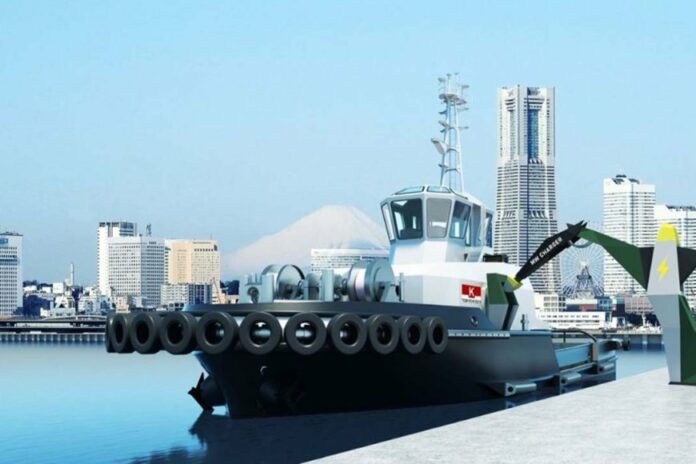
This EV harbor tugboat which will be operated in the ports of Yokohama and Kawasaki is aiming to contribute to “zero GHG emissions from the ports” in accordance with the Carbon Neutral Port (CNP) policy.

In January 2023, Tokyo Kisen put into service “TAIGA” which was the Japan’s first series-hybrid electric-powered tugboat equipped with a large-capacity 2,486 kWh battery. 

Building on two and a half years of operating experience with electric-powered tugs, this project advances to the next stage—enabling truly zero-emission (zero CO₂) operations—by developing and constructing a pure battery-powered EV tugboat. 

This could be possible by the combination of a large-capacity onboard battery system (6.66 MWh) and MW-class fast chargers.