-1.7 C
New York
Home Blog Page 283

Sennen simplifies construction of Ørsted New York wind farm with new digital system

0

Sennen’s software has focused on wind farm operations and maintenance to date, so this marks a new phase in the company’s product development. 

The system will help Ørsted deploy teams performing different construction phase tasks simultaneously without risk of interfering with each other’s activities. This is a particular issue for on-site multi-contractor management. Without an automated system, interruption to work can happen, resulting in wasted resources and delays. 

With this new tool, Ørsted will have full sight of contractor movements, enabling them to plan and allocate construction activity easily, efficiently and safely.

It will be run in parallel with existing processes, to measure potential improvements.

Gaby Amiel, co-founder and chief executive of Sennen, said:

“The rapid expansion of the offshore wind industry needs to be supported by intelligent digital systems that will enable growth to happen as quickly and safely as possible. That is what we specialise in at Sennen and we’re excited to be developing our offer so that we can support operators during the entire lifecycle of a wind farm – from construction and beyond.

We need companies like Ørsted to test new ideas and ways of working so that the industry can continue to innovate and grow. We’re delighted that they have chosen us for this project. It allows us to test and develop this new software on a real wind farm, which will offer invaluable learning.”

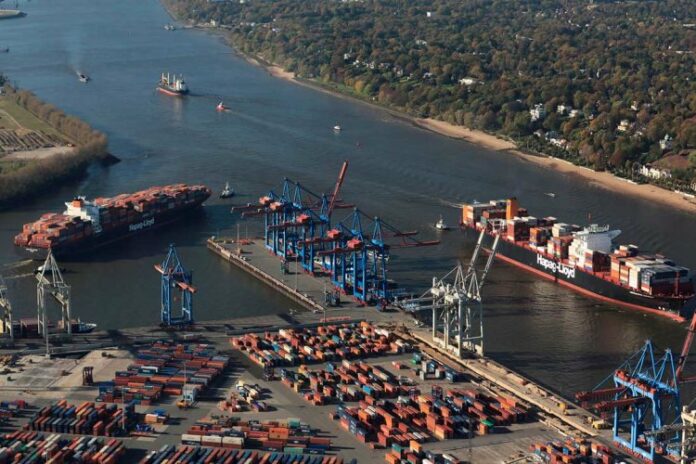
The Hamburg Senate presents new Port Development Plan

0

Senate presents Port Development Plan: Innovation plus quality to create sustainable added value

This lays down strategic guidelines for the port policy of the coming years, defines the availability of land for port development, and outlines strategic orientation for their future utilization.

Dr. Melanie Leonhard, Senator of Economics and Innovation:

“Hamburg is and will remain Germany’s largest seaport. This is of fundamental importance for the economic strength of Germany as an exporting economy and for supply chain security at national and European level. Going forward, we shall continue to operate a large, efficient universal seaport that serves these aims. Cargo handling is not an end in itself and container numbers may be an indicator, but are not the only relevant factor. Unlike other ports, Hamburg is itself a significant market and industrial base. Goods on arrival are not only transhipped, but also consumed or further processed.”

The Port Development Plan cites global trends, local operating conditions, and both social and economic developments. To remain competitive, the port needs to adapt continuously to these. The Port Development Plan accordingly defines guidelines for the required transformation processes and cites concrete areas for action, goals and measures. Along with many individuals, such stakeholders in the port as companies, trade associations and chambers have been comprehensively integrated several times in the drafting process.

The port will harness such global mega-trends as digitalization, climate protection, the circular economy, the transformation of work, and e-commerce, to extend its position. Customer orientation, quality and climate protection are crucial leitmotivs for the development of the port. Hamburg will rely on its existing strengths, yet primarily on its great diversity. This not only opens up numerous development prospects for the port, at the same time making it adaptable and resilient in face of economic fluctuations. The Port of Hamburg should continue in future to be notable for a variegated range of services, from cargo handling, via its broad industrial base and efficient logistics, to cruise shipping. Going forward, the port development plan presents a strategic land utilization regime providing the basis for facilitating a mix of functions in future.
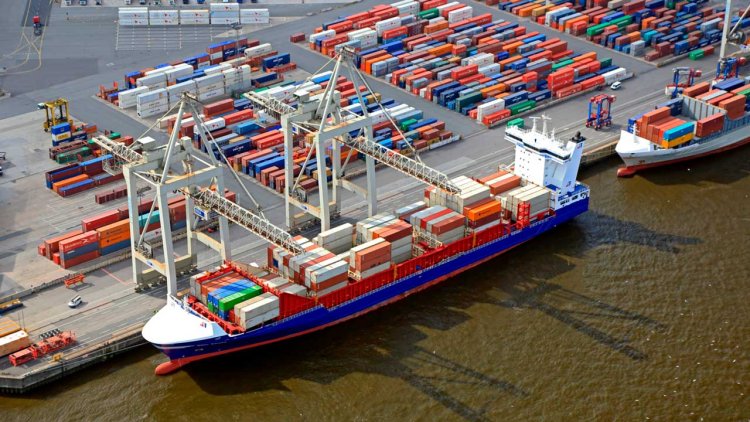
The project covers the following opportunities for action in the city and the port: Digitalization, climate protection, a circular economy and ecology, maintenance and expansion of infrastructure, settlement and land strategy, transformation of work, e-commerce. These cover measures for the further development of infrastructure and the use of digital aids. Special attention is given to the powerful Port Railway network and the superb rail infrastructure with the hinterland that makes the Port of Hamburg a pioneer of the climate-considerate transformation of freight traffic. From 2040, the Port should be climate-neutral in its operations. In addition, the determined expansion of shore power-supply for vessels will reduce emissions of harmful pollutants, contributing directly towards keeping the atmosphere clean.

Dr. Melanie Leonhard, Senator of Economics:

“We will continue strengthening our port’s function as a value added centre and maritime logistics hub. The global environment makes major advances on digitalization, efficiency and climate neutrality necessary. We will forge ahead with start-ups and further development in parallel with these different requirements. Our port is already now more essential than ever. In the next few decades we will require large quantities of renewable, rather than fossil, sources of energy. These will reach Hamburg via the port that we are now remodelling to be the driving force for the energy transition. Maritime logistics can therefore play an essential part in climate-friendly transport and decarbonization of society as a whole. In Hamburg, our port is the key player for this.”

McDermott secures decommissioning contract in Western Australia

0

The award is for the full removal of the Stybarrow disconnectable turret mooring (DTM) buoy, as part of the decommissioning of the Stybarrow field located in the northwest Cape of Western Australia.

Under the contract scope, McDermott will provide project management and engineering services for the recovery, transportation and offloading of the DTM buoy to a suitable onshore yard facility for dismantling and disposal. 

“This award not only demonstrates McDermott’s proven track record in undertaking deepwater projects of diverse scopes, but it also highlights the critical importance of decommissioning in the offshore industry,” said Mahesh Swaminathan, McDermott’s Senior Vice President, Subsea and Floating Facilities. “With our seamless integration of engineering, fabrication, and offshore mobilization expertise, we believe we are well-equipped to execute this project efficiently and responsibly, ensuring the safe recovery and removal of the Stybarrow DTM buoy.”

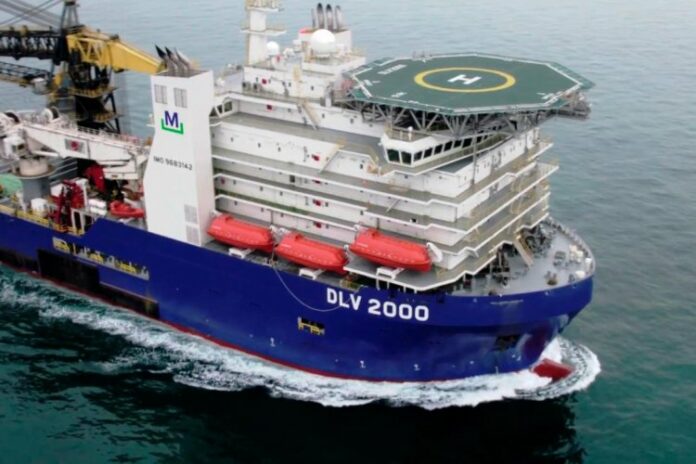
McDermott’s Perth-based team will oversee project management, while engineering and fabrication support will be provided by the team in Kuala Lumpur, Malaysia, and Batam, Indonesia. The DTM buoy will be lifted and removed utilizing McDermott’s DLV2000 vessel, ensuring safe and efficient operations throughout the decommissioning process.

Fugro to continue mapping Norway’s seabed to help preserve marine resources

0

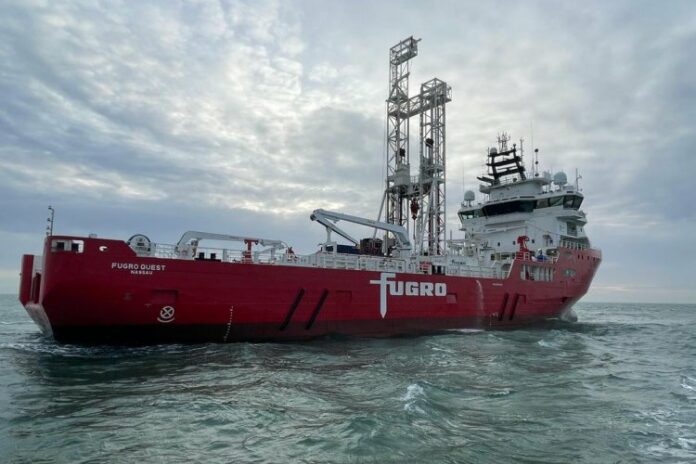
This is the latest in a series of contracts that Fugro has won for the MAREANO programme, and it demonstrates the company’s long-standing commitment to champion sustainable development in the marine environment.

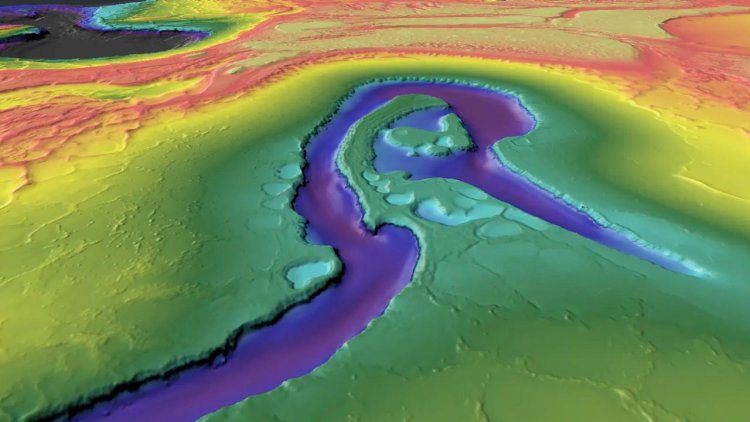
Supported by the Central Government of Norway, MAREANO is a multidisciplinary initiative aimed at mapping the seabed to generate scientific information for the responsible management and preservation of Norway’s marine resources. Fugro has been actively involved in the programme since 2006 and has acquired over 142,000 km2 of data.

The 2023 survey will cover a region in the North Sea, spanning 2,887km2, where water depths range between 140 and 335 metres. The primary goal of the survey is to gather high-quality, seamless datasets that integrate bathymetry and acoustic backscatter data to improve our understanding of the marine environment in the North Sea. This knowledge is essential for the sustainable development of new marine industries, such as offshore wind and offshore aquaculture, and for the protection of particularly valuable and vulnerable areas (SVOs) in the region.

Fugro’s survey vessel, equipped with advanced high-resolution, high-density multibeam echo sounders and sub-bottom data acquisition systems, will obtain comprehensive marine Geo-data for the Norwegian mapping programme. Fieldwork is scheduled to take place between July and late August this year.

Survey progress, including interim and final deliverables, will be accessible via VirGeo®, Fugro’s web-based Geo-data engagement platform.

In addition to supporting the MAREANO programme, Fugro is also a major contributor to two global ocean science initiatives: The United Nations Decade of Ocean Science for Sustainable Development (2021-2030) and The Nippon Foundation-GEBCO Seabed 2030 Project (Seabed 2030). These initiatives aim to fill the sizable gaps in ocean data to help reverse the cycle of decline in ocean health and support countries in creating improved conditions for sustainable development of the ocean.

As part of the MAREANO survey, Fugro will collect transit data for Seabed 2030, adding to the more than 2 million km2 of bathymetry data already collected for the project. This data will help to create a more complete and accurate map of the world’s ocean floor, which is essential for understanding and managing ocean resources, protecting marine ecosystems, and mitigating the effects of climate change.

Nicolien Haasbroek, Project Engineer for NHS said:

“I am happy with Fugro as contractor. We have had good collaboration under former contracts. The weather in the North Sea can be challenging, and we experienced a lot of wind last year. However, I am hopeful that we will have calmer weather for the survey in July and August.”

Marc Kebbel, Fugro’s Service Line Director Hydrography for Europe and Africa said:

“We are pleased to continue supporting the MAREANO project, which reflects our team’s dedication to enhance the understanding of our marine environment. The programme is aligned with Fugro’s values, and we are committed to providing high-quality Geo-data that advances scientific research and contributes to a sustainable and prosperous future for our oceans and communities.”

LDC chooses ZeroNorth for vessel fleet performance optimisation

0

Technology company ZeroNorth has announced it has been selected by leading global merchant and processor of agricultural goods Louis Dreyfus Company (LDC) to help accelerate the company’s decarbonisation journey by providing data-driven optimisation services to improve vessel performance and reduce fuel consumption across LDC’s chartered fleet of approximately 200 vessels, ranging from handysize to capesize.

The ZeroNorth platform converts data into tangible actions, interconnecting millions of data points into a single source of truth. The platform will provide LDC with data-driven recommendations on optimal routing based on specific voyage, vessel, bunker and emissions optimisation objectives. LDC will also benefit from further insights into its fleet, with a real-time view of the status of all vessels and suggested actions to be taken to improve performance.

Speaking on the announcement, Soren Meyer, CEO, ZeroNorth, said:

“We’re proud to be working with a sustainability-driven organisation like LDC and are looking forward to helping them achieve their ambitious decarbonisation goals. In an increasingly complex industry with tightening environmental regulations, it’s important that we all choose pioneering partners that can lead the way and raise the ambition for the entire industry. 

“Collaboration is key to driving greener operations across the industry and we look forward to helping LDC gain additional insight into its fleet, improve vessel performance, and ultimately make positive decisions for both profit and planet.”

Sébastien Landerretche, LDC’s Global Head of Freight, added:

“As a responsible freight operator, we are committed to operating our vessels in the most fuel-efficient way, to reduce shipping emissions as part of the Group’s overall decarbonisation journey. With a clear vision for their solution and strong subject matter expertise, we see ZeroNorth as a key partner paving the way for further actions, such as investment in Energy Saving Devices and adoption of alternative fuels, which are core to the Group’s strategy to help deliver a more sustainable maritime sector.”

Australia bans unsafe ship from Australian waters

0

AMSA issued a 180-day ban on the general cargo ship BBC Pearl after inspectors found multiple failures of the safety management system as well as a defective emergency generator and defective fire dampers during a port State control inspection in Cairns.

The vessel was detained in Cairns for four days until the serious deficiencies were rectified before, it proceeded to Port Hedland where the banning notice was issued. 

This is the second banning of a Briese Heavylift GmbH & Co vessel in the past month, following the 90-day ban issued to the BBC Weser on 12 June. 

This operator has a history of poor performance, with AMSA issuing multiple warnings that future safety violations would lead to strict enforcement action. 

AMSA Executive Director of Operations Michael Drake said that the safety violations on the BBC Pearl were alarming and posed a real safety risk to the seafarers on board. 

“The defective emergency generator would render the vessel helpless in the event of a main power supply failure, and this is the second time the BBC Pearl has been detained for a defective emergency generator,” he said. 

“These are clear violations of the International Convention for the Safety of Life at Sea.” 

Mr Drake said that any operators that think they can get away with substandard ships in Australia should be on notice.  

“Australia has a reputation for upholding high safety standards for vessels entering our waters,” he said. 

“We have imposed a longer ban of 180-days on the BBC Pearl to send a clear message to any poor-performing operator that Australia finds these conditions to be unacceptable.” 

HHLA TK Estonia and FERNRIDE strengthen collaboration

0

HHLA TK Estonia and Munich-based scale-up FERNRIDE have successfully completed the first phase of their joint project at the Estonian terminal, where the companies will continue to develop the project and promote autonomous driving. In addition, innovation unit HHLA Next once again invested in FERNRIDE in June.

The joint project began in January at the HHLA TK Estonia terminal near Tallinn. The goal of the first project phase was to determine the technology’s operational reliability in the area of automated container handling and to validate its appropriateness for future business opportunities. After the project team was able to provide a proof of concept during the first phase, the FERNRIDE system was successfully integrated into HHLA TK Estonia’s work processes. Key to this was in particular the participation of operating employees at the terminal, who addressed the specifics of terminal processes.

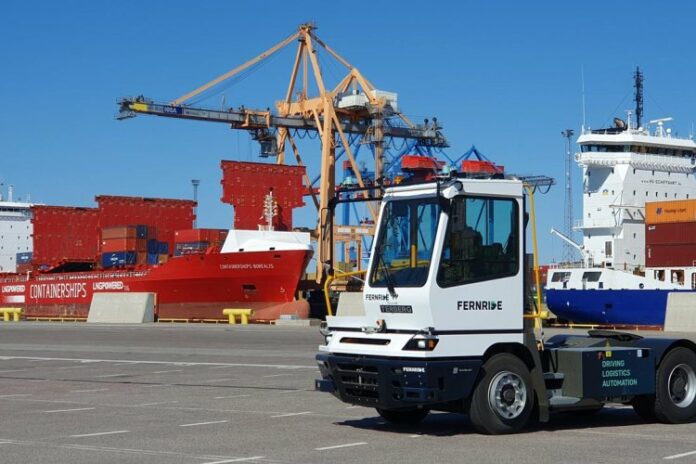
The yard truck that FERNRIDE had equipped with sensors and cameras was already able to transport initial containers between the quayside and the yard via remote control. FERNRIDE’s unique human-assisted approach to autonomy enables remote control of the vehicle by a teleoperator. With the start of the second phase, autonomous driving will be integrated into operational processes. For this purpose, an additional automated yard truck will be deployed at the terminal for container transport. The goal is to achieve a degree of autonomy of at least 80 to 90 percent.

Philip Sweens, Managing Director of HHLA International:

“Thanks to the joint project with FERNRIDE, we have been able to test the system directly in the operational business of HHLA TK Estonia. The implementation has proven itself in daily terminal operations, so that proof of concept could be achieved at an early stage. We will now continue our excellent collaboration with FERNRIDE and will work together to see how autonomous driving might work in the future. Our goal is to create work processes at our international terminals that are future-oriented and sustainable.”

Martin Isik, CCO FERNRIDE:

“We are looking forward to the next phase of productive and successful collaboration with HHLA. Our mutual trust and the desire to positively transform the sector make us perfect strategic partners in the implementation of our platform for autonomous electric trucking in port areas. Our partners are impressed by the platform’s advantages, including the increased efficiency and safety for our employees, the reliability of our operations and the easy scalability of the solution. HHLA shares our values and our ambitions of scaling this technology internationally, and the TK Estonia terminal offers ideal conditions to lay the foundation for this.”

As a result of an initial investment by HHLA Next, FERNRIDE has been a portfolio company of the innovation unit since December 2022. HHLA Next invested in FERNRIDE once again in the recently completed round of Series A financing. The two companies are thereby underscoring their close partnership of recent months and their common goal of more sustainable logistics.

Simone Lode, Managing Director of HHLA Next:

“The successful project in Tallinn once again underlined FERNRIDE’s professionalism as well as the immediate operability of the system. This strengthened our decision to expand our investment. With FERNRIDE, we are investing in a company that provides ‘human-assisted autonomy’. This is already a functioning, reliable solution that is paving the way towards autonomous driving.”

MAN Energy Solutions to deliver 15 dual-fuel green methanol engine retrofits

0

Under the terms of the Agreement, MAN PrimeServ, MAN Energy Solutions’ after-sales division, will deliver 15 engine retrofit solutions for  conversion of vessels powered by individual MAN B&W S90-type fuel-oil-powered engines from the Seaspan and Hapag-Lloyd fleets to dual-fuel ME-LGIM engines capable of running on green methanol. 

This Agreement includes 45 optional engine retrofit solutions. Each conversion can provide a CO2 reduction of 50.000–70.000 Tonnes each year, when operating on green methanol.

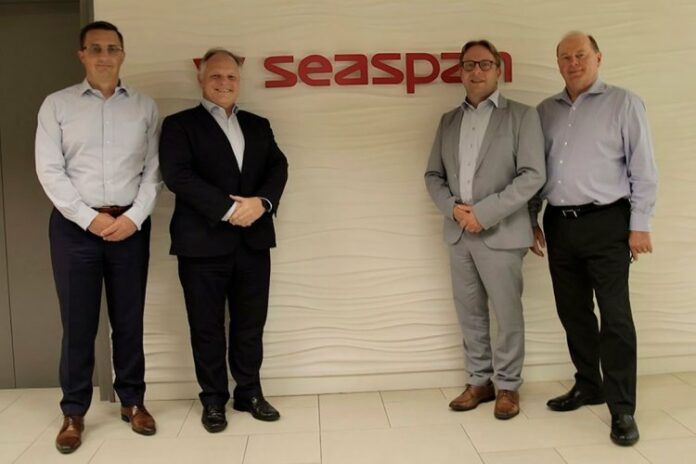
Bing Chen, President and Chief Executive Officer, and Torsten Pedersen, Chief Operating Officer, signed the Agreement on behalf of Seaspan, while Thomas Leander, Head of Solutions and Site Manager, Frederikshavn, Denmark; Jens Seeberg, Head of Retrofits & Upgrades, MAN PrimeServ Denmark; and Brian Østergaard Sørensen, Vice President and Head of R&D, Two-Stroke Business signed on behalf of MAN Energy Solutions. The development of this solution opportunity has been led by Thomas Leander of MAN Energy Solutions, Peter Curtis of Seaspan and Richard von Berlepsch, Managing Director Fleet of Hapag-Lloyd. 

Seaspan is the largest global containership lessor, primarily focused on long-term time charters with the world’s leading container shipping lines. With an industry-leading newbuild program of 70 vessels, Seaspan will bring its owned fleet to a total of 200 vessels and 1.9mn TEU capacity.

With a fleet of 250 modern container ships and a total transport capacity of 1.8 million TEU, Hapag-Lloyd is one of the world’s leading liner shipping companies. Hapag-Lloyd aims at operating its vessels in a climate-neutral manner to become net-zero carbon by 2045.

Leander said:

“Seaspan and Hapag-Lloyd, are significant maritime stakeholders with strong fleet-decarbonisation commitments and strategies. This Agreement shows clear intent to drive the industry transition toward zero-carbon shipping. Retrofitting existing engines to dual-fuel running is one of the most effective ways to reduce greenhouse gas emissions and to derive greater efficiency and profitability from an existing shipping fleet, while simultaneously delivering fuel flexibility and extending operational lifetimes. Crucially, this also avoids the unnecessary building of additional tonnage with associated CO2 emissions, and thereby showcasing that retrofitting the existing maritime fleet is an important and feasible path.

With this collaborative agreement, we proceed our journey providing decarbonisation solutions for the maritime industry.”

NYK conducts biofuel trial on vessel transporting wood chips for Daio Paper

0

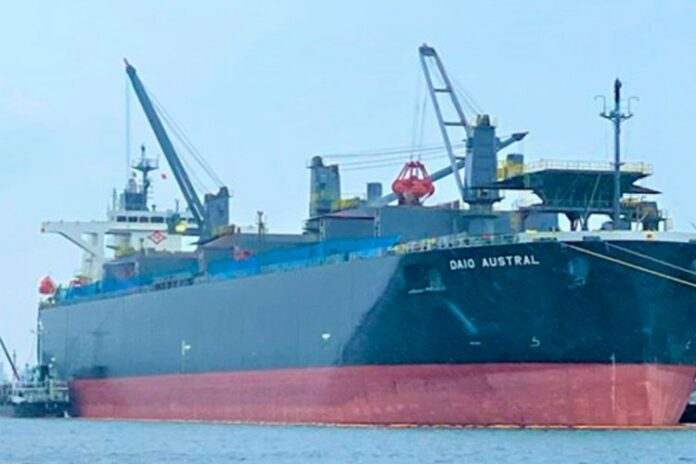
On June 22, NYK supplied biodiesel fuel at Kinuura port (Aichi Prefecture) to the wood-chip carrier Daio Austral, which transports wood chips for Daio Paper Corporation. 

This was the first oceangoing vessel operated by NYK to receive biodiesel fuel in Japan. The ship then made a test voyage to Cai Lan port in Vietnam, arriving safely on June 29 local time.

Biofuels are considered to be carbon-neutral because the carbon dioxide that is absorbed by the source of the biomass is equal to the carbon dioxide that is released when the fuel is burned. Since biofuels can also be used in heavy oil–fired engines, they are considered to be a powerful means of reducing greenhouse gas (GHG) emissions during the transition from heavy oil to zero-emission fuels.

From fiscal 2019 to fiscal 2022, the NYK Group successfully conducted test voyages using biofuels on seven oceangoing vessels, mainly bulk carriers and two tugboats. In fiscal 2023, the NYK Group aims to conduct test voyages on multiple ships, and this trial was completed with the cooperation of Daio Paper Corporation.

NYK will continue to actively introduce biofuels and other next-generation fuels to promote decarbonization in marine transportation.

Svitzer and South Hook enter EcoTow agreement to reduce tug fleet emissions

0

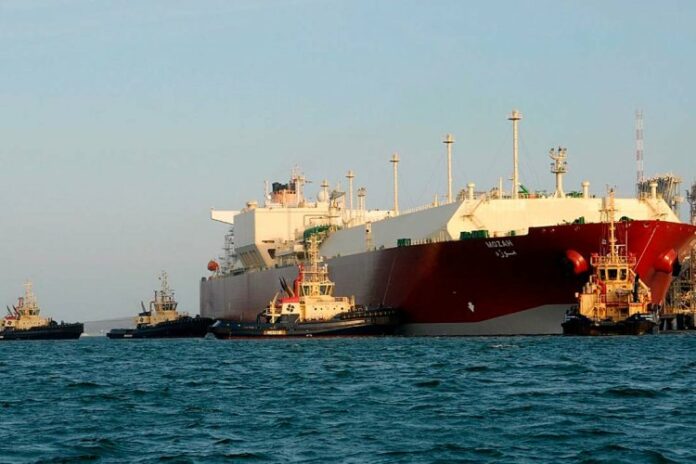
Svitzer has announced an EcoTow agreement to fuel a fleet of five tugs dedicated to the South Hook LNG Terminal in Milford Haven, with hydrogenated vegetable oil (HVO), a low-carbon fuel. The switch from fuelling tugs with marine gas oil (MGO) to HVO will reduce CO2 emissions, whilst maintaining a safe and reliable service for South Hook LNG and its customers.

The long-term deal, which requires no modifications to equipment or engines, will see a significant reduction in CO2 emissions from the five tugs servicing the LNG discharging at South Hook.

South Hook LNG Terminal is the first terminal at the Port of Milford Haven to switch its towage contract to low-carbon fuels, taking advantage of Svitzer’s EcoTow solution.

Commenting on the long-term agreement with South Hook, Mattias Hellstrom, European Chief Commercial Officer, Svitzer Europe, said:

“We are committed to providing sustainable marine services, and delighted to be working with a partner like South Hook LNG Terminal to deliver a more sustainable fleet of towage vessels in Milford Haven. We look forward to continuing working with South Hook to operate vessels that benefit the local port environment through reduced particulate emissions. Running these vessels on HVO also means Svitzer is able to continue cutting carbon emissions across its UK operations.”

In 2022, the switch from MGO to HVO in Svitzer’s UK fleet prevented more than 21,000 tonnes of CO2 from being emitted into the atmosphere. With the HVO conversion of the fleet dedicated to the service of South Hook LNG, there are only a few tugs left to be converted to complete the conversion of Svitzer’s entire UK fleet to low-carbon fuels.