-11.1 C
New York
Home Blog Page 254

Columbia Shipmanagement launches female cadet mentoring programme

0

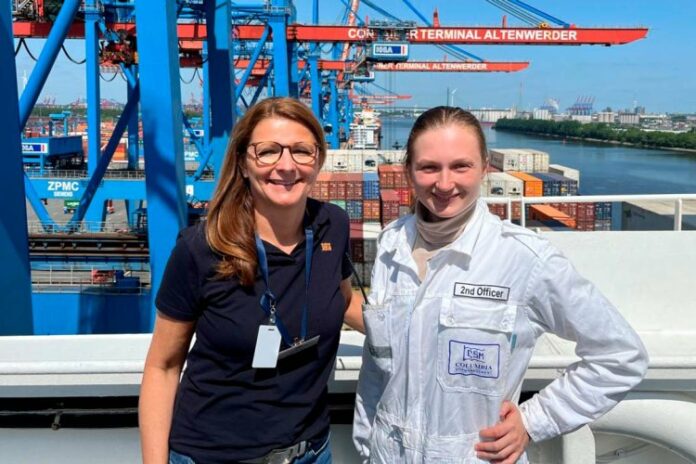
Recognising that the industry is missing out on a great deal of female talent the group hopes that the mentoring programme will not only attract more females onboard vessels, but help to retain them in the industry past cadetship, especially when faced with a number of career challenges such as the flexibility needed for juggling work and home life.

“We need to change the culture in the industry surrounding women and make it more viable for them to have a career in maritime, so that we can attract and widen the pool of talent that we draw from,” said programme leader Claudia Paschkewitz, Columbia Group’s managing director of sustainability, diversity and inclusion.

The programme acknowledges evidence from a 2019 Solent University report which highlights that mentoring schemes are also able to reduce costs related to health and safety, as well as decreasing staff turnover.

Columbia is drawing on the services of corporate wellbeing provider OneCare Solutions (OCS) for training of the programme’s mentors, who will be senior female colleagues based in different departments onshore. Each will be trained to deal with situations such as sexual harassment and bullying, and assigned to one female cadet in the fleet for their whole 12 months of sea service.

Harassment remains a widespread problem in shipping with the Danish government recently issuing a report that found a sixth of the 3,500 seafarers polled had witnessed incidents of bullying or sexual harassment on Danish ships over a 12-month period.

Women make up just 1.2% of the 1.89m seafarers globally, according to a 2021 report by BIMCO and the International Chamber of Shipping. 

A study conducted by the All Aboard Alliance published in April revealed 15 key pain points for women at sea. The research is the first to emerge from the Diversity@Sea workstream, which seeks to investigate how to make a career at sea more diverse, inclusive, and appealing to a broader pool of talent.

The 15 main issues have been divided into four categories, the first being the difficulty of succeeding professionally at sea for women (being perceived as less competent than male coworkers, not having equal access to training or tasks onboard, and having to outperform male peers to get respected or promoted).

Another category identified involves how social relations onboard can be especially challenging for women at sea (feeling isolated or unsupported because of their gender, the concern of gossip or rumours, or power abuse or sexual harassment and sexual misconduct onboard).

The third category of pain points relates to systemic employment challenges at sea (service contracts at sea being too long, lack of family planning options such as maternity leave or sea-shore rotation programmes, resulting in many women having to choose between a career at sea OR starting a family, in turn pushing women seafarer to find employment elsewhere, and finally, many companies still not willing to recruit women seafarers). 

The final category relates to the physical conditions onboard (lack of access to female sanitary products onboard or lack of access to adequately fitted Personal Protective Equipment (PPE) such as boiler suites, fire gloves etc., or lack of access to designated women’s changing rooms and bathrooms onboard).

The challenges were identified from an analysis of interviews with 115 women seafarers from all ranks and geographies serving onboard vessels. The majority of the interviewees (59%) were women with the rank of one stripe.

When asked about their preferred ratio of women colleagues onboard, the women seafarers interviewed had vastly different preferences. Responses ranged from 10% to 75% and from 1 to 10 women, respectively, while one in five women seafarers had no preferred gender ratio. Many of the women interviewed emphasised the importance of having women senior officers onboard.
Damen Shipyards signs deal with Fast Lines Belgium

0

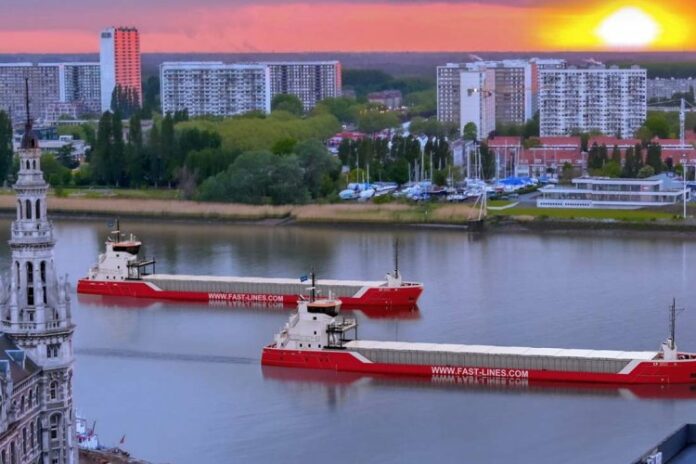
Prior to placing its order with Damen, Fast’s architects of transport reviewed all the options available to achieve minimal emissions in an economic manner.

This included looking at alternative bio-fuels as well as the latest advances in design and efficiency. Alongside the new hull design and an efficient and economic main engine, the vessels will be fitted with Daman’s Triton Remote monitoring system, delivering real-time information on fuel consumption and carbon emissions to the shore-side team as well as the ships’ crew.

For Fast Lines Belgium, the CF 3850 presented as the best solution for small and medium-sized shipowners looking to navigate the energy transition crossroad. The CF 3850 provides the best, affordable solution, reinforced by it having the lowest EEDI (Energy Efficiency Design Index) in the short sea cargo vessel market. 

“These will be our first new-build vessels and we are confident that the Damen CF 3850 vessels will fit like a glove in the Fast Lines Belgium’s business,” says managing director Catrien Scheers. “Not only are they economical and efficient, our customers will also be able to see for themselves just how low their fuel consumption and therefore their emissions are. This will give us a valuable commercial advantage.”

“We are delighted to welcome Fast Lines Belgium into the Damen family,” added Luc Joos, Sales Manager Belgium at Damen Shipyards. “They reviewed all the options available to them in detail before opting for the CF 3850. We are confident that their new vessels will deliver the performance that they and their customers seek.”

Norwegian company orders Konecranes mobile harbor crane for new terminal

0

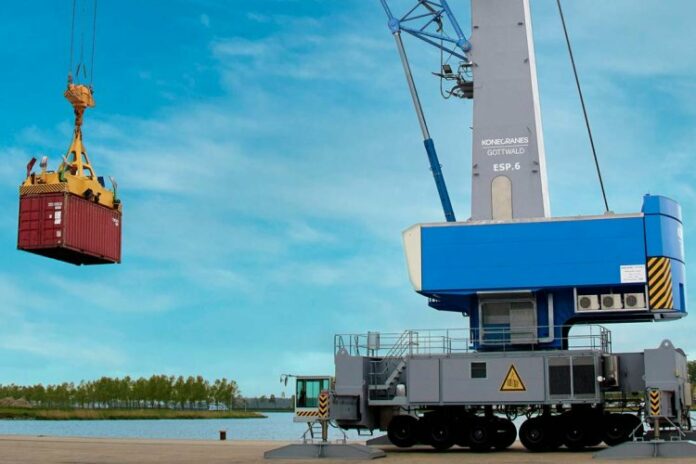
Norwegian logistics provider Tyrholm & Farstad AS has ordered a Generation 6 Konecranes Gottwald Mobile Harbor Crane for their new Flatholmen terminal in Ålesund, with the electric crane to expand capacity and reduce carbon emissions. The order was booked in Q3 2023, and delivery will take place in Q2 2024.

Tyrholm & Farstad made the order – the first crane for their new terminal – to extend their business and meet local industry demands for their logistics services. An easily adaptable, high-performance solution, the electric crane will handle container and general cargo for the Møre og Romsdal region.

“Our new terminal is an important investment for the future, so we need efficient and sustainable equipment to support it. Konecranes could provide a future-proof mobile harbor crane that combines the best available lifting technology with an innovative electric drive concept and excellent backup support from their local partner. This convinced us that the Generation 6 would be the right choice for our new operation,” says Jan Arve Hoseth, CEO, Tyrholm & Farstad AS.

“This order illustrates the strength of our long-term partnership with local partner AS BULL. Konecranes Gottwald mobile harbor cranes are popular in Norway and it’s exciting to see our new Generation 6 cranes installed in the new terminal, offering high performance, outstanding reliability and lower emissions for many years to come,” says Hans-Jürgen Schneider, Regional Sales Manager, Port Solutions, Konecranes.

This order is part of Ecolifting™, Konecranes’ continuous work to decrease the carbon footprints of our customers. From eco-optimizing diesel drives, to hybridization and fully-electrified fleets, we will continue to do more with less.

Nova Sea picks Maritech for new purchase and sale software

0

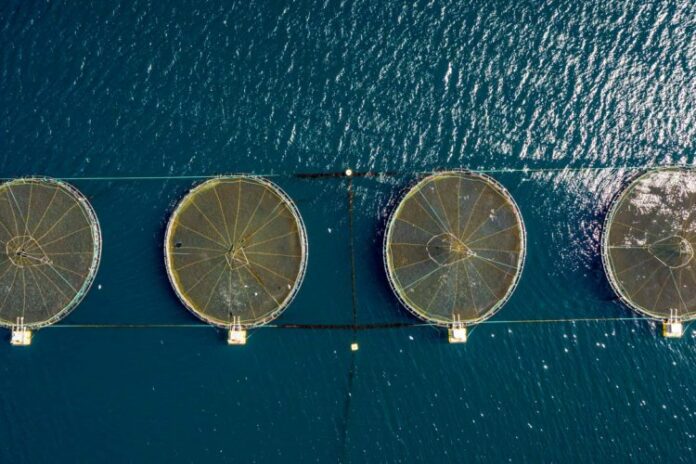
Molde, Norway-based aquaculture technology company Maritech develops digital solutions for a number of aspects of the aquaculture industry, from transport management systems to sales and orders. Nova Sea said it plans to implement Maritech Purchase & Sales as a cloud-based solution for managing its sales, claims, and exports. 

“For us, Maritech was a well-considered and natural choice. We continue our digital transformation journey by embracing cloud technology to streamline our processes,” Nova Sea Head of IT Geir Johan Birkeland said in a release.

Birkeland said that Nova Sea has already worked closely with Maritech in the pre-project phase, and found the company to be a “solid partner” for its digital needs.

“The new cloud software will enhance efficiency across various departments within our company, from coordination to sales, invoicing, and accounting,” Birkelad said. “This will provide us with better control and also create synergies beyond the functions directly involved in the project.”

Nova Sea is one of the largest salmon farming companies in Northern Norway, with more than 30 salmon licenses and facilities along the entire Helgeland coast.

“Nova Sea is a highly innovative and technology-driven company, and we are proud that they have chosen us,” Maritech VP of Sales Klas Vangen said. “We have learned a lot from them through our work together in recent months. Their expertise and dedication are crucial to Nova Sea’s success and have also added significant value to our collaboration. We look forward to achieving new milestones together and helping them continue increasing their growth.”

Maritech announced in its FY 2022 update, released on 9 June, that it had a 21 percent increase in revenue to NOK 185.3 million (then USD 17.2 million, EUR 15.9 million). In 2023, the company also secured contracts with Iceland-based Samherji and U.S.-based Kingfish Maine to provide software for seafood processing and aquaculture, respectively.    

BMT and ARES join forces with new Fast Crew Transfer Vessels

0

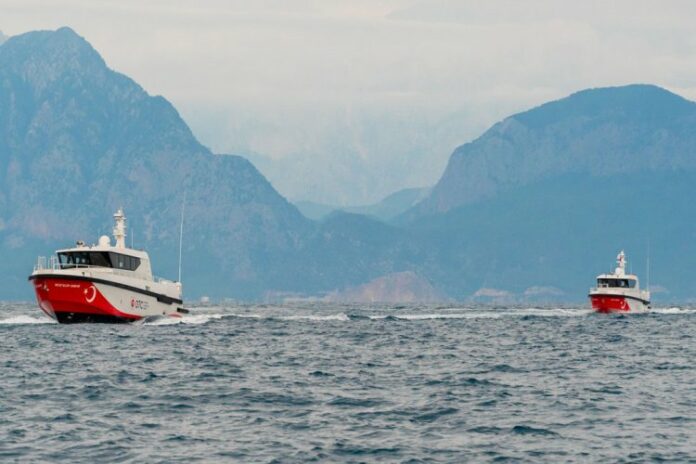
With a length of 20 metres, the FCTVs are built from aluminium and equipped with twin MTU 12V 2000 M86 Engines and Kongsberg S45-3/CA Waterjets, enabling them to achieve a speed of 47 knots, solidifying its position as a high-performance solution. The vessels operating in up to Sea State 5, can transfer up to 12 passengers with 3 crew, in quality interiors with onboard sleeping quarters with spacious kitchenette and mess areas all of a high-quality finish.

The ARES 65 FCTVs also feature a state-of-the-art Dynamic Positioning (DP) system, which allows the vessels to maintain their position and heading automatically, even in challenging weather conditions, making crew transfers safer and more efficient, ensuring that personnel can safely and quickly board and disembark from offshore installations. Equipped with a unique shock-mitigating seating system, the vessels provide a comfortable ride for passengers even in rough sea conditions. This advanced system reduces the risk of injuries and fatigue, enhancing the overall safety and comfort of crew transfers.

Leveraging the design success of other in-service fast patrol vessels designed by BMT, the ARES 65 FCTVs join a growing fleet of ARES and BMT successful designs that utilise a similar aluminium hull form, providing excellent stability and manoeuvrability on the water.       

Martin Bissuel, Head of Sales at BMT commented:

“The excellent collaboration between BMT and ARES combines BMT’s extensive technical experience in designing and engineering high-performance vessels with ARES’s expertise in building high-quality, high-performance vessels. We are thrilled to have worked with ARES on this offshore support project and delighted with the ongoing performance of the vessels.”

Yagmur Akca, Business Development Manager at ARES commented:

“This collaboration with BMT signifies a valuable milestone for ARES, considering ARES and BMT’s long-standing strategic partnership. Successful delivery of the ARES 65 Fast Crew Transfer Vessels marks our strength in the commercial market, highlighting our versatility. We take pride in this achievement and eagerly anticipate further expanding our presence in the maritime industry through continued collaborations with our strategic partner BMT.”

EXMAR hits milestone to equip gas newbuilds with ammonia dual-fuel engines

0

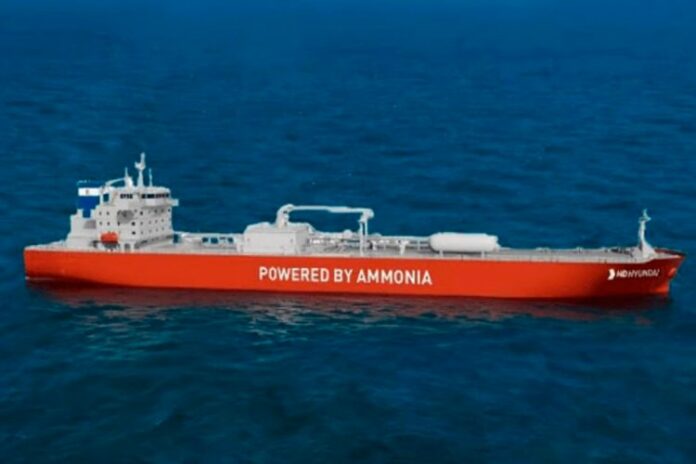
EXMAR LPG, a joint venture between EXMAR and Seapeak, is going ahead with ammonia as fuel for two Midsize Gas Carriers(MGCs) on order at Hyundai Mipo Dockyard in South Korea.

The 46,000cbm ships, scheduled for delivery in early 2026, will be among the first oceangoing vessels to be propelled by dual-fuel ammonia engines, allowing for close to zero emissions trading when using ammonia.

The engines will be delivered by WINGD and the fuel supply system by Wärtsilä Gas Solutions.

Carl-Antoine Saverys, Executive Director at EXMAR, said it was proud to be developing vessels with an operational carbon footprint reduction of 90%, which significantly exceeds the International Maritime Organisation (IMO)’s emissions reduction targets.

Throughout the design and development phase of the vessels, “meticulous attention” has been given to operational safety when introducing a toxic substance into the engine room.

A risk-based design appraisal conducted by classification society Lloyds Register, combined with input from seasoned crews and accepted by the Flag State (Belgium), has been paramount during the process and will continue to guide further design enhancements.

EXMAR, which has over 40 years of know-how in handling ammonia cargoes, said it was confident in its ability to navigate safely using this new zero-carbon shipping fuel.

Statkraft, Europe’s largest producer of renewable energy, has joined Aker Horizons as a partner on the large-scale green hydrogen and ammonia project in Narvik, Norway.

The plant under development at Kvandal in Narvik has a planned capacity of up to 600MW and will be one of the first large-scale plants for green ammonia in Europe, with an expected production of 1,000-1,500 tonnes per day.

Alba Tankers chooses Seaber’s solution to reduce emissions

0

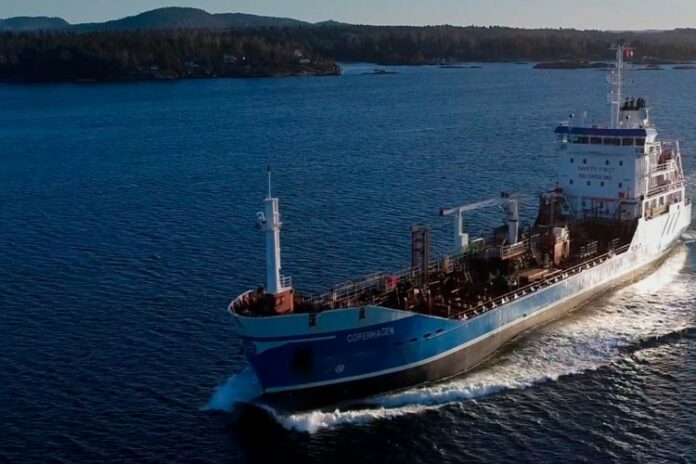
Seaber.io, the Finnish maritime technology company, has announced a cooperation with Alba Tankers, who commercially operate chemical and oil tankers in the area of North Europe-West Mediterranean.

Alba Tankers mainly focuses on vessels below 20,000 DWT, trading petroleum products, chemicals and vegetable oils with a fleet of 20 vessels. Their mission is to operate the vessels with a passion for safety, environment, quality and economy exceeding the expectations of clients, employees and society.

Commercial operators like Alba Tankers use the Seaber solution for maximizing fleet TCE by supercharging chartering and scheduling functions and also estimate the impact of EU ETS, which is coming into force starting in 2024.

Alba Tankers is thrilled to start using the Seaber solution:

“As any tanker company we aim to make sure we operate as environmentally friendly as possible. With current and emerging emission regulations the whole planning process becomes more complex. With Seaber’s software our team can quickly make decisions by following KPIs and compare multiple scenarios in no time.” says Håkan Kalmerlind, Head of Commercial Operations at Alba Tankers.

Seaber is uniquely positioned to digitally transform the shipping industry and bring down its environmental impact. Both shipowners and charterers benefit from Seaber’s web-based application allowing them to maximize efficiencies in planning and scheduling. In addition to single-cargo voyages, Seaber supports multi-parcel and multi-port voyages. The technology, based on a modern tech stack, integrates seamlessly with existing software solutions such as Voyage Management Systems and ERP’s.

Sebastian Sjöberg, CEO and Co-founder of Seaber is excited about the cooperation with Alba Tankers:

“One of Alba’s objectives is to use innovative technology to further improve efficiency and reduce emissions. This is what inspires the whole Seaber team to further develop our solution jointly with our customers.”

MMS Workboats launches cutting-edge plastic and debris collection vessel

0

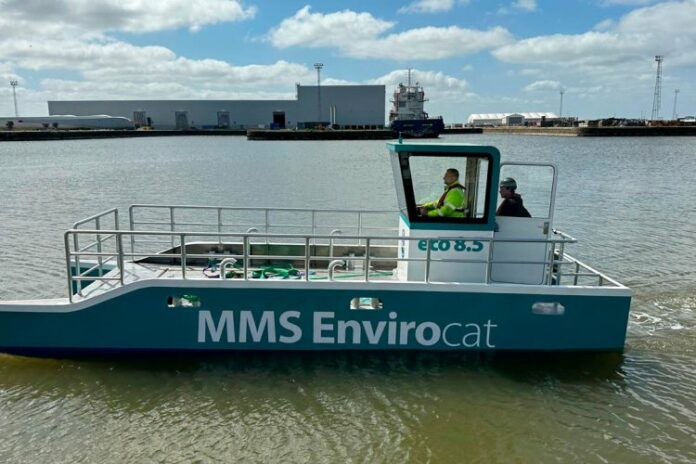
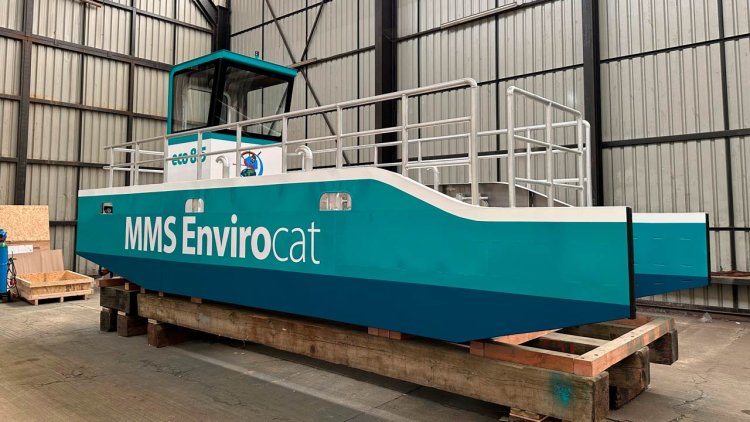
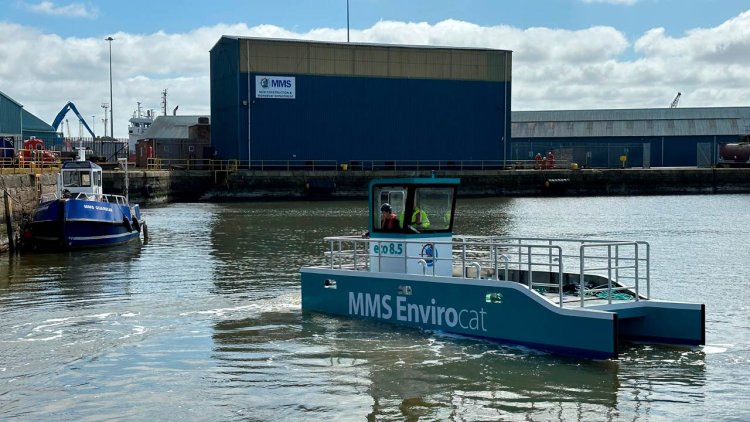
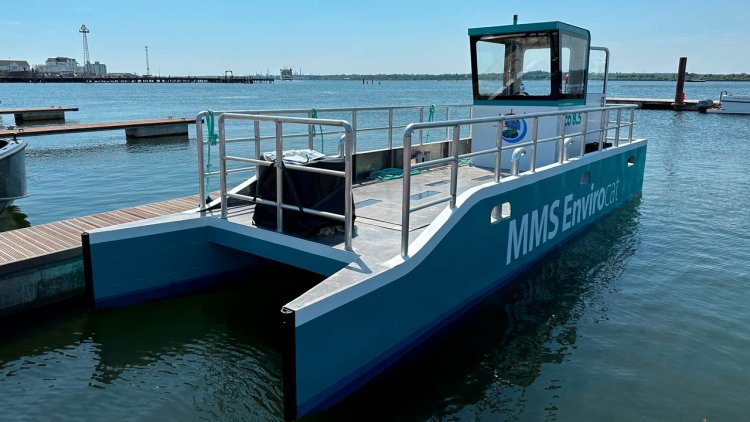
MMS Workboats, a division of MMS Ship Repair & Dry Dock Co Ltd. (MMS), has today announced the launch of the Envirocat All-Electric Eco 8.5, a cutting-edge plastic and debris collection vessel. 

Designed to make waterways cleaner and support sustainable industries such as fish farming and aquaculture, the 8.5 metre vessel can be operated by a single user, enabling efficient, cost effective and environmentally friendly clearance of plastic and flotsam from the water’s surface.

The vessel, developed in conjunction with Naval Architecture Firm Rockabill Marine Design, is the brainchild of Rob Langton, Managing Director at MMS, in response to the increasing need for plastic removal from waterways worldwide. 

Recent studies found 5000 pieces of plastic and 150 plastic bottles for each mile of UK beaches, with most of this waste entering seas and oceans through rivers and in-land waterways. According to the United Nations Environment Programme report in 2021, there is an estimated 75-199 million tons of plastic in the world’s oceans. Predictions show the amount of plastic waste entering aquatic ecosystems could more than double from an estimated 19-23 million tons per year in 2016 to around 53 million tons per year by 2030.

Rob Langton, said,

“The Envirocat All-Electric Eco 8.5 is the latest version of our popular Envirocat pollution control range, and marks a significant milestone in our commitment to environmental sustainability and innovation. We are proud to introduce a zero-emission vessel that not only helps clean our waterways but also supports the growth of eco-conscious industries like aquaculture, without a hefty price tag. This launch underscores our dedication to providing efficient, reliable, and eco-friendly solutions to our customers.”

Key Features of the Envirocat All-Electric Eco 8.5:

• Zero Emissions: Powered by two electric outboards, the vessel produces zero emissions, contributing to a cleaner and greener environment.

• Efficient Plastic Collection: Designed to efficiently collect floating plastic and debris from the water’s surface, the vessel can hold up 3m³ of waste, reducing marine pollution.

• Versatile Applications: This versatile vessel is ideal for a wide range of applications, including clearing harbours, ports, marinas, lakes, and canals, as well as supporting fish farming and aquaculture operations as a general workboat.

• Low Operating Costs: Alongside the ability to easily support an 8-hour working day, the operational cost of the Envirocat All-Electric Eco 8.5 is impressively low, at just £2 per hour (based on 2023 UK electric costs of 34p per kWh).

• User-Friendly Design: The vessel features a user-friendly wheelhouse with tinted bonded windows, offering excellent visibility. Digital and colour indicators provide essential information such as RPM, power consumption, distance, and speed.

The catamarans are constructed with marine-grade aluminium, ensuring both durability and longevity while keeping maintenance costs to a minimum. 

METIS adds EU-ETS to Total Emissions Management functionality

0

As well as supporting IMO’s Data Collection System metrics for a ship’s Average Efficiency Ratio and Carbon Intensity Indicator, and EU monitoring reporting and verification, the new capability means that METIS can help owners manage the complexities of carbon allowances.

Expanding to include maritime transport from next year, the EU-ETS will apply 100% for EU-EU voyages and 50% for EU-Non EU voyages. It aims to cut greenhouse gasses using a combination of emissions trading and emissions allowances for ships. Cargo and passenger ships of 5000 GT and above must account for emissions from January 1, 2024, in order to ‘surrender’ (or use) their first trading allowances by 30 September 2025. The ETS will also cover offshore ships from 2027.

To comply, shipping companies need to monitor emissions under a revised plan that has been assessed by a verified organisation and approved by the administering authority. Once per year, companies submit an emissions report for each ship and aggregated data into the ETS. The progressively more stringent scheme requires ships to surrender emissions allowances, starting at 40% of emissions in 2024, rising to 70% in 2026, and reaching 100% thereafter.

Capturing CO2 emissions data and reporting with the accuracy per voyage and cumulatively on which the ETS relies, METIS also allows users to establish the monetary value of equivalent allowances based on current EU carbon market rates. In addition to determining the number of allowances required, METIS will help to assign costs to the charterer or the manager based on the ‘polluter pays’ principle.

“Accurate data capture is crucial for ETS reporting, but METIS Total Emissions Management is also a comprehensive digital tool for emissions management that provides the framework for the predictive insights to help owners take evidence-based, effective decisions,” said Eleni Polychronopoulou, CEO, METIS Cyberspace Technology. “The solution allows owners to bring emissions management into the day-to-day decision-making for optimising vessel performance.”

As a cloud-based solution, the METIS platform is also highly adaptable to changing market and regulatory needs of shipping, added Polychronopoulou.

“Functionality can be continuously developed to add value for the end customer. Our expectation is that, as the ETS unfolds, customer feedback will stimulate further enhancements in functionality to reflect the realities of the scheme.”

WinGD to power EXMAR LPG’s first ammonia-fuelled vessels

0

Swiss marine power company WinGD will deliver ammonia-fuelled X-DF-A engines for a series of two 46,000m3 LPG/ammonia carriers to be built for EXMAR LPG BV, a joint venture of EXMAR and Seapeak, at Hyundai Mipo Dockyard. 

The two 52-bore X52DF-A engines will be delivered in Q2 2025 and will be among the first of WinGD’s ammonia-fuelled engines to enter service.

The order represents WinGD’s entry into an emerging market for ammonia-fuelled gas carriers. Such vessels have traditionally been early adopters of new power technology using their cargoes as fuel, and the ammonia transport market is projected to surge over the next few years as global demand for the carbon-free fuel and hydrogen carrier accelerates.

WinGD Director of Sales, Volkmar Galke said:

“Ammonia is set to become a mainstream sustainable marine fuel and energy carrier by mid-century, and we are delighted to be working with EXMAR to ensure that the vessels carrying the cargo will be among the first to use it. Thanks to close cooperation with the owner, shipyard, engine builder Hyundai Heavy Industries and other stake holders, WinGD’s X52DF-A will be available soon – not just for ammonia carriers but also for a range of other vessel types that can benefit from ammonia as a fuel.”

EXMAR’s Deputy Director Shipping, Carl-Antoine Saverys said:

“As global leader in maritime ammonia and LPG transportation we have a long history of innovative ship designs and floating infrastructure platforms. With four decades of experience in handling ammonia cargoes we are confident in our ability to safely and effectively use this innovative zero-carbon shipping fuel. This journey continues to shape the maritime industry, and we’re pleased with the strong collaboration with WinGD and the other partners to drive sustainability forward.” 

The X-DF-A range will feature high-pressure ammonia injection supplemented by a low targeted dose of pilot fuel, around 5%. Its performance and fuel efficiency will be similar to that of WinGD’s equivalent sized diesel-fuelled X-Engines, in both ammonia and diesel mode. No after-treatment for N2O emissions is foreseen, with selective catalytic reduction assuring Tier III NOx compliance on either fuel.

The X-DF-A range will span WinGD’s entire portfolio, with early orders also received for the 72-bore variant. The entire range has been approved in principle by Lloyd’s Register, meaning that owners can already incorporate X-DF-A engines into their newbuilding plans today.