0.9 C
New York
Home Blog Page 136

Damen to deliver two fully electric ferries to City of Toronto

0

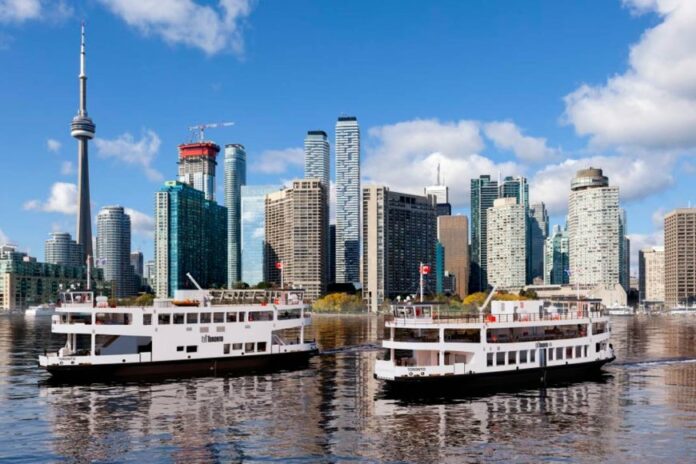
The fully electric vessels will provide a major boost to sustainability in the region. They will operate between the Jack Layton Ferry Terminal in downtown Toronto and the Toronto Islands, a major tourist destination, located in a high traffic area close to the shores of Lake Ontario.

Damen is building the Toronto Ferries at its Galati yard in Romania, to a design produced by Quebec-based Concept Naval. The naval architect company has developed the vessel design over the last two years in close cooperation with both the client and with Damen. 

The ferries will be 50 metres long with a maximum beam of 13 metres. One of the vessels will transport passengers and vehicles, and the other passengers and bicycles.

“We chose Damen for this new building project due to their outstanding track record,” said a City of Toronto spokesperson. “After a comprehensive RFP process, Damen emerged as the top-ranked supplier, excelling in critical areas such as experience, operational capabilities, engineering expertise and competitive pricing.”

Damen’s Product Director Ferries Henk Grunstra says,

“The City of Toronto is taking a big step forward for reduced emissions public transport with these new ferries. Fully electric vessels represent an ideal solution for a short route such as this one, within easy reach of charging infrastructure. We are looking forward to the construction of these ferries and to a successful collaboration with the City of Toronto and Concept Naval.”

Eric Garant, Director General of Concept Naval says,

“As a naval architecture firm, Concept Naval is proud to partner with Damen on the innovative 100% electric ferries for the City of Toronto. This project is designed to meet the needs of the City and the many users traveling to the Toronto Islands. Through the combined expertise of Concept Naval and Damen, we aim to provide a sustainable and efficient maritime transport service, at the forefront of technology, contributing to a greener future for the Toronto community.”

The Toronto Ferries will be the 23rd and 24th ferries that Damen has delivered to Canada in the last ten years. Examples include a number of fully electric and hybrid vessels as Damen works towards its goal to become the most sustainable maritime solutions provider.
Havfram contracted for transport and installation services for wind turbines in the Nordlicht Cluster

0

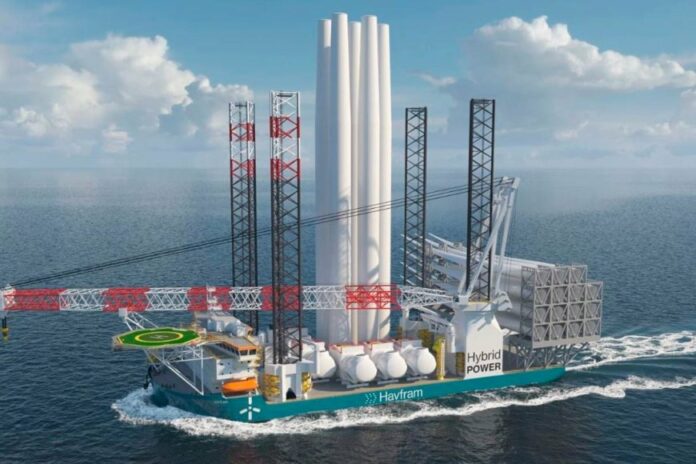
Havfram will deploy one of its state-of-the-art, low-emission wind turbine installation vessels for the construction of the two wind farms. Havfram’s new installation vessels, which are still under construction, are particularly efficient and support Vattenfall in its efforts to minimise CO2 emissions during the construction of wind farms.

Samira Barakat, Acting Head of Offshore Wind at Vattenfall:

“Vattenfall’s goal of achieving net-zero CO2 emissions by 2040 requires that we also reduce greenhouse gas emissions along the entire value chain. This partnership with Havfram showcases our commitment to investing in assets that enable our wind farms to be developed in a sustainable manner. The use of a low-emission installation vessel is an important step on our path towards fossil freedom and we are pleased to work together with Havfram, a trusted partner that shares our strategic ambitions.”

Tobias Stäb, Director of BASF Renewable Energy GmbH, added:

“With the signature of this contract, we are one step closer to the realization of the Nordlicht projects. The Nordlicht wind parks play an important role in BASF’s transformation towards carbon neutrality. The wind farms will supply our European chemical sites with renewable power and eventually enable BASF to increase production of low-carbon footprint chemical products. Thanks to the Havfram team for the collaboration!»

Even Larsen, EVP/CEO of Havfram Wind, said:

‘We are thrilled to have been selected for this substantial role in the Nordlicht cluster. The contract we signed today at the WindEnergy exhibition is a testament to Vattenfall’s and BASF’s confidence in our capabilities in delivering excellent transport and installation services. We look forward to contributing to the success of this landmark project and working with our partners Vattenfall and BASF to drive the transition to sustainable energy in Europe.’

The Nordlicht wind farms are located about 85 kilometres north of the island of Borkum in the North Sea. With a combined capacity of 1,610 MW, their 112 turbines are capable of generating enough electricity each year to meet the needs of around 1.6 million German households. Subject to the final investment decision, expected in 2025, construction is set to begin in 2026. The wind farms are scheduled to go into operation in 2028.

DNV completes first-ever verification of stage 3 floating LiDAR unit in Latin America

0

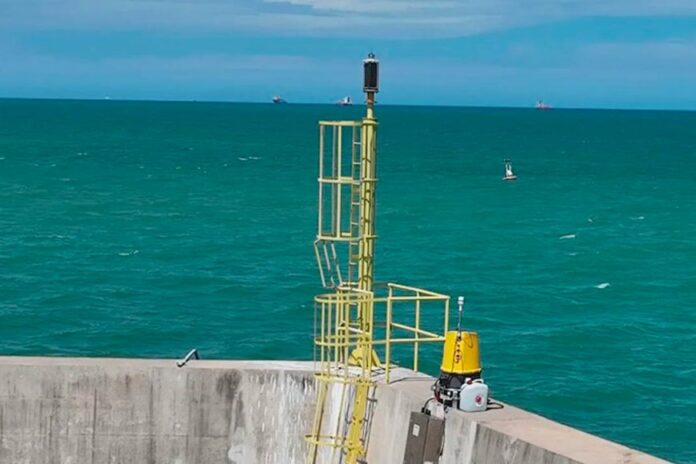
Over a period of 55 days, DNV conducted rigorous tests on the Fugro SEAWATCH® buoy, equipped with a Zephir ZX300M LiDAR unit. The floating LiDAR system’s performance was evaluated against a reference LiDAR unit onshore, widely accepted by the industry, to verify its performance and accuracy in measuring wind and metocean data under various offshore conditions off the coast of Porto do Açu, in Rio de Janeiro, Brazil. 

Accurate wind measurements are critical for the feasibility, design, and financing of offshore wind farms. Traditional methods, such as offshore meteorological masts, are expensive and complex, highlighting the demand for advanced, cost-effective solutions like floating LiDAR systems. The verification showed high data availability and low uncertainty in wind speed and direction measurements, confirming the reliability of floating LiDAR technology for offshore wind applications in Brazil. This development is pivotal in unlocking Brazil’s offshore wind potential and bolstering the growth of its renewable energy sector. 

The verification results mark a significant milestone for offshore wind in Latin America, demonstrating a more economical and reliable method of gathering critical data to guide decision-making for wind farm projects. 

Natalia Signorelli, Metocean Consultancy Lead at Fugro declared that

“Successfully verifying the floating LiDAR system in Brazilian waters is a significant milestone for offshore wind energy development in the region. This collaboration with DNV has enabled us to demonstrate the reliability and accuracy of our technology, paving the way for future projects.”

Santiago Blanco, Executive Vice President & Regional Director for Latin America, Energy Systems at DNV, highlighted the importance of this milestone:

 “DNV’s role as advisors is essential in helping organizations navigate the energy transition, with a focus on sustainability. Our contribution to the floating LiDAR verification project in Brazilian waters underlines this commitment: we provided rigorous testing and validation, ensuring the technology’s performance meets the highest standards, which is critical for advancing offshore wind energy projects in Latin America.”

Leonardo Barriatto, Product Manager at DNV, added,

 “We are proud to have collaborated with Fugro on this groundbreaking project that showcases the potential of floating LiDAR technology for offshore wind energy in the region. Our independent verification ensures the highest level of quality and accuracy for this innovative solution, supporting the development of renewable energy in Latin America.”

Shenzhen, Long Beach Ports, South Coast AQMD sign green framework

0

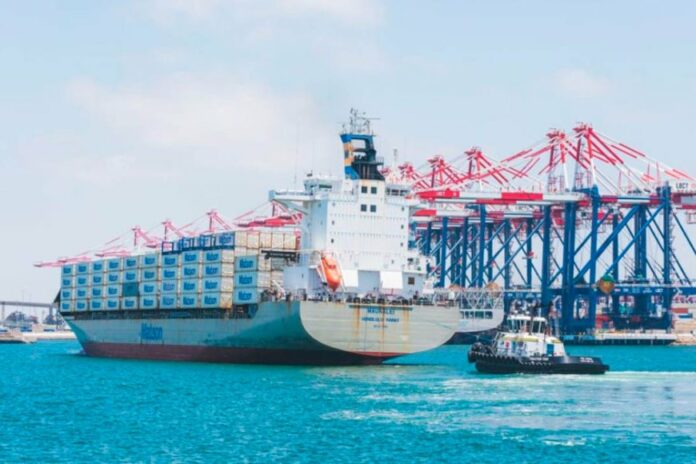
The Port of Long Beach, Shenzhen Port Group, Hutchison Ports YANTIAN (YANTIAN), South Coast Air Quality Management District (South Coast AQMD) and the North American Representative Office of Shenzhen have signed a memorandum of cooperation to collaborate on decarbonizing ocean trade and inspire other similar efforts to build a green maritime economy around the Pacific Rim.

Representatives for the parties signed the memorandum in Shenzhen, China, on Sept. 22. It establishes a framework to support coordination of technical exchanges and programs, initiate shared efforts to deploy clean technologies, promote sustainable infrastructure development within the maritime industry and promote economic development prioritizing sustainability and public health.

Potential collaborations may include maritime technology demonstration projects, programs to attract cleaner oceangoing vessels – because vessels are a key contributor to emissions associated with international trade – and information exchanges conducted through virtual meetings and regional workshops.

“One of the most important parts of strategic partnerships like this is the ability to target shipborne emissions, a source we have little power to regulate as a local port authority,” said Port of Long Beach CEO Mario Cordero. “We see the potential for this agreement to make fleets cleaner sooner. The technologies and practices we develop through this agreement also have the potential to have a positive impact on the environment and economies far beyond our two ports and cities.”

“The Port of Long Beach is honored and proud to be part of a collective effort to operate more sustainably and develop the green economy, all while protecting public health,” said Long Beach Harbor Commission President Bonnie Lowenthal. “This type of international collaboration is critical to our shared goal of decarbonizing shipping in the decades ahead.”

“Working together with our port partners, we have seen firsthand how we can accelerate the reduction of harmful emissions in nearby communities,” said South Coast AQMD Executive Officer Wayne Nastri. “The South Coast AQMD is excited to work with all our partners in this agreement to continue developing innovative strategies to reduce emissions and improve public health.”

“Building on the signing of this memorandum, we will drive initiatives in new fuel bunkering technologies, such as green methanol, and the development of zero-carbon ro-ro terminals,” said Shenzhen Port Group Chairman Zhaoyang Hu. “By enhancing communication and information sharing between the two ports, we aim to improve cargo transportation efficiency and establish more advanced green shipping corridors. These efforts will play a key role in achieving global Dual-Carbon Goal and fostering deeper economic and trade cooperation between China and the U.S.”

“The shipping industry is a cornerstone of global trade and economy. We recognize the importance of establishing partnerships and aligning our efforts towards common goals,” said YANTIAN Managing Director Lawrence Shum. “Through this memorandum, we commit to collaborating on technical exchanges, knowledge sharing and project cooperation, positioning ourselves as ‘pioneers’ in the green ocean economy of the Pacific Rim.” 

The memorandum signed Sunday will also explore the possibility of a Sister Ports Agreement between the Port of Long Beach, the second-busiest seaport in the United States, which handled 8 million twenty-foot equivalent units (TEUs) in 2023, and YANTIAN, which is one of the world’s largest container terminals run by a single operator. 

Equinor and DNO make an oil and gas discovery in the North Sea

0

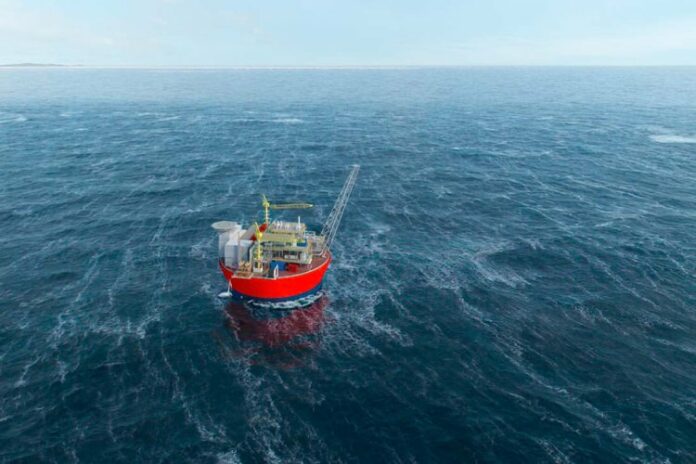
The primary objective of the drilling was in the “Angel” prospect. Preliminary estimates indicate the discovery is between 0.1-0.5 million Sm3 of recoverable oil equivalent, which is not profitable given current price assumptions.

Another objective for the well was to delineate the 35/10-9 (Heisenberg) discovery. Here, oil was proven which confirms the discovery size of 3.8-8.9 million standard cubic metres of recoverable oil, corresponding to 24-56 million barrels.

The exploration well is a continuation of the work in the area. Production licence 827 S was awarded in 2015 APA. The licensees have conducted exploration drilling on the “Gabriel” (35/10-6) prospect, which proved to be dry, and on Heisenberg, which was a confirmed discovery. An appraisal well was also drilled on Heisenberg earlier this year.

Geological information

The primary exploration target for the well was to prove petroleum in Eocene reservoir rocks in the Balder Formation.

The secondary exploration target for the well was to prove petroleum in Eocene reservoir rocks in the Hordaland Group, and to delineate the 35/10-9 (Heisenberg) discovery, also in Eocene reservoir rocks in the Hordaland Group.

Well 35/10-13 S encountered a 1-metre gas column in the Balder Formation in sandstone layers totalling 56 metres with good to very good reservoir quality. The estimated location of the gas/water contact is between 1709 and 1714 metres below sea level.

In the secondary exploration target, well 35/10-13 S encountered a gas in thin and heterogeneous sandstone layers totalling 6 metres with poor to moderate reservoir quality in the Hordaland Group. The gas/water contact was not encountered.

The well also encountered a 6-metre oil column in the Hordaland Group in the interval for the 35/10-9 (Heisenberg) discovery in sandstone layers totalling 6 metres with moderate to good reservoir quality. The oil/water contact was not encountered.

The well was not formation-tested, but extensive data acquisition and sampling have been carried out.

Well 35/10-13 S was drilled to a vertical depth of 1813 metres below sea level, and was terminated in the Sele Formation in the Eocene/Palaeocene.

Water depth at the site is 365 metres. The well has been permanently plugged and abandoned.

Chevron and Wärtsilä convert LNG carriers to spark gas operation

0

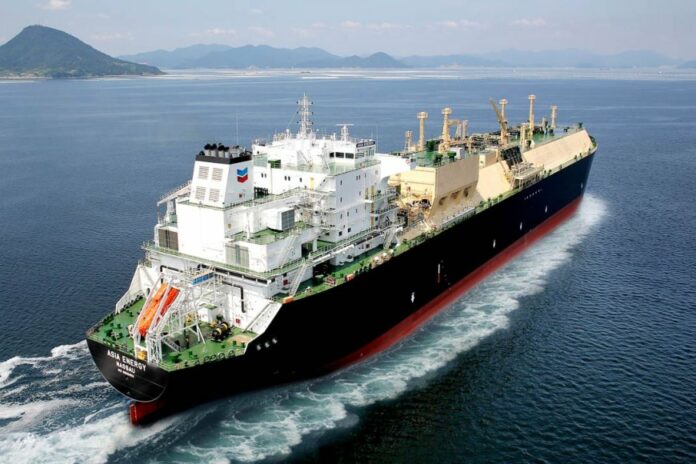
Technology group Wärtsilä, in partnership with Chevron Shipping Company LLC plans to convert one engine on six of Chevron Transport Corporation Ltd.’s LNG Carriers from dual-fuel (DF) to spark gas (SG) operation. 

The conversions are intended to reduce greenhouse gas emissions by lowering methane slip in support of Chevron Shipping’s broader efforts to reduce the carbon intensity of its operations. This marine industry first was made possible after two years of collaboration between the companies. 

LNG, when burned as a fuel, results in small amounts of methane that may not fully combust leading to methane escaping into the atmosphere, referred to as methane slip. Methane exists in the atmosphere for a shorter time than CO₂ but traps approximately 25–30* times more heat over a 100-year period. Addressing methane emissions is a key part of lowering carbon intensity. Wärtsilä’s 50DF to SG conversion project is designed to modify the engines in service to operate as SG, using spark ignition versus diesel pilot fuel to initiate combustion. This enables a more optimised combustion process, thereby reducing the methane slip and improving efficiency.

“Chevron Shipping aims to reduce methane emissions intensity of our LNG fleet in support of a lower carbon future,” says Barbara Pickering, President of Chevron Shipping. “We are pleased to collaborate with Wärtsilä in this industry first. This demonstrates steps we are taking to reduce the carbon intensity of marine transportation.”

“This innovative project represents a notable step forward on the road to advancing lower carbon fleets,” said Roger Holm, President of Wärtsilä Marine & Executive Vice President at Wärtsilä Corporation. “Wärtsilä has an extensive track-record in reducing methane slip from LNG-fuelled engines, not only as newbuild solutions, but also through retrofitting existing installations.”

This new technology complements Wärtsilä’s extensive portfolio of solutions aimed at reducing methane emissions from vessels. With nearly three decades of experience in LNG technology, Wärtsilä is providing market leading performance both with the dual fuel flexibility provided by the DF engine, as well as with the single fuel SG engine. 

Damen signs with WUZ Port and Maritime for ASD Tug 2111

0

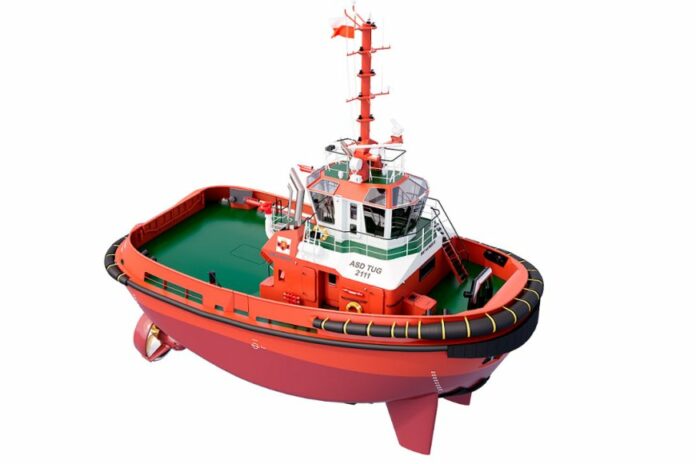
Damen Shipyards Group has signed a contract with WUZ Port and Maritime for an ASD Tug 2111. The vessel will be the eighth Damen tug operated by the Polish towage company. In recent years, WUZ has expanded its fleet in response to the development of the Port of Gdansk. 

The latest tug is currently being constructed at Damen Shipyards Changde in China in preparation for delivery next year. The ASD Tug 2111 will be one of the most compact vessels in the WUZ fleet. Its 21 metre length makes the tug the perfect solution to operate in the confined spaces of the Port of Gdansk’s Inner Harbour. 

Despite its compact nature, the ASD Tug 2111 offers up to 50 tonnes of bollard pull. The vessel is the latest addition to Damen’s Compact Tugs range. The design combines proven technology with innovation to provide the safety, sustainability, reliability and efficiency demanded by the modern port operation. 

To meet the needs of its clients, Damen is able to tailor the standard design of its tugs. For WUZ, Damen is preparing the ASD Tug 2111 with a winterization package, FiFi 1 fire-fighting capabilities and other modifications to enable it to operate in the Port of Gdansk’s LNG terminal. 

The port has been expanding in recent years. To support this, WUZ has invested in a range of new tugs, including a significant number of Damen vessels. 

The vessels joined other Damen tug types in the company’s fleet, as Marek Wengrzyn, Chairman of WUZ explains. 

“We value the long-standing relationship we have with Damen. Over the last years, the diversity of the Damen portfolio of tugs has given considerable support to our fleet expansion. The range of vessels we are now operating provides us with the versatility to offer a comprehensive towage service within the port.”

Justin Rietveld, Damen Sales Manager East and South East Europe, says, “We were very pleased to receive this latest order for an ASD Tug 2111 from WUZ. It underscores the level of trust and cooperation that exists between our two companies. I’m forward looking to continuing to develop our mutually beneficial relationship during the construction of these tugs and into the future.” 

Exail and Seabed 2030 project sign MoU to accelerate ocean floor mapping efforts

0

Exail has announced the signing of a Memorandum of Understanding (MoU) with The Nippon Foundation-GEBCO Seabed 2030 Project. This partnership aims to enhance global efforts in ocean bathymetry, contributing to the complete mapping of the world’s ocean floor by 2030.

The Seabed 2030 Project is a collaborative initiative between The Nippon Foundation and the General Bathymetric Chart of the Oceans (GEBCO). The project is dedicated to facilitating the full mapping of the global ocean floor and compiling all bathymetric data into the freely accessible GEBCO Ocean Map. 

Through this MoU, Exail and Seabed 2030 will work together to promote each other’s initiatives and share knowledge and best practices in ocean mapping and bathymetric data management.  As part of the agreement, Exail will contribute bathymetric data, promote the Seabed 2030 vision through its advanced technologies and solutions and actively engage in promoting Seabed 2030 to the users of its sonar, navigation, and autonomy solutions.

“We are thrilled to collaborate with The Nippon Foundation-GEBCO Seabed 2030 Project,” said David Vincentelli, autonomy business developer for the hydrographic market, at Exail. “This partnership reflects our commitment to advancing ocean exploration and our belief in the importance of a complete and accurate map of the world’s ocean floors. By joining forces, we can accelerate progress toward a fully mapped ocean by 2030, benefiting not just our industry, but the entire planet.”

“This partnership with Exail represents a significant milestone for Seabed 2030 as we continue to drive forward our mission of inspiring a complete map of the world’s ocean floor,” commented Seabed 2030 Project Director Jamie McMichael-Phillips. “Exail’s innovative solutions and expertise will not only enhance our technical capabilities, but also help raise awareness of the critical importance of ocean mapping. Together, we are committed to a better understanding of the ocean’s depths.”      

The MoU underscores both organizations’ dedication to the UN Decade of Ocean Science in Support of Sustainable Development (2021-2030), aligning their efforts with global initiatives to enhance ocean knowledge and management.

Wärtsilä to future-proof container vessels with CCS-Ready scrubber technology

0

Technology group Wärtsilä has been contracted to supply its latest carbon capture and storage-ready scrubber systems – CCS-Ready scrubbers – for three container ships owned by German operator Leonhardt & Blumberg.

A CCS-Ready solution will assure Leonhardt & Blumberg that it has continued regulatory compliance for SOx emissions today and opens the door to a smooth CCS system adoption in the future. Following a number of newbuild orders for CCS-Ready scrubbers, this will be one of the first retrofit projects prepared for CCS in the marine industry. The order was booked by Wärtsilä in Q3 2024.

The Wärtsilä solution significantly reduces a vessel’s operational expenses by enabling it to operate with less costly and more readily available fuel (HFO). At the same time, it significantly reduces the ship’s carbon footprint in line with the industry’s decarbonisation targets.

“We are working hard to operate our fleet in the most sustainable way possible,” says Tim Goettsche, Fleetmanager, Leonhardt & Blumberg. “This retrofit project with Wärtsilä’s advanced exhaust treatment system represents an exciting step forward in reducing GHG emissions with CCS technology. It will give our ships a head-start in being compliant with future regulatory requirements.”

The scrubbers are termed CCS-Ready because, as part of their installation, Wärtsilä will perform additional design and engineering work to ensure that future retrofits for a full CCS system on the vessels are accounted for.

An integrated CCS system, working in harmony with a scrubber system, is based on the principle of removing as many main pollutants from the exhaust as possible, tackling each pollutant in a modular fashion. Once other gases are removed, the remaining exhaust can then be scrubbed for carbon which can be safely stored onboard and disposed of on arrival at port.

“This project highlights and strengthens Wärtsilä’s commitment to deliver sustainable solutions for our customers. Our CCS-Ready scrubber technology has been proven in extensive testing over the past two and a half years. It is based on our deep experience and in-house know-how and will deliver a significant contribution to the industry’s efforts to reduce shipping’s environmental impact,” comments Sigurd Jenssen, Director, Exhaust Treatment, Wärtsilä Marine.   

The three 3600 TEU container vessels will be installed with a CCS-Ready, Vessel General Permit (VGP)-compliant, 27.5 MW Wärtsilä scrubber system. The flexible solution will ensure compliance with regulatory requirements regardless of where in the world they sail. The systems are being delivered on a fast-track basis, commencing in September of this year. The retrofit engineering and installation of the equipment onboard the vessels will be undertaken by Greentec Marine Engineering which is a high-tech service company specialising in marine and offshore engineering services.

Works start on the first next-generation Offshore Patrol Vessel for the Italian Navy

0

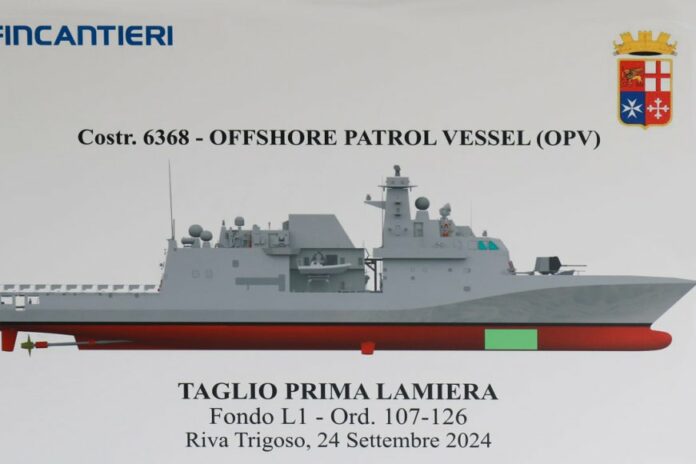
The ceremony was attended, among others, by the General Manager of Fincantieri’s Naval Vessels Division, Dario Deste, the Director of the Naval Armaments Directorate – NAVARM, Admiral Chief Inspector Giuseppe Abbamonte, and the CEO of Orizzonte Sistemi Navali, Giovanni Sorrentino.

This program, put in place to contribute to the modernization and renewal of the Italian Navy’s units, envisages the construction of four vessels, with an option for additional two, with the first delivery scheduled for 2027. The overall value of the first four ships, contracted by Orizzonte Sistemi Navali (OSN), a joint venture owned by Fincantieri (51%) and Leonardo (49%), is approximately 1.2 billion euros, including the related logistical support.

The OPV program responds to the need to ensure adequate capabilities for presence and surveillance, maritime patrolling, merchant traffic control, protection of lines of communication and the exclusive economic zone, as well as operations to protect against threats derived from marine pollution, such as toxic liquid spills.

With a length of about 95 meters long, a displacement of 2,400 tons and the capacity to accommodate 97 crew members on board, these new patrol vessels will be marked by a package of technological solutions, as well as standards of excellence in automation and maneuverability, that will make them suitable for operating in a wide range of tactical scenarios and weather conditions.

Among the most innovative features is the integrated naval cockpit, developed for the Italian Navy’s Multipurpose Offshore Patrol Vessels (PPAs), co-produced by Fincantieri NexTech and Leonardo. This represents a generational leap, allowing the control of engines, rudders, and platform systems, as well as some combat system functions, by just two operators – pilot and co-pilot – thus optimizing efficiency and safety.

The OPV program marks a major achievement for Fincantieri, further strengthening its position as a global leader in naval defense with its FCX product range, which includes these new patrol vessels. This project not only reinforces the company’s strategic role as a partner of the Italian Navy, but also deepens its collaboration with Leonardo through Orizzonte Sistemi Navali, showcasing Italy’s expertise in defense and in advanced naval integration.