3.2 C
New York
Home Blog Page 1339

LNG carrier spot rates soar as US export

0

The nearby spot rates for chartering large LNG carriers have been soaring at a time when future US export projects, fueling forward activity, continue to be given the “green-light”.

Recent reports from equity analysts, LNG has provided news that has featured prominently. Analysts at Cowen Securities have highlighted developments at Cheniere and Tellurian Cheniere, which has been a first mover among exporters, has been exporting cargo from Sabine Pass, on the Texas Louisiana border, since 2016, with its next facility, in Corpus Christi, set to come on line later this year.

The Cowen report highlighted regulatory approvals on Phase 3 at Corpus, which would come on stream in 2021, when Cheniere’s overall “nameplate” capacity- at Sabine and at Corpus, would exceed 20m metric tons annually.

Cowen notes that Tellurian’s Driftwood project, where molecules would be exported from a facility near Lake Charles, La, has seen a slight delay into early 2019, in obtaining a federal authorisation of its Environmental Impact Statement. They comment: “The approvals can still accommodate the company's goal for FID in 1H19 with operations commencing 2023.” If all the stars align, this project would be able to produce approximately 27m tons a year of LNG for export; the first phase would have the capacity for 11m tons a year of exports – if it goes according to plan.

While US exports, moving across the Atlantic and to the Pacific, through the Panama Canal, said to be increasing the number of allowed LNG transits, continue to attract attention, they are still a small component of seaborne LNG shipments. The growing spot component of LNG sales, from the US and also from traditional sources (with Qatar and Australia dominating) have brought more volatility to LNG charters.

Morgan Stanley’s Fotis Giannakoulis headlined his weekly Maritime Industries report with “LNG Tonnage Disappears as Global Prices Soar,” while Jefferies’ analyst Randy Giveans titled his report with “Atlantic LNG Shipping Rates Rise to $85,000 per day.

Evercore ISI analyst Jonathan Chappell, a proponent of the sector even before the present run-up, offered the caption “Much More In Store than just a Seasonal Spike…Though that is Likely Coming too” on his publication. Chappell explained that: “Short-term rate volatility has been somewhat extreme over the last 12 months, with a meaningful winter spike late last year followed by typical seasonal weakening in the spring.” He added: “However, over the last few months short-term rates have strengthened materially, counter-seasonally, touching the highest levels since the last bull market of 2012.

All shipping markets are caught in a tussle between available supply, and demand to move cargoes; clearly, the latter is driving the boat at this point in time. Morgan Stanley, in its report, suggested that: “Global LNG prices continue to climb driven by strong end-user demand and rising oil prices. October deliveries to Asia are now selling close to $12 pre mmbtu or +92% Year over year.

In a similar vein, Jefferies explained that: “Charterers such as Cheniere, Chevron, and Uniper continue to lock in multi-month contracts ahead of the winter.” Evercore ISI’s analysis framed the chart for the coming months, with the present base “elevating the starting point for another anticipated winter market rally and the next cyclical upturn expected to begin in 2019 (but apparently already under way).

Source:seawanderer

Container volumes at the Port of Long Beach

0

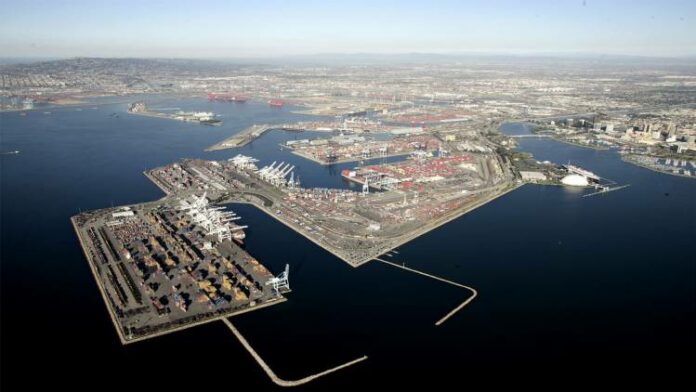
Container volumes at the Port of Long Beach dropped by 1.9% in August compared to the same month the year before. Namely, a total of 679,543 twenty-foot equivalent units (TEUs) were moved through the Port.

Imports also declined 3.6% to 343,029 TEUs, while exports increased by 1.9% to 119,546 TEUs. Empty containers sent overseas reduced by 1.1% to 16,968 TEUs.

This is contrary to August 2017, which was one of the busiest months in the Port of Long Beach’s 107-year history. At the time, it was the third-busiest month ever, and the mark has been exceeded three times since.

Long Beach’s volumes through the first eight months of the year stand at 5,320,930 TEUs, a number that is 9.4% above the pace of 2017, the Port’s best year ever.

According to the Port of Long Beach's, Executive Director Mario Cordero, this decline is due to 'a realignment of ocean carrier alliance services and port calls'.

In addition, another factor is higher tariffs by the US and China, something that helped increase traffic, as shippers act to beat duties imposed on goods this summer.

Source:seawanderer

Yemeni navy seizes Houthis

0

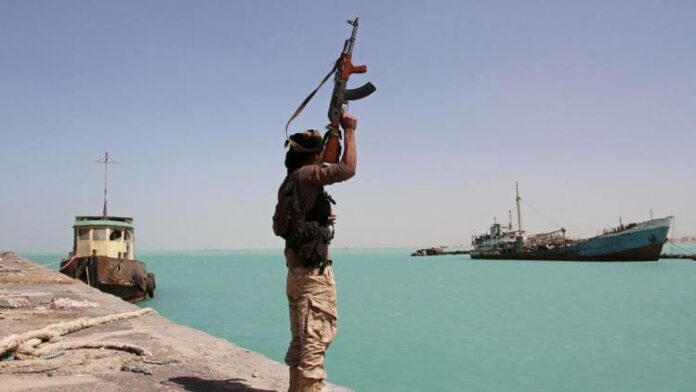
The Yemeni Navy managed to prevent an attempt by Houthi rebels against ships in the Red Sea. According to initial reports, Yemeni forces seized a a booby-trapped boat sent by the Houthis to attack international ships in the area.

According to UAE media Khaleej Times, the booby-trapped boat was loaded with explosive devices and traveling at a high speed of 35 knots on its way to international waters in the Red Sea to intercept a merchant ship.

The source pointed out that the naval military teams of the Yemeni army intercepted and halted the boat at an uninhabited island.

Houthis attacks against merchant and navy ships in the Red Sea are often. In May 2018, a missile or rocket damaged a Turkish-flagged bulk cargo vessel while at anchor in the Red Sea awaiting entry into As-Salif, Yemen.

More recently, in late July, Saudi Arabia announced a temporary halting of all oil shipments through the Red Sea shipping lane of Bab al-Mandeb, after Houthis rebels attacked two Saudi Very Large Crude Carriers (VLCCs) in the Red Sea.

These come in addition of a series of Houthi attacks on ships off the coast of Yemen, specially on the aftermath of the Saudi coalition’s closure of Red Sea ports back in November.

Source:seawanderer

Oil majors apply for first CO2

0

On Friday, oil majors Equinor, Shell and Total, submitted an application for an exploitation permit for a subsea reservoir for injection and storage of carbon dioxide (CO2), under the 'Northern Lights' project . This was the very first time the authorities have announced a licensing round for injection and storage of CO2.

The partners in the Northern Lights project were the only applicant when the deadline expired on Friday. Awards are expected during the fourth quarter of 2018.

"Equinor and partners Shell and Total are very satisfied to have the opportunity to apply for an exploitation permit for a future CO2 storage facility. We look forward to the further dialogue with the Ministry of Petroleum and Energy and the Norwegian Petroleum Directorate about this project through the autumn,"…says Per Gunnar Stavland, Authority Relations, Northern Lights.

The authorities announced the relevant area on 5 July. State Secretary, Ingvil Smines Tybring-Gjedde, said then that the announcement was a concrete follow-up of the Government’s ambitions for full-scale CO2 capture and storage in Norway, and an important element of the work on the storage part.

The ambition is to achieve a cost-effective solution for full-scale CO2 capture and storage in Norway, given that this results in technology development in an international perspective.

"In a similar manner as with the award of production licences, the Norwegian Petroleum Directorate will evaluate the geotechnical work and provide advice to the Ministry prior to an award",…says Wenche Tjelta Johansen, assistant director in exploration in the NPD.

Source:seawanderer

BPA: Coastal shipping could

0

The British Ports Association (BPA) published a report authored by Setfords Solicitors on Maritime Autonomous Surface Ships (MASS) and the challenges and opportunities for UK ports.

Published at the beginning of ‘Maritime UK Week’, the report describes the opportunities for UK ports in preparing for new MASS. Initially MASS are most likely to be used for short sea and coastal traffic. This could be within UK and Irish domestic, territorial and inland waters for potentially UK-flagged and registered merchant ships/cargo ships. The primary reason for this is that it will probably take some while for the IMO’s regulatory review to be completed, and the regulatory framework of a single nation will move more quickly.

In addition, coastal shipping could be one of the first parts of the UK maritime sector to embrace autonomous shipping and the BPA is encouraging ports to consider the implications on their operations.

The report also makes a number of recommendations for ports interested in leading in this fast-emerging area, including smaller ports who could gain early from autonomous or semi-autonomous coastal shipping and feeder traffic. There are also recommendations for the UK Government in reviewing UK legislation and regulations to make sure they are up to date and can accommodate new technological opportunities.

However, there will be some challenges. Some of them will be in the areas of operations and management, safety, security, cyber security and breakdowns in communication systems.

There will also be changes to quays for berthing, nevertheless this could increase jobs at ports, as it requires high levels of technical skill by shore based operators and back up service providers. The same set of skills will be needed for re-assessment of costs and payment for this new market, which may have an impact on harbour dues and other commercial agreements.

The report also makes some recommendations for harbour authorities, including reviewing harbour byelaws to check they could accommodate MASS.

Source:seawanderer.net

DNV GL forecasts gas capital

0

DNV GL’s 2018 Energy Transition Outlook, an independent forecast of the world energy mix in the lead-up to 2050, predicts global upstream gas capital expenditure to grow from USD960 billion (bn) in 2015, to a peak of USD1.13 trillion in 2025. Upstream gas operating expenditure is set to rise from USD448 bn in 2015 to USD582 bn in 2035, when operational spending will be at its highest.

While DNV GL’s model predicts global oil demand to peak in 2023, demand for gas will continue to rise until 2034. New resources will be required long after these dates to continue replacing depleting reserves.

The energy transition will be made up of many sub-transitions. Our Outlook affirms that the switch in demand from oil to gas has already begun. Significant levels of investment will be needed in the coming decades to support the transition to the least carbon-intensive of the fossil fuels,” said Liv A. Hovem, CEO, DNV GL – Oil & Gas.

Gas will fuel the energy transition in the lead-up to mid-century. It sets a pathway for the increasing uptake of renewable energy, while safeguarding the secure supply of affordable energy that the world will need during the energy transition,” Hovem added.

Rising global demand for gas will impact activity across the oil and gas value chain, according to DNV GL’s Outlook. Conventional onshore and offshore gas production is forecast to decline from about 2030, while unconventional onshore gas is expected to rise to a peak in 2040. DNV GL expects this trend to lead to leaner, more agile gas developments with shorter lifespans.

North East Eurasia (including Russia) and the Middle East and North Africa will account for most onshore conventional gas production in the lead-up to 2050, while North America will continue to dominate unconventional gas production. In the offshore sector, the Middle East and North Africa will see the highest annual rate of new gas production capacity from now until at least 2050.

Liquefied natural gas capacity will increase as production rises. DNV GL expects it to double by the late 2040s, as the midstream sector connects shifting sources of gas with changing demand centres. Seaborne gas trade is forecast to treble from North America to China by 2050. An increase in trade from Sub-Saharan Africa to the Indian Subcontinent and South East Asia is also expected. DNV GL forecasts further transition for the sector in the lead-up to 2050, as greener gases — including biogas, syngas and hydrogen — enter transmission and distribution systems.

Our forecast points to a faster, leaner and cleaner oil and gas industry in the future. It’s time for our sector to enhance focus on developing the digital technologies that will enable quicker and more agile exploration and production, and the smooth integration of less carbon-intensive gases into the energy system,” Hovem said.

DNV GL’s suite of 2018 Energy Transition Outlook reports are available to download free of charge. The main ETO report covers the transition of the entire energy mix to 2050. It is accompanied by three supplements forecasting implications for the oil and gas, power supply, and maritime industries.

Source: seawanderer.net

GTT receives an order from HHI

0

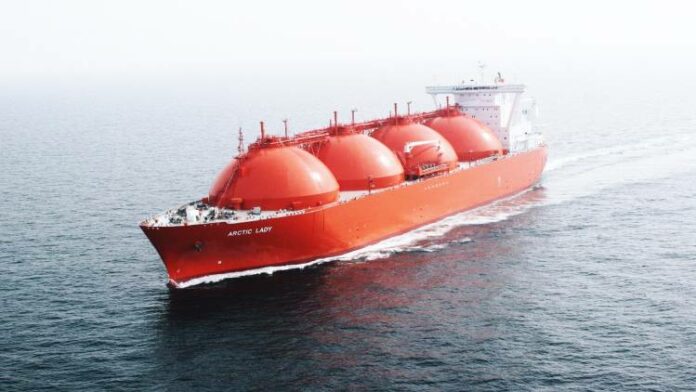
GTT has received an order from the Korean Shipyard Hyundai Heavy Industries (HHI) concerning the tank design of four new LNG carriers which will be built on behalf of the Greek ship-owner Capital Gas Carriers.

GTT’s Mark III Flex technology has been selected to equip the LNG tanks of these four 174,000 m3 ships. The delivery of these vessels is scheduled between the end of 2020 and mid-2021.

Philippe Berterottière, Chairman and CEO of GTT declared: “We are pleased with the long-term partnership of excellence developed with HHI. This new order represents a major project to which we are proud to contribute. We are also very pleased to accompany Capital Gas Carriers for its entry in the LNG world.

Source:seawanderer

China Launches Icebreaker Xuelong 2

0

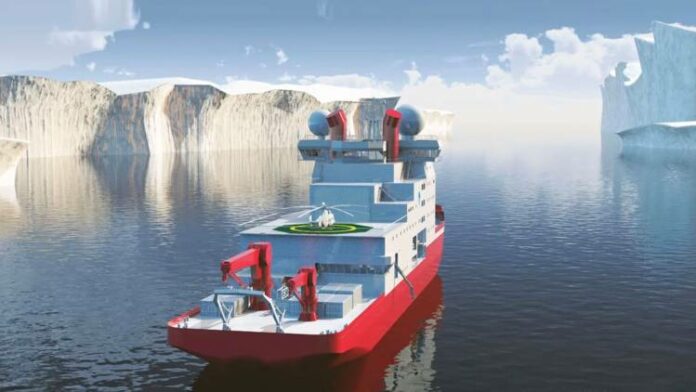
China launched Xuelong 2, the nation's first locally-built icebreaker, on Monday.

A ceremony was held at Jiangnan Shipyard for the polar research vessel, which is expected to enter service next year.

In 2012, the Polar Research Institute of China awarded the contract for the concept and basic design of the vessel to Aker Arctic. Construction of the 122.5-meter, 13,990 ton vessel began in December 2016. 

The Polar Class 3 vessel will have a range of around 20,000 nautical miles and is designed to break 1.5-meter-thick ice at speeds of two to three knots in both ahead and astern directions. She can operate in temperatures down to -30oC, has a maximum speed of 15 knots and can accommodate 90 crew and researchers.

The hull form was designed with good seakeeping characteristics and low open water resistance. A special box keel provides a disturbance-free flow environment for bottom-mounted scientific instruments in both open water and ice. The diesel-electric power plant and propulsion system, which consists of four main generating sets, two 7.5 MW azimuth propulsion units and two transverse bow thrusters, provides the vessel with redundant DP2 class station keeping capability.

The scientific outfit includes both wet and dry laboratories, a large aft working deck served by several cranes and winches, and a moon pool with scientific hangar that allows for the deployment of scientific instruments in ice-covered seas. The large forward cargo hold, heavy crane and cargo fuel tanks allow the vessel to carry out resupply missions to scientific research stations. The aviation facilities include a landing platform and a hangar for two helicopters.

Xuelong 2 is larger than the 15,300-ton Ukraine-built icebreaker Xuelong which is currently in service. Another icebreaker is already slated – this one capable of breaking three-meter ice and sailing in temperatures down to -45oC.

To date, China has conducted 34 Antarctic expeditions and eight Arctic expeditions.


Source:seawanderer.net

Djibouti Government Nationalizes Port Company

0

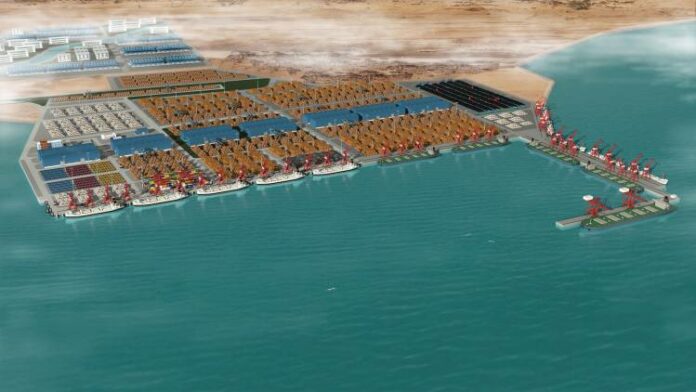
The Republic of Djibouti has nationalized the company that owns a majority stake in the Port de Djibouti SA (PDSA). This latest move in its clash with DP World follows an order from the President issued on September 9 which calls for the immediate nationalization of all the shares and social rights of PDSA in the Doraleh Container Terminal (DCT) joint venture with DP World. 

This government says that the decision aims to protect the fundamental interests of the nation of Djibouti and the legitimate interests of its partners and to ensure that the situation of the DCT joint venture company aligns with reality, as it has not been in charge of the container terminal of Doraleh since the termination of the concession contract in February 2018.

DP World will therefore have the State of Djibouti as a single interlocutor for all the discussions regarding the consequences of the concession contract termination.

Djibouti terminated the DCT contract due to what it calls “severe irregularities,” and says the contract was prejudicial to the fundamental interests of the Republic of Djibouti, to the development of the country and to its ability to control its most strategic infrastructure asset.

“DP World's "strategy", which consists in trying to oppose the will of a sovereign state, is both unrealistic and destined to fail. In any case, the proliferation of legal procedures, the 'fake news' campaigns and the intimidation attempts against Djibouti will have no effect on the case. That is why a fair compensation outcome is the only possible option for DP World, in line with the principles of international law.”

The move follows a decision earlier this month by the High Court of England & Wales which granted an injunction restraining PDSA from treating its joint venture shareholders’ agreement with DP World as terminated. 

The High Court has further prohibited PDSA from removing directors of the DCT joint venture company who were appointed by DP World. PDSA is not to interfere with the management of DCT until further orders of the Court or the resolution of the dispute by a London-seated arbitration tribunal.

On February 22, the Djibouti government seized control of the DCT from DP World, which had been awarded the concession in 2006. The move came after the government had attempted to force DP World to renegotiate the terms of the port concession. The port has three berths and an annual capacity of 1.2 million TEUs.

This is the third legal ruling in relation to the DCT following two previous decisions from the London Court of International Arbitration, all of them in favor of DP World. 

Source:seawanderer.net

ROCK-DUMPING VESSELS

0

Rock dumping vessels (Fall Pipe Vessel) are a category of watercraft that exist for the purpose of dumping rocks on the seabed. They are able to transport and dump rocks of variable sizes. The vessels range from large bulk-carrier style vessels, able to carry out precision operations using fallpipes, to smaller deck-loading vessels mainly used for erosion remediation.

Almost all such vessels are fitted with a dynamic positioning system, which makes it possible to position rocks very accurately. Large cranes or fall pipes are used to dump the rocks from the vessels. Side-discharging by means of crane is usually done in shallow waters, while fall pipes are more commonly used in deep-water rock-dumping operations.

The most common need for rock dumpers is to provide protection to previously laid pipelines in areas where they may be damaged by fishing gear. Pipelines at risk are not trenched, but remain on the seabed. There are a number of protection methods for such pipelines, including the placement of concrete mattresses, but for areas where a long distance of pipeline has to be protected, a rock-dumping operation may be most cost efficient.

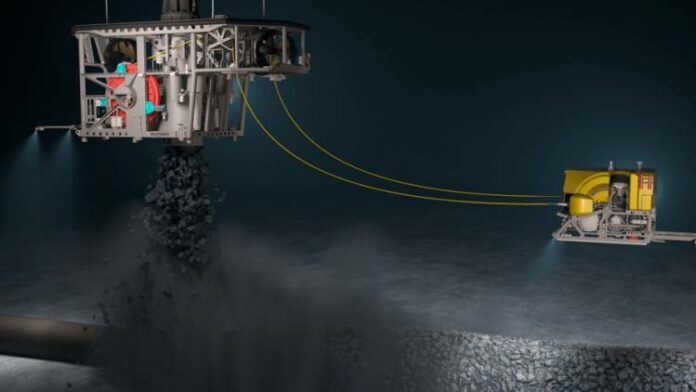
Fall pipe vessels (FPV) are equipped for rock installation at great water depths. The fall pipe end is positioned by a powerful remotely operated underwater vehicle (ROV) and allows for accurate rock installation on the seabed.

This equipment is most frequently applied to support the offshore oil and gas industry. The precision with which the rock is placed increases the safety of offshore pipelines from scouring and also anchors of other ships passing by.

Fall pipe vessels have been developed specifically for rock installation. Depending on the ship, a fall pipe may be able to install rocks with a size up to 400 mm in water depths ranging from 50 to 2200 metres.

To keep up with the pace of oil and gas field developments in deeper waters the dredging industry created an entirely new tool: A fall pipe, which could guide the rocks from the water surface underwater to much greater depths.

The video below shows typical rock dumping offshore operations.

At the end of the 1970s a steel, telescopic fall pipe was developed for rock installation at water depths significantly exceeding 50 metres. The large diameter steel fall pipes are, however, sensitive to drag and gravity forces.

In the mid-1980s an improved technique was developed based on a semi-open, flexible fall pipe consisting of a string of bottomless, heavy plastic buckets along two chains. At the lower end of the string a remotely operated, propelled vehicle (ROV) was attached. The ROV was equipped with a range of sophisticated technologies such as a camera and survey and positioning equipment. This flexible fall pipe design, with the ROV, installed on a dynamically positioned vessel, was able to achieve more accurate placement of rock by correcting the off-setting caused by currents. The drag forces were lower and therefore the system was less sensitive to rupture. This guaranteed a higher workability as the semi-open and flexible string of buckets is able to adjust its shape to the currents.

In the early 1990s DGPS (Differential Global Positioning System) was introduced in the offshore oil and gas and marine construction worlds: Differential drift of the rock-laying fall pipe vessel with respect to the subsea pipeline or cable could be achieved by dynamic positioning.

The success of this technique has proven invaluable as the dredging industry has become more and more involved with the offshore energy industry, working at ever greater depths.