7.9 C
New York
Home Blog Page 126

Trafigura signs long-term natural gas agreement with NuVista Energy Ltd

0

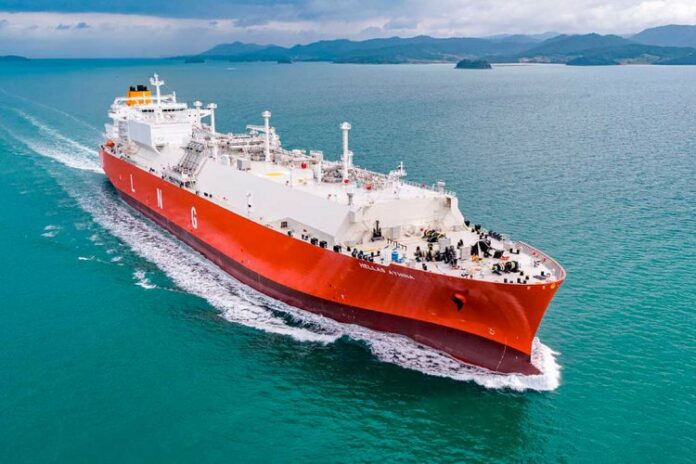
Under the agreement, NuVista will supply 21,000 MMbtu/d of natural gas to Trafigura with the purchase price indexed to JKM for a period of up to thirteen years beginning January 1, 2027.

Jonathan Wright, CEO for NuVista said:

“For over a decade of growth, we have prioritized ensuring significant diversity in our North American natural gas sales locations to maximize returns on our condensate-rich natural gas. We are extremely pleased to now make our first entry to the world LNG markets with this long-term agreement with Trafigura, one of the world’s leading LNG, energy and commodities groups.”

This agreement will support the growth of Trafigura’s natural gas business and further grow the company’s role in ensuring security of energy supply for customers worldwide.

Igor Marin, Global Head of Gas, Power and Renewables for Trafigura said:

“We’re delighted to be entering into a long-term offtake agreement with NuVista which has become a leading E&P producer in the Alberta Deep Basin. Canada’s gas producers are now creating an important new connection to global LNG markets. The signing of our first agreement with NuVista reinforces our dedication to these markets and to the growth of our long-term portfolio. It also showcases our capability to supply customers globally, helping them to navigate market fluctuations and ensuring reliability, adaptability and energy stability.”

Equinor strengthens its position in the Norwegian Sea

0

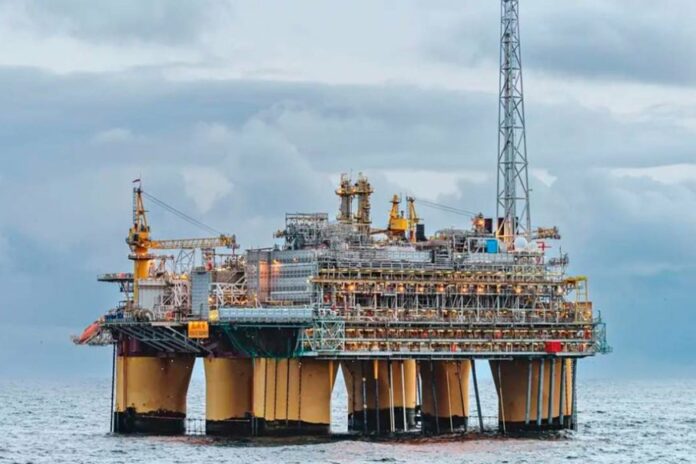
Halten East is an ongoing offshore development located in the Kristin-Åsgård area in the Norwegian Sea. The development comprises six gas discoveries and three prospects, which will utilise existing infrastructure and processing capacity at Åsgard B.

The recoverable reserves in Halten East are estimated to be around 100 million barrels of oil equivalents, of which approximately 60% is gas that will be exported to Europe via Kårstø.

“Halten East is an important project with strong profitability and low emissions, in a core area for Equinor. The transaction is in line with our strategy of optimising our portfolio on the Norwegian continental shelf to ensure long-term value creation,” says Grete Birgitte Haaland, senior vice president for Exploration and Production North.

The development will be carried out in two phases, with the drilling of six wells for five discoveries in the first phase (2024-25). The second phase (2029) includes a sidetract to one discovery and three optional wells for the prospects. The Halten East Unit was approved in May 2022 and is on track to start production next year.

The transaction is subject to various regulatory approvals. The effective date of the transaction is 1 January 2024.

Sweden cancels 13 offshore wind power projects due to potential Russian threat

0

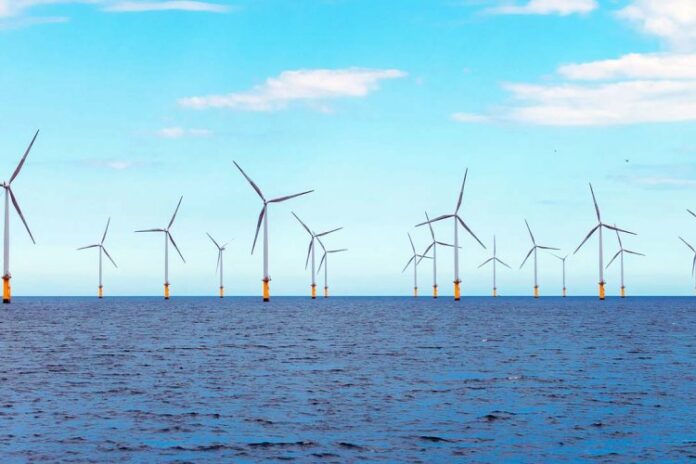
Most of the projects were in an early development phase. Among the affected offshore wind developers are OX2, Eolus, Ørsted, RWE, Freja Offshore, Deep Wind Offshore, and Statkraft.

The reason for this cancellation, according to the government, is that installing these wind farms could have unacceptable consequences for Sweden’s military defense, given its border with Russia across the Baltic Sea.

According to the Swedish Armed Forces, the wind farms could affect sensors and radars used by the military, making it difficult for the country to respond to any potential future attack from Russia.

Some media report that the Kaliningrad area is particularly sensitive. This is an isolated region of Russian territory bordered by Lithuania to the north and east and Poland to the south.

WindEurope claims that the Swedish military has been blocking offshore wind projects for years, and the government has not done enough to address this conflict.

It is indeed curious that other countries with access to the Baltic Sea and similar areas have not raised such objections. In fact, even Poland seems to see it as an opportunity to increase its surveillance systems, and it plans to equip offshore wind farms with sonar and radar systems in collaboration with its armed forces.

Moreover, given the offshore plans of countries like Poland and Lithuania, projects promoted by these countries should also be problematic for Sweden.

In this regard, WindEurope collaborates with NATO (to which Sweden recently joined, precisely due to the Russian threat) and the European Defence Agency (EDA) to respond to concerns like those raised by the Swedish government and military. This includes the “Symbiosis” project, which aims to promote the coexistence of offshore wind with defense operations and systems.

Another interesting point raised by WindEurope is that this project cancellation reveals the weaknesses of Sweden’s “open-door” development system, where developers can freely choose areas without prior government screening.

In most countries, administrations first identify certain areas that do not conflict with other activities such as defense, fishing, or environmental care. This approach provides legal certainty and avoids many “surprise” cancellations later on.

Despite having attractive maritime space and conditions, the reality is that Sweden currently has only 200 MW of installed offshore wind power—a modest figure considering its neighbor Denmark has 2.6 GW.

Source: Evwind

Crystal signs order with Fincantieri for third ocean ship

0

This comes as a result of the option granted under the two-unit agreements announced earlier this summer.

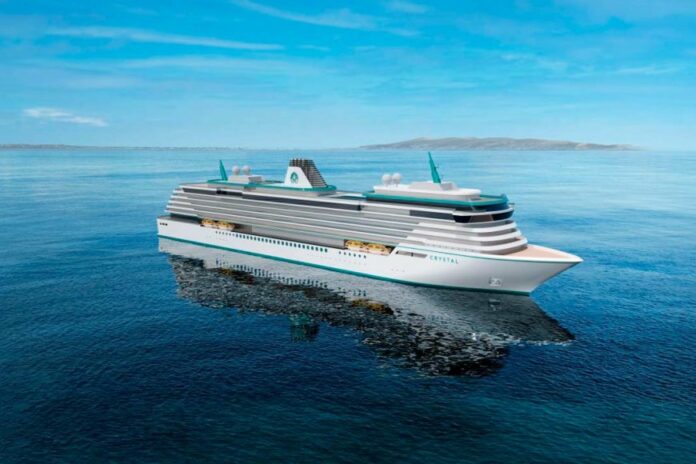
Similar to its sister ships, the 690-passenger (based on double occupancy), 61,800-gross-ton ship will feature a host of amenities and innovative designs, ensuring unparalleled comfort and indulgence for guests. Developed by renowned international architectural firms, the interior designs will use the finest materials and the best craftsmanship.

A standout feature will be a promenade extending through the whole ships’ perimeter, similar to those loved by guests on Crystal Symphony and Crystal Serenity, for leisurely strolls with stunning ocean views. Culinary enthusiasts will be delighted by a variety of dining options, showcasing a variety of world-class cuisines including Umi Uma, the only Nobu at sea as well as Beefbar, the brainchild of visionary restaurateur Riccardo Giraudi along with dishes created in collaboration with world-renowned chef Massimiliano and Raffaele Alajmo. Additionally, Crystal will continue its legacy of offering exclusive entertainment along with Casino de Monte-Carlowhich is set to debut on Crystal Symphony this month and Cystal Serenity in December.

The new ships will feature all-suite accommodations, with private verandas including a popular single occupancy category, with veranda, designed for solo travelers. This commitment to comfort is complemented by one of the highest crew-to-passenger ratios in this segment, ensuring personalized service and attention to detail.

“Exercising this option and agreeing to build a third ship together showcases the trust and partnership between my family and Fincantieri, dating back to Sitmar Cruises and evolving through Silversea to our present vision with Crystal,” said Manfredi Lefebvre d’Ovidio, Executive Chairman of A&K Travel Group.

Cristina Levis, CEO of A&K Travel Group, added,

“We’re pleased to bring an expanded fleet to our guests, offering even more ways to explore the world with the extraordinary service and style synonymous with Crystal.”

The announcement comes two years after A&K Travel Group acquired Crystal in 2022, marking a new chapter for the cruise line. Under A&K Travel Group’s leadership, Crystal has been focusing on enhancing its offerings both at sea and on shore and expanding its fleet to provide unparalleled experiences for its guests.

Friday Shipbrokers fix chartering project with Boskalis to transport car carrier to China for repair

0

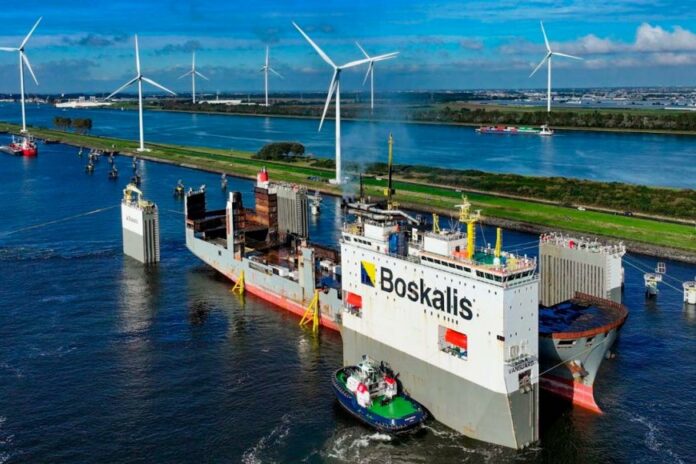
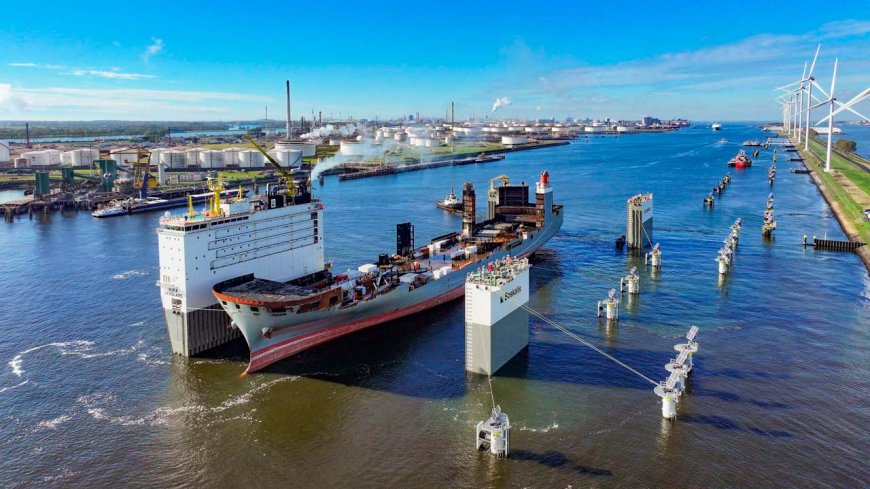
Friday & Co. Shipbrokers has announced the successful brokerage of a significant chartering deal between Dutch offshore engineering giant Boskalis and a Chinese charterer to transport the car carrier Floor (formerly Fremantle Highway) from the Netherlands to China. 

This project entails transporting the vessel—famously damaged by fire last year—aboard Boskalis’ semi-submersible heavy lift flagship, the BOKA Vanguard, for necessary repairs and modifications in Asia.

The Fremantle Highway, en route from Bremerhaven to Singapore in 2023, encountered a fire in the North Sea but was ultimately saved and docked in Rotterdam. Following this, insurers deemed the vessel a Constructive Total Loss (CTL), and it was acquired for a nominal sum. The vessel then underwent extensive modifications in Rotterdam, where all damaged and burned-out decks were cut out making it viable for transportation to China where it will be refitted for use.

Now renamed Floor, the car carrier is set for an extensive restoration in China, after which it will re-enter service under new ownership by mid-2025, offering a swift return to the global fleet amid a pressing demand for Pure Car and Truck Carrier (PCTC) vessels.

This is a first-of-a-kind project for S&P shipbrokers, Friday & Co. Shipbrokers. Justin Archard, Friday & Co.’s newest broker, has brought two decades of heavy-lift chartering experience to the team and played a key role in orchestrating the complex logistics and negotiations required to secure the ideal transport vessel for Floor. 

“‘Brokering this fix with Boskalis, the Chinese charterers and HCS (Hamburg Chartering Services) was an engaging and challenging project,” said Archard. “From initial contact, we thoroughly assessed potential vessels and ultimately selected the BOKA Vanguard for its unrivaled capabilities. I was delighted to be able to advise and facilitate a mutually beneficial outcome for both parties.”

Friday & Co. Shipbrokers provided representation for its client during pre-loading preparations, ensuring their interests were properly safeguarded and worked with the Marine Warranty Surveyor to ensure that the transport environment had been properly prepared and all risks minimised.  

“Our efforts ensured that the transport arrangement was thoroughly vetted for safety, accounting for changes in the vessel’s structure post-fire,” Archard remarked. “What was particularly interesting about this shipment was how the bending and twisting characteristics of the ship changed following the heavy steel cutting.  Engineers couldn’t know this before loading so this required some practical logic.”

Archard was also present at the load-out in Rotterdam on behalf of the client. In preparation for the journey to China, the BOKA Vanguard submerged to a depth of 24 metres over a 12-hour period, allowing Floor to be carefully manoeuvered onboard by tugboats and secured with custom-built supports. This delicate process was completed successfully, thanks to collaborative efforts among Boskalis and other key partners.

Despite significant fire damage, only the car decks of the vessel were compromised. All structural elements below the main deck remained intact, allowing for a cost-effective rebuild in lieu of a lengthy newbuild process. 

The journey from Rotterdam to China has already begun and is expected to take approximately 55 days. Once in China, the vessel will undergo renovations to bring it back into service, addressing a high demand for car carriers in the Asian market. 

Hapag-Lloyd orders 24 new container ships

0

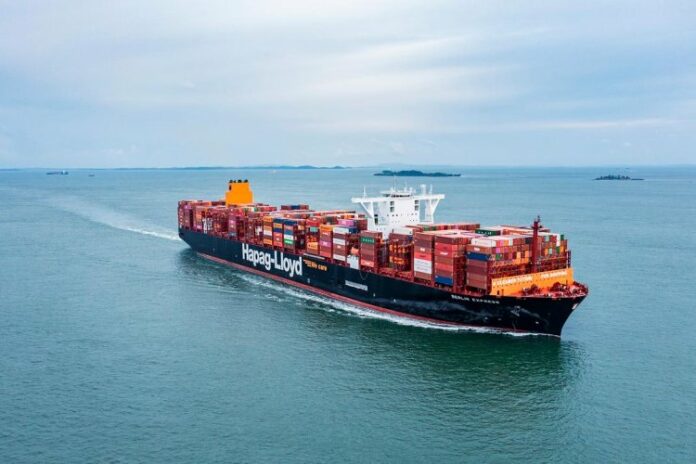
Hapag-Lloyd has signed two contracts with two Chinese shipyards for a total of 24 new container ships. Of these, 12 newbuildings – each with a capacity of 16,800 TEU – will be built by Yangzijiang Shipbuilding Group. 

These units will be used to expand the capacity of services that are already in place. An additional 12 ships, each with a capacity of 9,200 TEU, have been ordered from New Times Shipbuilding Company Ltd. and will replace older units in the Hapag-Lloyd fleet that will be nearing the end of their service life in this decade.

All of the newbuildings will be equipped with state-of-the-art low emission high pressure liquefied gas dual-fuel engines that are extremely fuel-efficient. In addition, these vessels can be operated using biomethane, which can reduce CO2e emissions by up to 95% compared to conventional propulsion systems. The new ships will also be ammonia-ready. Hapag-Lloyd will take delivery of the new vessels between 2027 and 2029. The newbuildings will have a combined capacity of 312,000 TEU and involve a combined investment volume of around USD four billion. A long-term financing of USD three billion has already been committed.

“This investment is one of the largest in the recent history of Hapag-Lloyd, and it represents a significant milestone for our company as it pursues the goals of its Strategy 2030, such as to grow while also modernizing and decarbonizing our fleet. Operating a fleet of more efficient vessels will also enhance our competitive position, and thanks to the increase in capacity, we will continue to offer our customers a global, high-quality product,” said Rolf Habben Jansen, CEO of Hapag-Lloyd AG.

Hapag-Lloyd is fully committed to the 1.5-degree target of the Paris Agreement. By 2030, the absolute greenhouse gas emissions of the company’s fleet operations are to be reduced by around one third compared to 2022 – in what will be another step toward net-zero fleet operation by 2045. This ambitious goal will be achieved by investing in modern, efficient newbuildings, slow steaming, fleet modernization and the use of new propulsion technologies and alternative fuels, which will allow customers to benefit from multiple green transport options at the same time. Considering the recent investment decision announced on April 16 of this year to retrofit five vessels to methanol propulsion, this investment is another step in Hapag-Lloyd’s efforts to prepare itself for a multifuel future and to drive the decarbonization of the liner shipping industry.

Hapag-Lloyd controls 287 modern container ships with a total transport capacity of 2.2 million TEU. This makes the company one of the world’s leading liner shipping companies. In addition, it operates the largest fleet sailing under the German flag.

Syngenta and Maersk extend partnership in more sustainable supply chain solutions

0

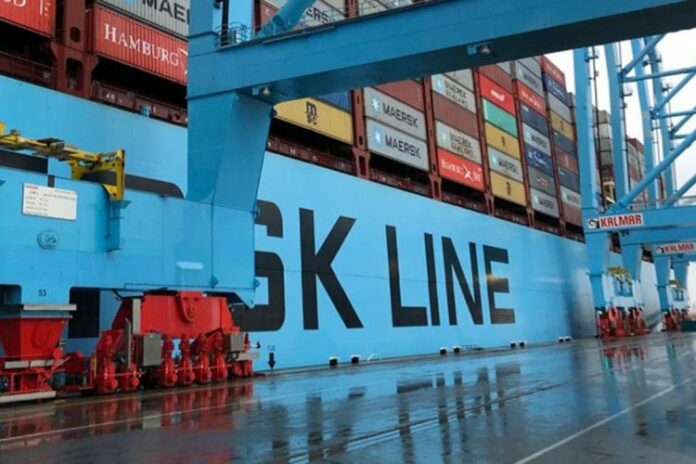
Syngenta Crop Protection, a global leader in agricultural innovation, and Maersk, a global integrator of logistics, announced today the extension of their fourth-party logistics (4PL) partnership for an additional five years. This renewed collaboration underscores both companies’ commitment to responsible logistics through continuous supply chain optimisation and innovation.

A 4PL provider takes third-party logistics further by managing resources, technology, infrastructure, and other logistics providers to design, build, and deliver customised supply chain solutions. This concept is integral to Maersk’s Logistics & Services product offering and a key element of its strategy to provide its customers with leading supply chain management solutions from factory to final destination.

A cornerstone of the collaboration is the constant focus on more sustainable logistics, with both companies highly committed to reducing greenhouse gas (GHG) emissions throughout the supply chain. Maersk aims to achieve net zero GHG emissions across its entire business by 2040, while Syngenta’s sustainability priorities are accelerating efforts to decarbonize its operations and set clear targets for sustainable operations. Under the collaboration, regular reporting on emissions and ongoing dialogue on sustainability outcomes are key determinants of business performance.

Over the past eight years, Syngenta and Maersk have successfully navigated major disruptions thanks to significantly increased resilience, including the Covid pandemic and the Red Sea crisis and identified opportunities for reducing GHG emissions from Syngenta’s supply chain.

Mike Hollands, Global Head of Production & Supply at Syngenta Crop Protection, said:

“We are thrilled to extend our partnership with Maersk, a company that shares our commitment to sustainability and innovation. Syngenta and Maersk have a strong alignment in prioritizing sustainability and driving innovation. Our partnership has proven its value, and we look forward to achieving new milestones together by continuing to develop and implement cutting-edge solutions that optimize our supply chains, leveraging digital logistics and artificial intelligence.”

Dimitris Armenakis, Global Head of Managed by Maersk Product, said:

“The journey we are on together with Syngenta underpins Maersk’s position as an integrated logistics provider. We thrive by the success of our customers and contribute to this by developing solutions that optimise and simplify their supply chains. We are always looking to innovate on behalf of our customers and add further value to their business.”

The extended partnership reinforces Syngenta’s and Maersk’s shared commitment to sustainability and innovation as industry leaders in driving efficient, resilient, and environmentally responsible supply chain solutions.

Cadeler signs firm contracts with ScottishPower Renewables

0

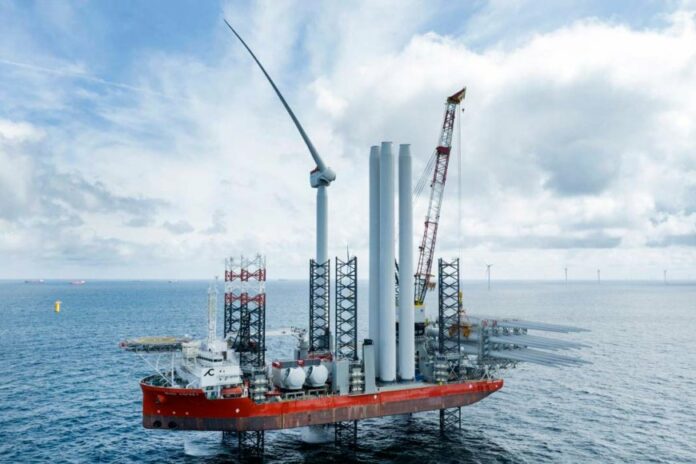
Cadeler A/S has announced the signing of firm contracts for the transportation and installation of 64 x 15MW offshore wind turbine generators (“WTGs”) as well as the foundations for the East Anglia TWO Offshore Wind Farm, being developed by ScottishPower Renewables (a member of the Iberdrola Group) off the coast of the UK. 

The aggregate value of these contracts to Cadeler is projected to fall within the range of EUR 360 – 382 million. The offshore works are set to commence in 2027 and will see the use of one of Cadeler’s newbuild A-class vessels.

In September 2024, the UK government announced the results of its latest auction for the award of contracts critical to the outbuild of new offshore wind farms. The awards included 960MW capacity allocated to ScottishPower Renewables’ £4 billion East Anglia TWO Offshore Wind Farm. East Anglia TWO will be located in the southern region of the North Sea, off the East Coast of England, and is expected to feature 64 x 15MW turbines, with the capacity to power the equivalent of almost one million homes each year.

Cadeler will be responsible for the transportation and installation of both the foundations and the WTGs for East Anglia TWO. The project will see the use of one of Cadeler’s A-class newbuild vessels, together with an O-class vessel from Cadeler’s existing fleet. This combination demonstrates Cadeler’s fleet flexibility and its ability to maximize efficiency and synergies across vessel classes.

Mikkel Gleerup, CEO of Cadeler, said: “This project underlines that our strategic decisions are in sync with our customers’ needs and the demands that we see in the market. With our six newbuilds on their way, Cadeler will deliver even greater flexibility and offer still improved efficiency for our clients, with solutions for even more complex projects. The East Anglia TWO project reinforces Cadeler’s strong position as a full-service T&I provider in the foundations space and our pivotal role in driving the transition to renewable offshore wind energy”.

Cadeler’s partnership with ScottishPower Renewables on East Anglia TWO reflects the execution of firm contracts for a portion of the work contemplated by a reservation agreement Cadeler disclosed in May 2024.

The offshore installation work for East Anglia TWO is set to commence in 2027 and, when finalised, the wind farm has the potential to make a substantial contribution to the UK government’s 2030 clean energy targets.

Mikkel Gleerup, CEO of Cadeler, said: “The results of the UK government’s Auction Round 6 are encouraging a focus on continued investment and further commitments to the green transition, with offshore wind energy set to play a crucial role in the energy mix of tomorrow.”

Charlie Jordan, ScottishPower Renewables CEO, said:

 “Following our recent auction success, we’ve been moving with pace and purpose to confirm the supply chain for East Anglia TWO, so it’s great to have Cadeler on board supporting this vital clean energy project, which will power almost one million homes with green electricity. East Anglia is the heart of our offshore wind operations in the UK and a vitally important region for us with one operational wind farm, another under construction and the supply chain now being confirmed for our third, enabling us to get out there and deliver a cleaner, greener and better future, quicker.”

First Damen Shrimp Trawler 2607 completes sea trials

0

Recently, the first in series Damen Shrimp Trawler 2607 successfully completed its sea trials in the Port of Hamriya, UAE. Damen has designed the new vessel for the next generation of (sub) tropical shrimp fishing. The design aims at the provision of a straightforward, no-nonsense platform, easy to operate and with minimal maintenance requirements. The Shrimp Trawler 2607 has an extremely low fuel consumption resulting in lower fuel costs and reduced emissions. 

Damen set about the development of the Shrimp Trawler as a solution for the growing market interest in fuel efficient vessels. Damen is specialised in the designing of high-pull vessels with limited propulsion power, and therefore, lower fuel consumption. Other examples of this include the recently delivered beam trawlers for Belgium and famous Damen Tugs. For those vessels, as with the Shrimp Trawler 2607, Damen applied CFD technology for optimisation.  

This has resulted in a larger propeller diameter, and a high catch nozzle, applied together with a streamlined balance rudder and skeg to reduce fuel consumption.  

The result, says Sales Manager at Damen Maaskant Pieter Louwe van Slooten, is a significant reduction in fuel consumption. 

“Before we began with the construction of this vessel, we undertook a considerable amount of research to ensure optimal fuel efficiency, while securing the power necessary for trawling operations.  

“The effects were clearly visible during sea trials, when the vessel surpassed our expectations. Compared to similar vessels currently operating in the market, the Shrimp Trawler demonstrated fuel savings of between 20 and 25% – representing a significant reduction in operating costs. This is the result of the great efforts and commitment of the team behind the vessel, who can be justifiably proud of a job well done.” 

As well as having a positive impact on the vessel’s OPEX, the fuel efficiency also means a considerable reduction in emissions. This ensures the Shrimp Trawler’s suitability for use as maritime operations become increasingly sustainable around the world.  

The vessel’s efficient profile goes beyond low levels of fuel consumption. The design of the Shrimp Trawler is deliberately straightforward, ensuring extreme user-friendliness, as well as reliability and minimal maintenance requirements. 

While simple where required, the vessel nonetheless features state-of-the-art shrimp freezing and storage facilities to ensure a high quality catch.  

Other changes on this vessel compared to its predecessors, have been made by positioning the engine room aft of the fish hold, thus shortening the propulsion line, without the shaft having to pass underneath the fish hold. The fish hold itself is located now under the deckhouse with a positive influence on trim of the vessel in different loading conditions. Processing and freezing of the shrimps now takes place on the aft side of the deckhouse, directly above the entrance of the fish hold, for better logistics. On the existing vessels the plate freezer is located on the aft side of the working deck.  

Another feature of the vessel is its high levels of safety and comfort. 
 
“The sturdiness of the vessel was also very clear to see during the trials. Ensuring safety onboard our vessels is one of the main priorities for Damen. The Shrimp Trawler also applies a lot of high quality, modern furniture and components to ensure comfort – after all, people working on the vessel are going to be spending weeks at a time on board.” 

The Shrimp Trawler 2607 is designed for operation in (sub) tropical environments. Its design is flexible, allowing for the vessel to conduct various different fishing methods in addition to shrimp trawling. 

Based on Damen’s practice of building vessels in series, the first Shrimp Trawler 2607 is available with a short delivery time.  

“Our philosophy is the construction of proven, standard vessels for stock, offering our clients rapid access to a reliable solution. Following the successful conclusion of sea trials, the vessel can be ready for delivery, following client specific adaptations, within a few months,” says Pieter Louwe.  

The Damen philosophy of shipbuilding also means that the vessel can be constructed anywhere in the world.  

“As well as our own international network of shipyards, we can also support the construction of vessels such as the Shrimp Trawler 2607 at non-Damen yards via the Damen Technical Cooperation (DTC). With this successful initiative, we not only widen access to our vessel, but help to build sustainable shipbuilding industries around the world.“ 

Chevron expands supply of marine lubricants to include Port Elizabeth

0

Chevron Marine Lubricants, a subsidiary of Chevron Corporation, has further extended its global supply capacity to include Port Elizabeth, South Africa. 

This expansion notably enhances the company’s ability to serve vessels taking the longer route to avoid current conflict areas. It also represents a strategically important addition to Chevron’s distribution network in the southern region. 

The expansion has been made possible through close collaboration with local partners, demonstrating the power of partnerships to enhance customer service and supply. 

“This marks a significant milestone in the development of our distribution network in southern waters,” says Ayten Yavuz, Global Marine Lubricants General Manager at Chevron. “Port Elizabeth is a major port of call, and having Chevron lubricants available will certainly increase the service reliability for visiting vessels. We have worked closely with our local partners to make this strategic expansion possible, and I wish to thank them for their excellent cooperation.” 

Chevron’s current range of marine engine lubricants, including the popular Taro Ultra range, will be available to ships calling at Port Elizabeth, a multi-cargo port located on the western perimeter of Algoa Bay.