2.9 C
New York
Home Blog Page 1246

Two Carriers Join Forces in Philippine Sea

0

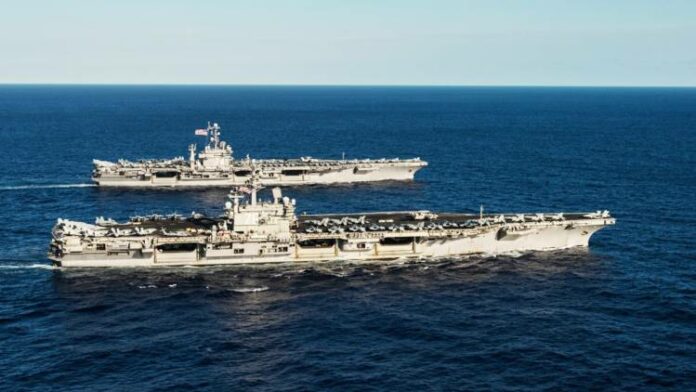
The carriers and escorts of the USS Ronald Reagan and USS John C. Stennis strike groups have teamed up for high-end exercises in the Philippine Sea, a relatively rare gathering of naval power in the Western Pacific. It comes at a time of heightened tensions between the U.S. and China over contested Chinese claims in the nearby South China Sea – including a recent "unsafe" encounter between an American destroyer and a Chinese warship near China's fortified outposts in the Spratly Islands. 

In a statement, 7th Fleet commander Vice Adm. Phil Sawyer made clear that the presence of two carrier strike groups is meant to convey American commitment to freedom of navigation in the region. The People's Liberation Army Navy frequently contests the right of American warships to transit freely through waters claimed by China. 

"Bringing two carrier strike groups together provides unparalleled naval combat power, tremendous operational flexibility and reach across the region," said Vice Adm. Phil Sawyer, commander of U.S. 7th Fleet. "It shows our forces at their best, operating confidently at sea, and demonstrates that the U.S. Navy will fly, sail and operate anywhere international law allows. The increased presence of two carrier strike groups in the region highlights the U.S. commitment to a free and open Indo-Pacific."

U.S. Navy aircraft carriers have conducted dual carrier strike group operations in the Western Pacific several times over the past decade, including the waters near the Korean Peninsula, Sea of Japan, South China Sea, East China Sea and Philippine Sea. These operations usually occur when strike groups from the West Coast are deployed to 7th Fleet to join the forward-deployed carrier strike group based in Yokosuka. Last year, the USS Nimitz, USS Reagan and USS Roosevelt conducted a rare tri-carrier exercise near the Korean Peninsula. 

Source:maritime-executive
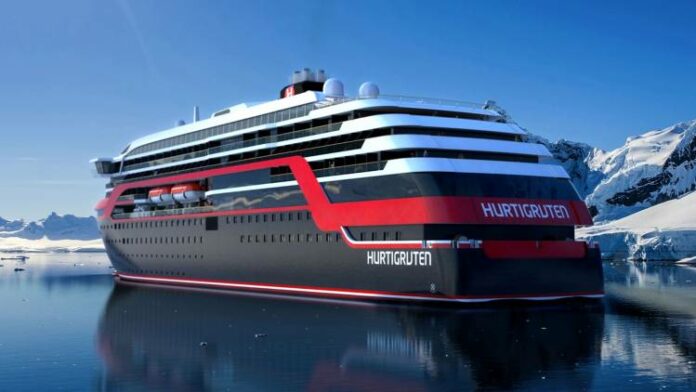
Hurtigruten Aims for Carbon Neutral Operations by 2050

0

Norwegian cruise operator Hurtigruten is in talks to power part of its fleet using liquefied biogas (LBG) – a commodity comparable to LNG, but made using methane from biological sources rather than natural gas. 

We are talking about an energy source from organic waste, which would otherwise have gone up in the air. This is waste material from dead fish, from agriculture and forestry,” said Hurtigruten CEO Daniel Skjeldam, speaking to Reuters. The fuel will be used in combination with LNG and with electric propulsion aboard six of its vessels, part of Hurtigruten's strategy to go fully carbon-neutral by 2050.

Biomethane is produced by anaerobic bacteria during the decomposition of organic matter, like manure, sewage or landfill waste. The technology for its capture, processing and use is well established – especially at wastewater treatment plants, where it is available in abundance – but it is rarely coupled with a liquefaction plant for producing cryogenic fuel. 

Liquefaction of biomethane would allow its use for marine transportation applications, as bunkering systems for conventional liquefied methane – LNG – are also a proven technology. The natural gas mixture in LNG is about 90 percent methane, with small quantities of heavier ethane, propane and butane. 

Hurtigruten also has two newbuild diesel-electric hybrids on order, the future Roald Amundsen and Fridtjof Nansen, and has just signed for a third ship with larger battery packs. They will be capable of limited periods of all-electric operation, and the first in the series is expected to be about 20 percent more fuel efficient than comparable conventionally-pwered vessels. The ships are under construction at Kleven Shipyard and are scheduled for delivery in 2019 and 2020. “Being able to sail using only electrical power is not only a great benefit to the environment, it will also enhance the impact of experiencing nature for the guests," said Hurtigruten CEO Daniel Skjeldam.  Imagine sailing silently along the ice edge in the Arctic or Antarctica, or along the banks of the Amazon. That is truly unique and exceptional, says Daniel Skjeldam.

Source:maritime-executive

ADNOC forms R&D co-operation with Saudi university

0

 ADNOC has signed a framework agreement with King Fahd University of Petroleum and Minerals (KFUPM) in Dhahran, Saudi Arabia, to explore the potential for collaboration in R&D and development of a student-ADNOC graduates exchange program.

The two parties will work together on topics of strategic importance to ADNOC such as enhanced oil recovery (EOR), field development optimization, and oil and gas processing further downstream, to improve the performance of ADNOC’s assets. 
In addition, ADNOC employees will be able to undertake postgraduate education in oil and gas degrees, courses and training programs at KFUPM.

Dr. Sahel Abdujauwad, Rector of KFUPM, said that his organization, established in 1963, has focused on different fields of energy and has established a science park with multinational research centers in upstream oil and gas.

It enrols more than 8,000 students pursuing undergraduate, masters, and doctorate degrees in different disciplines.

ADNOC also partners with Khalifa University, Abu Dhabi, Imperial College London, University of Cambridge, UK, Massachusetts Institute of Technology (MIT), US, Columbia University, US and University of Bergen, Norway.

During the 14th Rig Owners Seminar, held today on the sidelines of ADIPEC, Abdalla Saeed Al Suwaidi, CEO of ADNOC Drilling, outlined various ways his company has been advancing technologies and applications such as machine learning, neural networks, and predictive data to increase drilling productivity.

They include the company’s Panorama Digital Command Center and the Thamama Subsurface Collaboration Center where ADNOC is applying ‘big data’ technologies and artificial intelligence to help maximize value from its assets and resources and achieve targets such as reducing well drilling times by 30% by the end of 2019.

ADNOC Drilling, established in 1972, is the Middle East’s largest drilling company, operating a fleet that includes 20 jackups and 11 island rigs, and providing rigs and associated services to ADNOC Group companies. To date it has drilled more than 8,000 wells.

Source:offshore-mag

Relatively smooth experience expected using compliant 0.5% low sulphur fuels: VPS

0

Fuel tester Veritas Petroleum Services (VPS) is not expecting major problems with compliant 0.5% low sulphur fuel oil set to be used to meet the IMO’s 2020 sulphur cap.

VPS managing director for Asia, Middle East and Africa, Rahul Choudhuri, believes the compliant, hybrid fuels will be better and easier to use than similar 0.1% fuels being used in 0.1% sulphur emission control areas (ECAs).

If we look at the last four years we do have a lot of experience with low sulphur fuel oils, 0.1% fuel oils, they have been primarily used in Europe ECA areas,” Choudhuri told a Wilhelmsen Ship Management breakfast seminar in Singapore on Friday.

You are going to 0.5% low sulphur fuel oils coming up. The industry has experience in the last four to five years in using these (0.1% sulphur) fuels, the 0.5% fuels should be better and easier to use.

While there has been a surge in owners ordering scrubbers to comply with the 0.5% sulphur cap this will only cover a small percentage of the fleet with the majority of owners opting either burn gas oil or compliant low sulphur fuels.

As major bunker fuel suppliers announce their planned low sulphur fuel ranges to comply the sulphur cap from 1 January 2020, they are starting to share test blends with major owners.

We’ve had some large shipowners who are sending us samples which are actually test blends which they are getting ready to use,” Choudhuri said. He said the fuels had good ignition and combustion points, although did caution the fuels had quite high pour points.

He urged owners to put into place a system regarding the management of new fuels.

There have been concerns in the market that while unrelated the contamination problem that started in the US Gulf and has affected over 100 vessels since March this year could be a precursor to the types of problems that could be seen with blending fuels to create compliant low sulphur fuels to meet the requirements of the 2020 cap.

Source:seatrade-maritime

COWI Expands in US Offshore Wind Energy

0

In a major developement, international consulting group COWI announced it plan to increase its presence in the USA significantly with the consultancy contract with Vineyard Wind in Massachusetts – the first major US offshore wind energy project.

The Denmark-based specialist in  engineering, environmental science and economics said in a release that the project is part of a masterplan to construct 10 GW offshore wind farms.

The next seven years will see 10 GW offshore wind farms be developed on the northern East Coast – including Massachusetts, New York State, Connecticut, New Jersey and Maryland.

The first major offshore wind farm project is the Vineyard Wind project, which in phase 1 will generate 800 MW for Massachusetts. Vineyard Wind awarded COWI the consultancy contract for parts of the project.

Consequently, COWI is expanding its competencies in Boston by extending its current premises and increasing the staff.

The extension aims to support the Vineyard Wind project and to meet the demand for renewable energy on the US market. COWI expects to increase the staff from the current two employees at the Boston office to expected 80 -100 specialists within wind energy within approx. 3 years.

"We're well positioned to meet the demand, thanks to the competencies that we've built in Denmark for the past 20 years. Now, we go where the market and our customers are. To that end, we're building competencies and adding new staff to our Boston office, which boasts a central location in terms of existing and future projects," says Jan Behrendt Ibsø, VP of Wind Energy and Renewables with COWI.

Source:marinelink

Van Oord team ‘shields’ marine fauna

0

Van Oord and Scottish outfit Ace Aquatec are working together to make an acoustic device to protect marine fauna during offshore construction available to all contractors and interested parties around the world.

The so-called FaunaGuard has currently only been used by Van Oord on a few offshore projects, including the 600MW Gemini wind farm off the Dutch coast.

Van Oord said the device can be used during all offshore activities, such as rock installation, piling, drilling, blasting and dredging operations to safely and temporarily deter marine fauna species.

A porpoise module will be the first to be made commercially available, with other modules to follow in the coming months and years, it added.

Van Oord lead engineer Erik van Eekelen said: “The strategic partnership with Ace Aquatec is consistent with our mission to create world class innovative and sustainable solutions.“

At Van Oord we want to ensure that our inhouse innovations are made available to the rest of the world.

Ace Aquatec managing director Nathan Pyne–Carter said: “This partnership brings together the complimentary expertise of two innovation leaders in their field, and our systems and environmentally responsible ethos make this a win both for our businesses and for the environment.”

We look forward to supporting this exciting industry with our advanced systems which conjoin the technical expertise of Ace Aquatec with the experience and sounds that Van Oord has developed in their FaunaGuard innovation.

Source:renews

Orbital reveals next-gen tidal design

0

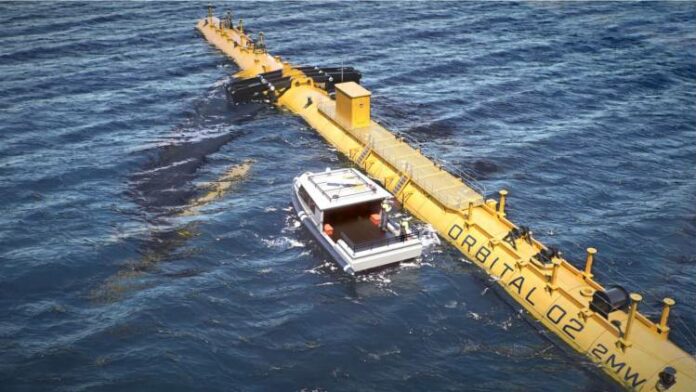
Orbital Marine Power has unveiled the key technical specifications of its O2 2MW next-generation tidal machine scheduled to be installed at the European Marine Energy Centre off Orkney in 2020.

The Scottish developer said the superstructure of the floating superstructure would be 73 metres in length, a 14% increase on the 64m-long SR2000 prototype 2MW unit.

The Orbital O2 2MW device will house twin turbines rated at 1MW at a tidal current speed of 2.5 metres per second.

The turbine rotors will have diameters of 20m and it 600 square-metre area, which the Kirkwall company said is the largest ever on a single tidal generating platform.

The device will also feature a 360-degree blade pitching to allow dynamic control of the machine’s 20m rotors and enable power to be captured from both tidal directions without need to yaw the entire platform.  

The steel structure of the turbine has been simplified to reduce fabrication costs and futureproof the product for volume manufacturing.

The machine will also feature new ‘gull wing’ style retractable legs that raise the nacelles, pitch hubs and blades to the water surface to allow access without heavy lift vessels.

The new configuration reduces the draught of the unit from 6m to less than 3m to ensure the utility-scale machine can be towed and installed with modest-sized workboats.

“This optimised turbine will unlock tidal markets around the world at a competitive price point and provide regulators and investors with a new, predictable renewable energy option,” said chief executive Andrew Scott.

Source:renews

APM Terminals Pipavav bets big on LPG, Auto cargo for growth

0

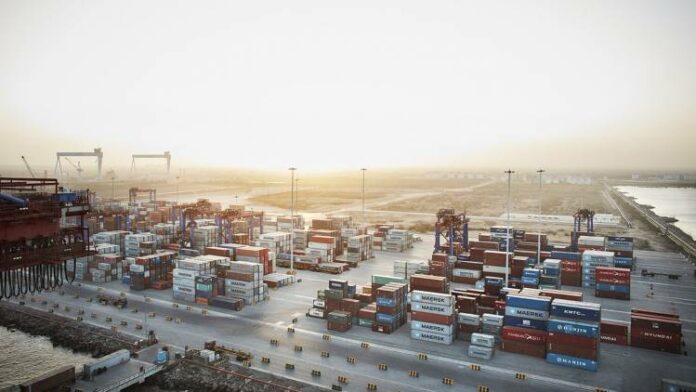
Private ports operator, APM Terminala Pipavav looks to capitalise its strength in the Liquified Petroleum Gas (LPG) and automobile cargo for a faster growth of its port operations at Pipavav port in Gujarat.

The port operator has reported sustained growth in the container cargo volumes at 238,000 TEUs, which was recorded at 1,95,000 TEUs in first quarter of the fiscal 2018-19. The company attributed growth to new service additions of Coastal and Transshipment volumes.

Keld Pedersen, Managing Director, believes that growth in port’s operations will be driven by the rise in LPG and automobile cargo businesses. “We are very keen on seeing exports grow. Car manufacturing in India, goes hand-in-hand with our port operations. We are preferred port for many of the auto OEMs. The outlook for automobile exports is bright and we are optimistic for sustained growth in this segment,” said Pedersen.

We have achieved a record of roughly 200,000 TEUs of container business in the last two quarters. Going forward automobile and LPG will drive the growth,” Pedersen told BusinessLine.

He further added that LPG cargo has about 70 per cent share in the overall liquid cargo volumes of 1 million tonnes recorded last year.”It is said to have a great outlook for the next decade. LPG will grow because of more areas can be covered going forward. We are very optimistic about that part of the business,” he added.

For the quarter ended September 2018, APM Terminals’ bulk business stood at 532,000 MT, and liquid business stood at 93,000 tonnes. The RoRo (roll-on roll-off) business handled about 22,000 cars for the second quarter. APM Terminals Pipavav currently has a capacity to handle up to 1.35 million TEUs of containers, besides 4-5 million tonnes of dry bulk cargo, 2 million tonnes of liquid cargo and about 250,000 cars per year.

Of the five berths at APM Terminals Pipavav port, there is one dedicated LPG berth with a draught of 11.5 metres with length overall (LOA) of 170 metres for LPG tankers. For container vessels of upto LOA of 335 metres there is another berth with draught of 14.5 metres and for bulk carriers of upto LOA of 240 metrers the berths have draught of 13.5 metres.

Pendersen ruled out possibility of any further capex or new business addition being worked out. “We are always evaluating new opportunities. But for now we don’t have any plans other than to continue what we do.”

Source:hellenicshippingnews

Portmaster improves efficiency in the Port of Scheveningen

0

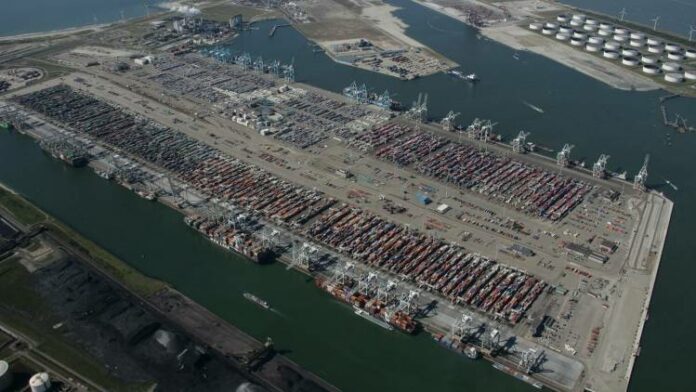
The Port of Scheveningen has been using Portmaster since September 2018. The Port of Rotterdam Authority developers attuned the port management system to the needs of the relatively small port in Scheveningen.

As port management, you are obliged to maintain various management systems,” explained Korstiaan Huisman, interim Head of the Traffic Center department. “Our previous supplier could no longer offer support. I was already familiar with Portmaster and the Port of Rotterdam Authority wanted to use our port as pilot area for the further development of this. So this came just at the right time.

Large and small
As management system, Portmaster, part of the Port of Rotterdam Authority PORT FORWARD portfolio, is suitable for both small and large ports. With approximately 4,000 port calls per year, size-wise the Port of Scheveningen cannot be compared with the Port of Rotterdam. However, the port authorities still need to satisfy the same statutory obligations and can use Portmaster for this. “Every commercial vessel arriving at a port must report 24 hours in advance,” stated Huisman. “As port management, we must forward these reports to the government’s maritime single window. We can do this with Portmaster. And we can also use this system for invoicing.”

Modular system
The Port of Scheveningen is using the basic version of Portmaster, which can later be expanded, as the system is modular. “The next step is to add the module for maintaining a monitoring and reporting journal on operational details and shift changes. The Port of Rotterdam Authority will also be testing new modules in our port.

Broad support
The Portmaster version for Scheveningen was developed and implemented by the Digital Business Solutions department from the Port of Rotterdam Authority. The operators working with the system in Scheveningen were closely involved in this. Huisman: “Our operators thought that the option to change berths in the port wasn’t clear enough and this was modified at their request. It’s a great way of working that has resulted in the system being supported across our organisation. It also demonstrates that the large Port of Rotterdam, where Portmaster was developed, can place itself in the position of the smaller ports. They understand how we work and modify the system accordingly. Moreover, we can benefit from knowledge and IT developments in the Port of Rotterdam.”

Faster and more precise
The implementation took two months and, according to Huisman, ran very smoothly. “We hardly needed any fine-tuning. It performed really well straight away.” The Port of Rotterdam Authority can service and update the system remotely as well as repair faults, where necessary. Portmaster works perfectly and is easy to operate. A big advantage is that we can now add vessels and companies to the system ourselves. Our software supplier used to have to do this, which took more time and was also prone to error. Portmaster enables us to work more efficiently.

Some 4,000 vessels call at the Port of Scheveningen each year, 80% of which are fishing vessels. Various government and cargo vessels also enter the port each week. Scheveningen is also a port of call for leisure vessels.

Source:hellenicshippingnews

Australia set to become world’s biggest exporter of LNG

0

Australia is on its way to become the world’s biggest exporter of LNG, according to the energy economics group EnergyQuest, informing in its latest monthly report that total Australian LNG shipments were significantly higher in October at 6.4 million tonnes (Mt) –up 10.3% on 5.8 Mt in September.

The increased export shipments were boosted in part by the start of production from the INPEX-operated Ichthys LNG project, which saw its first LNG cargo depart Darwin on 22 October, followed by two further cargoes.

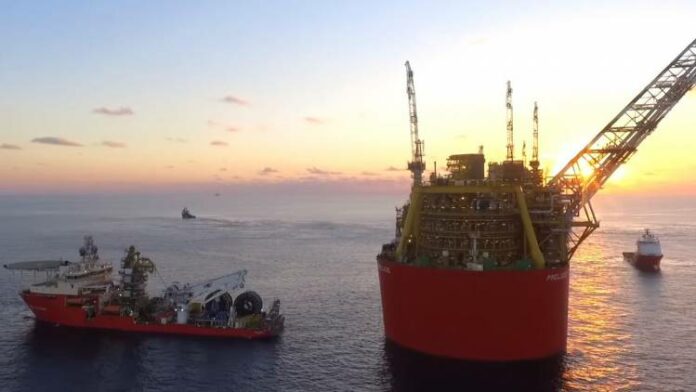
EnergyQuest Chief Executive, Dr Graeme Bethune, said the higher October shipments were 76 Mtpa on an annualised basis, prior to any significant production from Ichthys (annual capacity of 8.9 Mtpa) and the start-up of Shell’s Prelude project (3.6 Mtpa).

As Ichthys ramps up production in coming months we expect Australia’s annualised production rate to overtake Qatar’s nominal capacity of 77 Mtpa, making us the world’s biggest exporter. Latest reports are for a further three Ichthys cargoes to load in November from the Darwin plant to be sold on the spot market.

Dr Bethune said the October increase in Australian shipments reflected strong performance by west coast projects. East coast shipments were slightly below those in September, following agreement by east coast gas producers to offer uncontracted gas to the domestic market in the event of any shortfall.

Meanwhile, Dr Bethune said that after passing Japan in April this year as the world’s largest importer of natural gas (comprising both LNG and international pipeline gas), China’s LNG imports are growing quickly, with September imports up 26% on a year earlier.

"Australia continues to be the largest LNG supplier to China, supplying 43% of Chinese LNG imports in September. Notwithstanding strong Chinese demand, Chinese LNG imports from the US have slumped, from 0.5 Mt in January to only 0.1 Mt in September. This reflects the China-US trade war, plus record LNG shipping costs, particularly charter rates, which disadvantage longer distance transport,"…explained Dr. Bethune.

Meanwhile, Japanese Prime Minister, Shinzo Abe, is expected to arrive in Darwin today for the official opening of the $US40 billion Ichthys LNG project, which is set to drive Australia to the premier LNG export position.

Source:safety4sea