2.6 C
New York
Home Blog Page 1124

Spain’s Port of Ferrol Conducts First LNG Bunkering

0

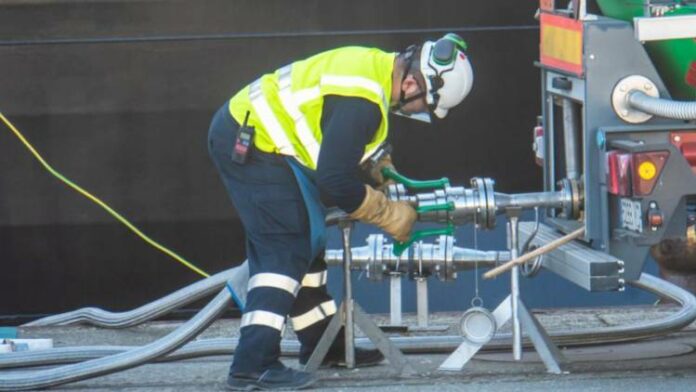
The Spanish port of Ferrol has hosted LNG bunkering operations for the first time in its history. Two bunkering operations were performed last weekend on the outer jetty where small and medium-sized cruise ships usually dock when they visit the city. 

The ships bunkered were the ferries Samnøy and Huftarøy which have just been built in the Turkish shipyard Tersan. They stopped in Ferrol on their way to the Norwegian fjords where they will be exploited in passenger services by the Torghatten Nord shipping company. With a length of 134 meters and a width of 21 meters, both vessels have been designed to transport up to 545 people and up to 180 vehicles. 

The supply operations were undertaken by Repsol and involved five tankers filled with LNG at the Reganosa terminal. The Samnøy received about 110 cubic meters of fuel, and the Huftarøy was supplied with 68 cubic meters. 

Few ports in Spain are capable of performing such operations in Spain at the moment. The Port Authority of Ferrol-San Cibrao has taken a pioneering interest in LNG, along with Repsol, Navantia and the terminal operator for Reganosa. The port anticipates growth in LNG as fuel particularly in container shipping fleet, a segment that is adopting LNG at an annual rate of 15-20 percent. Reganosa is working to convert Ferrol into a LNG hub for the Iberian northwest by adapting its Mugardos facilities to small-scale LNG traffic. 

According to José Manuel Vilariño, president of the Port Authority, “Ferrol is very well positioned to attract customers of this kind of supply operations. It has LNG available in its port and is located in a strategic location, at the gates of the Baltic Sea and the North Sea.”

Source::maritime-executive

Equinor joins US fisheries task force

0

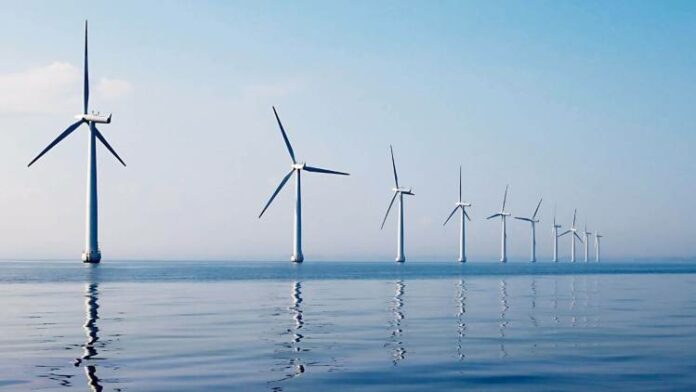
Equinor has joined a joint industry task force aimed at boosting collaboration between the fishing industry and offshore wind industry in the USA.

The task force was set up earlier this year with the goal of maximizing the compatibility of future offshore wind development with the country's established fishing industry.

The initiative is spearheaded by the Responsible Offshore Development Alliance (RODA).

RODA said it will focus on improving communications regarding operational and design elements of offshore wind projects and commercial fishing practices.

“The joint industry task force allows both industries to remain autonomous while facilitating conversations, utilizing the best available science and providing a space for direct input to be discussed and generating novel solutions as offshore development continues to move forward,” RODA said.

Source:renews

Russian Official Confirms Plans for Behemoth Icebreaker

0

Russian officials have said they will back the overhaul of an ailing Far Eastern shipyard in order to build an enormous nuclear icebreaker the Kremlin hopes will cement its control of Arctic waterways, the official Tass newswire reported this week.

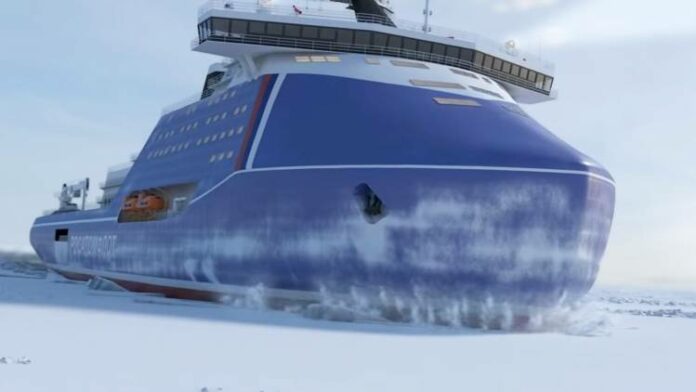
The icebreaker in question is the Leader – or Lider in Russian – a ship of futuristic, almost fantastical, proportions that first debuted on the pages of a slick Russian trade magazine four years ago. But what at first looked like an expensive dream has gathered momentum in official circles, and now the government is mobilizing billions of dollars to revamp the Zvezda shipyard, a nearly defunct naval installation Vladivostok, to build the vessel.

On Monday, Yury Borisov, a deputy prime minister, told the Tass state newswire that the Kremlin would issue an official order to build the Leader next month. At the same time, he confirmed that Zvezda would be renovated by Rosneft, Russia’s enormous state oil company, which has high hopes for drilling oil in the Arctic with help from ice-crushing nuclear behemoths like the Leader.

Borisov offered no specific dates for when the Leader would be completed, but did say that the dry dock at which it will be built at Zvezda will be ready for operation by next year.

Should the project come to fruition, it will become one of Russia’s most potent symbols of post-Soviet Arctic conquest.

The Leader first appeared as a mere artist’s rendition on the cover of the United Shipbuilding Corporation’s company magazine in 2015.

On its glossy cover, the sleek vessel was pictured from the point of view of helicopter poised to land on its deck as it steamed through puffy islands of ice. The airy vision seemed more similar to a prized yacht owned by a Kremlin-friendly oligarch than it did to any of Russia’s more muscular specimens of nuclear icebreaking steel.

Its dimensions seemed likewise incredible. At 205 meters (673 feet) and 71,000 tons, it would weigh in at 50 meters (164 feet) longer and thousands of kilograms heavier than Russia’s three largest icebreakers – which are themselves still under construction.

Its two experimental RITM 400 reactors would be capable of propelling it through the thickest ice the Arctic can dish out, while maintaining a hull shallow enough to make it useful in navigating the Arctic’s river tributaries.

And the Leader’s maintenance needs, according to engineers, would be minimal. As described in reports by Russia’s shipbuilding trade press, the Leader would be built of materials capable of “self-diagnosing” metal corrosion, and would further be able to “self-heal” when damage is detected. Many in Russia’s official press have championed the Leader as nothing less than the engine of the country’s economic turnaround.

But the Leader comes at a stiff price. The vessel is expected to cost $1.6 billion, and Russian officials have said they intend to build at least three.

Yet the Zvezda shipyard is an unlikely place to entrust with the task of building it. The bulk of Russia’s nuclear icebreaker fleet has been forged at the Baltic Shipyard in St. Petersburg. In fact, that shipyard is in the process of constructing the Sibir, the Arktika, and the Ural – which officials have previously billed as the biggest in the world.

But the Zveda shipyard has not only not built a nuclear icebreaker before it hasn’t built much of anything for the past 20 years. During the late 1990s and early 2000s, the shipyard was kept afloat by funding from the United States, which paid it to dismantle Soviet nuclear submarines under various post-Soviet nuclear disarmament agreements.

Since then, it has accrued debt and frustrated the Kremlin, which last year turned the shipyard over to Rosneft, run by a close political ally of Vladimir Putin, to boost its bottom line.

Alexei Rakhimov, head of the United Shipbuilding Corporation, which owns the Baltic Shipyard, noted the political nature of giving the Leader contract to the Zvezda shipyard, and said building an icebreaker at the distant Pacific Ocean port makes little economic sense.

Source:bellona

Cyber threat explained

0

Cyber threat is any event or incident that aims to impact organisational operations, such as mission, functions, image, or reputation, organisational assets, individuals, other organisations, or the Nation through an information system. This is achieved through unauthorised access, destruction, disclosure, modification of information, and/or denial of service.

Mainly, cyber threats should be categorised in order to better understand the vulnerabilities of assets.

According to KR Guidance for the maritime cyber security system requirement, external environmental factors of internal information technology and operational technology should be identified and categorised as threats.

Moreover, the Open Web Application Security Project (OWASP) is an open source web application security problem that focuses on the research of web exposure, malicious files and scripts, security vulnerabilities.

OWASP Top 10 are published in 2004, 2007, 2010, 2013 and 2017.

Injection is a vulnerability that takes place when an attacker identifies and executes maliciously injected data as part of a normal query of the data base in a web application.

Injection attacks are easy-to-happen; data is in put or database information is requested.

The injection consists of four different types:

  1. SQL injection;
  2. HTML injection;
  3. OS command injection;
  4. LDAP.

Also, there are various types of injection depending on the attack method and language used.

Specifically, Structured Query Language (SQL) injection is a practice used to adjust or retrieve data in a SQL database.

When a cyber attacker executes specific SQL actions, an unauthorized user can change existing data, modify transactions and balances, and retrieve and/or destroy all server data.

The most crucial form of SQL injection is that the attacker gets root access to the machine and give it full control.

Finally, preventing injection requires keeping data separate from commands and queries:

  • It is preferable to use a safe API, to prevent the use of the interpreter entirely or provide a parameterized interface or migrate to use Object Relational Mapping Tools (ORMs);
  • The use of positive server-side input validation is ideal;
  • Use LIMIT and other SQL control within queries to prevent mass disclosure of records in case of SQL injection.

Source:safety4sea

Software development security important in shipping industry

0

A software development security is of a big importance for the shipping sector nowadays, as the cyber attacks and threats seem to be increasing and shipping companies are facing challenges on how to deal with cyber activity.

Mainly, software development security is an activity to grow and operate secure software through a series of security activities that are carried out at each stage of software development by removing security weaknesses, such as developer error, logical error, etc.

These security weaknesses are caused by cyber attack in advance from software development stage.

Yet, in order to develop a safe software in the shipping industry, each member taking part at the project should have clear responsibilities.

Also, the security activities should be conducted at each stage of the software development life cycle, and standards for development security must be established.

Moreover, Korean Register published its guidance for Maritime Cyber Security System requirement, as:

  1. Establish test procedures: Procedures should be established to conduct security test before the introduction of software and applications;
  2. Security testing: Software test should be carried out to identify defects. If the software fails the test, it should be forbidden to apply to the actual operating system;
  3. Security acceptance testing: The environment for test execution should be established and tested according to the procedures;
  4. Technical review for operating platform changes: The software that has passed the test should be applied to the operating system after obtaining approval from the responsible person.

Source:safety4sea

Oil majors launch first oil and gas blockchain consortium in US

0

A group of major oil and gas companies have joined forces to establish the first industry blockchain consortium in the United States. The move is aligned with the rising interest on blockchain technology for trade industry in recent years, as blockchain has been viewed by many as a solution to transactions inefficiencies, as well as a way to improve transparency and reduce the risk of fraud.

The seven founding member companies are Chevron, ConocoPhillips, Equinor, ExxonMobil, Hess, Pioneer Natural Resources and Repsol.

With several use cases across the industry value chain, the consortium, residing under the Offshore Operators Committee (OOC), intends to conduct proofs of concept with this emerging technology in 2019.

"Creating the OOC Oil & Gas Blockchain Consortium is a significant step toward establishing key blockchain standards, frameworks and capabilities for the oil and gas industry. Blockchain technology is a catalyst for reimagining the way we do business and this consortium represents a collaborative effort to explore the technology’s potential and leverage learnings to drive industry adoption,"…said Rebecca Hofmann, chairman of the board of directors.

Blockchain technology uses distributed ledgers to allow digital assets to be transacted in a real-time, immutable manner. The scope and objectives of the consortium are to:

  • Learn, lead and leverage emerging blockchain technology for the oil and gas industry by evaluating the technology, completing proofs of concept, and conducting pilots;
  • Explore the benefits and industry application of blockchain including faster transacting, reduced disputes, improved safety and lower costs;
  • Facilitate blockchain adoption through industry standardization of data, processes, security and compliance;
  • Drive standard setting through industry alignment on key blockchain components, including governance structures, smart contract parameters, consensus protocols and cryptology requirements.

A board of directors will oversee consortium funding, ensure operating procedures are maintained and provide project approval.

"The consortium is eager to begin building a foundational network of business partners to collaboratively advance use cases within exploration, finance, IT, land, operations and supply chain, while also leveraging learnings amongst our members,"…said JD Franke, vice-chairman of the board of directors.

In 2018, Equinor was involved in another blockchain consortium, along with BP, Shell, Gunvor and Mercuria, which launched its blockchain platform for oil and gas in November, to be the world’s first fully operational, enterprise-grade blockchain platform to enter the market.

Source:safety4sea

LNG meets IMO’s GHG reduction goals

0

SEA/LNG announced that is firmly supports that LNG is a viable pathway to be in line with IMO's 2020 GHG targets. The shipping sector has two important paths two follow. Firstly, the industry aims to a rapid improvement of air quality. Secondly, the decrease of GHG emissions is vital.

SEALNG in collaboration with SGMF has commissioned an independent study to establish the facts regarding GHG emissions from LNG as a marine fuel considering all emissions from well-to-wake for LNG and other fuels.

As the study is currently under review, its results will be published in April.

SEALNG Chairman, Peter Keller, noted that LNG offers commercially viable long-term solutions in favour of IMO GHG goals.

LNG along with efficiency measures being developed for new ships in response to the IMO’s Energy Efficiency Design Index (EEDI), will provide a way of meeting the IMO’s target of a 40% decrease in GHG by 2030 for international shipping.

Moreover, many are the solutions being developed that will enable emissions saving to be realised in the future.

For instance Mr Keller referred to "Mixing LNG with bioLNG (from biogas) as a ‘drop-in’ fuel significantly reduces GHG emissions. Longer term, ‘power-to-gas’ is a key technology with the potential to produce large volumes of renewable LNG."

LNG outperforms other conventional fuel, as it mitigates local emissions and enhances air quality.

LNG emits zero sulphur oxides and virtually zero particulate matter (PM) and compared to existing heavy marine fuel oils, LNG emits 90% less nitrogen oxides (NOx).

Technologies that seem to have promise, safety, and scalability could be built upon marine fuel infrastructure for LNG and clearly indicate that it is inaccurate to conclude that LNG will not provide a pathway to meeting IMO 2050 GHG ambitions.

Concluding, LNG can and does solve the air quality issues the maritime industry has been working on for decades and sets a path forward to meet IMO GHG targets.

Source:safety4sea

Port of Long Beach powers 20% of local jobs, study finds

0

The US Port of Long Beach is connected to one in five jobs in Long Beach, sustaining a local workforce that continues to drive economic growth across the region, according to a new Economic Impact Study prepared for the Port.

As the second-busiest container seaport in US, activity at the Port supports 51,090 jobs in Long Beach alone, according to the Economic Impact Study completed by EDR Group Inc. In the five-county region, more than 575,000 jobs result from Port trade, construction and tourism, and the number grows to 2.6 million nationwide.

These findings come as the Harbor Commission contracted with EDR Group in July 2017 to study the economic impacts of Port operations. The study found:

  • Across Southern California, the Port supports 576,350 jobs, providing $30.8 billion in income.
  • Statewide, 705,430 jobs are supported by the Port, providing $38.7 billion in income.
  • The Port supports about 2.6 million jobs in the US, providing $126.8 billion in income.

"The Port of Long Beach is an economic engine that generates one in five jobs for the hardworking people living in our community, as well as one in 20 good-paying jobs across a five-county region in Southern California. For every job supported in the City of Long Beach, there are 50 jobs supported throughout the United States, which demonstrates that trade moving through this Port positively impacts the national economy in many different ways,"…said Long Beach Board of Harbor Commissioners President Tracy Egoscue.

Port-related jobs across the city have increased by 70% since the previous economic impact study, completed in 2004, mainly due to increased cargo volume. The earlier study showed that the Port was connected to 30,000 jobs -about one in eight- in Long Beach.

On a wider scale, the previous report stated that the Port supported more than 300,000 jobs in the five-county region -Los Angeles, Orange, San Bernardino, Riverside and Ventura- and 1.4 million jobs in the US.

Source:safety4sea

Fearnleys calls an end to cape misery

0

Norwegian broker Fearnleys is calling an end to the misery for capesizes, suggesting the dire run for large bulkers since the start of the year is nearly over.

In its latest weekly report, the shipbroker observes that the the Baltic capesize index is now assessed below those of all the smaller segments.

“This is usually a strong sign that the bottom is in or at least very close,” Fearnleys pointed out.

Capesizes have been hit very hard this year with iron ore and coal trading volumes not running as smoothly as had been predicted. A deadly dam collapse late last month at a Vale iron ore mine in Brazil added to an already troubling supply/demand situation for the capesize sector. The Baltic Capesize Index hit its year-to-date low three days ago, slumping to 520 points, but has picked up a little since then.

London brokers Alibra noted in their weekly report yesterday that capesize period rates have yet to rebound following the situation in Brazil and the market remains “under pressure”.

Nevertheless, Fearnleys is hopeful of a rebound, claiming that seasonal tailwinds starting in March should result in an imminent market upturn for the big ships.

The Baltic Dry Index (BDI) closed up two points yesterday to finish on 651 points. Earlier this month the index had ducked below 600 points.

The decline in the BDI this year was described last week as the worst on record, with the exception of the calamitous drop in the wake of the collapse of Lehman Brothers 11 years ago, according to a report from Alphabulk, part of AXS Marine.

Alphabulk analysed the severity of the drop via percentage changes in the BDI over five- and 10-day periods as well as looking at volatility within the index.

Cleaves Securities’s latest weekly report, issued on Monday, echoed Fearnleys hopeful sentiment, stating: “We still believe that the current weakness represents the intra-year low for 2019, and forecast dry bulk spot rates to average 140% higher in 2Q19.”

Source:splash247

Novatek readies for all-year use of the Northern Sea Route

0

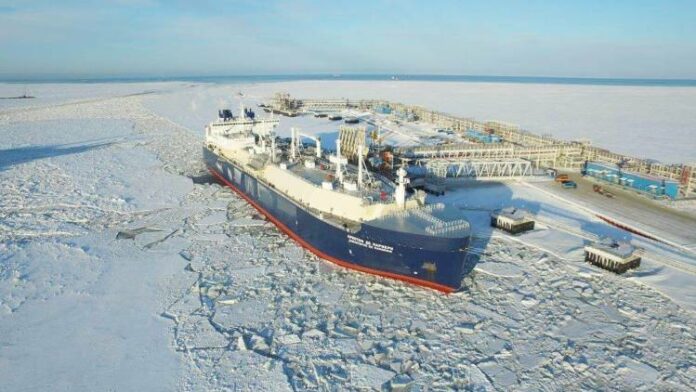
Russian gas producer Novatek has outlined plans to get LNG exports moving through the Northern Sea Route (NSR) all-year round, something that has environmental groups on edge.

Novatek operates the Yamal LNG facilities in Russia’s Arctic north, which has seen huge volumes shipped to Asia in its fist year of operations.

“Our plan is to keep the Northern Sea Route open twelve months a year in 2023 to 25 with 100-megawatt-hour nuclear icebreakers,” Novatek chief financial officer Mark Gyetvay told delegates at an energy conference attended by Reuters yesterday.

Commenting on the Novatek news, Malte Humpert, founder of the Arctic Institute, a think tank, cautioned that the NSR opening all year round would still remain a niche trade, very much focused on energy exports.

The Arctic will not change the flow of global goods. The reason why Russia and Novatek are interested in developing the NSR is to export its natural resources to markets in Europe and Asia. The NSR will remain a niche trade route and will primarily be used to export Russian oil and gas.

As it stands the route is open for ice-class ships for eight months of the year.

Mikaa Mered, a professor at French business school NEOMA, said Novatek’s plans were very likely to go ahead.

“With the technology now at Novatek’s disposal on the market and climate change helping their plans, it is feasible indeed,” Mered said.

The route has been open all-year in the past. During the Cold War the NSR was open all the time to supply military bases even during winter.

The Arctic saw 400,000 tons of transit traffic on 28 vessels in 2018. By comparison, the Suez Canal saw 18,000 ships and 525m tons. Russian president vowed in March last year to increase traffic along the Arctic route tenfold by 2025.

Alexey Knizhnikov from WWF Russia told Splash the wildlife NGO was worried about the growing maritime traffic in the region.

Source:splash247