5.1 C
New York
Home Blog Page 1122

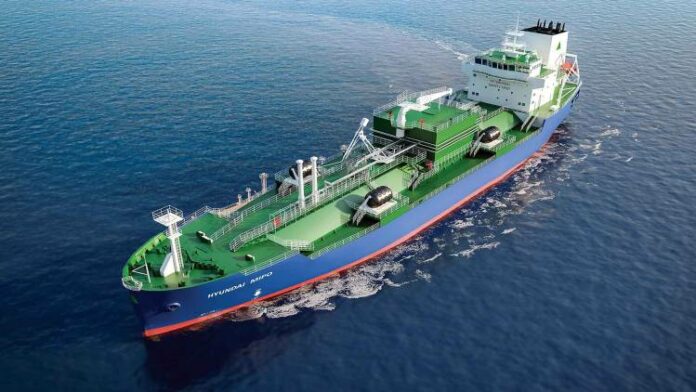
World’s largest LNG bunker vessels reach construction milestone

0

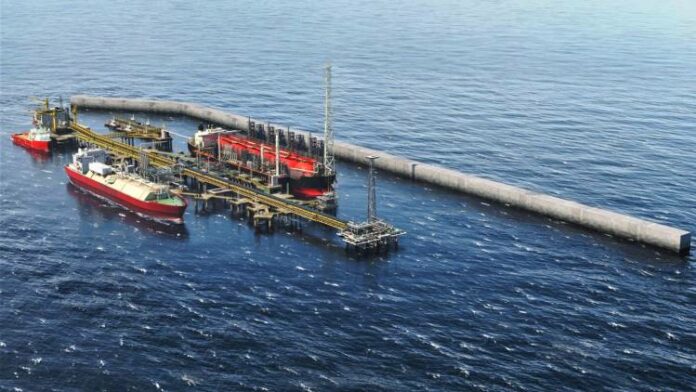
Small-scale LNG company Avenir LNG Ltd marked a milestone in the construction of the world’s largest LNG bunker vessels on 25 January by making its initial progress payments on the two 20,000-m3 ships under construction at Sinopacific Offshore Engineering in Nantong, China.

Avenir LNG signed the contract for the two LNG bunker vessels (LNGBV) in Q4 2018 and made the first progress payments of US$11.2M to the shipyard, according to regulatory filings by Stolt-Nielsen Limited, which has a 45% stake in the company through its investment arm Stolt-Nielsen Gas.

Other major investors in Avenir LNG are Golar LNG and Höegh LNG Holdings Limited, who each hold 22.5% stakes, and institutional and private investors, who hold the remaining 10% interest.

Avenir LNG is also building two dual-fuel 7,500-mLNGBV with Keppel Singmarine in Nantong that will be delivered in late 2019 and early 2020. The total cost for both vessels is approximately US$80M, including site team costs and capitalised interest. On 23 August, Avenir LNG exercised options for two more 7,500-m3LNGBVs with Keppel Singmarine at a total cost of US$76M that will be delivered in Q3 and Q4 2020, respectively.

Listed on the Norwegian OTC since 14 November 2018, Avenir LNG plans to become a leading provider of small-scale LNG for the power, ship bunkering, trucking and industrial markets. 

Stolt-Nielsen, Golar LNG and Höegh LNG announced a combined investment of US$182M in Avenir LNG in 1 October 2018. The investment, made up of cash and equity-in-kind, is partly funding the construction of the six LNGBVs and an 80% ownership in an LNG terminal and distribution facility under development in the Italian port of Oristano, Sardinia. 

Source:lngworldshipping
DNV GL to certify Dutch offshore data

0

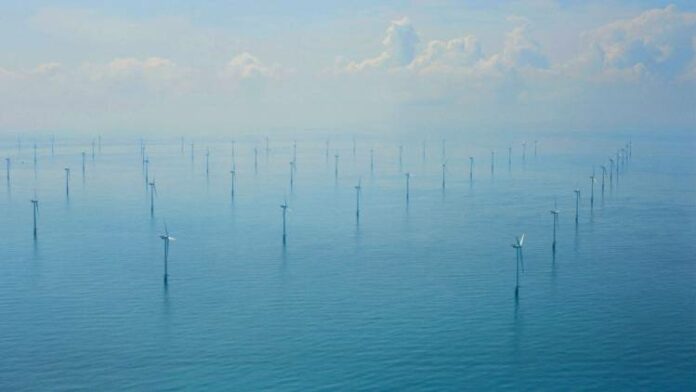
DNV GL has been appointed to provide certification services for the Dutch offshore wind farm zones Hollandse Kust West and North of the Wadden Sea Islands.

DNV GL’s bid to Dutch enterprise agency RVO for the €386,565 contract was one of three submitted.

The contract will run until early 2024 and could be renewed for one further year.

DNV GL will carry out the certification of the various site studies that will be performed for the offshore wind farm zones for the two projects, which together total 2.1GW of capacity.

RVO issued the tender in October 2018.

A tender to develop the 1400MW Hollandse Kust West is expected by 2021 and by 2022 for the 700MW North of the Wadden Sea Islands project.

This month Fugro was awarded a contract to complete offshore geotechnical site investigations for Hollandse Kust West.

The company said it is preparing to begin a six month data gathering campaign at the site in April, which is 51km from shore.

Fugro's work will include a seabed investigation and borehole drilling and the geodata outfit said it will use its vessel Fugro Scout to tackle the bulk of the fieldwork.

The data gathered will be used by developers preparing bids for the site.

“It’s very important that the Netherlands Enterprise Agency prepares the best possible package of site studies for future developers of this offshore wind farm,” RVO project manager Ruud de Bruijne said.

Source:renews

Danes select 800MW Thor to go under the hammer

0

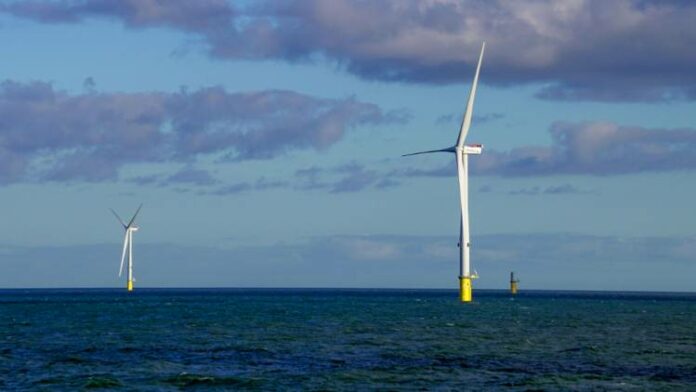
The Danish government has selected a site in the North Sea as the first 800MW zone for its upcoming offshore wind tenders.

The area, dubbed Thor, is located 20km off Nissum Fjord on the country’s west coast and was chosen ahead of a portion of the Kriegers Flak site in the Baltic Sea.

Officials believe the project will unlock the lowest cost of energy.

The tender for the rights to develop the Thor site will be held this year with power due online between 2024 and 2027.

A further two 800MW tenders are also planned at later dates.

“We have kept the municipalities' wishes against our obligation to make the green transition as cheap as possible, and I think the location in the North Sea strikes a good balance, ” said Energy Minister Lars Christian Lilleholt.

The forthcoming offshore wind farm will be our largest and it will make a major contribution to local growth and the green transition.

Offshore wind is a Danish specialty, and the North Sea is well on its way to becoming a Silicon Valley for offshore wind.

Source:renews

ONGC finds gas, oil in two basins offshore India

0

ONGC has made two recent discoveries offshore India, the company revealed in its latest results statement.

Well GKS091NFA-1 was drilled in block GK-OSN-2009/1 Kutch Offshore in Gujarat State, northwest India, flowing gas during a test. ONGC said the result suggests the play could extend across a large area.

In NWMH Extn. PML in India’s Western Offshore basin well B-203-2 flowed 783 b/d of oil and 78,571 cu m/d of gas from an interval within an early Oligocene Mukta sandstone formation.

A limestone interval in the Heera formation also flowed oil and gas. The discovery confirmed a westward extension of the WO-4 plays in the downdip direction.

Source:offshore-mag

Nigerian election result may slow petroleum reforms process

0

Wood Mackenzie sees little change of direction for Nigeria’s oil and gas industry in the immediate future following the re-election of Muhammadu Buhari as president.

Gail Anderson, director, Sub Saharan Africa research, said: “A second term means stability within key state bodies, such as the Nigerian National Petroleum Corp. (NNPC) and the Ministry of Petroleum Resources…"

“In his first term, Buhari presided over collapsing oil prices, production outages and a depreciating currency. The economic climate now is better than it was in 2015, but we expect no change in his economic approach, which is about tight control over Nigeria’s monetary policy and its main revenue earner, oil and gas.”

In the build-up to the election, Buhari indicated he could sign the Petroleum Industry Governance Bill, subject to amendments. But Buhari remains Minister of Petroleum Resources, and it is doubtful whether he would want to allow the NNPC to become an independent commercial entity.

“Fiscal reforms are still at senate committee reporting stage in the current National Assembly, which runs until June,” Anderson said. This makes for a long transition period – court action notwithstanding – when little progress is likely.

“When the ninth assembly opens later in June, the clock will be re-set and all bills will have to be re-tabled, from first reading onwards. Although it looks like the APC will again control of both upper and lower chambers, history tells us that is no guarantee of success. Hence, the legislative route to reform will likely hit a roadblock.”

Discussions have started with international oil companies on fiscal terms, with various 20-year deepwater contracts due to expire from 2023 onwards.

“The administration and, indeed, politicians from all sides are eager to increase the government’s share from these contracts,” Anderson pointed out. Although the IOCs would reluctantly accept tougher deepwater terms in return for another 20 years, getting a fair balance between investors and the state is vital.

With major FIDs [field investment decisions] highly unlikely until the issue is resolved, these negotiations will go a long way to determining whether Nigeria’s world-class deepwater has an attractive long-term future. There is a lot at stake in the next four years.

Source:offshore-mag

BP commissions TechnipFMC to supply Tortue Ahmeyim FPSO

0

 BP has awarded TechnipFMC an EPCIC contract for the deepwater Tortue Ahmeyim FPSO which will operate offshore the maritime border of Mauritania and Senegal.

This is a follow-up to front-end engineering design contract awarded to the same contractor last April.

TechnipFMC said it would draw on its extensive experience with fabrication yards and previous history delivering FLNG, FPSOs, and conventional platforms for offshore gas monetization.

The development’s initial subsea infrastructure will take production from the first four wells through pipelines connected to the Tortue Ahmeyim FPSO. There liquids will be extracted, and the gas exported through another pipeline to a new LNG hub terminal for liquefaction.

Source:offshore-mag

Infographic: The advantages blockchain provides

0

Although blockchain poses challenges in the transportation and logistics sector, it also provides benefits. Since 2013, venture capital investors have poured approximately $300 million into startup companies offering blockchain solutions relevant to T&L.

BCG addresses that despite the magnitude of the potential benefits, blockchain adoption by the T&L industry has been slower than one might expect. Adoption has been impeded by the very same obstacles relating to coordination and trust that the technology would help the industry to overcome.

However, Blockchain has shaken ground in maritime and logistics as it provides transparency and it is easy-to use if one gets the know-how.

As such, the advantages are:

  • Goods Origination: When registering materials in blockchain, the ones participating can verify the origination of these items, while in the meantime enhance quality assurance.
  • End-to-End Status Tracking:The participants seek a real-time visibility, as freight transit. Blockchain enables the tracking along numerous parties and prevents retroactive manipulation of data.
  • Invoice and Payment Management: As many are the participants in T&L transactions and the bureaucracy seems that it has no end, blockchain is used to store and share digitized records and create digitalized contracts. Automated processing reduces settlement times, ensures accuracy, and detects fraud, while eliminating the need for intermediaries and paper-based processes.
  • Traceability in reverse logistics.
  • Customs clearance and auditing.
  • Asset and supply certification.
  • Supplier management and certification.
  • Capacity monitoring and planning.
  • Trade and credit financing.
  • Insurance and claiming handling.
  • Physical access management.
  • Peer-to-peer exchange platforms.
  • Tokenization of physical assets.
  • Ticketing.
  • Employee certification.

Concluding, the digitalization of certification is of a big importance for the maritime industry as the certification process has remained unchanged until today.

Source:safety4sea

Infographic: 9 challenges blockchain faces

0

In September and October 2018, BCG conducted an online survey concerning international companies in the T&L industry in order to assess their understanding of blockchain and their progress in adopting the technology. In order to acknowledge the promise of blockchain, T&L stakeholders must collaborate to develop an ecosystem that forges trust and creates mutual benefits across the value chain.

According to BCG's survey findings, most industry participants have not taken a deep look at blockchain’s potential applications.

Companies should be willing to invest the time and effort to realize the technology’s promise. The research resulted that blockchain can relieve a wide variety of pain points that impede information sharing and create costly inefficiencies

Blockchain can bring many challenges and barriers to those who aspire to develop it. According to the survey, the pain points are:

  1. Inefficient data and document management;
  2. Suboptimal equipment utilization;
  3. Complex claims and changes in ownership;
  4. Complex regulatory compliance;
  5. Costly and cumbersome letter-of-credit process;
  6. Limited traceability;
  7. Trade-based money laundering and fraud;
  8. Nontransparent pricing and booking;
  9. Complex process in reverse logistics.

In order to avoid all the above challenges that are most likely to have costly impact in a company, the ones who are to develop a blockchain project should firstly educate the organization. In other words, the ones taking part in blockchain should learn about the technology.

One should be aware that blockchain has challenges and risks; Therefore, the company should review its current pain points and assess the technology’s potential to address them.

Finally, each company should develop a specific strategy for blockchain adoption.

Source:safety4sea

World’s largest battery package launched

0

A Canadian manufacturer of energy storage systems signed a contract according to which it will be provided with the world's largest battery package for hybrid-powered vessels. The technology will be installed onboard Havila Kystruten’s environmentally-friendly coastal vessels.

Specifically, the contract was signed between Corvus Energy and the Norwegian Electric Systems (NES) for the marine.

The package installed, will enable the vessel to voyage the fjords and ECAs on zero emission mode five years prior to the deadline, stated Geir Bjørkeli, the CEO of Corvus Energy.

Moreover, the manufacturer will serve an air-cooled ESS along with Corvus’ patented single-cell thermal isolation which exceeds class requirements.

The newbuilds are part of the construction of four environmentally-friendly vessels that will operate on the Bergen-Kirkenes coastal route.

The equipment from Corvus Energy is scheduled for delivery in 2020 and the coastal route vessels will be in service from 2021.

Generally, Wartsila also signed an agreement for a hybrid retrofit installation. The installation of the battery hybrid propulsion solution aims to enhance the vessel's environmental performance by reducing its emissions, fuel consumption, and noise.

In addition, Asahi Tanker and partner Exeno-Yamamizu Corporation Tokyo developed a shipping tanker called 'e5' that incorporates zero emission electric propulsion.

In light of green practices and a more sustainable future in shipping, Sailcargo will build 'Ceiba', a 148-foot emission-free cargo tall ship.

As the shipping industry envisions a greener future, efforts are being made to find alternative solutions, in protection of the environment. Therefore, Foreship published an infographic, describing a 5-steps solution to use batteries onboard.

Source:safety4sea

Fincantieri Delivers Costa Venezia

0

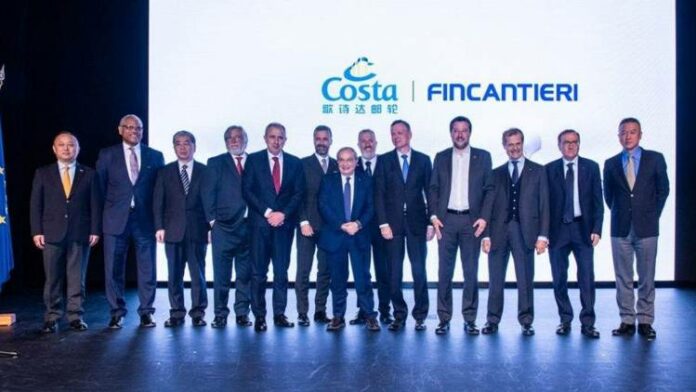
Fincantieri's Monfalcone shipyard handed over Costa Venezia – built specially for Chinese guests – to Costa Cruises, the Italian brand of Carnival Corporation, the world's largest cruise company.

The handover took place yesterday in the presence of Italy's Deputy Prime Minister and Interior Minister Matteo Salvini and Deputy Minister of Infrastructure and Transport Edoardo Rixi, as well as Carnival Corp. & plc and Costa Group officials.

With a gross tonnage of 135,500 tonnes, the 323-meter-long Costa Venezia offers 2,116 cabins for a total of 5,260 passengers and will be the largest among Costa's fleet in China.

The ship is part of an expansion plan that includes 7 new ships arriving for the Costa Group by 2023, with an investment of over 6 billion euros.

After arrival at its homeport in Shanghai on May 18, Costa Venezia will join the other three Costa cruise ships serving the Chinese market (Costa Atlantica, Costa Serena and Costa Romantica) and complete a full-year operation in Asia, according to Costa Cruises.

Michael Thamm, Group CEO Costa Group and Carnival Asia, said: “Costa Venezia will help us to further develop the cruise market in China, which has a great unexplored potential. Suffice to say that, currently, 2.5 million Chinese people a year choose to go on a cruise vacation, which is less than 2% of the total number of Chinese people who travel abroad."

"Moreover, Costa Venezia further strengthens Costa's bond with Italy: it is a ship built in Italy, by an Italian shipyard, which flies the Italian flag and which will make Chinese guests experience unforgettable Italian experiences." he added.

 Giuseppe Bono, CEO of Fincantieri, said: “For us “Costa Venezia” is the emblem of what we are able to do and where we intend to arrive, but she is also the product of the historical partnership with Carnival Corporation and Costa Crociere, which enhances the tradition of Italian manufacturing and know-how, projecting them towards other borders”.

"As the first ship built specifically for the Chinese market, Costa Venezia marks the start of a new era, not only for Costa and Fincantieri but also for the Chinese cruise industry as a whole", says Mario Zanetti, President of Costa Group Asia.  

On Costa Venezia, Chinese guests will experience the uniqueness of Venetian and Italian culture.

Source:marinelink