-8.4 C
New York
Home Blog Page 108

Cavotec signs EUR 7 million in shore power orders for Italian ports

0

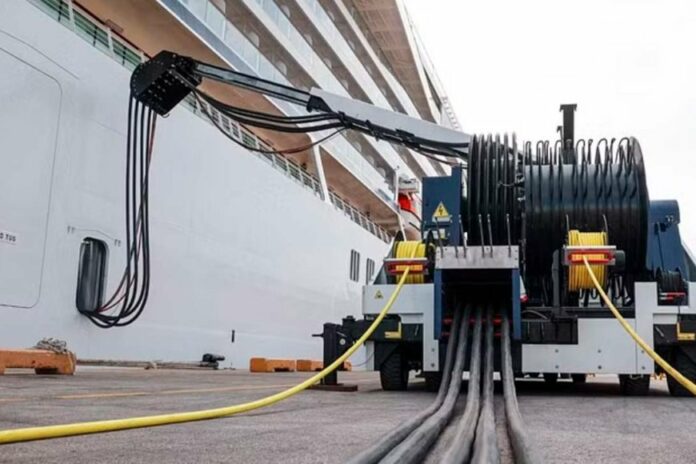
Cavotec has signed three significant shore power orders totaling EUR 7 million for Italian ports, received at the end of 2024. 

The first order involves the delivery of Cavotec’s PowerMove and PowerFeed systems to support cruise vessels at multiple ports across western Italy. This project will enhance shore power connectivity across the region, representing a strategic milestone for sustainable cruising in the Mediterranean.

The second order includes Cavotec’s PowerMove technology for both cruise and Ro-Ro vessels in Tuscany. This project will enable two ports to reduce emissions and improve their environmental performance.

The third order is for two PowerMove systems to connect cruise vessels and a PowerExtend to connect container ships at a port in southern Italy. This project underscores the growing importance of shore power solutions for diverse vessel types.

Deliveries for these projects are scheduled between early 2026 and mid-2026. These developments will contribute significantly to reducing emissions and improving air quality in Italian ports, while reinforcing Cavotec’s position as a trusted partner in sustainable port technologies.

Equinor awarded 27 new production licences on the Norwegian continental shelf

0

Equinor was awarded 20 licences in the North Sea, six in the Norwegian Sea and one in the Barents sea. Equinor is the operator of seven of the licences and a partner in 20.

“There are still substantial resources on the Norwegian continental shelf (NCS). Together with our partners, we need to explore more to contribute to European energy security and maintain our position as a reliable supplier of oil and gas. The annual award of pre-defined areas is crucial to ensure high export levels over time. We will continue to make robust investments, and our ambition is to drill around 250 exploration wells by 2035. In order to do this, we need regular access to acreage,” says Jez Averty, Equinor’s senior vice president for subsurface, the Norwegian continental shelf.

Equinor operates 35 offshore platforms that together make up an extensive network of amortised production, processing and export infrastructure. Discoveries in areas with existing infrastructure can be developed rapidly, at lower costs, and with lower greenhouse gas emissions from production and transport.

“We have a significant portfolio of smaller discoveries near existing infrastructure. We’re working alongside the supplier industry to accelerate developments and reduce costs, which will ensure that several of these discoveries can come on stream even earlier. One good example is Eirin, which will be tied back to Gina Krog. This development was approved in January 2024, and we expect production to start in the end of 2025. The gas from Eirin will have very low production emissions, since the Gina Krog platform is electrified. Moreover, it will extend Gina Krog’s lifetime by seven years,” Averty continues.

As regards discoveries that require new development solutions, Equinor will prioritise solutions that yield low emissions.

“Despite most exploration wells being drilled near existing infrastructure, it is important that we also explore new areas and new ideas and concepts with the potential for more major discoveries. Our confidence in the Norwegian shelf remains strong and we are prepared to take steps to secure the future energy supply,” Averty concludes.

French submariners accidentally disclosed patrol data via Strava

0

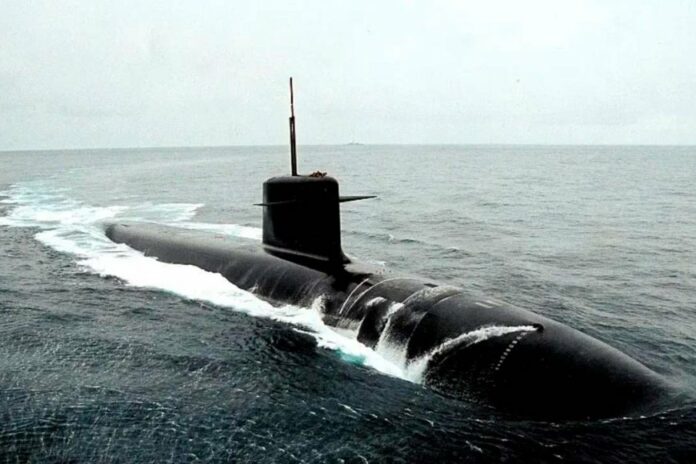
Due to the data that the sailors openly published in the program, users were able to learn about the operation of the base on the island of Ile Longue, located in the west of the country, and the schedule of submarines’ duty.

Le Monde reported about the incident.

The crews of French nuclear submarines publicly share their sporting activities through the Strava app, inadvertently disclosing confidential information about the SLBM patrol schedule.

Thus, information from one of the French fleet’s most secretive bases, located in the harbor of Brest (Finistère) on the island of Ile Longue, was publicly available.

It is on Ile Longue that four SLBMs are based, each carrying sixteen nuclear missiles, which are about a thousand times more powerful than the bomb dropped on Hiroshima. This is the home of the naval component of the French nuclear deterrent.

The four “black boats,” as they are called, have been operating on a “constant patrol at sea” since 1972, and although their exact location is classified, at least one of them is always on standby.

Their task is to disappear into the ocean and be ready to receive an order from the French President and launch a nuclear strike.

Land and sea patrols and unmanned aerial vehicles ensure the security of this base. More than 2,000 employees have to be vetted to access the site: scanners, facial recognition systems, and sniffer dogs monitor everything that happens, as Le Monde noted during a visit in December 2024.

Cell phones and other electronic devices are prohibited on most of the base and must be stored in special lockers at several checkpoints.

However, even such strict security measures could not prevent the leakage of extremely sensitive information from this fortress. According to the data published in the article, the submarines’ locations were revealed through their jogging routes. At the same time, their schedules allowed for calculating the frequency of submarine deployment for combat duty.

It was through the use of the Strava app that the location of U.S. bases in Syria was revealed, where military personnel jogging regularly and noting their activity made it possible to geolocate their clusters. Subsequently, the US Department of Defense banned its military from using the geolocation function in apps and on any devices in the field.

Source: Militarnyi

ICC: Maritime piracy dropped in 2024, but crew safety remains at risk

0

In these two incidents, crew members were taken hostage for the duration of the incidents. Overall, 31 crew were taken hostage and one threatened. Knives were reported in 10 incidents and guns in three.

The highest number of incidents in a decade was reported at anchorages in Bangladesh. IMB recorded 14 incidents in 2024, of which 13 were onboard ships anchored at Chattogram and one at Mongla anchorage. Two crew were taken hostage and a further three threatened. Knives were reported in seven incidents.

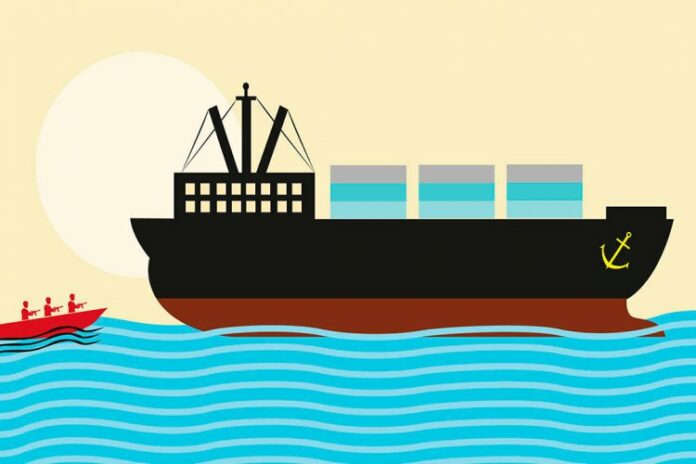
The IMB annual Piracy and Armed Robbery Report recorded 116 incidents against ships in 2024 compared to 120 in 2023 and 115 in 2022. It reveals that 94 vessels were boarded, 13 attempted attacks, six vessels hijacked and three fired upon.

While the number of reported incidents in 2024 remains similar to those reported in 2023 and 2022, IMB urges caution to promote crew safety given an increase in the number of crew taken hostage or kidnapped – from 126 taken hostage in 2024 compared to 73 in 2023 and 41 in 2022. Twelve crew were reported kidnapped, compared to 14 in 2023 and two in 2022. A further 12 crew were threatened and one injured in 2024.

The reported use of weapons also continues to rise. In 2024, guns were reported in 26 incidents compared to 15 in 2023. Knives were reported in 39 incidents in 2024, compared to 42 incidents in 2023.

ICC Secretary General John W.H. Denton AO said:

“While we welcome the reduction of reported incidents, the ongoing threats to crew safety remain a significant concern. Safeguarding routes and ensuring the security of seafarers, who are essential to maintaining global commerce, is vital. Every effort must be made to protect lives at sea while ensuring the seamless flow of goods through international supply chains. This requires a collaborative effort, with continued regional and international naval presence being crucial to this endeavour.”

Crew safety at risk in Gulf of Guinea

Activity remains relatively lower in the Gulf of Guinea with 18 incidents reported in 2024, compared to 22 in 2023, 19 in 2022, 35 in 2021 and 81 in 2020. However, crew members continue to be at risk, with the region accounting for all 12 kidnapped crew and 23 % of the total number of crew taken hostage in 2024.

In East Africa, at least eight incidents were reported, including the hijacking of two fishing vessels and a bulk carrier in the first half of 2024. IMB encourages vigilance and adherence to the recommendations in the latest Best Managements Practices.

IMB Director Michael Howlett said:

“Despite the restrained activity, there is no room for complacency as ongoing threats to crew safety highlight the importance of continued caution. Masters and vessel operators are strongly encouraged to strictly adhere to all recommendations in the Best Management Practices while transiting the Gulf of Guinea and waters off East Africa.”

A rise in weapons and incidents in Southeast Asian waters

Incidents in the Singapore Straits continue to rise with 43 in 2024 compared to 37 in 2023 and 38 in 2022. The 2024 IMB Piracy and Armed Robbery report reveals that 93% of vessels targeted were boarded and 11 large vessels over 100,000 deadweight tonnage (DWT) were targeted in this strategically important seaway.

Harm to crew continued, with 13 taken hostage, five threatened and one injured during the incidents. While considered low-level opportunistic crimes, the use of guns and knives increased to eight and 19 in 2024 respectively, compared to three and 15 in 2023. Most incidents were reported during the hours of darkness and while vessels were underway.

The IMB Piracy Reporting Centre (PRC) has also expressed concern of late reports as well as under reporting, by vessels being boarded in these waters.

“The increase in use of weapons and the late and under reporting by vessels are areas of concern. We continue to urge vigilance and strongly encourage the timely reporting of all incidents, as the optimal way of providing a clearer understanding of the risks and safety measures to take.” said Mr Howlett.

A year-on-year increase in reported incidents has been observed in the Indonesian archipelago, up from 10 in 2022 and 18 in 2023 to 22 in 2024. While 20 incidents remain under the definition of armed robbery, two fall under the definition of piracy.

Silverstream and Carnival Corporation expand partnership with new installations to drive efficiency

0

Silverstream Technologies has signed an agreement with Carnival Corporation & plc to install the Silverstream® System on another two cruise ships. 

These will be the third and fourth new build Excel-class vessels to be fitted with its air lubrication system. The 180,000 GT vessels, with a capacity of over 5,000 passengers, will be built at German shipyard Meyer Werft and feature key sustainability technologies to support Carnival Corporation in meeting its decarbonisation goals. 

The LNG-powered newbuild vessels, among the most environmentally advanced ships in their class, will integrate Silverstream’s technology onboard, unlocking net fuel savings potential and paving the way for the next generation of low-emission passenger vessels. Previously, the system delivered approximately 5% net fuel and emissions savings onboard Princess Cruises’ Diamond Princess. This aligns with Carnival Corporation’s focus on minimising its carbon intensity by 40%, a target the company aims to achieve by 2026—four years ahead of initial projections. 

The two newbuilds, scheduled for delivery in 2027 and 2028, will result in a total of 16 vessels in Carnival Corporation’s fleet with the Silverstream® System advancing the company’s decarbonisation aspirations. Like their predecessors, these latest additions to the fleet will also feature a broad range of other energy efficiency improvements, such as waste heat recovery, sophisticated HVAC systems and hull form optimisation, helping Carnival Corporation further minimise its environmental footprint and operating costs.

The emissions savings generated by the Silverstream® System support decarbonisation goals that help further the sustainability leadership positioning of cruise operators. Underpinning these efforts is Silverstream’s close collaboration with shipyards to seamlessly meet the industry’s growing demand for clean technology solutions, as well as comprehensive operational data obtained from many years of system operations. 

Noah Silberschmidt, Founder & CEO, Silverstream Technologies, commented: “Cruise operators have consistently been frontrunners in embracing advanced technologies across their fleets. Since 2016, we have proudly partnered with Carnival Corporation, the industry’s largest operator, to support their decarbonisation journey with our proven air lubrication technology. The need of the hour is to raise decarbonisation ambitions, and we are committed to building large-scale partnerships that advance sustainability across the entire sector.”

Carnival Corporation’s Chief Maritime Officer, Vice Admiral (Ret.) William R. Burke, added: “Silverstream’s ability to deliver proven, verified GHG and fuel cost savings sets them apart in a crowded marketplace. Our continued partnership has thrived thanks to our shared commitment to advancing sustainability in the maritime sector. As we work towards net zero by 2050, we look forward to many more years of collaboration, driving energy efficiency, reducing fuel consumption and cutting emissions throughout our fleet.” 

The Silverstream® System works by reducing frictional resistance between the water and the hull surface, minimising net fuel consumption and associated greenhouse gas emissions by 5-10%. The system has been independently verified by Lloyd’s Register, HSVA, the University of Southampton, Carnival Corporation, and Shell. It can also be retrofitted in 10 days or less, minimising disruptions to vessel operations.

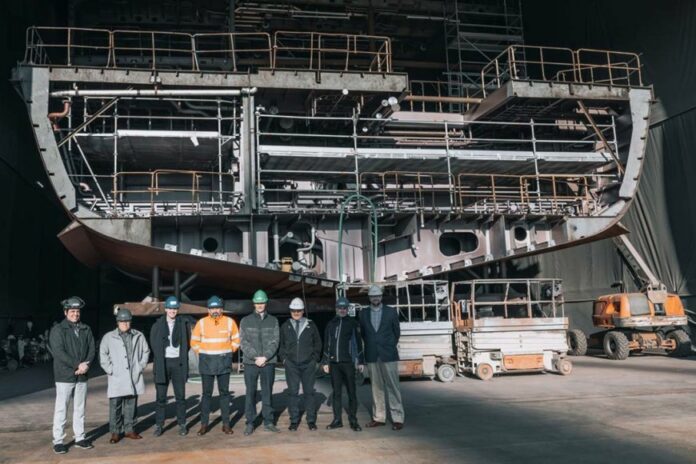
Damen cuts steel on latest Island Class vessel for BC Ferries

0

At the same time, another vessel in the series reached the grand block assembly stage of construction at the yard. The vessels, based on Damen’s double-ended 8117 E3 Ferry, will be the first fully electric ferries to sail in the organisation’s fleet. They will bring the total number of Damen vessels operated by BC Ferries to ten. 

BC Ferries’ fully electric vessels are a critical part of the company’s broader strategy to reduce corporate emissions by 2030. The four new electric ferries will contribute to this goal by eliminating approximately 10,000 tonnes of CO2 equivalent annually.The ferries carry Damen’s in-house E3 notation, which stands for Environmentally Friendly, Efficient in Operation, and Economically Viable. 

The steel cutting ceremony was attended by David Tolman, BC Ferries’ Program Manager for the Island Class series of vessels, as well as BC Ferries’ on-site team. Representatives from Damen, including Damen Shipyards Group Chairman Kommer Damen, were also in attendance. 

Speaking during the event, Mr Damen said, “It is a pleasure to attend this milestone event, together with our client. The long-standing relationship we have with BC Ferries is a prime example of how Damen works to support its customers. BC Ferries operates a number of Damen Ferries, based on proven standard designs, and adapted to their evolving needs. The vessels we are building demonstrate increasing sustainability. Previously, we have delivered hybrid propulsion vessels, already representing a step towards lower emissions. These fully electric ferries prepare the ground for zero emissions operations, bringing BC Ferries’ efficiency goals within reach.”

Ed Hooper, Executive Director of Shipbuilding at BC Ferries, said, “Reaching the steel cutting and grand block assembly milestones for two of our four new Island Class vessels is a great signal of the progress being made towards welcoming these new electric vessels into our fleet. Each stage of construction brings us closer to delivering cleaner, quieter, and more efficient vessels that align with our commitment to serving coastal communities.”

In addition to the vessels, Damen is also providing BC Ferries with the charging towers. The ferries will recharge their batteries between services, as passengers are embarking and disembarking. 

Able to transport up to 390 passengers and 47 vehicles, the four ferries will operate between Nanaimo and Gabriola Island and Campbell River and Quadra Island, entering service by 2027.  

Damen Shipyards Galati currently has six fully electric ferries under contract for Canada; the four Island Class vessels, plus two ferries for the city of Toronto.

Houthis claim combined attack on U.S. aircraft carrier

0

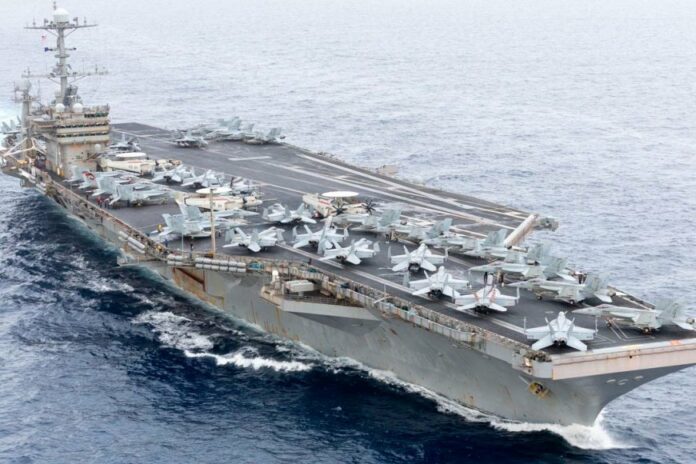
Yemeni Houthis from the Ansar Allah group claimed to have carried out a combined drone and missile attack on the USS Harry S. Truman aircraft carrier in the northern Red Sea.

This statement was made by Yahya Saree, a representative of the Houthi armed forces.

“Missile forces and unmanned forces conducted a joint military operation, attacking the U.S. aircraft carrier Harry S. Truman and a number of ships accompanying it in the northern part of the Red Sea using cruise missiles and drones,” Saree stated on the air of the Houthi-owned Al-Masirah TV channel.

At the same time, the United States does not acknowledge the attack on the aircraft carrier and its escort ships.

This is the sixth claim of an attack on this aircraft carrier in a month since it arrived in the Red Sea in mid-December 2024.

The aircraft carrier group was deployed to the Red Sea as part of Operation Prosperity Guardian, aimed at fighting the Yemeni Houthis, helping to intercept missiles targeting Israel. And also to participate in strikes against ISIS terrorists in Syria and other regions.

The United States announced the launch of the Prosperity Guardian multinational special security operation to protect shipping in the Red Sea at the end of December 2023.

In addition to the United States, the international mission was joined by: the United Kingdom, Bahrain, Canada, France, Italy, the Netherlands, Norway, the Seychelles, Spain, and the United States.

The operation was launched because of Houthi attacks on merchant ships passing through the Red Sea from Yemen. At the same time, the Houthis announced their intention to attack all ships in the Red Sea heading to Israel, regardless of who owns them.

Since then, the Houthis have regularly attacked merchant and military ships in the Red Sea and Indian Ocean. And the international coalition has been conducting missile and air strikes against Houthi military targets.

Recently, a U.S. missile cruiser accidentally shot down an F/A-18F Super Hornet fighter jet while it was flying over the Red Sea.

The plane was shot down by the missile cruiser USS Gettysburg (CG-64), which is part of the carrier strike group led by the aircraft carrier USS Harry S. Truman (CVN-75).

Source: Militarnyi

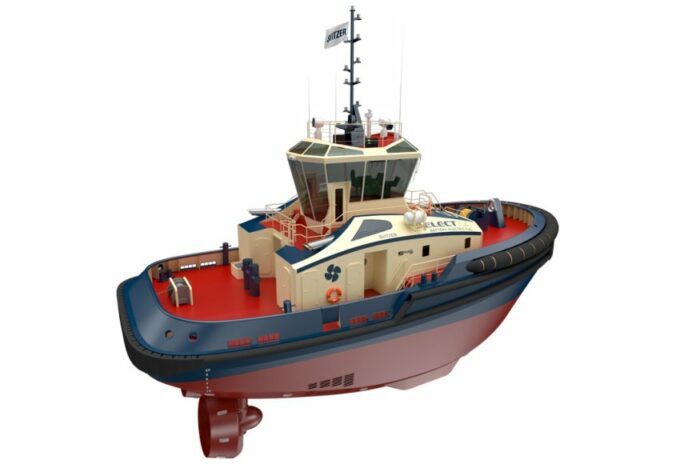
Svitzer places order to build another battery-powered tug

0

The new tug will add to the existing capacity in the Øresund Strait, delivering near-zero emissions for towage services in the region.

Svitzer, a leading global towage and marine services provider, today announced it has ordered another battery-powered tug to add to its fleet. The tug will be used in the Øresund Strait between Denmark and Sweden. It will also contribute to achieving the ambitious targets Svitzer has set for decarbonising its global operations, to benefit its customers and communities.

The new ASD electric tug is based on the design of naval architect Robert Allan Ltd. It is 25 meters long and has a 70-ton bollard pull (BP). It will have a 1,818 kWh battery, enabling the tug to operate safely and efficiently on electrical power only. It also has two generators for backup, extended endurance, and firefighting operations.

Mathias Jonasson, Managing Director, Scandinavia, Svitzer: “In recent years, we have experienced an increasing demand for green towage services in Scandinavia, including the Øresund Strait. At the same time, we have committed to doing our part to significantly reduce CO2 emissions in the industry by 2030. Getting a new battery-powered tug solves both challenges as we can continue to provide reliable and safe services to our customers while reducing the carbon footprint.”

Tamer Geçkin, R&D and Electrical Systems Director, Sanmar Shipyards: “We are honored to support Svitzer in decarbonising their fleet and building this new high-performing battery tug. It has all the quality characteristics expected from a premium tug built at Sanmar Shipyards; a big, power-efficient battery powers it. Thereby, it represents the future for many tug operations.”

First Damen Cutter Suction Dredger under construction in Azerbaijan

0

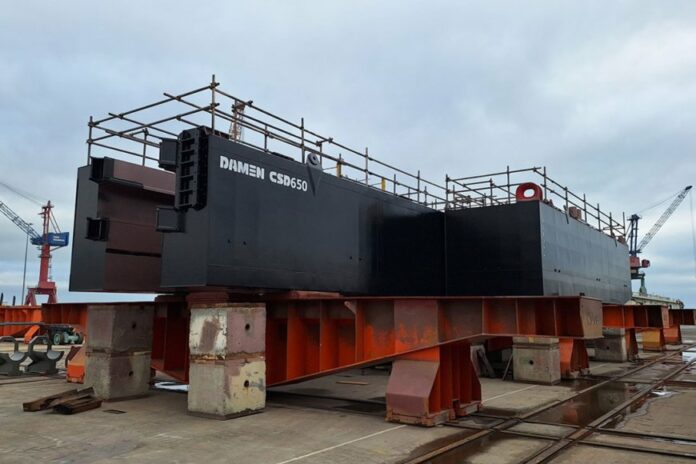
Baku Shipyard is currently working on the construction of a Damen Cutter Suction Dredger (CSD) 650. The design of the dredger and its materials package have been delivered by Damen Shipyards Group. 

While Baku Shipyard has built a wide array of vessels over time, this is the first cutter suction dredger to be built in Azerbaijan. All steel work is being carried out by the yard according to the Damen design. The materials package delivered by Damen to the yard include the main components such as the dredge pump and the operating cabin etc. The materials filled eleven trailers and two 40 foot containers. The CSD 650 is a stationary dredger designed to work at a dredging depth of between -3m and -18m. The 700 kW cutter power and 1,825 kW dredge pump power combined with the impressive 63 m swing width ensure efficient dredging operations.

Mr Alexander Shamray, Damen Sales Manager, explains: “We are very happy to work together with Baku Shipyard. The cooperation with the yard team is excellent, and that is reflected in the high quality of the dredger. The professional team has taken up the project brilliantly, and the quality of the output is impressive. We are delighted that the dredger is progressing the way it is, especially considering that it is the first that the yard has built. We are looking forward to the commissioning of the dredger and delivery to the Port of Baku.“

The well-equipped dredger, which has been named Engineer Soltan Kazimov, will be performing maintenance dredging duties in the port. Accessibility is key here particularly as over the past five years the water level in the Caspian Sea has significantly dropped. This combined with the latest port expansion, ensures dredging is a necessity to keep the various berths available for ever-increasing port traffic.

Thanks to its strategic location, the Port of Baku has developed into a regional logistic centre over the past years. Its east-west axis connects China by rail and road to the Black Sea and the Mediterranean, while its north-south transport corridor extends towards the Persian Gulf.

First-ever ammonia and propane co-loaded vessel completes voyage from US to Europe

0

Trafigura in collaboration with CF Industries, the world’s largest producer of ammonia, today announced the completion of the first co-loaded ammonia and propane shipment operation of its kind.

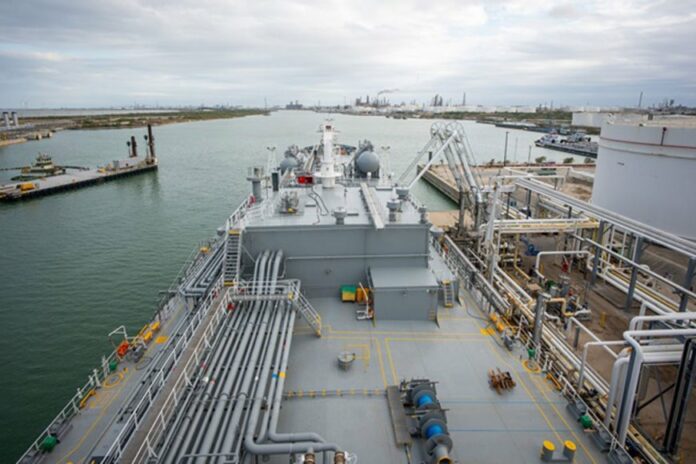
In early January, the Green Power Medium Gas Carrier (MGC) completed a single voyage from the US to Europe loaded with ammonia from CF Industries and with liquefied petroleum gas (LPG or propane) in separate tanks.

The co-loaded vessel project was intended in part as a demonstration of capabilities needed for the efficient and economic transport of low-carbon ammonia to supply ports that may not require a full vessel of ammonia. The ability to co-load low-carbon ammonia with LPG is one pathway to supporting the scale up in availability of low emission fuels. Low-carbon ammonia continues to be a leading alternative fuel candidate for applications such as coal co-firing as well as supporting the marine shipping industry transition from heavy fuel oil to alternatives with a lower-carbon intensity.

“We transport LPG and ammonia from the US to Europe on similar ships on a regular basis,” said Patricio Norris, Global Head of Ammonia and LPG for Trafigura. “We can improve the economics for our customers and reduce emissions with fewer voyages by safely co-loading Ammonia and LPG in the same vessel.”

“We appreciate the partnership we have with Trafigura as we take steps together to help prepare for demand growth of low-carbon ammonia and the expected transition of the marine shipping industry to low-carbon ammonia as a fuel,” said Bert Frost, Executive Vice President, Sales, Market Development and Supply Chain, CF Industries. “Ammonia is safely transported around the world by vessels daily, and this voyage reinforces the flexibility we have to serve emerging low-carbon ammonia demand as we innovate shipping methods with industry-leaders such as Trafigura.”

Ammonia was loaded onto the Green Power from CF Industries’ Donaldsonville, Louisiana, manufacturing complex and LPG was loaded into separate tanks of the vessel in Corpus Christi, Texas. Following a review of applicable regulations, permission from the US Coast Guard, a detailed risk assessment and planning with the ports, shipowner and operator Purus and STS company International Fender Providers (IFP), the loadings proceeded.

Strict segregation requirements ensured that any crossover of liquid, condensate or vapour was prevented. After crossing the Atlantic Ocean, the LPG was discharged via a ship-to-ship (STS) operation in the Mediterranean for use in domestic heating and the ammonia was discharged at Tees Port for CF Fertilisers UK.

This shipment follows Trafigura’s first ship-to-ship transfer of ammonia in July 2024 for CF Industries. CF Industries is currently progressing a carbon capture and sequestration (CCS) project at its Donaldsonville facility that will enable it to produce substantial volumes of low-carbon ammonia. The CCS project is expected to start-up in 2025.