5.5 C
New York
Home Blog Page 73

Seacoat SCT signs Global Sales Partnership with PAC Ocean Solutions

0

Texas-based maritime coatings company Seacoat has entered into a strategic partnership with PAC Ocean Solutions, a marine services provider headquartered in London, UK.

PAC Ocean Solutions will act as Seacoat’s global sales partner, enabling Seacoat to expand the reach of its advanced SEA-SPEED coating technology across the international maritime industry.

SEA-SPEED is a silane-siloxane-based coating that optimizes vessel performance without compromising long-term durability. Engineered for the underwater hulls of commercial, cruise, and military ships, it outperforms traditional antifouling paints in both longevity and efficiency.

With a ten-year lifespan that is double that of conventional coatings, SEA-SPEED creates a surface five to ten times smoother than competing products. This minimizes drag to deliver a fuel saving estimated between 4% and 12%, as well as accompanying reductions in fuel costs and lower greenhouse gas emissions. 

At a time when shipping companies face growing regulatory and commercial pressure to reduce their carbon emissions, including regional emissions regimes, Seacoat offers a sustainable coatings solution that will deliver significant savings for years to come.

Dr. John Bowlin, Seacoat CEO, commented: “We are excited to enter this agreement with PAC Ocean Solutions. PAC’s commitment to supporting customers with best-of-breed performance and service aligns exceptionally well with that of Seacoat’s. Together, our two companies are focused in helping the maritime industry achieve greater operational efficiencies and compliance towards the reduction of emissions.”

Melvin Varghese, CEO of PAC Ocean Solutions, said: “We are thrilled to embark on this partnership with Seacoat, a company that shares our vision of excellence and commitment to the maritime industry. Their dedication to delivering top-tier performance and service perfectly complements PAC Ocean Solutions’ mission to support our customers with innovative and sustainable solutions. This collaboration marks the start of a promising journey, and we look forward to driving growth and innovation while making a lasting impact on emissions reduction.”

Titan completes first bunkering to MOL under new term contract

0

Titan Clean Fuels (Titan) and Mitsui O.S.K. Lines (MOL) have completed the first LNG and liquefied biomethane (bio-LNG) bunkering operation of a new multi-delivery contract for MOL’s vehicle carrier fleet.

On Sunday the 16th of March, Titan’s Alice Cosulich LNG bunkering vessel delivered 500 tons of bio-LNG and 400 tons of conventional LNG to the Celeste Ace vehicle carrier. The simultaneous operation (SIMOPS) bunkering took place in the Port of Zeebrugge’s International Car Operators (ICO) terminal.

Titan’s delivery of ISCC-EU-certified mass-balanced bio-LNG marks the first of a series of bio-LNG deliveries to the Japanese shipping company. The bio-LNG was produced using waste and residue, which reduces GHG emissions by up to 100% compared to marine diesel on a well-to-wake basis. LNG, bio-LNG, and renewable hydrogen-derived e-methane can be blended at any ratio and ‘dropped into’ existing LNG bunkering infrastructure with little to no modification.

Nicolas Ganas, Senior Trader and Business Development Manager at Titan stated: “We applaud MOL’s commitment to LNG and bio-LNG as marine fuels, reinforcing the shift towards cleaner shipping. This collaboration strengthens our partnership in the region, and we look forward to reliably supplying their vessels with lower-carbon fuel solutions.”

Adding to this, Caspar Gooren, Commercial Director of Renewable Fuels at Titan, commented: “This bunkering highlights the growing role of bio-LNG in decarbonizing international shipping today. With bio-LNG availability expanding, its deep decarbonization potential, and increasing commercial viability, the LNG pathway offers practical solutions for shipowners and operators. Moreover, with a global maritime leader like MOL putting its commercial weight behind bio-LNG, this is an exciting time for the clean fuels transition.”

Yoshikazu Urushitani, Marine Fuel GX Division General Manager at MOL said: “We are exploring the use of ammonia and hydrogen fuels as part of our strategy to adopt clean alternative fuels, while moving to expand the use of LNG-fueled vessels and more quickly achieve a low-carbon society. We will also be early adopters of bio-LNG and synthetic LNG. Partnering with Titan, we will start using bio-LNG to lead the shipping industry in the transition to clean alternative fuels. We remain committed to adopting clean fuels to reach net zero GHG emissions by 2050.”

The number of vessels in use and on order that can use LNG, bio-LNG, and in the future e-methane, showcases how significant a role the LNG pathway will play in shipping’s decarbonisation. MOL currently operates 5 LNG-fuelled vehicle carriers and will have 6 more delivered by the middle of 2025. In total, there are 62 vehicle carriers that can operate on LNG today and another 146 of these LNG-fuelled vessels are on order.1  Some 90% of vehicle carrier orders feature LNG dual-fuel propulsion.

V.Ships Leisure to manage new Orient Express sailing yachts

0

V.Ships Leisure, part of V.Group, announces its partnership with Orient Express Sailing Yachts for the management of two groundbreaking sailing yachts.

Managed from Monaco by V.Ships Leisure, the first vessel, Orient Express Corinthian, will be the world’s largest sailing yacht, featuring hybrid LNG propulsion and AI-driven noise reduction technology. It will enter service in June 2026, sailing across the Mediterranean, Adriatic, and Caribbean. Orient Express Olympian will follow in 2027.

Per Bjornsen, CEO of V.Ships Leisure, commented: “We are honoured to partner with Orient Express on this revolutionary maritime project, where exceptional design meets cutting-edge technology and sustainability.

“Our role is much more than a ship manager. By working in close partnership with our clients, building a strategic and collaborative relationship, we are providing real value and impact. At a time when the industry is getting more and more complex, we have the agility to support small and medium-sized companies in the hospitality space, whilst providing the scale of a global business. It’s a real win-win for all.”

Florian Richard, Fleet Director of Orient Express Sailing Yachts added: “V.Ships Leisure shares our commitment to excellence and our vision for a refined, sustainable travel experience.”

AtoB@C Shipping welcomes hybrid multi-purpose carrier to fleet

0

AtoB@C Shipping has taken delivery of Terramar in Goa, India on 14 March 2025. The delivery of Terramar marks the halfway point in the company’s newbuilding program, as Terramar is the sixth vessel in the series of twelve 5,400 dwt plug-in hybrid vessels.

Terramar, like its sister vessels, boasts advanced hybrid propulsion and shore power connectivity. With a deadweight tonnage of 5,400 and an ice class rating 1A, Terramar is engineered for efficient and sustainable year-round operations in the Baltic Sea and Northern Europe. The integration of cutting-edge battery technology enables emission-free and quiet port visits, significantly reducing CO2 emissions per cargo unit by nearly 50% compared to the current generation of vessels.

“”The delivery of Terramar is a significant achievement for AtoB@C Shipping as we have reached the halfway point in our newbuilding program. It reflects the hard work and commitment of our entire team. We are proud to lead the way in sustainable shipping”, says Frida Rowland, Commercial Director and Head of BU Coasters, ESL Shipping and AtoB@C Shipping.

The newbuilding program is progressing in schedule and one vessel is expected to be delivered every quarter until the autumn of 2026. Seventh vessel in the series, Biomar, was launched on March 2nd and the steel-cutting ceremony for the eleventh vessel, Megamar, was celebrated in February.

ClassNK issues AiP for large ammonia-powered ammonia carrier

0

The approval was given through ClassNK’s review of basic design drawings and risk assessment conducted by ClassNK based on the basic design. In order to respond quickly to the future demands, the design have been completed in more detail than generally required for the AiP.

ClassNK has issued an approval in principle (AiP) for a large-size ammonia-powered ammonia carrier, jointly developed by Mitsui O.S.K. Lines, Ltd., Namura Shipbuilding Co., Ltd., and Mitsubishi Shipbuilding Co., Ltd. to transport large volumes of ammonia with low emissions. The certification demonstrates its feasibility from regulatory and safety perspectives.
 
Ammonia is expected to see wider use as a zero-carbon fuel and increased demand in power plants since it does not emit CO₂ when combusted. The carrier features larger cargo tanks than very large gas carriers (VLGCs) and very large ammonia carriers (VLACs), while also enabling low-emission transport with ammonia as fuel. In addition, it meets the restrictions on entry into major power plants in Japan, while maintaining specifications consistent with current VLGCs in terms of connections to power plants and ammonia supply terminals during loading and discharging.

Equinor starts production at the Halten East development in the Norwegian Sea

0

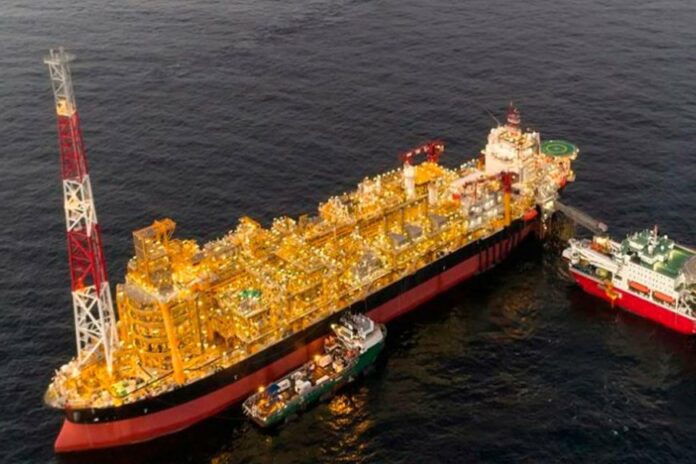
Equinor has started production at the Halten East development in the Norwegian Sea, two years following approval from Norwegian authorities.

“We are starting up Halten East at a time where piped gas from Norway is in high demand and important for energy security. In a challenging cost and inflation environment, the project has been delivered both on time and within our cost estimate,” says Geir Tungesvik, executive vice president for projects, drilling, and procurement in Equinor. The estimated pay-back time for the project is one year.

Halten East is a tie-in development located in the Kristin-Åsgard area in the Norwegian Sea. Vår Energi and Petoro are partners. The development consists of six gas discoveries and flexibility for three prospects in addition, utilizing existing infrastructure and processing capacity at Åsgard B.

The plan for development and operation (PDO) was approved by authorities in February of 2023. Now, gas from the first well Gamma is on stream two years later, on plan. The first phase consists of six wells from five discoveries. The second phase is planned in 2029. It will include a sidetrack and an additional three possible wells. The total investment of the project is around NOK 9 billion for both phases.

The reservoirs of Halten East contain gas and condensate. The recoverable reserves are estimated to be around 100 million barrels of oil equivalent from the discoveries. The gas will be sent to Kårstø from Åsgard B, from where it will be exported to Europe via pipeline.

“Halten East demonstrates the importance of area solutions and cooperation between licence owners and authorities to realise the full resource potential on the Norwegian continental shelf. Together, we can develop industrial solutions that will continue to deliver energy with low costs and low emissions. We have a large portfolio of projects that will connect discoveries to our producing hubs. Equinor expects to put over 30 such projects on stream at the NCS within 2035,” says Kjetil Hove, executive vice president for development and production on the Norwegian continental shelf.

Around 90% of Halten East investments have gone to suppliers in Norway. The development phase of Halten East is estimated to provide around 3000 person-years of employment per year from 2022 to 2029.

In November 2024, Equinor acquired Sval Energi’s 11,8% share in the Halten East Unit, increasing its ownership to 69,5%.

Partners: Equinor Energy AS (69.5%, operator), Vår Energi ASA (24.6%), Petoro AS (5.9%)

DNV awards AiP for LCO2 carrier design developed by Shell and Brevik Engineering

0

DNV has awarded a detailed Approval in Principle (AiP) to Shell International Trading and Shipping Company Limited and Brevik Engineering for their design of a 74,000 cubic metres (cbm) liquid carbon dioxide (LCO 2) carrier. 

Carbon capture and storage (CCS) is set to play a key role in decarbonization of industry in Asia Pacific. Emitting countries such as Japan, Korea, and Singapore are studying the possibility of shipping substantial quantities of their own CO2 to store locations within the wider region. This necessitates the development of larger capacity vessels than those currently planned for European CCS projects. Low-pressure cargo tank designs are a key enabler to commercialise these large LCO2 ships to enable transportation of CO2 at lower cost.

This AiP from DNV covers a comprehensive scope across a wide range of disciplines, including the assessment of specific technical challenges for LCO2 carriers. Over 50 documents have been reviewed, with special emphasis on cargo tank design, including tank integrity analysis and suitability of material.

With dimensions capped at 290 meters in length and a 12-meter draft to access key East Asian ports, the designed ship mirrors the size of a 174,000 cbm LNG carrier. It features 15 cylindrical tanks that store 74,000 cbm of liquid CO2 at around -50°C and 6–8 barg, a low-pressure industry standard. The vessel is also designed for future onboard capture of CO2 from the main engine exhaust.

This achievement marks a significant milestone in showcasing the viability of innovative low-pressure shipping technology for CO2.

Mathias Sørhaug, Business Development Director CO2 shipping, DNV Maritime said: “We are pleased to be collaborating closely with Shell and Brevik Engineering on bringing this innovative gas carrier design to fruition. This AiP underscores the importance of joint innovation and collaboration in advancing solutions that support the development of the wider CCS value chain. Scale is essential to drive down the cost of CCS and this work demonstrates the feasibility of large CO2 carriers with a low carbon footprint.”

Lee Teng-Huar, Shell General Manager, Maritime Operations, Asia Pacific and Middle East commented: “After months of technical research, we are proud to have received this detailed Approval in Principle confirming the feasibility of low pressure shipping with a design that is tender-ready. We are excited to see how innovations like this can potentially enhance safety, achieve scalability and flexibility to drive cost competitiveness in the implementation of large-scale cross-border CCS.”

Evert Grødal, Managing Director of Brevik Engineering AS, is proud to bring the company’s experience in marine design and CO₂ ship logistics to the development of this novel low-pressure CO₂ carrier, where the key philosophy has been to reduce technological risk and ensure compliance with current regulations: “Based on a comprehensive technology study, conducted in collaboration with Shell, this innovative design is expected to set new benchmarks in safe, efficient, and sustainable large-scale CO₂ shipping,” he concluded.

An Approval in Principle (AiP) is an independent evaluation of a concept based on a predefined framework of requirements. It confirms the feasibility of the design and ensures there are no significant technical obstacles hindering its implementation.

The construction of the next CSOV for BS Offshore starts at Ulstein Verft

0

On 11 March 2025, the hull of yard number (Yno) 321 for BS Offshore arrived at Ulstein Verft. This marks the beginning of a new phase in the shipbuilding process.

While the hull has been under construction at the CRIST yard in Poland, closely monitored by a site team from Ulstein Verft, the designers and engineers at the various Ulstein companies in Norway and Poland have been working on finalising the detailed drawings for the ship. The hull arrival at Ulstein Verft marks a new phase, which includes securing, painting, outfitting, piping, equipment installations, electrical work, and system integration.

The vessel is a sister to Yno 320, launched at Ulstein Verft on 23 February.

“We are pleased to see the journey toward completing the second CSOV is progressing and look forward to the continued progress and collaboration in bringing this vessel, designed with efficiency, safety, and sustainability at its core, to life”, says Matthias Müller, Managing Director BS Offshore.

This is Ulstein’s fifth W2W vessel for BS Offshore. All have been designed by Ulstein Design & Solutions AS and constructed at Ulstein Verft. BS Offshore is a pioneering ship owner, and Ulstein is proud to continue the partnership, contributing to the advancement of sustainable maritime solutions.

TWIN X-STERN

Like its predecessor, the newbuild is part of the innovative TWIN X-STERN CSOV series, known for its exceptional operational performance and seakeeping abilities. During the outfitting phase, the vessel will be equipped with advanced technology, including a 3D-compensated crane and a gangway, ensuring safe and efficient personnel and cargo transfer to offshore wind turbine facilities.

Hybrid propulsion

The vessel will also have a diesel-electric propulsion system with substantial battery energy storage, significantly reducing the environmental footprint. She is prepared for methanol as a future fuel.

Accommodation

After her delivery in 2025, the vessel will be ready to support the offshore wind sector with modern, high-comfort accommodation for up to 132 crew and clients.

Kongsberg wins design contract for Olympic Group’s two subsea construction vessels

0

Kongsberg Maritime has signed a significant contract for the design of two multipurpose subsea vessels. The UT7623 SEV (Sustainable Energy Vessel) vessels will be methanol-ready and feature battery hybrid technology.

These vessels are the first references for Kongsberg Maritime’s latest subsea construction vessel designs and will feature a fully integrated package of technology including rim-drive propulsion, hybrid power and winch systems.

The UT7623 SEV vessels are designed in close collaboration with Olympic and are set to be the most energy-efficient in their category. The extensive package of integrated technology from Kongsberg Maritime includes rim-drive electric azimuth propulsion, retractable azimuth bow thrusters, switchboards and thruster drives. Hybrid battery power, an integrated bridge system, automation and control systems, dynamic positioning system, tank sounding, mooring winches and an overhead ROV launch and recovery system (LARS) is also included.

Kongsberg Maritime’s expertise as an integrator ensures that these vessels are built for multiple purposes and optimised for advanced offshore operations under rough conditions, providing Olympic with unparalleled performance and efficiency.

Olympic has taken a leading role in the transition to environmentally and climate-friendly vessels. The UT7623 SEV vessels are a testament to this commitment, marking a new milestone in the company’s journey towards more sustainable operations.

“At Olympic, we have always been at the forefront of innovation, setting new standards for sustainable offshore operations. The UT7623 SEV vessels build on our long-standing experience in renewable energy and oil and gas, offering unmatched flexibility and efficiency. With Kongsberg Maritime’s cutting-edge technology, we are once again delivering vessels that lead the industry forward,” says Stig Remøy, CEO & President, Olympic.

The vessels will be constructed at the CMHI shipyard in Shenzhen, China, with delivery scheduled for the summer of 2027. They will operate in both the renewable energy and oil and gas sectors, featuring advanced technologies that significantly exceed the requirements of the Paris Agreement. The UT7623 SEV vessels are methanol-ready dual fuel, setting new benchmarks in the industry for energy efficiency and environmental sustainability.

“We are excited to deliver the UT7623 SEV vessels to Olympic,” says Per Kristian Furø Sales Director at Kongsberg Maritime. “These vessels represent the latest offering from our extensive ship design portfolio. They are methanol-ready dual fuel, and have a fully electric propulsion system, setting new benchmarks in the

industry for energy efficiency and environmental sustainability. This new design exemplifies the qualities of next-generation ships through their innovative design, environmental sustainability, operational efficiency, and economic impact. They are vessels that not only meet but exceed the demands of modern offshore operations and will do so with extremely low fuel consumption.”

ADNOC L&S and SeaOwl sign agreement to design remotely operated marine supply vessels

0

ADNOC Logistics & Services has signed an agreement with SeaOwl for the design of unmanned Remotely Operated Vessels (ROV) capable of transporting vehicles, equipment and supplies to and from offshore sites. 

The agreement was signed by Captain Abdulkareem Al Masabi, CEO of ADNOC L&S and Xavier Génin, CEO of SeaOwl at the UAE Climate Tech Forum organized by the Ministry of Industry and Advanced Technology.

The innovative design of the ROV will reduce carbon emissions up to 30% as the vessel will be lighter and smaller, as facilities for a crew are not required. In addition, the smart automation systems will optimize routing and propulsion, further decarbonizing ADNOC L&S’ offshore operations in support of the UAE’s Net Zero by 2050 Strategic Initiative and ADNOC’s 2030 Sustainability Agenda.

Captain Abdulkareem Al Masabi, CEO of ADNOC L&S said: “A strategic commitment to sustainability and innovation plays a crucial role in ADNOC L&S’ ability to serve its customers. The vessel is another example of this commitment as we leverage the latest technology to optimize our maritime operations, reduce our carbon footprint and improve safety while increasing efficiency.”

The design for the 55 meters long ROV will allow the vessels to be operated from an onshore control room through a satellite link using the latest automation and self-navigation technology. The design will utilize state of the art artificial intelligence systems to control propulsion, dynamic positioning, remote communication and cyber security.

SeaOwl, a French company specializing in the automation and digitalization of maritime services, will design the vessel, oversee its construction, and facilitate navigation permits. Seaowl will partner with Bureau Veritas (BV), a world leader in testing, inspection, and certification, to facilitate obtaining the necessary navigation permits from the UAE maritime transportation affairs.

Xavier Génin, CEO of SeaOwl said: “After the success of our Proof of Concept supported by the French Government, we are delighted to join forces with ADNOC L&S to bring a new era of sustainable logistics operations through digital automatization. This project will create strong ties with the UAE industrial landscape, as we plan to engage many other UAE players in this exciting journey.”

This design will improve safety and reduce operational costs as the vessels will be able to operate in harsher conditions with no exposure to seafarers.

Upon construction, the ROVs will join ADNOC L&S’ large and diverse fleet of modern and technologically advanced vessels. Combined with its 1.5 million square meter logistics base in Abu Dhabi and its integrated logistics capabilities, ADNOC L&S is one of the region’s largest shipping and integrated logistics companies.