-3 C
New York
Home Blog Page 555

EU-SCORES to deliver ‘world-first’ bankable hybrid offshore marine energy parks

0

Innosea – part of the AqualisBraemar LOC Group (ABL Group) – are named as one of 16 project partners of the European SCalable Offshore Renewable Energy Sources (EU-SCORES) – a €45 million marine energy project lead by the Dutch Marine Energy Centre (DMEC). The EU-SCORES project will pave the way for bankable hybrid offshore parks across Europe by 2025, unlocking the large-scale potential of wind, wave and offshore solar systems.

The current global annual electricity consumption is about 21,000 TWh and is predicted to double by 2050, with a growing population and GDP. Efficient and effective use of offshore renewables is pivotal in the EU’s transition towards an economy with net-zero greenhouse gas emissions by 2050. To accomplish this, the EU set clear targets to reach 230-440GW and 40GW installed capacity of offshore wind and ocean energy by 2050, respectively.

Kicking off in September 2021, the project partners will jointly build on two highly comprehensive and impactful demonstrations: (1) A 3MW offshore solar PV system by Oceans of Energy off the Belgian coast co-located with a bottom fixed windfarm and; (2) A 1.2MW wave energy array by CorPower Ocean in Portugal co-located with a floating wind farm.

The demonstrations in EU-SCORES aim to showcase the benefits of continuous power output by harnessing complementary power sources including wind, sun and waves. This hybrid approach will create a more resilient and stable power system, higher capacity factors and a lower total cost per MWh. Major project developers and utility companies will further strengthen demonstration efforts, paving the way for future large-scale commercialisation of these innovative parks.

The full-scale demonstrations are intended to prove how the increased power output and capacity installed per km2 will reduce the amount of marine space needed, thereby leaving more space for aquaculture, fisheries, shipping routes and environmentally protected zones. Additional benefits achieved by co-using critical electrical infrastructures and exploring advanced operation and maintenance methodologies supported by innovative autonomous systems should lower the costs per MWh. Moreover, the project demonstrations will support the stability and resilience of the European energy system, while considering sustainability, local stakeholders and existing ecosystems.

Benjamin Lehner, Project Portfolio Manager DMEC, said:

“For a successful energy transition we have to move fast without jeopardizing the reliability of our electricity grid. EU-SCORES can be a game changer doing so. The multi-use of offshore space presents a favorable business case with major potential to accelerate the transition, whilst the hybrid approach will enable more reliable electricity provision.”

Matthijs Soede, Snr. Policy Officer, European Commission DG Research, said:

“We have very high expectation from the EU-SCORES project, which perfectly fits with our aim to realise the Green Deal. They show great ambition by demonstrating different energy sources considering efficient use of the seas and their success will support the clean energy transition.”

Mattias Lynch, Innosea Engineering Director EU-SC, said:

“In taking part in the EU-SCORES project, we have the opportunity to leverage our cross-sector expertise in wind, floating solar and wave energy to support the innovation of ground-breaking hybrid technology. Multi-use of offshore space has the potential to unlock significant operational and cost benefits for the renewable landscape, improving resilience of structures, performance output, and optimal use of marine space. We’re really looking forward to working with our partners on this!”

The EU-SCORES consortium partners are:  Dutch Marine Energy Centre (DMEC), Oceans of Energy, TU Delft, SBM Offshore, POM West-Vlaanderen (POM), RWE Renewables (RWE), CorPower Ocean, Uppsala University, Lappeenranta-Lahti University of Technology (LUT), Enel Green Power, RINA offshore consultants, INNOSEA – a AqualisBraemar LOC Group company, EDP Labelec, WavEC Offshore Renewables, INESC TEC, Exceedence, Western Star Wave – a Simply Blue Group company

Also supported by: IRO (Association of Dutch Suppliers in the Offshore Energy Industry), ENECO Group, Redes Enérgeticas Nacionais, Parkwind, Ocean Winds, Energie Baden-Württember
OSM to supervise the building of two more ships for Fjord1

0

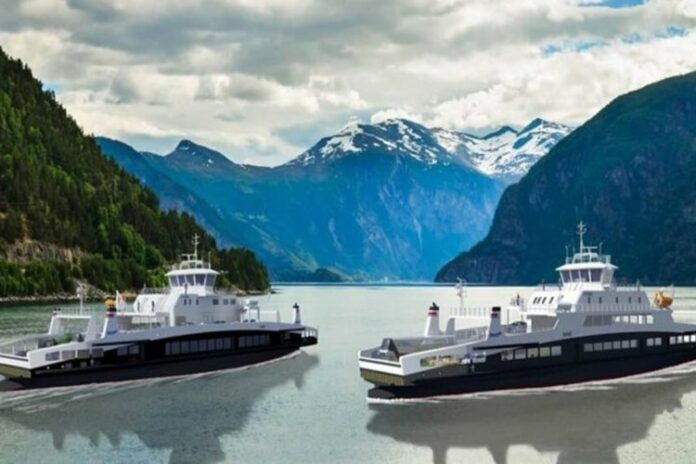
OSM Maritime Group will supervise the building of two more ferries for the Norwegian Fjord1 transportation group.

The two vessels are HAV Design and they will be built in the Tersan shipyard, Turkey. The newbuilds will be the seventh and eighth ferries under OSM New Build Supervision for Fjord1, currently supervising its sixth ferry named MF Rødvenfjord.

The new buildings will be both 84m long, with 16.3m beam, double-ended and will bear a capacity of 248 persons, 80 cars and six trucks each. Both ferries will have a battery-powered propulsion system, which can be charged via shore power while passengers are disembarking in port. The vessels will also have a diesel-electric backup system to allow them to operate in either fully electric, hybrid or diesel-electric mode.

Following their scheduled delivery, expected in the second quarter of 2023, the ferries will operate on the routes between the communities of Stranda and Liabygda, and Eidsdal and Linge in Norway.

RINA expands its digital offerings with the acquisition of Logimatic Solutions

0

The company, with a turnover of about 6 million euros, will be fully integrated within the RINA Group and its nearly 50 employees will continue in the current structure from its offices in Denmark, Singapore and Chile.

This acquisition is in line with RINA’s strategic plan and will boost the company’s first-class knowledge of digital solutions, providing support to customers for efficient and sustainable business operations.

The move will add SERTICA to the RINA portfolio of maritime offerings, while INEXTIA, FOTODOK and RENOMATIC will complement RINA’s businesses in the energy and industry sectors. 

SERTICA is the powerful fleet management solution, which integrates a wide range of functions, modules and features for all areas of maritime business, incorporates fleet maintenance, procurement management and HSQE modules to provide deeper insights into fleet operations, enabling effective monitoring, control and cost savings.

Ugo Salerno, CEO of RINA, said:

“The Logimatic Solutions business is a perfect fit for us, as it complements our technical offer of digital applications and improves our market positioning in terms of geographic proximity to our customer base. The SERTICA Fleet Management Software has an excellent reputation and is already installed on over 1400 vessels worldwide. It extends our capabilities and is a powerful and beneficial addition to the tools we already provide to our customers in the maritime industry.”

Lars Riisberg, CEO at Logimatic Solutions, said:

“When RINA presented their strategy of delivering world-class digital solutions, I saw a unique opportunity. I truly believe that our products and organization deserve this opportunity to grow further with a strong and global company. We treasure a close relationship with our customers, and this is something I can say for sure will not change. We will continue to support and grow our SERTICA family in cooperation with RINA with the same professional, yet informal approach. This is in our DNA.”

NAVTOR joins TRANSACT, a research project with 30 other European partners

0

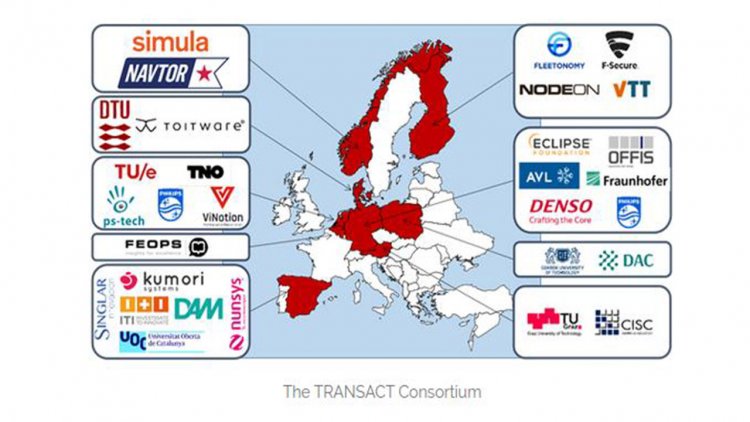
NAVTOR has been selected to join a European-funded, Philips-led consortium focused on exploiting the potential, and ensuring the integrity, of cyber-physical systems (CPS). NAVTOR joins 30 other European partners in launching the ECSEL Joint Undertaking TRANSACT-project, funded by the European Union’s H2020 Framework Programme. 

NAVTOR will team up to develop new applications and AI-enhanced maritime services for improved performance and safety, building its offering for customers, while tapping into a wealth of cross industry research and expertise.

CPS technology is increasingly commonplace (systems that control physical processes/objects and adapt to real-time conditions – e.g. autonomous vehicles, or smart vessels). However, their often-standalone nature means their full potential cannot be exploited. TRANSACT brings together large companies, SMEs, research institutes, and universities to explore ways to create an integrated, connected architecture for such systems, primarily through enhancing edge and cloud technologies. This could help ensure that safety-critical CPS deliver optimal levels of performance, safety, security, and data privacy – key building blocks in a smarter, safer, and more sustainable maritime future.

NAVTOR CEO Tor Svanes comments:

“This is a hugely exciting project to be part of. We have a long history of involvement in research consortiums focused on solving industry challenges, such as the SESAME and SESAME-2 projects, and are delighted to have been selected alongside so many other leading companies and institutions to utilise and develop our AI-enhanced edge and cloud computing expertise. This can benefit society as a whole and, more specifically, deliver real advantages for our industry and growing customer base.”

One of TRANSACT’s key focus areas is ‘critical maritime decision support’, with NAVTOR using its experience to tackle issues around: Fuel optimisation through route optimisation; detection of anomalies in fuel consumption during voyage, traffic pattern monitoring; situational awareness along intended Passage Plan; detection of abnormal vessel behaviour; and detection of malicious tampering of AIS/GNSS.

This will bring together the firm’s knowledge in both e-Navigation (harnessing the potential of its connected, cyber-secure e-Navigation ecosystem) and performance optimisation, which was boosted earlier this year by the acquisition of US-based software developer Tres Solutions.

Bjørn Åge Hjøllo, Chief Business Development Officer, NAVTOR, comments:

“The future is connected. Having better access, control and seamless, secure sharing of data is the platform that a more sustainable industry can be built on, with improved performance, efficiency and drastically reduced emissions.”

“Being a part of TRANSACT will allow us to extend the existing edge/cloud architecture on vessels and enable continuous development and updates of dynamic end-to-end safety and performance monitoring applications and services. We expect this to open doors for additional services, such as early warnings of potential navigational risks, and anomalies in assumed fuel consumption and performance. Taken together these pieces of the puzzle can help us put together a greener, safer and more profitable future for vessel owners and operators worldwide.”

NAVTOR will work closely with Norwegian partner SIMULA RESEARCH LABORATORY AS, to develop and implement AI-enhanced monitoring and decision support solutions. The firm will also serve on the Executive Board of the project and be responsible for its overall monitoring and technical progress, quality assurance, and the day-to-day management of scientific and technological activities. 

Netherlands technology giant Philips has been appointed project lead, with partners also drawn from Finland, Germany, Poland, Austria, Spain, Belgium, and Denmark. Other focus areas include the remote operation of autonomous vehicles in urban environments, cloud-based battery management systems for electric vehicles, and edge-cloud-based clinical applications for image guided therapy and diagnostic imaging, as well as critical wastewater treatment.

Kongsberg Digital partners with Data Gumbo to improve supply chain efficiencies

0

The combined technology offerings improve supply chain efficiencies and transactional accuracy and transparency to drive value for heavy asset industries.

Kognitwin is a world leading digital twin Software-as-a-Service platform that enables industrial operators to integrate and contextualize data from their IT and OT systems, for advanced analytics and simulation that drive higher degrees of asset performance and collaboration. Kognitwin changes the nature of working with industrial data, allowing data streams to change enterprise workflows. When deployed with automated smart contracts on GumboNet, customers, vendors and suppliers can integrate specific transactional data resulting in comprehensive real-time and predictive digital replicas of industrial heavy assets.

Shane McArdle, SVP Digital Energy, Kongsberg Digital, said:

“Digital twins and portfolios thereof are becoming prioritized enablers for operator transformation. We are increasingly observing a growing number of operators intending to centralize sensor and transactional data, including critical supply chain information, on their digital twins. In the past, unlocking value through smart contracts have largely been challenging because of access to complex source data. Now, with digital twins that include representations for real-time sensors, virtual sensors and integrated transactional data, we find an unprecedented opportunity to meaningfully catalyze utilization of smart contracts and distributed ledger technologies. Through our partnership with Data Gumbo we can enable customers to make meaningful progress toward real-time supply chain management, fundamentally changing how this business process operates today.”

Kognitwin will integrate with GumboNet to codify the triggering of supply chain transactions on smart contracts and automated payments. End-users will experience real-time updates to contractual transactions based on current data sets, viewable in a digital twin context.

The partnership addresses global operators’ needs to improve supply chain management by empowering operators to reduce processing times, access real-time data to increase confidence in processing and aid in strategic business decision making throughout their supply chains. The solution has further potential to take advantage of Kongsberg Digital’s own supply chain tracking solutions.

Andrew Bruce, CEO and Founder, Data Gumbo, said:

“This integration of digital twin technology with blockchain-backed smart contracts signals a huge opportunity for supply chain cost reduction and transparency.”
“In deploying GumboNet, Kongsberg Digital is able to offer a control tower to its customers with the ability to provide 4-5 way matching, cross-referencing and triggering of supply chain data and events. By automating real-time transactions with certainty, we are making supply chain management intuitive, easy and transparent allowing parties to capitalize on savings and value.” 

Shane McArdle, SVP Digital Energy, Kongsberg Digital, said:

“In the future we expect that digital twins, by means of their workflow enablement, information accuracy and data richness, will serve as the main triggers for supply chain activities. We are pleased to partner with Data Gumbo on paving the path for innovation in this domain.”

Kawasaki receives an order for an 86,700 m³ LPG-fueled LPG/ LAG carrier

0

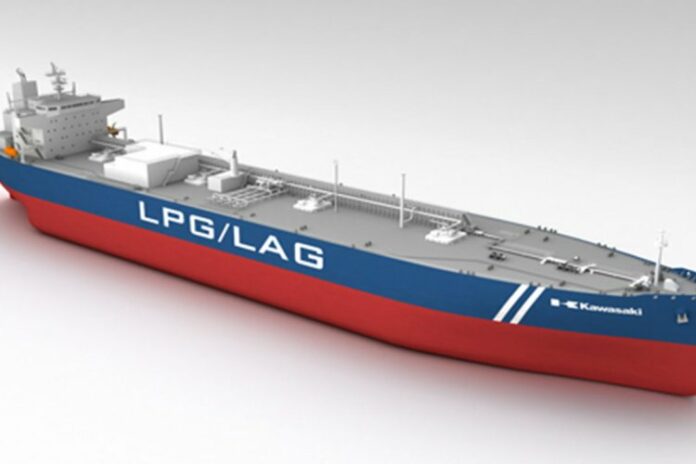
Kawasaki Heavy Industries, Ltd. has concluded a shipbuilding contract for a new 86,700 m3 liquefied petroleum gas (LPG) and liquefied ammonia gas (LAG) carrier powered by LPG fuel for ENEOS Ocean Corporation.

The vessel is equipped with separate cargo tanks designed to carry LPG and LAG at the same time. This contract represents the 72nd LPG carrier and 9th LPG-fueled LPG carrier to be constructed by Kawasaki, and their second LPG/LAG carrier. Kawasaki plans to complete the construction of the vessel at its Sakaide Works in 2023.

The advantage of this dual-purpose vessel is its capability to simultaneously carry LPG, which is already used as a low-carbon energy source, and LAG, a new fuel contributing to the establishment of a decarbonized society. Another feature is the greater capacity of the cargo tanks as compared to conventional carriers, which was achieved without significantly changing the vessel’s length, breadth, or other main specifications.

Fueled by low-sulfur fuel oil and LPG (which significantly reduces the emission volumes of sulfur oxides [SOx], CO2, and other pollutants in the exhaust gases as compared to marine fuel oil), the vessel meets SOx emission standards set by the International Maritime Organization (IMO), as well as the IMO’s Energy Efficiency Design Index (EEDI) Phase 3 regulations, which are scheduled to adopt stricter CO2 emission standards in 2022.

To meet environmental standards being tightened globally, and to implement action plans set forth in the Sustainable Development Goals (SDGs) adopted by the United Nations and other initiatives, Kawasaki plans to develop and build more LPG-fueled LPG carriers and other commercial vessels that meet environmental standards, as well as to develop other eco-friendly marine technologies, to contribute to the establishment of a low-carbon/decarbonized society. These products include vessels for transporting liquefied hydrogen, considered to be the next-generation energy source.

Specifications

  • Length overall Approx. 230.00 m
  • Molded breadth 37.20 m
  • Molded depth 21.90 m
  • Molded summer draft 11.65 m
  • Tank capacity 86,700 m3

Mitsubishi Shipbuilding receives AiP for LCO2 carrier cargo tank

0

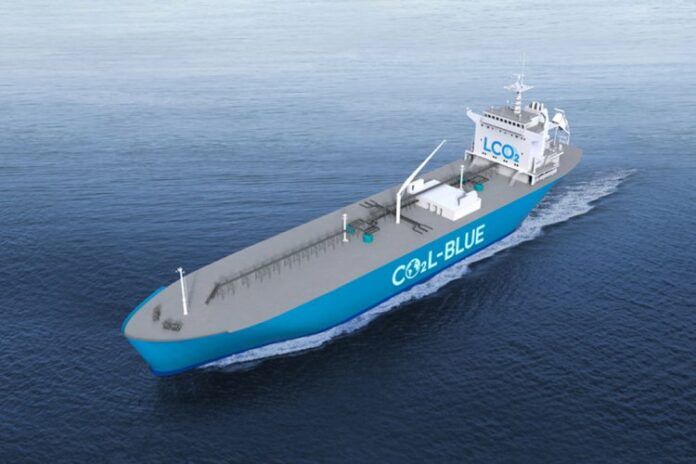
Bureau Veritas (BV), a world leader in testing, inspection, and certification, has delivered an Approval in Principle (AiP) to Mitsubishi Shipbuilding – part of Mitsubishi Heavy Industries (MHI) Group – for a cargo tank system to be mounted in a liquefied CO2 (LCO2) carrier.

LCO2 carriers transport liquefied CO2 gas as a liquid in a low temperature, high pressure state. They play a pivotal role in the carbon dioxide capture, utilization, and storage (CCUS) process, by transporting CO2 from its emission sources to storage sites or facilities for utilization. Demand for these vessels is expected to increase in the future, as CCUS is attracting attention worldwide as an effective means to achieve decarbonization.

BV reviewed the design of the LCO2 cargo tank system and confirmed that it meets the technical and regulatory requirements and standards for safety. The inspection of this system was conducted based on the International Gas Carrier (IGC) Code which applies to marine vessels carrying liquefied gas in bulk, as well as BV’s ship classification regulations.

Alex-Gregg-Smith, Senior Vice President & Chief Executive, North Asia and China, Bureau Veritas M&O, said:

“This AiP recognizes that Mitsubishi Shipbuilding’s new LCO2 technology meets our class rules and standards. I would like to thank Mitsubishi’s team for their trust, and BV is proud to help advance innovation and new technology that is much needed to achieve a low-carbon future.”

Digital Berth Planner tool goes liveat Port of Gothenburg

0

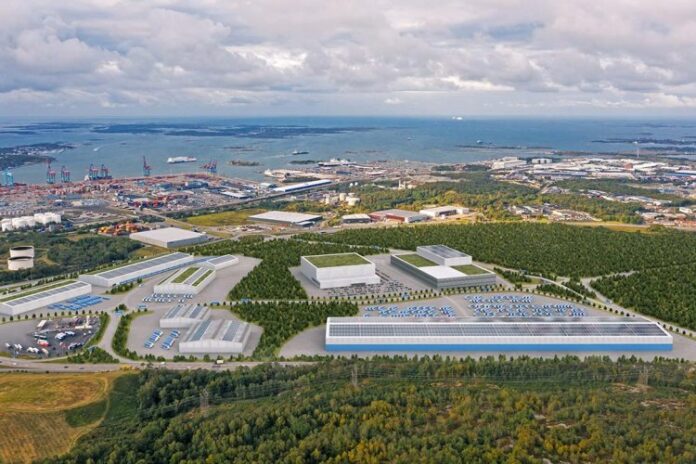
The first to use this new smart service is Port Control – which receives all calls at the Port of Gothenburg – and the safety and security coordinators at the Energy Terminal. External users will gradually join the system.

Fredrik Rauer, traffic coordinator and project leader for Berth Planner at the Gothenburg Port Authority, said:

“Allberth is long-awaited and much sought after. With Allberth we now have a berth planning tool that can make calls smarter, safer, and considerably more efficient for all concerned. And reduced emissions from the vessels are an obvious benefit in climate terms.”

One of the most striking advances to emerge from Allberth is the ability to quickly and effectively identify berths that are vacant and then act on that information. This has made the call system considerably easier and offers a unique overview. Not only can those involved improve their resource planning, but the reduction in waiting times ultimately also leads to lower emissions.

Fredrik Rauer said:

“We can now use the same tool to examine the safety parameters to determine whether a ship can moor at a specific berth, to position the ship, and to plan the time. We can also show external parties the calls that have been coordinated with the terminal and the calls for which we only have an approved vessel notification. Without this status distinction, it will appear as if we have two or three moored vessels overlapping and an outsider would logically put this down to scheduling problems. With Allberth we can give mooring personnel, the ship’s agent, and the terminal the opportunity to act immediately on the information that we visualize in the application.”

Allberth offers two-way integration – for in-house use by berth planning personnel at the Port of Gothenburg and for external use by the various parties involved in calls. Allberth is more powerful and more comprehensive than anything that was previously available. Traffic coordinators at Port Control, safety and security coordinators at the Energy Terminal, and the port’s production planners now have a schematic overview at their disposal. It is similar in many ways to a traditional school timetable, where a note is made of which ships are moored at the different berths. Using the map service, a time slot is chosen for a specific berth, allowing operatives to see which vessel is due to moor at a particular berth at a particular time. In certain instances, we can also see the planned position at the quayside.

Prompt and accurate information to key players is fundamental in an efficient call system. This is where the second part of Allberth comes into play. Allberth provides rapid status information to external parties, including the pilots, personnel at the mooring company, and the ship’s agent, all of whom have a key role to play. The system ensures greater accuracy and predictability, making it more time-efficient, cost-effective, and environmentally smart.

Allberth is the result of collaboration between the Finnish company Awake.AI, which is responsible for developing the service, and the Gothenburg Port Authority. It will be the first step in the task of increasing transparency and visualization of the call system. It will also be a vital element in the ongoing digitalization of the port as a freight hub and a key area for the Port of Gothenburg as it continues its journey into a digitalized world.

Allberth and further digitalization of the call system will contribute to improving the efficiency of the system as a result of enhanced resource utilization and a more transparent flow of information – factors that can help save time and reduce bunkering emissions.

APM Terminals Apapa boosts service delivery with berthing window

0

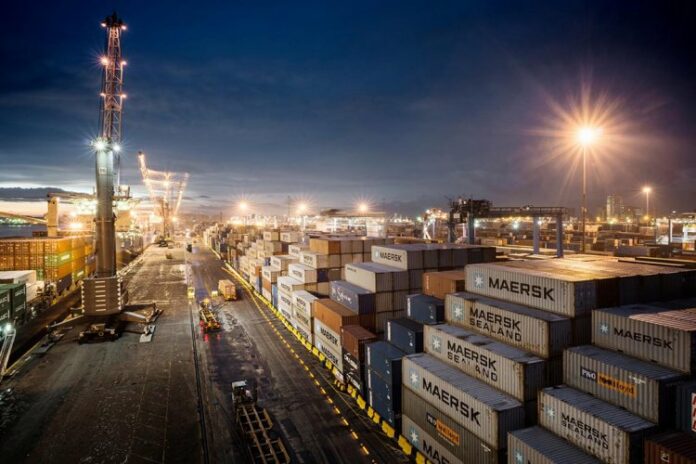
The first Berthing Window for the WAF/MWX service (operated by Hapag Lloyd, CMA-CGM & Arkas) was launched on last week with the arrival of the 4,360 TEU CMA CGM LAPIS at APM Terminals Apapa, which is located within the Lagos Port Complex, Apapa.

The Chief Commercial Officer of APM Terminals Apapa, Richard Smith, who was represented at the launch of the maiden edition of the Berthing Window by the Commercial Manager, Temilade Ogunniyi, said the service will enable the allocation of a fixed time period for vessels to berth, discharge, load and sail.

He said the new Berthing Window is another major milestone achievement at APM Terminals Apapa to enhance service delivery and improve customer experience.

Smith said:

“The berthing window is a major step towards bringing structure to the berth schedule, cutting waiting time to zero, assisting shipping lines to maintain a regular fixed arrival time, and allowing us to deliver better services to Nigerian importers and exporters.”

The Port Manager of Lagos Port Complex Apapa, Olufunmilayo Olotu, who also witnessed the launch of the Berthing Window, commended APM Terminals Apapa for the new initiative, which she said would boost service delivery and eliminate ship waiting time at the port.

Olotu said:

“This development means the schedules are sent ahead and there will be no more waiting time. We are placing premium on professionalism and professionalism means aligning with international best practices, one of which we are witnessing today.

“It has been said that shipping is all about time and time is money. We want to reduce the number of ships that are kept waiting at anchorage. So for every minute that a vessel is kept waiting, we are talking of global economic implications. Therefore, our duty is to ensure that we reduce the waiting time to the barest minimum, and we are collaborating with APM Terminals to ensure that customers are satisfied.”

Also speaking at the event, Senior Manager, Operation at Hapag-Lloyd, Abimbola Kolade, commended APM Terminals for launching the Berthing Window.

He said:

“This development would bring sanity to vessel schedules. By sanity, I mean we will be able to tell our customers that our vessels would be at the port at a certain date and the cargo would get loaded. With this, we can assure them that their cargo would be delivered to the final destination at a certain time.

“You know when the window is starting, and so you know how to plan your time towards the arrival of your goods. In the overall scheme of things, there is going to be reduced cost for our customers.

“What this means for exports is that we can tell customers when their containers will be loaded onto the vessel at Apapa and when the vessel would get to its destination. This will give them the confidence to deal with their customers overseas.”

Shell identifies damage to WD-143 from Hurricane Ida in the Gulf of Mexico

0

During this initial flight, Shell observed damage to its West Delta-143 (WD-143) offshore facilities.

When it is safe to do so, the company will send personnel offshore to provide a closer inspection of these facilities to understand the full extent of the damage and the degree to which the production in the Gulf of Mexico will likely be impacted.

The WD-143 facilities serve as the transfer station for all production from Shell’s assets in the Mars corridor in the Mississippi Canyon area of the Gulf of Mexico to onshore crude terminals.

Shell’s Perdido asset in the southwestern Gulf of Mexico was never disrupted by the hurricane, and its floating production, storage and offloading vessel, the Turritella (also known as Stones) is currently back on line. All of the other offshore assets remain shut in and remain fully evacuated at this time. 

At the early phase of assessment and recovery, approximately 80% of Shell-operated production in the Gulf of Mexico remains off line.