-1.1 C
New York
Home Blog Page 306

Ports of Mannheim and Rotterdam sign logistic partnership

0

To reinforce these plans, Uwe Köhn, Port Director of Hafen Mannheim and Matthijs van Doorn, Commercial Director of the Port of Rotterdam Authority recently signed a memorandum of understanding (MoU).

The port of Mannheim has a strategic location along the Rhine corridor and within a strong industrial area, from where bulk and container flows are transported to and from Rotterdam.

Topics to be addressed in the cooperation include the possibilities for further developing the hinterland network via rail and inland shipping, transforming the logistics chain into a zero-emission transport corridor for freight transport by road, water and rail, further increasing the reliability and efficiency of barge handling at deep-sea and inland terminals, and sharing knowledge between both port complexes to work towards a fully transparent digital Rhine corridor.

Regarding energy transition, both ports will examine whether they can act jointly in facilitating the infrastructure for the transport of alternative renewable energy carriers, either produced, imported or used in the ports, the hinterland and between the ports along the corridor.

ABB Azipod propulsion to power Spanish Navy flagship

0

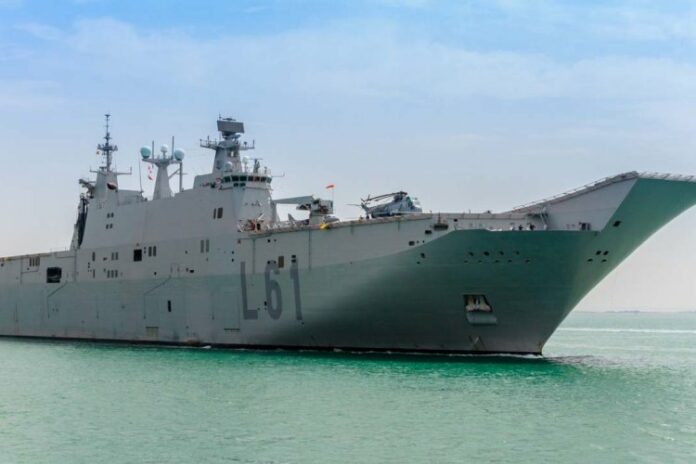
ABB has secured a contract with the Spanish state-owned Navantia shipbuilding company to retrofit the Spanish Navy flagship, Juan Carlos I with an electrical propulsion system based on dual ABB Azipod® units. Due completion in 2025, the project is the first of its kind on a naval ship. Following the commissioning, Juan Carlos I will benefit from enhanced efficiency and maneuverability to support its varied and demanding naval operations.

The contract follows a study undertaken by ABB in 2020 to determine the feasibility of installing new propulsors on the ship. The study identified ABB Azipod® as a solution to meet the vessel’s requirements for reliability, efficiency, maneuverability and safety.

“Navantia is proud to make history with the first retrofit of this kind on a naval ship. ABB Azipod® propulsion system has proven to be highly effective in ensuring the optimal capacity of our flagship vessel and we look forward to seeing the benefits in operation,” said a Navantia spokesperson.

“We are proud to see our Azipod® propulsion system chosen for this project,” said Sindre Satre, Business Line Manager, Coast Guard and Navy, ABB Marine & Ports. “We already have a long track record with highly efficient solutions on the commercial market and now see that our technologies are becoming increasingly viable also for naval vessels.”

ABB’s scope of supply for Juan Carlos I comprises two Azipod® propulsors and medium-voltage drives, with support and maintenance available locally from the ABB service center in Spain and worldwide via ABB’s global service network.

While the order represents the first retrofit of an ABB Azipod® propulsion system aboard a naval vessel, the solution has been maximizing ship performance in the naval patrol segment for several years. In 2019, the Norwegian Coast Guard icebreaker KV Svalbard became the first Azipod®-powered vessel to reach the North Pole, where the system’s maneuverability and icebreaking capabilities proved critical.

Partners develop large-scale liquid hydrogen carrier vessel

0

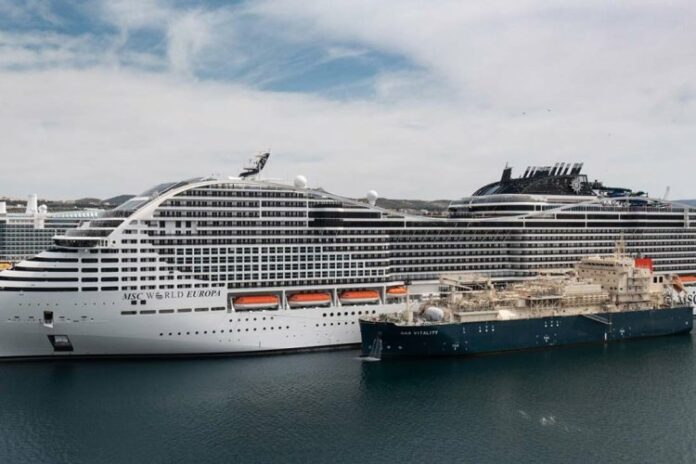
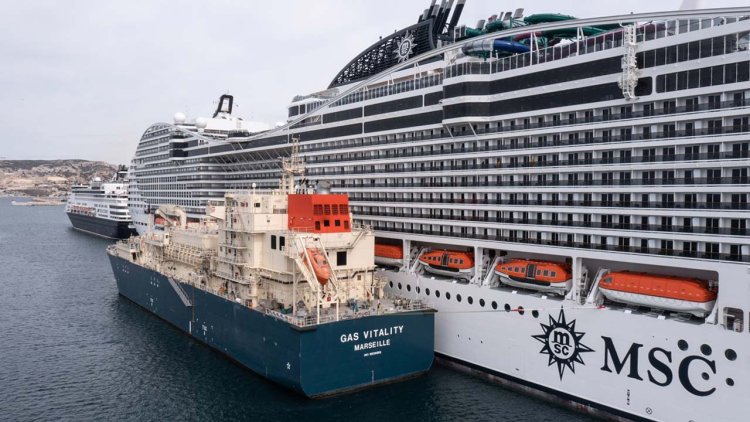
MSC World Europa, which was delivered in October 2022 by Chantiers de l’Atlantique at the Saint Nazaire shipyard in France, is 333 meters long and the best performing large cruise ship operating in the world in terms of CO2eq emissions per passenger.  

TotalEnergies Marine Fuels’ chartered LNG bunker barge, the Gas Vitality, refuelled the MSC Cruises vessel via a ship-to-ship transfer of 2 500 m3 of LNG at the port on April 22nd, while guest operations continued as normal. The successful execution of these simultaneous operations (SIMOPs) underscores TotalEnergies’ Marine Fuels ability to safely deliver commercial LNG bunkering operations.

The operation marks the start of the previously announced LNG bunker supply contract between TotalEnergies and the Cruise Division of MSC Group in March 2021, as the companies drive forward their respective decarbonization plans. Under the agreement, TotalEnergies Marine Fuels will supply approximately 45,000 tons per year of LNG to MSC Cruises’ vessels at Marseille.
Philippe Charleux – Senior Vice President Lubricants and Specialties, TotalEnergies, said:

“This operation also expands our LNG bunkering capabilities to the cruise ship segment, demonstrating our ability to serve a broader range of shipping clients, as the industry strives to reduce emissions. In line with TotalEnergies’ Climate ambition, we will continue to work hand-in-hand with our industry partners to develop and scale up new, lower-carbon and ultimately, zero-carbon fuel solutions for shipping.”

Patrick Pourbaix, Managing Director of MSC Cruises in France, said:

“This first LNG bunkering operation in Marseille is an important milestone for our company as we welcome MSC World Europa for her first summer season in the Mediterranean. Featuring a range of unprecedented innovations in terms of environmental and marine technologies MSC World Europa represents a major step forward on our journey towards meeting our target of net-zero emissions by 2050. LNG is not only the cleanest marine fuel currently available at scale, but also a transitional fuel as we look ahead to source and use synthetic LNG or other alternative non-carbon fuels as soon as they become available at scale.”

Marine LNG sharply reduces emissions from ships and significantly improves air quality, in particular when at berth for the benefit of port cities and communities in coastal areas. The use of marine LNG therefore impacts positively not only the city where LNG bunkering will take place, Marseille. It also paves the way forward for all ports in the Mediterranean to meet the new International Maritime Organization (IMO) regulations taking effect in 2025, as part of its new Emission Control Area (ECA) designation. Used as a marine fuel, LNG helps to cut: sulfur emissions and fine particle emissions by 99%, nitrogen oxide emissions by up to 85% and Greenhouse gas emissions by around 20%.

NYK’s new vessel tests navigation automation systems

0

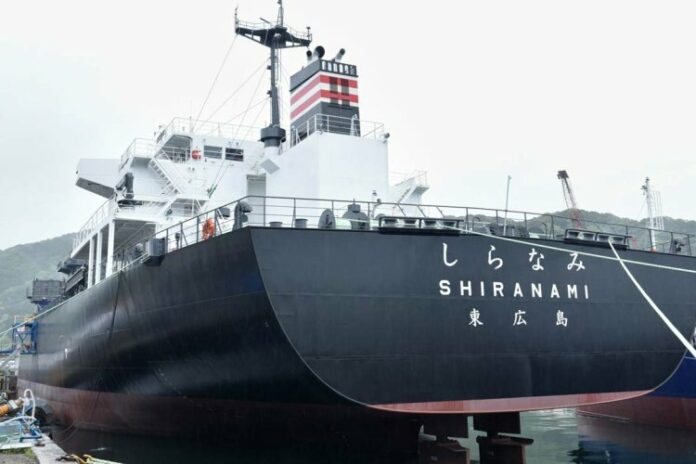
A naming ceremony was attended by Sunao Nakamura, senior managing executive officer optimization business of JERA Co., Inc. (Chuo-ku, Tokyo; hereafter JERA); Nobuhiro Kashima, senior managing executive officer of NYK; and many other persons concerned.

The vessel is a sister ship of the domestic coastal coal carrier Ushio, which was delivered in July 2022. As part of the “2021 Support Project for R&D in Promoting Aggregation and Cooperation in the Maritime Industry“, which is being implemented by the Ministry of Land, Infrastructure, Transport and Tourism (MLIT), new systems for the navigation and engine systems respectively were introduced on this vessel on a trial basis, with the aim of realizing crewed autonomous operation of ships.

  • Navigation system: a navigation duty support function has been introduced to improve the reliability of information on surrounding vessel traffic by integrating visual information from cameras and various sensors, which is then used to formulate a navigation avoidance plan. In the future, demonstration tests will be carried out with the aim of further improving the safety of crewed autonomous navigation based on the results of these tests and the Ushio’s operational data.
  • Engine system: a unique system that utilizes the ship’s engine shore-based management system and simulation technology. In addition to detecting engine anomalies, the system enables to estimate the cause of anomalies, thereby contributing to safe operation and reducing the workload of the crew.

Like the first vessel Ushio, the ship will be operated by the NYK affiliated company Asia Pacific Marine Corporation based on a transportation contract between JERA and NYK. The vessel will serve as secondary transportation of overseas-delivered coal from a relay station within Tokyo Bay to the Yokosuka Thermal Power Station. The ship is designed to be environment-friendly and includes a hatch cover that can be kept closed during discharging operation as a dust-prevention measure.

Greenvolt and Bluefloat to develop floating offshore wind projects in Portugal

0

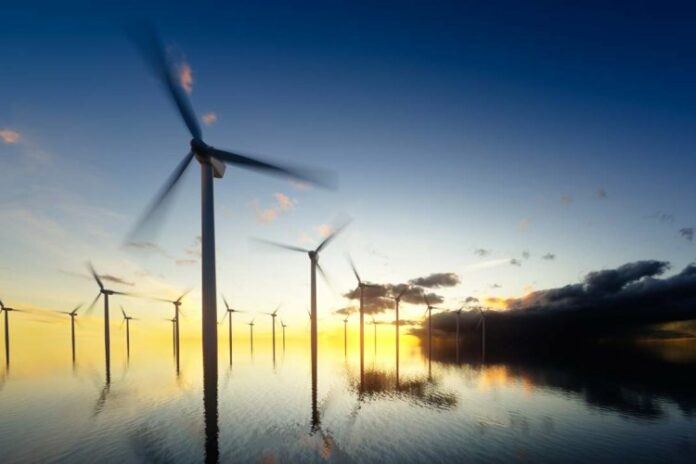
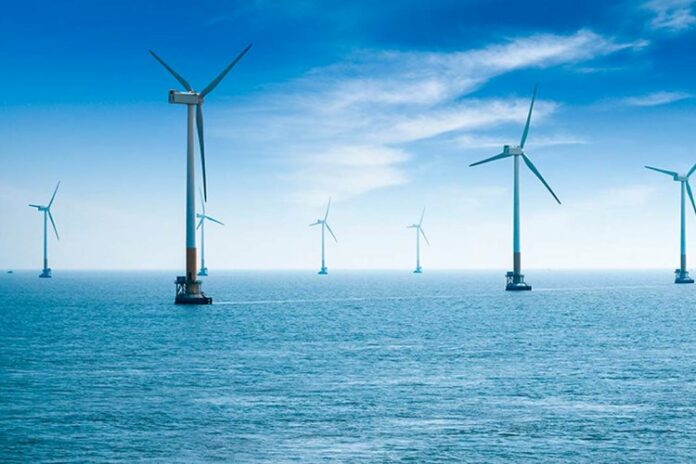
Greenvolt and Bluefloat Energy have announced a partnership to develop offshore wind projects off the Portuguese coast that would contribute towards the achievement of the recently announced national target of an installed capacity of 10 GW by 2030.

Offshore wind power generation is a key pillar in the European Union’s decarbonisation strategy and Portugal has been one of the pioneers in the deployment of floating offshore wind technology. Portugal holds a great potential for offshore wind, which is now recognized by the national policy makers who seek to unlock the potential of this technology to deliver on the country’s decarbonization targets.

Greenvolt and Bluefloat Energy have joined forces to make this vision a reality. A highly complementary partnership combines the strengths of both companies. Greenvolt brings the local development and permitting expertise as well as a strong local brand recognition, whereas Bluefloat Energy contributes with an extensive technical expertise in floating offshore wind and a unique understanding of floating technology.

“Greenvolt has a differentiating strategy for utility scale solar and wind projects, focusing on the development phase. Through this partnership with Bluefloat Energy, one of the leading offshore wind developers with a unique hands-on experience in floating technology, Greenvolt maintains its strategic positioning now expanding to the offshore wind segment In Portugal“, says João Manso Neto, CEO of the Greenvolt Group.

In turn, Carlos Martin Rivals, CEO of BlueFloat Energy, states that “entering the Portuguese market is a natural extension for BlueFloat floating wind strategy for southern Europe. The Company are delighted to partner with Greenvolt, one of the leaders in renewable energy in Portugal and a fast-growing company that shares our development philosophy and a strategic vision for offshore wind in this key market”.

Neptune Energy commences production on Fenja field

0

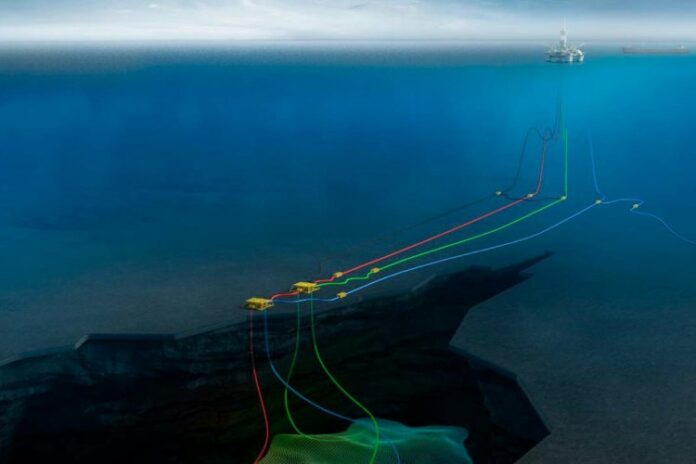
Fenja is expected to produce 35,000 barrels of oil equivalent per day (boepd, gross), via two oil producers, with pressure support from one water injector and one gas injector.

The development consists of two subsea templates tied back to the Equinor-operated Njord A platform. A 36 km electrically trace-heated (ETH) pipe-in-pipe solution transports oil from the Fenja field to the platform for processing and transport. Due to the high wax content of the Fenja field’s oil, the contents of the pipeline must be warmed up to a temperature above 28 degrees Celsius before starting the flow after a shut down.

During normal production, the temperature in the pipeline is well above this temperature. The tie-back to Njord A is the world’s longest ETH subsea production pipeline.

Neptune Energy’s Managing Director in Norway and the UK, Odin Estensen, said:

“The Fenja development is an excellent example of how our industry uses innovative technologies to overcome challenges. The ETH pipe-in-pipe solution is crucial for transporting the oil, and is a creative, cost-effective approach that enables the field to be tied back to existing infrastructure.

“Fenja is also located in a strategically important growth area for Neptune Energy, with a number of other interesting prospects nearby.”

Total reserves are estimated between 50 and 75 million boe, of which 75% is oil and 25% is gas.

Neptune’s Projects and Engineering Director in Norway, Erik Oppedal, added:

“The ETH pipeline represents an important technological step, made possible through excellent collaboration between TechnipFMC and Neptune Energy. It could also unlock opportunities to develop future tieback developments.”

Fenja is located 120 km north of Kristiansund at a water depth of 325 metres.

DNV launches new project to tackle earthquake challenges for wind farms

0

The so called ACE2 JIP is a follow-up project of “Alleviating Cyclone and Earthquake Challenges” (ACE) JIP and will deeply investigate issues related to earthquakes which was not conducted in the first project.

Special topics that will be addressed in the ACE2 JIP are geotechnical aspects such as damping and liquefaction, jack-up installation vessels, details of seismic load analysis and specific Taiwanese and Japanese needs. The results will be used to update the recommended practice DNV-RP-0585 Seismic design for wind power plants with the most recent customer feedback and state-of-the-art knowledge.

Kim Sandgaard-Mørk, Executive Vice President for Renewables Certification at DNV, explains:

“When we look at the predictions for installed offshore wind capacity worldwide, we expect that Europe will be surpassed by Asia in the 2030s and North America in the 2040s. Especially in Asia and the US wind turbines and offshore substations, need to be designed to meet challenging conditions like earthquakes. This collaborative effort by the industry will increase the financial robustness of future wind farms in earthquake zones.“  

Marcus Klose, Head of Section Steel Structures at DNV adds:

“We have just kicked off the project and it is great to have world-class experts gathered around the table to tackle one common industry challenge. It seems that one of our focus areas will be on the conditions in Japan. Japan has the sixth longest coastline in the world with ambitious government targets to install 10 GW of offshore wind by 2030. Therefore typhoons, earthquakes and tsunami risks should be given special attention in the project design life cycle. I am happy that we could attract so many relevant players from Japan. The results will help to accelerate discussions and project decisions in all relevant markets.“ 

Companies that joined DNV in the kick-off meeting are CDEE, Equinor, Jan de Null, Kajima, Obayashi, Ørsted, Penta-Ocean, Shell, Shimizu, Siemens Gamesa, Taisei, Van Oord and Vestas.
 

Maersk Tankers launches voyage management service

0

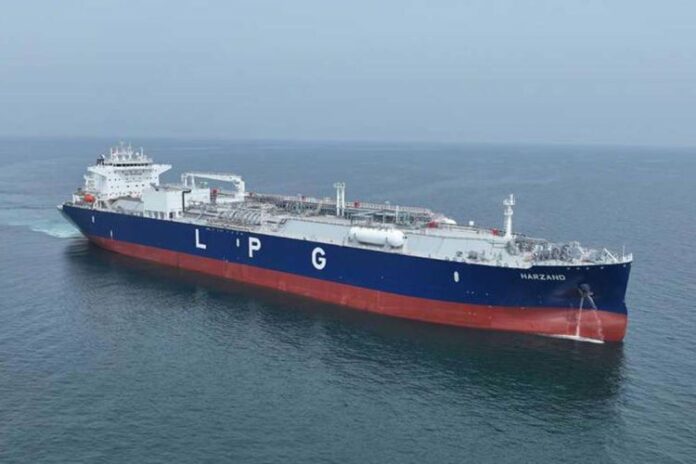
Maersk Tankers will take over the voyage management of, initially, seven Petredec Global-owned LPG carriers. The service includes day-to-day vessel operations, fuel optimisation and claims handling, covering full post-fixture support from the time the vessel is fixed for a voyage, through its successful execution, to the closure of the voyage books. 

Petredec Global is the world’s largest pure VLGC owner, with 26 VLGCs and an average age profile of only five years. They operate fuel-efficient vessels with one of the best fleet-wide annual efficiency ratings. For the company, the agreement is part of an ambitious strategy aimed at generating operational efficiencies and reducing carbon emissions. 

Tom Lush, Head of Commercial Shipping at Petredec Global, says:

“It is not through technological advances alone that the industry’s environmental goals will be achieved. Collaboration and leveraging the expertise of other leaders in the industry will be key. We welcome this partnership with Maersk Tankers as an example of this.”

Aditya Trehan, Head of Operations at Maersk Tankers, says:

“Shipowners are under increasing pressure to boost the economic and environmental performance of their vessels. Ensuring efficiency in day-to-day operations can make a huge impact.”

“As a commercial manager of more than 150 vessels across six pools, we manage more than 2,000 voyages for shipowners annually. Through the scale of our operations, we have a global team covering all regions and time zones and have strong connections to port operators worldwide. We look forward to applying our expertise in support of Petredec Global and other operators with our new voyage management service.”

Maersk Tankers will take over operations of the first vessel at the end of April. 

Delivery of the Ocean Albatros expedition cruise vessel

0

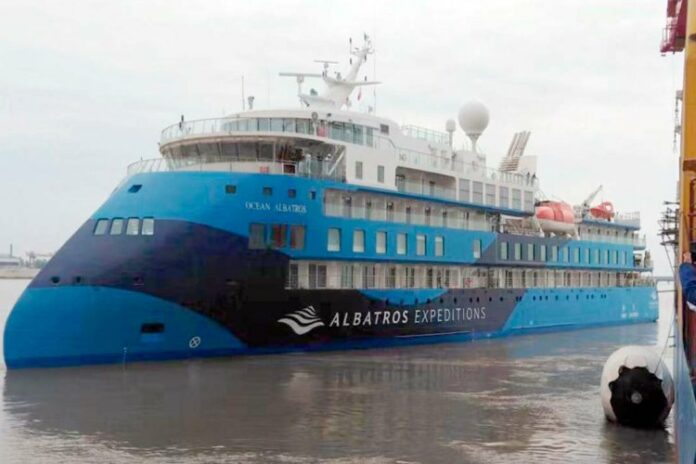
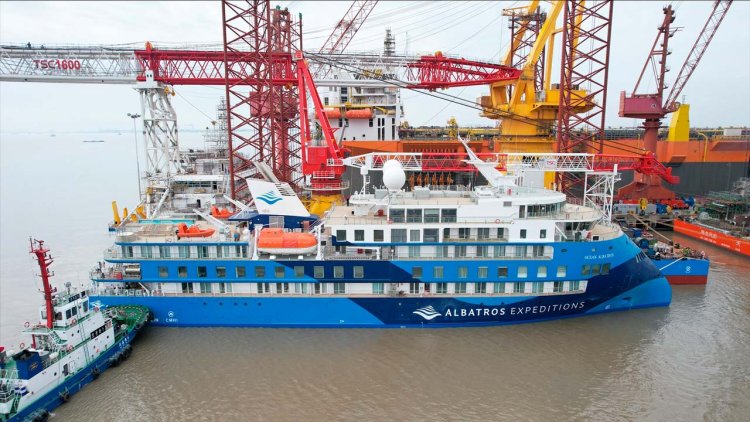
The CMHI Haimen yard, China, has delivered SunStone’s sixth expedition cruise vessel in the Infinity class, the Ocean Albatros. The vessel will operate on year-round charter for Albatros Expeditions.

The Ocean Albatros has a length of 104.4 m and a beam of 18.4 m, and accommodation for 199 passengers. The Ocean Albatros holds a total of 95 comfortable staterooms and suites, all with unobstructed sea views, and most with their own balcony. The vessel is small enough to give an exclusive atmosphere yet large enough to yield all expected services and facilities.

The U.S.-based SunStone Ships decided on the CX103 designs from Ulstein Design & Solutions AS for their first Infinity Class vessels in 2017. Since then, the Greg Mortimer, the Ocean Explorer, the Ocean Victory, the Sylvia Earle, the Ocean Odyssey, and now, the Ocean Albatros, have been delivered to the Owner. The vessels are on long-term charters for various operators.

The SunStone Ships were the first in which the proven X-BOW hull was introduced for use in cruise ships. The vessels have low emissions due to a combination of power system and ship design.

A seventh vessel in this series will be delivered in 2025.

The Ocean Albatros will operate in both Antarctica and the Arctic and on cruises between these core expedition areas.

The vessel complies with Polar Class 6, has a Polar Code Category B and is built with Safe Return to Port, Dynamic Positioning and Zero Speed Stabilizers.

Like her sister vessel, the Ocean Victory, the vessel has two restaurants, a wellness area, an Albatros Nordic Bar, an open deck dining facility, a modern lecture lounge, and other state-of-the-art amenities. Unlike the Ocean Victory, the Ocean Albatros will also offer a unique panorama sauna and a total of 12 dedicated solo travel cabins.

Kongsberg relaunches its application for vessel and fleet optimisation

0

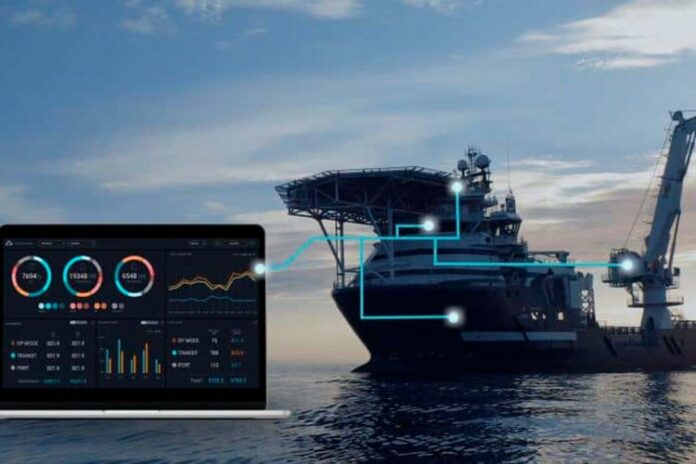
The new version of Vessel Performance provides enhanced onboard decision support through an improved and more user-friendly interface. Optimising running engines and reducing excess equipment usage, Vessel Performance assists the crew in reducing fuel consumption and maintenance costs.

The Vessel Performance data is also shared in real-time with onshore personnel. The accessible data and analysis Increase operational awareness for the users, making it easier to detect the cost savings opportunities, which is normally a time-consuming task in the offshore industry due to the complexity of the systems onboard.

Runar Stave, CTO of Olympic Subsea, says:

“Olympic Subsea has been using Vessel Performance since 2021. With Vessel Performance, our crew onboard has been able to monitor and take immediate action in order to reduce running hours, fuel consumption, and emissions. This has led to best practices and significantly greater awareness by the crew for Smarter, Safer and Greener operations. With the new functionality, we will improve and optimize our operations even more in terms of cost, efficiency, and sustainability.” 

Anders Bryhni, Vice President at Kongsberg Digital, says:

“In the offshore industry, our customers struggle to discover and implement best practices for vessel optimisation across the fleet in their busy workdays. Earlier, the decision-making on how to run the vessel has been largely left to the crew on board, and the available tools have been demanding too much from the users. There is no longer a lack of data, but a lack of clear guidance towards the owner’s office and onboard crew. “

“Based on interactions with our valued customers, we have addressed these challenges and aim to be an even better partner for decision support towards speed and power for the various operational conditions. The new and improved version of Vessel Performance is an integrated application on the Vessel Insight infrastructure, and we believe this is a step change in the goal towards smarter and greener vessel operations.”