
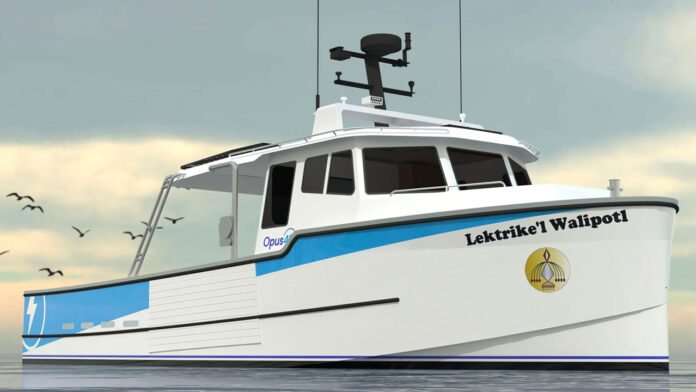
A conglomeration comprising the Mi’kmaq First Nation community; Halifax, Nova Scotia-based coastal conservation firm Oceans North; Halifax-based marine engineering and shipbuilding company Allswater; and Halifax-based electric grid technology firm BlueGrid Technology have raised CAD 4.4 million (EUR 3.2 million, EUR 2.7 million) to fund the effort, which has been dubbed the Lektrike’l Walipotl Membertou Electric Lobster Boat Commercial Fishing Demonstration Project.
“Membertou is incredibly proud to be moving forward with the development of Canada’s first electric fishing vessel,” Membertou Chief and CEO Terrance Paul said. “The electric boat is a natural next step in our drive to become clean energy leaders and will play an important role in unlocking the benefits of marine electrification for the next generation of fishers.”
The new slew of boats, which comprise just one project under a CAD 34.5 million (USD 24.9 million, EUR 21.4 million) investment pool funding five projects selected for development by Canada’s Ocean Supercluster, recently passed an energy audit and underwent a rigorous vessel design process to get to this latest stage in the roll-out process.
“This is the kind of project where everyone brings something essential to the table,” Allswater President and CEO Rob Crutcher said. “For Allswater, it’s about creating the design and making sure the build comes together the way it should. People talk about electric boats as ‘the future,’ but we’re actually building one and showing how it works in real fishing conditions. That’s what makes this project so exciting.”
Sheena Kennedy, executive director of Oceans North, added that this project holds both economic and environmental benefits for Canada, in that it is likely to cut both costs and pollution.
“The project demonstrates how climate action presents an economic opportunity for Canada’s fisheries and boatbuilding sectors while significantly reducing impacts on the environment,” Kennedy said.
Canada’s Ocean Supercluster said that the engineers behind the project analyzed how to integrate advanced electric propulsion systems and battery technology to create a functional, fully electric boat that could be used commercially. Traditionally, these types of vessels are powered by diesel gasoline-powered engines, but the electrified vessels and charging will have “bi-directional capabilities,” connecting the vessel to the electric grid through battery power.
That’s essential, according to BlueGrid CEO Andrew Boswell, because power needs can still be met through onboard batteries during peak demand without causing strain to the electrical grid or possible losses of power.
Beyond the Nova Scotian lobster fleet, Oceans North said the hope is to expand plans for electrification to a variety of workboats in the future, such as aquaculture wellboats, tour boats, and patrol boats.


