
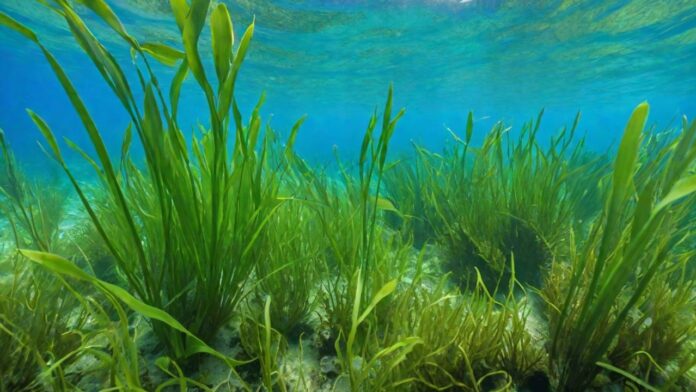
Mitsui O.S.K. Lines (MOL) has announced a cooperative effort with Tokio Marine Asset Management and Idemitsu Kosan to launch a joint initiative to explore and advance the potential of blue carbon through activities such as seagrass bed restoration in regions across Japan.
This project aims to support the expansion of blue carbon, which is expected to play a key role as a carbon sink in achieving net-zero emissions, while contributing to regional revitalization and biodiversity conservation.
The three companies jointly established a study group in October 2024 with some other companies to promote nature-based decarbonization centered on blue carbon and enhance its economic value. Since then, they have collaborated with other corporates, government agencies, and solution providers to discuss challenges and policy proposals for the societal implementation of blue carbon. The group will now transition to concrete demonstration projects to address the challenges identified through the study group and to verify the proposed measures for enhancing economic value.
Through seagrass bed restoration and regional revitalization activities in coastal areas, the three companies will help advance a decarbonized society by scaling up this initiative into a major blue carbon project, at the same time revitalizing the local economy and addressing the issue of coastal seaweed die-off (known as ‘isoyake’). This phenomenon where seagrass beds decrease or disappear significantly beyond the range of seasonal fluctuations or minor long-term changes, resulting in the absence of seaweed growth.
Blue carbon refers to carbon that is sequestered in the seabed and deep ocean through the uptake of atmospheric CO2 by coastal and marine ecosystems via photosynthesis. The concept was first introduced in a 2009 report by the United Nations Environment Programme (UNEP) and has since gained attention as a new approach to greenhouse gas mitigation.


