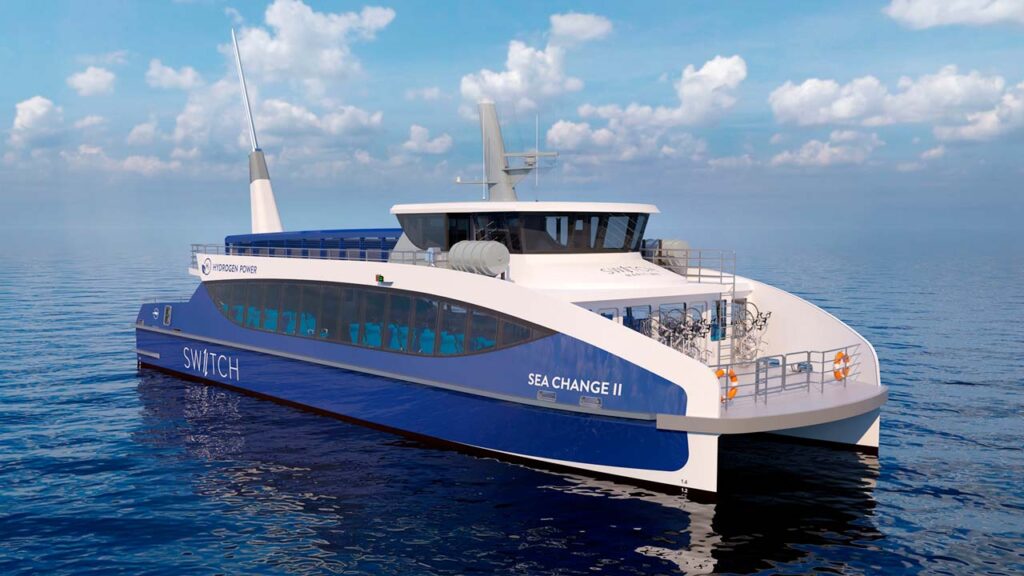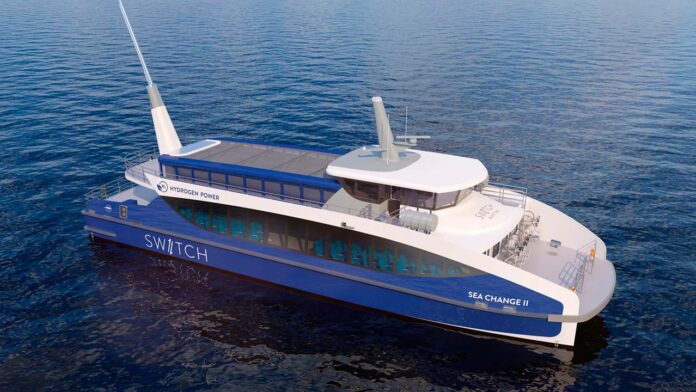
Global digital shipbuilder Incat Crowther has begun detailed development and naval architecture on a hydrogen fuel cell-electric fast ferry design, with initial deployment targeted for New York waters.
Incat Crowther is working on the design and regulatory approval process for the new 28-metre vessel in partnership with zero-emission vessel developer SWITCH Maritime (SWITCH). The project includes a global team with expertise spanning ferry operations, electric propulsion, and hydrogen system safety. From their office in New York City, SWITCH is actively advancing project development activities beyond vessel design. The project team is planning to deploy a ZEF-150 demonstration based at the Brooklyn Navy Yard.
The new vessel is designed to align with local operational requirements and pre-existing infrastructure.
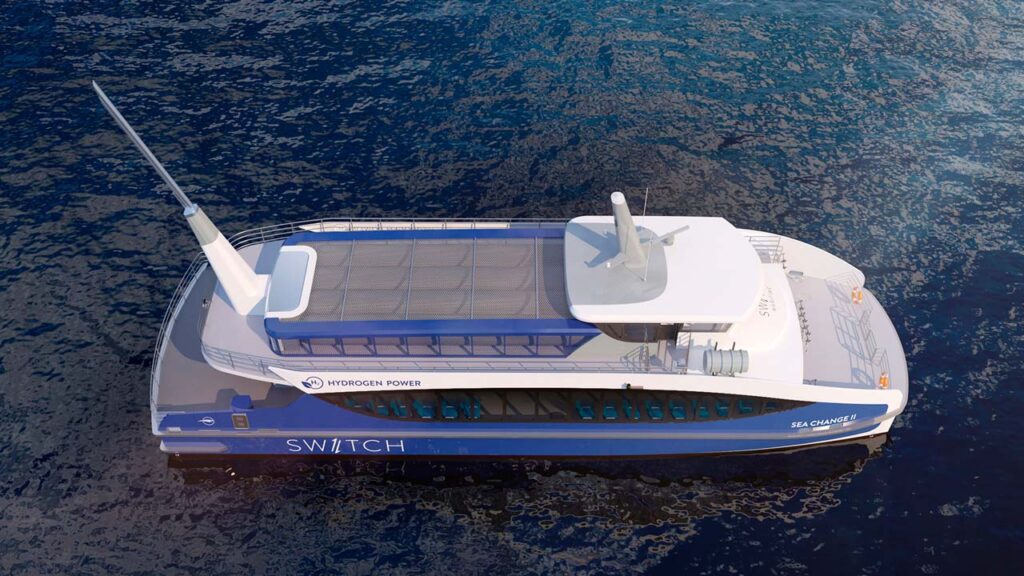
The vessel’s world-leading hydrogen fuel cell-electric propulsion and hydrogen storage systems ensure the new ferry can maintain an operational profile similar to that of a diesel vessel. This means parallel service speeds, a daily bunkering schedule, no need to increase dwell time or alter service to account for vessel charging, and no investment in costly shoreside charging infrastructure and power grid upgrades. The drop-in nature of the technology ensures the new hydrogen fuel cell-electric ferry will seamlessly integrate into current operations, rather than requiring schedule changes or a system-wide reorientation.
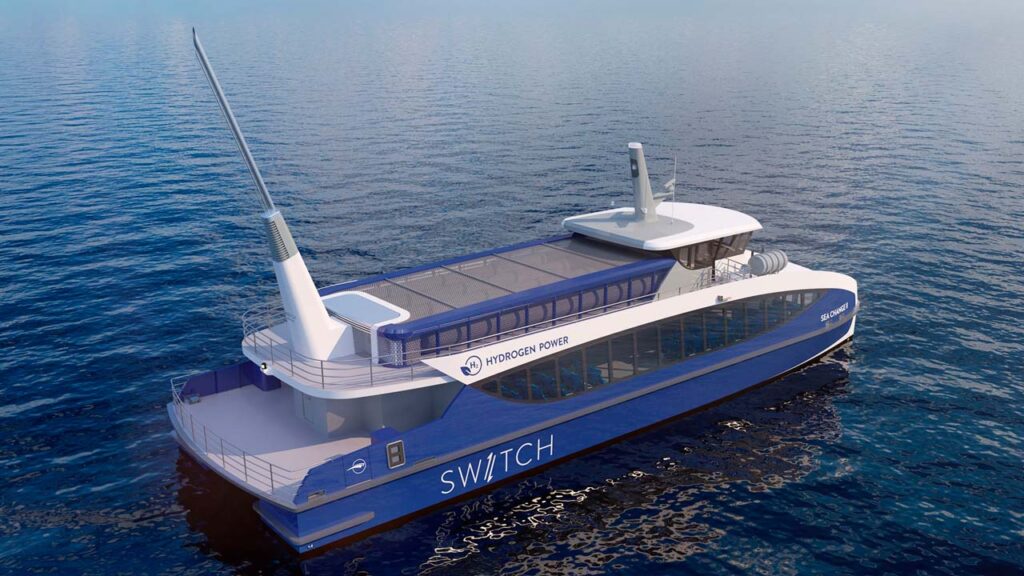
In this project, vessel modernisation and emission reduction will be achieved through the deployment of hydrogen fuel over other low and zero emission technologies proving there is no one-size-fits-all approach to achieving these outcomes. The use of hydrogen fuel in this case offers considerable flexibility and presents a zero emission transport solution for fleets with longer range requirements and those operating in areas where shoreside charging for battery-electric propulsion may not be technically or economically feasible.
The new 28-metre hydrogen fuel cell-electric ferry will be capable of transporting 150 passengers at a cruising speed of 25 knots. The operationally flexible vessel will have 720 kilograms of stored, compressed hydrogen capacity giving it the ability to operate on a range of routes across New York ferry networks with a full day of operational range. Although the New York market will be its first deployment, the vessel is well equipped to perform on longer, high-frequency commuter routes in both the United States and around the world.
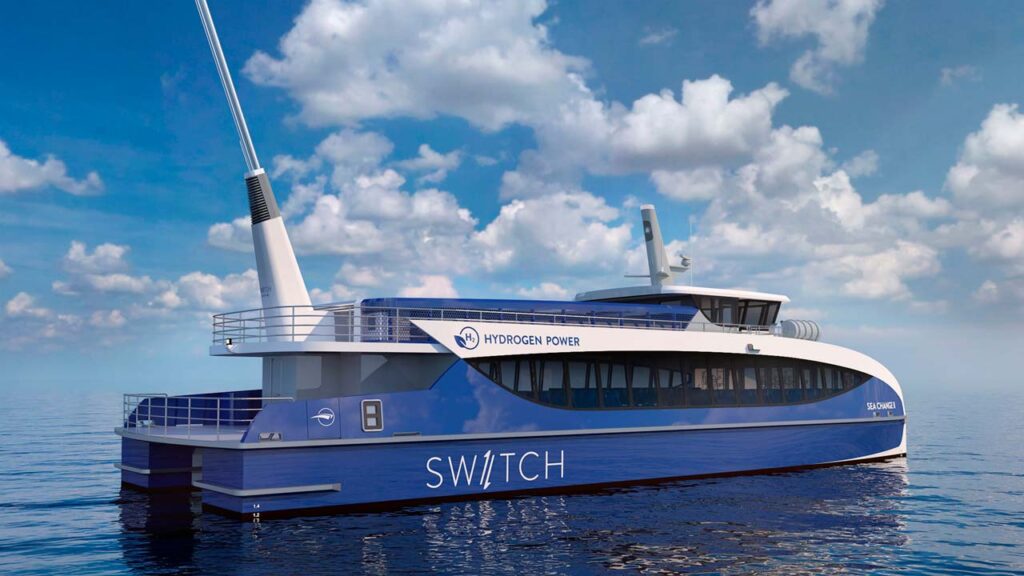
In addition to operational flexibility, the new vessel’s design will also prioritise the passenger experience.
The vessel’s spacious main deck will feature comfortable seating for 150 passengers, ample luggage storage, a kiosk, three bathrooms including a wheelchair accessible bathroom, and large windows to allow passengers to enjoy the iconic views on New York’s waterways.