
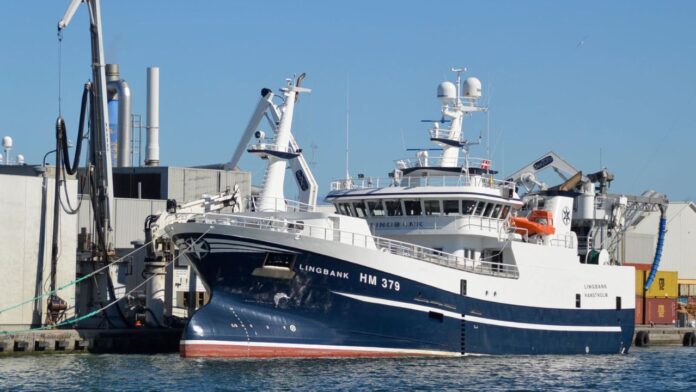
At the northern tip of Denmark, the Port of Skagen, the nation’s largest fishing port, is shifting to cleaner energy. With EU support, the port is moving away from diesel-powered generators and installing fully electric power coming from shore for the energy-intensive unloading process of large pelagic vessels. A project which aligns closely with the EU’s objective of supporting the energy transition within the fishing sector.
Vessels docking at the Port of Skagen require significant energy for unloading pelagic fish (such as herring, sprat and blue whiting), with operations lasting between 10 and 30 hours.
Traditionally these operations rely on diesel generators, significantly increasing energy consumption and emissions. Continuous unloading during peak periods results in CO₂ emissions, noise, and air pollution, impacting the environment as well as the health and well-being of local residents and workers.
Organisation and the Port of Skagen launched a three-step project:
1) developing shore power infrastructure,
2) retrofitting vessels for connection, and
3) increasing grid capacity.
Jesper Rulffs, Business Developer at the Port of Skagen, explains: “By shifting pelagic vessels from diesel generators to shore power during landing operations, we achieve reductions in CO₂ as well as SOₓ, NOₓ and particulate emissions. This improves local air quality and strengthens the long-term competitiveness of the port by offering cleaner and more efficient services to the fleet.”
The project’s success relies on the close cooperation between the Port of Skagen and the Danish Pelagic Producer Organisation. The port needed assurance that vessels would use the shore power infrastructure, while vessel owners required confidence in the port’s ability to provide reliable electricity.
Both sides have ensured the project’s feasibility and 2 vessels have been retrofitted with equipment to connect to shore power, with one more vessel in the process. Once fully operational, unloading operations will entirely run on green electricity—removing the need for diesel generators.
“For the Port of Skagen, this project highlights how strategic investment in onshore power supply can generate both environmental and operational benefits,” Rulffs adds.
The project delivers clear environmental and operational benefits.
Individual vessels are expected to cut diesel use by 3–8% annually, and the broader benefits for the Port of Skagen are even greater: better air quality and reduced noise for residents and port workers. With the port serving the North Atlantic pelagic fleet, these improvements resonate far beyond the local community.
“The results of this project demonstrate that environmental performance and commercial value can go hand in hand,” says Rulffs.
Skagen is committed to becoming CO₂-neutral, and electrification is a key part of this goal. With electric cars and cranes already in use, shore power is the next major step. As more vessels convert to using shore power for the unloading of fish, the benefits will continue to grow.


