
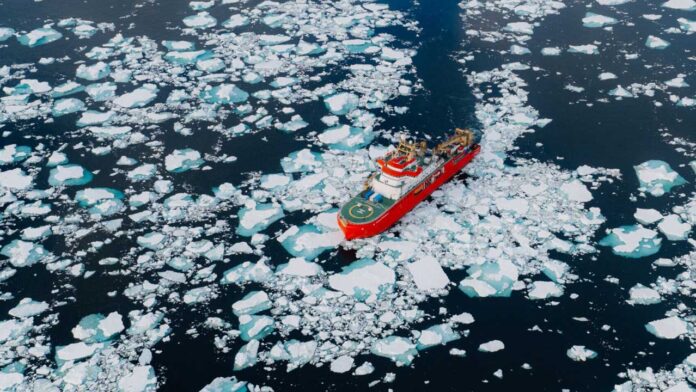
Specialist divers will be entering the icy waters of the Weddell Sea, Antarctica this festive season (22-29 December) as part of a groundbreaking mission to test RRS Sir David Attenborough’s (SDA) ability to navigate through challenging sea ice conditions.
Entering the water via a tethered cage lowered directly over the ship’s stern, the divers will deploy twice a day beneath the UK’s state-of-the-art polar research ship. They’ll be retrieving groundbreaking measurements of how the vessel’s propellers interact with sea ice – using instrumentation deployed in the Antarctic for only the second time.
The SDA made its maiden voyage to Antarctica in 2021 and has completed several important science expeditions since then. While it’s already shown its capability to break through sea ice, these trials will test the ship’s performance in specific ice conditions. Importantly, the results of this mission will mark a significant advancement in understanding how polar research vessels cope with sea ice and, importantly, make a significant contribution to maritime safety in polar environments.
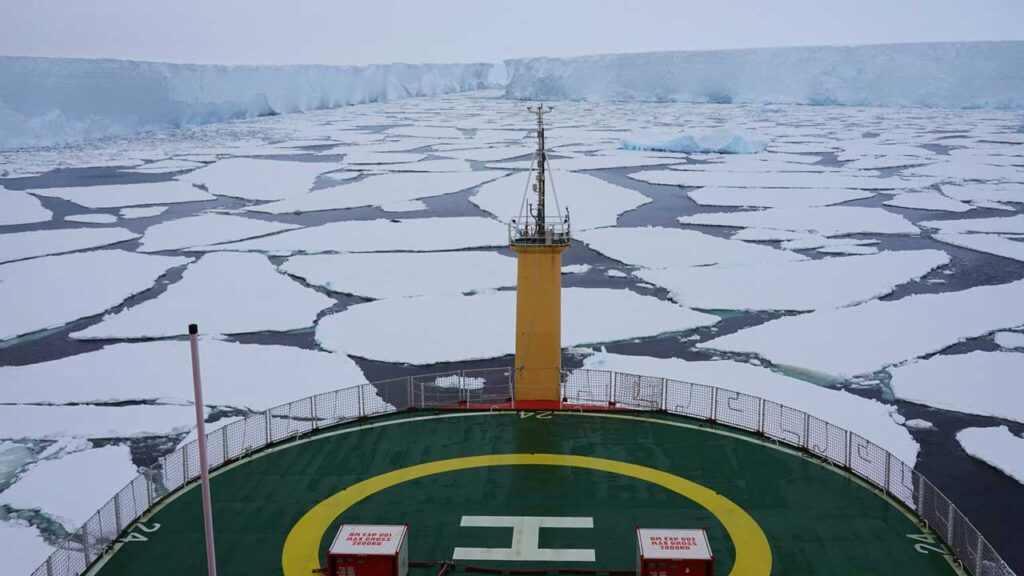
Central to the ice trials is an instrumented propeller blade that will record the forces and loads experienced by the propellers as the ice flows under the ship. The instruments have a limited battery life , requiring divers to deploy beneath the vessel twice daily – typically morning and evening – to download data and recharge the instruments.
The ship will be put through its paces in two distinct types of ice: level fast ice – ice that is attached to the coast and stationary – and large ice floes containing pressure ridges. These ridges form when the floes are pushed together by wind and ocean currents. Understanding how the vessel responds to these features is crucial for determining its operational limitations.
Each testing sequence follows a carefully choreographed pattern. For level fast ice, the ship will drive through the ice, recording data as it goes. Teams will then be lowered onto the ice to measure its properties – including thickness, salinity, temperature – and collect ice cores which can be tested for crushing strength. To test the ship’s performance in the ice ridges, the team will take ice measurements before the vessel breaks through. The ship will then move through the ice ridge, again collecting data on the how the propellers are affected.
The trials also include turning manoeuvres in pack ice and ‘glancing impact’ tests, where the ship drives at an angle into the edge of an ice floe whilst sensors record the pressure on the hull.
The data collected by the instrumented propeller, combined with measurements from strain gauges on propeller shafts, borescopes (which will capture photos and video of the ice moving under the ship) and pressure sensors on the hull, will provide unprecedented insight into ship-ice interactions.
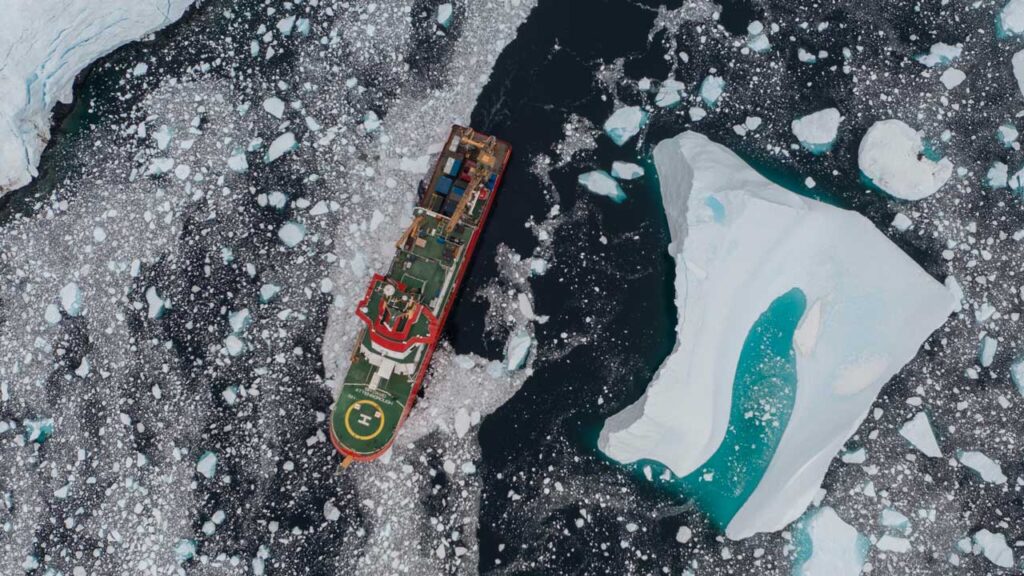
Dive operations also form a critical component of the testing programme. A diver will be deployed under the ship twice a day to download the data and to recharge the propellor instruments.
The trials will focus on areas around James Ross Island and the eastern Antarctic Peninsula.
The results could have implications for the ship’s scientific programme, potentially enabling operations in ice conditions previously considered too challenging. The data will also help optimise engine performance, with potential benefits for fuel efficiency and carbon emissions.
Photos of dive operations will be available from 30 December 2025.


