3.3 C
New York
Home Blog Page 1226

Russia’s Rosneft Signs Oil and Gas Deal with China

0

Russian oil giant Rosneft said that China National Chemical, known as ChemChina, agreed to purchase 2.4 million tons a year of crude oil. That amount is equivalent to 6% of Rosneft's total exports to China in 2017.

Crude oil from Eastern Siberia will be transported to a Russian Far East port by pipeline and will reach China via Russia’s Pacific port of Kozmino.

The deal allows for increasing crude oil supplies to China’s market, which is a strategic one for Rosneft, the Russian company said in press release.

"Conclusion of the contract will lead to an increase in direct supplies of oil to the strategic Chinese market and ensure a guaranteed cost-effective export channel for the Company's crude sales," said the release.

ChemChina is one of the largest petrochemical companies in the world. The company's business is focused on oil refining, production of basic and special chemical materials, agricultural chemistry, rubber products, and chemical equipment.

According to media reports, Rosneft will also form a joint venture with Beijing Gas Group to operate filling stations in Russia for natural gas-fueled vehicles.

Source:marinelink

PSA quits port lobby group IPPTA

0

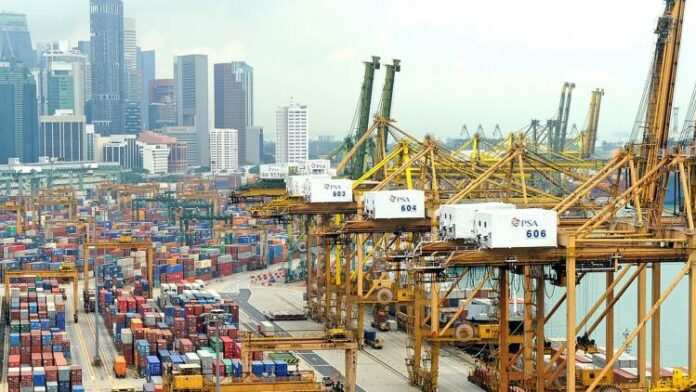
Singapore’s PSA International Pte Ltd has quit membership of the Indian Private Ports and Terminals Association (IPPTA), an industry lobby group, as its dispute with D P World and A P M Terminals over the issue of transfer of containers hauled by rail to/from different terminals at Jawaharlal Nehru Port Trust (JNPT) escalates into a full-blown rivalry.

PSA, owned by Singapore’s sovereign wealth fund, is no longer a member of IPPTA, a 15-member group that was formed to lobby the government on port industry related issues at major ports, multiple persons having knowledge of PSA’s exit from IPPTA, said. PSA’s name does not figure in the list of IPPTA members, according to its website.

PSA’s decision to walk out of IPPTA is connected to a complaint it had filed with India’s anti-trust regulator, the Competition Commission of India (CCI). In the complaint, PSA alleged that the Dubai government-owned entity (D P World) and the container port operating unit of A P Moller-Maersk Group A/S (A P M Terminals), which have been running facilities at JNPT for many years, were creating entry barriers to its newly-opened terminal at India’s busiest container gateway, thereby limiting its operational effectiveness since the 18 February start.

After seeing merit in PSA’s complaint, the CCI has ordered further investigation into the issue.

Mike Formoso, managing director of PSA’s India unit, did not respond to a call made to his mobile seeking comment.

PSA probably realised that by continuing in IPPTA they cannot fight other member terminals; that’s why it left,” an industry official said.

Container transfer issue

The feud between the top global container operators relates to the inter-terminal transfer of containers, a system that is unique to JNPT where DP World runs two terminals, one each by A P M Terminals, PSA and the government-owned port trust.

Container-laden trains arriving at JNPT from the inland container depots (ICDs) located in the hinterland, typically carry boxes destined for different terminals. When the “mixed train” arrives, it is placed at the rail siding of the terminal that has the most containers on that trip and is referred to as the “handling terminal”, which unload the boxes from the train, including those meant for other terminals.

It is the responsibility of the other terminals to send their trailers to fetch the containers from the “handling terminal” and move it to their respective terminals for further loading onto ships, according to the arrangement mutually agreed by all the terminals before PSA started operations at JNPT.

The same process is followed for the import cycle also.

The Tariff Authority for Major Ports (TAMP), in a common order, approved a uniform rate of Rs 400 per TEU for inter-terminal rail handling operations from 15 February 2007 based on an application filed by JNPT. Individual terminals billed this charge to its customers- the shipping lines.

Gateway Terminals (run by A P M Terminals) and Nhava Sheva International Container Terminal (run by D P World) have refused to collect the boxes arriving on “mixed trains” at Bharat Mumbai Container Terminal (run by PSA), shipping line sources said. “Hence, BMCT has assumed the responsibility of doing both up and down movement of boxes at its own cost just to ensure that the trade flow doesn’t stop,” an official with a container shipping line said.

NSICT and GTI have argued that the inter-terminal transfer of containers from GTI/NSICT to BMCT and vice-versa would be “operationally unfeasible and commercially unviable” given the considerable distance of as much as 12 kms between them and BMCT.

What those two terminals are doing is they are charging Rs400 per TEU because they are applicable to all the boxes whether they come to BMCT or NSICT or GTI or anybody else. Secondly, they are also charging one additional service request (ASR) – Rs 1,800 per TEU in the case of GTI and Rs 2,100 per TEU for NSICT (as per TAMP-approved rates for their respective terminals) – on the shipping lines, only for those boxes which are coming to or from BMCT. This is actually increasing the overall transaction cost to trade,” the shipping line executive said.

The ASR, though, is not being charged by the terminal run by government-owned JNPT.

Yet, it is an embarrassment to JNPT which played a key role in India’s 66 rank jump in the ‘Trading Across Borders’ component of the World Bank’s Doing Business (DB) rankings 2019 — from 146th to 80th position.

What NSICT and GTI are saying is if you sent a box which is destined for or originating from BMCT, if you want us to handle that box, you pay this much as ASR. Essentially what they are saying is that if you want to do business with BMCT, then it is a heavy penalty to you, you have to pay this additional amount, otherwise we will not give that box. And in any case, we will not do the horizontal movement of boxes,” the shipping line executive said.

This cost barrier is being created by NSICT and GTI to block train operators, mainly Concor, from running “mixed trains” to BMCT and instead go for dedicated or scheduled services, he alleged.

NSICT and GTI are also resisting JNPT’s efforts to thrash out a consensus on the vexed issue so that it can take a proposal to TAMP to include BMCT also into the common order approved in 2007.

PSA claims that the distance from GTI to Nhava Sheva (India) Gateway Terminal (also run by D P World) is 3.9 kms and from GTI to BMCT is 4.3 kms. It had offered to “absorb” the incremental cost arising from the 0.4 km extra distance.

BMCT even suggested that it was willing to sign “bilateral agreements” with NSICT and GTI on inter-terminal transfers if they were not keen on including BMCT in the common order of TAMP.

“Eventually, when BMCT found there was no solution in sight, it filed a complaint with CCI. It is a collaborative practice between two entities and the fact that the terminal run by JNPT is not charging the ASR itself shows that it is an unnecessary or invalid charge,” the shipping line executive said.

The rivalry between the global giants runs deep.

The opening of the PSA terminal has intensified competition for containers at JNPT, with the volume growth not showing any significant growth.

Due to competition, BMCT is giving lot of discounts to wean away shipping services from GTI and NSICT to attract cargo. Any further increase in volumes at BMCT will be at the cost of other terminals. They are trying their best to stop BMCT from growing at their expense,” an EXIM trade official said.

In December, China’s COSCO Shipping Lines will shift one of its service from GTI to BMCT. PSA is from the Far East; A P M Terminals also runs terminals in the Far East. PSA is forcing container lines to pass through its terminals. By virtue of that, GTI is likely to lose volumes. Cargo once lost is lost forever,” said the EXIM trade official.

In course of time, BMCT will have a 2-km long berth capable of handling 4.8 million TEUs which will necessitate running dedicated trains. “Till that time, BMCT will have to climb on someone else’s shoulder to survive. After that, BMCT will simply cast them away just like curry leaves,” he added.

Source: 

US Navy provides 3D simulator for aircraft carrier flight deck crews

0

The US Office of Naval Research Global and the Naval Air Warfare Center Training Systems Division collaborated to create a training simulator for aircraft carrier flight deck crews. The simulator has 3D technology and enables the communication of the full flight deck team with key decision-makers.

In the past, flight deck crews had the potential of training only while they were on the job. Yet, the partnership between ONR Global and NAWCTSD brought the 'Flight Deck Crew Refresher Training Expansion Packs' technology which enables sailors and marines to train. This technology is a game-based immersive 3D technologies that enables for individual, team or multi-team training events.

Moreover, the first three TEPs will help a carrier's:

  • Primary Flight Control team;
  • Landing Signal Officer (LSO) team;
  • Catapult Launch Team.

What's more, the training sessions provide a real-life, with the aid of virtual environments, experience. Even the flight patterns that happen during the simulations are real-life patterns conducted by pilots. The training provides normal operations and emergency conditions too, exposing the US navy crew to a variety of real-life scenarios.

One of the most hazardous environments in the US Navy is the deck of an aircraft carrier, because catapult systems that may remove limbs, furious engines, whipping propellers and high winds create a chaotic environment.

The most difficult operation is to help a pilot land an aircraft on a short slab of pitching steel in the middle of the ocean. Helping a pilot land in a difficult situation couldn't be handled properly if it was not for the flight deck crews that are responsible for safely launching and recovering aircraft.

Finally, the idea for the Flight Crew Training via 3D was established by an LSO instructor at Naval Air Station OCEANA. TechSolutions—ONR Global’s rapid-response science and technology program that develops innovative technologies to solve problems voiced by Sailors and Marines, in a time of 12 months, listened to the idea and then helped launch it.

Source:safety4sea

New blockchain solution launched to ease transactions

0

US-based cloud provider Oracle launched the Oracle Blockchain Applications Cloud, aimed to increase transparency and agility in transactions in the global supply chain. Modern supply chains generate millions of data points and thousands of daily transactions that need to be validated and confirmed. This limits the pace of business and exposes organizations to risk.

In a bid to respond to this, Oracle Blockchain Applications enable operators to track products through the supply chain on a distributed ledger to increase trust in business transactions, get better visibility across a multi-tier supply chain, accelerate product delivery and contract execution, and improve customer satisfaction.

Namely the applications reduce barriers to adoption of blockchain and improve trust and transparency in business networks. Oracle Blockchain Applications include Intelligent Track and Trace enabling end-to-end traceability of goods and transactions, Lot Lineage and Provenance enabling product genealogy, serialization, and provenance, Intelligent Cold Chain helping to monitor and track the temperature-controlled supply chain, and Warranty and Usage Tracking removing paper-based processes and automating usage tracking for high-value assets.

The company's Blockchain Applications also leverage Internet of Things (IoT) connectivity and use embedded artificial intelligence (AI) features to leverage real time data to improve the accuracy of data flowing in a customer’s business network.

These applications are built with Oracle Blockchain Cloud Service, which was launched earlier this year.

Source:safety4sea

Introducing Raa Labs – Speeding Up Maritime Digitalisation

0

Raa Labs, a digital start-up backed by 157 years of maritime experience, launches today. Raa Labs will enable maritime companies to harness data, drive digitalisation and adopt technology to take a leap into the future, improving efficiency and introducing new business models.

The maritime industry finds itself amid a perfect storm of economic stresses, regulatory changes and technological disruption. It is a combination of cut-throat competition, strained financial performance in many shipping segments, and a strong need to reduce the industry’s environmental footprint. The good news is that digital innovation offers a lifeline. Leveraging technology will allow the industry to meet regulatory requirements, reduce operating expenses and be better adapted to take on the future.

To fully embrace innovation, you need to understand the bigger picture to ensure that every action you take not only saves the day or the week, but positions you for future growth,” says Raa Labs CEO, Ari Marjamaa.

The diverse Raa Labs team has the digital and entrepreneurial capability and competence together with the maritime experience and expertise to bring together the key actors and perspectives necessary for progress.

Raa Labs delivers

We ensure that our customers consider the entire value chain from an innovation standpoint, securing long-term growth and return on investment. We’re not an applications company giving you just a piece of the puzzle,” explains Marjamaa.

Raa Labs’ initial customer deliveries range wide, from orchestrating the architecture necessary for harnessing data from hundreds of vessels in order to improve performance while reducing environmental impact and operational expenses, to tailor-made applications enabling effective collaboration processes across company disciplines and divisions. Raa Labs will also deliver new solutions, specially designed to meet needs or challenges in the industry, reducing the inefficiencies of today.

What if you could compare prices and order commodities to your ship on the go, using a user-centered interface and simply getting what you need when you need it, with full transparency? The maritime industry isn’t spoiled with innovation, and our humble ambition is to help the maritime industry reinvent itself, “says Marjamaa.

Domain knowledge + customer insight + software = competitive edge

The success of any digital ambition in the maritime industry starts with an open infrastructure, access to data, and a customer-first mind-set.

The current digital state of the maritime industry is lagging standardisation, disconnected data in monolithic silos and dated software. This creates inefficiencies and slows down innovation. The shapers of tomorrow’s industry are those who know how to utilise their expertise, data and customer insights to build software creating a competitive edge,” says Raa Labs CDO, Inge André Sandvik.

Powerful backing

Located at Lysaker outside Oslo in Norway, Raa Labs taps directly into the immense networks of owners Wallenius Wilhelmsen and the Wilhelmsen group, both leaders in the maritime industry. Raa Labs has received USD 2 million in seed investment from the owners.

A company with this backing, with these resources and access to competence can create solutions beyond your imagination. The Raa Labs team brings solid experience from technology companies, software development and the maritime industry, putting us in a unique position to create value for our customers in the maritime industry, but also within oil & gas- and renewables. We are currently seven people, but rapidly growing with the customer demand,” says Marjamaa.

The company name Raa is the old Norse word for the yard that held up the square sail of the Viking longships. This highly efficient sail offered the Viking vessels superior speed and handling – securing a dominant position on the seas. The winds of technology change are blowing, and Raa Labs is set to be the partner that gives maritime players a competitive advantage, supporting the industry to sail faster into the future.

Source:wilhelmsen

Vestdavit to supply boat-handling system for Nexans cable-layer

0

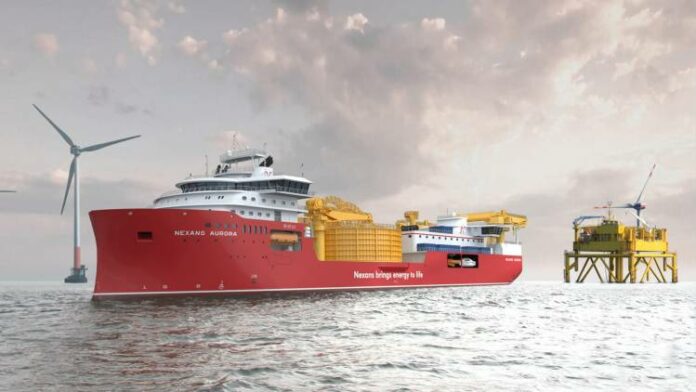
Vestdavit has been contracted to equip Nexans’s cable-layer Nexans Aurora with a multi-boat handling system for its mission bays.

The MissonEase system works on a system of hydraulic cradles that move boats from their stowage positions to maintenance, preparation or launch areas.

The system order includes Telescopic TDB-5000 davits installed either side of the mission-bay, deck-mounted transfer rails and a cradle mechanism. It will handle several workboats and tug boats for launch and recovery on either side of the ship. A single operator can use a remote control to launch and recover the mission boat, along with all on-deck handling.

In addition to the MissionEase system, Vestdavit will deliver two H-9000 davits, which can handle twin Fassmer SLT 8.5 life/tender boats.

Nexans Aurora was designed by Ålesund-based Skipsteknisk and will be constructed by nearby Ulstein Verft. It will measure 149.9 m in length by 31 m in width and have capacity to accommodate 90 people. Its duties will include power cable laying and cable-system protection and trenching.

Source:osjonline

2019 MarTID survey launched

0

The second annual MarTID survey has been launched to continue the study of global maritime training practices, WMU says in a press release. Separate surveys are available until 31 January for seafarers, ship operators, and maritime education and training institutions.

MarTID – the global Maritime Training Insights Database – is designed to provide a global picture of maritime training that is not currently available, offering the global maritime community data on current and emerging training trends and techniques, staffing models, training focus areas, training tools, training resource allocation and assessment practices.

It is generally perceived that ‘the human element’ is the leading contributory causative factor in up to 80% or more of maritime accidents. In response, vessel operators and maritime training centers are investing in creating best practice and innovative training programmes. However, maritime industry training approaches, successes, and failures are not broadly studied or shared leaving training leaders to their own devices to invent and design their best practice training approach.

The mission of MarTID is to help ensure safe, efficient and sustainable maritime operations on clean oceans through providing the maritime industry with comprehensive data on how it manages and conducts training for shipboard competencies. This includes the effects of drivers, such as technology, on the training. The data is updated annually by means of the global survey providing insights that can lead to enhanced policy-setting, decision-making, benchmarking and operational optimization by industry and regulatory authorities at all levels.

The inaugural, 2018 survey focused on collecting a broad set of foundational training data. The 2019 survey has been condensed and consists of two sections. The first seeks to collect benchmark data, tracked annually, to help reveal trends with respect to core training issues including training budgets, training models, training staffing, the use of technology, major training initiatives, and seafarer demographics. For 2019, a theme for the second section focuses on the impact of autonomous vessel operations (actual and potential) on maritime training. The survey seeks to explore the perspectives of vessel operators/managers, maritime administrators, maritime training experts and seafarers in this area. Going forward, the MarTID survey will follow a themed approach with one section annually on tracked data and a second section focused on a theme of contemporary relevance.

MarTID is a non-commercial initiative collaboratively founded in 2017 by the World Maritime University, New Wave Media and Marine Learning Systems. The MarTID  reports are free and distributed widely to reach a global audience. The 2018 inaugural report was the first tangible outcome of the initiative. The MarTID team and the collaborating institutions take this opportunity to thank all respondents of the inaugural survey, and extend gratitude in advance to all respondents of the 2019 survey.

Shell announces short-term climate targets

0

British oil major Shell revealed plans to set short-term targets as part of a long-term ambition to reduce the Net Carbon Footprint of its energy products. The plans were announced in a joint statement developed with institutional investors on behalf of Climate Action 100+, an initiative led by investors with more than $32 trillion in assets under management. The company plans to link these targets to executive remuneration, subject to shareholder approval.

Shell aims to reduce the Net Carbon Footprint of its energy products by around half by 2050, and by around 20% by 2035, in line with Paris Agreement. In 2017, the company became the first international oil and gas firm to set the ambition to reduce the Net Carbon Footprint of the energy products it sells. The steps it has decided to follow are:

  1. Public short-term Net Carbon Footprint targets
  2. Targets linked to remuneration
  3. Review of progress
  4. Alignment with the TCFD recommendations
  5. Corporate climate lobbying

Now Shell is building on that long-term ambition with the commitment to setting specific Net Carbon Footprint targets for shorter periods, of three or five years. Shell will set the target each year, for the following three- or five-year period. The target setting process will start from 2020 and will run to 2050.

As stated in the official Joint statement, Shell has three strategic ambitions:

  • To provide a world-class investment case by growing free cash flow and increasing returns, all built upon a strong financial framework and resilient portfolio;
  • To thrive through the energy transition by providing the mix of products its customers need as the energy system evolves; and
  • To sustain its societal licence to operate by being a responsible energy company that operates with care for people and the environment.

Shell plans to link these targets and other measures to its executive remuneration policy. The revised remuneration policy will be put to shareholders for approval at the company’s Annual General Meeting in 2020.

Shell will publish its progress towards lowering the Net Carbon Footprint of its energy products initially in the Sustainability Report. In line with the recommendations of the Task Force on Climate-related Financial Disclosures (TCFD), Shell intends to integrate this disclosure into the Annual Report and Form 20-F as appropriate. The company will seek third-party assurance of the reported Net Carbon Footprint.

"Meeting the challenge of tackling climate change requires unprecedented collaboration and this is demonstrated by our engagements with investors. We are taking important steps towards turning our Net Carbon Footprint ambition into reality by setting shorter-term targets. This ambition positions the company well for the future and seeks to ensure we thrive as the world works to meet the goals of the Paris Agreement on climate change,"..said Shell CEO Ben van Beurden.

Source:safety4sea

EMSA to improve maritime surveillance using drones

0

EMSA has secured four contracts for maritime surveillance services based on remotely piloted aircraft systems. These contracts aims to improve maritime surveillance capabilities to European agencies and member states.

Namely, according to EMSA the contracts concerning the remotely piloted aircraft systems were signed because of the increased demand.

Firstly, EMSA signed a contract with CEIIA-Centro de Engenharia e Desenvolvimento on 27 September for long range-long endurance maritime surveillance. CEIIA will provide services similar to those of the Hermes 900 RPAS subcontracted from Elbit. As a result, the RPAS has high-tech features, such as operational flight duration that can last more than 12 hours and payload configuration. What's more, it acquires optical and infrared cameras, a multi-mode maritime radar, AIS and distress signal receiver, which provides it with long range detection, recognition, and identification capabilities. In addition, the RPAS is equipped with satellite communications enabling the surveillance of large maritime areas beyond radio line of sight.

Moreover, EMSA signed a contract with Schiebel Aircraft GmbH on 19 November concerning vertical, take-off and landing aircraft. The Camcopter S-100 RPAS can be run directly from vessels, extending its range of surveillance. This model has the ability to take off and land vertically from both ashore and offshore vessels. What's more the VTOL RPAS has more than six hours operational flight time and carries a payload with optical and infrared cameras, an optical scanner, AIS receiver, and has a maximum range of 100km.

Also, EMSA signed a contract on 2 November for emissions monitoring in collaboration with Nordic Unmanned AS, UMS Skeldar Sweden AB and Norut Noterhn Research Institute AS. This partnership is based on the VTOL RPAS, Skeldar V-200 and focuses on monitoring emissions and multi-purpose services. This model has a sensor that monitors sulphur emissions and is capable of take off and vertical landing. What's more, it has more than 4 hours operational flight time and a variety of more than 50km. The Skeldar V-200 also carries a payload of optical and infrared cameras and an AIS receiver too.

In order to support surveillance operations EMSA signed a contract for lightweight quadcopters from Nordic Unmanned AS on 9 November. These services will be based on more than 10 INDAGO2 quadcopters from Lockheed Martin. The first models are to be installed on EMSA's  standby pollution response vessels that are responsible for oil spill recovery operations. In the future, they may also be activated for surveillance operations from any patrol vessel.

As Markku Mylly,  EMSA’s Executive Director, stated these contracts strengthen EMSA's maritime surveillance abilities and EMSA is able to support national authorities execute coast guard functions, such as maritime pollution, emissions monitoring, search and rescue operations. Also, EMSA is capable of helping European agencies in matters of illegal fishing detection, anti-drug trafficking and border surveillance.

Source:safety4sea

Reduce OPEX and become Greener: Wärtsilä Services

0

The oil & gas industry was plunged into turmoil when the oil price crashed in 2014. To get back on track, the industry has been forced to transform. It has been forced to figure out new ways of working and apply new solutions to remain profitable while oil price fluctuates. The question that oil companies and drilling contractors are asking is this: can the environmental footprint be reduced while at same time lowering OPEX? Fortunately, the answer is yes, Wärtsilä Services says.

Carrying out sustainable OPEX reductions is no simple matter. It involves, among other things, careful risk management, refined cost predictions and an increased focus on remote services. The latter can be used to maximise the availability of the equipment, optimise fuel expenditure and prevent unforeseen issues. With the responsibility for fuel costs increasingly shifting from oil companies to drilling contractors, such services can significantly impact the profitability of the contractor’s operations.

Oil and gas will play a significant part in the energy mix in the future, we cannot argue about that. But, as contradictory as it sounds, the environmental footprint of the oil and gas industry can and should be reduced. Our contribution is to provide smart technologies that enable step changes in efficiency and provide environmental and financial benefits,” says Jesper Bonde, General Manager, Oil &Gas, Wärtsilä Services.

Greener operations are good for business
From the environmental point of view, the oil & gas industry is heavily regulated both nationally and internationally. Environmental taxation in Europe is a major motivator to finding new ways of reducing CO2 and NOx emissions. Fresh ways of thinking, operating and partnering are called for, if the players in the industry want to stay in the game. Regulations will only get tighter, so opting out is no longer possible.

A sustainable reduction of energy consumption and emissions requires digital mapping and baseline of the environmental footprint of an asset. When this baseline is linked to the relevant energy consumption data, it is easy to identify improvement areas and calculate the return on investment (ROI).

In addition to simple ‘end of pipe’ cleaning solutions, Wärtsilä helps oil & gas companies optimise low load operations, improve asset efficiency and thereby reduce the environmental footprint closer to the source of energy. A holistic approach enables reliable operations with better profitability,” Jesper Bonde explains.

New ways of teaming up
The transformed oil & gas industry needs to find new ways of operating and new set-ups to ensure sustainable profitability. This involves joint efforts of oil companies, drilling contractors and third-party service companies sharing the gain or pain of an operation. When everyone carries the risk and also partakes in the rewards, the motivation for shared success is high.

For service partners such as Wärtsilä Oil & Gas, this means looking beyond mere maintenance. It means helping the oil company and drilling operator reduce their OPEX in a sustainable way, while improving the efficiency of operations and ensuring better environmental performance. A comprehensive approach, with shared incentives for all parties, answers the needs of the transformed oil & gas industry,” Jesper Bonde concludes.

Wärtsilä Services in brief
Wärtsilä Services provides high-quality lifecycle services that enhance customers’ business. Its broad range of services supports both shipping and power generation companies, whenever and wherever needed. Solutions range from spare parts and basic support to ensuring the maximised lifetime, increased efficiency and guaranteed performance of the customer’s equipment or installation – in a safe, reliable, and environmentally sustainable way.

Wärtsilä in brief
Wärtsilä is a global leader in smart technologies and complete lifecycle solutions for the marine and energy markets. By emphasising sustainable innovation, total efficiency and data analytics, Wärtsilä maximises the environmental and economic performance of the vessels and power plants of its customers. In 2017, Wärtsilä’s net sales totalled EUR 4.9 billion with approximately 18,000 employees. The company has operations in over 200 locations in more than 80 countries around the world. Wärtsilä is listed on Nasdaq Helsinki.

Source:portnews