3.3 C
New York
Home Blog Page 1225

Petrogas starts production from Dutch North Sea well

0

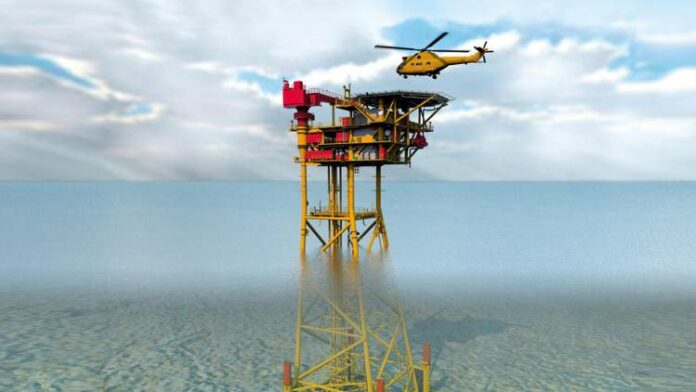
Oil and gas company Petrogas has started production from its A18-A5 well located in the Dutch sector of the North Sea. 

RockRose Energy, Petrogas’ partner in the project, has informed that the Petrogas-operated A18-A5 well has been drilled and completed and is now on production.

RockRose said that the A18-A5 well targeted Pleistocene aged stacked marine sands, specifically the Q3.2 and Q4 sand units. Production at the A18 field to date has been from the older Q6A, Q7 and Q8 sand units.

The Q4 reservoir came in as prognosed demonstrating a test rate of 320,000 Nm3/d (12 mmscfd) with the Q3.2 above expectation demonstrating rates of 480,000 Nm3/d (18 mmscfd).  This implies an unconstrained comingled production rate of >700 boepd net to RockRose.

A18-A5 is constrained at 20 mmscfd due to infrastructure limits of 75mmscfd (13,040 boepd) gross, and therefore the asset will be producing at a platform plateau for considerably longer than anticipated. These constraints give a net rate of 200-250 boepd to RockRose, which underpins production from our Netherlands assets for the next couple of years.

A18-A5 and the ongoing workovers on A12, will bring the AB area back to a facilities constrained plateau of 135 mmscfd gross (3,400 boepd net to RockRose).

RockRose Executive Chairman, Andrew Austin, said: “The result from the A18-A5 well came in above pre-drill expectations and, most importantly was delivered safely, on time and on budget.

RockRose entered the A18 field through the acquisition of Dyas B.V. earlier this year. Petrogas also gained access to the Dutch North Sea assets through an acquisition. Namely, Petrogas in 2014 bought Chevron Exploration and Production Netherlands B.V.

The transaction included the sale of the Chevron subsidiary’s interests in 11 offshore blocks on the Dutch Continental Shelf, which in 2013 had an average net daily production of approximately 2,000 barrels of crude oil and 41 million cubic feet of natural gas. The Dutch assets A/B and P/Q are now held under Petrogas Exploration and Production Netherlands.
Scorpio Bulkers buy scrubbers for 28 vessels

0

Scorpio Bulkers announced that it signed an agreement with third parties to purchase scrubbers for 18 of its vessels in 2019 and for 10 of its vessels in 2020. The total value of these agreements reaches $42.4 million.

The scrubbers will have ‘hybrid ready’ design, which enables them to be upgraded to a ‘closed loop’ configuration in the future.

Scorpio Bulkers also has an option to buy scrubbers for up to 18 additional vessels in 2020.

During October, Scorpio Tankers entered into agreements with suppliers, engineering firms, and ship repair facilities to cover the purchase and installation of scrubbers on its remaining owned and financed leased LR2, LR1, and MR tanker vessels.

This number amounts to a total of 75 vessels, which will have been retrofitted with scrubbers between the second quarter of 2019 and the second quarter of 2020.

The scrubbers and their installation are expected to cost between $1.5-$2.2 million per vessel, with 60-70% of these costs to be financed.

Earlier in October, Scorpio informed that it will install scrubbers to the vast majority of its vessels in order to comply with the 2020 sulphur cap, by the end of the first half of 2020. However, the company had not determined the exact costs or how such costs will be financed.

Before this decision, Scorpio Tankers was planning to use compliant fuel in order to comply with the upcoming regulations, as informed in June 2018. As the company explained, at that time it was evaluating scrubbers as well, but did not choose them because it did not have a reason to do so.

Nevertheless, because of regulatory, technological, and supply/pricing risks, Scorpio ultimately decided to install scrubbers as a way to comply.

Source:safety4sea

Iran Seeks to Deploy Naval Mission to Venezuela

0

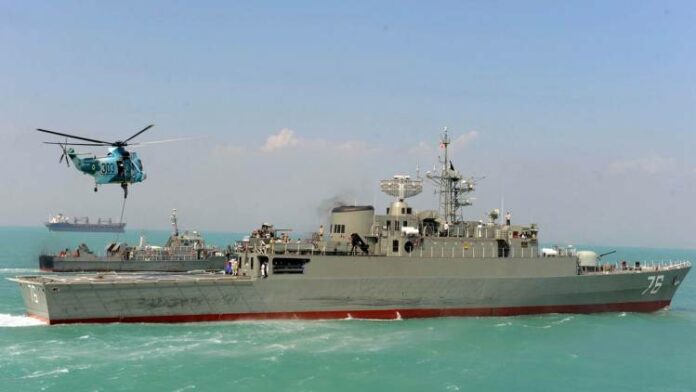
Iran's navy is dispatching its warships further abroad, according to top commander Rear Admiral Hossein Khanzadi. In recent years, the force has conducted anti-piracy operations, security patrols and joint SAR missions in the Gulf of Aden and the Strait of Bab el-Mandeb, but it has rarely dispatched its surface warfare assets on transoceanic voyages.  

"Among our plans in the near future is to send two or three vessels with special helicopters to Venezuela in South America on a mission that could last five months," said deputy navy commander Rear-Admiral Touraj Hassani Moqaddam, in a recent interview with Iranian outlet Mehr News. 

As isolated regimes with overlapping economic interests, Venezuela and Iran have longstanding ties, including well-established networks for commerce, banking and mutual investment. During the previous sanctions regime, the government of Venezuela's then-President Hugo Chavez was accused of helping Tehran evade sanctions, launder money and foster the spread of extremism – including providing a safe harbor for elements of the designated terrorist organization Hezbollah. 

New naval assets

Iran says that it has recently commissioned two diesel-electric Fateh-class mini-submarines, each capable of diving to 200 meters and operating for five weeks without replenishment. One is refurbished, and the second is a newbuild, according to Western defense analysts. It has also added a new corvette-sized warship, the Moudge-class vessel Sahand.

The Iranian Navy claims that the 1,300 tonne Sahand has stealth characteristics, implying a reduced (not eliminated) radar signature. She was launched in 2012 and has been undergoing outfitting for the past six years, and Iran claims that she was finished using only domestically-produced components. Sahand is reportedly capable of operating for five months without resupply. 

Iran claims the newly commissioned vessels are evidence of its capability to resist the Trump administration's sanctions measures, which impose steep penalties on foreign firms that do business with Iran's energy, maritime and defense sectors.

Source:maritime-executive

Rolls-Royce and Finferries demonstrate world’s first fully autonomous ferry

0

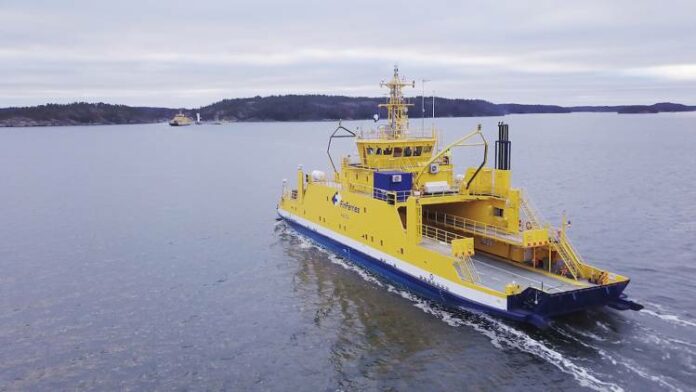
Rolls-Royce and Finnish state-owned ferry operator Finferries have today successfully demonstrated the world’s first fully autonomous ferry in the archipelago south of the city of Turku, Finland, the company said in a press release.

The car ferry Falco used a combination of Rolls-Royce Ship Intelligence technologies to successfully navigate autonomously during its voyage between Parainen and Nauvo. The return journey was conducted under remote control.

During the demonstration, the Falco, with 80 invited VIP guests aboard, conducted the voyage under fully autonomous control. The vessel detected objects utilising sensor fusion and artificial intelligence and conducted collision avoidance. It also demonstrated automatic berthing with a recently developed autonomous navigation system. All this was achieved without any human intervention from the crew.

The Falco is equipped with a range of advanced sensors which allows it to build a detailed picture of its surroundings, in real time and with a level of accuracy beyond that of the human eye. The situational awareness picture is created by fusing sensor data and it is relayed to Finferries’ remote operating centre on land, some 50 kilometres away in Turku city centre. Here, a captain monitors the autonomous operations, and can take control of the vessel if necessary.

During the autonomous operation tests in Turku archipelago, Rolls-Royce has so far clocked close to 400 hours of sea trials. The Rolls-Royce Autodocking system is among the technologies that have been successfully tested. This feature enables the vessel to automatically alter course and speed when approaching the quay and carry out automatic docking without human intervention. During the sea trials, the collision avoidance solution has also been tested in various conditions for several hours of operation.

Earlier this year Rolls-Royce and Finferries began collaborating on a new research project called SVAN (Safer Vessel with Autonomous Navigation), to continue implementing the findings from the earlier Advanced Autonomous Waterborne Applications (AAWA) research project, funded by Business Finland.

The Falco is a 53.8 metre double-ended car ferry, which entered service with Finferries in 1993. It is equipped with twin azimuth thrusters from Rolls-Royce.

MSC Announces New Bunker Recovery Charge

0

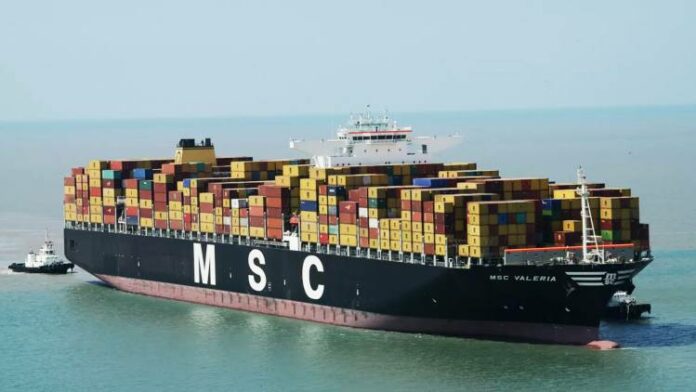
Mediterranean Shipping Company (MSC) has announced new bunker charges as of January 1, 2019 to comply with the 2020 sulfur cap, which is anticipated to cost the shipping industry $60 billion annually.

MSC has estimated that the cost of the various changes it is making to its fleet and its fuel supply is in excess of $2 billion dollars per year. “We believe that it is essential to segregate transparently the burden of fuel costs, in order for this cost to be passed on visibly throughout the supply chain. Passing on that cost is also vital to ensure the sustainable future of the container shipping industry,” said the company in a statement.

MSC's new Bunker Recovery Charge (BRC) replaces the current Bunker Contribution (BUC), Fuel Adjustment Factor (FAD) and Emergency Fuel Surcharge (EFS), and largely absorbs other pre-existing fuel-related charges. Charges specifically related to coastal Emission Control Areas (ECAs) will remain in place. For reefer cargo, the charge will be BRC x 1.5 due to the additional cost of electricity generation to power the reefers.

The company has a fleet of 510 vessels with a total capacity of 3.3 million TEUs. It is planning a mixed response to the sulfur cap including the installation of scrubbers on some vessels and the use of low sulfur fuel on others.

MSC joins a growing number of container shipping companies to introduce new charges ahead of the sulfur cap. In October, OOCL announced for a bunker recovery charge. The company expects the additional costs of complying with the cap to be well above half a billion dollars. 

Hapag-Lloyd also announced new charges and estimated that its additional costs will be around $1 billion in the first years. CMA CGM announced a surcharge to cover an additional average cost of $160 per TEU, based on current conditions. In announcing its surcharge, Maersk Line said it expected extra fuel costs of at least $2 billion annually.

Source:maritime-executive

SpaceX to launch satellites to track piracy activities

0

SpaceX will launch three satellites that will scan the world for radio signals of dark ships. The satellites belong to a startup called HawkEye 360 and aim to help monitor global activity in the oceans using geospatial information.

HawkEye 360 will have a trio of satellites and will be the first commercial operation to capture radio frequency feeds.

Hawkeye’s three satellites will have the ability to triangulate and pinpoint any given radio signal. As a result, the company aspires to have 10 separate, three-satellite flocks zooming around the globe. With that much hardware, it will scan any part of the world in less than 30 minutes.

The software launched by the company will receive unique radio signals from ships to small vessels, track them over time and also assume their future movements. In that way, the cluster will be able to triangulate hard-to-pinpoint signals from satellite phones,  push-to-talk radios, and marine radar. Ships need these and other radio-emitting tools to voyage the seas.

In the possibility that Pathfinder works, the global authorities will gain a major advantage in hunting 'dark ships', meaning vessels that turn off their GPS location transponders or automatic identification system. The AIS broadcasts a ship's GPS location to avoid collisions, but turning it off is a usual trick vessels use if they're slipping into unapproved fishing zones or trafficking illegal drugs, wares, or people. The tracking of illegal activities amounts approximately $3 trillion per year.

Moreover, Pathfinder, a satellite similar to those SpaceX is launching, will sway around Earth from pole to pole in a sun-synchronous orbit, called SSO. This orbit keeps sunlight drenching a spacecraft's solar panels while allowing it to fly over every square inch of the planet.

The already existent Pathfinder System is used by many brands and models of radio transponders. However, this device results to some differences concerning radio emissions that are not always obvious. On the contrary, HawkEye supports that though its satellites can detect those differences and exploit them. To this result, by tracking a number of these radio emissions on a ship and pairing those with AIS signals, when they're turned on, the company can track with detail every ocean vessel on Earth. In this way, even if a ship is 'spoofing' its AIS data, HawkEye supports it will be aware of. AIS data will report one location, but the vessel's radio fingerprint will reveal its true location.

HawkEye 360 stated that its system works, since when it installed the Pathfinder technology into three Cessna jet airplanes and flew them over the Chesapeake Bay, it manage to detect ships that were spoofing their AIS data.

In addition to fingerprinting such vessels, HawkEye 360's machine-learning algorithms will also be able to determine typical activity patterns for a ship and flag any unusual deviation.

The Pathfinder satellite cluster will give HawkEye 360 a global view of certain radio transmissions on Earth once every 4-6 hours.

HawkEye 360 consists of approximately $30 million in funding, which is enough to operate for 18 months, has 31 employees, and has lined up more than $100 million in future work. In the future, they aim to launch five more three-satellite clusters, which will create a constellation that can map Earth's radio signals once every 30 to 40 minutes.

Launching larger and more capable satellites will also improve the company's ability to detect weaker signals.

Finally, except the offshore detection, Pathfinder could be used and onshore as well. The technology could also detect improper use of the radio-frequency spectrum, including interference between cell-phone towers. Such interference can cause data loss between mobile devices and towers, leading to slow and unreliable internet, among other problems. Ground crews with trucks typically drive around towers to search for and identify such problems, but such teams and equipment can expensive to deploy, especially on a nationwide scale.

Source:safety4sea


Otary clinches Seamade cash

0

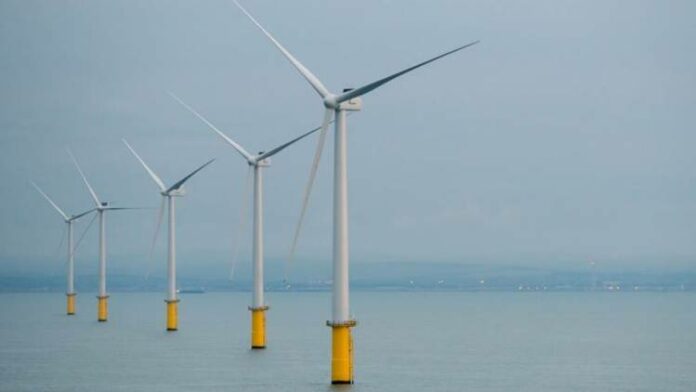
Otary has reached financial close on the over 487MW Seamade offshore wind farm off the coast of Belgium.

A total of €1.3bn will be invested in the project, which will kick off construction next summer. Commissioning is scheduled for late 2020.

A consortium of lenders includes the European Investment Bank, the Danish export credit agency EKF and 15 commercial banks are providing funding for the project.

The banks are Santander, Bank of China, Belfius, BNP Paribas, Commerzbank, Rabobank, ASN Bank, ING, KBC, KfW IPEX, MUFG, Siemens Bank, Societe Generale, SMTB and Triodos.

EIB will provide €250m via the European Fund for Strategic Investments.

Seamade chief executive Mathias Verkest said: “We are pleased that our project milestones are achieved in time trough tremendous efforts of many as we are working on a quite ambitious timing towards 2020.”

Seamade has also confirmed that a consortium of Engie Fabricom, Tractebel, Smulders and Geosea has been chosen as EPCI contractor the project's two substations.

Two export wires will be produced by Hellenic Cables and installed by Tideways. 

Siemens Gamesa has also confirmed that it will supply 58 turbines for the project with individual capacity of 8.4MW and rotor diameters of 167 metres.

The deal covers supply and installation of the machines, as well as a 17-year service agreement.

Siemens Gamesa offshore business chief executive Andreas Nauen said: “We are very pleased that our preferred supplier agreement announced in March 2018 has now become a fully confirmed order with SeaMade.”

Turnkey contractor Dredging International is in the process of selecting suppliers for the monopile foundations and array cabling.

Otary comprises Belgian companies Socofe, DEME, Power@Sea, Elicio, Aspiravi, Green Offshore, SRIW and Z-Kracht. Electrabel and Eneco are also minority shareholders in Seamade.

Source:renews

Canada to develop maritime awareness system

0

Canada's Minister of Transport, Marc Garneau, announced that more than $2.5 million has been awarded to four coastal communities in British Columbia to develop, test and evaluate a new maritime awareness information system in Canada.

The Government of Canada, under the Oceans Protection Plan, is ensuring that Canada's coasts are protected in a modern and advanced way. The funding will go to the Council of the Haida Nation and the Gitga’at Nation, who are hosting two pilot projects on the North and Central Coast of British Columbia.

Moreover, the T’Sou-ke Nation and the Pacheedaht Nation will also receive funding, as neighbouring nations, who are hosting a shared pilot project on the South Coast of Vancouver Island.

This funding was available under the $1.5 billion Oceans Protection Plan, and is the largest investment that has ever been made to protect Canada’s coasts and waterways. Via this plan, the Government of Canada is creating a world-leading marine safety system that provides economic chances for Canadians, while protecting the coasts and waterways for generations to come.

Transport Canada is collaborating with Indigenous and coastal communities in favour of a new maritime awareness information system, identifying the kind of information that should be included in the system, discussing local priorities and building partnerships. In total, ten Indigenous communities, governments and organizations from Canada’s coasts will be embodying the new system.

The new maritime awareness information system will be web-based, user-friendly, and will develop access and expand the type of maritime data available to Indigenous peoples, coastal communities and other stakeholders.

The system will show a variety of valuable close-to-real-time data and maritime information, including vessel traffic and weather information. The funding is set to provide local communities with the resources to put in place infrastructure, internet and equipment necessary to test this new system over the course of one year, starting in spring 2019.

Finally, partnership is a basis of programs and initiatives launched under the OPP, and the Enhanced Maritime Situational Awareness Initiative plays an crucial role in working together to create greater efficiencies, stronger partnerships and a sustainable marine safety system.

Source:safety4sea

Dutch delight at Budel solar

0

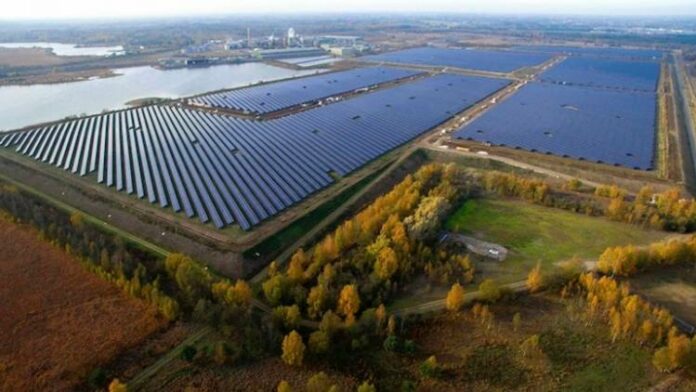
The 44MW Budel solar farm near Eindhoven in the Netherlands has started commercial operations.

It was developed by the Dutch province of Noord-Brabant, the commune of Cranendonck and UK company Solarcentury on land previously used by the Nyrstar zinc smelter.

Budel comprises 154,000 solar panels installed on over 65 hectares of land.

Encavis owns a majority share in the project and Solarcentury a minority interest. Project finance for Budel was provided by Rabobank.

Solarcentury chief executive Frans Van Den Heuvel said: “The Netherlands currently produces less than 2% of its electricity from solar but this is only set to rise in the very near future.“

Having deployed 1GW of solar globally, we’re looking forward to further accelerating the transition from fossil fuels to renewable energy.

“The Dutch people want to see clean power and climate action, we are here to work with governments, business, landlords, developers and other stakeholders who also know it makes economic sense to switch to solar now.”

Encavis chief executive Dierk Paskert said: “Budel solar park is an important development for both the Netherlands and our our growth strategy.“

Completion of the project on schedule is another impressive proof of our successful partnership with Solarcentury and the good cooperation with all parties involved.

As such, we’re delighted to continue our strategic partnership with Solarcentury and realise further projects very soon.

Rabobank managing director of project finance Marc Schmitz said: “This initiative came to life when the Province Noord-Brabant gave a second life to an ex-landfill site. This project will significantly contribute to the preservation of the region. “

Source:renews

E.on Officially Opens Rampion Offshore Wind Farm

0

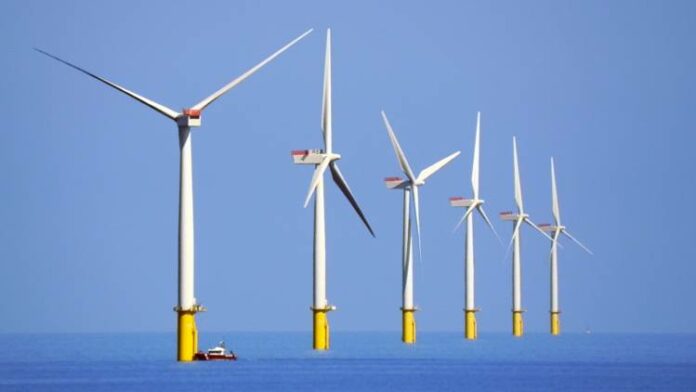
The 400-MW Rampion offshore wind farm off the Sussex coast in the UK has been officially opened, said German energy company E.on SE.  The offshore wind farm now generating enough green electricity for around 350,000 UK homes setting a new power record in the country.

Three years of construction officially came to an end on Saturday (November 29) at a ribbon cutting ceremony for the Rampion offshore wind farm, the first wind farm off the UK's south coast.

Named after the county flower of Sussex, the offshore wind farm, over the next 25 years, will make an important contribution to meeting the UK's climate targets.

After a three-year construction schedule involving a workforce of around 750 at peak times, all 116 turbines were put into operation in spring. A visitor center is scheduled to open on the beach promenade of the seaside resort of Brighton, by summer 2019, where interactive displays will provide information on climate change, offshore wind energy and Rampion.

"We continue to see the UK as an attractive market for the expansion of offshore wind. The government's support for this technology and an intelligent funding system are also exemplary for other countries in Europe," said Sven Utermöhlen, COO of E.ON Climate & Renewables, to guests from politics and business.

The wind farm is a joint project of E.ON, the Canadian energy company Enbridge and the Green Investment Rampion Ltd consortium. E.ON is responsible for the construction and operation of the wind farm.

Over the past ten years, E.ON has invested nearly €3 billion in renewable projects in the UK. With the completion of Rampion, the company owns almost 1.2 gigawatts of wind power in the UK and more than 6 gigawatts worldwide.

Source:marinelink