3.3 C
New York
Home Blog Page 1223

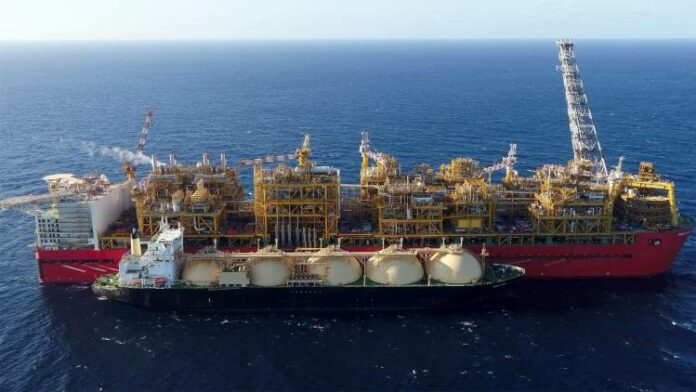
Prelude FLNG to Start Producing at End-2018

0

Royal Dutch Shell expects production at its Prelude floating liquefied natural gas (LNG) unit to start at the end of the year, a spokeswoman told Reuters on Tuesday.

"We continue to progress Prelude towards operations, with safety and quality being our main focus … We expect to see production around the end of the year," she told Reuters in an emailed statement.

Prelude – which will process natural gas produced offshore northern Australia and export it as LNG – is expected to have an annual LNG production capacity of 3.6 million tonnes. It will also produce 1.3 million tonnes a year of condensate and 400,000 tonnes a year of liquefied petroleum gas (LPG).

Shell first decided to go ahead with the project in 2011. After long delays, it introduced gas to the 490 meter-long (1,600 ft-long) Prelude FLNG for the first time earlier this year as part of the cooling process before start-up.

It subsequently received a second LNG cargo in early October, Refinitiv Eikon data showed. Before an LNG project goes into commercial operation, a cargo is typically imported to cool down its production train.

Shell owns 67.5 percent of the Prelude FLNG project. Japan's Inpex Corp, Taiwan's CPC Corp and Korea Gas Corp hold the rest of the shares. 

Source:marinelink

Bunker fuel assurance blockchain platform enters scaling phase

0

Maritime Blockchain Labs (MBL) has announced the start of a scaling phase of its first demonstration project aimed at enhancing traceability and trust in the bunker fuel supply chain from the supply source to the receiving vessel.

The scaling phase will involve the further development and scaling of the solution, capturing fuel deliveries and associated verified data into the system.

MBL said the work will be undertaken by a consortium formed of shipowners or operators, fuel suppliers, port authorities and a fuel testing body, with MBL inviting interest from stakeholders within these groups to join and co-sponsor this phase of work. It is expected to begin in January 2019.

The project, a fuel assurance platform based on a prototype digital system, was developed earlier this year together with a consortium including International Bunker Industry Association (IBIA), Lloyd’s Register FOBAS team, Bostomar, Heidmar, Bimco, GoodFuels and Precious Shipping.

MBL is itself a partnership between Lloyd’s Register Foundation and Blockchain Labs for Open Collaboration (BLOC), set up to explore the use of blockchain for the assurance and safety of critical infrastructure and drive new business models for the global maritime industry.

Deanna MacDonald, ceo of BLOC said: “Our demonstrator phase has shown us that dealing with marine fuels’ quality and quantity assurance is an industry wide issue, and that the industry is looking to work together to solve this issue. We’ve built something that for the first time, will allow stakeholders across the global shipping industry to verify and validate transactions across the fuels supply chain.”

She continued: “The recently concluded MEPC73 showed us that there are still burning questions about the availability of compliant fuels post-2020 – and the current epidemic of bad bunker, as it’s been called by Intertanko and others, shows that building traceability and trust in the marine fuels supply chain is one of the most vital issues facing shipping right now.”

The MBL platform provides a chain of custody on quality and quantity documentation points for interested stakeholders within the supply chain, which in turn will provide a decision support system around marine fuels.

This is achieved by using Hyperledger Fabric blockchain technology. This technology creates an immutable chain of custody of quality analysis documentation and specification of fuels from the various actors transacting and transferring the fuels throughout the supply chain. The analysis results of the fuel supply are then associated or linked to the specific transaction offering this fuel.

Source:seatrade-maritime

Garten goes onstream in the North Sea

0

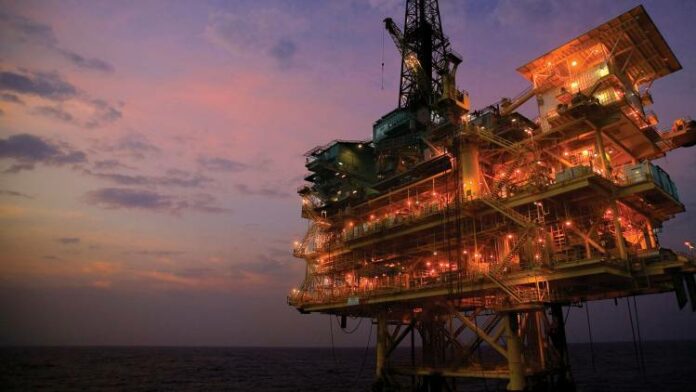
 Apache Corp. has started production from the Garten field development on block 9/18a Area-W in the UK North Sea.

The Garten field is tied back to the Beryl Alpha platform, 180 mi (290 km) northeast of Aberdeen.

The Garten discovery well, which is located 6 km (4 mi) south of the Beryl Alpha platform, was placed on production in late November, less than eight months after being drilled in March. The discovery well encountered a downthrown structural closure with 778 ft (237 m) of net oil pay in stacked, high-quality, Jurassic-aged sandstone reservoirs.

The well is currently producing from the Beryl sand at a rate of 13,700 b/d of oil and 15.7 MMcf/d. Two lower zones were also successfully tested, and all three zones will ultimately be commingled to maximize recovery.

The recoverable resource is expected to exceed 10 MMbbl of light oil plus associated natural gas. Apache has a 100% working interest in the Garten development.

Mark Hobbs, director of Operations & Projects at Apache North Sea, said: “Garten is a unique technical achievement and represents Apache’s most complex smart well completion to date. Our delivery on this project underscores Apache’s strong mix of integrated technical capabilities, project management expertise, and cost discipline.”

Source:offshore-mag

Watch: Testing of remotely operated passenger ferry

0

The Ice-class passenger ferry Suomenlinna II was remotely piloted through test area near Helsinki harbour. This was the world’s first remote trial for an existing passenger ferry, which aimed to prove that human oversight of vessels remotely is achievable with today’s technologies.

Namely, the partnership between ABB and Helsinki City Transport accomplished an innovation in autonomous shipping. The trial, which is the world's first for an existing passenger ferry, was successful into testing the improvement of ship operations using technologies that are available for almost any kind of vessel.

The trial occurred when the ferry was off duty, with no passengers on board and no other vessels voyaging in the area. The vessel is run by a set of conventional onboard controls with the remote mode deployed during the trial only.

Suomenlinna II has a specific voyage route from Helsinki to Suomenlinna fortress, the UNESCO World Heritage site on a nearby island. Yet, for the trial it began its journey from Helsinki’s market square, Kauppatori and the captain operated wirelessly through a specific area of Helsinki harbour.

Suomenlinna II was retrofitted with ABB’s positioning system, ABB Ability Marine Pilot Control, and steered from a control center in Helsinki.

Finally, Suomenlinna II, was officially built in 2004. It operates year-round, and manages the weather conditions that affect the rest of the modes of transport in Helsinki.

Source:safety4sea

Watch: IMO’s MSC 100 begins with a busy safety agenda

0

On the occasion of the opening of the 100th session of Maritime Safety Committee (MSC 100), the IMO issued a short film reviewing its basic activities in the area of shipping safety. IMO's MSC 100 started for its milestone 100th session on 3 December, with a busy agenda encompassing maritime autonomous surface ships, fatigue guidance for seafarers, polar shipping, goal-based standards and other agenda items.

Autonomous ships

Key on the agenda is the issue of autonomous ships. MSC will receive the report of a correspondence group which has been testing the proposed methodology for the regulatory scoping exercise on autonomous surface ships, taking into account different levels of autonomy. A working group is expected to be established during the session. It is anticipated that the framework for the scoping exercise will be further developed and finalized.

Goal-based standards and safety level approach 

Following the adoption of Goal-based ship construction standards for bulkers and oil tankers (GBS) and the successful initial verification of 12 Recognized Organizations by IMO GBS audit teams, MSC will consider the final report of the audit team that conducted the first maintenance of verification audit in order to ensure continued conformity of the rules with the GBS.

Approval of revised guidelines on fatigue  

The MSC is expected to approve revised IMO Guidelines on Fatigue, which have been thoroughly reviewed and updated by the HTW 5 Sub-Committee. The Guidelines provide information on the causes and consequences of fatigue, and the risks it poses to the safety and health of seafarers, operational safety, security and protection of the marine environment. The aim is to assist all stakeholders to contribute to the mitigation and management of fatigue.

Safety of ships in polar waters

The Committee is expected to establish a working group to further consider how to move forward with developing mandatory and/or recommendatory measures for ships operating in polar waters but not currently covered by the Polar Code.

2020 sulphur cap

The Committee will be invited to consider submissions concerning the potential need for guidance related to possible safety issues associated with the implementation of the 2020 sulphur cap. MEPC 73 in October invited MSC 100 to consider the outcome of the intersessional meeting concerning the safety implications associated with the use of low-sulphur fuel oil and take action.

Adoption of amendments 

The MSC is expected to adopt the following amendments:

  • Draft amendments to update the 2011 ESP Code, including a series of technical and editorial revisions, as well as revisions related to criteria for grooving corrosion and various updated tables and diagrams.
  • Draft amendments to the SPS Code, including a revised chapter 8 on life-saving appliances; a requirement for special purpose ships to comply with the provisions of chapter IV of SOLAS; and a revised Form of Safety Certificate for Special Purpose Ships and Record of Equipment for Special Purpose Ship Safety Certificate (Form SPS).

Approval of draft amendments, guidance and guidelines

The MSC is expected to:

  • Approve draft amendments to the IBC Code, with a view to subsequent adoption. The draft amendments include draft revised chapters 17 (Summary of minimum requirements), 18 (List of products to which the Code does not apply), 19 (Index of products carried in bulk) and 21 (Criteria for assigning carriage requirements for products subject to the IBC Code), as well as draft new paragraph 15.15 (Hydrogen sulphide (H2S) detection equipment for bulk liquids). Further draft amendments are consequential to draft amendments to MARPOL Annex II.
  • Approve draft amendments to the LSA Code regarding ventilation on totally enclosed lifeboats, in order to ensure a habitable environment is maintained in such survival craft. The draft new paragraphs (4.6.6 and 4.6.7) on means of ventilation for totally enclosed lifeboats, and on openings and closings, would require a totally enclosed lifeboat to be provided with means to achieve a ventilation rate of at least 5 m3/h per person for the number of persons which the lifeboat is permitted to accommodate, for not less than 24 hours.
  • Approve draft amendments to the LSA Code focused on manually-launched "rescue boats that are not one of the lifeboats" on cargo ships.  The draft amendments (to paragraph 6.1.1.3) also include a requirement for means to bring the rescue boat against the ship’s side and hold it so that persons can be safely embarked.
  • Approve draft Revised guidelines for the approval of fixed water-based fire-fighting systems for ro-ro spaces and special category spaces (to update the guidelines in MSC.1/Circ.1430). The revision relates in particular to the position of sprinklers or nozzles, to ensure adequate performance, and to reliable control of fixed water-based fire-fighting systems.
  • Instruct relevant sub-committees to consider relevant parts of the draft interim guidelines for the safety of ships using methanol as fuel prepared by CCC 5. The detailed interim guidelines provide requirements for the arrangement, installation, control and monitoring of machinery, equipment and systems using methyl/ethyl alcohol as fuel to minimize the risk to the ship, its crew and the environment, taking into account to the nature of the fuels involved.
  • Consider draft amendments to the International Code of Safety for Ships using Gases or other IGF Code in particular proposed modifications to regulation 9.5.6 relating to the leakage detection requirements for pipes carrying liquefied fuel
  • Approve draft interim guidelines on the application of high manganese austenitic steel for cryogenic service. The interim guidelines are aimed at ensuring the safety of LNG-fueled ships, by specifying the requirements for the utilization of high manganese austenitic steel in the design and fabrication of cargo and fuel tanks complying with the IGC and IGF Codes.
  • Approve Interim guidance for conducting the refined MHB (CR) corrosivity test related to draft amendments to section 9.2.3.7.3 of the IMSBC Code concerning test for metals.

Source:safety4sea

European Council agrees its stance on maritime single window

0

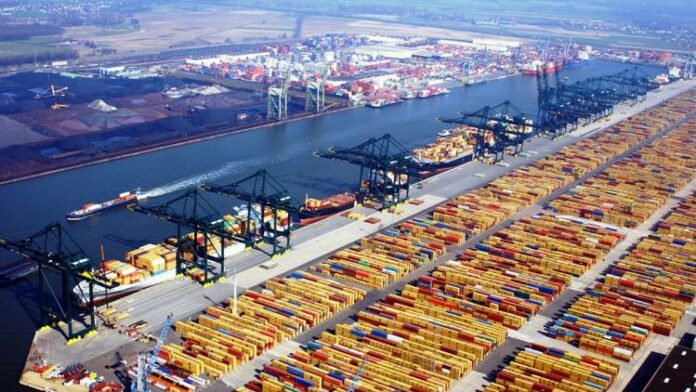
On 3 December, the European Council reached a general approach on a proposal to bring together all reporting formalities associated with a port call, under a system called a European maritime single window. The proposal is expected to increase efficiency of maritime operations by ensuring reporting procedures are the same for all port calls, aiming to boost competitiveness of the maritime sector in the long-run.

The regulation is part of the Mobility Package III which the Commission adopted in May 2018. The European maritime single window environment aims to address the issue of numerous, non-harmonised reporting obligations by linking the existing national maritime single windows together in a coordinated and harmonised way. The reform will improve interoperability between various systems, making it much easier to share and reuse data.

"A single reporting window for ships will significantly reduce the administrative burden on maritime transport. We are creating conditions for increased application of the once-only principle, so that ships would only need to report once per port call and the same information would be reused for subsequent port calls within the EU."…said Norbert Hofer, Minister for Transport, Innovation and Technology of Austria, President of the Council.

The general approach approved Monday on single window constitutes the Council's position for negotiations with the European Parliament. Both institutions must agree on the final text.

"I'm very happy with the General Approach adopted by the Council. The compromise text is in line with the main objectives of our proposal and will, no doubt, represent a big step towards reducing the administrative burden, and modernising the shipping sector. I am now very confident that an agreement with the European Parliament will be reached soon, before the end of its mandate,"…stated Commissioner for Transport, Violeta Bulc.

In addition, the EU Transport, Telecommunications and Energy Council (TTE) reached a General Approach on minimum training of seafarers. The main aim behind the Commission's proposal was:

  • to align the legislation with the latest amendments to the IMO framework on the minimum standards for training and certification of seafarers;
  • to improve the efficiency of the centralised EU mechanism under which the training systems of third countries are recognised at EU level, allowing seafarers educated abroad to work on-board our flagged fleet; and
  • to provide greater legal clarity of the process by which the certification of seafarers is recognised between Member States.

The European Commission welcomed this early agreement on a General Approach and hopes to find an agreement with the European Parliament before the end of its mandate.

Source:safety4sea

SeaMade Offshore Wind Farm selects DEME for foundations, turbines, offshore substations and inter-array- and export cables

0

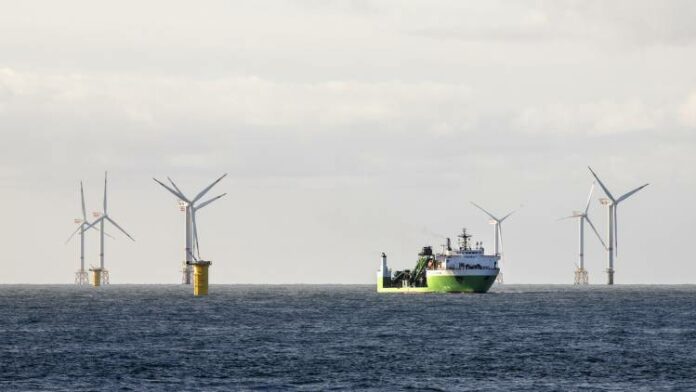
DEME’s subsidiaries Dredging International, GeoSea and Tideway have secured major contract awards for the 487 MW SeaMade Offshore Wind Farm in Belgium. The project reached financial close on December 3, 2018.

SeaMade stands for a combination of two offshore wind projects in Belgium, previously known as Mermaid (235 MW) and Seastar (252 MW). The project will include 58 wind turbines and will be located 40-50 km off the coast from Ostend.

The contract awards include:

Foundations, turbines and inter-array cables – The Engineering, Procurement, Construction and Installation (EPCI) contract for the 58 foundations and the inter-array cables will be undertaken by Dredging International. The cables will connect each turbine to the relevant offshore substation. The foundation type will be a monopile foundation. With a hub height of 109 metres and a rotor diameter of 167 metres, the wind turbines will be the largest installed thus far in the Belgian North Sea.

Each of SeaMade’s two wind farms, Mermaid and Seastar, will have its own offshore substation, which will collect electricity produced, convert it from 33 kV to 220 kV and export it into the grid. After a successful collaboration on numerous offshore wind farms, GeoSea, ENGIE and Smulders join forces again for the SeaMade project. The partnership will be responsible for the full engineering, procurement, construction, transport, installation and commissioning of the two high voltage substations.

Both wind farms will be connected through two 220 kV submarine high voltage cables to the Belgian Modular Offshore Grid. In a consortium with Hellenic Cables, Tideway will be responsible for the design, manufacturing and installation operations, and for connecting the wind farms high voltage substations to the Belgian Modular Offshore Grid. The export cables have a combined length of approximately 28 km.

The construction of the project has already been initiated with offshore works to start in summer 2019. Both wind farms are planned to be operational before the end of 2020.

The total value of the contracts awarded to DEME is about EUR 500 mio.

Source:portnews

Siemens and Aker Solutions to strengthen digital offerings through strategic collaboration

0

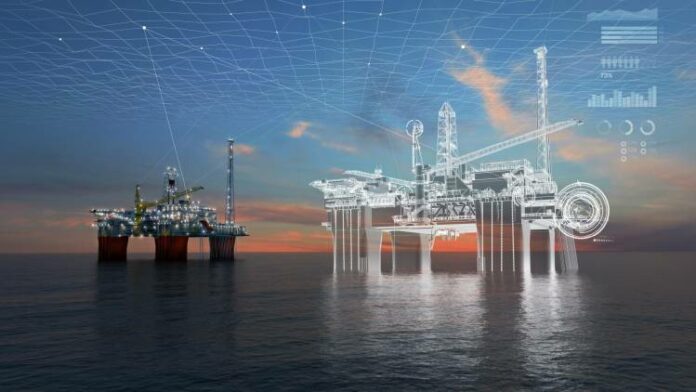
Siemens and Aker Solutions have signed a strategic collaboration agreement to further develop digital offerings in engineering, operations and services, the company said in a press release.

The collaboration focuses on the creation of software applications and joint service offerings including the development of industrial digital twins that will drive efficiency throughout the entire plant lifecycle. In addition, the companies will further develop specific offerings for the oil and gas sector based on Siemens' Comos engineering platform. These solutions will help customers to reduce engineering and operational cost and enable improved decision making.

The agreement builds on a long-standing, successful relationship between both companies by combining individual strengths and promoting joint offerings.

Aker Solutions will bring in its domain expertise and sector-specific digital offerings in field development, asset performance and integrity, while Siemens will provide a wide range of digital offerings for the process industries – ranging from automation equipment to software applications for engineering and simulation.

Wärtsilä Introduces Lifeboat for Buildings

0

The technology group Wärtsilä has launched a lifeboat for buildings, not a real product, to draw attention to rising sea levels caused by climate change.

The lifeboat was designed by Wärtsilä Ship Design and is powered by 100 renewables renewables, like synthetic renewable fuels and solar energy.

“This hypothetical lifeboat is a way for Wärtsilä to amplify the critical need to move climate change discourse to action. In fact, the concept is not as unimaginable as we first think. The boats would have been useful in the recent floods in Italy and Indonesia. We must act now, together. Or the unthinkable will happen, and this lifeboat will have to be built for real,” says Marco Ryan, Chief Digital Officer.

Technology plays an important role in the mitigation of the impacts of climate change, says Marko Vainikka, Director, Corporate Relations and Sustainability. “Sustainability has been at the forefront in everything we do for decades. Our sustainability targets call us to reduce our own energy consumption by seven percent by 2025 and reduce greenhouse gas emission from gas engines by 15 percent by 2020. These goals among others need to be achieved in order to avoid a future where lifeboats for buildings are needed.

The promotion of the lifeboat comes as the International Energy Agency (IEA) announced that world’s advanced economies will see an uptick in their carbon dioxide emissions this year, bucking a five year-long decline. Based on the latest available energy data, energy-related CO2 emissions in North America, the European Union and other advanced economies in Asia Pacific grew, as higher oil and gas use more than offset declining coal consumption. As a result, the IEA expects CO2 emissions in these economies to increase by around 0.5 percent in 2018.

The IEA also expects emerging economies to emit more CO2 than last year. The IEA’s full global energy and CO2 data for 2018 will be released next March, but all indications point to emissions growth globally, driven by rising energy use and a global economy expanding by 3.7 percent.

Global oil demand is set to grow robustly in 2018, global gas use is also increasing strongly, pushed in particular by Chinese policies aiming to curb air pollution in cities, while large numbers of new coal power plants continue to be built and come online. 
 
Although the growth in emissions is lower than the 2.4 percent rise in economic growth, it is particularly worrisome for global efforts to meet the Paris Agreement, says the IEA. 

Countries are gathered at the COP24 climate conference this week and next to take stock of efforts to limit emissions. Global energy-related CO2 emissions need to peak as soon as possible and then enter a steep decline for countries to meet climate goals.

Source:maritime-executive

Maersk Sets Net Zero CO2 Emission Target by 2050

0

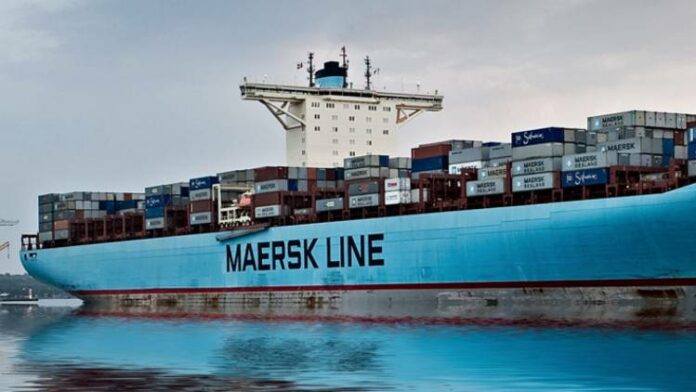
Maersk announces its goal to reach carbon neutrality by 2050 this week. To achieve this goal, carbon neutral vessels must be commercially viable by 2030, and an acceleration in new innovations and adaption of new technology is required, says the company.

Maersk's relative CO2 emissions have already been reduced by 46 percent compared to a 2007 baseline 2007, approximately nine percent more than the industry average.

The only possible way to achieve the so-much-needed decarbonization in our industry is by fully transforming to new carbon neutral fuels and supply chains,” says Søren Toft, Chief Operating Officer at A.P. Moller – Maersk.

Maersk is putting its efforts towards solving problems specific to maritime transport, as it calls for different solutions than automotive, rail and aviation. The yet to come electric truck is expected to be able to carry maximum of two2 TEUs and is projected to run 800 kilometer per charging. In comparison, a container vessel carrying thousands of TEU sailing from Panama to Rotterdam makes a journey of around 8,800 kilometers. With short battery durability and no charging points along the route, innovative developments are imperative, says Maersk.

Given the 20-25-year life time of a vessel, it is now time to join forces and start developing the new type of vessels that will be crossing the seas in 2050, says Toft. “The next five to 10 years are going to be crucial. We will invest significant resources for innovation and fleet technology to improve the technical and financial viability of decarbonized solutions. Over the last four years, we have invested around $1 billion and engaged over 50 engineers each year in developing and deploying energy efficient solutions. Going forward we cannot do this alone,” he says.

Maersk hopes to generate a pull towards researchers, technology developers, investors, cargo owners and legislators that will activate strong industry involvement, co-development and sponsorship of sustainable solutions. In 2019, Maersk is planning to initiate open and collaborative dialogue with all possible parties. The aim, says the company, is to tackle together one of the most important issues in the world: climate change.

Source:maritime-executive