2.1 C
New York
Home Blog Page 1219

Green light to uniquely profitable project

0

The Ministry of Petroleum and Energy has approved the plan for development and operation (PDO) of the Troll Phase 3 development.  Capital expenditures of NOK 7.8 billion will help extend the productive life of the Troll field beyond 2050.

Since it came on stream in 1995 the Troll oil & gas field has generated an estimated NOK 1400 billion (NOK 175 million per day).

“With a break-even of less than USD 10 per barrel, Troll Phase 3 is one of the most profitable and resilient projects ever in our company. Thanks to the PDO approval Equinor and its partners can now deliver another 2.2 billion barrels of oil equivalent from the field with a CO2 intensity of 0.1 kilo per barrel,” says Torger Rød, Equinor’s senior vice president for project management. “Equinor will work closely with partners and suppliers planning start-up of the field in the first half of 2021,” added Rød.

“Troll is the biggest gas producer on the NCS, meeting 7-8% of Europe’s total daily gas consumption. We will deliver safe, profitable and carbon-efficient energy from Troll that helps reduce coal consumption and reduce CO2 emissions in Europe with a long-term perspective beyond 2050,” says Gunnar Nakken, Equinor’s senior vice president for Operations West.

The development of Troll phase 3 will see about 70 % of the value creation take place in Norway.

The partnership has awarded contracts within marine installations and subsea facilities totaling an estimated NOK 950 million to the companies Nexans, DeepOcean, IKM, Allseas and Marubeni.

In addition, the partnership has awarded contracts worth approximately NOK 2 billion for subsea facilities and the construction of a new processing module on the Troll A platform to Aker Solutions.

Troll partners: Equinor (30.58% – operator), Petoro (56%), Norske Shell (8.10%), Total E&P Norge (3.69%), ConocoPhillips Skandinavia (1.62%)
 

EU NAVFOR promotes maritime security dialogue in Somalia

0

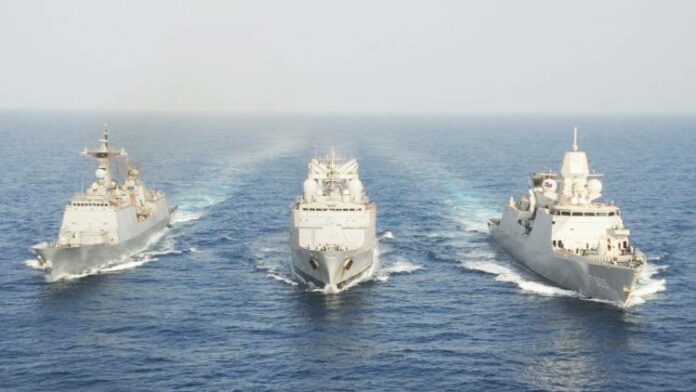
The Operation Commander of EU NAVFOR, Major General Charlie Stickland OBE, visited Mogadishu on 4-5 December 2018, to continue vital discussions on maritime with the Somali Deputy Prime Minister, His Excellency Mahdi Mohammed Gulaid.

EU NAVFOR says the Operation Commander and Deputy Prime Minister discussed Somalia’s maritime security capabilities and priorities, as identified recently by the Federal Government.  The relationship between maritime security and a successful ‘blue economy‘ will be key to Somalia’s economic future. Gen Stickland then briefed the DPM on EU NAVFOR and its partners‘ operational activities to deter and disrupt piracy and armed robbery at sea, following the recent attack against the Hong Kong-flagged merchant vessel KSL Sydney in the Somali Basin on 16 October. In addition, the DPM was briefed on how warships and aircraft from EU NAVFOR have supported the implementation of EU policy by means of working through the United Nations Food and Agriculture Organisation (UNFAO) to the benefit of Somali fishing communities.  The Chargé d‘Affairs of the EU Delegation to Somalia, Mr Fulgencio Garrido-Ruiz, highlighted the EU‘s integrated approach towards Somalia and stressed that with the extension of the EU NAVFOR mandate of until December 2020, the EU remains committed to the country.

The discussions with the Deputy Prime Minister were echoed in further meetings about Somalia’s exposed maritime flank, including with the Minister for Internal Security, Mohamed Abukar Islow, as well as with the National Security Advisor, Abdisaid Ali, and the Chief of Defence, Abdirashid Abdullahi Mohamed.

To complement these strategic discussions, a joint visit took place to Mogadishu Port, together with the EU’s civilian capacity-building mission, EUCAP Somalia.  This visit sought to enhance the operational and tactical relationships enjoyed by the EU with the Maritime Police Unit and the Coast Guard. EU NAVFOR regularly supports EUCAP Somalia in its work with Somali forces to increase security within the ports.

With the longest coastline in continental Africa, Somalia has the potential to benefit greatly from its vast maritime domain. For the country to unlock this economic potential, however, safe and secure Somali seas, along with the guaranteed freedom of navigation, are a prerequisite.  Piracy, the smuggling of weapons and contraband, as well as human smuggling and trafficking, have all been identified by the Somali Federal Government as key security threats. Consequently, EU NAVFOR works alongside other EU instruments such as EUCAP Somalia – as well as UN and other international agencies – to support Somali Government efforts to enhance national maritime security capabilities.

There was also time to meet with the Operation Commander of EUTM, Brigadier General Matteo Spreafico (Italian Army) and the Head of Mission for EUCAP Somalia, Maria-Cristina Stepanescu.

Source:portnews

Torqeedo displays 2019’s new electric boating products at Salon Nautique International de Paris.

0

Torqeedo says it will display its new products for electric mobility on the water at Salon Nautique International, Paris’ world-renowned boat show. The Salon Nautique will take place at the Porte de Versailles from December 8 through December 16, 2018 with Torqeedo’s 2019 innovations and its full line of electric boating products on display on stand 2.2B1.

After the world premiere in Amsterdam, Torqeedo will display new 100 kW motors as part of their fully integrated Deep Blue and Deep Blue Hybrid drive systems in Paris. Twice as powerful as were previously available, these quiet, clean and low-maintenance electric drive systems are available in two versions: low-rpm for displacement boats and high-rpm for planing boats.

Torqeedo will also display an upgraded, higher-capacity battery for their most powerful electric drive systems: the new Deep Blue 40 kWh battery with technology by BMW i. It features more than 30% more capacity in the same footprint and an energy density of 144 Wh per kg.

A 30% increase in energy and energy density will also extend to Torqeedo’s 24 V Power batteries which will feature an impressive energy density of 138 Wh per kg in 2019. The new pack tips the scales  at just 25.3 kg, only 800 grams more than the prior model, and in the  exact same footprint.

2019 will also see a new direct-drive, 1,100 W addition to the globally successful Travel series of clean, emission-free outboards. The Travel 1103 C is the quietest motor in its class and boasts a heavy-duty design. Just like the market-favourite Travel 1003, which remains the lightest and easiest-to-handle 3 HP equivalent outboard, the new 1103 C is suitable for boats up to 1,500 kg. 

Torqeedo’s lightest outboard delivers hands-free kayak fishing, making it the preferred choice of professional anglers for years now. 2019’s Ultralight 403 A offers a host of practical new features, including  easy mounting, quick motor depth adjustment and a lightning-fast way to safely stow the motor for transport or remove it altogether.

Several Torqeedo-powered boats will also be on display at Salon  Nautique de Paris including the X Shore yacht tender (stand 1A28), ZenPro 580 by Naviwatt (stand 1A29), Rand Boats’ Picnic 18, RS21 by RS Sailing (stand 1G75) and electric pontoon boats by Bennington Marine (stand 4C30). 
 

Unmanned Response Boat Disperses Spills with Water Jets

0

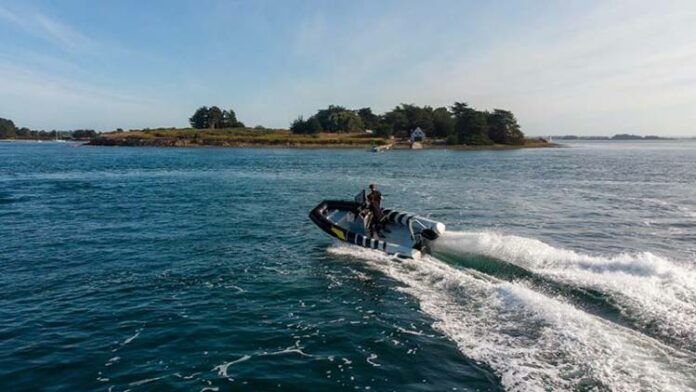
The new spill response boat Vorax disperses oil with high pressure water jets, and it was recently displayed for the environmental authorities and future customers in California.

The six-meter boat looks like a racing boat, but is something completely different: it's the world's first unmanned spill response boat, and it's armed with a chemical-free dispersant in the form of seawater. The technology was developed by SINTEF and commercialized through the spinoff company Blue Impact AS.

Chemical-free solution

The catamaran drives back and forth over the oil spill and pulverizes the oil into small biodegradable particles using high pressure water jets.

"In this way, the oil particles will dissolve and become part of nature's cycle," says former SINTEF researcher and Blue Impact entrepreneur Stein Erik Sørstrøm. Blue Impact has worldwide patents on this technology.

The California Department of Fish and Wildlife has tested the company's method to remove oil leaking naturally from the ocean floor outside of Santa Barbara. Along the coast of California, petroleum is naturally dissipated, and every year it produces oil spills corresponding to emissions from a large oil tanker. In this area it is not permitted to use chemicals to remove oil spills.

First big test

"This was our first major test for whether mechanical dispersion will work not only in theory but also in practice," said Karl Nevland, co-founder of Blue Impact and Field Operations Manager in California. The U.S. Coast Guard, National Environmental Authorities and private oil recovery organizations were also present during the test.

SINTEF still plays an important role in the process of taking environmentally-friendly technology in the world: The investment fund SINTEF Venture owns Blue Impact AS, and in addition to the research foundation it provides knowledge and support. NOFO, Norway's Coastal Administration, the Research Council and Innovation Norway have also contributed funding.

Trondheim company Maritime Robotics has developed the instrumentation for the unmanned boat.

Like drones in the ocean

Most oil spills are small, and the need is greatest in coastal waters – not on the open sea. It is also the intention that more boats will operate together. They could then be used in a coordinated manner, almost like drones.

The equipment can be easily transported by car trailer or under a helicopter and inserted where there has been oil spill. The advantage of an unmanned boat is – first and foremost – that personnel should not be exposed to oil spills.

Another advantage is that unmanned vessels can be used in higher-risk areas to a greater extent than manned vessels, and may in theory be operational 24 hours a day, according to Sørstrøm.

Source:maritime-executive

California Fines MSC $630,000 for Auxiliary Engine Usage

0

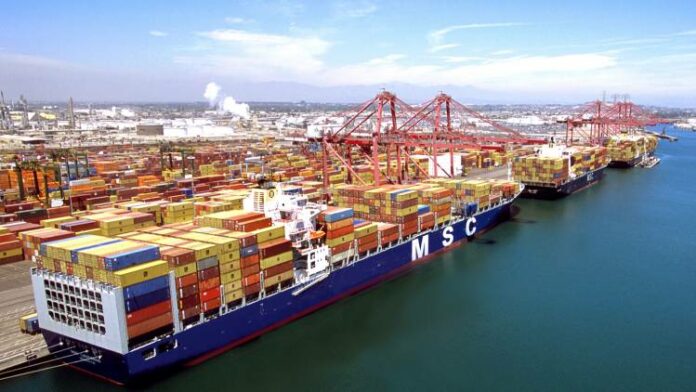
Number-two ocean carrier MSC has paid $630,000 in penalties to the California Air Resources Board for violating California's Ocean-Going Vessel At-Berth regulation.

The violations were discovered during an audit of MSC port calls at Oakland, Los Angeles and Long Beach during 2014. The investigation by CARB revealed more than 2,500 violations at Oakland and LA/Long Beach in two categories – first, failing to reduce auxiliary engine power generation by at least 50 percent, and second, exceeding limits for auxiliary engine run time. 

Ocean-going vessels are significant contributors to air pollution,” said CARB enforcement division chief Todd Sax. "Even in port, their auxiliary engines generate toxic diesel particulate pollution that impacts not only port-adjacent communities, but also entire inland regions. This regulation helps to protect all Californians and is necessary to ensure we meet our clean air goals.”

The At-Berth Regulation is designed to reduce emissions from diesel auxiliary engines on container ships, passenger ships and other vessels while berthing at a California port. Vessel operators can either turn off auxiliary engines and connect to grid-based shore power, or use alternative technologies to achieve equivalent emission reductions while in port. The regulation ultimately requires fleet operators to reduce at-berth NOx and particulate matter emissions from auxiliary engines by at least 80 percent by 2020.

MSC cooperated with the investigation and later converted its California fleets to include 100 percent shore power-equipped vessels, and it has had no further violations of the At-Berth regulation. The fine was paid to the California Air Pollution Control Fund to support air pollution research, and the company agreed to comply with all requirements of the regulation.

CARB also fined MSC $350,000 in April for violations of the California Ocean-Going Vessel Fuel Regulation. Four vessels were found to have failed to comply with the rule, including one ship that failed to comply twice. MSC corrected the matter once notified and created a compliance plan. 

Source:maritime-executive

Industry publishes improved cyber guidelines

0

A group of the world's largest international shipping associations and cyber security experts have published an update to their cyber security guidelines. 

The third edition of the industry cyber risk management guidelines, Guidelines on Cyber Security Onboard Ships, addresses the requirement to incorporate cyber risks in the ship’s safety management system (SMS). It also reflects a deeper experience with risk assessments of operational technology (OT) – such as navigational systems and engine controls – and provides more guidance for dealing with the cyber risks to the ship arising from parties in the supply chain.

“The industry will soon be under the obligation to incorporate measures to deal with cyber risks in the ship’s safety management system. This had not been tackled in the previous versions,” says Dirk Fry, chair of BIMCO’s cyber security working group and Director of Columbia Ship Management Ltd.

“The third edition provides additional information which should help shipping companies carry out proper risk assessments and include measures in their safety management systems to protect ships from cyber-incidents. A new dedicated annex provides measures that all companies should consider implementing to address cyber risk management in an approved SMS,” Fry says.

This is much easier said than done”, he adds, and notes that the criminals trying to exploit companies or breach their security are getting more inventive by the minute.

The new guidelines are the third edition in as many years, which reflects the constantly evolving nature of the risks and challenges.

OT risks differ

A second key expansion in the guidelines is around operational technology. Ships have more and more Operational technology (OT) which is integrated with Information technology (IT) and which can be connected to the internet, but the risks associated with OT are different from IT systems.

For example, malfunctioning IT may cause significant delay of a ship’s unloading or clearance, but with malfunctioning or inoperative OT there can be a real risk of harm to people, the ship or the marine environment.

Another new element in the guidelines is a number of examples of actual incidents to demonstrate some of the real-world situations shipowners and operators face. The examples have been anonymized.

Supply chain risks

A third new focus area is the risk of malware infecting the ship’s systems via the many parties associated with the operation of a ship and its systems.

Advice includes evaluating the security of service providers, defining a minimum set of requirements to manage supply chain or third-party risks and making sure that agreements on cyber risks are formal and written.

The guidelines also underline the need for ships to be able to disconnect quickly and effectively from shore-based networks, where required.

According to the Cyber Security Survey by BIMCO, Fairplay and ABS Advanced Solutions, the joint Industry Guidelines on Cyber Security Onboard Ships, are widely used across the industry. The survey also showed industry is more aware of the issue and has increased cyber risk management training, but there remains room for improvement.

THE GUIDELINES ON CYBER SECURITY ONBOARD SHIP V.3 

OPEC delays output decision

0

Oil fell nearly 3% in choppy trading on Thursday after OPEC and its allies ended a meeting without announcing a decision to cut crude output, according to a Reuters report.

The Organization of the Petroleum Exporting Countries met in Vienna, Austria, to decide production policy in coordination with other countries including Russia, Oman, and Kazakhstan.

OPEC tentatively agreed to cut oil output but was waiting for a commitment from non-OPEC heavyweight Russia before deciding volumes.

Russian Energy Minister Alexander Novak flew home from Vienna earlier for talks with President Vladimir Putin in Saint Petersburg. Novak returns to Austria’s capital on Friday for discussions among Saudi-led OPEC and its allies.

Saudi Energy Minister Khalid al-Falih said OPEC needed Russia to cooperate, and a decision was likely by Friday evening.

If everybody is not willing to join and contribute equally, we will wait until they are,” al-Falih reportedly said.

Market watchers had expected a joint cut of 1 MM to 1.4 MMb/d. The OPEC, non-OPEC meeting is set to start on Friday at 11:00 GMT.

All eyes are now fixated on tomorrow’s OPEC+ joint declaration, and a combined output cut of at least 1 MMb/d will be required to see a meaningful recovery in oil prices,” Abhishek Kumar, senior energy analyst at Interfax Energy in London, was quoted as saying.

Brent crude futures fell $1.50, or 2.4%, to $60.06/bbl, after dropping to a session low of $58.36. US crude futures fell $1.40, or 2.7%, to $51.49, bouncing off a low of $50.08.

The benchmarks have slumped more than 25% so far this quarter, according to the report.

Source:offshore-mag

The Tipping Point: U.S. Exports more Oil than it Imports

0

The United States last week exported more crude oil and fuel than it imported for the first time on record, underscoring the nation's growing influence as a supplier of oil to the world.

Exports of crude surged in the week to Nov. 30 to more than 3.2 million barrels per day, the U.S. Energy Information Administration said on Thursday.

When adding in all imports and exports of crude and refined products, for the week the U.S. exported a net 211,000 bpd – the first time that has happened, according to U.S. Energy Department figures dating to 1973.

The United States historically has been a heavy importer of crude oil in part due to a four-decade ban on crude exports that was lifted in late 2015 by then-President Barack Obama.

Petroleum exports until recently were dominated by products like gasoline and diesel, but that has changed since the U.S. shale revolution that has sped up drilling and extraction of oil, helping boost overall U.S. production to a record 11.7 million bpd.

The data comes on the same day that the Organization of the Petroleum Exporting Countries adjourned a meeting without announcing a supply-cut agreement as it grapples with sinking prices due in part to the surge in U.S. output that has upended the global supply equation.

"So when does the U.S. send a delegate to OPEC meetings?" said Kyle Cooper, consultant at ION Energy in Houston. "It's really quite amazing. I do think that will occur more and more often in coming years."

U.S. oil prices have sagged since hitting a four-year high near $76 a barrel in October. That wass in part due to concerns about oversupply coming to the fore again as U.S. production surged in tandem with increased output from Saudi Arabia and Russia. The three countries are the world's largest producers of oil.

That has created a dilemma for Saudi-led OPEC, which wants to maintain higher prices but avoid ceding more market share to shale producers. 

U.S. production is expected to average more than 12 million bpd in 2019, an increase of more than 3 million bpd in 2016. On Thursday, OPEC adjourned its meeting in Vienna, aiming to reach an agreement with Russia on Friday.

"It seems EIA has a habit of sending bad news to OPEC during its Vienna meetings. In the past, it was been surging U.S. production numbers. But this time was truly remarkable and historic showing data for net crude imports as -211,000 bpd," said Joe McMonigle, analyst at Hedgeye in Washington.

Crude inventories fell 7.3 million barrels last week, the first drawdown since September, as net crude imports hit a record low of 4 million bpd, EIA data showed.

For the week, the United States also posted net exports of 4.2 million bpd of products like gasoline and diesel.

The weekly figures are subject to wide fluctations, however, so the sudden shift may be a temporary occurrence. Andrew Lipow, president of Lipow Oil Associates in Houston, said he was not surprised this happened in the winter, a seasonally slow period for domestic gasoline demand.

U.S. oil prices were little changed after the EIA data. The market has been lower all day due to concern that planned OPEC production cuts will be smaller than originally anticipated.

As of 1:15 p.m. EST (1815 GMT), U.S. West Texas Intermediate crude futures were down $1.80, or 3.4 percent, at $51.09 a barrel. Brent crude dropped $2.05, or 3.4 percent, to $59.51 a barrel.

Source:marinelink

Second Wello Penguin primes for action

0

Finnish wave energy developer Wello has launched its latest Penguin device for deployment at the European Marine Energy Centre off Orkney in Scotland.

The new device entered the water at Tallinn, Estonia, as part of the Clean Energy From Ocean Waves project, and will be towed to EMEC.

It will be installed alongside Wello’s original Penguin device at EMEC, which has been in place since April 2017.

EMEC said the Clean Energy From Ocean Waves project is funded by the EU’s Horizon 2020 research and innovation programme and aims to build and deploy an array of three Wello Penguins at EMEC’s grid-connected wave test site at Billia Croo.

The company added that knowledge from the first EMEC project has fed into the development of the second device, which was built at the Netaman shipyard in Tallinn.

A licence was granted in November for the installation, operation and decommissioning of the three devices.

EMEC environment and consents specialist Caitlin Long said: “We are very pleased that the CEFOW project has been successful in securing consent for the first WEC array on a single electrical cable, in Scotland."

The awarded marine licence provides Wello and Fortum with the required flexibility to commence with the installation of the second WEC’s moorings and the smart hub.

This is a great achievement by the project consortium and we look forward to welcoming two more Penguins to EMEC.

Source:renews

Siemens connects with Moray East

0

Siemens has won a contract for offshore and onshore substations for the 950MW Moray East project off the coast of Scotland.

The deal covers three offshore transformer modules, which are smaller in size and weight to conventional AC platforms and so do not require special vessels for transport and installation.

Siemens will also supply an onshore substation to transform electricity into 275kV for feeding into the main grid.

Smulders has been contracted to build the three OTMs for Siemens.

Siemens will also install 30km of underground export cable to the onshore substation at New Deer in Aberdeenshire.

Preparatory work has already started at the site of the onshore substation, the company added. Siemens has appointed local contractor I&H Brown to manage the site enabling work.

It is anticipated Moray East will be operational by April 2021.

Siemens Energy Management managing director Carl Ennis said: “These large-scale renewable projects make me incredibly proud. Not only do they incorporate our engineering excellence on a massive scale, they showcase our commitment to renewables and clean energy generation.“

We are delighted our market-leading technology is being used on this project.

EDPR, Engie and Diamond Generating Europe are developing the wind farm, with Kansai Electric Power and Mitsubishi UFJ Lease & Finance also involved as shareholders in DGE subsidiary Diamond Green.

The £2.6bn project reached financial close today.

Moray East board director Dan Finch said: “Moray East marks a major milestone in the progress of the offshore wind industry. Not only will it deliver plentiful, sustainable, renewable power, it will do so at a highly competitive price – to the economic advantage of both the household and the country.“

Offshore wind farms pay rent for the use of the sea bed – and last week we made our first payment of £6m to Crown Estate Scotland – so the country is already benefiting before we have even produced a single unit of power.

Last month we announced the port of Cromarty Firth will be used as the project’s intermediate port during construction, and in the long term, we announced in summer that Fraserburgh will be the operations and maintenance base for the lifetime of the wind farm.

Throughout the development process we have worked with local and national stakeholders to enable advantage to be taken of the new opportunities brought by offshore wind.

We are grateful to all those who have engaged with us to take the project to this point and look forward to continuing to work with them through the construction, delivery and operation which will enable those opportunities to be realised.

Source:renews