2.1 C
New York
Home Blog Page 1218

Polar Star Prepares for Antarctic Mission

0

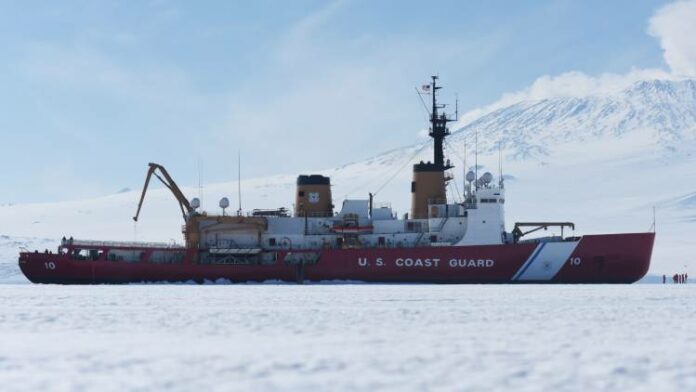
The United States' sole heavy icebreaker, the 42-year-old Polar Star, is getting under way once more on her annual voyage to Antarctica. She has just completed an extended drydock period and is now in Honolulu making final preparations to depart. 

The Star spends about six months per year in drydock on the U.S. West Coast, then transits south to break ice for the annual McMurdo Station resupply mission. McMurdo is America's main logistics hub in Antarctica, and the Star is the only American ship that can clear a path to its pier so that cargo and fuel can be delivered. 

Breaking thick ice is severe work, involving heavy hull vibration and high engine loads, and it takes its toll on the Star's aging systems. Last year she suffered a shaft seal failure, which caused serious flooding in one of her machinery spaces. The water was entering at about 20 gallons per minute, but the crew responded quickly, using an emergency shaft seal to stop the flow and then crafting a more durable in-the-field repair. During the same voyage, the Star also lost power in one of her three gas turbines, which provide the extra horsepower needed to break thick multi-year ice. The engine failure was caused by an error between the turbine and the ship's Cold War-era electronic control system. 
Contractors reassemble the Star's damaged port side hub during a shipyard period in Vallejo, California, Oct. 3 (USCG)

The yearly voyage to McMurdo Station, called Operation Deep Freeze, is a joint military mission in support of the National Science Foundation, the lead agency for the United States Antarctic Program. Since 1955, U.S. Pacific Command has assisted in providing air and maritime support throughout the Antarctic continent, and the Coast Guard has been the nation's sole provider of polar icebreaking capacity since 1965. 

As Polar Star prepares to depart on her voyage, the U.S. Congress is debating whether to order a replacement vessel. The Senate version of the Coast Guard appropriations bill contains $750 million for one heavy icebreaker; the House version does not. The Coast Guard says that its mission needs (including redundancy and self-rescue capability) will require a fleet of three heavy and three medium icebreakers. America's near-peer competitors, Russia and China, are currently expanding their Arctic icebreaker fleets.

Source:maritime-executive

TMEIC Automates Khalifa Port’s Phase II Expansion at Abu Dhabi Terminals

0

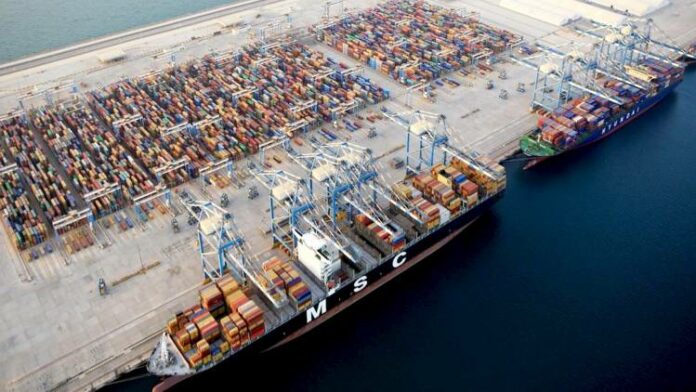
Toshiba Mitsubishi-Electric Industrial Systems Corporation (TMEIC) has been selected to provide industrial drive and automation solutions, including automation of the Landside Transfer Zone (LSTZ), for a second major expansion at Abu Dhabi Terminals (ADT).

The Phase II expansion project includes 54 Konecranes Automated-Stacking Cranes (ASC) at the Khalifa Port Container Terminal (KPCT). TMEIC previously provided automation solutions for 52 Konecranes ASCs during Phase 1 of the project, commissioned in December 2012.

TMEIC and Konecranes have worked extremely well together over the years,” said Darren Honaker, TMEIC Industrial Systems Commercial Leader. “This second expansion with ADT solidifies a great partnership and we look forward to delivering another exceptional automation project for a client that trusts TMEIC to go above and beyond to meet deadlines and deliver positive results.

“We value our partners at TMEIC because of our shared focus on delivering customer-centric services that increase the value and effectiveness of our clients’ businesses,” said Jussi Sarpio, Director, ASC and RMG Cranes at Konecranes.

In addition to supplying over 300 TMEIC TMdrive®-10e2 industrial drives, Phase II automation includes TMEIC’s state-of-the-art, laser-based Maxview® and Maxspeed® crane control systems for labor savings, increased yard productivity, reduced equipment maintenance and improved safety.

TMEIC’s unique technology fully automates high speed movement and placement of both 20-foot and 40-foot containers. Maxspeed® crane control systems provide optimum crane operation and increased production rates through enhanced operator joystick reaction time and precise control. TMEIC’s Maxview4D™ solution will fully automate the LSTZ, providing fully autonomous landing on any top-loaded container handling equipment, including road chassis. The advanced solution solves challenges at ports around the world struggling to reduce their carbon footprint, while improving terminal throughput and efficiency.

Equipment delivery commences in September 2019 and is scheduled to be completed in 2020.
TMEIC and Konecranes collaborations also includes the historic expansion currently underway at the Port of Virginia, USA.

Source:hellenicshippingnews

Vietnam: Fees of seaport services to rise next year

0

The Ministry of Transport has released the new fees for seaport services to be applied at local seaports, with many fees edging up by between 10% and 50%. The new fees will come into effect on January 1, 2019, Sai Gon Giai Phong newspaper reported.

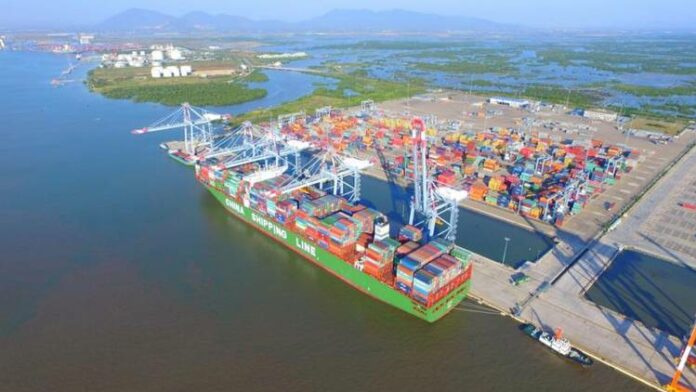
A container vessel is seen docking at Cai Mep-Thi Vai international port to load cargo in this file photo. The Ministry of Transport has revised up fees for seaport services, which take effect on January 1, 2019

The price in Region I (excluding Lach Huyen Port in Hai Phong City), applied to the services of loading and unloading cargo from vessels and barges to container yards, has been adjusted upward by 10%.

Notably, the charge of loading and unloading commodities from vessels, barges to other barges, trucks at ports and vice versa are revised up by 50%.

At Cai Mep-Thi Vai Port, the price for loading and unloading containers from vessels to other vessels and barges has been adjusted upward by 10%. Meanwhile, charges for transferring goods from vessels and barges to container yards and vice versa will be reduced by 10%.

As for ports located in the Mekong Delta region, however, charges for container unloading and loading services will see a reduction of 50%.

Further, in addition to the upward adjustment of goods loading and unloading service fees, tourists on board cruise ships will be charged higher fees for using services at wharves, berths, rising to US$2.50-US$3.50 per person per trip from the current US$0.99-US$1.10.

Regarding exceptional services with fees that are higher or lower than the regulated prices, as well as ports with newly renovated berths and wharves that exclusively serve international passenger cruise ships, transport operators will have to propose price rates and send reports to the Vietnam Marine Administration. The transport ministry will then consider issuing approvals.

The ministry’s representative stated that the seaport service fee hikes would not result in an increase in logistics fees.

Source:hellenicshippingnews

EMEC to navigate wave impact project

0

Orkney’s European Marine Energy Centre is to lead a three-year project to address environmental concerns around the development of emerging wave power technologies.

The Strategic Environmental Assessment of Wave energy technologies (SEA Wave) scheme aims to achieve a deeper understanding about how the marine environment reacts to the presence of wave energy converters.

The project funded by the European Maritime and Fisheries Fund will bring together wave technology developers like Wello, academic institutions such as Universities of Exeter and Plymouth, data managers and other stakeholders from the UK, Portugal, Finland, Belgium, Sweden and Ireland.

EMEC said the project would undertake multi-device ecological sampling campaigns to provide the evidence for regulators to adopt a risk-based consenting process and support developers secure future consents for array projects.

“As the wave energy industry advances through the research and development phase, SEA Wave will enable all-important monitoring of the potential effects wave energy converters may have on the host environment,” added EMEC environment and consents specialist Caitlin Long.

Crucially, the findings from this project will enhance regulators and stakeholders’ knowledge of the environmental effects from installation to decommissioning and provide the required confidence to adopt a risk-based consenting regime.”

Source:renews

MHI Vestas confirms Moray East gig

0

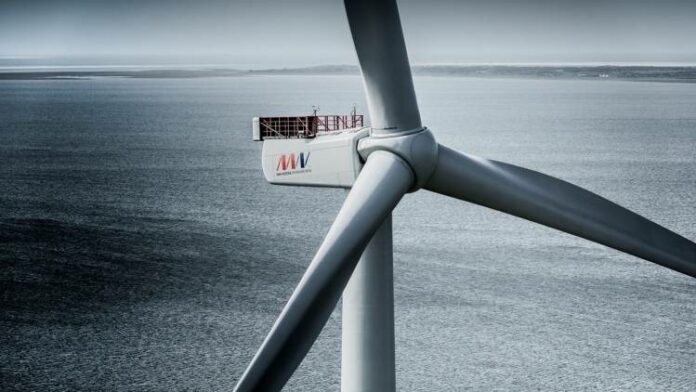
MHI Vestas has confirmed it will supply turbines to the 950MW Moray East offshore wind farm off the coast of Scotland, following financial close of the project today.

The deal covers supply of 100 V164-9.5MW machines and a 15-year service agreement.

Meanwhile, Boskalis has confirmed that it has won a contract for the supply and installation of array cables at the wind farm.

The company signed a preferred bidder agreement for the project in June 2017.

Boskalis said the contract is valued at €110m.

Work scope includes the design, supply, installation and burial, as well as termination and testing of 122 66kV array cables.

Moray East project director Oscar Diaz said: “Moray East is a landmark project for the offshore wind industry, delivering sustainable, renewable generation at a highly competitive power price."

The project will bring new opportunities to areas including Fraserburgh, where we have announced the wind farm’s operations and maintenance base will be located, and in the Cromarty Firth, where the port was last week selected as the pre-assembly port.

“We look forward to working with MHI Vestas, particularly in Fraserburgh and in Invergordon, where we have ongoing plans for local supply chain engagement.”

MHI Vestas chief executive Philippe Kavafyan said: “We are pleased that Moray East has reached financial close. With the signing of the firm order, we can accelerate preparations for our company’s largest MW project to date.“

Installing the world’s most powerful commercial turbine, the V164-9.5MW, in Moray Firth means more local, clean energy jobs in Scotland and across the UK, including our most recent expansion of blade production on the Isle of Wight.

EDPR, Engie and Diamond Generating Europe are developing the wind farm, with Kansai Electric Power and Mitsubishi UFJ Lease & Finance also involved as shareholders in DGE subsidiary Diamond Green.

Source:renews

Training Day: Cruden’s pioneering Fast Craft Simulator

0

Marine simulators are commonplace in the training and development of crew for large vessels. Not so much for small, fast patrol and attack craft.

From the mid to late 1970s, marine simulators developed into a viable training tool for trainee mariners. Their initial popularity developed as opportunities for practical training became scarcer and a lot costlier, too. Since then, however, the advancement of the technology has brought a new dimension to professional crew training for small, fast craft. We gained exclusive insight into this hyper-realistic advanced technology from Cruden’s CEO Maarten van Donselaar.

With the success of aerospace simulators in reducing costs and fast-tracking trainees, the use of simulators in the marine context has become an important part of safety training and bringing trainees up to a higher level of competency before being let loose on large vessels. Today, the most common simulators used in our industry include those that replicate, to an incredible level of detail, a ship’s bridge and control, the engine room, cargo handling, communication and Global Maritime and Distress and Safety Systems (GMDSS) plus remotely operated vehicles (ROVs).

While the current crop of simulators can give novices control of anything from a Panamax container ship right up to an Ultra Large Crude Carrier (ULCC), very little has existed in the way of highly realistic tools for high-speed craft. Up to now, replicating the real-world effects of performance, handling and safety procedures for small, fast boats was, and still is, an incredibly complex task given the speed and rapid responses required to replicate the real-world experience. That training has therefore largely remained out of reach. Until now.

The Advent of Fast Craft Simulation
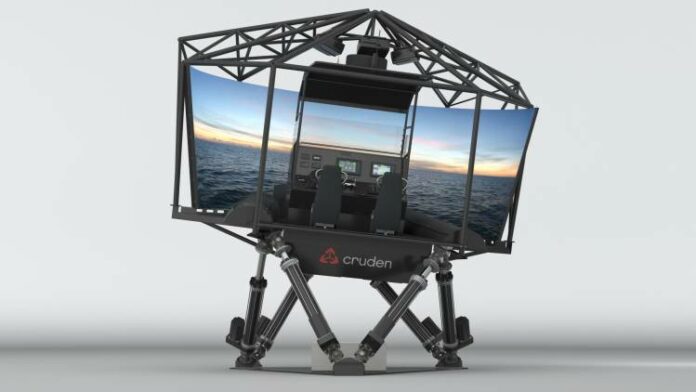
This all looks set to change following the recent unveiling of a production-ready fast craft simulator Dutch simulator manufacturer and integrator, Cruden. Maarten van Donselaar, CEO, Cruden, explains, “Cruden is already well-known as a provider of simulators, from our background in the motorsport, automotive and aerospace industries. For automotive and motorsport in particular, simulators play a role in the research and development of systems and vehicles. However, in the marine context, they serve predominantly as a training tool and are already widely used to train students on large vessels where movements are responses are much slower. Now though, we are seeing a particular need for a highly realistic, dynamic training tool for fast craft that complements training at sea and one that has been developed to offer training organizations increased hours; reduced costs; repeatable, programmable conditions and scenarios; realistic and detailed data-led AAR; and protection to trainers and trainees from physical stress.”

Cruden’s Fast Craft Simulator is the culmination of over six years of development and testing to ensure the proprietary hardware and software can replicate repeatable scenarios with the utmost accuracy and sensory realism.

The Fast Craft Simulator is more akin to a Formula 1 set-up where a few milliseconds lag in system response can unsettle the operator because drivers are very sensitive to correctly timed responses to their input or the effects of hitting a curb. Our architecture is developed to minimize latency. Over the past six years we’ve worked closely with the likes of the Florida Powerboat Industry and military end users plus training providers worldwide to gather as much knowledge on boat specifications measuring physical parameters as well as every aspect of their behavior and characteristics on the water. Of equal importance is understanding the training needs in terms of the course content and evaluation criteria. Our team of experts then designs and builds the fast craft simulators exactly according to client specification,” says van Donselaar.

While being able to replicate the flat water performance of a high-speed boat is impressive in itself, we pressed van Donselaar on how surface conditions can be simulated accurately. “Once we’ve mapped the measured parameters of the boat to the simulation model, we then begin the validation by actually measuring how the boat responds to input in various sea states and use the results to fine-tune parameters and map the surface conditions,” he replied, adding quickly, “Only then are we able to build a variety of highly accurate scenarios.”

The integrated nature of all our systems means that the software and hardware are developed to complement each other and trainees will practice in front of ultra-high definition screens and simulation-grade projectors capable of delivering a horizontal field of view ranging from 210 degrees to a full 360 degrees. This enables the training provider to accurately assess students as the two parts of the system work together seamlessly for a hyper-realistic experience.”

In addition to this, Cruden is currently working as part of a joint venture between the Marine Research Institute Netherlands (MARIN) and the Dutch Ministry of Defense to develop a new Fast Small Ship Simulator (FSSS). “Cruden has the capability to make simulators for virtually any requirement and our team will structure the system to mirror anything from small RHIBs to 100 ft patrol boats. This includes hull mockups mounted to the motion system that moves in six degrees of freedom. This allows the trainee to experience high-speed turns and recognize violent slamming. We account for all scenarios thanks to the computer algorithms, but stop short of making it too extreme in the case of high G-force ‘slamming’, to eliminate any risk of knee or back injuries. The flexibility of this system is integral to making it a viable tool for craft-type training as well as defense-based scenarios,” adds van Donselaar.  

The arrival of Cruden’s Fast Craft Simulator and development of the FSSS coincides with the growth of this market both for high-performance vessels used in law enforcement and search and rescue as well as special defense force and naval operations. The need for such training tools is adding a whole new dimension to the way in which mariners can learn and develop their skills.

Maarten van Donselaar explains: We are working with a range of partners ranging from Special Forces and coast guards who deploy boats from OEMs like Boomeranger, MST, Damen and Holyhead. Training simulators go beyond just boat and crew performance assessments, it also has the capability to incorporate shore-based communications, targeting and weapons simulations. For weapons integration, we work with Meggitt Training Systems and so, whatever a fast craft is equipped with in real life, will also feature on the training simulator.

Practical training has become more and more expensive as well as time consuming and it is also beholden to the prevailing weather conditions. Plus, it also carries a high element of risk. Our simulators can now enable training providers to overcome these challenges in a controlled environment whereby students can be closely assessed and correctly trained and prepared before the practical examination.

Source:marinelink

Dubai’s DP World Completes Danish Unifeeder Acquistion

0

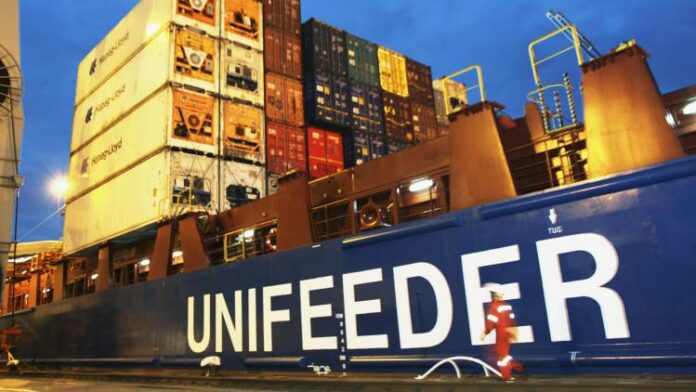
Global port operator DP World says it has completed the acquisition of Danish logistics firm Unifeeder for $748 million.

DP World’s full acquisition of Unifeeder Group from Nordic Capital Fund VIII was announced in August, but finalized on Thursday.

"DP World PLC is pleased to advise that it has closed the transaction to acquire 100% of Unifeeder Group from Nordic Capital Fund VIII and certainminority shareholders," said one sentence statement from the Dubai-based global marine terminal operator.

"Unifeeder Group is now part of the DP World Group, a leading enabler of global trade and an integral part of the supply chain," said a statement from the logistics company which provides transport solutions in Northern Europe.

"We are excited to become part of a company that shares the Unifeeder’s vision of serving our customers through removing inefficiencies and delivering sustainable shareholder value. Under the new ownership, Unifeeder Group will benefit from DP World’s global scope, size, and presence which in turn will enable Unifeeder’s brands to expand further and beyond current geographies," it added.

Unifeeder, which operates a growing shortsea network in Europe as it serves both deep-sea container hubs and the intra-Europe freight market, is connected to approximately 100 ports. The acquisition will help Dubai-owned company expand its foothold through the largest feeder and shortsea network in Europe.

The acquisition of Unifeeder will further enhance DP World’s presence in the global supply chain and broaden our product offering to our customers – the shipping lines and cargo owners – with a view to ultimately reduce inefficiencies and improve the competitiveness of global trade.

The current operations of Unifeeder are complementary to DP World’s existing business and provides future growth opportunities.

Unifeeder, founded in 1977, is an integrated logistics company with the largest and bestconnected feeder and growing shortsea network in Northern Europe with connectivity to approximately 100 ports.

The company provides efficient and sustainable transport solutions for international container shipping lines between international and regional ports and shortsea services to cargo owners with fully multimodal door-to-door solutions, combining seaborne transportation with road and/or rail. The business is cash generative and operates on a highly flexible cost base.

Source:marinelink.

Chinese Consortium Bags USD 1.4bln Panama Bridge Project

0

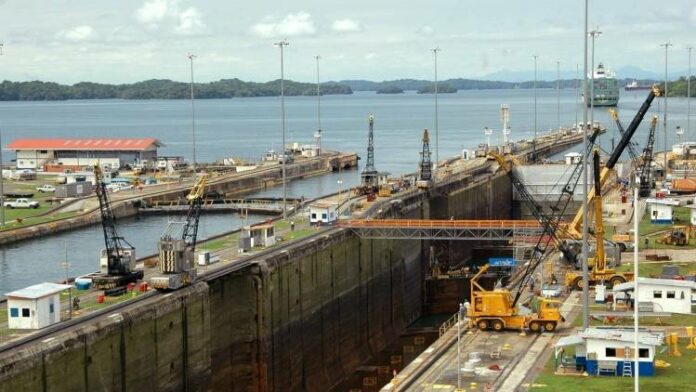
The government of Panama gave a US$1.4 billion contract to build a bridge over the Panama Canal to Panama Cuarto Puente, a Chinese consortium.

Panama Cuarto Puente consortium or so-called Panama Fourth Bridge Consortium,  composed of China Communications Construction Company (CCCC) and its unit China Harbour Engineering Company (CHEC), will design and build a bridge over the Panama Canal.

According to a report in Reuters, the 6.5-km (4-mile) bridge will have six car lanes and a two-way metro line. The Chinese companies initially won the contract in June but the award was postponed after rival bidders appealed the decision.

Now that the consortium outbid companies from Spain, Italy, South Korea and China, the construction is estimated to begin this year and will take three years.

While delivering the order to proceed, Panamanian President Juan Carlos Varela said: "These companies have just completed a bridge of more than 55 kilometers between Hong Kong, Macao and Zhuhai, the longest bridge in the world, so I have full confidence that they will do a first world work."

AP said that it will be one of the largest construction projects in Panamanian history.

Panama and China opened free trade talks earlier this month with the aim of crafting an agreement that could turn the Central American country into a hub for Chinese goods across Latin America.

Apart from the bridge, Chinese companies have been awarded multi-million dollar contracts, such as a convention center and a cruise terminal.

Source:marinelink

EU, South Korea boost discussions on Free Trade Agreement

0

On 6 December, the EU and South Korea discussed the South Korean shipping and shipbuilding state subsidies measures in the context of the EU – South Korea Free Trade Agreement (FTA) implementation.

SEA Europe (the European Shipyards and Maritime Equipment Association) and ECSA expressed their satisfaction of these discussions, as European shipbuilding and maritime equipment industry and European shipowners, need a global level playing field and benefit from fair trade and competition as well as open markets.

The two associations have previously voiced serious concerns about the negative impact of recent 'unsustainable, unfair and economically unsound trade-distorting' rules in the shipbuilding and shipping industry, which 'jeopardize the recovery path of the global market towards a healthier business environment and more profitability'.

In addition, the two associations expressed concerns over the recent EU decision to join Japan’s consultations with South Korea on measures adopted by South Korea that affect trade in commercial vessels.

Responding to the increased competition and the dwindling shipbuilding orders which have brought an idle period for the domestic shipbuilding industry, the Republic of Korea has developed and implemented a range of measures to provide financial support to its shipbuilders.

However, Japan considers that certain measures taken by South Korea related to state aid measures, are inconsistent with its obligations under the WTO Agreement on Subsidies and Countervailing Measures (ASCM) and the GATT 1994.

"SEA Europe and ECSA are concerned with any interference into market forces through unfair state aid measures and cargo reservation schemes. The actions launched by the EU and Japan now confirm these concerns. Both associations stand united in upholding the need for governments to fully respect and abide by their international obligations."

Source:safety4sea

DSME gets $400m to build ASR-II submarine rescue ship

0

South Korean shipbuilder Daewoo Shipbuilding & Marine Engineering (DSME) has received a 444 billion-won (approx. US$400 million) contract to build a new submarine rescue vessel for the Republic of Korea Navy.

The detailed design and construction contract comes 12 months after South Korea’s Defense Acquisition Program Administration (DAPA) announced that the design phase for the 5,200-ton ship had been completed.

The project of developing a new submarine rescue ship, dubbed ASR-II, was initiated in November 2015 together with South Korean shipbuilder Daewoo Shipbuilding & Marine Engineering (DSME).

The South Korean Navy already operates a smaller, 3,200-ton submarine rescue ship Cheonghaejin which was commissioned in 1995.

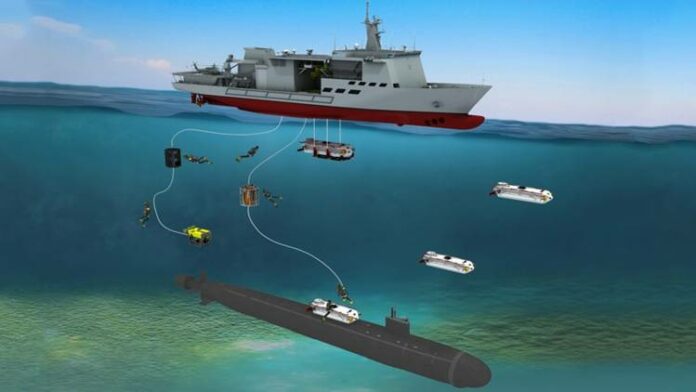
According to DAPA, ASR-II will be a more potent ship capable of rescuing distressed submariners from depths of up to 500 meters. An embarked remotely operated vehicle will be able to descend to 1000 meters below the surface. Compared to the ROKS Cheonghaejin, which can only operate in waves below 2 meters, the ASR-II will tolerate more adverse conditions.

According to a DAPA release from 2017, the new ship will have a center well through which deep sea rescue vessels will be deployed. The center well allows for a broader scope of submarine support operations in addition to enabling the ROK Navy to conduct underwater exploration. The Cheonghaejin relies on an A-frame to deploy DSRVs.

DSME expects to complete all work on the new ship and deliver it to the navy by 2022.